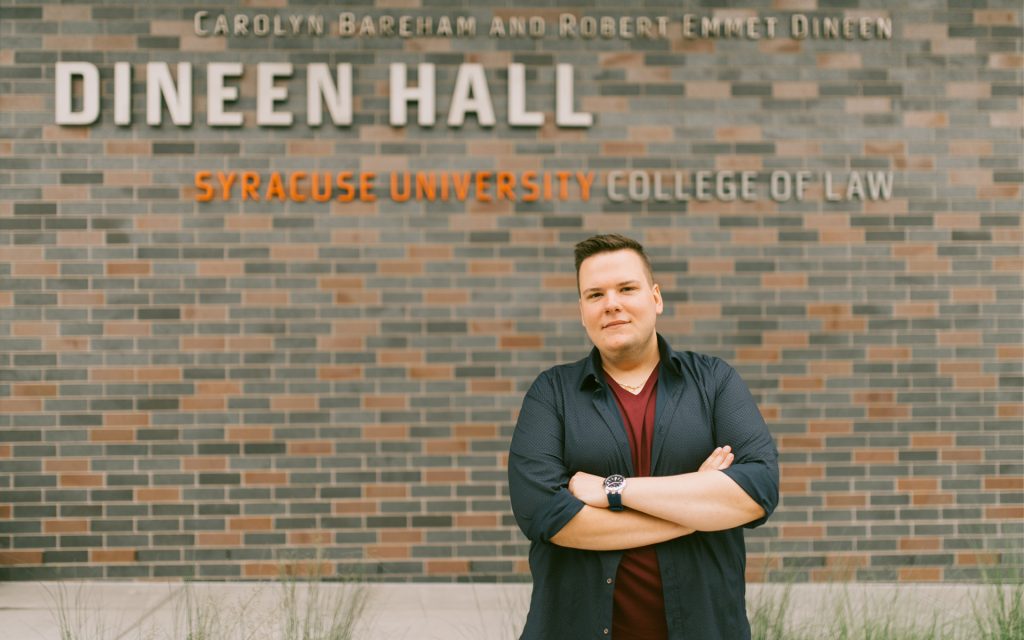
In the article “Mask bans are growing in popularity. Critics call the trend a ‘dog whistle’ to quell protest”,
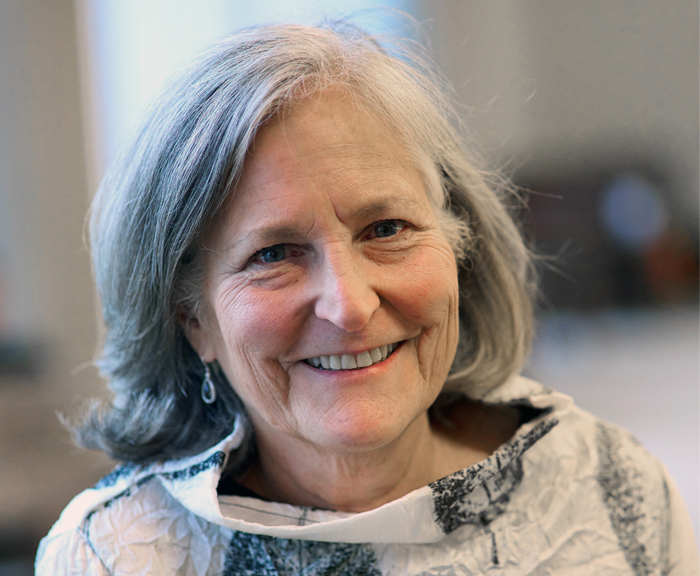
Macfarlane, who has a disability and considers herself high risk, questions how a mask ban takes into account the safety of people like her with health vulnerabilities. She also doubts that increasing “high-stress” interactions with the police will yield positive results and feels it’s unfair to put the burden on immunocompromised people to share health concerns that are not visible to the naked eye.
“That doesn’t lend itself well to a safe interaction,” she said. “It makes me really nervous about the right to protest, the right to attend a political rally.”
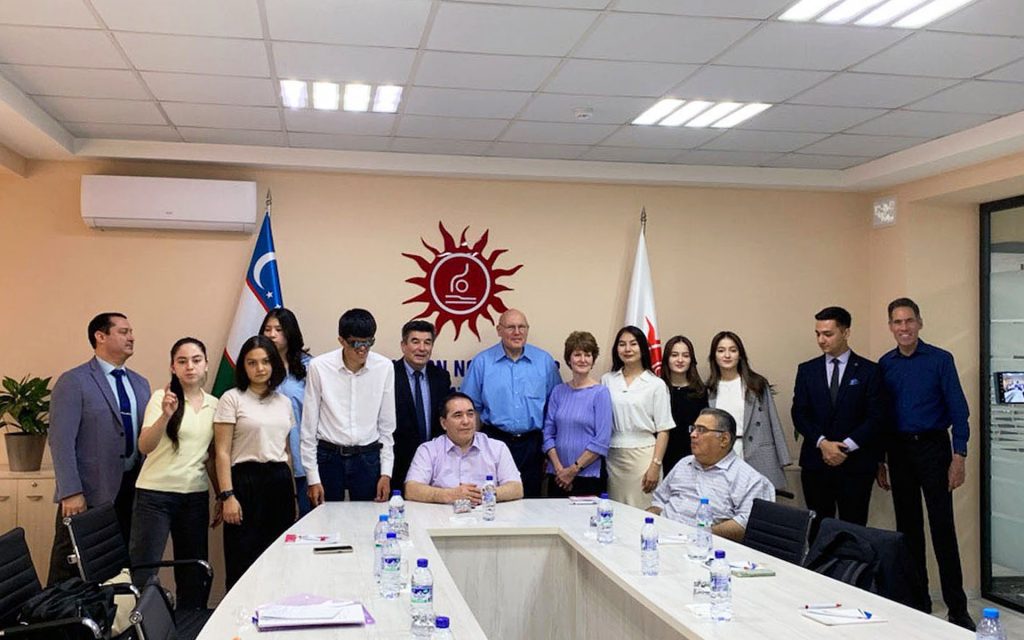
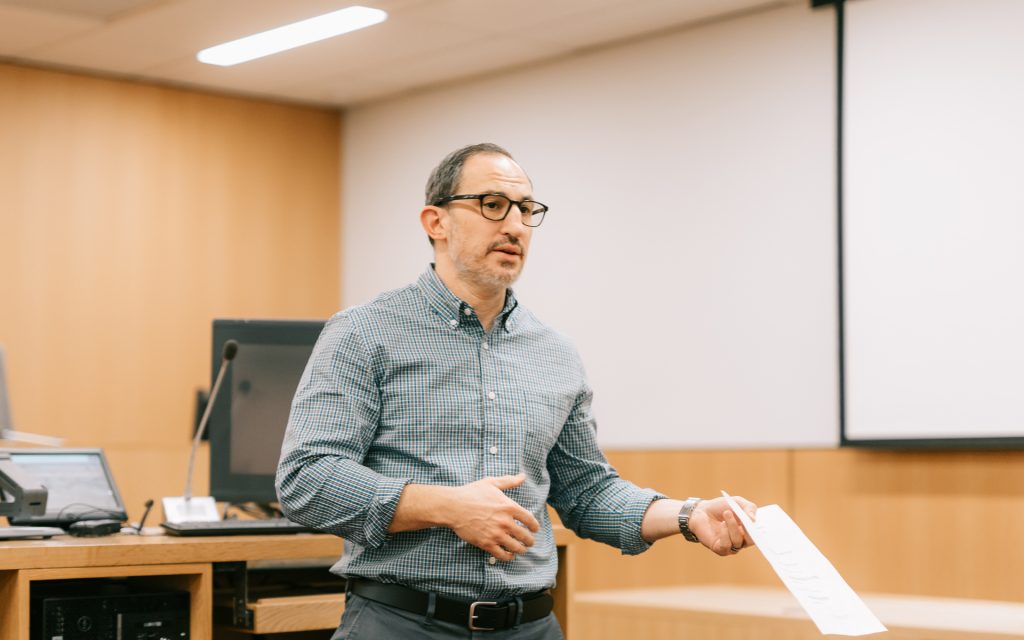
This spring, Professor Michael Schwartz, Director of the Disability Rights Clinic, Office of Clinical Legal Education at the College of Law visited the University of World Economy and Diplomacy’s (UWED) law clinic in Tashkent, Uzbekistan. Schwartz visited UWED to investigate the prospects for collaboration with Syracuse Law as UWED is seeking to expand its law clinic to address disability rights issues. In eleven meetings over four days, Professor Schwartz addressed law clinic faculty and students, along with Deaf students from a local high school, and members of the law enforcement and judicial communities.
Schwartz was also interviewed on Uzbek TV about his visit, which was captioned by Mirjakhon Turdiev, an Uzbek graduate student affiliated with Maxwell School’s Global Affairs Program. In his interview, Schwartz stated, “We would like to establish relations in Uzbekistan to create a new system for the protection of the daily rights of persons with disabilities. For this purpose, I came to your country. Uzbekistan has ratified the Convention on the Rights of Persons with Disabilities, and this is really wonderful, now it is time to fully implement the rights shown in this convention. During my career as a lawyer, I achieved the release of a deaf man who was unjustly sentenced to 12 years in prison, as well as the release of a blind man who was sentenced to 33 years in prison for murder. There are many people with disabilities who have become innocent victims of such crimes. For this reason, every person should first of all know their rights and be properly protected.”
Prospects for a collaboration between UWED and Syracuse Law are bright. “There is much work to do to help Uzbekistan in meeting its obligations under the UN Convention on the Rights of Persons with Disabilities. This work will also benefit Syracuse’s law students as they acquire knowledge of international human rights law,” says Schwartz.
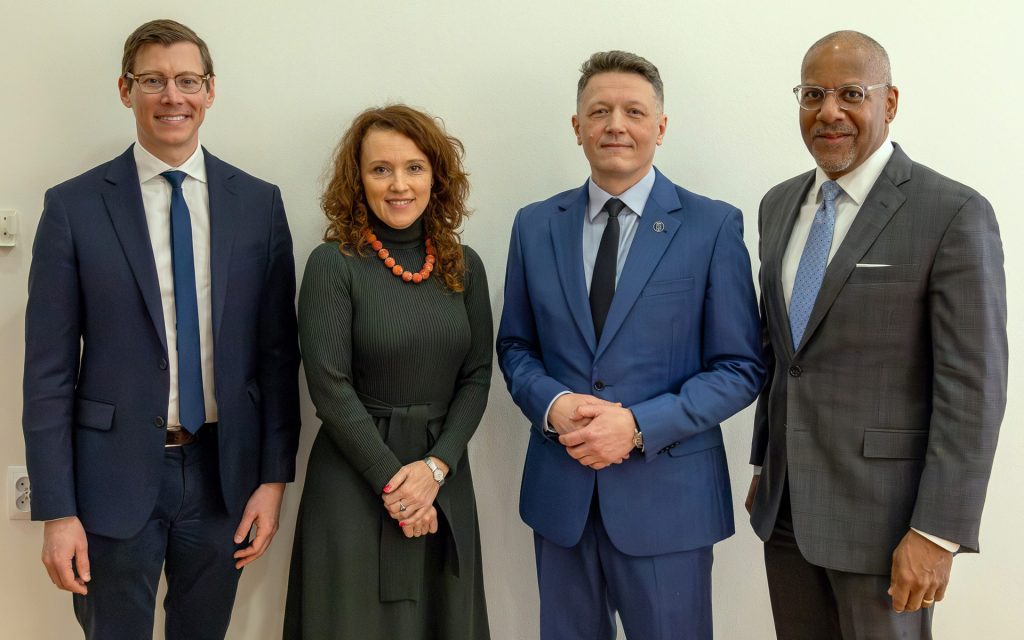
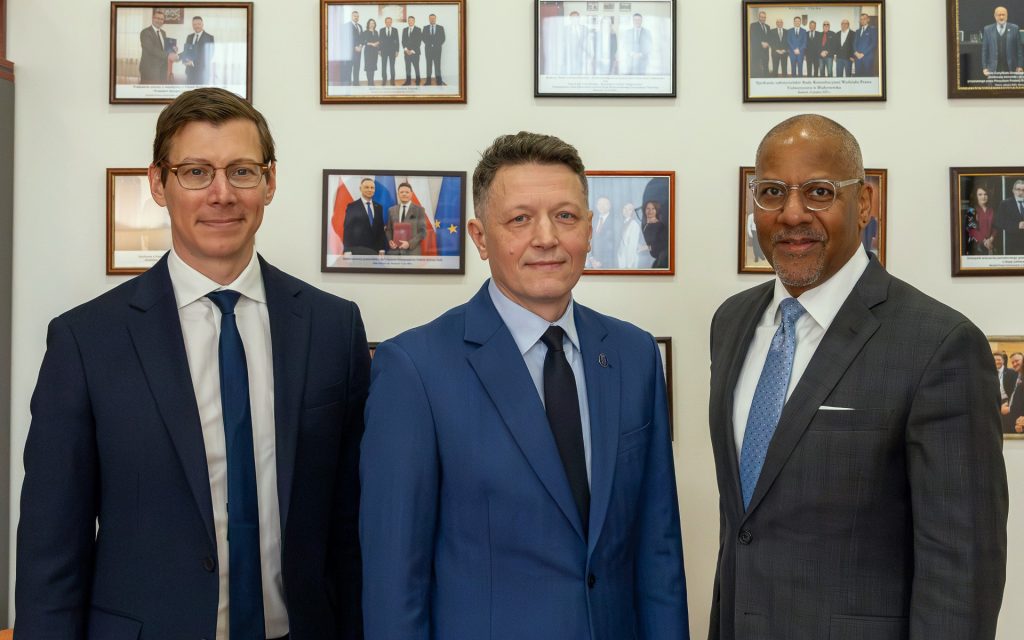
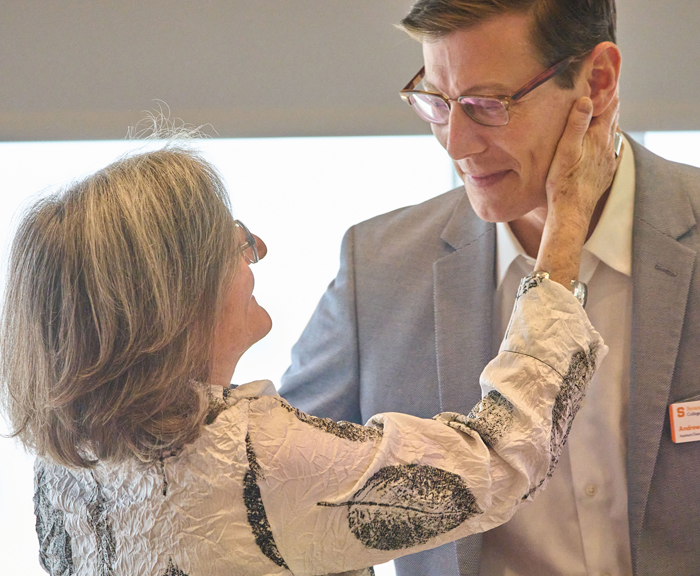
Andrew Horsfall, Vice Dean for International Cooperation and Development, dr hab. Izabela Kraśnicka, prof., Dean dr hab. Mariusz Popławski, prof. and Craig Boise
While the University of Bialystok and its Faculty of Law in Bialystok, Poland, may be more than 4,000 miles away from Syracuse Law, the exchange and collaboration of faculty, students, and knowledge on both sides have created a close relationship that has heightened learning on the legal, political, and cultural fronts, expanding a world view for so many, here and there, at a time when cross-cultural, global understanding may be more important than ever.
In 2016, Professor Izabela Kraśnicka, former vice dean for international cooperation and development at the University of Bialystok and head of the international department; and Professor Maciej Perkowski, head of the Department of Public International Law at the University’s Faculty of Law, were involved in a number of projects related to disability issues, including autism.
At the time, the University of Bialystok was proud to have its first Ph.D. student with autism, Maciej Oksztulski, who was working on his doctoral thesis, International Legal Standards of the Right to Education and Their Practical Implementation by National Scientific Institutions in Relation to Students on the Autism Spectrum, a comparative analysis that referenced Poland and the U.S. He had received a grant to complete further research, which required a comparative aspect to learn how foreign universities attracted and accommodated students with autism. To support Oksztulski’s work, Perkowski, who supervised his thesis, thought it was necessary to approach high-profile institutions like Harvard and Yale. Kraśnicka went to great lengths to convince Oksztulski that while those schools may hold prestige, it was also important to consider that other universities in the U.S. may be better suited to support his work.
“We needed a school that had extensive experience with supporting people with disabilities,” says Kraśnicka. After much research, she discovered Syracuse Law. Kraśnicka was drawn to the school’s Disability Rights Clinic, an initiative with a reputation for excellence directed by Associate Professor of Law Michael A. Schwartz, a supervising attorney and faculty member.
Kraśnicka coordinated with Schwartz and Andrew Horsfall L’10, assistant dean of International Programs, to arrange a visit for Oksztulski and a few faculty members from the University of Bialystok in 2017. Not only did this allow him to further his research, but he was able to see first-hand the ways autism was supported and recognized in the U.S. (Oksztulski successfully defended his thesis in 2022 and is now on the faculty at the Department of Public International and European Law at the University of Bialystok.)
From this initial collaboration, Kraśnicka and Horsfall launched a new partnership between their two institutions that would mutually benefit their faculty and students.
In 2019, Schwartz, who is deaf, was the first Syracuse Law faculty member to travel to the University of Bialystok to participate in the Axiological and Legal Aspects of Disability conference held at the University of Bialystok’s Faculty of Law to create a space for scientific research and the exchange of viewpoints regarding disability law. Schwartz presented Valuing Disability Rights: A Deaf Insider’s Perspective at the conference.
During his visit, he was hosted by the Student Legal Clinic at the University of Bialystok Faculty of Law, where he exchanged experiences with Polish students on how law clinics operate in Poland versus the U.S. His visit culminated by publishing an article, titled: Providing Effective Communication Access for Deaf People: An Insider’s Perspective in the University of Bialystok’s legal studies journal.
Soon after Schwartz’s visit, Kraśnicka identified funding available through the prestigious Erasmus+ grant program that broadened the partnership and exchange with additional Syracuse Law faculty members. The grant program, among other things, supports teaching, research, networking and policy debate on European Union (EU) topics. After coordinating with Hirsfall in May of 2022, the exchange was set up. Professors Cora True-Frost L’01 and James Baker were on their way to Poland.
“There is always a celebration when a U.S. professor comes to visit,” says Kraśnicka of True-Frost and Baker. “Our students are very interested in their experiences, and they want to see and learn from U.S. faculty and students, as well as hear about human rights from an American common law perspective.”
While in Bialystok, Baker and True-Frost were welcomed by Maria Cudowska, then a faculty member at the University of Bialystok Faculty of Law, who came to Syracuse Law for a sabbatical leave for the 2022-2023 academic year. Later, in July of 2023, Sylwia Leszczuk and Ewa Szpiganowicz, both graduates of the Faculty of Law and part of the University of Bialystok’s International Cooperation Office, came to Syracuse.
A Robust Exchange of Information
Cora True-Frost L’01
True-Frost is the Bond, Schoeneck and King Distinguished Professor of Law, director of the Journal of Global Rights and Organizational/Impunity Watch News, and a faculty advisor to the Journal of International Law and Commerce. With an interest in global and human rights, she described her visit as a “full, robust week of exchanging information.” She gave several lectures at the University of Bialystok related to her scholarship and work in international human rights law and international law, while also pursuing information on her interest in nongovernmental organizations (NGO) working in disability law and responding to Russian aggression by receiving Ukrainian refugees. NGO partners from the University of Bialystok arranged meetings with both disability advocates and recently arrived Ukrainian refugees to Poland at the time when Russia’s invasion of Ukraine had just begun.
“Experiencing and understanding world events from various perspectives is critical to my teaching and scholarship in international law,” True-Frost says. “Although I was raised in Germany as an Army brat, I had never visited, let alone worked, in Poland. The Erasmus exchange in Bialystok offered tremendous insight into the daily experience of what Russia’s invasion of Ukraine means to Eastern and Northeastern Europe.”
“As a result, the exchange deepened and broadened my own perspective of Russia’s invasion, including the calculus of my own government’s response,” she adds. “Comparing migration and disability issues in Poland with related discussions in Europe and in the United States adds texture to the basic value of dignity, the right to life and the right to not be invaded, details which I have woven into teaching disability rights law and international law. I look forward to continued collaborations with our partners in Bialystok and the region.”
Visiting Scholar Turned Fellow Embraces Opportunities at Syracuse Law
When True-Frost and Baker first visited the University of Bialystok, they were hosted by Cudowska, who graduated from the University of Bialystok with a Ph.D. in 2019 and a post-doctoral degree in legal translation in 2021. Cudowska graduated from Michigan State University (MSU) of Law with an LL.M. She continued her research at MSU Law as a Polish American Kosciuszko Foundation research fellow in 2021. As a licensed civil facilitative mediator, Cudowska retains ties with the state of Michigan by chairing the Board of the Southeastern Dispute Resolution Services.
Cudowska never imagined she’d be spending three years in Central New York at Syracuse Law. Her expertise and collegiality with the professors from Syracuse led to a sabbatical from Bialystok, which she chose to accept. Enthusiastic about bringing her research interests to the U.S., she was on her way to Syracuse Law in the fall of 2022 for a year-long stint as a visiting scholar.
Cudowska and Baker
As a visiting scholar, Cudowska worked under the guidance of True-Frost researching disability rights and human rights. Cudowska’s independent research projects concerned dispute resolution, as well as climate change, national security law, and international relations. When approached to consider a two-year fellowship with the Institute for Security Policy and Law (SPL), Cudowska jumped at the chance to continue her work in the U.S.
“Organically, the stars aligned. It wasn’t planned, but there was a Research Fellow position, and I applied,” she explains. She received the fellowship, which began in August 2023 and will run for two academic years through spring 2025. Cudowska is very grateful for the support of her colleagues at Syracuse Law, especially Baker, for encouraging her to accept and for supporting her in her current role.
She spent the fall 2023 semester focused on grant writing to help move the SPL projects forward, including Ring Around Russia (RAR), while also preparing two classes that she taught this spring: National Security, co-taught with Baker; and a National Security Research Seminar, which focused on national security and climate change.
“What stands out is the collegiality coupled with the level of care, attention to detail, and help that I received on all fronts: openness, kindness, and friendliness,” she says of her experience at Syracuse Law. “I’ve developed a number of professional relationships here that have become friendships, and I have the opportunity to teach at a prestigious U.S. institution, which means a lot in terms of my experience and career. I hope to make the most of my stay here and dive into every advantage and opportunity of academic life.”
Continuing the Partnership
Michal Stokowski
While Cudowska will continue her work in Syracuse through the 2024-25 academic year, and Baker will continue to travel back and forth in his efforts with Bialystok’s Szymanski, other faculty on both sides of the Atlantic have also been able to take advantage of the partnership:
In Spring 2023, Professor Anand pursued research on the law of the European Union on a sabbatical that took him to the University of Bialystok as a visiting scholar, Adam Mickiewicz University, also in Poland, as a visiting scholar, and to the Max Planck Institute for Comparative Public Law and International Law in Heidelberg, Germany, as a visiting researcher.
In Fall 2023, Michal Stokowski from the University of Bialystok came to Syracuse Law to further his research on his Ph.D. thesis, The Act of August 31st, 1944: On the Punishment of Fascist-Hitler Criminals Guilty of Murdering and Abusing the Civilian Population and Prisoners of War, and Traitors to the Polish Nation, known as August Decree. Stokowski researched WWII legislation from a comparative perspective under Baker’s supervision.
R.J. Naperkowski L’23
R.J. Naperkowski L’23 has been working with Baker on RAR, writing grants pertinent to the rule of law, national security pedagogy, and veterans affairs. In December 2023, Naperkowski and Baker traveled to Slovakia to attend Helping Ukrainian Refugees, a Visegrad Fund V4 minigrant project, in Oravice, Slovakia, and Witow, Poland. The project’s idea arose from the general concept of the RAR, with the greater goal of helping Ukraine. It focuses on helping young people in the Visegrad and selected neighboring countries to enhance their democratic values and civic virtues. Kraśnicka, Szymanski, Baker and Naperkowski, along with their Slovak counterparts, Dr. Martin Bulla and Dr. Miroslava Mittelmannova, both from Trnava University; and Professor Miroslava Chekh from Ukrainian Catholic University were lecturing on the importance of the role of law and civil society.
Andrew Horsfall L’10, Dean dr hab. Mariusz Popławski, Craig Boise during a visit to the University of Bialystok in 2024.
In March 2024, Dean Craig Boise and Horsfall made their first visit to the Faculty of Law at the University of Bialystok to meet with counterparts there in furtherance of an already well-established and robust partnership. Horsfall and Kraśnicka explored expanding the partnership into new areas, including short-term study abroad courses where students from both schools can visit the other to explore various subject matter and content of interest. They also discussed hosting exchange students at Syracuse for a semester using grant funding that Bialystok recently received through the EU’s Erasmus program. According to Horsfall, Syracuse will host its first exchange student from Bialystok in the fall of 2024 as part of this new feature of the partnership.
Office of International Programs Offers Pathways to Syracuse Law
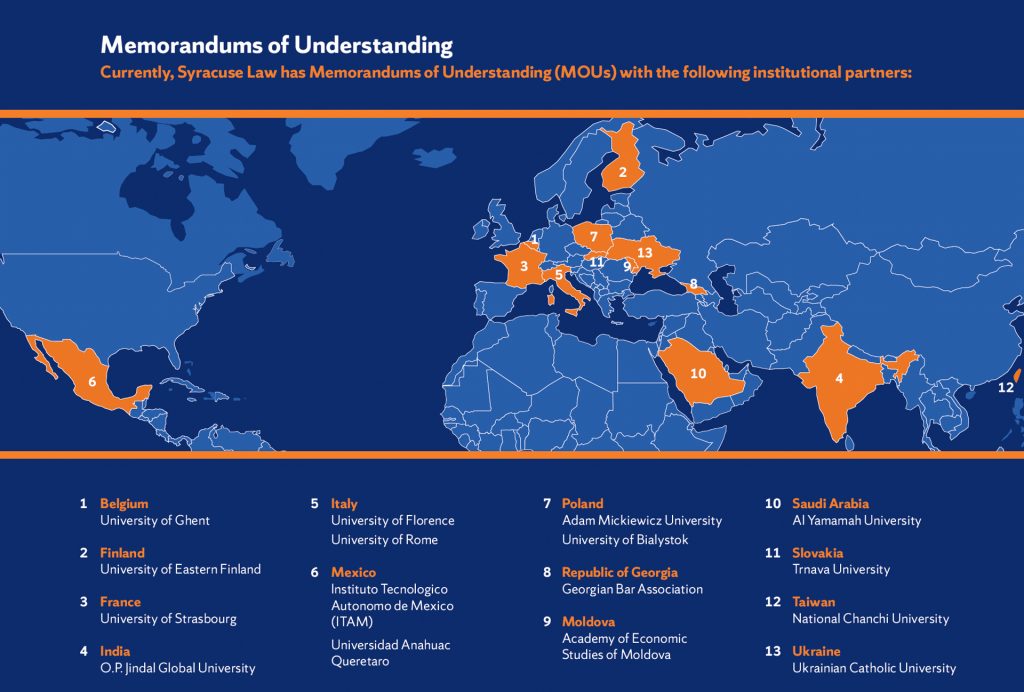
Horsfall believes the University of Bialystok is an outstanding example of the importance of establishing relationships with international law schools, bar associations, and other partners and institutions. He notes that Syracuse Law has a number of Memorandums of Understanding (MOUs) with schools throughout Europe, Asia and South America, all of which serve as a channel to bringing visiting scholars, exchange students, or those interested in the LL.M. program for foreign attorneys looking to be educated in the American legal system.
“The strong relationship we’ve developed with the University of Bialystok would not be possible without the hard work and dedication of Andrew Horsfall,” says Dean Boise. “Andrew has had the vision to see the opportunities that benefit our faculty and our students. Syracuse Law has been open to understanding the development of law both within Poland and throughout the E.U. Our partnership with Bialystok, and, in particular, Andrew’s counterpart, Izabela Kraśnicka, has facilitated that possibility, even as faculty and students there have learned from the American legal experience. Our connection with Bialystok will continue to grow and make a significant impact on both schools.”
As can be seen from just some of these examples, the expansion of Syracuse Law’s international footprint around the world has engaged faculty, students, staff, and even alumni in meaningful and exciting ways,” says Horsfall. “It continues to be a significantly worthwhile endeavor to bridge understanding across various legal cultures. I’m grateful to be working at an institution and alongside colleagues to share in these values.”
Syracuse, Bialystok Students Collaborate Through New Online Law Course
Todd Berger
This spring, Professor Todd Berger, director of advocacy programs, debuted an online collaborative course with the University of Bialystok focusing on transnational alternative dispute resolution. Ten Syracuse Law students, five residential and five JDi, along with another 10 from the University of Bialystok Faculty of Law took the one-credit class, which was taught together with Dr. Marta Kuklo, a faculty member at the University of Bialystok, who is an international expert in negotiations and mediation.
The course focused primarily on negotiations, mediation, and the universality of the skills sets used in both, as well as building a cross-cultural and transnational context specifically through the comparison of how the mediation process works in the U.S. versus Poland. Several guest lecturers on transnational negotiations were invited to the class, which was a very popular component. The class was taught in English, and all the students and instructors had to navigate the six-hour time difference. Students often worked in pairs (one from the U.S., one from Poland) on experiential exercises in negotiations and mediations throughout the course.
According to Berger, the class was very successful, and plans are in the works to expand it to a 2-credit course next year. “It was a great experience to teach with someone like Marta, who is so accomplished in her field, and I learned from her myself,” he says. “And, the exposure that both students got working with others from across the world built competencies that will most certainly help them succeed in the 21st century, as it continues to be more interconnected and diverse.”
More than 50 faculty, students, alumni, and friends from Syracuse Law and Syracuse University along with dozens on Zoom from around the world, attended the program “The Past, Present, and Future of Disability Lawn and Policy at the College of Law” to honor the retirement of Professor Arlene Kanter.
Kanter’s contributions to the lives of numerous Syracuse Law students and the global legal profession during her four-plus decades of service are difficult to wrap one’s head around. There are countless books, articles, presentations, committee memberships, guest teaching positions, not to mention co-counsel to two U.S. Supreme Court cases, and so much more, it is hard to narrow these accomplishments down to a few highlights.
There are, however, two lasting accomplishments that will continue to make an impact on the world at large:
Kanter established the Syracuse Law Disability Law and Policy Program (DLPP) in 2005 which has evolved into one of the most comprehensive disability legal studies programs in the country. DLPP draws J.D., LL.M., S.J.D., and visiting scholars from around the world to immerse themselves in all aspects of disability law and its intersection with international human rights law.
From 2001-06, Kanter worked with the United Nations committee on drafting the Convention on the Rights of People with Disabilities (CRPD). Since then, she has collaborated with governments and disability organizations on implementing the CRPD in more than a dozen countries and counting.
In Their Words:
“As we gather today, we owe a big thank you to Professor Arlene Kanter for founding the DLPP back in 2005 and serving as the director of the program for nearly 20 years. Under her leadership, the DLPP has grown into a center that is not only integral to the College of Law but also to the broader university.”
“You are a beloved teacher, and that is to say not only for the law students and [those] in the School of Education and other places, but for all of us. You have always committed to teaching us to make us more aware. Your path-making ways have also inspired all of us to be and do our best.”
Paula Johnson, Director of the Cold Case Justice Initiative
“There were several instances when the Children’s Rights and Family Law Clinic represented members and families that were members of the disability community. When I needed to seek out disability expertise, and someone who knew the area at both a theoretical and practical level, for me there was only one answer. It was Arlene. Arlene always made herself available as a collaborative partner who could consult to make sure that I was serving our clients to the best of our ability and withwhom I could explore the latest and greatest developments in disability law that would provide the best option for our clients.”
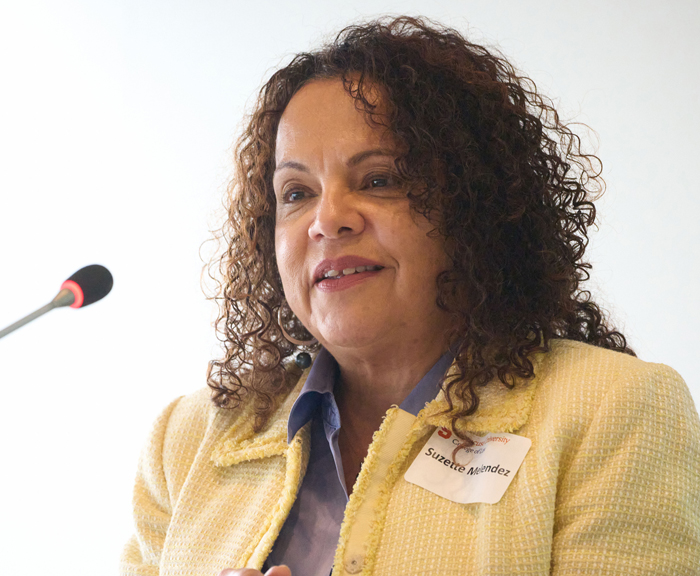
Suzette Meléndez, Faculty Fellow for the Office of Strategic Initiatives in Academic, Affairs and the Office of Diversity and Inclusion, Syracuse University; former director of the Children’s Rights and Family Law Clinic
“You have fostered an environment of inquiry and critical thinking and most importantly to me, you have delivered real change in our university community. You secured a commitment that our university would ensure that our newly-constructed buildings not only ensure accessibility but also move beyond mere compliance to ensure equity through your advocacy on the campus facilities advisory board. Simply put, your voice matters in the room. It matters for people with disabilities and all of us.”
Cora True-Frost G’01, L’01, Bond, Schoeneck & King Distinguished Professor
“We are truly indebted to your leadership, your energy, and your passion for all things disability rights. I know you’ll continue to be a strong force for change, but I also hope you get to enjoy a little bit more time with family and friends and the beautiful sun and sea of Cape Cod.”
Beth Ferri, Associate Dean for Research, School of Education
“Every time I return to SU for alumni events or to speak with disability law students, I am astounded by the diversity of students and professions and interests that Arlene has cultivated within the DLPP. Every time I’m at an event I am inspired by the law students and alums. It’s an amazing legacy.”
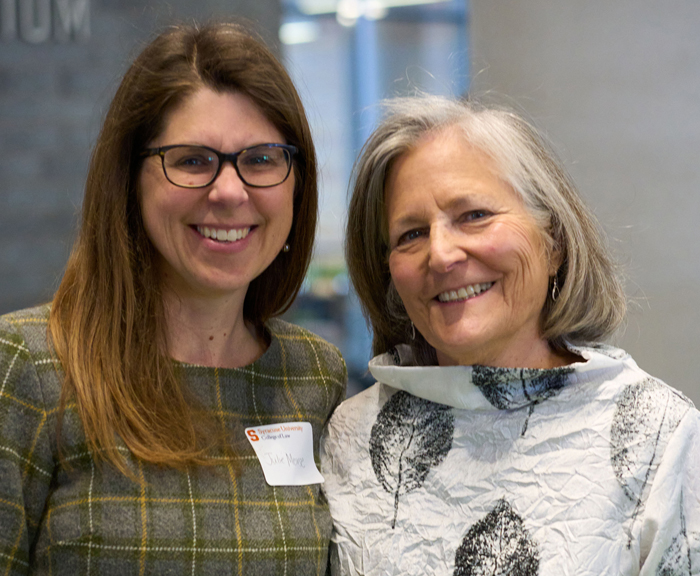
Julie Morse G’05, L’05, Attorney, Legal Services of Central New York
“Although I did not have the benefit of being one of your students, the lessons I’ve learned from you transcend the classroom. Evidenced here today, your work and your humanity have left an imprint on so many and the seeds you planted continue to grow.”
Andrew Horsfall L’10, Assistant Dean of International Programs, Co-Director, LondonEx
“What strikes me is that my story is not really special when you look at the alums in this network. She’s created a who’s who network of people in disability rights. I think it’s important to summarize what an impact she has had on the world if we just think of the number of people with disabilities who were her alumni’s clients as part of a class action, as part of policies we are changing, we quickly get to millions of people that were positively impacted by Arlene and whose lives have her fingerprints on them.”
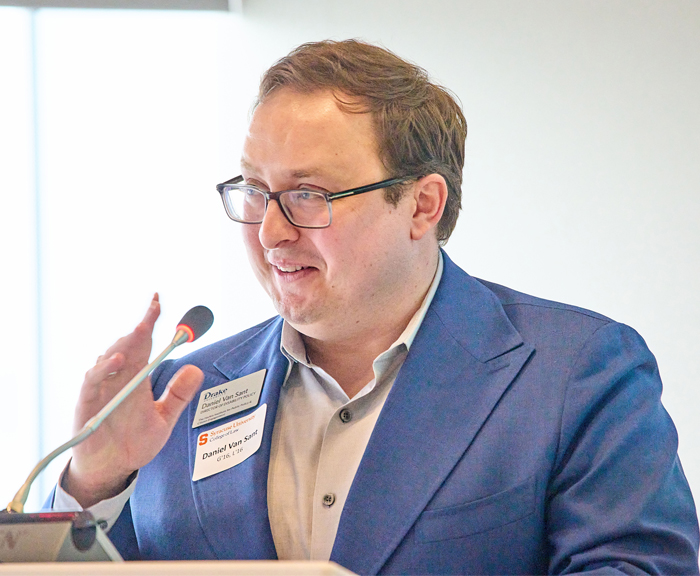
Daniel Van Sant G’16, L’16, Director of Disability Policy, The Harkin Institute
“Professor Kanter is an internationally recognized scholar in disability law. And she writes incisive articles defending disability rights. Yet she is a humble, warm, and friendly person. I am so grateful and honored to be Professor Kanter’s student as an LL.M. and S.J.D. As an advisor, she is guiding me through my dissertation and encourages me to explore new methods in legal study. I could not ask for a better Ph.D. advisor.”
Renci “Mercy” Xie LL.M.’20, S.J.D. candidate
“As I think of the past very busy year as I settle into my life in Syracuse, one thing has been constant—Arlene’s support. In the disability law field, Arlene is nothing short of a legend. The College of Law has a reputation as a disability law and policy leader thanks to Arlene’s groundbreaking work. As I continue to think of the future of DLPP, I think about continuing to live up to Arlene’s standards and staying true to her values.”
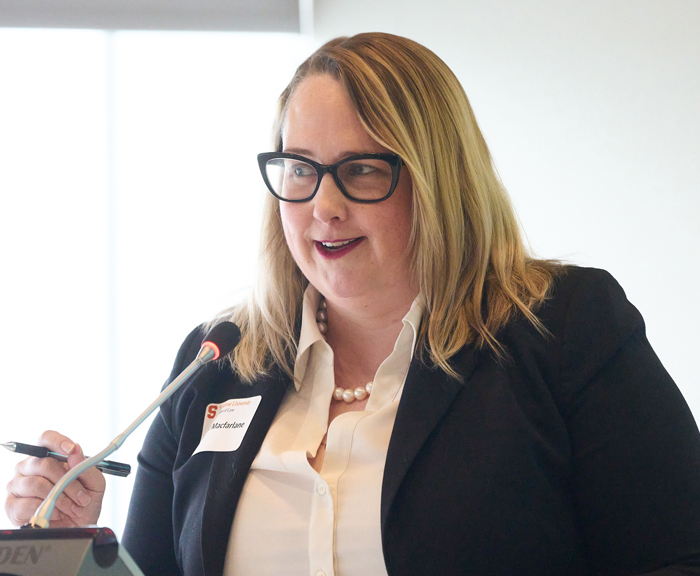
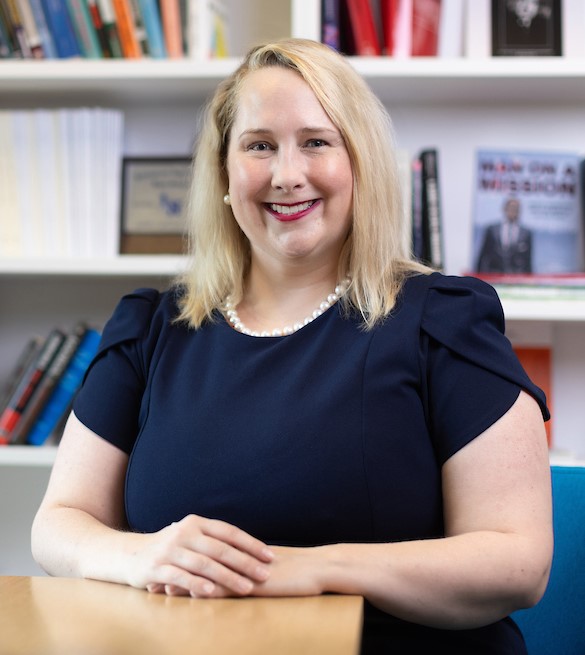
Katherine Macfarlane, a leading expert on disability law, civil procedure and civil rights litigation, joined the College of Law last summer to lead the groundbreaking Disability Law and Policy (DLPP) program. The program was founded and led by Professor Emerita Arlene Kanter, who retired in June after 35 years of teaching.
Macfarlane’s disability law research and advocacy focus on reasonable accommodations in the workplace and higher education. Macfarlane is herself a person with disabilities. She has had rheumatoid arthritis, an autoimmune disease that causes joint deterioration and visual impairment, since childhood. Her lived experience with disability is one reason she’s excited to direct the DLPP program, she says.
Before joining the faculty as an associate professor last August, Macfarlane served as special counsel for disability rights in the U.S. Department of Education’s Office for Civil Rights, an appointment supported by a grant from the Ford Foundation’s U.S. Disability Rights Program. She previously was an associate professor at Southern University Law Center and the University of Idaho College of Law. She also was an assistant corporation counsel in the New York City Law Department, where she served as lead counsel in federal civil rights actions and an associate in Quinn Emanuel Urquhart & Sullivan’s Los Angeles and New York offices. After law school, she served as a law clerk for the District of Arizona and the U.S. Court of Appeals for the Ninth Circuit.
Katherine Macfarlane (Photo by Marilyn Hesler)
In addition to her disability law research, Macfarlane writes at the intersection of federal civil procedure and civil rights litigation. Her article about the modern implications of 42 U.S.C. § 1983, the landmark civil rights law originally passed as part of the Ku Klux Klan Act of 1871, has been cited twice by U.S. District Court Judge Carlton Reeves, most recently in Green v. Thomas, an order denying qualified immunity that received national media attention.
New DLPP Initiatives
Macfarlane appreciates that Kanter’s DLPP groundwork has provided an understanding of disability law and policies here.
“The University’s understanding of what it takes to support people with disabilities means I can jump right into the kind of programming I want to do. Things I might have had to fight for at other institutions are a given at Syracuse. That’s so refreshing.”
Through DLPP, Macfarlane wants to empower law students to see themselves as disability law scholars and future academics. She hopes to make this year’s inaugural student scholarship-focused symposium a yearly tradition and continue hosting discussions with cutting-edge disability law scholars and advocates. She plans to spotlight the novel disability law work being done by several law faculty. She will also continue to offer disability knowledge workshops and trainings to departments and faculty at Syracuse and around the country and wants to involve DLPP students in those efforts. She especially hopes to maintain the University’s reputation as a destination for law students interested in disability law and law students with disabilities.
“I want for us as a university to think beyond compliance and consider what it takes to continue to attract students and faculty who have disabilities—how to remain an institution where disabled individuals are supported and succeed,” she says. “That means we need to think through the experience of people with disabilities from the minute they arrive on campus and about how to streamline the process of obtaining a reasonable accommodation, for example. We need to ask how much time, money, and health insurance a person with disabilities is required to expend and how we can lessen those burdens. Our conversations should reach far beyond a discussion about accessible design and dive into the day-to-day experience of people with disabilities.”
Early Law Interest
Macfarlane lived in Canada and Italy in her youth and always wanted to go to law school. When she moved to the U.S., she was drawn to and inspired by U.S. civil rights movements and civil rights law. Congressman John Lewis is one of her heroes. Her disability law specialty came about later in her career.
“I have been disabled for as long as I can remember, but in law school, I was too self-conscious to identify with the disability community or focus on disability law,” she says. “Well into my twenties, I lived my medical experience in secret, hiding my constant procedures and chronic pain from even my closest friends. Finding the disability community and disability law has been pretty life-changing for me in that I can finally be myself. I became an expert in disability law because I had to in order to protect my own rights, but then I realized I loved this area of the law and the people doing this work, and I never left.”
People with disabilities are underrepresented in the practice of law and academia, Macfarlane says. “Not only is there a real need for people with disability law experience, there is also an absolute need for people with disabilities to go into this area of law. Having more disabled people in the practice of law is a readily attainable goal. But the spaces they work in have to be accessible, too, so law schools, courthouses and law firms have to constantly audit their physical spaces and their disability-related policies,” she says.
DLPP As Leverage
DLPP provides a forum to leverage both objectives, Macfarlane says. “I also love that I can expose students with disabilities to this area of law and advocacy and help give them the confidence to exist as a person with disabilities that I didn’t have myself as a law student. And this generation of law students makes me so excited! They understand what access requires. I’m very interested to see what this generation of young people do when they enter the practice of law or when they come into positions like mine.”
A focus on the specialty requires careful monitoring of litigation and Supreme Court decisions to guard against a decline in disability rights, Macfarlane says. She cites a recent attempt to narrow the Americans with Disabilities Act that could allow businesses to forego making their establishments accessible. She finds it concerning that some recent Supreme Court decisions may foreshadow a lowering of America’s commitment to disability rights as well.
That’s why the DLPP’s efforts are essential, Macfarlane says. “I’m always pitching DLPP to students. Disability law is a vital, cutting-edge area of law; it’s always changing. Many of us come to this specialty because we’re fired up about disability rights in our own lives. That’s why I’m so pleased to be here; it’s tremendous that a person with a disability is at the helm of this program.”
Burton Blatt Institute Chairman and University Professor Peter Blanck’s 2nd edition of “Disability Law and Policy” was released in honor of the 34th Anniversary of the Americans with Disabilities Act (ADA). “Disability Law and Policy provides an overview of the themes and insights in disability law. It is a compelling compendium of stories about how our legal system has responded to the needs of impacted individuals.
The year 2025 marks the 35th anniversary of the ADA, celebrated on July 26. During the past three decades, disability law and policy have evolved dramatically in the United States and internationally. “Walls of inaccessibility, exclusion, segregation, and discrimination have been torn down, often brick by brick. But the work continues, many times led by advocates who have never known a world without the ADA and are now building on the efforts of those who came before them,” says Blanck, a professor at the College of Law.
Lex Frieden, an internationally distinguished disability rights scholar and advocate and former Chairperson of the U.S. National Council on Disability, writes in the Foreword to Blanck’s book: “In 1967, I survived a head-on car crash. When I woke up, I was paralyzed from the shoulders down. . . . My story is one of many in the modern disability rights movement. In ‘Disability Law and Policy,’ Peter Blanck retells my story, and the personal experiences of many others living with disabilities, in a master tour of the area. Peter is a world-renowned teacher, researcher, lawyer, and advocate. He has been central to the modern sea change in disability civil rights . . . ‘Disability Law and Policy’ should be read by all of us—people with the lived experience of disability and their advocates, parents, family members, and friends.”
Blanck says that “a new generation of people with disabilities, building on the efforts of Lex Frieden and many others, families, friends, advocates, and supporters, is stepping forward. As a guiding beacon, disability law and policy offer hope of a future in which all people, regardless of individual difference, will be welcomed as full and equal members of society.”
“Disability Law and Policy” is published by Foundation Press and is available from West Academic.
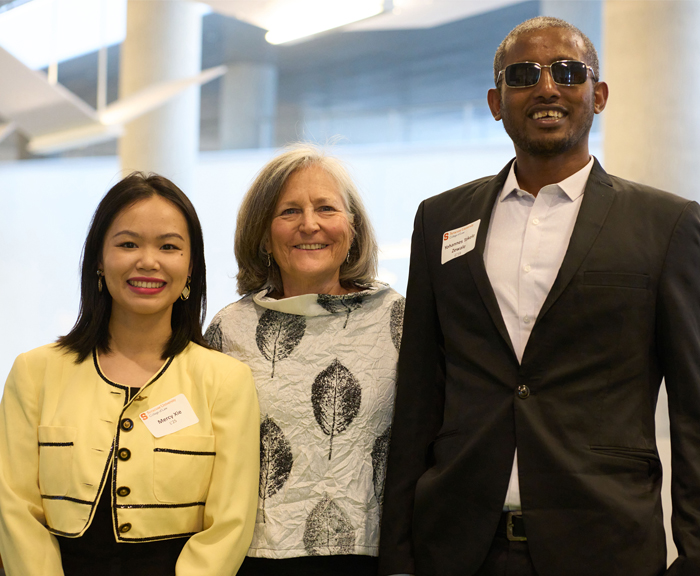
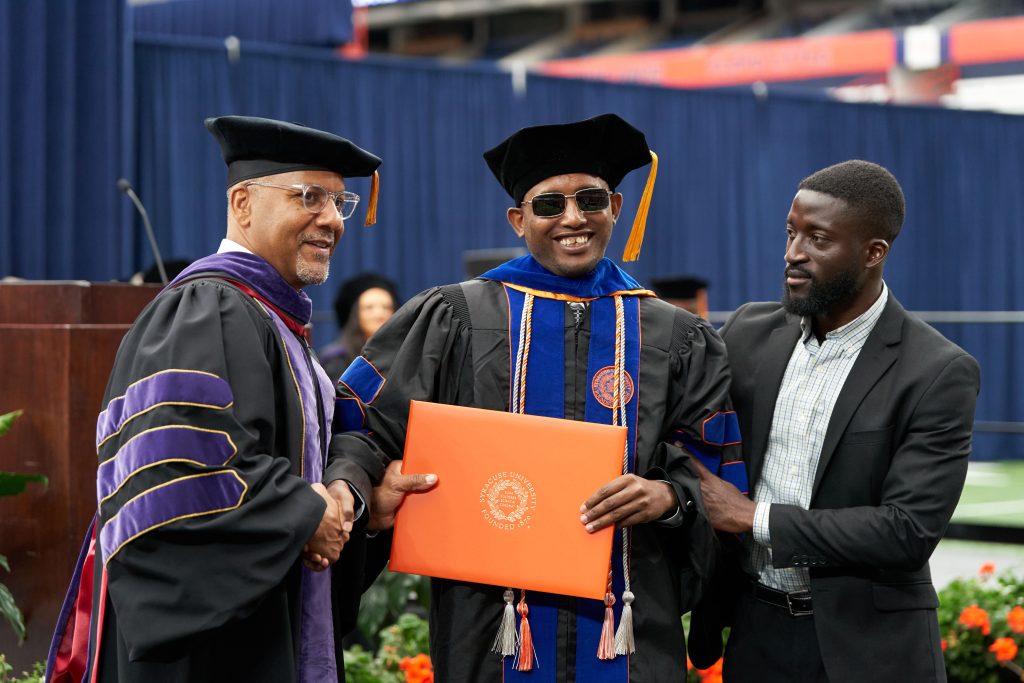
Yohannes Takele Zewale, LL.M.’19, S.J.D.’24, successfully defended his dissertation for the Doctor of Juridical Science (S.J.D.) degree. Zewale passed the oral defense of his dissertation with no revisions, becoming the first student to receive his S.J.D. from the College of Law.
In his dissertation, titled “Representation and Persons with Disabilities in Legislatures: A Proposed Model of Approval Representation,” Zewale discusses the lack of descriptive representation of disabled people in legislatures, as well as the limited research on the topic. To address this shortcoming, Zewale proposes a new model of “Approval Representation”, which seeks to increase descriptive representation based solely on voter preferences. His model is an alternative to the model of Descriptive Representation, which has been used in many countries to promote the representation of women and racial, ethnic, and religious minorities. Only five countries’ laws include quotas requiring the descriptive representation of disabled people in their legislatures, and all these countries are in the African region.
“Not only is Yohannes’ dissertation significant for its comprehensiveness (at 270 pages), its originality (there is only one other article on the topic), and its use of qualitative research methods to support its claims (following receipt of Institutional Review Board approval, he conducted interviews with 12 disabled people who serve in legislatures), but this dissertation is also significant because it shines a light on countries that are too often ignored by a research field largely dominated by Western scholars. The fact that the first five countries that have instituted policies to ensure representation of disabled people in their legislatures are all within the African region is a topic worthy of research in itself,” says Professor Arlene Kanter, Faculty Director of International Programs and dissertation advisor to Zewale.
Zewale earned his LL.B. and his first LL.M. from Addis Ababa University in Ethiopia, in 2015 and 2018, respectively. He received his LL.M., as an Open Society Fellow, with a concentration on international and comparative disability law, from the College of Law in 2019. He has held positions at the Addis Ababa University School of Law, the Ethiopian Center for Disabilities and Development (ECDD), and different organizations. He is currently working for various non-governmental organizations at both national and international levels.
Macfarlane says what’s missing from the bills are any attempts to limit unfair judge assignments in criminal or non-political cases. Regarding Senator Chuck Schumer’s, D-N.Y., bill, she fears that “unrepresented, incarcerated, powerless parties” are not part of the considerations.
“There are so many examples of other cases in which parties get their cases assigned directly, there are all kinds of local rules that allow judges to pull what they call related cases onto their docket, senior judges and visiting judges get to select the type and number of cases they hear,” Macfarlane said. Another example is that, in certain district courts, when someone wants to challenge their federal conviction through a habeas petition, “there are rules that force the filing of our federal habeas petition to be directly assigned to the same judge that sentenced you.”
Professor Kat Macfarlane recently spoke with Bloomberg Law for the article “Chief Judge Sought to Move New Appointee Out of Texas Courthouse.” The article revolved around Chief Judge Alia Moses of a Texas federal trial court’s attempt to reassign a newly appointed judge Ernest Gonzales out of her courthouse to another courthouse over a reported personal issue. The chief judge said the move was due to a conflict of interest, but that conflict has been resolved.
Macfarlane, who studies case assignment procedures, said it’s concerning that such a decision can be made by the chief judge individually with little oversight. Chief judges are not chosen or elected but rather are elevated to the position if they meet certain criteria set by federal law, including being under the age of 65. Still, many courts make decisions on matters like case assignment through consensus, rather than divisive votes.
“It’s absurd to give that much power to one person in the federal system,” Macfarlane said.
Professor Arlene Kanter, Founding Director of the Disability Law and Policy Program, has recently had her article, The Role of Human Rights Indicators in Assessing Compliance with the UN Convention on the Rights of People with Disabilities” published in the Georgia Law Review.
The article’s abstract:
In recent years, international human rights treaties have come under attack for failing to fulfill their promise. While it may be true that human rights treaties have not realized their full potential in every case, there is little discussion about how to measure the impact of treaties. This Article explores the ways in which we measure compliance with human rights treaties, focusing on the Convention on the Rights of People with Disabilities (CRPD). The CRPD entered into force in 2008. Since then, 188 States Parties have ratified it. In addition, the Office of the High Commissioner for Human Rights recently released a set of indicators designed to measure States Parties’ progress towards implementation of the CRPD. These new “CRPD Indicators” are designed to assist States Parties as well as the CRPD Committee and other UN bodies in assessing compliance with the CRPD. This Article is the first to analyze the benefits as well as the limitations of the new CRPD Indicators.
This Article begins with an analysis of the CRPD, followed by an analysis of the ways in which the CRPD differs from other human rights treaties, including its reporting and monitoring requirements. The Article then discusses recent research on the role of human rights indicators as a tool to measure treaty compliance, followed by a discussion of the benefits and limitations of the new CRPD Indicators, as examined from a Disability Studies perspective. Assessing the role of the CRPD Indicators from a Disability Studies perspective requires a reframing of the essential role of people with disabilities and their organizations in working towards compliance and implementation of the CRPD. The Article concludes with a cautionary note regarding reliance on the CRPD Indicators as the primary tool to assess compliance with the CRPD. Although the CRPD Indicators are a helpful tool in measuring States’ progress towards compliance, they cannot replace ongoing efforts to mobilize and support disabled people in their fight for full implementation of the CRPD.