News

Switzerland Course Offers Students First-Hand Look at the Influence of International Tax Law

Where better to learn about international tax law than Switzerland? Its prominence in global taxation comes from a combination of low tax rates, financial privacy, and political stability, which has long attracted multinational corporations and wealthy individuals. With a sophisticated financial sector, favorable tax treaties, and a highly developed business environment, Switzerland is a hub for international wealth management and corporate structuring, making it a powerful influence in the field of international tax law.

In March, 25 students from Syracuse University College of Law got an inside look as they traveled to Zurich to take part in a three-day course, The Evolving Role of International Tax, Transparency and Tax Equalization, led by Dean Emeritus and Professor of Law Craig Boise and Marnin J. Michaels G’96, L’96, a partner at global law firm Baker McKenzie Zurich, known for its high-end, cross-border corporate, finance, and tax expertise.

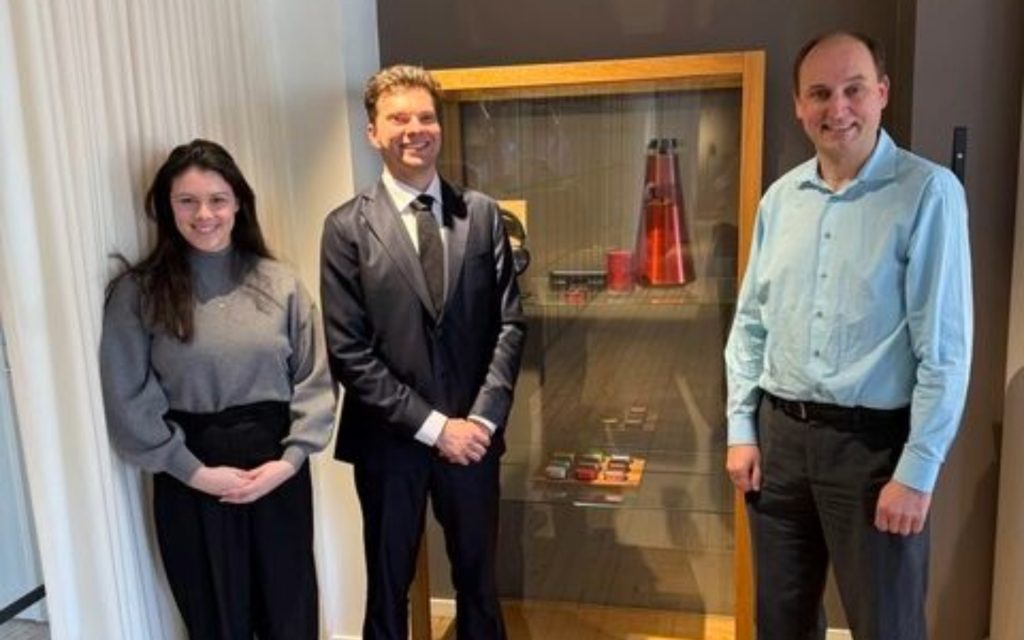
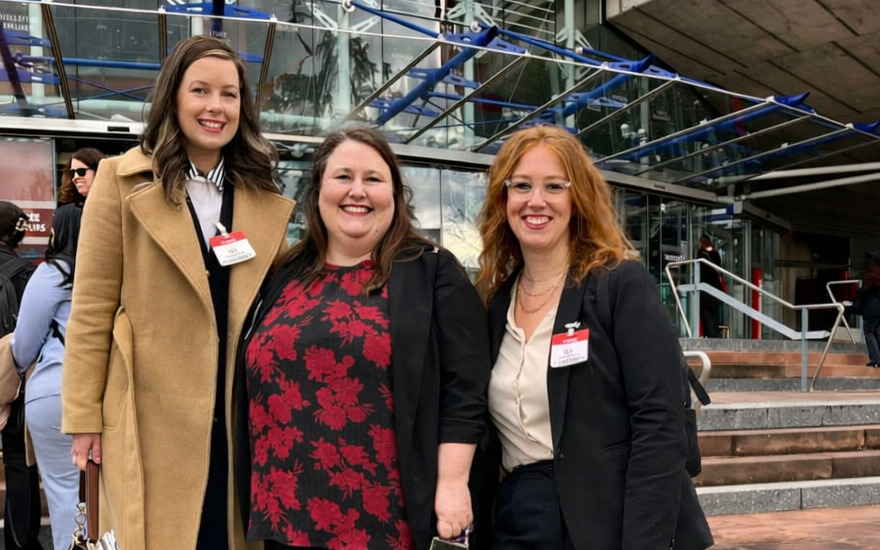
Syracuse Law students in a group photo outside building in Switzerland

“Throughout this trip, students realized just how critical tax law is because taxes are one cost that every company, everywhere, has, and is always trying to reduce,” says Boise, who practiced tax law before entering academia. “This experience gave students insight into why tax planning is so important to how companies structure themselves around the world and how many corporate decisions are actually driven by taxes and tax laws.”

Open to on-campus and hybrid online JDinteractive (JDi) students, the course offered presentations from a prestigious slate of Swiss-based tax attorneys, government officials, and corporate experts brought together through Michaels’s extensive professional network. Topics included tax treaties, cross-border business structures, trade issues, trust and wealth planning, and the renewed interest, particularly in the U.S., in tariffs.

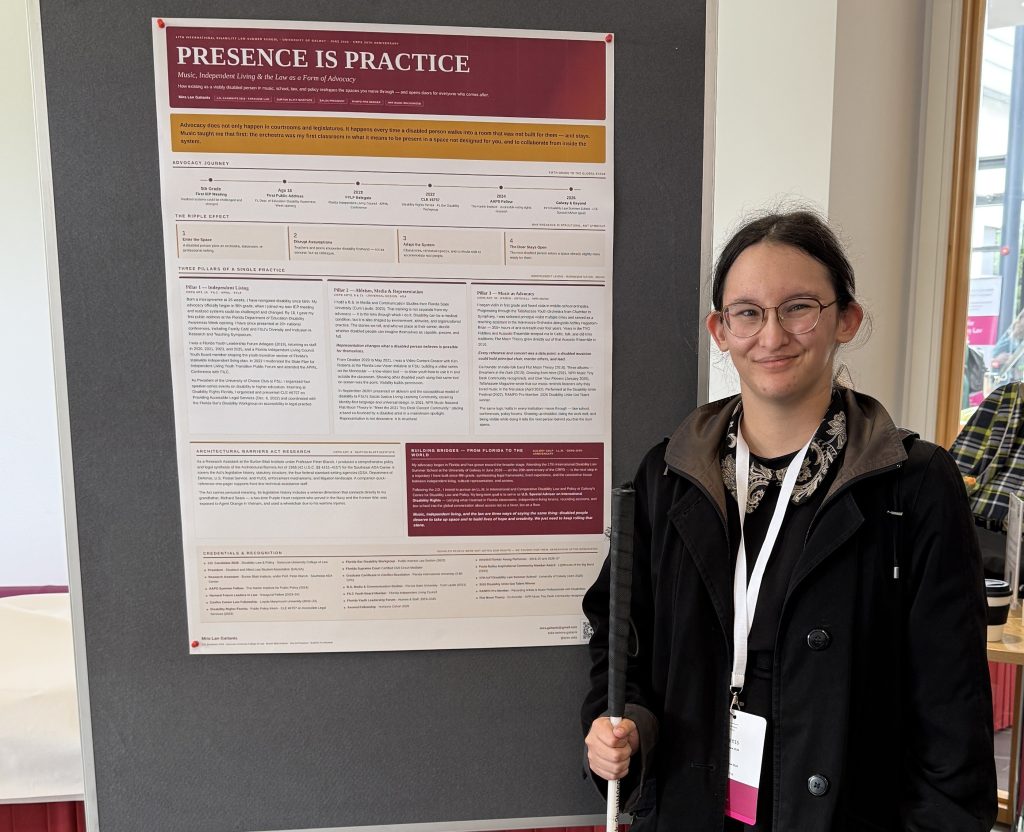
Syracuse University law student in front of building in Switzerland

“What stayed with me most was a presentation by Pablo Bentes, a partner at Baker McKenzie, on the convergence of taxes, tariffs, and sanctions,” says Omar Ismael Nuno L’27. “What made it so impactful was the way he explained that there are no longer isolated policy tools but those that increasingly work together as revenue generating and geopolitical instruments. That really changed the way I think about international legal systems because it showed how economic policy, cross-border regulation, and global power can all intersect.”

The group was hosted by Baker McKenzie and also visited Bank Vontobel, a leader in private banking and investment service with global presence and vast expertise in wealth management services.

Syracuse University Law Student standing in front of Baker McKenzie sign in Switzerland.

One of the three days was spent in Liechtenstein, where students visited Kaiser Partner, a family-owned financial service group and private bank specializing in wealth management, family office services, trusts, fund administration, and investment advice.

Students also had time to experience the people, sites, and culture of Switzerland. This is the third time Syracuse Law has offered a course on international tax law outside the U.S. with this being the largest group to date, a testament to its popularity. Olivia Roberson L’27 was most impressed by the long global reach of Syracuse Law.

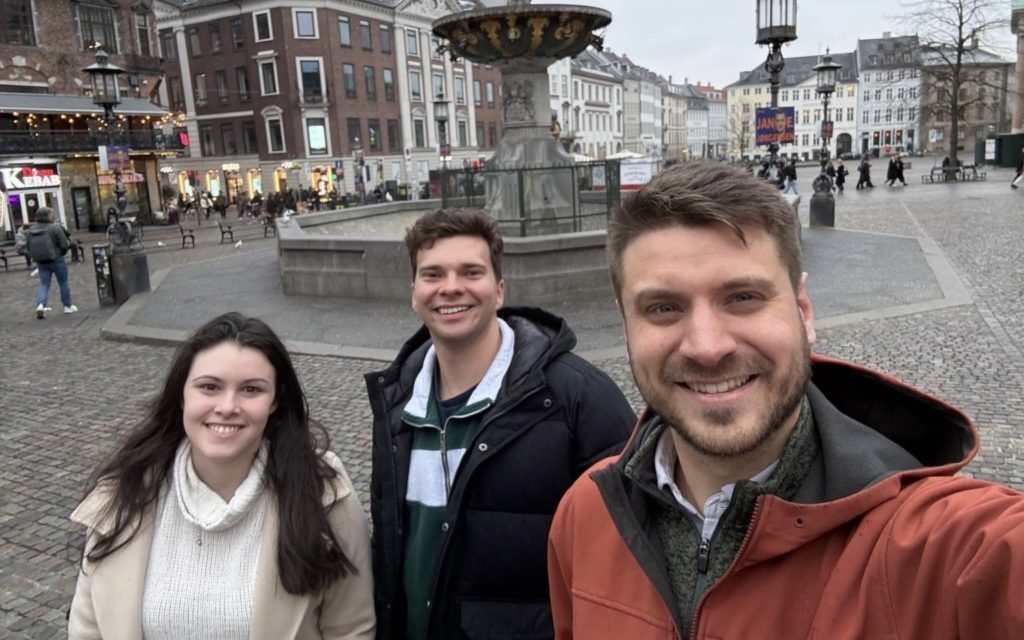
Syracuse Laws student standing in front of water and views in Switzerland

“Marnin Michaels truly exemplifies that there are no boundaries for us as law students, as he went to Syracuse Law and now works at Baker McKenzie in Zurich,” she says. “This shows that our opportunities are endless, and our legal careers can bring us anywhere in the world.”

Professor Shubha Ghosh Participates in the Missouri Law Review Symposium on the Defend Trade Secrets Act

Crandall Melvin Professor of Law Shubha Ghosh recently participated in the Missouri Law Review “The Defend Trade Secrets Act at 10” symposium.

Ghosh, Director of the Syracuse Intellectual Property Law Institute, was a Commentor during the first paper session which questioned the power of the Defense Trade Secrets Act (DTSA) through the lens of reverse engineering restrictions, examined the circuit split over pleading standards for trade secret litigation, and analyzed how the readily-ascertainable bar to trade secrecy should be interpreted under the DTSA.

Father-Daughter Duo Enroll in JDi Program with Shared Values of Helping Others Through the Law

When Emma Boehme Grant L’29 was accepted into the Syracuse University College of Law’s JDinteractive (JDi) program, she looked forward to sharing experiences with others studying the law through the hybrid online program. However, Emma was fortunate to already have someone very special in her corner to help her acclimate to law school — a 3L who just happened to be her father, George Boehme L’26.

Shared Values Draw Father/Daughter to JDi Program

George is currently completing his last semester in the JDi program, after retiring from a successful career in newspaper publishing and starting his “second act” in his 60s by enrolling at Syracuse Law.

Feeling he hadn’t done enough to make the world a better place throughout his career, George decided that a law degree would allow him to offer pro bono legal services to those in need and possibly  teach law at some point. Located in Houston, George found Syracuse Law’s JDi program allowed him to stay in Texas while achieving his goals.

Emma lives in Memphis, Tennessee, where she works full-time as the homeless management information systems director at the Community Alliance for the Homeless.

Emma Boehme (orange scarf) at a January 2026 JDi Residency in Syracuse, NY with fellow classmates Jenny Blanch Dickinson, Heather Winnie and Jill Ayers.
Emma Boehme Grant (orange scarf) at a January 2026 JDi Residency in Syracuse, NY with fellow classmates Jenny Blanch Dickinson, Heather Winnie and Jill Ayers.

She always wanted to contribute to the “greater good” and, at first, focused on art, culture, and community as a way of empowering people and creating change. Later, she chose to be a preschool teacher to impart good values, morals, and decision-making on young children.

“It was gratifying, but neither was fulfilling me the way I had hoped,” she says of her early career choices. However, Emma’s current job has shown her the many challenges organizations and the people they serve face that could benefit from someone with a formal legal background to guide them.

“Through a combination of my life experience and the current political climate, I see law school as a step in positively impacting the world around me,” she says.

Crossing Paths and Sharing Experiences

At the time, George was already enrolled in the JDi program, and Emma admits he was an inspiration to her. Seeing how much her father valued the JDi program, she decided to explore it herself and quickly realized that its flexibility and online courses could be an ideal fit for her, too.

George Boehme L’26 standing in staircase in Dineen Hall.

“When my daughter first asked me about Syracuse’s JDi program, I was flabbergasted, as she had never mentioned an interest in the law before,” George says. “I wasn’t sure if she was serious at first, and I didn’t want to scare her off. But now that she is a student here, too, I am incredibly proud. I tend to be a big cheerleader for the Syracuse JDi program, as I can’t find a single flaw in my own experience, so I love telling others about it— and that included my daughter.”

Because George is two years ahead of Emma in the program and classes are held online, she did not expect much interaction with her dad. But she did not anticipate that he would serve as an academic success fellow for Civil Procedure during her first semester and for Contracts this semester.

“It just worked out that way, and it’s nice to know he’s there for me, but he doesn’t give me special privileges. He still makes me schedule office hours with him, and not just pop on the phone and say, ‘Dad, can you help me?’” Emma explains, noting that most people at the College of Law are aware that they are father and daughter.

“But, it is an advantage that he knows better than anyone how my brain works and how I process information, so, of course, he helps me and is very forthcoming with letting me know what resources are available to me at the law school,” she adds.

While Emma has a way to go in the program, she is eager to continue. George is preparing to graduate this May and start his legal career.

“Honestly, I’m disappointed that my Syracuse Law experience is about to be over, but I’m eager to see what’s in store for me after graduation, as I’ve been working hard towards that goal,” George says.

“I’m confident my daughter will have a similar experience over the next two years. And I can’t wait for the day I’ll be able to say that both father and daughter are alumni of Syracuse University College of Law.”

George Boehme L’26 and daughter Emma Bohme Grant L'29 pictured with brother and mom and dog. Picture of them all younger than today.

Professor Shubha Ghosh Discusses the Live Nation-TIcketmaster Antitrust Settlement

Crandall Melvin Professor of Law Shubha Ghosh spoke with The Verge on the recent Live Nation-Ticketmaster antitrust settlement with the Department of Justice.

In reaction to the settlement, Sen. Amy Klobuchar (D-MN) plans to introduce a new bill to strengthen courts’ review of antitrust settlements, including by empowering states to have a greater role and making sure courts can’t approve agreements that fail to resolve antitrust issues. 

Reviews under the Tunney Act (Antitrust Procedures and Penalties Act of 1974) are already meant to ensure that antitrust settlements are in the public interest, though Ghosh says it’s rare for a judge to throw out a deal altogether. Under the Tunney Act review, the court will evaluate whether the parties are likely to return over the same issues, and if the proposal creates new problems, he said.

Dean Terence Lau L’98 Speaks with the New York Times on Tariff Refunds

Dean Terence Lau L’98 spoke with the New York Times for an article on the complexities of refunding tariffs after the recent Supreme Court decision.

The administration initially tried to delay the legal proceedings around refunds. In a late-night court filing at the end of last month, the government proposed to halt the fight for about four months, but a panel of judges quickly rejected that request.

Lau said the actions reflected an effort by President Trump to introduce “administrative friction” around the $166 billion in tariff collections.

While Lau acknowledged that the refund process was so complex that it necessarily would take some time, he said the government’s court filings also showed “they are trying to narrow who gets refunds, and they’re stretching the timeline.”

Lau began his career in the Office of the General Counsel at Ford Motor Company in the International Trade and Transactions practice group. His practice focused on U.S. law for foreign affiliates and subsidiaries, among other topics. Later he served as Ford’s director for the Association of Southeast Asian Nations Government Affairs.

“Entirely Unpredictable,” Says Professor of Law Emeritus William C. Banks on the War in Iran

Distinguished Professor of Law Emeritus William C. Banks spoke with Salon on the Iran war.

Banks said that Trump’s handling of the conflict has been “entirely unpredictable” and said he advised against “putting faith” in the timelines previously suggested by the Trump administration, referring to Hegseth as “inexperienced.”

“Nobody knew anything. Nobody experienced the conflict yet,” Banks said. “So, I don’t think there is a timeline.”