
Shaking hands with a Supreme Court justice is a dream come true for anyone in the legal profession, but that dream became a reality for three Syracuse University College of Law students who participated last summer in The Sonia & Celina Sotomayor Judicial Internship Program.
Syracuse Law students Imari Roque L’27, Rebeca Chavar L’27, and Emma Bissell L’27 participated in The Sotomayor Program, which aims to “cultivate and develop future leaders from underserved communities” through judicial internships, educational experiences, and other resources to help achieve professional goals.
Justice Sonia Sotomayor is the first Latina and third woman to serve on the U.S. Supreme Court, appointed by President Barack Obama in 2009. Growing up in public housing in the Bronx, Sotomayor is known for her respect for the judicial process and passionate approach to the law, particularly in regard to civil liberties and the rights of those from marginalized communities. She is also committed to the judicial process, as well as supporting those impacted by systemic inequities.
For two months this past summer, Roque, Chavar, and Bissell participated in The Sotomayor Program, working full-time for judges, while also participating in professional development training and networking. Each worked in a different judicial environment, but all three gained invaluable insight and experience working in courtrooms under the direct supervision of a judge.
Roque has been interested in The Sotomayor Program since she was 14 years old, but it wasn’t until she was a 1L at Syracuse Law that she applied to the program’s law school division.
“I’ve always been drawn to being a lawyer, and Justice Sotomayor is the first person who comes to mind,” she explains. “No one in my family is a lawyer, so Sonia Sotomayor—a Puerto Rican woman from the Bronx like me—has been my role model.”
Roque was matched with the Hon. Bryant Tovar, a judge of the Housing Part of Civil Court of the City of New York, dealing with landlord-tenant matters, civil litigation and immigration law. The work focused on the Small Property Part of the court, which handles housing issues before trial, particularly cases where landlords are suing tenants.
“I became really familiar with what city court looks like, developed a rapport with the judge, clerk, and others, and learned a lot about negotiations and alternate dispute resolution, as well as what everyday law looks like,” says Roque. “It was interesting because Judge Tovar leads with understanding and empathy on the bench, which gave me a different perspective on the law.”
Chavar worked for the Hon. Javier Vargas in New York State Court of Claims in Manhattan, where she gained hands-on experience observing three major trials. Judge Vargas encouraged his interns to engage deeply in their work, often discussing with her issues brought against the state of New York, involving issues such as car accidents and claims of excessive force by law enforcement.
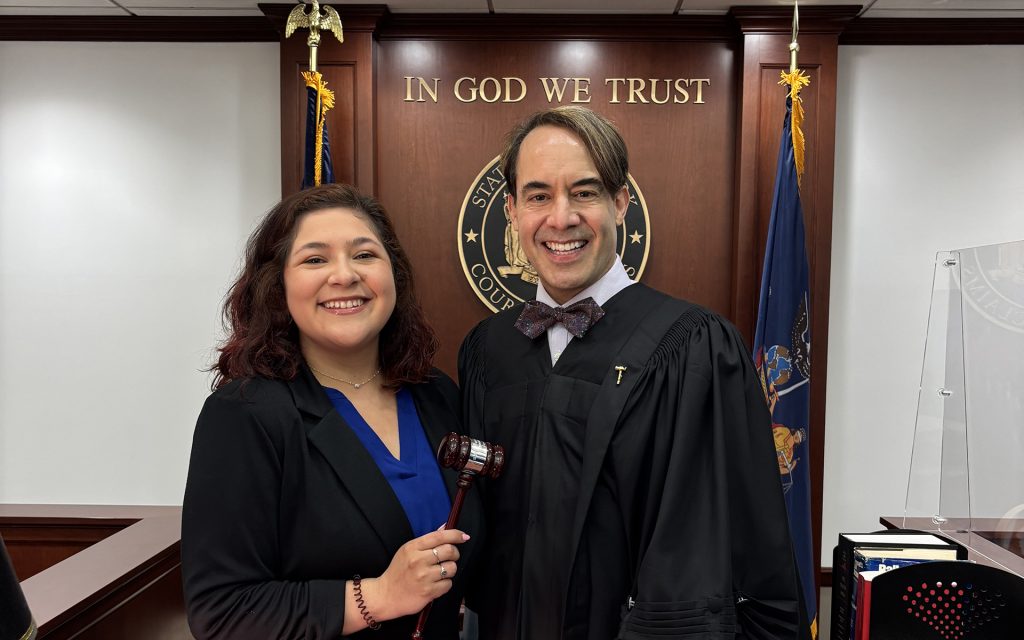
“I was thrilled when Judge Vargas asked me to help draft a memo recommending how to decide on a motion, and that set the tone for the kind of work he expected,” she says. “I also helped draft a decision for one of the trials, did research on pending trials, and my final project was a case where I wrote a decision by myself for review by the clerk and the judge.”
Bissell discovered The Sotomayor Program through an email Mary Kate Tramontano L’26 sent to the Women’s Law Student Association listserv, an opportunity that ultimately led her to work with district civil and criminal court judges in the Eastern District of New York in Brooklyn.
“It was awesome because I was able to observe a lot of different types of trials,” Bissell says. “I was assigned to a judicial clerk who helped me with whatever I needed. Getting to the end of my internship and seeing that I could write a full legal opinion was the best feeling ever.”
Meeting a Legal Legend
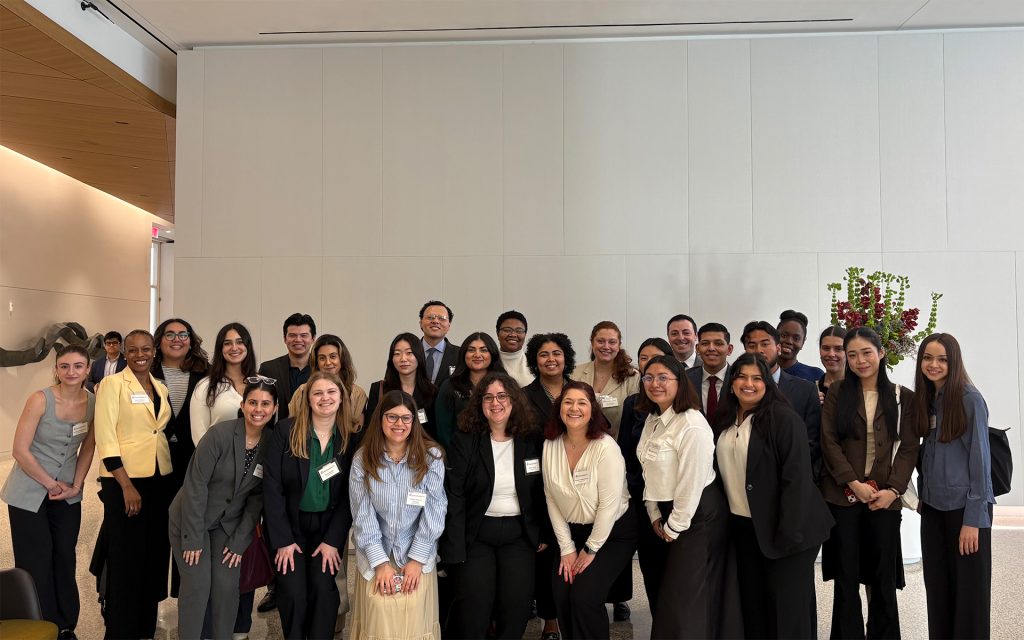
After a summer of learning the ins-and-outs of the courtroom, students were invited to an event highlighted by a visit from Sotomayor herself. Not only did the interns get to hear the Supreme Court justice speak, but they also had the chance to talk with Sotomayor and take photos with her.
“It was a full circle moment for 14-year-old Imari,” says Roque. “I shook hands and said hello to someone I’ve admired most of my life. It’s funny because she looked like someone who could be in my family. The experience really helped me understand that that could be me.”
Chavar was also awe struck by Sotomayor. “We took a group photo, and I was lucky enough to be placed right next to her! She asked me where I went to law school,” Chavar says. “The reason I’m in law school is largely inspired by Justice Sotomayor. When she went to the bench, I was in middle school, and I have a distinct memory that inspired me to go to law school. So it was a big deal to hear her wisdom. A majority of the students there were from underrepresented backgrounds in the legal field, and Justice Sotomayor was a beacon of hope and encouraged us to trust in the legal system despite all that’s going on in the world.”
“You read her opinions, and you know that she is incredible, but then you see her in action, and she is so eloquent,” says Bissell. “When I started law school, I was questioning my decision, and I think The Sotomayor Program helped reinforce that those in the legal field are making decisions that are impacting people’s lives. I know I want to be a part of that type of work.”
For more information, visit The Sonia & Celina Sotomayor Judicial Internship Program.