
Michigan firm gives “tech guy” a first-hand look at legal practice that combines science, technology and international law
When Austin Dewey L’26 found out his externship would take him to Copenhagen to present his patent research to the chief legal officer of an international corporation, he never expected his introduction to the city would include a last-minute dash to replace a suit the airline lost in his travels. But, Syracuse University College of Law taught him to think on his feet, and, in the end, he arrived dressed for success and well prepared to demonstrate the knowledge he had gained through his unique experiences in law school.
Combining Science, Technology and the Law
With an undergraduate degree in environmental science from Florida State University, Dewey thought he might be a marine biologist but changed his mind and headed to law school. He was particularly attracted to Syracuse Law for its Innovation Law Center (ILC), as well as the opportunity to pursue a career that touched on his interest in science and technology.
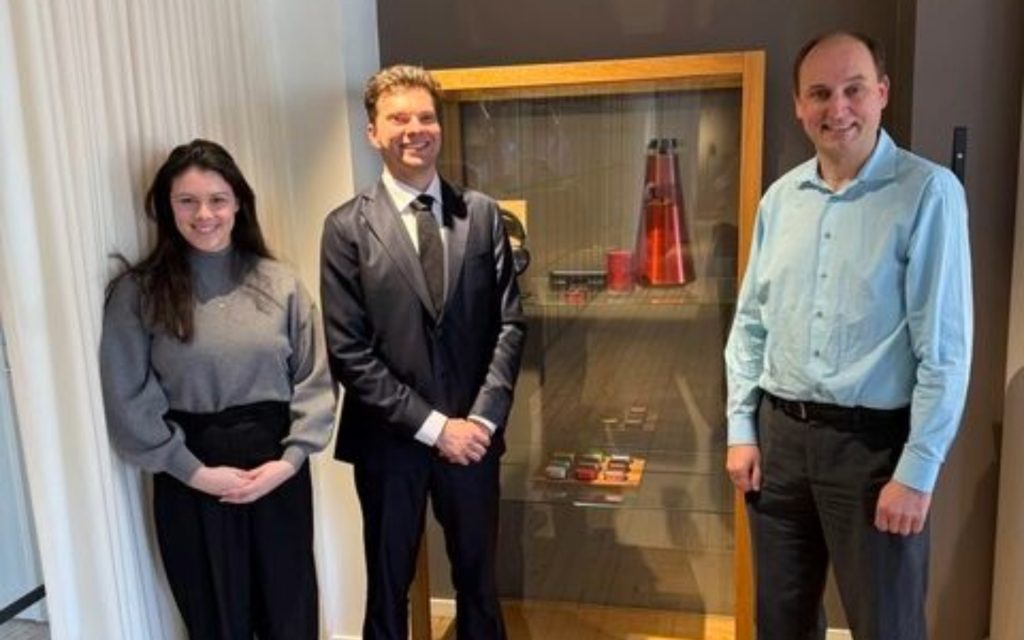
Last spring as a 3L, Dewey accepted an externship with Willard Quinn PLLC, a Michigan-based firm specializing in intellectual property law (IP). Through that externship he discovered an area he never knew existed before law school: patent law.
“My externship provided invaluable hands-on experience in this area of law, strengthened my research and analytical skills, and offered a unique glimpse into the global practice of IP strategy,” he says.
Dewey was tasked with research for one of the firm’s clients, Bang & Olufsen, a Danish manufacturer of audio and home entertainment products, as it explored expansion in U.S. markets. He spent months digging through the client’s existing patents, identifying potential infringers, and uncovering licensing opportunities that led to a freedom to market analysis.
Working remotely five hours a day in addition to his coursework at Syracuse Law was challenging but well worth it. “The externship experience was awesome, and ultimately I was able to identify three potential infringement claims upon Bang & Olufsen’s intellectual property,” he explains. “After that, I worked with the firm’s partners to help develop the best legal strategies for the client.”
Dewey created a detailed presentation outlining his findings and recommendations. The firm flew Dewey, along with another extern, and partners Kevin Quinn and Mark C. Willard, to Copenhagen to present to its chief legal officer and legal team.
“It was so exciting to not only show my work to the client first-hand but also have the chance to see how this process works in actual practice,” says Dewey of the three-hour solo presentation. “I assumed their legal team had all of this information in hand but was surprised my research was able to make them aware of some additional potential infringement that was going on.”
The brand’s partners asked a lot of strategic questions, and his research helped him supply answers with confidence. “Millions of dollars were potentially at stake for Bang & Olufsen, and it really struck me that the work I did was contributing toward their decision making. It was such an opportunity for me to confirm my interest in IP law.”
One thing that left a real impression on him was Bang & Olufsen’s take on how European countries viewed their legal systems. “It opened my eyes to a lot of differences, particularly how Europeans tend to be less litigious than Americans,” Dewey says. ”It was interesting to get that global perspective on the law.”
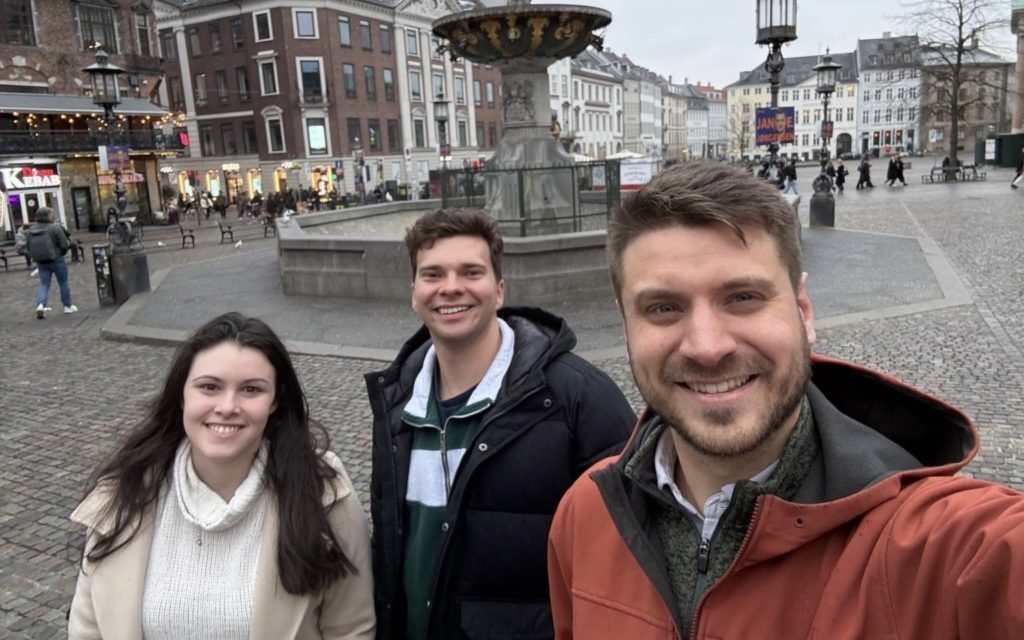
Dewey stayed in Copenhagen for an extra day, exploring an ancient castle, taking in the unique Scandinavian design and architecture, sampling amazing street food, and walking around the city’s historic canal systems — making the experience even more memorable.
Law School “on a Whim” Opened His Mind to IP
Dewey admits that he started law school “on a whim with an open mind to see what it could offer me.” He credits Brian Gerling L’99, executive director of the Innovation Law Center and professor of practice, as well as Distinguished Lecturer Dan Traficonte, for showing him ways to combine science and technology with the law.
Professor Traficonte is a “tech guy” like me and really helped me discover IP law, and Professor Gerling’s guidance at Syracuse Law’s ILC, where I was able to help real inventors protect their ideas, allowed me to see technologies I didn’t even know existed,” says Dewey, who spent two years of law school involved at the ILC and became a senior research associate.
Director of Alumni Relations Adrienne Lutz connected him with several alumni as career resources, which eventually led to the Willard Quinn opportunity. “It all added up to an outstanding experience, and I am grateful for the guidance I received.”
“Science and technology are some of the most competitive areas of the legal field right now,” Dewey adds.
“Syracuse Law understands that learning about the law in the classroom is only one aspect of a legal education, and seeing what’s done in actual practice adds another level. My externship at Willard Quinn was so impactful and proved to me how much I enjoyed this kind of day-to-day work. And I’ll never forget my visit to Denmark. IP, patents, and technology are an evolving area of the legal field that are going to be extremely important in the future.”