Around Syracuse Law

JDi Waivers Allow Greater Access to New York State Bar, In-State Legal Practice

“As a first-generation immigrant balancing work, education and personal responsibilities, the flexibility of Syracuse’s JDinteractive program was the only realistic way for me to pursue a legal education while remaining committed to my career and community,” says Sebastian Szczebiot L’25.

When Szczebiot decided to enroll in law school, he was the assistant director of the Susan B. Anthony Center at the University of Rochester. He chose Syracuse University College of Law’s JDinteractive (JDi) program because pursuing a law degree in a residential program was simply not an option. However, to practice law in New York State, he knew he would have to apply for a waiver establishing “undue hardship” from the New York Court of Appeals to sit for the state’s bar exam.

While graduates of the JDi program are currently qualified to sit for the bar in 49 of 50 states, New York’s restrictions on distance education do not allow graduates from hybrid/online programs to do so without such a waiver.

Abstract photo of man's hands leafing through a book and a laptop and leather briefcase on a desk in front of him.

“While New York state’s bar exam waiver requirement initially gave me pause, I saw it more as an administrative hurdle than a barrier,” explains Szczebiot. “I trusted that the bar authorities would recognize the seriousness and rigor of my JDi path.”

Szczebiot was successful in obtaining a waiver. Today, he is an associate at Nixon Peabody LLP, in Rochester, New York.

Syracuse Law has offered its American Bar Association-approved JDi program since 2019, one of the nation’s first two accredited hybrid/online J.D. programs, according to Teaching Professor Shannon Gardner, associate dean for academic programs at Syracuse Law. The JDi program allows students from across the country—and the world—to take classes and participate in other legal experiences through a hybrid/online format, giving greater access to more people who want to contribute to the legal profession.

While the ABA requires Syracuse Law to disclose to JDi applicants that they may not qualify for bar admission, it has not dampened enthusiasm from prospective students. Many intending to practice in New York have been successful proving undue hardship and moving forward with the bar exam.

“I pursued my law degree through the JDi program because of my career in public service, but I was troubled at the thought of leaving my career as a caseworker with the Cortland County (NY) Department of Social Services, and I did not know how I could take care of my family without an income,” says Megan K. Poole L’22.

“The hardship I brought to get a waiver included my desire to continue my career in New York State and become a lawyer for the Department of Social Services. And not allowing me to take the bar exam would have been such a disservice to the State of New York, especially at a time when we need a younger generation of attorneys more than ever.”

Poole received her waiver, and today is senior court attorney for the Hon. Beth O’Connor, family court judge, Cortland County, 6th Judicial District.

While every case is unique, undue hardship has been proven for reasons ranging from the financial need to continue working, family obligations, socioeconomic factors, spouses’ careers, essential community involvement and more.

“I decided to go the JDi route when I was applying to law schools because it was the most realistic option for me as a full-time professional who traveled often for work,” says Grace Terry L’24. “My undue hardship application detailed that I was a life-long resident of New York with a partner who not only has an established job working for the state but also a child with an Individualized Education Program through New York State public schools. My economic circumstances required that I work while in law school, and choosing Syracuse Law’s JDi program allowed me to take classes in the evenings while working during the day to support my family.”

Terry, too, was successful in getting a waiver, and today she is a staff attorney for Legal Services of Central New York.

“While New York state is the most limiting for online graduates to sit for the bar, it is my hope that as hybrid/online legal education continues to prove itself, the state will recognize that and reduce restrictions, giving greater access to those who wouldn’t otherwise be able to earn a law degree,” says Gardner.

“Programs like Syracuse University College of Law’s JDi give greater access to both legal education and the legal profession for many, so allowing our graduates to join the bar in New York is something I think everyone can get behind.”
More About JDi

New Board Member Brings Silicon Valley Insight to College of Law

Randy Haimovici L’00 has always challenged himself to find his passion. A self-admitted “average” student in high school, he joined the California Army National Guard and made a deal with himself: never get below a 3.0 GPA at the University of California, Davis, or join the military full time — the latter something he wasn’t eager to do.

Haimovici rose to the challenge, earning his undergraduate degree at UC Davis and setting his sights on a new goal. Believing he could make a greater impact by helping people through the law, he left the West Coast and enrolled at Syracuse University College of Law with plans to become a litigator.

“It was a practical way to interact with the world, have an exciting career, and still enjoy pro bono work and helping people,” he says. “I’ve never regretted becoming a lawyer.”

That path eventually led him to one of the most transformative companies of the 21st century: Uber. Today, Haimovici serves as associate general counsel, litigation and regulatory, for Uber, and, as of September, he is also a new member of the College of Law’s Board of Advisors.

Looking back at his law school foundation, he credits Syracuse Law’s Moot Court and Criminal Defense Clinic for developing his desire to pursue litigation and practice his legal talents in the courtroom.

“Syracuse was a great fit for me. I made three of my closest friends there, and it gave me the skills and opportunities to be an effective litigator,” he says, noting that Syracuse Orange sports were also an exciting draw.

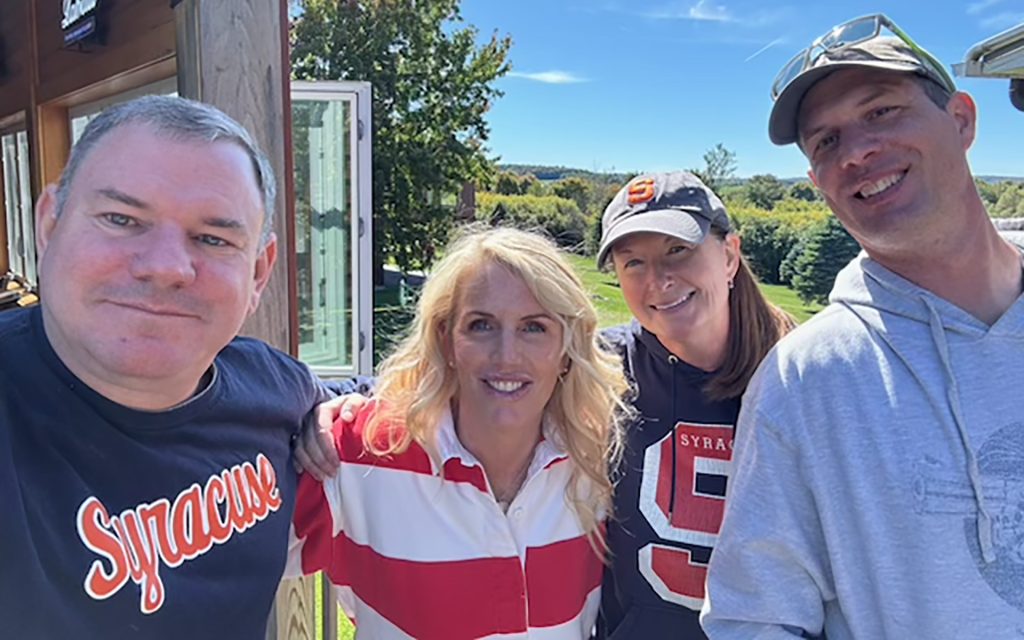
Randy Haimovici with Amy Zell L’00, Eileen Walsh L’00 and her husband, Jeremy Walsh in an outdoor photo
Randy Haimovici with Amy Zell L’00, Eileen Walsh L’00 and her husband, Jeremy Walsh.

After graduation, Haimovici worked in San Francisco as an associate at Sedgwick LLP and a year later joined Shook, Hardy & Bacon as an associate litigating commercial and liability cases in state and federal courts. Through these roles, he gained vital experience in trials and negotiating settlements. He also developed and chaired the firm’s first digital crime practice. In 2009, Haimovici was named partner, continuing to represent high- profile clients like Starbucks, Ford Motor Company, and Microsoft.

A few years later in 2016, he had the opportunity to join an emerging company that didn’t even exist when he graduated from law school: Uber. At the time, Uber was still finding its footing, having been established in 2009 and launching its first cars in 2011.

“It was as fast-paced as you could ever have imagined, which made me fall in love with being a lawyer all over again,” explains Haimovici, who joined Uber as director of litigation at a time when the company was going through some growing pains. “Sometimes, it was like going to lawyer bootcamp because the technology and the products were changing daily and the legal issues were, and are, incredibly complex.”

As Uber expanded, so did his career. Haimovici was named associate general counsel, U.S. mobility and Canada, in 2021. His work has since evolved to provide legal counsel to business teams and company executives, manage domestic litigation and regulatory matters, ensure that complex legal challenges are handled with strategic foresight, drive industry innovation, and challenge regulations that negatively impact mobility, delivery services, and business operations.

“In my early days here, my job was about whether Uber could exist and operate, and today it’s about how Uber functions. Uber wants to provide great service and minimize laws that negatively impact our industry or how we run our business,” Haimovici says.

“Uber has become a part of American culture, and we’re still protecting our interests under the law as we move into artificial intelligence and testing autonomous vehicles, which comes with its own set of legal challenges,” he adds.

Despite his success, Haimovici has never lost his passion for helping others. In fact, he implemented a national legal advice initiative for Uber drivers who were impacted by executive orders issued by the president.

“It’s a privilege to have a skill set to offer people who need it,” he says. “It’s something I’ve always been passionate about and intend to continue for the rest of my career.”

As a board member of the College of Law, Haimovici is committed to giving back.

“I’m looking forward to helping Syracuse Law best serve its students in keeping up with various changes, challenges, and opportunities,” he says, noting that he is also eager to be a resource to students pursuing more non-traditional careers. “I like to tell students to follow their passions, find their piece of this profession, and love every day of it.”

Pro Bono Student Spotlight: Kate Silverstrim-Jensen L’26

Kate Silverstrim-Jensen L’26

What type of pro bono legal service(s) have you performed?    

During my second year of law school, I did Pro Bono work through Volunteer Lawyer’s Project of CNY, or “VLP” in their Tenant Rights department. This program provides no-cost representation for qualified tenants facing eviction and judgement in the City of Syracuse’s special housing court. I began by observing court proceedings, conducting legal research, and completing application forms with prospective clients. Then, once I had a good understanding of the process, VLP agreed to sponsor my student practice order, which allowed me to represent clients and interact with the judge in court. 

What benefits did you experience from doing this work?

Through this experience, I learned how to manage a case from beginning to end. I completed intake and evaluation, researched claims, drafted and filed answers and counterclaims, negotiated with opposing parties, argued before the court, and ultimately made a real difference in our client’s lives. This was extremely rewarding and also grew my confidence exponentially. It’s one thing to watch other lawyers in court, but it’s a whole different experience to do it yourself and this experience proved to me that I could do that.  

What would you say to other law students considering pro bono work? Why would you recommend it to others? 

I would ask other law students considering Pro Bono, what are you waiting for? There literally isn’t a single down side to doing Pro Bono work. It’s a rewarding experience for everyone involved and has led to many more opportunities because it expanded my legal network, improved my confidence and experience levels, and gave me a positive legal reputation in the community.  

Pro Bono Student Spotlight: Alyssa Rivera L’26

Alyssa Rivera L’26

What type of pro bono legal service(s) have you performed?    

The summer after my first year of law school, I interned for the Federal Public Defender for the Western District of Texas. In my role as an intern, I was able to get hands-on experience and truly make a difference in people’s lives. I interviewed clients and their families, researched their cases, and worked with the appellate division to notify clients of any changes to the law that could help their case. However, what I found to be most rewarding was drafting sentencing memoranda and getting to humanize clients so that not only the judge, but everyone in the courtroom, understood that they are more than an indictment number. During my time here at Syracuse Law, I also participated in the Veterans Legal Clinic where I was able to provide pro bono services to unhoused veterans right here in Syracuse. Getting to give back to those who gave so much was truly an honor.  

What benefits did you experience from doing this work?

Working with individuals in the capacity that I have has been one of the most meaningful parts of my law school journey. Each case reminded me that every file placed on my desk contained a snippet of the life of a real person with a much larger story that deserves to be heard. Specifically, working in criminal defense taught me how powerful it can be to simply stand beside someone who feels forgotten by the system. I was able to be the person who treated them with dignity, listened to them without judgment, and help fight for their rights when many people thought they were undeserving of it. Getting to experience law in this raw of a setting is something that you simply cannot learn in class, and I believe that I am not only a better student, but person, because of it. 

What would you say to other law students considering pro bono work? Why would you recommend it to others? 

I would tell others to engage with pro bono work not because it might be a requirement for admission to a state bar, but because this work is the heart of the legal profession. As law students and future lawyers, we have both the skill set and the power to help people when they are at their lowest. Because of this, it is extremely humbling, inspiring, and grounding work that we should all be honored to do. 

Pro Bono Student Spotlight: Jude Unland L’26

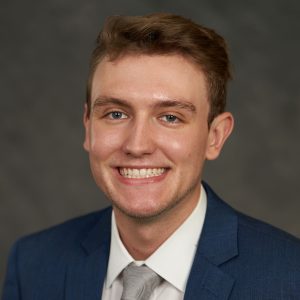
Headshot of Jude Unland in front of a gray background
Jude Unland L’26

What type of pro bono legal service(s) have you performed?    

I have spent my summers and falls during law school working with the Volunteer Lawyers Project of CNY or VLP for short. I have exclusively worked with the LGBTQ+ Rights Department where I have been lucky enough to help numerous trans and non-binary individuals across the state change their name to reflect their true identity. I also assist our department head, Mallory, with LGBTQ+ discrimination cases. 

What benefits did you experience from doing this work?

The benefits I have received from my experience with VLP have been great. Given the attack on trans people in the past year, the work I have done means even more to me now than when I began. As a member of the community I am serving, being able to literally change a person’s life gives me a personal sense of joy. Professionally and educationally, I have also been enriched. My two bosses, Tara and Mallory, have been professional mentors in a way I was not expecting. It is a wonderful feeling to be trusted with work in the way I have been because both of them took the time to invest in me in the beginning and teach me valuable practical skills such as interviewing and intaking a client, how to be persistent but most importantly, how to balance the comfort of the client and professionalism. I have become more confident in the work I produce and my correspondence with clients. Outside of my department, I am also surrounded by amazing attorneys who care and are always willing to help. The environment of VLP’s office is first things that made me want to continue doing the work. 

What would you say to other law students considering pro bono work? Why would you recommend it to others? 

I would greatly encourage other law students to do at least a semester or a summer of pro bono work. I guarantee you will not regret it. Even if you do not end up falling in love with the subject matter, you will get to positively impact real people’s lives and feel that impact. That feeling is immeasurable. Additionally, I think its pertinent to emphasize the importance of the work, especially at a time like this. These services are needed more than ever, and people are growing more and more desperate. Pro bono work helps to fill the need. 

Pro Bono Student Spotlight: Kate Turner L’27

Kate Turner L’26

What type of pro bono legal service(s) have you performed?    

Last summer, I worked with the Prince William County Public Defender’s Office, assisting attorneys in preparing for trial, conducting bond interviews at the Adult Detention Center, and drafting sentencing memoranda for indigent clients. 

During law school, I’ve had the privilege of providing pro bono legal services through the Syracuse University College of Law Housing Clinic, where I represent tenants facing eviction and housing insecurity. In this role, I’ve conducted client interviews, drafted motions and settlement agreements, and appeared in court on behalf of clients who otherwise might not have had representation. 

This summer, I’ll be joining the Legal Aid Society’s Wrongful Conviction Unit in Manhattan, continuing my commitment to public interest and client-centered advocacy.

What benefits did you experience from doing this work?

My pro bono experiences have shaped both my understanding of the law and my sense of purpose within it. Working directly with clients has shown me the power of listening and communication, which are skills that go beyond doctrine or procedure. I’ve learned how to translate complex legal processes into language that clients can understand and trust, which stems from my background in linguistics and my goal of making the law more accessible. Professionally, this work has strengthened my research, writing, and courtroom advocacy skills, but personally, it has reinforced why I came to law school in the first place: making legalese more understandable and approachable to my clients. 

What would you say to other law students considering pro bono work? Why would you recommend it to others? 

I would tell other law students that pro bono work is one of the most meaningful parts of legal education. It allows you to step outside of the classroom and see the law’s real impact on people’s lives. It’s also an opportunity to build professional confidence early in your legal career through meeting clients, drafting pleadings, and appearing in court under supervision. More than anything, it reminds you that the legal system is built for people, not just precedent. Whether or not you plan to pursue public interest law, pro bono work gives you perspective, empathy, and a sense of responsibility that will shape your entire career.

Pro Bono Student Spotlight: Jared Park L’26

Jared Park L’26

What type of pro bono legal service(s) have you performed?    

I spent a summer interning in the Criminal Appeals Department at Hiscock Legal Aid, where I drafted briefs, motions, memos, and correspondence on behalf of incarcerated clients to protect their rights throughout every stage of litigation. Last semester, I participated in the SU Criminal Defense Law Clinic, and I enjoyed it so much that I returned this semester as a Clinic II student. Through the clinic, I’ve had the opportunity to represent real clients in Syracuse City Court, handling misdemeanor and violation cases from arraignment to disposition. 

What benefits did you experience from doing this work?

These experiences confirmed that I want to build a career in public defense. They’ve given me meaningful courtroom experience before graduation and connected me with mentors who have shaped my career goals. 

What would you say to other law students considering pro bono work? Why would you recommend it to others? 

I encourage every law student to pursue pro bono work, especially through the clinics. There is no better way to learn than by doing, and no better use of our training than to serve communities who are too often overlooked by the legal system. 

Alumnus Finds Success Contributing to Seismic Shift in Technology

An entrepreneurial spirit, fascination with technology and interest in the law has taken Kevin Whittaker L’02 on a career path that has brought him to the heart of Silicon Valley, giving him the opportunity to contribute to complex legal issues that disruptive technology like artificial intelligence (AI) and big data has brought to businesses around the globe.

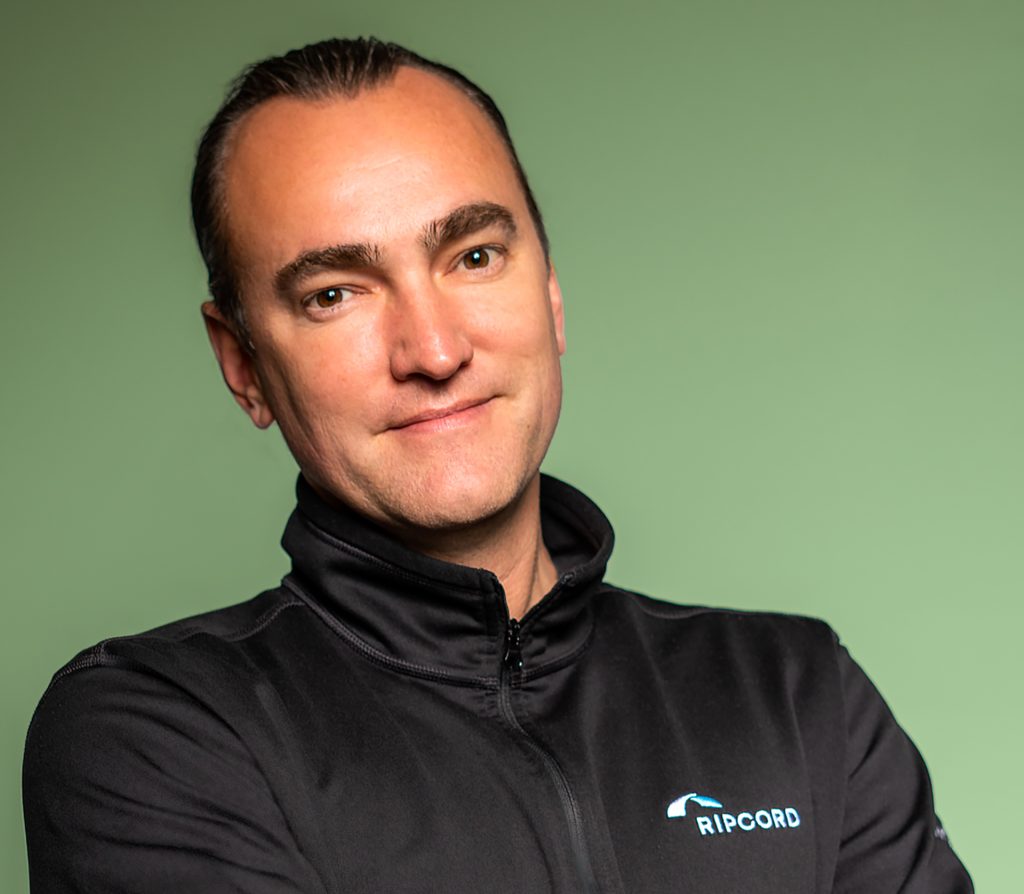
Headshot of Kevin Whittaker wearing a black Ripcord pullover in front of a green background

Whittaker has been an entrepreneur since he started selling candy at a profit to classmates in high school and college. While studying at Syracuse University College of Law, he convinced the law school to allow him to take some fashion design classes at the University’s College of Visual and Performing Arts. This led to him creating a line of T-shirts that eventually morphed into Blue Bunney Couture, a men’s neckwear line that kept Whittaker busy as a fashion designer for 10 years after graduating from Syracuse Law. At the same time, he was also practicing law.

Whittaker worked for several large firms on the West Coast, including Faegre Drinker; Reed Smith LLP; Baker McKenzie; and Orrick, Herrington & Sutcliffe LLP, where he found a real interest in defending and counseling tech companies in complex employment, financing and corporate matters.

Along the way, he met Alex Fielding and his team. Fielding is a group serial entrepreneur and founder of Ripcord Inc., a Silicon Valley-based company he started out of NASA technology with the mission to robotically extract meaningful data from mountains of paper records and digital documents that exist around the world.

Whittaker was fascinated by the work Ripcord was doing in the tech space, as it was the first to market with this technology, impacting a $62 billion document intelligence market. It is backed by leading investors, including Kleiner Perkins, Google Ventures, Lux Capital and Apple co-founder Steve Wozniak.

When Ripcord offered Whittaker the opportunity to join the company in 2021, he jumped at the chance to combine his interest in entrepreneurship, technology and the law by handling all of its legal work, including commercial agreements, investor financing, mergers, IP, cybersecurity and compliance initiatives.

“I’ve always been interested in the next move, so being a part of this kind of initiative is very exciting to me. I’m eager to collaborate with my team and help to build something even bigger,” he says of the company’s use of proprietary robotics, generative AI and Cloud software to help the world become paperless and extract meaningful and useful data.

Whittaker has been generous in sharing his knowledge and experience in this space with students at Syracuse Law.

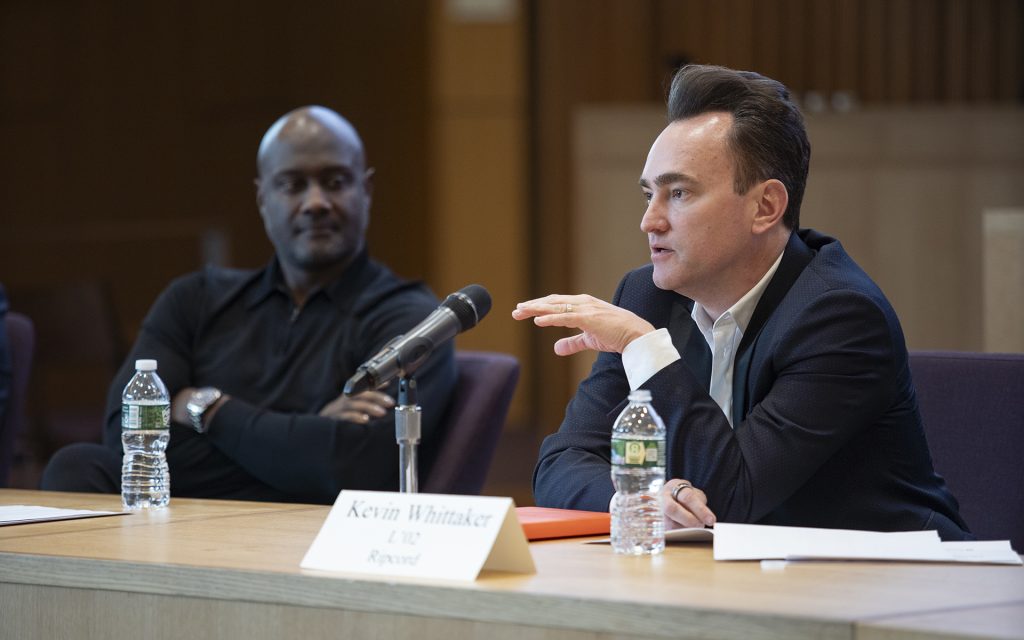
Last February, he took part in the College of Law’s Innovation Law Center Symposium, “Venture to Victory:  Pioneer Perspectives in Tech, Venture, and Private Equity.” He spoke on a panel of successful entrepreneurs, financial investors and legal experts discussing the challenges and opportunities that this disruptive technology is bringing to the legal field.

He notes that the “seismic shift” going on is creating greater expectations that new hires out of law school will be adept at the latest technology and ready to hit the ground running.

To that end, he has supported Syracuse Law and students aspiring to pursue technology and the law through the College of Law Scholarship and Financial Aid fund.

“I think that any kind of help I can offer the next generation of lawyers coming out of Syracuse is super important,” he says.

Looking back, Whittaker is pleased that he chose the non-linear route out of law school that brought him to a place where today he thrives.

He is also optimistic about emerging tools that are transforming the practice of law. “AI is coming for us, fast and furious,” he says. “It’s powerful and exciting and is going to impact every aspect of business and the law. Anyone who does not embrace it is going to be at a serious disadvantage. As for me, I’m embracing everything I can to push the boundaries of what we can achieve.”

First Latina Elected to Georgia State Assembly Receives LALSA Award for Advocating for Underrepresented Communities

Born in Mexico, Brenda López Romero L’11 spent most of her young life with her father in Georgia. She had to repeat kindergarten to improve her English, an experience that fueled her determination to not only acculturate but help advocate for others like her. Her parents always stressed that education was key to achievement, saying, “Go to school, and be somebody.” With that motivation, she became the first in her family to graduate from high school, complete a political science degree at Georgia State University and ultimately earn a law degree from the Syracuse University College of Law. 

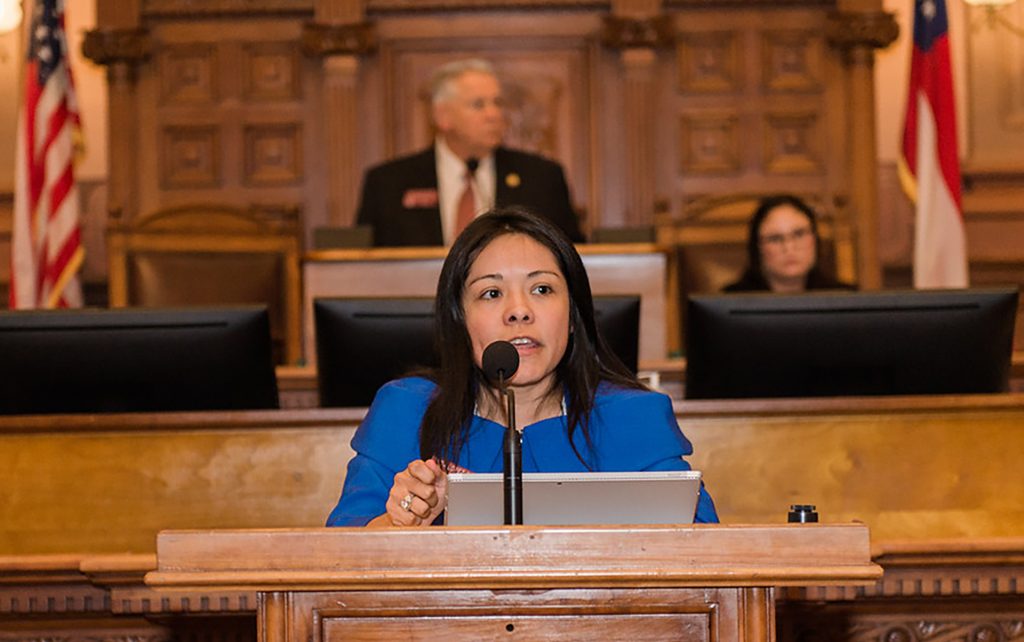
Brenda Lopez Romerez speaks into a microphone at a podium in the courtroom, with two people seated behind her

López Romero has not only become “somebody,” but she has made history—as the first Latina elected to the Georgia General Assembly, a position she held from 2017 to 2021. There, she sponsored 72 bills and served on committees related to education, retirement, state planning and community affairs. From 2021 to 2025, she served as senior assistant district attorney for the Gwinnet County (GA) district attorney’s office and today is an immigration attorney at The Lopez Firm. However, she is currently running again for the state assembly to regain her seat in the 2026 election.

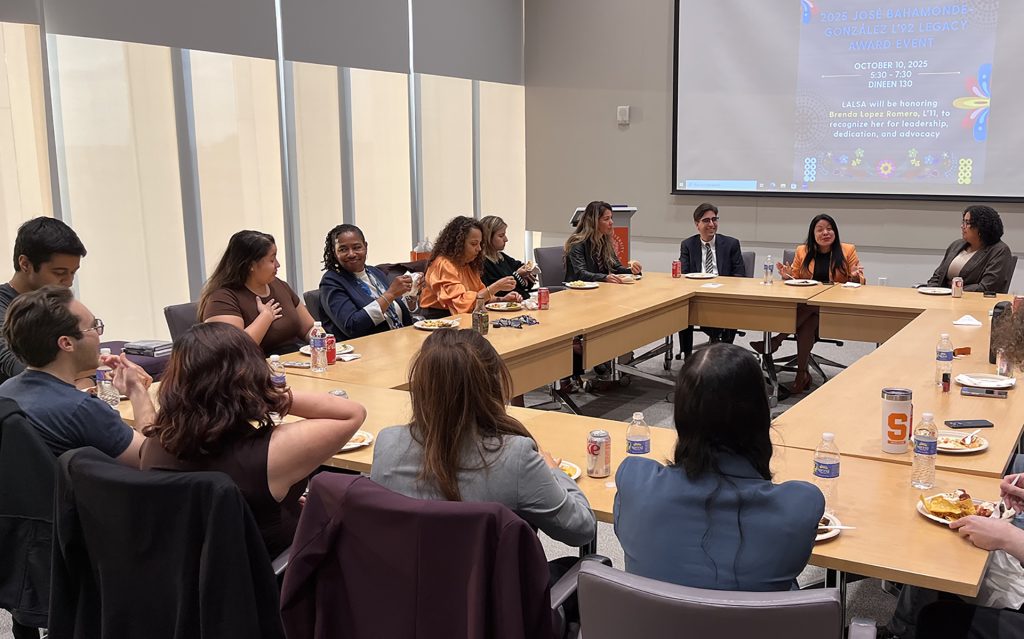
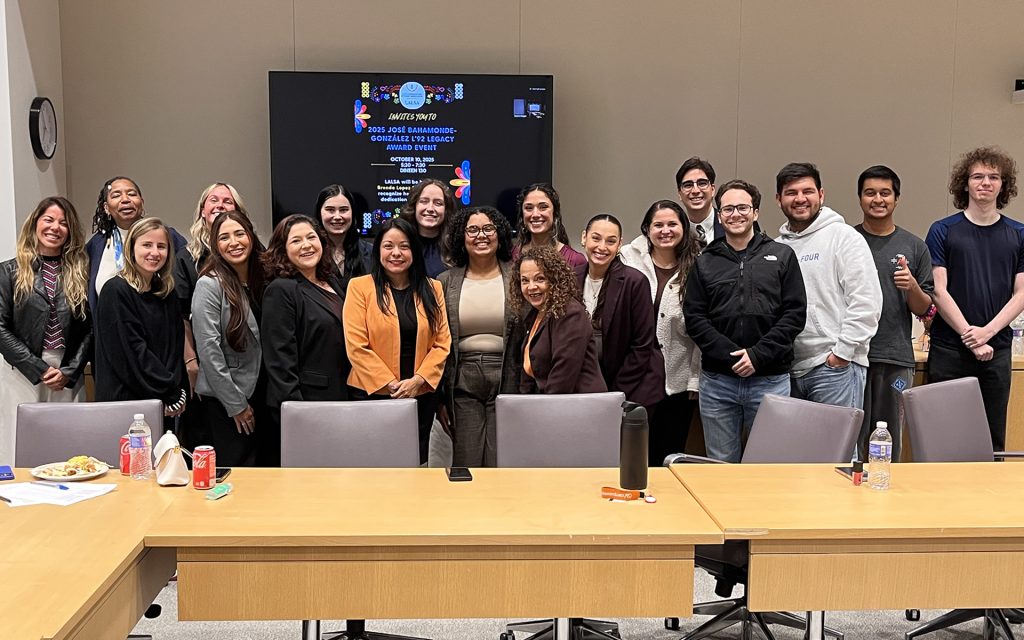
In recognition of her contributions, López Romero was presented with the José Bahamonde-González L’92 Legacy Award from the Latin American Law Students Association (LALSA) at Syracuse Law on Oct. 10, 2025. This award recognizes alumni who have significantly contributed to their communities and achieved excellence in their careers, while celebrating and recognizing the efforts that members of the Hispanic American community have made in the legal field. 

Brenda López Romero speaks with students at the 2025 José Bahamonde-González L’92 Legacy Award Event

“It is no wonder that Brenda López Romero was such a strong contender for the José Bahamonde-González Legacy Award,” says Syracuse Law Teaching Professor Suzette M. Meléndez, “From the moment that she stepped into our law school, Brenda always presented as someone with great determination and civic purpose. She knew that her decision to go to law school was to engage in the greater community seeking to improve the lives of others while using the rule of law to seek equity.”

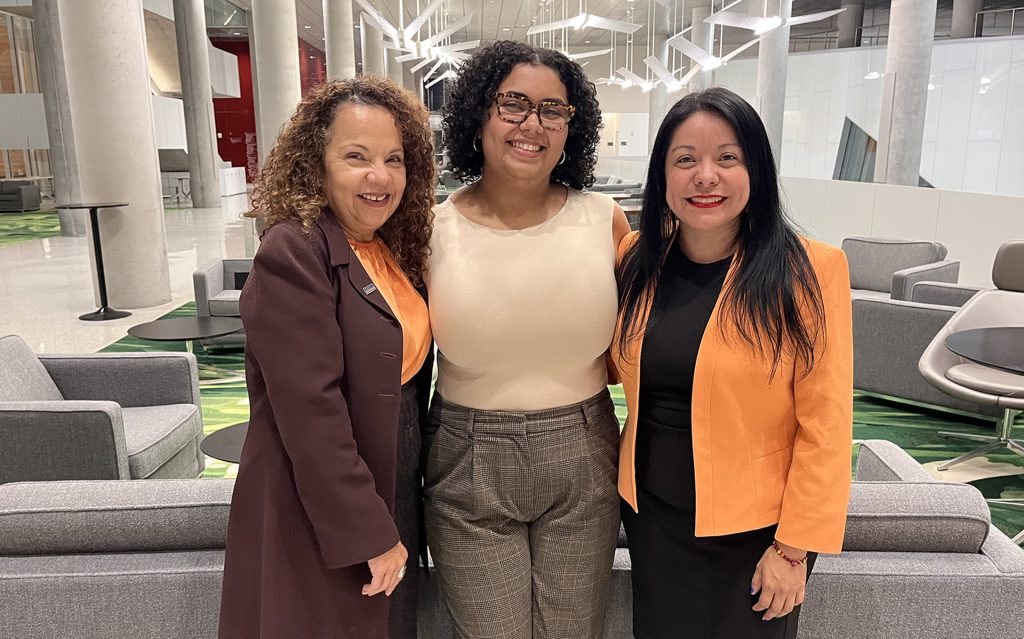
Syracuse Law Teaching Professor Suzette M. Meléndez and LALSA President Imari Roque L26 celebrate Brenda López Romero.

Inspired by her father’s attorney—who once told her she’d make a good lawyer—López Romero set her sights on the law and never looked back. Her later entry into state government came from the idea that she could make a bigger impact if she had a voice that could open more doors for more people. Through her work, López Romero has been an advocate not only for the rights, protection and education of Latinos, but for those from many different backgrounds.

“I learned U.S. history and civil rights in school, and it showed me that I am here because other groups and communities went through struggles that made it possible for me. So I take this work very seriously,” she says. “When you advocate for a particular group or issue, you’re trying to create a more positive quality of life that ends up benefitting everyone.”

Receiving an award from her alma mater is very meaningful to López Romero, particularly because she was selected by the LALSA students. 

“It’s very significant to me and correlates to what the next generation of young people are going to be able to achieve,” she says. “I want to be a mentor and a memorable person in someone else’s life and know that I helped someone as many people have helped me along the way. The José Bahamonde-González L’92 Legacy Award is recognition that I’m doing just that. That little girl who came to America and spoke no English has a voice now, and I intend to keep using it.”

Criminal Law, Procedure, and Policy Speaker Series (2025-26)

This year’s Criminal Law & Policy Speaker Series connects students with top legal minds — from scholars to practitioners — tackling real-world challenges in criminal justice. It’s a chance to hear, question, and engage with those shaping the field. The series is organized by Associate Dean for Faculty Affairs Lauryn Gouldin with support from the Laura J. and L. Douglas Meredith Professorship Program, with many events hosted in partnership with the Criminal Law Society.

PresentationSpeaker and Date
The Role of a ProsecutorThe Honorable Margaret Garnett, U.S. District Court Judge for the Southern District of New York 

August 20, 2025
Representing Police Officers in Section 1983
Litigation
Syracuse University College of Law Professor Katherine Macfarlane

September 3, 2025
Representing AdolescentsAlan Rosenthal L’74, Veteran criminal defense and civil rights attorney

September 22, 2025
A Firsthand Account of the Challenges of Reentry: “Welcome Home from Prison, This Won’t Be Easy”The Honorable Mitchell Katz, U.S. Magistrate Judge for the Northern District of New York, in Conversation with Dewayne Comer

September 29, 2025
Reforming Sixth Amendment RightsLisa Bailey Vavonese, Director, Research-Practice Strategies, and Matt Watkins, Senior Media & Policy Advisor, Center for Justice Innovation

October 6, 2025
The Value of Holistic Criminal DefensePiyali Basak, Managing Director at Neighborhood Defender Service of Harlem

October 15, 2025
Supreme Court Preview – Criminal CasesLisa Peebles L’92, Federal Public Defender for the Northern District of New York

October 17, 2025
Networked Information Technology in Criminal LawProfessor Jessica Eaglin, Cornell University School of Law

November 5, 2025
Prior conviction impeachment: what is it, why is it harmful, and might it be abolished?Professor Anna Roberts, Dean’s Research Scholar, Brooklyn Law School

November 10, 2025
Criminal Law Society’s Forensic Series, in partnership with Onondaga County Forensic Laboratories and Syracuse University’s Forensic and National Security Sciences Institute, features sessions on Biology & DNA; Firearms & Latent Prints; and Drug Chemistry, Arson, & Digital EvidenceJanuary 29 ( Biology & DNA), February 12 (Firearms & Latent Prints), and February 26 (Drug Chemistry, Arson, & Digital Evidence)
Civil Rights Lawyering and Propaganda in a Time of Rising AuthoritarianismAlec Karakatsanis, Founder and Executive Director, Civil Rights Corps and Author of Usual Cruelty and Copaganda

February 18, 2026
The Tenacious Power of Constitutional TortsProfessor Joanna Schwartz, UCLA School of Law

April 16, 2026