News

Professor William C. Banks Mulls Election Scenarios in Medium and AP

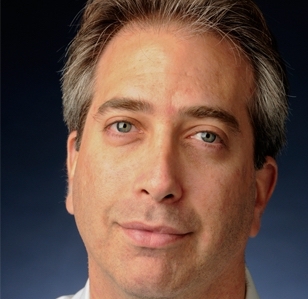
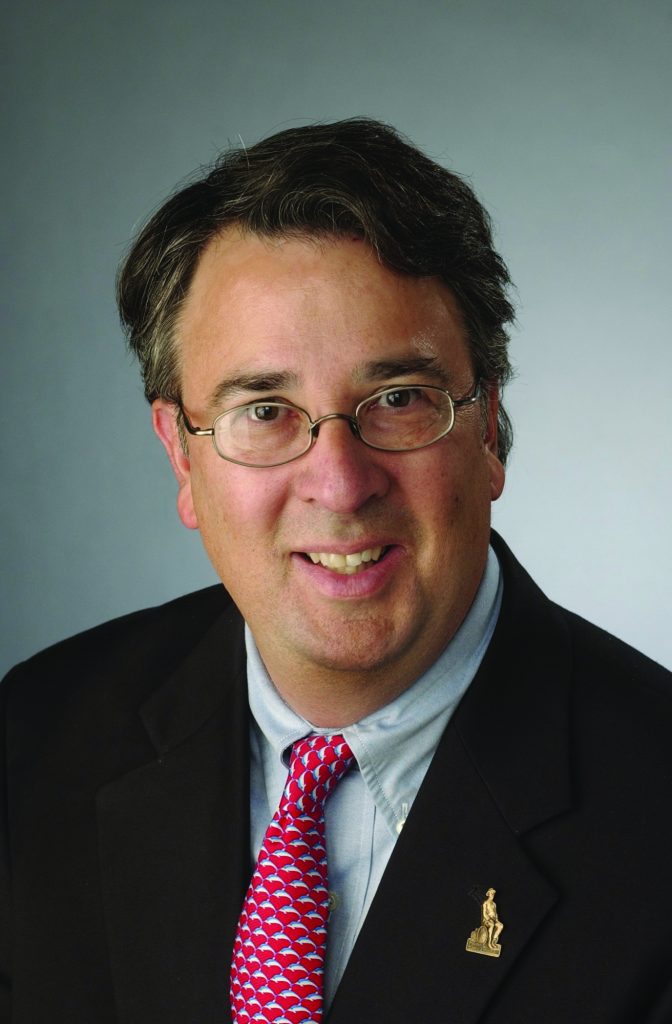
Professor of Law Emeritus William Banks

Will There Be Blood?

(Medium | Oct. 26, 2020) In his inaugural address four years ago, President Donald Trump declared a crusade against the “carnage” he said his predecessors had wrought on the nation, lining their own pockets while creating a nation of “forgotten men and women.” Five hours later, fired up and triumphant, Trump filed for re-election, the earliest incumbent to do so in memory. So it was that Trump set the stage for what a lot of people thought was him governing, but in effect has been the most foreboding, nerve-frazzling — and by far the longest — re-election campaign in modern U.S. history.

Just a week away from its climax, some of the country’s most sober voices say one cost of Trump’s term-long barrage of grievance and accusation is the possibility of civil unrest on and after Election Day. There is always the chance that fraught tempers will dissipate, either by luck or a landslide one way or the other that imposes a forceful quiet on the contest. But, with an animated Trump issuing daily allegations of a sinister plot to unseat him, and supporters of both sides apprehensive of how far the other is prepared to go to win, the fear is that Americans will erupt in the worst political violence since Jim Crow …

… William Banks, a law professor at Syracuse University, said the president’s actions reflect mere “Trumpian rhetoric, played to maximum volume for his base.” Perhaps, though we won’t know until we see his reaction should he be defeated next Tuesday …

Read the full article.

An Election Day Role For National Guard? Maybe, But Limited

(AP | Oct. 30, 2020) Federal laws and long-standing custom generally leave the U.S. military out of the election process. But President Donald Trump’s unsubstantiated warnings about widespread voting irregularities have raised questions about a possible military role.

If any element of the military were to get involved, it would likely be the National Guard under state control. These citizen soldiers could help state or local law enforcement with any major election-related violence. But the Guard’s more likely roles will be less visible — filling in as poll workers, out of uniform, and providing cybersecurity expertise in monitoring potential intrusions into election systems …

… William Banks, professor at Syracuse University College of Law, said that sending uniformed troops to the polls, including the Guard, would be unwise.

“The overriding point is that we don’t want the military involved in our civilian affairs. It just cuts against the grain of our history, our conditions, our values, our laws,” he said …
Professor William C. Banks Helps Military Times Explain Martial Law

Professor of Law Emeritus William Banks

How the president could invoke martial law

(Military Times | Oct. 23, 2020) Throughout 2020, America has faced a global pandemic, civil unrest after the death of George Floyd and a contentious election. As a result, an influx of fear about the possibility of the invocation of martial law or unchecked military intervention is circulating around the internet among scholars and civilians alike.

“The fear is certainly understandable, because as I’m sure you know, martial law isn’t described or confined or limited, proscribed in any way by the Constitution or laws,” Bill Banks, a Syracuse professor with an expertise in constitutional and national security law, told Military Times. “If someone has declared martial law, they’re essentially saying that they are the law.”

What is ‘martial law’

In short, martial law can be imposed when civil rule fails, temporarily being replaced with military authority in a time of crisis. Though rare, there have been a number of notable U.S. cases where martial law came into play, including in times of war, natural disaster and civic dispute — of which there has been no shortage in 2020.

While no precise definition of martial law exists, a precedent for it exists wherein, “certain civil liberties may be suspended, such as the right to be free from unreasonable searches and seizures, freedom of association, and freedom of movement. And the writ of habeas corpus [the right to a trial before imprisonment] may be suspended,” according to documents from JRANK, an online legal encyclopedia …

Read the full article.

2Ls Penny Quinteros and Margaret Santandreu Win 2020 BSK Competition

Congratulations to 2Ls Penny Quinteros and Margaret Santandreu, winners of the 2020 Bond, Schoeneck & King Alternative Dispute Resolution (BSK ADR) Competition. More than 70 watched the final on Zoom, with Quinteros and Santandreu prevailing over the team of 3L Kylie Mason and Shannon Wagner. 

For their final case, argued on Oct. 22, 2020, students negotiated the validity of a sales agreement for a horse, Beautiful Pegasus, after he was stolen from the farm where he was being cared for prior to delivery. Teams had to identify who would be held liable for the theft, and they advocated for a full reimbursement or specific performance.

Third year, second year, LL.M., and JDinteractive online law degree program students took part in the competition. At the final, Mason was named Best Advocate, while Quinteros becomes the first JDinteractive student to win a College of Law intracollegiate advocacy competition. 

“Despite the challenges that a virtual competition brings, students put their creativity to the test and vigorously advocated for their clients,” says 3L Frances M. Rivera Reyes, BSK ADR Negotiation Competition Director. “Without a doubt, we have some incredibly talented advocates in our school.”

Final judges were The Hon. Joanne F. Alper ’72, a retired judge for the Circuit Court of the Seventh Circuit of Virginia; James L. Sonneborn, of Bousquet Holstein PLLC; and Brian Butler L’96, a managing member for Bond, Schoeneck & King PLLC.

BSK ADR 2020 Competition Finalists

Institute for Security Policy and Law Experts Featured in JNSLP COVID-19 Special Issue

As the novel coronavirus swept the globe in late 2019 and early 2020, a full-blown pandemic quickly and significantly affected the United States. The public health crisis worsened in the winter and spring of 2020, and it soon became clear that national security institutions and processes were being tested, sometimes in new and unique ways.

This is the background of a special COVID-19 issue of the Journal of National Security Policy and Law, edited by Professor Emeritus William C. Banks: “A stunningly good collection of short articles surveying and detailing many of the most vexing legal and policy problems associated with the pandemic,” Banks explains.  

“The articles have been written by internationally recognized subject matter experts who have experience in government, the courts, the cyber domain, public health, human rights, international organizations, domestic military policy and policing, journalism, and several other disciplines,” Banks adds. “Some of the articles take a granular look at aspects of the pandemic, while others widen the lens to look at such issues as leadership.”

Among the articles, Syracuse University Institute for Security Policy and Law Director the Hon. James. E. Baker discusses “Leadership in a Time of Pandemic” in the journal’s lead article, as well as the importance of using the Defense Production Act to its fullest extent during a health crisis.

In his article, Professor Mark P. Nevitt evaluates the responses of different branches of the military and argues that the current public health crisis could be an opportunity to reevaluate the governance of domestic military operations

The Special Issue groups its articles into categories. The first focuses on who is in charge. A second grouping examines pandemic responses from the perspectives of health, privacy, military, and emergency law. A third concerns information from the perspectives of transparency and journalism. A final section includes an important comparative and international law perspective on cybersecurity and the pandemic.

MarketWatch Discusses Google Antitrust Suit with Professor Shubha Ghosh

Professor Shubha Ghosh

(MarketWatch | Oct. 20, 2020) The Justice Department formally charged Alphabet Inc.’s Google with antitrust violations Tuesday, the first major action against Big Tech for its staggering market power and valuations.

“Google is a monopolist in the general search services, search advertising, and general search text advertising markets,” according to the Justice Department’s complaint, filed in federal court in Washington, D.C., on Tuesday morning. “Google aggressively uses its monopoly positions, and the money that flows from them, to continuously foreclose rivals and protect its monopolies.”

Deputy Attorney General Jeff Rosen said Tuesday morning that Google GOOG GOOGL was charged with violating the Sherman Act with its search and search-advertising businesses after a 16-month investigation …

… The Justice complaint does not portend an onslaught of legislation against tech companies but could signal consumer-protection laws down the line, Shubha Ghosh, a law professor specializing in tech issues at Syracuse University, told MarketWatch …

Read the full article.

Professor Roy Gutterman L’00: The Right to Vote Is “The Essence of a Democratic Society”

Professor Roy Gutterman

(Syracuse Post-Standard | Oct. 22, 2020) Four years ago, more than 130 million Americans voted in the presidential election. Through the swirling chaos of this year’s election, experts predict an even more robust voter turnout.

So far, two weeks before the election, 25 million have already voted, largely attributed to both the heightened interest in the election and the Covid-19 crisis. Locally, early voting opens on Saturday at six locations throughout Onondaga County. Whether it is braving lines and social contact at a polling places on Nov. 3, or casting an absentee ballot by mail, will you be one of those voters?

Though much of the attention is focused on the presidential election, and for good reason, there are congressional and state legislative races and local elections on the ballots. The “down-ticket” races and issues may lack the glitz, glamour and gore of the national election but they still play an important role in the democracy and governmental operations. The lower-ticket races determine everything from the composition of Congress to your local government officials, as well as special ballot issues.

The right to vote has been a hard-fought right that embodies the most basic part of the democratic system: choosing the people and officials who will design, set and enforce laws and public policy, and defining what our society stands for. The right to self-governance through public participation — voting — is so vital, the Constitution and a body of federal and state laws ensure and protect the right to vote …

Read the full article.

Professor Roy Gutterman L’00 Challenges Recent “Censorship” by Social Media

Professor Roy Gutterman

(WAER | Oct. 16, 2020) A Syracuse University Newhouse Professor is questioning decisions by Facebook and Twitter to limit access to an article that contained unverified sources and information about Joe Biden’s son.  

“Regardless of how you feel about the story, its sourcing, or even the politics behind it, it’s not a favored practice for many of us to have other people decide what we can and can’t read or view.” said Roy Gutterman, the Director of the Tully Center for Free Speech. “I’m kind of disappointed to see that this article was going to be blocked. I’m always in favor of letting consumers and citizens make judgements on their own” …

Listen to the segment.

Interdisciplinary Approaches to Elder Justice: Unlocking the Potential of Restorative Practices

VIRTUAL CONFERENCE | OCT. 15-16, 2020 | 2-6 p.m. EST

Conference Program

A symposium of international and interdisciplinary experts in the fields of restorative justice and elder abuse designed to foster collaboration, exchange ideas, and develop best practices.

The program will feature presenters and accomplished practitioners from around the world in the fields of social work, law, medicine, nursing, government, and psychiatry.

Learn about cutting edge projects around the world, discuss the strengths and challenges of restorative models in this context, engage in small group discussions about best practices, and participate in the circle process.

Featured speakers include:

  • Jennifer Llewellyn, Professor of Law; Yogis and Keddy Chair in Human Rights Law, Dalhousie University Schulich School of Law, Halifax, Nova Scotia
  • Chris Marshall, Diana Unwin Chair in Restorative Justice, University of Victoria School of Government, Wellington, New Zealand

Coordinators

  • Professor Mary Helen McNeal, Syracuse University College of Law
  • Dr. Maria Brown, Syracuse University Aging Studies Institute

Agenda

To view the agenda, please click here.

Registration

Registration for the conference has closed. For more information please contact Maria Brown at mbrown08@syr.edu.

Sponsors

Professor Peter Blanck: Absentee Ballots Should Be Accessible, Especially During COVID-19

Professor Peter Blanck

An accessible absentee ballot is crucial for blind and disabled Iowa voters, advocates say — especially in COVID-19 era

(Ames Tribune | Oct. 9, 2020) Don Wirth has been legally blind for 25 years. At 70 years old, he’s at higher risk for COVID-19, so instead of going to the polls and using an accessible voting machine, he voted absentee during the primaries. His wife filled out the paper ballot for him.

“I have great confidence that she’s going to fill it out the way I want her to,” Wirth, of Ames, said. 

But Wirth knows not all blind or otherwise disabled people have a loved one they can trust to help cast their vote. And, he believes, no Iowan should be forced to surrender their privacy to exercise their constitutional right. 

“Why shouldn’t we have the same access that sighted people do when there are solutions out there that are readily available?” Wirth said …

… Peter Blanck, a law professor at Syracuse University, disagrees. Blanck has written multiple books on the ADA, served on various federal disability commissions and edits the Cambridge Disability Law and Policy Series.

“Title II of the ADA requires state and local governments to provide meaningful and equal access to all the services that they provide,” Blanck said. “A reasonable accommodation would not have to be approved through the Legislature because that’s required under (federal) law” …

Read the full article