This year, 2020, marks the 125th anniversary of the founding of the College of Law. Today, as in a number of those prior years, the College faces global, societal, demographic, and technological challenges, which the coronavirus pandemic has brought into sharper focus and accelerated.
Yet, in the face of these challenges, the College has not only persevered but has grown in stature and relevance because of its pioneering efforts and a culture of innovation. The 2020 Yearbook highlights a number of innovations that have occurred over the rich history of the College, as well as the remarkable contributions alumni, faculty, and students have made to the legal profession and beyond. I would like to underscore two.
Syracuse University, through the work of disability rights pioneer Dr. Burton Blatt, has been a leader in humanizing services for people with disabilities. Today, the College of Law, thanks to work of the Burton Blatt Institute and Director and University Professor Peter Blanck—as well as the scholarship of professors Arlene Kanter and Robin Paul Malloy, among others continues to pioneer research and scholarship regarding not only how persons with disabilities are viewed and treated by society but also how laws, such as the American with Disabilities Act, can function as a force for change.
Research by BBI has been instrumental in helping to shape policy for the promotion of inclusion opportunities. Similarly, Professor Kanter’s Disability Law and Policy Program and the Disability Law Clinic provide hands-on experience for students, here and abroad, while Professor Malloy has written extensively on the intersection of disability law and land use, as a way to ensure greater accessibility within our communities. The importance of these efforts to provide a more inclusive and accessible society cannot be understated.
“JDi has enabled our faculty to develop a deeper understanding of the multiple dimensions for effective online learning, far in advance of other institutions.”
Among the communities that are facing dramatic challenges due to the pandemic are institutes of higher education in general, and legal education in particular. In fact, their challenges began well before the pandemic. Traditional job opportunities for law school graduates have been reduced as firms downsize, leading in part to a reduction in the number of applicants to law schools. The landscape is ever changing.
The shifting landscaping creates pressure on all law schools to find innovative ways to compete. Our JDinteractive program—developed before the pandemic—has placed us at the forefront of online legal education now that it is experiencing a paradigm shift. JDi has enabled our faculty to develop a deeper understanding of the multiple dimensions for effective online learning, far in advance of other institutions. That effort, along with the immediate success of the program, has made the College a much sought-after resource for other institutions across the country as they try to grapple with the pivot toward remote learning.
These and our other extraordinary achievements over the past 125 years could not have come about without the dedication and persistence of the College community of alumni, faculty, students, and friends over these years. Your unwavering commitment to the College, especially in these challenging and difficult times, is a testament to the role the College has fulfilled and will continue to fulfill in preparing generations of thoughtful, articulate, passionate, and compassionate leaders both within and outside our profession.
On behalf of the Board of Advisors and the faculty and students at the College today—and all those who will follow—I want to thank you for your generosity and support.
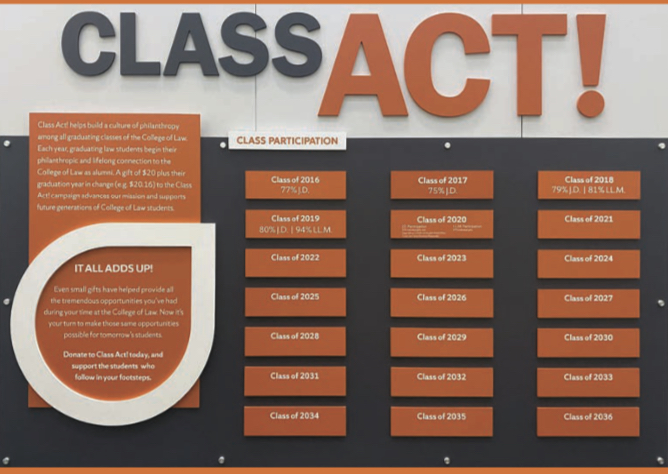
In Fall 2015, then-J.D. Class President Dustin Osborne L’16 and the Class of 2016 launched the College of Law’s first-ever Class Act! campaign, buoyed by the support of College of Law Board of Advisors Member Alan Epstein L’74.
A University-wide senior class giving campaign, Class Act! encourages students to make their first-ever gift to the University a symbolic amount in honor of their class year—$20.21, for the Class of 2021. We hope these gifts will be the first of many more as our students graduate, join our alumni family, and build their careers.
Five years later, the tradition continues, and—as with other aspects of the student experience at the College of Law—it grows in innovative ways.
A Historic Class Gift, and a New Participation Record for LL.M. Students
In spring 2020, the University suspended the Class Act! Campaign, in deference to students and in recognition that they were facing unforeseen financial and personal challenges due to the COVID-19 pandemic. By that point, led by then-3L Class President Aubre Dean L’20 and the Class Act! Giving Committee, J.D. students had achieved a 32% giving participation rate.
Monetary gifts by students to any law fund of their choosing qualify for their Class Act! participation. Usually, most students elect to designate their gifts to the Law Annual Fund or the Scholarship and Financial Aid Fund. But this year—making the best of an unusual situation— students voted to pivot their focus from a campaign of individual gifts to a class gift using funds raised collectively by the class earlier that year.
This new gift was earmarked for ’Cuse Law Cares, an emergency fund for College of Law students adversely impacted by the pandemic. For their part, the LL.M. Class of 2020, led by Betania Allo LL.M.’20, had already achieved a record breaking individual Class Act! giving participation rate of 97%.
All these achievements have been recognized on the Class Act Giving Wall in the Travis H.D. Lewin Advocacy Commons in Dineen Hall. We are grateful for the generosity and philanthropic leadership of both the J.D. and LL.M. classes.
Class of 2021: A Tradition Reimagined
As of November 2020, the Class of 2021’s campaign is already well underway. The class voted to expand the scope of its campaign by adding new options for giving: donations of basic needs items to Hendricks Chapel and/or donations of casebooks to the Law Library for use by future law students, along with the traditional monetary gift.
The class will recognize these new giving options along with the traditional philanthropic gifts in its Class Act! participation rates. This is new territory for Class Act!, driven by students’ desire to leave a unique and meaningful legacy.
Best wishes to the Class of 2021 for a successful campaign!
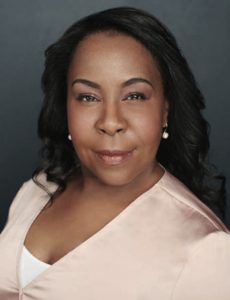
Felicia Collins Ocumarez L’98, G’98—who received the 2020 Black Law Students Association (BLSA) Legacy Award at the Alumni of Color Award Ceremony during Law Alumni Weekend (LAW)—has generously spearheaded an effort to establish a new scholarship to expand diversity at the College of Law.
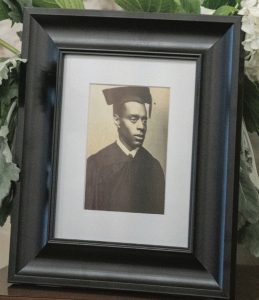
This scholarship initiative honors William Herbert Johnson L’1903. Johnson was the first African American to graduate from the College of Law. With a steady call for action during LAW, College of Law alumni and friends have reached their first fundraising target of $150,000.
“I thank Felicia Collins Ocumarez for her extraordinary leadership and generosity in spearheading this scholarship at the College of Law. This is a transformative investment in diversity and equity whose benefits will ripple out into the legal profession and society at large,” says Dean Craig M. Boise.
Syracuse University Trustee and College of Law Board of Advisors Member Vincent Cohen Jr. L’95 says, “I am proud of the role my father, Vincent Cohen L’60, played in the diversification of ‘Big Law’ back in the early 1970s and I continue to build on his belief that the legal profession needs to reflect the people it serves,” says Cohen Jr. “With this new scholarship, the College of Law is set to further expand the diversity in the profession by attracting the best and brightest aspiring Black attorneys. I am proud to be a part of this urgent equal access to justice movement.”
“Felicia Collins Ocumarez is the epitome of a trailblazer who advocates for the Black community and does so with tenacity and excellence. I am grateful for her support of the Black Law Student Association,” says 2L Mazaher Kaila, President of the Black Law Student Association.
To support this scholarship, contact Assistant Dean for Advancement and External Affairs Sophie Dagenais at 315.560.2530 or sdagenai@law.syr.edu.
The Attorney Who Represented the Ukrainian Whistleblower Describes His Path from Syracuse to the Impeachment of a President
In August 2019 a government whistleblower made a formal complaint alleging that President Donald J. Trump had asked Ukrainian President Volodymyr Zelensky to investigate former Vice President Joseph R. Biden L’68, Trump’s political opponent in the 2020 presidential election. That official complaint set off a series of events that led to Trump’s impeachment in the House of Representatives in January 2020 and to his Senate trial and eventual acquittal a month later.
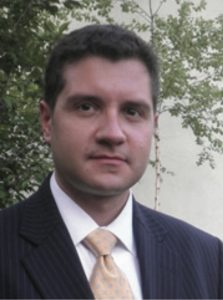
Many Americans followed only the third impeachment trial of a president intently, but perhaps none more so than Andrew Bakaj L’06, the Ukrainian whistleblower’s lead counsel. Bakaj was a student of Professor Emeritus William C. Banks in the early days of the Institute for National Security and Counterterrorism (INSCT), now the Institute for Security Policy and Law. That’s where he learned the laws that would inform his subsequent work on whistleblower law and policy in the Intelligence Community.
As an intelligence officer and criminal investigator, Bakaj also represented state department officials impacted by “Havana Syndrome.” Today, as Founding and Managing Partner of Compass Rose Legal Group PLLC, he is a leading expert in security clearance matters and has advised and counseled numerous senior US government officials in a variety of legal and investigative areas. In this interview, Banks and Bakaj catch up to discuss Bakaj’s fascinating career, including his public service, the importance of strong whistleblower laws, what happened when Bakaj was himself the subject of retaliation, the founding of Compass Rose, and the impeachment of a president.
Professor Emeritus William C. Banks: Tell us what brought you to Syracuse and how your legal education prepared you for your career.
Andrew Bakaj L’06: When researching law schools, what genuinely stood out about Syracuse was INSCT. The more I researched the program and looked at the school as a whole, the more I felt that Syracuse was the perfect fit for me. I knew that Syracuse was going to prepare me to be a lawyer, and I knew that the Institute’s professors would have an impact on me for years to come. However, what has surprised me is how my education had such a direct, positive impact on my career.
Obviously, law schools typically don’t have courses on “whistleblower law,” but the legal concepts we study prepare us to work as advocates and advisors. The Institute offered an opportunity to delve deeper into real-world issues impacting our nation’s security.
WCB: What national security path did you take after graduation?
AB: My education and training resulted in me being hired as an investigator with the US Department of Defense (DOD) Office of the Inspector General (OIG). My OIG leadership was looking to create a program to protect DOD civilian whistleblowers, particularly those within the defense intelligence community. After conducting a number of investigations, I was tasked with developing the legal and investigative framework to protect whistleblowers within and outside that community who hold security clearances.
Additionally, I worked closely with the National Security Agency (NSA), overseeing its internal whistleblower protection program. Our program became the model for President Barack Obama to expand whistleblower protections to members of the larger Intelligence Community and those who hold security clearances.
WCB: Tell me more about your time at the CIA Office of Inspector General and the path toward founding your own firm …
AB: When I joined CIA OIG in 2012, I was directed by Inspector General David Buckley to lean forward and develop a program to comply with the presidential directive. What’s more, not only did he want me to lead at CIA, he wanted me to lead and coordinate within the greater Intelligence Community. This led me to work with the recently established Office of the Intelligence Community Inspector General (OIC IG).
While successfully creating the program at CIA, my colleagues disclosed to me that senior CIA OIG officers were manipulating evidence in order to obtain a false prosecution, which resulted in someone pleading guilty.
After attempting to resolve the issue at the lowest level, CIA OIG leadership was not taking any action, and it was, in fact, targeting colleagues for raising concerns. Unable to merely sit on evidence that CIA leadership was violating the law, I coordinated with the OIC IG to have independent eyes look at the matter.
The matter was immediately referred to the FBI for investigation, and the case where the individual pleaded guilty was reversed. Moreover, the CIA IG and Deputy IG began targeting me and my colleagues. In 2014, David Buckley suspended my security clearance and placed me under investigation because of my communication with the OIC IG, which is protected whistleblower activity.
Over a year later, I resigned from CIA and filed a whistleblower reprisal complaint against the CIA OIG, using the rules and regulations I developed.
Shortly thereafter I began working as Special Of Counsel for Mark Zaid— who happens to be my attorney—and I eventually went on to found Compass Rose Legal Group.
WCB: How did you become involved as counsel for the Ukrainian whistleblower in 2019?
AB: Quite simply, the client was a referral from a trusted friend.
WCB: Were you surprised that the whistleblower’s claims would lead to impeachment?
AB: Candidly, I was surprised that the claims resulted in impeachment. When I first learned about the underlying issues back in early August 2019, I suspected that the matter would have legs because it involved the President. I certainly expected a congressional investigation. Impeachment isn’t something I considered would happen.
WCB: Based on your experience with the Ukraine case and others in recent years, what changes, if any, would you like to see in laws protecting whistleblowers?
AB: First, I would like to see it codified that the identity of whistleblowers are protected from public disclosure, and that this extends to members of Congress and other US government officials, including the President.
Second, given the complexity of the issues involved, I think it would be wise to create an Intelligence Community administrative court to ensure consistency in the agency application of laws and regulations protecting whistleblowers.
WCB: What advice do you have for law students aspiring to a career in national security law?
AB: While it’s important to have overarching career goals, it’s important to be flexible and to keep options open. As you can see from my own story, there is no way I could have predicted the twists and turns my life took. Opportunities come around when you least expect them, and there are times when something relatively minor can have significant meaning down the road.
As a White House Intern, Sergio Rumayor Had a Front-Row Seat to History
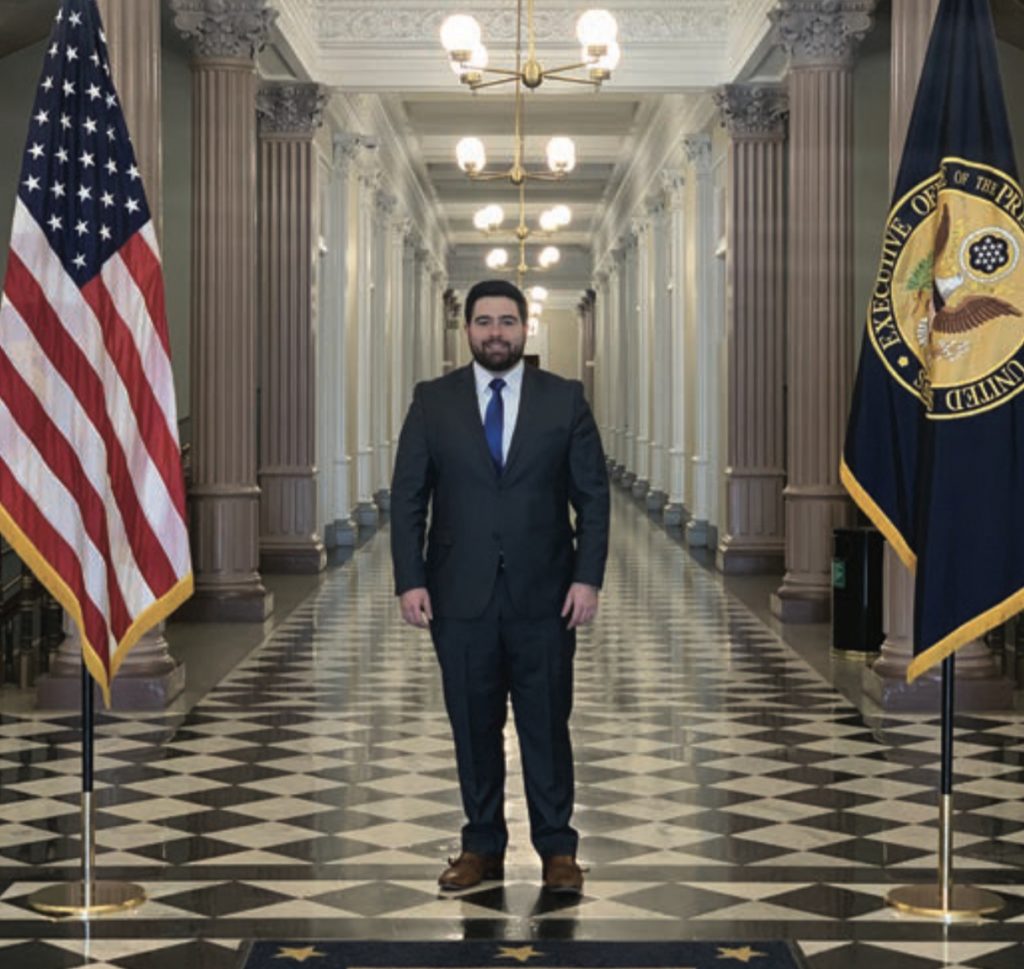
Rising 3L Sergio Rumayor stands in the entrance lobby of the Eisenhower Executive Office Building in Washington, DC.
Impeachment. Flood. Pandemic. Rising 3L Sergio Rumayor’s spring 2020 externship in the Office of White House Counsel did not lack for excitement. Then again, as Rumayor explains, when it comes to the highly competitive White House Internship Program (WHIP), only students prepared for hard work and challenges will do. “I believe White House interns are students and professionals who are team players: outgoing, articulate, and capable,” he says.
All that drama was still to come when Rumayor, a native of Staten Island, NY, was assessing his externship options as a 1L. “My interest in an externship at the White House happened on a whim,” he says. “Originally, I wanted to work in the private sector, but I thought it would be cool to get out of New York City.”
Rumayor learned that the White House was on the list of DCEx choices, and specifically the Office of White House Counsel, where Rodney Dorilas L’19 worked the year before. “I later found out that Rod was well-liked in that office, and the image of a Syracuse intern he left behind set a high standard.”
Offering honest advice, Dorilas explained to Rumayor that WHIP and the Office of White House Council were difficult to get into. Rumayor was up for that challenge. After a rigorous application process, he learned he had been accepted around Thanksgiving 2019. In January 2020, he moved into a short-lease DC apartment along with rising 3L AnoopKahlon—who was externing at DC firm Sanford Heisler Sharp LLP—and reported to the Eisenhower Executive Office Building.
Rumayor joined the Executive Branch team during the third-ever impeachment of a US president in American history.
“From a law student’s perspective that was amazing,” says Rumayor. “I was able to observe and appreciate the extensive hours of research on constitutional and American history necessary to perform everyday duties at the Office of White House Counsel, as well as the professionalism required to succeed in such an environment.”
Working under “some of the most brilliant legal minds and scholars in the country,” notes Rumayor, “made it an unforgettable experience that I will carry with me forever. I feel extremely blessed to have served in the Executive Branch during this time in history.”
“There was rarely a dull moment,” Rumayor adds. “I woke up every morning eager to get to work and see what was in store.”
Often what was in store were critical Executive Branch tasks, such as researching and writing memoranda on constitutional issues and federal statutory law, tracking Freedom of Information Act litigation, assisting with Presidential Records Act compliance and federal judiciary nominations, and helping with government oversight requests, questions of executive authority, and government ethics. “I applied skills I learned in the classroom— such as in constitutional law, legal communications and research, and professional responsibility—in a high-stakes and demanding, practical environment,” he notes.
Despite being an intern in such a high-level Executive Branch office, Rumayor says that he and his two fellow interns were treated exceptionally well. “The interns are treated like part of the team. It was an incredible experience that has made not only an impact on my career as a law student but also on my future career as a Syracuse lawyer.”
Unfortunately, Rumayor’s externship was cut short by the COVID-19 health crisis in March. And that wasn’t the only adjustment he had to make that month. “March 10 was my last week at the White House. That same week, my apartment was flooded, so I had to live in a hotel for a month!” Ever resourceful, Rumayor applied for another externship to fulfill his curriculum requirements. “This summer I am working remotely for HBW Resources, a DC energy lobbying firm, as well as for the Office of the Richmond County District Attorney in Staten Island in the Criminal Court Bureau.”
Thanks to his work at the White House and the Richmond County DA, Rumayor says he is now considering a public service career.
“I am very grateful for the time I spent at the Office of White House Counsel and the relationships and bonds I made there,” Rumayor says. “My experience gave me a clearer understanding of how the law operates in the three separate branches of government. There is simply no other place in the world that you can do work like that.”
Professor Ian Gallacher Launches The Legal Writers Toolkit
Professor Ian Gallacher believes the world needs good lawyers, and he wants them to be good legal writers too. To this end, he is developing The Legal Writer’s Toolkit for all current College of Law students and alumni, and he hopes it will eventually be available to prospective students as well.
According to Gallacher, writing is thinking: “You can’t write well unless you think well. It is important for lawyers to write well because it allows them to show the quality of their thinking.”
Hosted online, The Legal Writer’s Toolkit will be organized by writing topic with both video and non-video-based content. Gallacher says he hopes the toolkit will help legal writers at any point in the writing process. “When they encounter problems, they can start here,” he says.
The traditional model for legal writing assistance at law schools has been the writing center, notes Gallacher, which is typically a faculty-led, student-staffed physical space. In a writing center, support happens in person when a student has an assignment due. After making an appointment, the student will get general help on their assignment through peer-to-peer counseling.
“A writing center model is a fine one,” Gallacher observes, “but it’s an expensive option and would be difficult to manage in a future that includes COVID-19 social distancing.” So at a time when centers of learning and student support are transitioning online, The College of Law is well-positioned to adapt its writing assistance rapidly to this change. Gallacher says the project was conceived before the COVID-19 crisis occurred, but that it’s certainly timely.
Gallacher notes one complication of COVID-19 closures, however: “My plan was to use the campus video production facilities to record a lot of this content, but I suspect this will be happening in my basement now.”
As of June 2020, initial non-video content for the toolkit—a reading list—is complete and available to incoming students. Gallacher asked several faculty—including Dean Boise and Vice Dean Keith Bybee—to select books they thought incoming students should read before law school, and he encouraged Bybee to select his own book, How Civility Works.
Focus questions accompany each title to help students understand the texts and “move their reading approach to the more active style required in law school, where students need to ask questions of the texts they’re reading in order to get the most out of them,” Gallacher explains.
If students complete the entire reading list, they will have a tremendous advantage in their first year of study, Gallacher says, with subjects ranging from negotiation techniques to technology’s impact on the law. The first iteration of the complete toolkit will be available this fall, with plans for the site “to grow as quickly as I can add material,” he says.
“It is important for lawyers to write well because it allows them to show the quality of their thinking.”
Gallacher joined the College of Law faculty in 2004 to lead the Legal Communication and Research (LCR) program. “Syracuse has a very liberal and engaged approach to legal writing education, which made joining the faculty extremely appealing,” Gallacher says.
Gallacher explains that Daan Braveman—College of Law Dean from 1994 to 2002—wrote in the December 1989 Journal of Legal Education about the importance of doctrinal professors teaching legal writing, a program he named Law Firm. “Daan’s article was groundbreaking,” says Gallacher. “It was one of the first signs that doctrinal faculty were alive to the importance of legal writing as part of the first-year curriculum. That made Syracuse a very exciting place for someone dedicated to the teaching of legal writing and for research to come.”
Professor Richard Risman came to Syracuse in 1998 and directed the Law Firm program until 2002. That was at that time legal writing was becoming a discipline in its own right, so Risman decided to teach more and the College made his position a tenured appointment, which was rare.
“The LCR program evolved from the idea of doctrinal teachers teaching writing as part of their courses. They came to learn that teaching legal writing is really hard, so once there were enough people identified as legal writing educators, LCR was possible,” Gallacher recalls.
Now at 63 years old, Gallacher has decided to try something new with The Legal Writer’s Toolkit, and Professor Aliza Milner has been named the new LCR Director. Teaching at Syracuse since 2006, Milner is described by Gallacher as “incredibly experienced and fabulous. She will take LCR and drive it into the future.”
With a stable writing faculty core and a continuing desire to create better legal writers, Gallacher—who in 2018 was awarded the Thomas F. Blackwell Memorial Award for Outstanding Achievement in the Field of Legal Writing by the Legal Writing Institute and the Association of Legal Writing Directors—sees The Legal Writer’s Toolkit as a natural next step for the College.
“Syracuse is a place where we care about people. I obviously care about Syracuse students the most, but I also care about anyone who wants to be a better legal writer,” Gallacher says.
In April 2020, the College welcomed five new professors who continue to broaden the College’s academic and research capacity in key strength areas and who expand the bench of highly experienced legal scholars teaching in JDinteractive.
“The teaching, practice, and research interests of these new faculty members will be critical to guiding our students toward academic and career success,” says Dean Boise. “I’m particularly pleased to have hired two professors—Jack Graves and Linda Whitton—who will focus their teaching within JDinteractive. Both are recognized scholars in their fields and—as online pioneers—they are profoundly dedicated to providing quality online legal education for the 21st century.”
Meet the New Professors
Courtney Abbott Hill L’09
Most recently Associate Director of Student Affairs, Courtney Abbott Hill L’09 joins the faculty as a teaching professor of legal writing. In the Office of Student Affairs, she was responsible for helping students reach their full academic potential with an emphasis on bar exam preparation. She also designed and implemented academic success programming, and she taught a third-year law seminar.
Abbott Hill earned her J.D. magna cum laude from the College in 2009, where she was Managing Editor of the Syracuse Law Review and a member of the Justinian Honor Society and the Order of the Coif. After graduation, she served as a court attorney with the New York State Appellate Division, Fourth Department, before transitioning to a career focused on law student success as a regional director with a national bar review provider.
Why did you decide to teach law? I love working with students! I spent time teaching before law school and decided early in my law career to pivot toward helping law students achieve their full potential.
What is the most important aspect of the law that students should know? When reading the facts and circumstances of the cases you are assigned in law school, remember that the people involved are not fictional. Consider this human element rather than simply looking for the rules established by the cases. Not only will that help you read and think critically, it will help you become a better lawyer.
What interests do you have outside of teaching and the law? I have two young children, so when I’m not working you can usually find me cheering on a Little League team, watching a dance recital, or volunteering at their school.
Jack Graves
Jack Graves joins the College as a teaching professor and will develop and teach JDinteractive courses in commercial transactions and evidence. A visiting professor at the College in 2005, Graves was most recently at Touro Law Center, where he served as Professor of Law and Director of Digital Legal Education, launching its hybrid J.D. program.
A law graduate of the University of Colorado (1994), Graves has played a significant role developing online legal education in J.D. programs nationwide. His recent writing focuses on teaching materials tailored to the online environment, including Sales Law (2020), Learning Contracts (2019), and International Sales and Commercial Arbitration (2017).
Graves was an original member of the Working Group on Distance Learning in Legal Education. He developed and delivered two fully asynchronous courses through iLaw Distance Learning, and he serves as a frequent speaker at online legal education conferences, including Syracuse’s April 2019 symposium on “Online Learning and the Future of Legal Education.”
Why did you decide to teach law? I thoroughly enjoyed the law school experience and environment as a student, and I found the opportunity to return to that environment as a faculty member to be irresistible. Although I loved practicing law, I found the most rewarding aspects of my job to be attorney development and associate training.
What is the most important aspect of the law that students should know? Reading and applying statutes is one of the least developed skills for law students and lawyers. While there is much to be said for the common law, we often become so immersed in case methodology that law students (and lawyers) can easily overlook the value and importance of direct statutory interpretation.
What interests do you have outside of teaching and the law? I love outdoor sports, including cycling, skiing, climbing, kayaking, and other adrenaline-inducing activities. Adding twins to our family a few years ago slowed me down a bit, but as they get older, I am returning to the outdoors.
Mark P. Nevitt
An expert on the intersection of national security and climate change, Mark Nevitt will teach national security law, climate change law and policy, environmental law, and constitutional law.
A contributor to the Just Security blog and Penn Law’s Regulatory Review, Nevitt has published widely on climate change, environmental law, and national security law in the Harvard Environmental Law Review, Washington University Law Review, Boston College Law Review, and elsewhere. His chapter on “Environmental Law in Military Operations” is included in the influential operational law analysis US Military Operations: Law, Policy, and Practice (Oxford, 2016).
Nevitt has served as the Distinguished Professor of Leadership and Law at the US Naval Academy in Annapolis, MD, and Sharswood Fellow, Lecturer-in-Law, at the University of Pennsylvania Law School. Before his academic career, he was a tactical jet aviator and a Judge Advocate General’s Corps attorney in the US Navy. As a legal advisor, he helped with the US Navy’s investigation into the Iranian detention of sailors on Farsi Island in 2016. His military awards include the Air Medal and Meritorious Service Medal (four awards).
Why did you decide to teach law? First, I view teaching law as a continuation of my public service that began when I was 18 years old and joined Navy ROTC at the University of Pennsylvania. Second, I love legal research, scholarship, and going deep on issues that are not just theoretically interesting but that are grounded in real-world practice and that require innovative legal solutions.
What is the most important aspect of the law that students should know? Be inquisitive, never stop learning, and keep an open mind about where your Syracuse law degree may take you. I’m a case study. I started out as a military attorney with a variety of assignments throughout the world, and each exposed me to a new and interesting aspect of the law.
What interests do you have outside of teaching and the law? My wife, Sara, and I love to cook, travel, read, and explore the environment. We are both environmentalists at heart, and we are looking forward to finding our new winter sport. Sara grew up in Upstate New York, so Syracuse is bit of a homecoming. At least once a year, I take a long bicycle ride in beautiful countryside. In 2019 that was Nova Scotia, and the year before that, the Green Mountains in Vermont.
Monica Todd
Monica Todd becomes a teaching professor of legal writing. Most recently, she was a legal writing professor at Western State College of Law in Southern California, and she served as a visiting professor at California Western School of Law in 2019-2020. She has taught courses in family law, community property, and academic support, and she served as Director of Western State’s Family Practice Certificate Program.
A specialist in family law practice and crossover social and legal issues related to family law and domestic violence, Todd has published research in Akron Law Review and Western State University Law Review.
Before her law career, Todd attended graduate school at the University of California at Irvine, completing both a master’s degree in social ecology (with an emphasis on Human Development Studies) and the Elementary Education Teaching Internship Program. She taught elementary school before earning her J.D. at the University of California at Los Angeles in 2007. At UCLA she was Bergstrom Child Welfare Law Fellow and Copyright Editor of the Women’s Law Journal. After law school, she practiced at Stegmeier & Gelbart LLP and the Law Office of John A. Bledsoe.
Why did you decide to teach law? Teaching law is the perfect blend of two very creative, important, and challenging professions. I taught elementary school for several years before becoming a lawyer. While being a lawyer was the fulfillment of a lifelong dream, I missed being in the classroom. I feel fortunate to have combined my two passions into a fulfilling career, and I am honored to have had a role in the development of many young lawyers over the years.
What is the most important aspect of the law that students should know? Words are everything. Subtle nuances in the written word and slight changes in punctuation can have a drastic impact on the meaning of legal rules and how they apply. It is crucial that students take time to not only understand the law but to learn how to use it to craft effective legal arguments. Words are power, and in harnessing this power, lawyers can change the world!
What interests do you have outside of teaching and the law? I enjoy gardening, camping, and spending time with my family. I am looking forward to learning about the flora and fauna of Upstate New York and to discovering new places of natural beauty.
Linda S. Whitton
Linda Whitton is Professor Emerita of Law at Valparaiso University Law School, where she held the Seegers Distinguished Professor Chair. Joining Syracuse as a lecturer, she will teach property law in JDinteractive. She is known nationally and internationally for her scholarship on durable powers and guardianship, and she is the Reporter for the Uniform Power of Attorney Act (2006) and the Uniform Recognition of Substitute Decision-Making Documents Act (2014).
Whitton is a retired Fellow of the American College of Trust and Estate Counsel, and she has served in numerous leadership positions within the ABA Section of Real Property, Trust, and Estate Law and the AALS Section of Aging and the Law.
A graduate of Valparaiso University Law School, before commencing her academic career, Whitton served as law clerk to the Hon. S. Hugh Dillin, United States District Court for the Southern District of Indiana, and practiced business and commercial real estate law.
Why did you decide to teach law?I enjoy the challenge of demystifying legal concepts and making them accessible to students and the public. Following the examples of my mentors, I want to inspire others to advocate for those who are unable to advocate for themselves.
What is the most important aspect of the law that students should know?The development of professional judgment. Studying the law is the vehicle through which professional judgment is honed, and it is the compass by which lawyers navigate change in laws and the circumstances in which laws are applied.
What interests do you have outside of teaching and the law? I am an avid kayaker and gardener, and I enjoy all types of design.
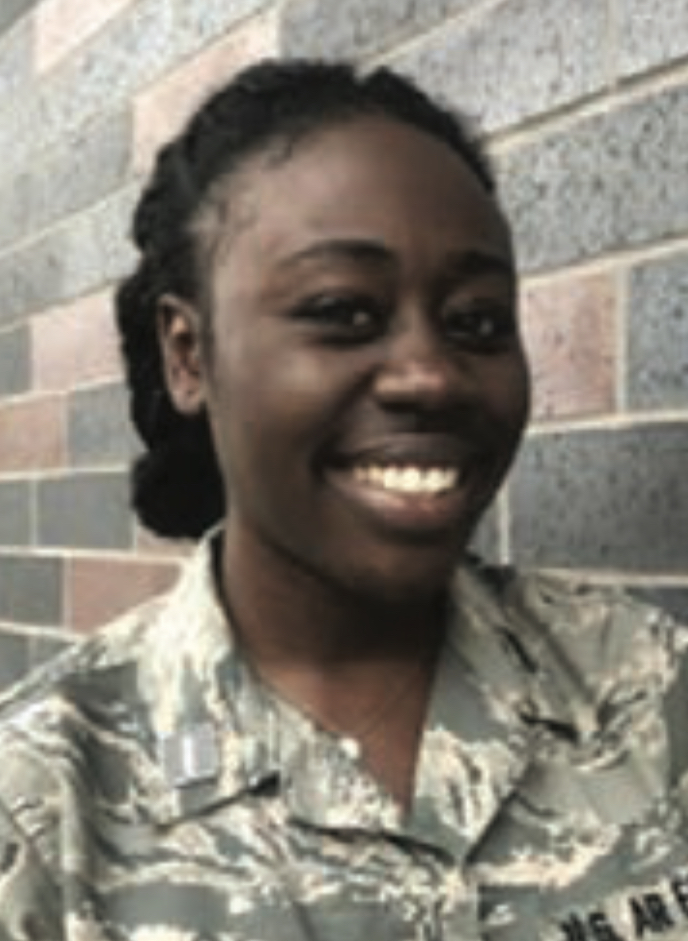
Rising 3L Sharon Otasowie received the Commandant of Cadets Award, presented as part of the 103rd Chancellor’s Review and Awards Ceremony to recognize the distinguished performance of cadets in the Army and Air Force Reserve Officers’ Training Corps (ROTC) programs. The Commandant of Cadets Award is “presented to a cadet in the top 25% of their Aerospace Studies class who demonstrates exceptional leadership, appearance, bearing, and character.”
Krastev and Marcellino Secure Best Ever Tax Challenge Result
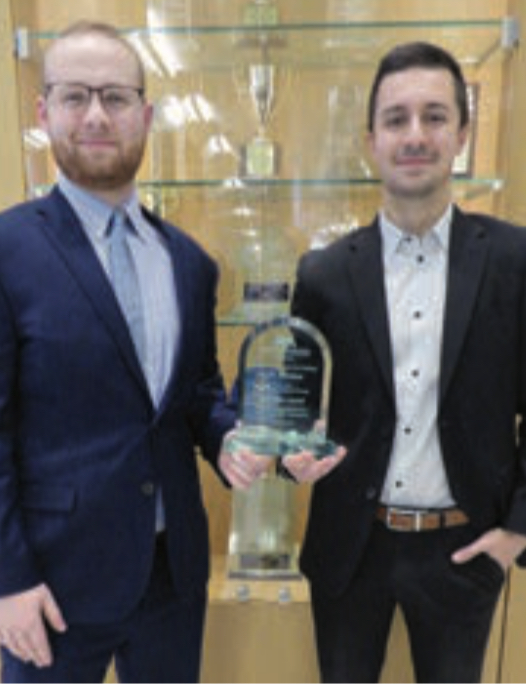
Brian Krastev L’20 and Matthew Marcellino L’20 finished second out of more than 80 teams from around the country competing in the American Bar Association (ABA) Law Student Tax Challenge competition. This is the College of Law’s best result ever in this annual competition. Professor Robert Nassau, Director of the Low Income Taxpayer Clinic, coached the team.
An alternative to traditional moot court competitions, the Law Student Tax Challenge asks two-person teams of students to solve a cutting-edge and complex business problem that might arise in everyday tax practice. The team defended its solution before a panel of judges representing the country’s top tax practitioners and government officials, including tax court judges.
JDi Student Hosts ABA Law Student Division Podcast
MeghanStapletonSteenburgh, a rising 2L student in the JDinteractive program, was chosen as a host of the American Bar Association Law Student Division podcast for 2020. Throughout the year, Steenburgh has been contributing interview- style podcasts to the ABA’s series.
Among her interviews to date are conversations with Sen. Dan Sullivan of Alaska, and DeanBoise and Professor Nina Kohn. Boise and Kohn were interviewed in March 2020 about making legal education more accessible through online programs and other innovations, just before the COVID-19 pandemic forced the remainder of the spring 2020 semester to be conducted online. The two-part podcast also featured JDi 2Ls Mandy Mobley Li, Katy Morris, and Ernie Sawyer.
Students Join Professor Gouldin to Present on Bail Reform
Matt Taghavi L’20 and Katherine Brisson L’20 presented with Professor Lauryn Gouldin on bail reform as part of the Criminal Justice Educators Association of New York State Annual Conference. “Matt and Katherine did an excellent job comparing New York State’s new bail reform legislation with the new bail reform law in California,” says Gouldin.
Dowling Published Twice in NDNY Federal Court Bar Association Newsletter
While working as an extern at the Office of the Federal Public Defender of the Northern District of New York (NDNY), John J. Dowling III L’20 had two articles published in the bar association’s newsletter.
“US Supreme Court Cabins Sentencing Courts’ Deference to Sentencing Commission” was published in the fall newsletter, and “Circuit Split Deepens over Whether Inchoate Drug Crimes Trigger Career Offender Enhancement” ran in the spring 2020 newsletter.
Cohn Places Second in Student Writing Competition
Samuel Cohn L’20, a dual degree graduate with a master’s in the Newhouse School New Media Management program, won second place in the student writing competition for the Law and Policy Division of the Association of Educators in Journalism and Mass Communications.
Titled “‘Funding Secured:’ A Forty Million Dollar Tweet that Highlights First Amendment Issues Associated with Regulating Speech on Social Media,” Cohn’s paper examines the legal fight surrounding Tesla owner Elon Musk’s use of social media.
BLSA Hosts Conversation on People of Color in Legal Profession
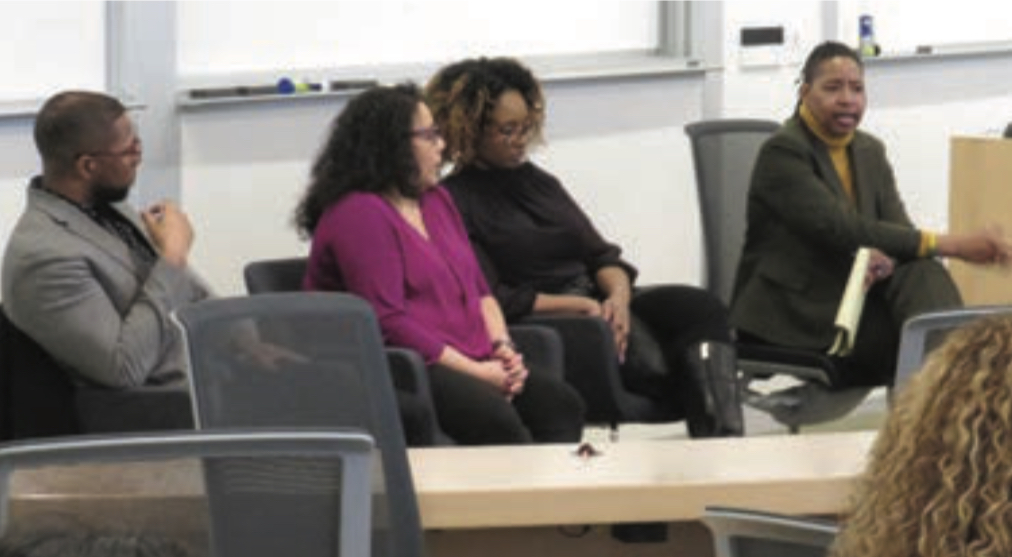
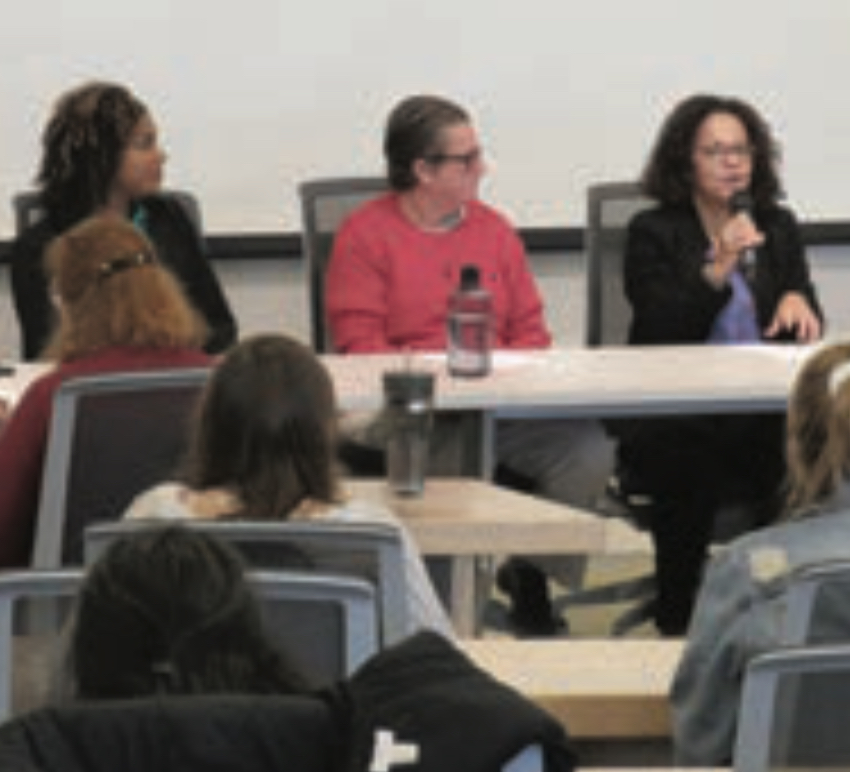
Addressing the important topic of diversity in the law during Black History Month, the Black Law Students Association (BLSA) held “A Conversation About Being a Person of Color in the Legal Profession” in Dineen Hall on Feb. 20, 2020.
Moderated by Professor Paula C. Johnson, the panel included Alyssa Campbell, Director of Equal Opportunity and Employment, Syracuse University Office of Equal Opportunity, Inclusion, and Resolution Services; Melanie Cuevas-Rodriguez, Syracuse University Equal Opportunity and Title IX Investigator; and David L. Chaplin II L’13, Director of Employee Relations, Onondaga County.
College of Law Celebrates Diversity in Law and Society, Engages Community
In fall 2019, the College of Law community came together to learn from each other and celebrate the many ways diversity contributes to a vibrant Dineen Hall.
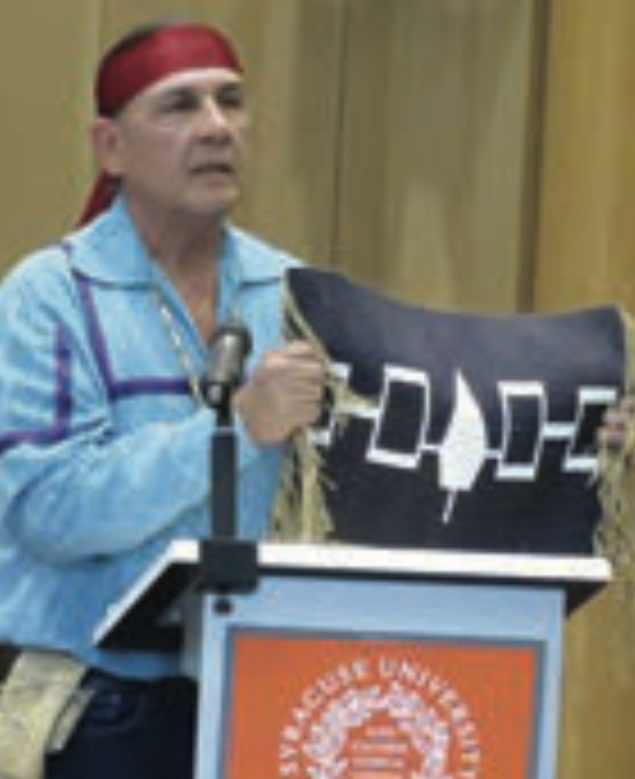
Thanks to Student Bar Association Diversity Chair rising 3L Ken Knight and his committee, events included “A Conversation with the Onondaga Nation”; an informational discussion with Barclay Damon on its Diversity Mentor Program; a “Diversity and the Law” professor panel; the William Herbert Johnson L’1903 bar admission ceremony; and a day of volunteering at the We Rise Above the Streets Sandwich Saturday in downtown Syracuse.
On February 28, the College of Law celebrated Diversity Law Day, in collaboration with the New York State Bar Association, the William Herbert Johnson Bar Association, Law School Admission Council, and the Syracuse Civics Initiative.
Students from Syracuse-area school districts visited Dineen Hall and met with College of Law faculty and students, as well as local practicing attorneys, who discussed the importance of diversity, inclusion, and representation in the law.
Among the activities, law students gave a presentation to the high school students about the famous espionage trial of Ethel and Julius Rosenberg during the Cold War, followed by a brief reenactment of the trial and small group work.
The students also heard from the Hon. Thérèse Wiley Dancks L’91, who spoke about her passionate interest in civics education. Later in the day, the high schoolers had the opportunity to ask law students about college, law school, and diversity during a panel discussion in the Melanie Gray Ceremonial Courtroom.
Mock Trial Provides Courtroom Experience for College of Law and Newhouse Students
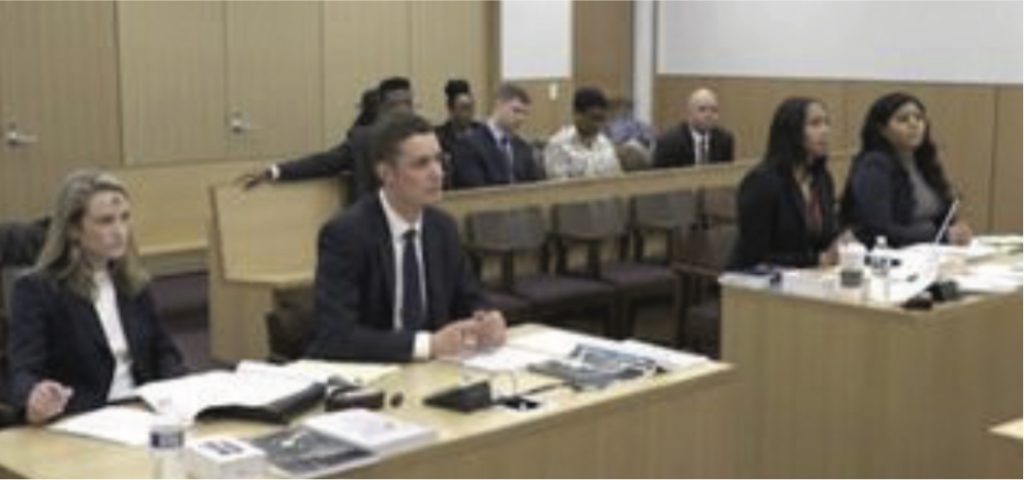
Two Syracuse University professors have teamed up in an innovative cross-campus collaboration to allow future television reporters and lawyers to experience the drama of a high-profile murder trial. College of Law Professor Todd Berger and Professor Elliott Lewis of the S.I. Newhouse School of Public Communications convened their respective classes for the mock trial of People v. Mitchell, a fictional case involving the shooting death of a young woman.
In this cross-disciplinary class, law students played the roles of prosecutors and defense attorneys, questioning witnesses and making objections during testimony. The Newhouse students honed their skills as television journalists, performing live updates during breaks in the trial and producing a narrated report after its conclusion.
“I honestly don’t know of another law school that offers such a unique opportunity in a beginner’s trial advocacy class,” Berger says. “It gives law students an early taste of what it’s like to represent a client in the media as well as in the courtroom.”
Dean Boise Raises the College of Law’s Profile at the Annual NYSBA Meeting
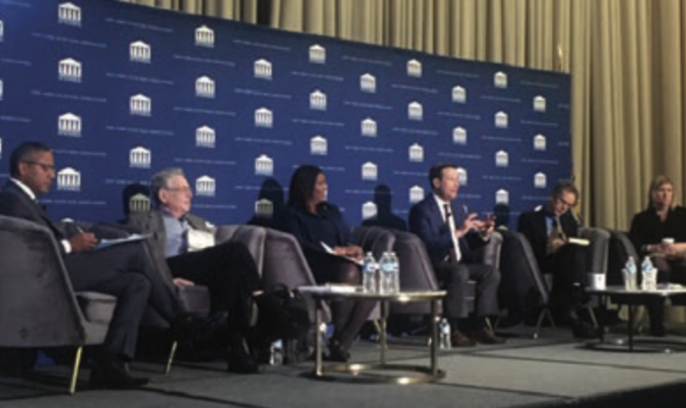
At the New York State Bar Association’s (NYSBA) Annual Meeting in January 2020, Dean Boise moderated the Presidential Summit panel, attended by more than 500 people. The panel tackled head-on one of the most disturbing and enduring trends of our time—the rise of white nationalism and domestic terrorism. The topics and remedies discussed are resonating far beyond the discussion.
Boise also gave the Keynote Address to NYSBA’s Judicial Section. “Preparing Students for a 21st Century Law Practice” examined how Syracuse and other law schools are innovating curricula and programs and adapting to the future of law practice.
Professor Dorfman Spearheads New Empirical Study
Professor DoronDorfman and a team of researchers from the aChord Center: Social Psychology for Social Change at the Hebrew University of Jerusalem have been conducting research for the 2019 Municipal Accessibility Index in Israel.
The study examines the Israeli public opinion toward people with disabilities, as well as perceptions of accessibility in different areas of life (including social life, labor market participation, and health care) among disabled individuals.
Professor Kohn Joins Yale Law During Spring 2020 and Serves as Advisor to the American Law Institute
Professor NinaKohn, David M. Levy L’48 Professor of Law and Faculty Director of Online Education, spent the spring 2020 semester as a Visiting Professor of Law at Yale Law School. A faculty affiliate with Syracuse University’s Aging Studies Institute, Kohn taught a seminar on Law and Aging at Yale. Kohn’s research focuses on elder law and the civil rights of older adults and persons with diminished cognitive capacity.
Kohn also accepted an invitation from the American Law Institute (ALI) to serve as an advisor on the ALI’s Restatement of the Law Third, Torts: Concluding Provisions project. This project focuses on medical liability, vicarious liability, statutes of limitation, and wrongful death and survival actions.
“This project will play an important role in clarifying some of the most dynamic areas of tort law,” says Kohn.
Professor Emerita Wilhelmina Reuben-Cooke Remembered
Wilhelmina Reuben-Cooke, Professor Emerita of Law and an influential leader at Duke University, died October 22. She was 72.
A native of South Carolina, Reuben-Cooke was one of the first five African American undergraduate students at Duke University and was active in the civil rights movement.
She graduated from Duke in 1967 and the University of Michigan Law School in 1973. After graduation from law school, she worked in communications, antitrust, tax, securities, criminal, and general corporate law. She served as Associate Director of the Institute for Public Representation (IPR) at the Georgetown University Law Center and was responsible for litigation before the Federal Communications Commission and the federal courts, including the US Supreme Court, at IPR and the Citizens Communication Center.
Reuben-Cooke began her teaching career at the College of Law in 1986. While at the college, she drew on her experience to develop a summer externship program in Washington, DC, building the program to include studies in communications law, federal legislature advocacy, disability law, labor law, and civil rights. She also served as Associate Dean for Academic Affairs and directed the college’s academic programs. Reuben-Cooke left the College of Law in 2003 to become Provost and Vice President for Academic Affairs at the University of the District of Columbia, a position she held until 2007.
“Wilhelmina was a pioneering woman—here on the faculty at the College of Law and earlier as one of the first five black students to enroll at Duke University in 1963,” says Professor Paula Johnson, professor in the College of Law. “We first met at Georgetown University Law Center when she was Associate Director of the Institute for Public Representation and I was an LL.M. student with the Center for Applied Legal Studies. She was here when I first came to the College of Law and supported so many of us across the SU campus and throughout the Syracuse community. She will be greatly missed. May she rest in peace and power.”
“When I think of her, I think of her ability to maintain grace and warmth in spite of adversity and under pressure,” says Sarah Ramsey, Professor of Law Emerita. “She was a splendid presence at the College of Law and a wonderful friend and colleague.”
Professor Christian Day says Reuben-Cooke was a warm, bright, and infectious colleague. “Her smile lit up the room,” he says. “She was principled and fair, and her expertise in communications law established links with Newhouse. She was an exceptional mentor for many of our students.”
“Wilhelmina was a remarkable woman and role model in every way. She enriched the College of Law environment by her enormous contributions to our ways of interacting with one another and by living her commitments and values,” says Professor of Law Emerita Leslie Bender. “She enriched my life by the warmth, grace, intelligence, and friendship she offered. Those of us who were privileged to have been her colleagues and friends know how lucky we are.”
Reuben-Cooke served as a trustee of Duke University for two terms, and she held numerous honors, including the Duke University Distinguished Alumni Award and the Sojourner Truth Award from the Syracuse University chapter of the National Association of Negro Business and Professional Women’s Clubs.
She is survived by her husband, Edmund D. Cooke Jr.; two daughters, Wilhelmina Nilaja Cooke and Shani Malika Cooke; and several siblings, nieces, nephews, and cousins.
Student attorneys enroll in one of the College’s eight law clinic courses to practice law and represent clients for the first time in their legal careers. They look forward to face- to-face meetings with clients and advocating for them in court and with administrative agencies, doing so in a supportive environment supervised by faculty members while brainstorming on cases with their law clinic colleagues.
In spring 2020, when the coronavirus pandemic wreaked havoc on our daily lives, the impact on the practice of law and with it clinical legal education was no exception. Teaching and learning throughout the law school pivoted to online after spring break. So too did our practice of law and the representation of clinic clients. Although the experience the student attorneys received was not at all what they thought it would be, it was powerful.
As disruptive as the virus was, it was also an incredibly teachable moment. Law clinic faculty rose to the challenge of teaching our students how to lawyer in a time of a grave crisis, how to exercise good judgment in the face of uncertainty, and how to utilize skills in the remote practice of law that some faculty were only just learning themselves.
Teaching classes remotely was just the tip of the proverbial iceberg for law clinic faculty. Supervising students on actual cases with real clients was the ultimate challenge. We were not alone: Lawyers throughout the country—if not the world—were learning how to work and represent clients remotely. Our student attorneys now continue in summer session, building on their experience in real time during a national crisis.
Importantly, during this pandemic, students have had to overcome the obstacles faced by people who are historically disadvantaged in our society. Many of our clients do not have smartphones, let alone a computer, and cannot access Zoom or other remote communication applications. Some courts and administrative agencies were closed except for emergency legal matters. With the guidance of supervising faculty, our student attorneys rose to the occasion with creative problem-solving in every aspect of our legal representation.
It has been a scary, stressful, and challenging time for most people throughout our country. In the best of times, lawyers must put their own self-interest aside and get out of their own way to be effective advocates for their clients. In this time of a global pandemic—when civil and legal rights are of utmost importance— our ability to help others with our legal skills and effectively represent clients is paramount. In our clinics, student attorneys have continued without interruption to receive an unparalleled legal education while providing critical legal representation to clients. They will call upon the skills and experiences they have gained here and now throughout their legal careers. I am very proud of them.
Deborah Kenn Associate Dean of Clinical and Experiential Education Professor of Law Director, Office of Clinical Legal Education
Children’s Rights & Family Law Clinic
Each year, the work of the Children’s Rights & Family Law Clinic (CRC) is characterized by select themes. This past academic year, these themes included adoption issues, custody, and child support matters as well as providing comprehensive legal representation to clients also represented by the Veterans Legal Clinic.
The year began with the continuing representation of a mother needing legal assistance obtaining health insurance for her children who had been continuously in her care and custody. The client had been covering her children through Medicaid but subsequently learned that two of her children having specialized medical needs had their health coverage terminated after their father, who had been abusive to the client, had enrolled them in an out-of-state plan that they would never be able to use. This resulted in the children not being able to obtain medically necessary services. After many months of discovery, research, communications with state agencies, and filing extensive pleadings with the court, the Clinic was able to obtain this necessary coverage.
CRC also participated in its first adult adoption matter. Specifically, CRC retained a client for an adult adoption where the client wished to preserve his sense of family with the only family he has ever known. The client wished to have the same relationship reflected legally. We continue our work with the clients.
Criminal Defense Clinic
Student attorneys in the Criminal Defense Clinic (CDC) represented more than two dozen people charged with misdemeanors or violations in Syracuse City Court during the 2019-2020 academic year. In the fall semester, Nathan Wagner L’20 and rising 3L KaylaWheeler successfully defended their client by invoking a provision in the criminal code that allowed their client to avoid conviction by taking an alcohol training course.
Furthermore, Taylor Carter-Disanto L’20 and rising 3Ls Michaela Macini and Matt Cohan had charges against their client dismissed on the eve of trial by arguing that the trial would violate the speedy trial rule due to the prosecution failing to comply with the new criminal discovery rules. CDC students were some of the first attorneys in Onondaga County to successfully get a charge dismissed under the 2020 discovery amendments.
Disability Rights Clinic
Disability Rights Clinic (DRC) Director Michael Schwartz is the only culturally Deaf law professor in the United States. While there are a number of law professors with diminished hearing, none are fluent in American Sign Language nor identify as belonging to the Deaf community of the United States and overseas.
In collaboration with Schwartz, DRC students Connor Haken L’20 and Philip M. Lee L’20 successfully petitioned the New York State Division of Human Rights to allow student attorneys, practicing under the guidance of a licensed lawyer, to represent clients in a public hearing.
In addition, the DRC successfully negotiated a settlement allowing a Deaf warehouse employee of a national retail chain to drive a forklift on the job; DRC students edited a Korean Disabled People’s Organization’s shadow report to the UN under the UN Convention on the Rights of Persons with Disabilities, and students have been engaged in ongoing negotiation with the New York State Department of Corrections and Community Supervision to install a videophone for Deaf and hard of hearing inmates in state custody.
Transactional Law Clinic
Transactional Law Clinic student attorneys and Director Jessica Murray concluded the Clinic’s inaugural year by assisting clients affected in various ways by the COVID-19 crisis. In one matter, a not-for-profit client wondered if it could shift its organizational focus to COVID-19 relief, from its previous mission. This inquiry led to review by the Clinic of the organization’s governance documents, various state and federal laws, as well as practical considerations.
Several clients approached the Clinic about the interpretation of agreements and how they would be affected by the pandemic. Not surprisingly, among other matters, the clinic examined the meaning and applicability of force majeure clauses. “It was very rewarding for student attorneys to provide helpful legal advice related to these unprecedented times,” says Murray.
Betty and Michael D. Wohl Veterans Legal Clinic
In November, Beth G. Kubala became Director of the Betty and Michael D. Wohl VeteransLegal Clinic (VLC). Kubala was most recently Senior Director for Strategy and Performance at Syracuse University’s Institute for Veterans and Military Families (IVMF). Before joining the University, Kubala retired from the US Army as Lieutenant Colonel following 22 years of active service.
Among VLC’s work in 2019-2020, rising 3L Madeline Cardona presented before a Veterans Law Judge at the Board of Veterans’ Appeal in Washington, DC. Cardona offered opening and closing arguments, interviewed three witnesses, and provided testimony and evidence in support of a disability benefits issue.
In April, Jonathan Pilat L’20 submitted public comment on a proposed legislative change by the US Department of Veterans Affairs, to amend the VA regulations that limit student attorney access to electronic records kept by the Veterans Benefits Administration. Pilat’s comment voiced dissent for this change and communicated VLC concerns. Pilat also advocated for continued access to veterans benefits records under the current regulation or under an amendment that would enable clinic students to qualify for read-only access.