The Syracuse University College of Law is proud to announce three honorees featured on the 2024 Association of American Law Schools (AALS) Pro Bono Honor Roll, which recognizes individuals advancing access to justice through exceptional pro bono contributions.
Elliot Malin L’24
Elliot Malin, a 2024 graduate of the College of Law, completed an extraordinary 1,400 hours of pro bono work. Malin collaborated with the Lizzy Hammond Foundation to raise awareness about accidental deaths in inflatable bounce houses and organ donation, as well as with the Anti-Defamation League of Nevada and the ACLU to provide legal support to an underserved individual in a protected class. His remarkable dedication earned him the College of Law’s Outstanding Pro Bono Service Award for the Class of 2024.
Professor Paula Johnson
Professor Paula Johnson, a distinguished faculty member and co-founder of the Cold Case Justice Initiative (CCJI), was recognized for her significant contributions to civil rights-era justice. CCJI investigates racially motivated murders from the civil rights movement and educates law students and the public on these critical cases. Beyond CCJI, Professor Johnson’s teaching and scholarship focus on criminal law, race, voting rights, and gender justice.
Dafni Kiritsis, Director of Externships & Career Services
As the director of the College of Law’s Pro Bono Recognition Program, Dafni Kiritsis has played a vital role in promoting pro bono work among law students. Under her leadership, students who complete 50 or more hours of qualifying pro bono work are recognized at commencement. Kiritsis also organizes the annual Pro Bono Fair and facilitates collaborations between students and local public interest attorneys.
These honorees exemplify the College of Law’s commitment to public service and advancing justice for underserved communities.
Chezelle McDade L’25 came to the U.S. from Trinidad with the dream of becoming a singer, and while she did pursue a career in opera early on, she soon realized the “amazing opportunities” that higher education would allow her. Today, she may still belt out a few arias now and again, but she is truly in tune with earning a law degree through Syracuse University College of Law’s JDinteractive (JDi) program.
McDade earned an associate degree in mass communications and music from Medgars Evers College/CUNY and a bachelor’s degree in legal studies from John Jay College of Criminal Justice, all while working in the legal field. Early in her career, as a paralegal for attorney John K. Avanzino, her talent for law became apparent. So much so that Avanzino’s wife, Angelicque, then an attorney at a large law firm, urged her to consider law school.
“I put that at the back of my head at the time, as I was working to pay the bills,” she says, “but, as I got more financially stable, I started thinking more about it.”
McDade continued her career, working as an attorney section leader at the law firm of Baron Associates, PC, and then as a senior paralegal for the U.S. Securities and Exchange Commission before joining her current employer of nine years, DLA Piper, where she rose through the ranks as a senior paralegal, case manager and then a law clerk.
“The partners and associates at DLA Piper recognized my abilities and started giving me more substantive work,” she explains. “I was treated like a second or third year associate, putting in approximately 1,800 billable hours a year. The experience was an epiphany that I wanted to pursue law school.”
While McDade had the support of her employer, she also needed the blessing of her family, which includes husband Vernel, two high schoolers, Jasmine and Jayden; and 5-year-old Josiah, who has Down Syndrome. When she brought up the idea to her children, they replied, “Yes, 100%, Mommy! Aren’t you already a lawyer?”
McDade explored some local on-campus programs, but none were a good match. When she discovered the JDi program, she thought it was a good fit for her. “I got the acceptance email from Syracuse Law, and I knew it was going to change my life,” she says.
“I’ve met some of the most accomplished people from all over the world in my cohort.”
—Chezelle McDade L’25
Now a 3L, McDade has excelled in law school, while continuing at DLA Piper. “I’ve met some of the most accomplished people from all over the world in my cohort,” she says, noting her gratitude for her two best law school friends and supporters, Natalie Bravo L’25 and Amanda Higginson L’25. “JDi students are so integrated with the law school, and, even though much of your time is spent in front of a screen, you form lasting relationships and feel very much a part of this important work.”
Some of the work McDade has become involved with is through Syracuse Law’s Betty and Michael D. Wohl Veterans Legal Clinic, coordinated by Teaching Professor Elizabeth G. Kubala, executive director. McDade’s contributions allowed her the unique opportunity to work on an amicus brief to the U.S. Supreme Court regarding the obligation of the VA to reimburse veterans for out-of-pocket costs for emergency medical treatment outside of the U.S. The Veterans Clinic was approached by a Washington, DC, law firm to ask if it would be willing to write an amicus brief in support of a petitioner. She and Christopher Foreman L’24 led a team overseen by Kubala that raised issues unique to the petitioner, while also highlighting the need for clearer policies regarding the VA’s medical care. McDade was also able to enlist assistance from attorneys at her law firm to enter into a formal engagement letter for advice and counsel throughout the process.
According to Kubala, the students gained “incredible insights into how to write an amicus brief and make a contribution to veterans at a national level.” So much so that McDade and Foreman received the Clinical Legal Education Association Outstanding Team Award for Syracuse University College of Law in 2024.
As McDade completes her law degree, she knows that her career interests focus on litigation with the intention of also doing significant pro bono work—something her law firm has long prioritized. She would also like to incorporate advocacy for children with disabilities, like her son.
“As I near the end of the JDi program, it is difficult to believe all that I’ve accomplished and the amount of support I’ve had from so many people along the way,” she says. “I am proud that, very soon, I will be able to tell my children that, ‘Yes, Mommy is a lawyer.’”
“Elizabeth Kubala takes her students from the classroom to the community, breaking down barriers so veteran clients can access quality health care, food and other government benefits. Her work bridges generations, aiding recent veterans now enrolled in college to those who fought in Korea and Vietnam.”
—Domenick Napoletano, New York State Bar Association President
Under her direction, students in the Betty and Michael D. Wohl Veterans Legal Clinic (VLC) have authored amicus briefs to the United States Supreme Court and argued cases at the Federal Circuit Court of Appeals. Her tenacity has brought about new programs and funding to fight veteran homelessness and substance use. Professor Kubala’s nomination praised her infectious enthusiasm and passion for her work.
Syracuse University and the College of Law proudly support veterans through a legacy of over 100 years of commitment to military-connected students. Recognized as one of the Best Private Schools for Veterans and dedicated to being the Best Place for Veterans™, Syracuse offers unparalleled resources, academic programs, and student organizations for our veteran population.
Syracuse University is also home to the D’Aniello Institute for Veterans and Military Families, a national non-profit organization which has supported more than 208,000 service members, veterans, and military family members through programs and services which empower them in their post-service lives.
Garrison Funk L’25 was named the recipient of the Rhoda S. and Albert M. Alexander Memorial Scholarship for the 2024-2025 academic year. Funk was selected after a competitive application process by the Alexander Memorial Scholarship Committee to receive this significant scholarship in recognition of his commitment and dedication to public service.
Funk focuses his time during law school by volunteering for the Volunteer Lawyer’s Project of Central New York, serving as a student attorney for the Cornell University Farmworker Legal Assistance Clinic, externing and interning with the Department of Defense, and working as a legal researcher for the Syracuse Institute of Security Policy & Law. Funk is also pursuing his master’s degree in international relations at the Maxwell School. These experiences have influenced his desire to pursue a career in public service after graduation.
“I am deeply honored and grateful to be named the Rhoda S. and Albert M. Alexander Memorial Scholarship recipient for the 2024-25 school year. Thank you to all of my wonderful mentors, friends, and family for giving me the tools I needed to pursue my path to service,” says Funk.
The Rhoda S. and Albert M. Alexander Memorial Scholarship was established by College of Law Board of Advisors Member and Syracuse University Trustee Richard M. Alexander L’82, Chairman of Arnold & Porter, and his wife Emily.
Professor of Law Emeritus William Banks provided Newsweek with background on Martial Law in the wake of South Korea’s President Yoon Suk Yeol declaring “emergency martial law” on December 3.
“Historically, martial law has been invoked when the national government is unable to enforce the laws in society. In effect martial law places the nation’s military in charge, and the rules that might be put in place are subject only to the commanders’ discretion,” says Banks. “Martial law has only rarely been invoked in the United States, as it is viewed as an extreme measure for the most turbulent times. In the 18th century English legal scholar Blackstone wrote that martial law is in “reality no law, but something indulge rather than allowed as law.”
In reviewing the state’s report on the facility, Kohn commented “We really need to be thinking about penalties beyond inspections. Is this a facility that the state should be licensing?”
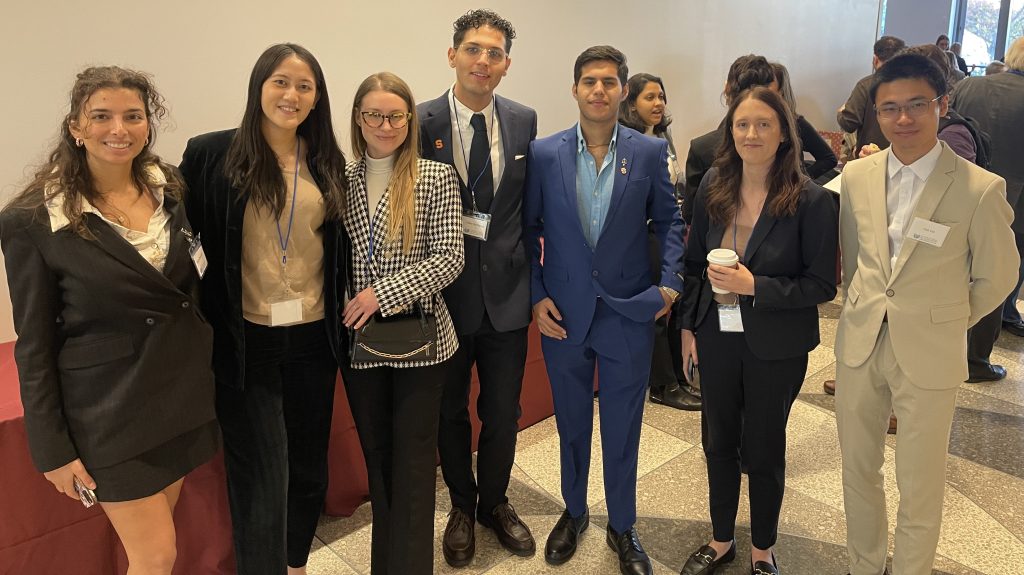
Several Syracuse Law students from the International Law Society (ILS) recently attended the International Law Weekend Conference (ILW), hosted by the American Branch of the International Law Association (ABILA). The students were accompanied by Professor Cora True-Frost G’01, L’01, Faculty Advisor to the ILS, the most recent cohort in a longstanding tradition of Syracuse Law students attending the ILW.
At the conference, students participated in panels addressing some of the most pressing legal challenges facing the world today, including space law, immigration law, and labor regulation enforcement. They also had the chance to network with leading experts in international law, gaining valuable insights and perspectives on the global legal landscape.
“The conference gave students the opportunity to think through the legal problems they will address in their careers, both immediately after graduating and throughout their lifetimes, while also networking with attorneys from around the world and exploring job opportunities in various fields of international law,” says Zoe Tkaczyk L’25, president of the ILS. “The weekend in New York gave us the opportunity to get to know our classmates better and to spend time together and with alumni.”
Omar Sabbatini, an exchange student from the University of Rome Tor Vergata in Italy, who is spending the fall 2024 semester at Syracuse Law, highlighted the significance of the conference. “The ABILA’s ILW allowed us to engage with prominent figures in international law, including individuals who might seem distant from us—such as the author of our international law textbook, who participated in a panel alongside the Swiss and Chinese ambassadors,” he said. “Our attendance enabled us to establish meaningful connections with students and professionals while delving into lesser-known areas of international law, such as the law of people at sea. It also illuminated pressing issues, such as the situation of women in Afghanistan, through direct and authentic testimonies.”
“The International Law Weekend Conference provided Syracuse Law students with a unique platform to expand their global perspectives, deepen their understanding of international law, and connect with a diverse community of legal scholars and practitioners,” says True-Frost.
Crandall Melvin Professor of Law Shubha Ghosh, director of the Syracuse Intellectual Property Law Institute, recently spoke with The Verge for their article “Breaking down the DOJ’s plan to end Google’s search monopoly.” The DOJ has proposed many remedies after a federal judge ruled that Google monopolized internet search and other services.
Discussing the possibility of Google selling its Chrome browser, Ghosh says “There is definitely an issue about whether you’re just simply transferring a valuable asset from one company where these assets are too tightly integrated, to another company.”
Another proposed remedy is for Google to license some of its most valuable data. “Data is not really protected, per se, by intellectual property,” Ghosh says. “It’s not like Google created the data. They created the platform that allowed the data to be generated.” It’s like asking who owns a news event, he adds. “The news is just what happens, and you just have an agency that collects it or observes it. But that doesn’t by itself create any kind of property right.”
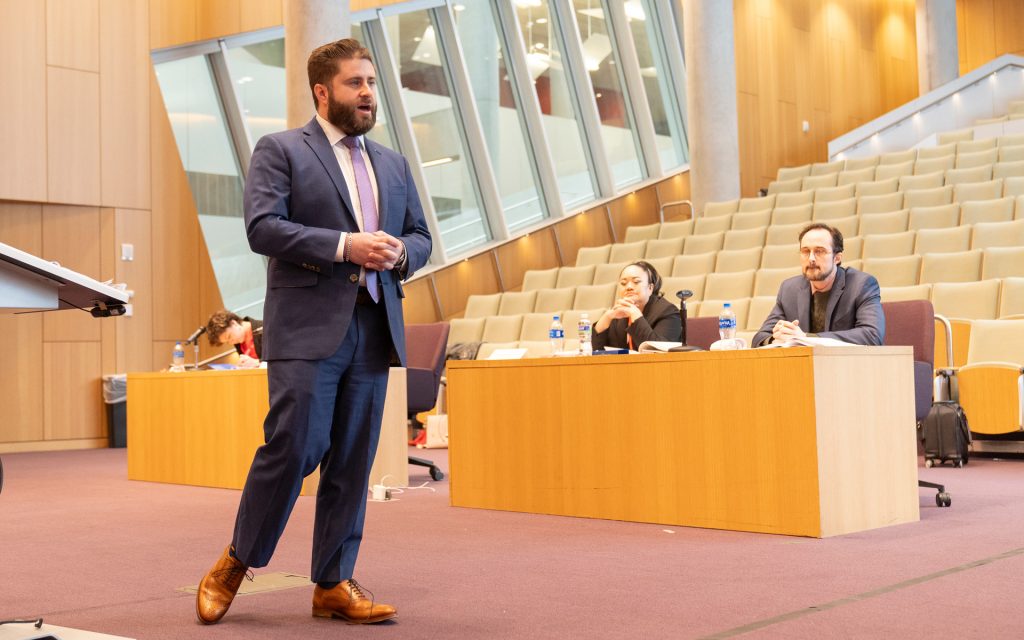
Many students at the Syracuse University College of Law aim to work as general counsel at some point in their careers. And, while most have a sense of what that job title entails, Syracuse University College of Law students who participated in the General Counsel Symposium, sponsored by the Corporate Law Society (CLS) in Dineen Hall, had a unique opportunity to network and gain face-to-face insights from prestigious alumni and guests willing to share their own experiences working as general counsel for leading corporations around the globe.
“Every single alumnus I reached out to said ‘yes’—a true testament to the Orange alumni network.”
—Brett VanBuren L’25
The concept started last February when Brett VanBuren L’25, president of the CLS, proposed the idea of organizing a General Counsel Symposium to Lily Yan Hughes, assistant dean of career services and student experiences. After getting the green light, VanBuren and his team of Nicholas Troia L’25, Gabriella Amaturo L’25 and Dana Krinsky L’25, as well as Director of Alumni Relations Adrienne Lutz, started to assemble a diverse lineup of alumni and a few others with outstanding experience working as general counsel.
“Every single alumnus I reached out to said ‘yes’—a true testament to the Orange alumni network” said VanBuren.
Alumni Paired With Student Organizations on Current Issues
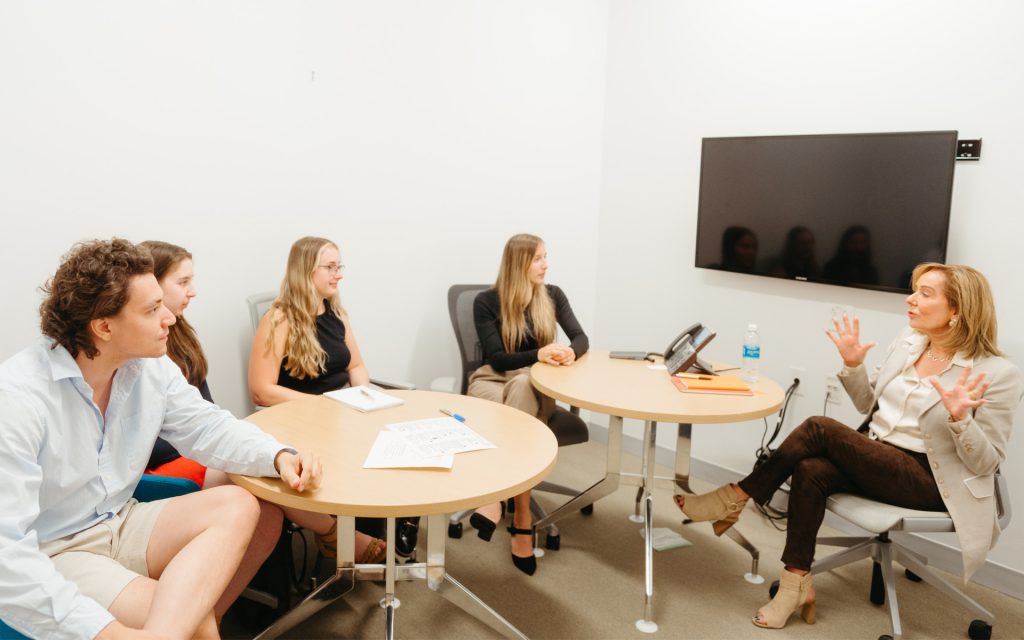
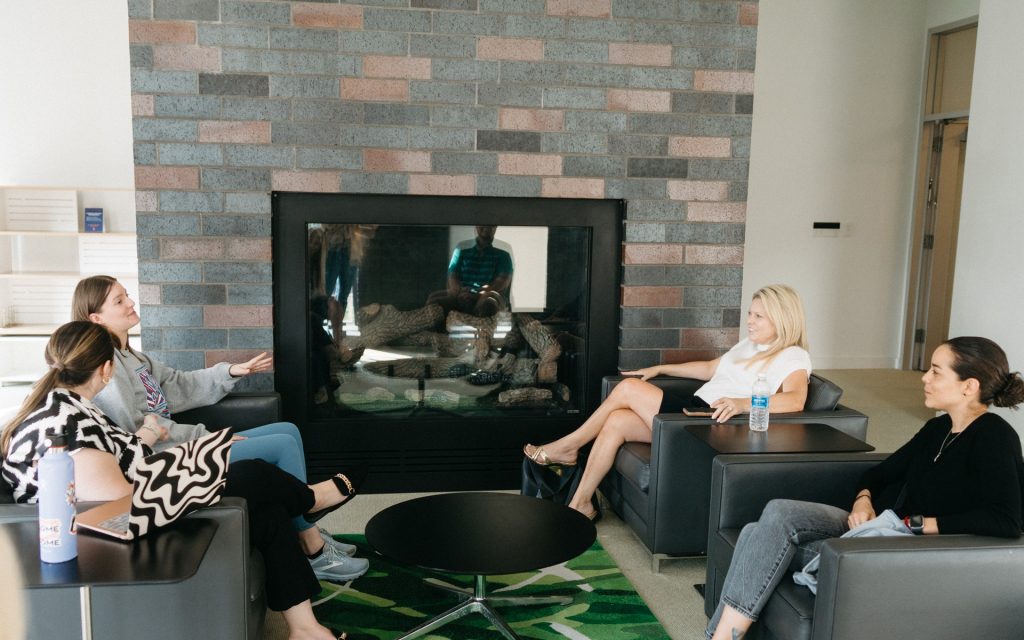
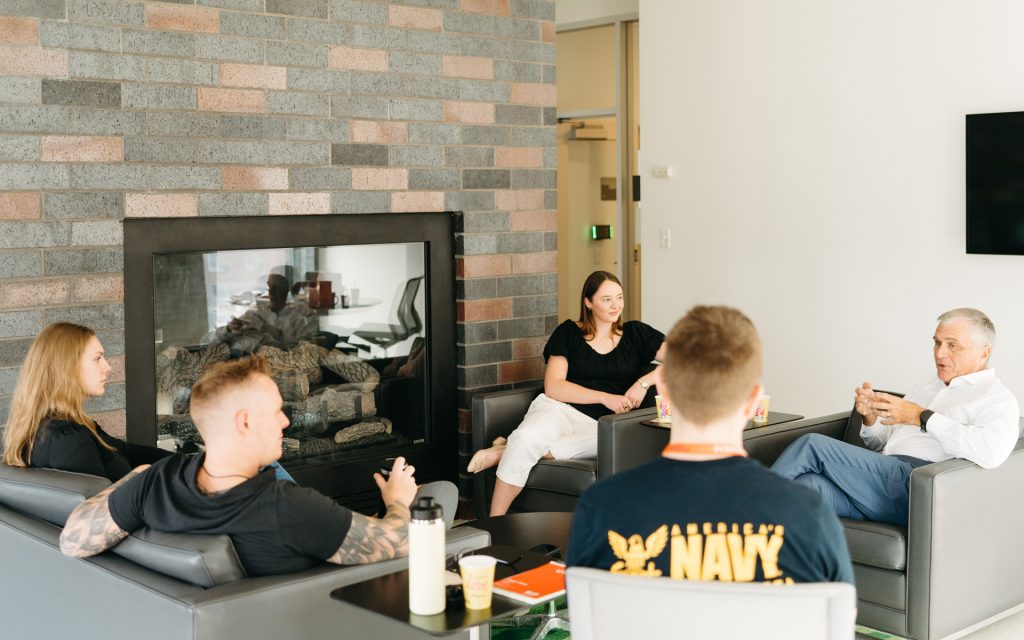
Early in the day, alumni and other guests were paired with various Syracuse Law student organizations based on areas of interest and expertise.
Students from the Bankruptcy Clinic had the opportunity to meet with Melanie Gray L’81, former chair, Syracuse University College of Law Advisory Board and Syracuse University trustee, who practiced complex commercial law and was lead attorney on behalf of Enron during its Chapter 11 bankruptcy filing, which, at the time, was the largest corporate bankruptcy in U.S. history.
Leslie Park L’95, assistant general counsel and senior vice president, legal & business affairs, Hallmark Media, explained some of the challenges faced by her company, primarily due to its extensive movie library, to the Entertainment and Sports Law Society (ESLS). “Leslie Park provided such an eye-opening perspective on the different ways in which the law intersects with the entertainment industry,” said Krinsky, president of the ESLS. “She shared candid advice about how to break into the industry and truly took the time to listen to members’ goals and respond with tailored recommendations.
A former lead articles editor of Syracuse Law Review, Aaron Tidman L’07 met with current editors outlining his non-traditional career path that eventually led him to his current work as assistant general counsel and director of compliance at Pinterest.
Rebecca Peters ’00 MPA (MAX), L’00, director of public policy, semiconductor policy, Samsung, met with the Women’s Law Student Association for a conversation about her own career path, along with changes being made in the legal profession today.
Jim Dixon, retired senior vice president and chief legal officer, RWE Clean Energy, met with students from the Veterans Law Society and the Environmental Law Society. “We were allotted about 30 minutes, but Jim conversed with us for over an hour-and-a-half,” said Luke Overdyk ’22 (Falk), L’26. “Much of our career pursuit is internet based, and it can be difficult to navigate. It was encouraging to hear from a professional like Jim in person and speak candidly. He welcomed our many questions and offered his best advice for aspiring environmental lawyers.”
Panel Discussions Gave Students Practical Insight From Prestigious Thought Leaders
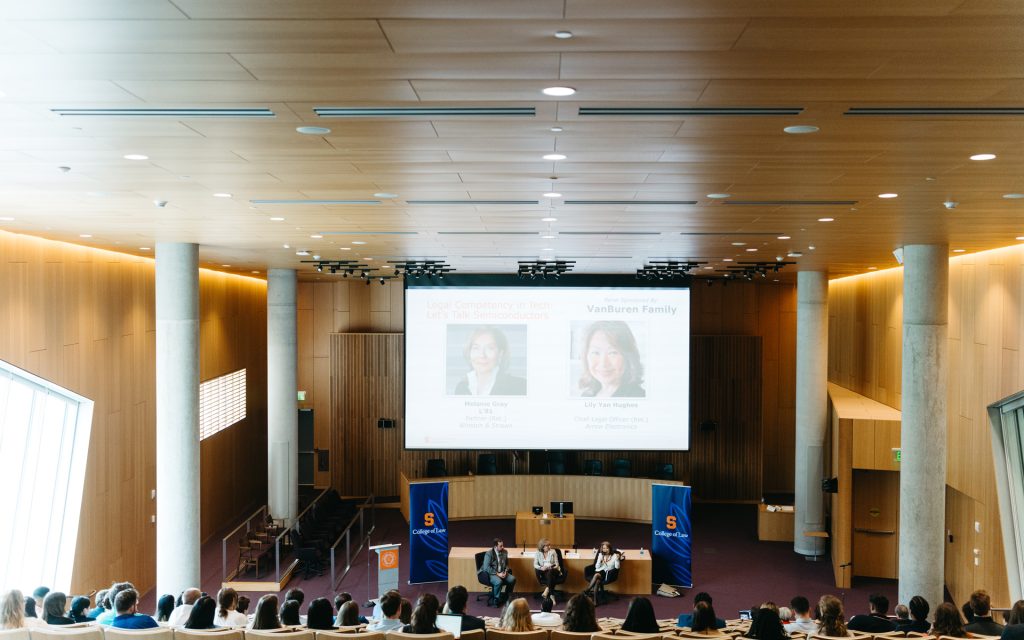
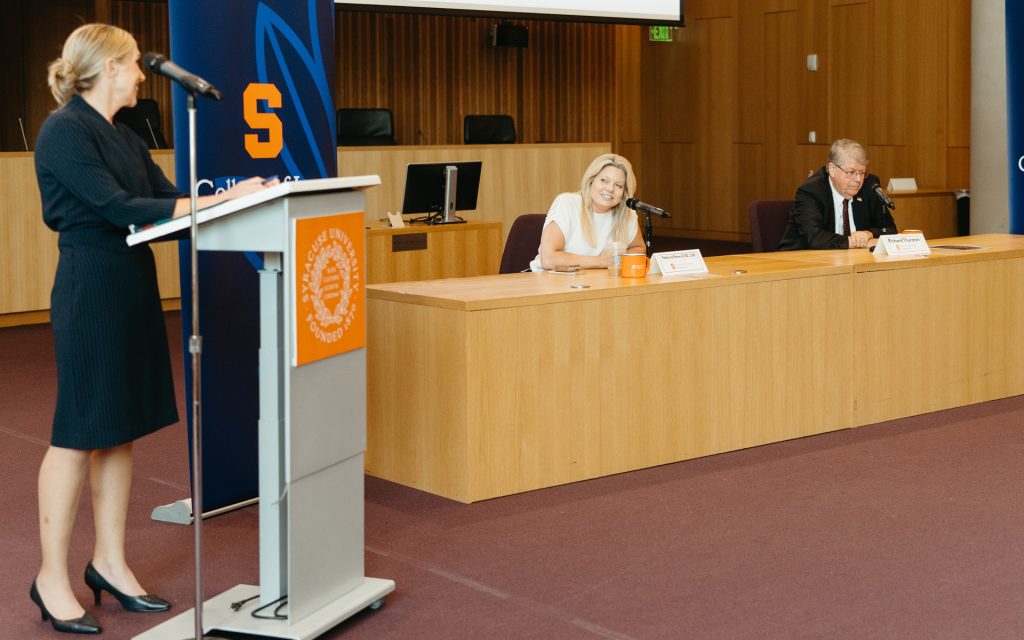
In the afternoon, Syracuse Law Dean Terence J. Lau L’98 welcomed attendees to the Melanie Gray Ceremonial Courtroom.
“This symposium is an outstanding example of the bonds that Syracuse Law forges between students, alumni and industry partners through mentorships that span generations and philanthropy that opens doors for the next wave of legal minds,” said Lau. “To our students here today—look around. These accomplished professionals were once where you are now. And, they’re here today because they believe in you and your potential to change the world.”
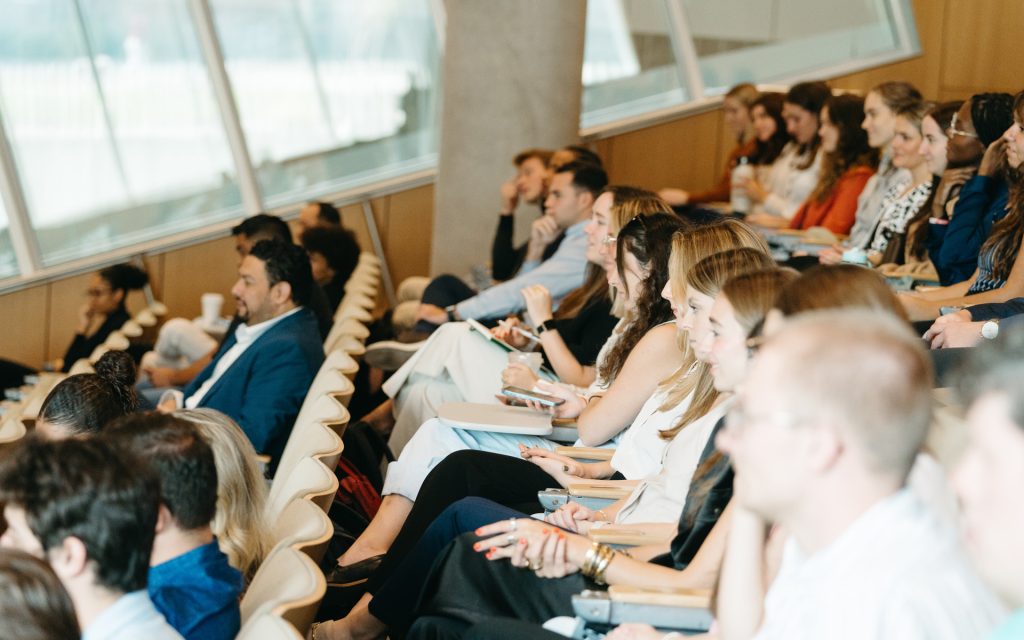
Following the dean’s remarks, four discussion sessions were offered to students, including Syracuse Law’s JDinteractive (JDi) students, who were able to participate through a livestream. Each session was comprised of a panel of several alumni or other guests with specific expertise as general counsel. These sessions included:
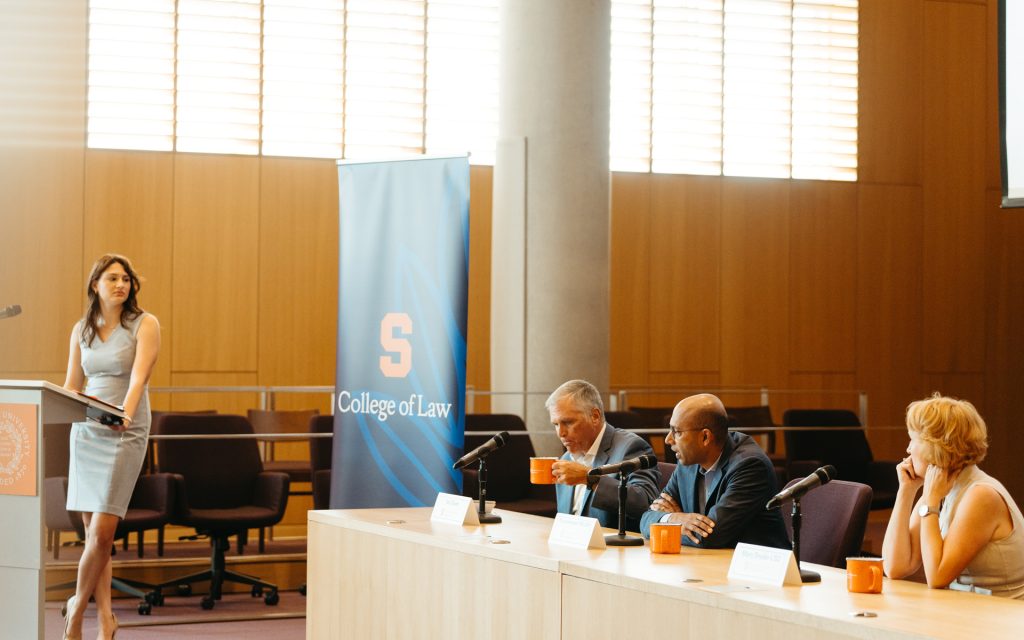
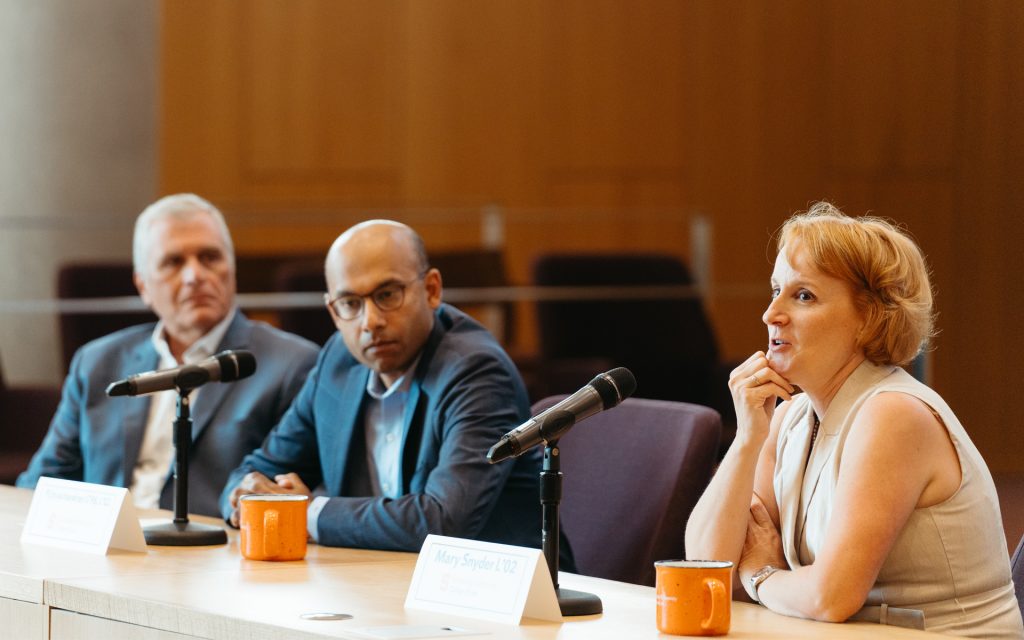
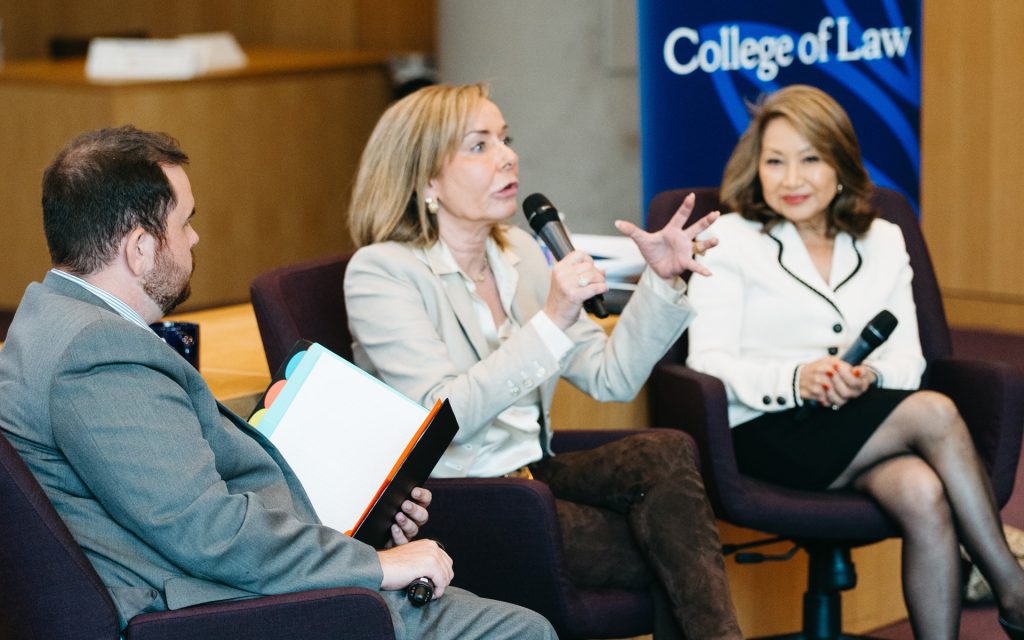
Left to right: Jim Dixon, Prashanth “PJ” Jayachandran ’98 MPA, L’98, and Mary Snyder L’02
Welcome to In-House: The Role of General Counsel with panelists Dixon, Mary Snyder L’02, executive vice president & general counsel, SRC; and Prashanth “PJ” Jayachandran ’98 MPA, L’98, senior vice president & chief supply chain counsel, Colgate-Palmolive, and a distinguished lecturer at Syracuse Law. This session helped clearly define what a general counsel does, as well as understand how a solid knowledge of business can influence senior leadership by offering new ideas or measures that mitigate risk.
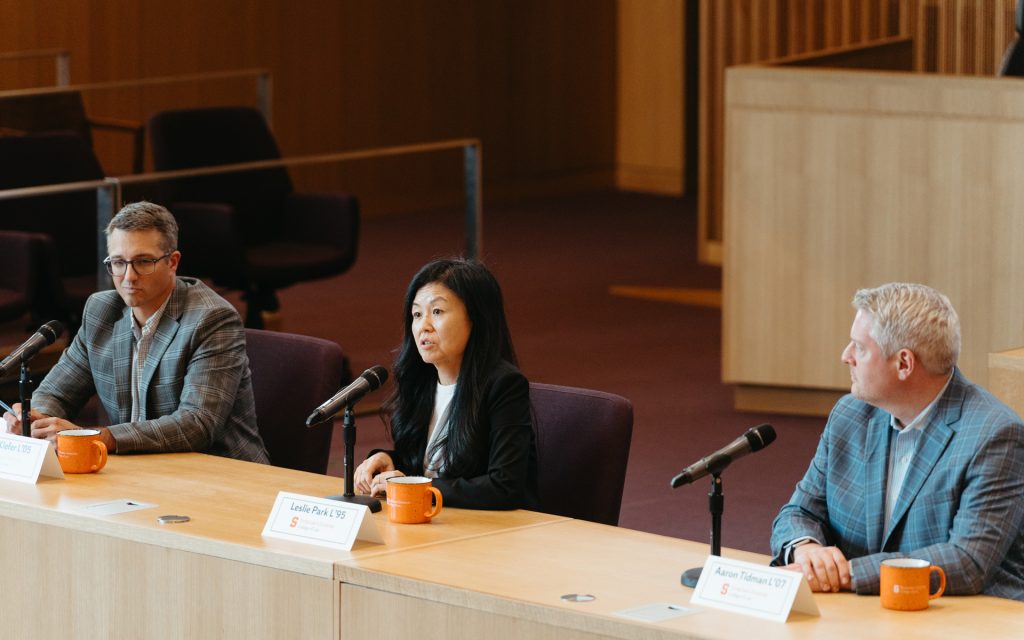
Left to right: Kris Kiefer L’05, Leslie Park L’95, and Aaron Tidman L’07
Getting to the Boardroom: The Path to In-House Success with panelists Park, Tidman and Kris Kiefer L’05, assistant general counsel and director, National Grid. Many students attending this session were interested in hearing about what companies are looking for when hiring a general counsel, as well as the importance of developing excellent soft skills, like listening, communicating and wanting to do the right thing.
Legal Competency in Tech: Let’s Talk Semiconductors with panelists Peters and Richard Thurston, current chairman, CEO and chief legal officer, Hudson Valley Fast Fab; founder of RLT Global, a semiconductor consulting firm, and retired senior vice president, general counsel, Taiwan Semiconductor Manufacturing Co., was particularly valuable, as the Syracuse community prepares for Micron Technologies to build a $100 billion chip manufacturing facility in Central New York.
Left to right: Brett VanBuren L’25, Melanie Gray L’81, and Lily Hughes.
Leadership Challenges: Handling the Best and the Worst Days of a Company with panelists Gray and Hughes, who, before joining Syracuse Law, was a former chief legal officer at Arrow Electronics and vice president and associate, general counsel for corporate finance and mergers and acquisitions at Ingram Micro, a former Fortune 100 New York Stock Exchange-listed company. Students heard how every successful career comes with some mistakes along the way and were encouraged to “own up to it and disclose it,” by Hughes, who said most problems have solutions if they are identified quickly.
Evening Session Focused on Negotiations, Competition
After a reception where students were able to further engage with participating alumni and guests, Jeff Gewirtz, executive vice president, business affairs chief legal officer, Brooklyn Sports and Entertainment Global, Zoomed in from New York City to speak to the group on negotiations, as well as how his law degree has set him up for success in the business world.
Bringing the day to a close was the final round of the inaugural Corporate Law Society’s Business Negotiation Competition (BNC), sponsored by local firm Bousquet Holstein. Two teams of law students who made it through to this final round negotiated a real world business scenario in front of judges that included Gray, Park and Thurston.
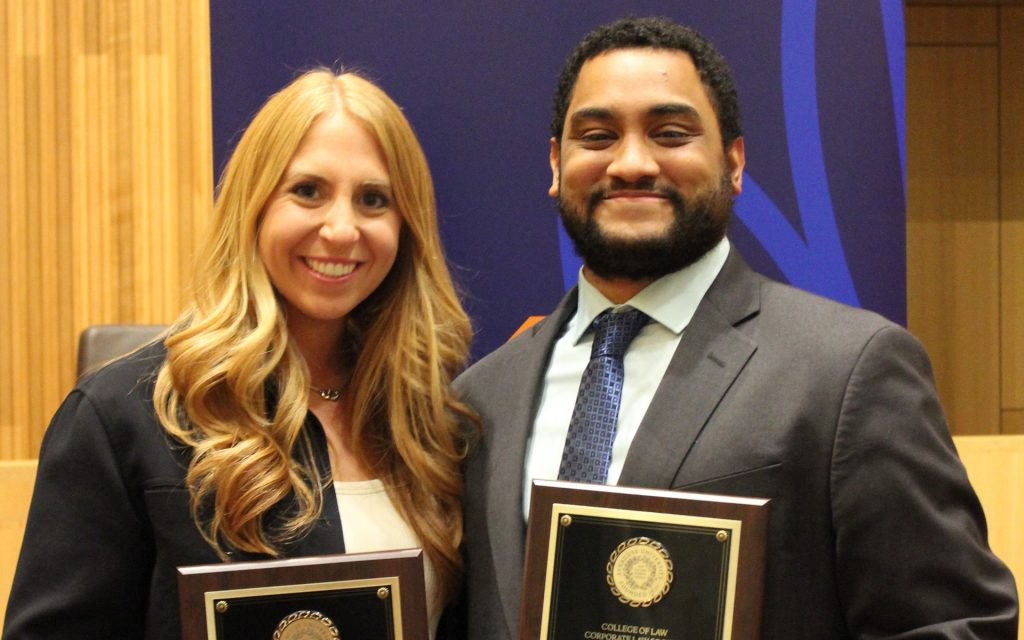
Sixteen competitors in teams of two participated in the BNC, which is a hallmark of Syracuse Law’s intercollegiate advocacy competitions. Through three preliminary rounds held earlier in the month, students worked on fictitious legal scenarios until two teams made it to the finals. Austin Dewey L’26 and Gregory Patrick L’26 went head-to-head against Krinsky and James Cameron III L’25 in a scenario involving negotiating a new terminal, additional routes and a percentage of local hires for an airline establishing a new hub. In the end, the team of Cameron and Krinsky walked away with the win.
Overall, the first General Counsel Symposium was a great accomplishment, according to VanBuren. “I think it was a success thanks to the openness of our alumni who were willing to share their own stories,” he said. “I knew every one of them was going to be a hit, as each person not only has already had an accomplished career but was honest, passionate and humorous. I think the outcome of the day was witnessing how wide-ranging the work of a general counsel can be. There was something for everyone—from employment law to legal ethics to emerging technology. I hope the General Council Symposium continues to happen every year and only grows in impact.”
Crandall Melvin Professor of Law Shubha Ghosh recently spoke with the Associated Press on the DOJ’s request that a federal judge impose several sanctions to break up Google’s monopoly on search engines and other technologies. The request includes the potential sale of the Chrome web browser and that its Android operating system should be completely walled off from the company’s search engine.
“It is probably going a little beyond,” Ghosh said of the Chrome breakup. “The remedies should match the harm; it should match the transgression. This does seem a little beyond that pale.”