The College of Law will host the Hon. Rosemary Pooler Memorial Lecture on Thursday, March 27 from 4 – 5 p.m. in Dineen Hall. The keynote speaker is Miriam Seifter, Professor of Law, Co-Director of the State Democracy Research Initiative, and Rowe Faculty Fellow in Regulatory Law at the University of Wisconsin Law School.
Seifter will deliver the address “Law for All: The Legacy of Judge Rosemary Pooler.” The Hon. Rosemary Pooler, who passed away in 2023, was a United States Circuit Judge of the United States Court of Appeals for the Second Circuit.
Other speakers will be College of Law Dean Terence Lau L’98; the Hon. Brenda K. Sannes, Chief U.S. District Judge for the Northern District of New York; and College of Law Professor Jenny Breen.
Please RSVP for the lecture with a reception to follow.
The following day the College of Law will host the United States Court of Appeals for the Second Circuit for oral arguments. The Court will be in the College’s Melanie Gray Ceremonial Courtroom on March 28 from 10 A.M. to 11:30 A.M. The oral arguments are free and open to the public. Seating is limited.
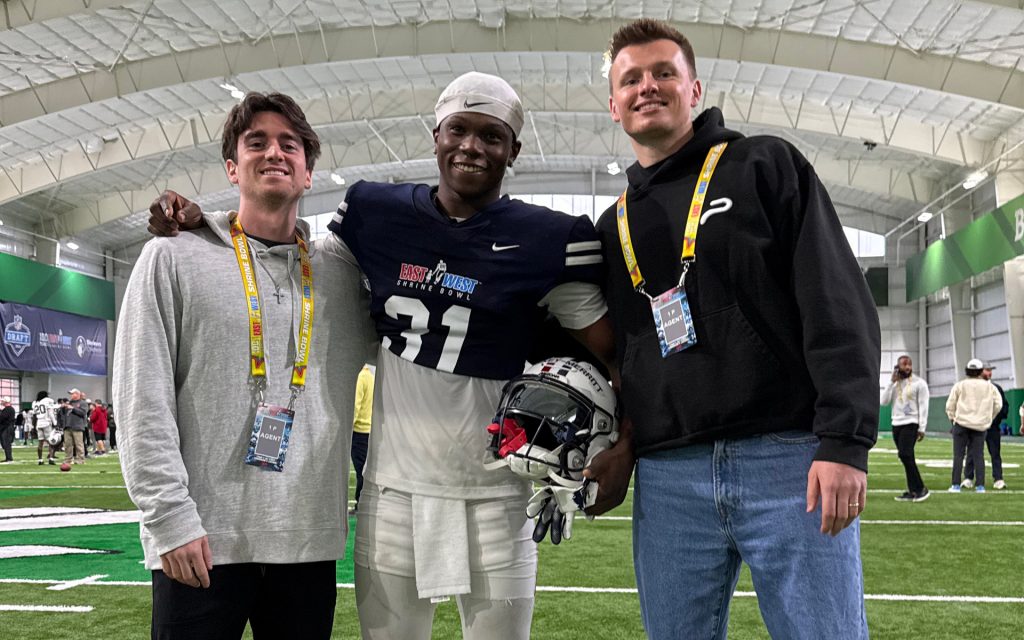
Alex Styrt ’22, L’25 (left) with Premier client Jacory Croskey-Merritt (2025 NFL Draft Prospect) and agent/general counsel at Premier, Wyatt Mumfrey.
Alex Styrt ’22, L’25, is on the fast track. A 3L at Syracuse University College of Law, he is also founder and CEO of Premier Athlete Agency, a full-service sports agency representing elite athletes. The business is based in San Diego, California, and, thanks to Syracuse Law’s Orange Flex program, Styrt is able to live on the West Coast while finishing his law degree.
Styrt always wanted to be a sports agent, so he decided a degree in business followed by law school was the way to go. Typically, it would take seven years of school to get his career started, but then he found Syracuse University offered one of the country’s only 3+3 BS/JD programs. This accelerated program allows qualified students to earn a bachelor’s degree at the Martin J. Whitman School of Management in only three years and then, upon acceptance, get a jump start at Syracuse Law.
“The opportunities to get an undergraduate degree in three years and go right into Syracuse Law, along with the Orange Flex program, have let me accelerate my dream career, grow my agency and become a lawyer—all by age 24.”
—Alex Styrt ’22, L’25
At Whitman, Styrt majored in entrepreneurship and emerging enterprises (EEE). He was encouraged by his professors to take the plunge and start his own business in the developing area of NIL (name, image and likeness), which allows NCAA athletes to be paid for endorsements, appearances and other opportunities. He says the support system from the school “played a big part in his success,” even allowing him to use the work he was doing to establish the agency to fulfill course credit requirements.
“Getting the business running before starting law school made all the difference. Once I was a 1L, I don’t think I would have had the time to get it done,” Styrt says.
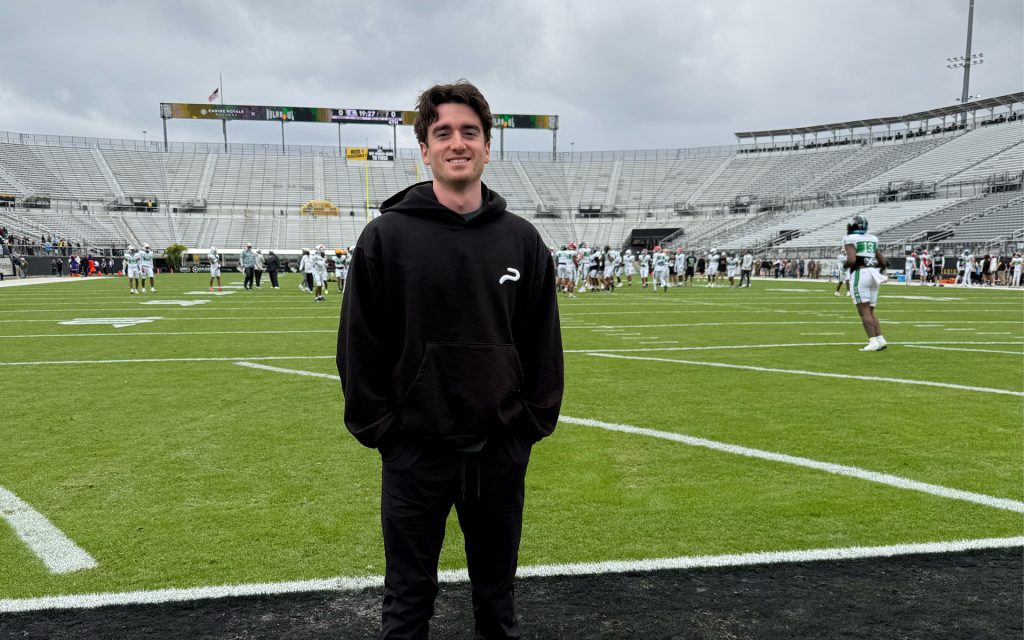
Alex on the field at the Hula Bowl in Orlando, Florida.
In 2022, he graduated from Whitman after just three years and started at Syracuse Law that fall with a focus on sports, entertainment and intellectual property. Styrt went to law school with the intention of building skills like negotiating, client advocacy and an overall knowledge of the law to help him better represent athletes for everything from endorsement deals to player contracts.
Styrt spent his first two years at Syracuse Law juggling classes while keeping his business growing over calls, texts and Zoom. But in 2L, Barry Weiss, special advisor to the Office of Career Services, suggested he look into Syracuse Law’s Orange Flex program, which allows qualified 3Ls to take their last year of classes online through the School’s JDInteractive program.
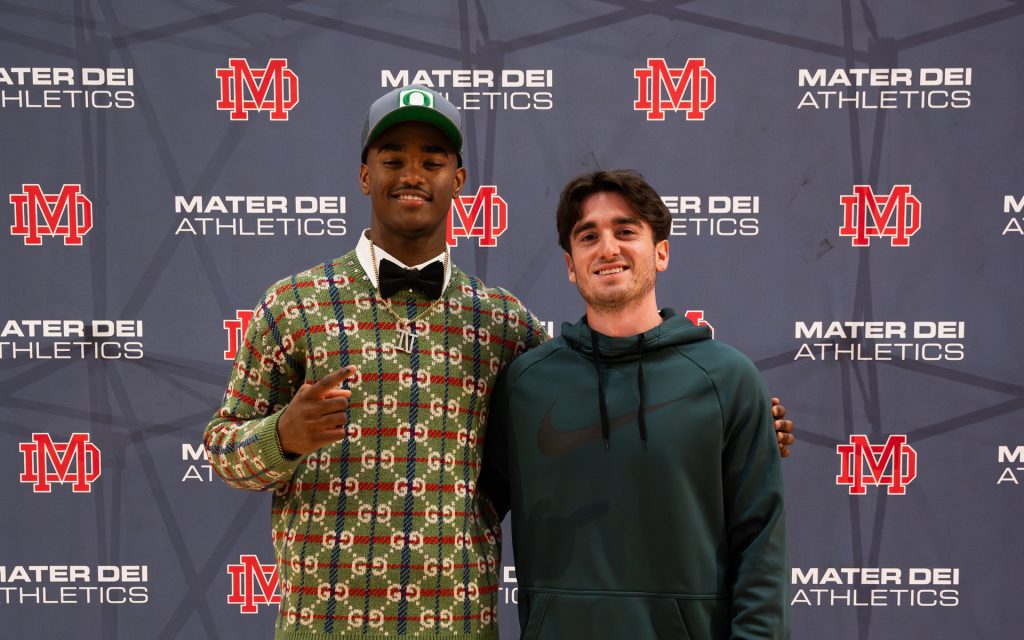
Alex with with Premier client, Nasir Wyatt (University of Oregon) at Mater Dei signing day in Santa Ana, CA
“Orange Flex was perfect for me,” he says. “I’m spending my 3L year in San Diego taking my courses online, while running my business full time. I’ve made a lot of sacrifices and put in plenty of 14 hour days jumping from classes to client calls, but the progress growing the company in just the past six months has been worth it. It’s my passion.”
His first client was signed by the San Francisco 49ers three years ago, when Styrt was only 21. Since then, the agency has expanded its client base to players drafted by more than a dozen NFL teams, as well as made inroads into women’s college basketball, beach volleyball and soccer. Styrt has worked with NFL athletes such as Jared Goff and Kerby Joseph, as well as artists such as Wiz Khalifa and Heembeezy. Most of Styrt’s time is spent working with his team at the agency, as well as representing athletes and their families in off-field business and marketing opportunities. He has negotiated endorsement deals with brands like Oakley, Alo, Bose, Fiji Water and Bulgari.
Alex with Tayler Hawkins (San Francisco 49ers) at the Versace Store in San Diego.
When Styrt graduates in Spring 2025, he will focus solely on the agency, but, to him, it’s become about so much more than just business. Styrt has become close with his clients and their families and says he “feels blessed to have developed great relationships that will last beyond football. They are family now.” He also credits his friends and own family who have been there since the beginning.
As his agency succeeds, giving back is important to Styrt, and he encourages his clients to give back, as well. Annually, Premier’s college athlete clients partner with Oakley to support the Boys and Girls Club through a holiday event where athletes sign autographs, take pictures and wrap gifts. Styrt assisted his client Cameron Young of the Seattle Seahawks with creating a bike drive where he gave away over 100 bikes to kids from his community in Crosby, Mississippi. And, currently, Premier is supporting client Josh Karty of the Los Angeles Rams, in his chosen charity for the NFL’s My Cause My Cleats—The American Cancer Society—by matching donations made in his name.
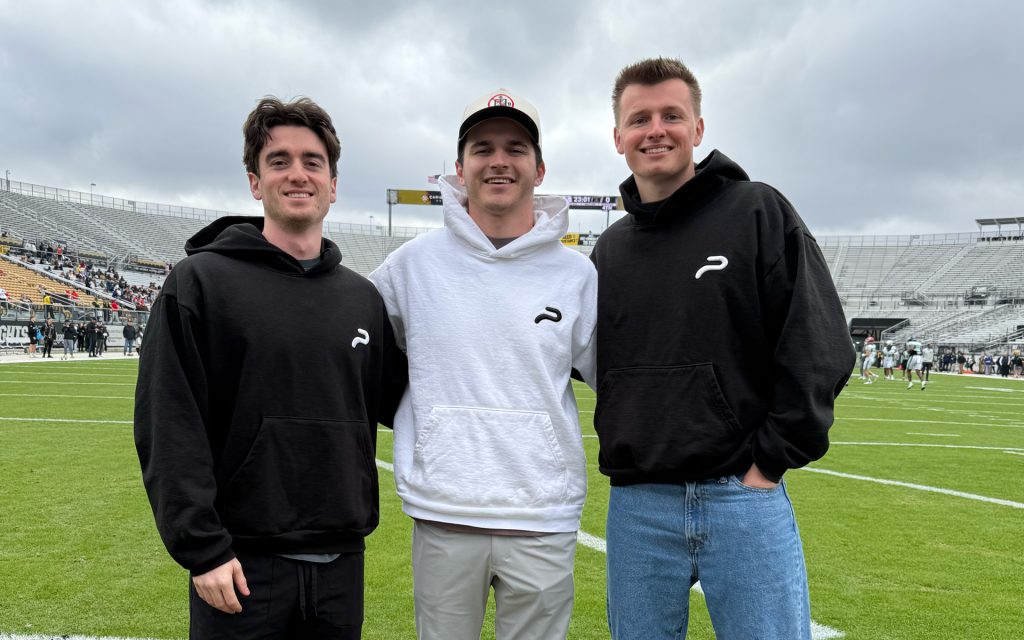
Alex (left) with Cole Singer (agent at Premier), Wyatt Mumfrey (agent and general counsel at Premier) at the Hula Bowl in Orlando, Florida.
Today, Premier is a full-service sports agency operating remotely with more than 30 team members, including in-house legal counsel and some employees recruited from Syracuse University. As of December 2024, Premier is providing legal services and business and marketing representation to over 40 clients across the NFL, NCAA and Ultimate Fighting Championship (UFC).
“Of course, I want to continue scaling the agency, but, the more I do this, the more it’s important to build a reputation as a person of character who cares about the athletes I work with and their families,” he says, noting that he specializes in setting up clients for their lives after football, something often overlooked with NFL players.
While Styrt acknowledges that becoming a sports agent is very competitive, he believes he has found his niche and is eager to see where it takes him.
“The opportunities to get an undergraduate degree in three years and go right into Syracuse Law, along with the Orange Flex program, have let me accelerate my dream career, grow my agency and become a lawyer—all by age 24,” he adds. “The whole experience at Syracuse has definitely been a win for me!”
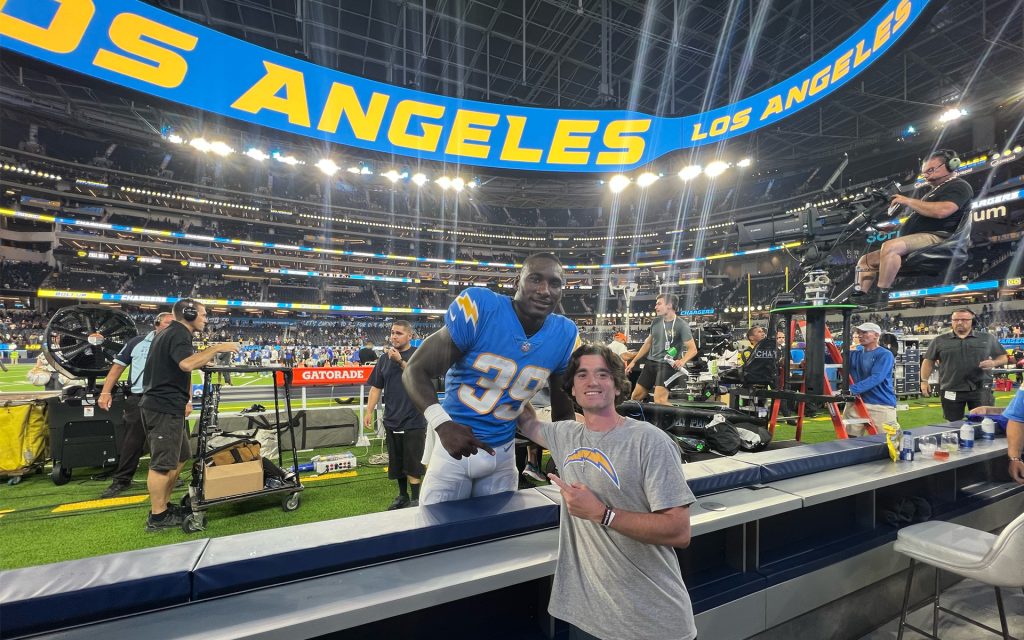
Postgame pic with Premier client Kevin Marks Jr. (Los Angeles Chargers) at Sofi Stadium in Los Angeles, California.
Early in his legal career, Gabriel Sepulveda-Sanchez L’11 worked with an insurance defense firm, where he represented insurance companies in personal injury lawsuits. In some ways, however, it made him uneasy to work in an area that undervalued people’s injuries. When his father brought a wrongful death case to his attention, he passed it along to another attorney with experience in this type of law, lending a hand with the case on weekends. Soon, Sepulveda-Sanchez realized that he felt more fulfilled helping injured people and families who had suffered a loss than he did trying to minimize costs for insurance companies. So, with only six months of living expenses in his bank account, he started passing out his business cards and founded his own personal injury firm, Sepulveda Sanchez Accident Lawyers, in 2015.
“If you told me at age 25 that I would one day own my own law firm, I wouldn’t have believed it. But, I made it happen.”
—Gabriel Sepulveda-Sanchez L’11
This November, Sepulveda-Sanchez was recognized for his entrepreneurial spirit as a recipient of a 2024 ‘CUSE50 award, which honors the top 50 fastest growing alumni businesses owned or led by Syracuse University graduates. He is honored to be recognized by the University and credits his time at Syracuse University College of Law for helping him build a strong legal foundation.
“If you told me at age 25 that I would one day own my own law firm, I wouldn’t have believed it,” he says. “But, I made it happen. The award is a beautiful honor that makes me feel so pleased to be a part of a great University and Law School. And, it was so cool to come back to campus and meet other successful entrepreneurs from so many different fields who were also recognized at the event.”
“Syracuse Law trained me to think critically. It taught me how to study, gave me confidence and helped me find a network of friends and colleagues, many of whom I still have today.”
—Gabriel Sepulveda-Sanchez L’11
Sepulveda-Sanchez chose Syracuse Law because he wanted an experience somewhere completely different from his native California. “I took a big chance moving across the country to Upstate New York to go to law school, but I like a challenge,” he says. “It was the right decision. Syracuse Law trained me to think critically. It taught me how to study, gave me confidence and helped me find a network of friends and colleagues, many of whom I still have today.”
Currently, Sepulveda Sanchez Accident Lawyers has four attorneys, 20 staff members and offices in Los Angeles and Stockton, California; as well as a satellite location in New York City. The company represents those seriously injured in obtaining justice by maximizing their settlements or verdicts in the courtroom. Sepulveda-Sanchez is fulfilled by being able to help those who might not be able to navigate the complexities of the insurance system on their own.
“We become really close to our clients and work hard to make sure they have the financial means to recover from their injuries, pay their medical expenses and still support their families,” he says. “And, we also look out for our clients when they do receive a cash award, particularly a large one, by helping them create a structured settlement, so they can make their money last. Most people aren’t used to getting a large amount of money all at once, and that can result in some impulsive spending or bad financial advice from others. In some ways, we work to protect our clients from themselves and make sure their settlements will last for a long time.”
Sepulveda-Sanchez acknowledges the negative stereotypes that can sometime go along with being a personal injury lawyer, noting that the billboards and advertisements with memorable jingles and slogans are the reality of working in such a competitive field. But, he is proud of what he does because he knows that he is really changing people’s lives for the better.
“It’s all funny to people until they have a life-changing injury and need a lawyer to help them,” he says. “Then, they have a whole different view of what we do.”
This past year, his firm helped a client receive the firm’s largest award to date—$10 million. Sepulveda-Sanchez explains that a security guard was driving home at midnight on the freeway when all he remembers is “hitting a brick wall and waking up in the hospital.” What he had actually hit was an 18-wheeler. Its airbrakes had failed, and the tractor trailer stopped in the middle of the dark road with no hazard lights to warn oncoming traffic.
“Our client never saw it coming, but the police tried to say that the client might have fallen asleep at the wheel,” explained Sepulveda-Sanchez. “He had extensive injuries to his legs, but we went to work and proved that the truck driver was at fault and got our client a structured settlement that will ensure he can make a full recovery and continue to support his loved ones. We became really close to the family and supported them throughout the process. That’s when you know the work you’re doing is really helping people.”
Sepulveda-Sanchez’s firm continues to grow, and since reconnecting with Syracuse Law and others at the University through the ‘CUSE50 event, he is eager to become more involved with his alma mater by speaking to students, mentoring or helping would-be lawyers any way he can.
“I tell people that while I passed the bar, it was Syracuse Law that really made me a lawyer—and I’m very proud of that.”
—Gabriel Sepulveda-Sanchez L’11
“I’m honored to have receive a ‘CUSE50 award this year as a graduate of the Syracuse University College of Law,” he says. “I tell people that while I passed the bar, it was Syracuse Law that really made me a lawyer—and I’m very proud of that.”
Crandall Melvin Professor of Law Shubha Ghosh, Director of the Syracuse Intellectual Property Law Institute, commented that the recent summary judgment in favor of Thomson Reuters in their lawsuit claiming copyright infringement against Ross Intelligence’s use of artificial intelligence (AI) was a “strong victory.”
“The trial will proceed, [but] Thomson Reuters was awarded a summary judgment, a victory at this stage of the litigation,” Ghosh said in a Tech Crunch interview. “The judge also affirmed that Ross wasn’t entitled to summary judgment on its defenses, such as fair use and merger. As a consequence, the case continues to trial with a strong victory for Thomson Reuters.”
Nassau notes that the earned income tax credit, or EITC, a refundable tax break for low- to moderate-income workers, is a common target.
“There are people who claim it improperly for one reason or another,” said Nassau. “It can be confusing,” with eligibility based on earnings, residency, and family size.
Professor Katherine Macfarlane spoke with Bloomberg for the story “74 Lawsuits Have Been Filed to Stop Trump, Most in a Handful of Courts”. The article examines where lawsuits challenging President Trump’s executive orders are being filed.
Macfarlane, an expert in federal civil procedure, said that in politically charged cases, at least some amount of “macro” strategy around where to file has become standard.
Political protections like life tenure haven’t “been enough to give parties confidence that it doesn’t matter who you’re in front of,” she said.
Macfarlane’s recent article “Constitutional Case Assignment”, published in the North Carolina Law Review, addressed judge-shopping and case assignment in the federal district courts, and is available here: https://papers.ssrn.com/sol3/papers.cfm?abstract_id=4539837.”
Dean Terence Lau, a former international trade expert at Ford Motor, spoke with CNBC on automotive industry tariffs being proposed by President Trump.
Lau said that the automotive industry is built on free trade as is adaptable to change. “The car industry can adjust to anything. Really, it can. It’s always going to make product that customers want to buy because personal mobility and transportation is a human need all around the world,” he said. “What the car industry cannot do well is pivot on a dime.”
Lau argued that a single-digit tariff can be a “nuisance,” but once they hit 10% or more, that’s when additional costs can really begin eating into the margin on products.
Dr. Amanda Higginson L’25 and Dr. Tobias Mattei L’25 are featured in the ABA Journal article “Jurist Doctors: Physicians Return to Law School for New Challenges.” The article examines the trend of physicians returning to school to obtain a law degree. Higginson and Mattei attended the College of Law’s hybrid online JDinteractive program.
Dr. Mattei, Chief of Spine Surgery and Associate Professor, Division of Neurological Surgery at St. Louis University, decided to attend law school during COVID-19 to assist in his review of potential legal cases and other instances where he was an expert witness.
Dr. Tobias Mattei L’25
“I just wanted to be smarter than the attorneys I was dealing with, to make sure I could understand the framework” of legal cases,” says the spinal cord specialist who has a few patent applications. “Very few doctors, especially neurosurgeons, have this special knowledge.”
Dr. Higginson, Associate Dean for Student Affairs, Clinical Sciences, and Clinical Professor of Pediatrics at the Brody School of Medicine at East Carolina University, is a U.S. Navy veteran who used the GI Bill to attend the College of Law.
“Our office handles all of the policies surrounding the medical students,” she says. “I view those now in a slightly different way, in terms of the language used.”
Some people know from an early age that they want to be lawyers. For others, the path to a law degree comes later, shaped by life experiences and schooling. What is undeniable is that a J.D. degree offers incredible flexibility to chart a successful career, no matter the challenges or circumstances that come along the way.
That’s the experience of Danielle Wild L’15, an Associate Teaching Professor at Syracuse Law and a member of the Legal Communication and Research (LCR) faculty.
Wild’s path back to her alma mater—and into teaching—was not direct or fully intentional.
She originally planned to pursue a career as a forensic psychologist, earning a B.A. in Psychology with a minor in Criminal Justice at Roberts Wesleyan College (now University). During her undergraduate studies, she became more aware of and passionate about restorative justice, the Innocence Project, and wrongful convictions.
“When my interests started going in that direction, I decided to graduate early and gain experience in the legal field,” she explains. “Several professors encouraged me to consider law school. I worked as a paralegal for a year, and that confirmed I wanted go this route [to law school].”
While she applied to many law schools, she chose Syracuse Law to stay close to family and accommodate fast life changes. “I grew up in Syracuse, and my whole family is here,” she says. “I was living in Rochester when I decided I wanted to go to law school. I got married a month before starting law school while my husband was finishing graduate school. We decided we wanted to stay near family.”
That decision turned out to be a very fulfilling one for Wild. At Syracuse Law, she competed on the National Trial Team and was a member of the Moot Court Honor Society (now the Travis H.D. Lewin Advocacy Honor Society). Additionally, she served as the Secretary of the Justinian Honor Society, a Law Ambassador, and an editor on the Syracuse Law Review. As a 3L, she was a Legal Communication and Research Assistant to Professor Shannon Gardner.
Wild remembers law school fondly: “I loved law school. I made the most of a variety of opportunities while here. I thrived, and as soon as I left, I missed it. A part of me always thought I’d return to academia, but I didn’t expect to teach until later in my career.”
After graduating, Wild worked at a criminal defense firm in Rochester for two years, handling a spectrum of criminal matters at trial and on appeal. Working at the firm ended up not being a good fit for Wild for various reasons, and when starting a family came into the picture, the flexibility of her J.D. became a lynchpin for her next career step: opening a solo practice focused on criminal appeals and post-conviction advocacy.
“I opened a solo practice because of the flexibility and autonomy it gave me. My first son was only a few months old when I left the firm. I quickly wrapped up my trial cases and focused on appellate work, which gave me more control over my schedule. What started as a necessity based on life circumstances turned into a successful practice. I carved out a niche in the Rochester area and earned a strong reputation. I received some offers to join other firms over the years, but I declined them because I couldn’t see myself practicing law any other way.”
While her practice continued to grow, along with her involvement in the Monroe County Bar Association, the call to return to law school beckoned in Fall 2022, when she was presented with an opportunity to join the Syracuse Law faculty as an adjunct professor. “The doors started opening to teach classes here and there. I loved it, and that led me to pursue a full-time position,” she says.
“I prioritize the mastery of skills alongside legal doctrine. I try to show students how what they’re learning translates into practice and informs the everyday work that lawyers do.”
—Danielle Wild L’15
That full-time position came to fruition in Spring 2024, when Wild joined the LCR faculty, also teaching courses in criminal law and advocacy. Wild draws on her experiences both as a firm lawyer and solo practitioner to shape her teaching.
“I prioritize the mastery of skills alongside legal doctrine,” Wild explains. “I try to show students how what they’re learning translates into practice and informs the everyday work that lawyers do. In my legal writing classes, for example, we work through a mock case over the semester. We begin with preliminary research to understand a discrete area of law, then engage in fact-gathering—such as a client consultation or other simulated exercise—before conducting additional research and refining our analysis. We translate that work into legal writing. I believe this approach helps students see legal analysis as an essential skill and understand how it fits into real-world practice.”
Wild and Setzer meet to discuss coursework in Dineen Hall.
Julian Setzer L’25 had Professor Wild for LCR II and was so impressed with her teaching style he is now taking her Appellate Advocacy class. “Professor Wild communicates her goals for the class very clearly since in law school, there’s not a lot of black and white, there’s a ton of gray areas. The assignment she has given us in the appellate class is very practical.”
“I identify with the level of professionalism and work ethic that it takes to be a professor, a practitioner, and a parent and at the same time be a decent human being. To do all that and smile through it is an admirable trait.”
—Julian Setzer L’25
Wild’s career path is a testament to the versatility of a J.D. degree—one that helped her find her way back to her alma mater and a place she loves.
“I identify with the level of professionalism and work ethic that it takes to be a professor, a practitioner, and a parent and at the same time be a decent human being. To do all that and smile through it is an admirable trait. And I think every law student should take Professor Wild to learn how to achieve that,” says Setzer.
What makes a good legal writer?
Being able to make your point clearly and concisely. Your reader should only need to read your work once to understand—and agree with—your analysis or argument.
I often tell my students to think of legal analysis like a lab report. Legal analysis is a thought experiment, and like a lab report, it must be meticulously structured and detailed so the reader can follow each step, replicate the experiment, and reach the same result.
University Professor David Driesen discussed the “unitary executive” theory with ABC News.
In the article “Trump and the ‘unitary executive’: The presidential power theory driving his 2nd term”, Driesen says “I think they are setting up test cases, and this Supreme Court is very likely to expand the theory and overrule other cases that are in tension with it.”