

(Indus News | Oct. 22, 2020) The US government has sued tech-giant Google, accusing it of illegally protecting its dominant position in the market through deals signed with big companies like Apple. Dr. Shubha Ghosh shares his views on the issue …
(Indus News | Oct. 22, 2020) The US government has sued tech-giant Google, accusing it of illegally protecting its dominant position in the market through deals signed with big companies like Apple. Dr. Shubha Ghosh shares his views on the issue …

Congratulations to 2Ls Penny Quinteros and Margaret Santandreu, winners of the 2020 Bond, Schoeneck & King Alternative Dispute Resolution (BSK ADR) Competition. More than 70 watched the final on Zoom, with Quinteros and Santandreu prevailing over the team of 3L Kylie Mason and Shannon Wagner.
For their final case, argued on Oct. 22, 2020, students negotiated the validity of a sales agreement for a horse, Beautiful Pegasus, after he was stolen from the farm where he was being cared for prior to delivery. Teams had to identify who would be held liable for the theft, and they advocated for a full reimbursement or specific performance.
Third year, second year, LL.M., and JDinteractive online law degree program students took part in the competition. At the final, Mason was named Best Advocate, while Quinteros becomes the first JDinteractive student to win a College of Law intracollegiate advocacy competition.
“Despite the challenges that a virtual competition brings, students put their creativity to the test and vigorously advocated for their clients,” says 3L Frances M. Rivera Reyes, BSK ADR Negotiation Competition Director. “Without a doubt, we have some incredibly talented advocates in our school.”
Final judges were The Hon. Joanne F. Alper ’72, a retired judge for the Circuit Court of the Seventh Circuit of Virginia; James L. Sonneborn, of Bousquet Holstein PLLC; and Brian Butler L’96, a managing member for Bond, Schoeneck & King PLLC.


As the novel coronavirus swept the globe in late 2019 and early 2020, a full-blown pandemic quickly and significantly affected the United States. The public health crisis worsened in the winter and spring of 2020, and it soon became clear that national security institutions and processes were being tested, sometimes in new and unique ways.
This is the background of a special COVID-19 issue of the Journal of National Security Policy and Law, edited by Professor Emeritus William C. Banks: “A stunningly good collection of short articles surveying and detailing many of the most vexing legal and policy problems associated with the pandemic,” Banks explains.
“The articles have been written by internationally recognized subject matter experts who have experience in government, the courts, the cyber domain, public health, human rights, international organizations, domestic military policy and policing, journalism, and several other disciplines,” Banks adds. “Some of the articles take a granular look at aspects of the pandemic, while others widen the lens to look at such issues as leadership.”
Among the articles, Syracuse University Institute for Security Policy and Law Director the Hon. James. E. Baker discusses “Leadership in a Time of Pandemic” in the journal’s lead article, as well as the importance of using the Defense Production Act to its fullest extent during a health crisis.
In his article, Professor Mark P. Nevitt evaluates the responses of different branches of the military and argues that the current public health crisis could be an opportunity to reevaluate the governance of domestic military operations.
The Special Issue groups its articles into categories. The first focuses on who is in charge. A second grouping examines pandemic responses from the perspectives of health, privacy, military, and emergency law. A third concerns information from the perspectives of transparency and journalism. A final section includes an important comparative and international law perspective on cybersecurity and the pandemic.
(MarketWatch | Oct. 20, 2020) The Justice Department formally charged Alphabet Inc.’s Google with antitrust violations Tuesday, the first major action against Big Tech for its staggering market power and valuations.
“Google is a monopolist in the general search services, search advertising, and general search text advertising markets,” according to the Justice Department’s complaint, filed in federal court in Washington, D.C., on Tuesday morning. “Google aggressively uses its monopoly positions, and the money that flows from them, to continuously foreclose rivals and protect its monopolies.”
Deputy Attorney General Jeff Rosen said Tuesday morning that Google GOOG GOOGL was charged with violating the Sherman Act with its search and search-advertising businesses after a 16-month investigation …
… The Justice complaint does not portend an onslaught of legislation against tech companies but could signal consumer-protection laws down the line, Shubha Ghosh, a law professor specializing in tech issues at Syracuse University, told MarketWatch …
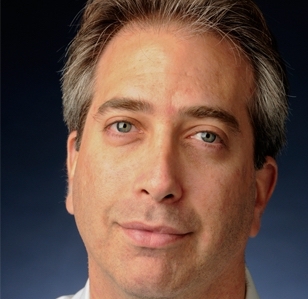
(Syracuse Post-Standard | Oct. 22, 2020) Four years ago, more than 130 million Americans voted in the presidential election. Through the swirling chaos of this year’s election, experts predict an even more robust voter turnout.
So far, two weeks before the election, 25 million have already voted, largely attributed to both the heightened interest in the election and the Covid-19 crisis. Locally, early voting opens on Saturday at six locations throughout Onondaga County. Whether it is braving lines and social contact at a polling places on Nov. 3, or casting an absentee ballot by mail, will you be one of those voters?
Though much of the attention is focused on the presidential election, and for good reason, there are congressional and state legislative races and local elections on the ballots. The “down-ticket” races and issues may lack the glitz, glamour and gore of the national election but they still play an important role in the democracy and governmental operations. The lower-ticket races determine everything from the composition of Congress to your local government officials, as well as special ballot issues.
The right to vote has been a hard-fought right that embodies the most basic part of the democratic system: choosing the people and officials who will design, set and enforce laws and public policy, and defining what our society stands for. The right to self-governance through public participation — voting — is so vital, the Constitution and a body of federal and state laws ensure and protect the right to vote …
(WAER | Oct. 16, 2020) A Syracuse University Newhouse Professor is questioning decisions by Facebook and Twitter to limit access to an article that contained unverified sources and information about Joe Biden’s son.
“Regardless of how you feel about the story, its sourcing, or even the politics behind it, it’s not a favored practice for many of us to have other people decide what we can and can’t read or view.” said Roy Gutterman, the Director of the Tully Center for Free Speech. “I’m kind of disappointed to see that this article was going to be blocked. I’m always in favor of letting consumers and citizens make judgements on their own” …
(Ames Tribune | Oct. 9, 2020) Don Wirth has been legally blind for 25 years. At 70 years old, he’s at higher risk for COVID-19, so instead of going to the polls and using an accessible voting machine, he voted absentee during the primaries. His wife filled out the paper ballot for him.
“I have great confidence that she’s going to fill it out the way I want her to,” Wirth, of Ames, said.
But Wirth knows not all blind or otherwise disabled people have a loved one they can trust to help cast their vote. And, he believes, no Iowan should be forced to surrender their privacy to exercise their constitutional right.
“Why shouldn’t we have the same access that sighted people do when there are solutions out there that are readily available?” Wirth said …
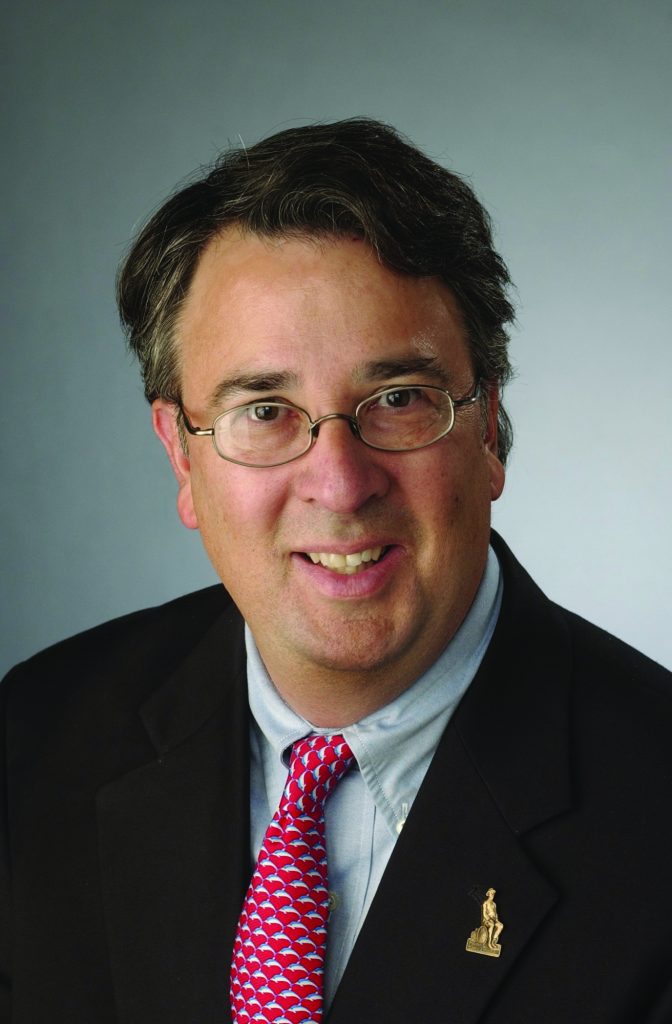
… Peter Blanck, a law professor at Syracuse University, disagrees. Blanck has written multiple books on the ADA, served on various federal disability commissions and edits the Cambridge Disability Law and Policy Series.
“Title II of the ADA requires state and local governments to provide meaningful and equal access to all the services that they provide,” Blanck said. “A reasonable accommodation would not have to be approved through the Legislature because that’s required under (federal) law” …
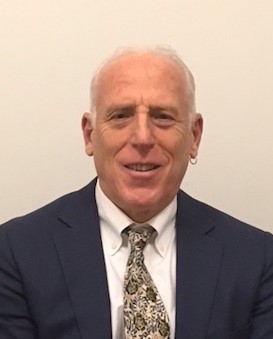
“The idea has always been to do what I can to steer students in this direction,” says Martin R. Feinman L’83, Director of Delinquency Training in the Juvenile Rights Practice at The Legal Aid Society of New York, the largest social justice law firm in the United States.
Over the years, Feinman has steered students toward a career in social justice law by funding stipends for students working in the Children’s Rights and Family Law Clinic, by encouraging The Legal Aid Society to host Syracuse interns and externs and to hire graduates, and by offering students advice and guidance, as he did at an Oct. 28, 2020, panel discussion on careers in social justice, hosted by the Office of Career Services.
Now Feinman is leveraging his generous financial contributions to promote careers in public interest with a focus on juvenile justice. Fellowships are awarded to students who secure externships or postgraduate positions providing criminal defense on behalf of indigent persons and/or legal advocacy on behalf of youth and young adults in the juvenile justice or welfare system.
With more than 30 years’ experience in the field—during which he has advocated for children and families, defended indigent adults, trained young attorneys, and advised policymakers—Feinman knows what he’s talking about when he says the need for social justice lawyers is enormous. “But needless to say this work isn’t for everyone and doesn’t always pay as well,” he adds.
“Students have loans to repay and might wonder whether a public interest career can meet their aspirations,” Feinman continues. “I say it can, and through this fellowship program, I want to motivate students to at least try this area of practice.”
Feinman admits that there can be barriers other than financial to a career in his field.
“This work can be intimidating and emotionally overwhelming, especially when you are the difference between an adolescent or adult client’s freedom or incarceration, or when you are representing a young child who has been neglected or abused,” says Feinman. “Then, there are the overwhelmed court calendars and stressed-out judges pressuring you.”
“But on the flip side, it’s just so extraordinarily rewarding,” Feinman asserts. “You are engaged in work that can be life-saving and difference-making.”
When he trains young attorneys, Feinman emphasizes that The Legal Aid Society lawyers often support clients unconditionally in ways that nobody else has ever done, sometimes not even family members.
“We are there to do everything we can to help the client,” Feinman explains, “and to be that kind of advocate is inspiring, motivating, and rewarding, but sometimes heartbreaking.”
Feinman admits he has been “crushed” sometimes when adults he has represented have been jailed or youths sent away from home, but that he’s also had “the thrill of making arguments that have changed people’s lives. The potential for job satisfaction is tremendous.”
The need for attorneys at The Legal Aid Society is tremendous too. Feinman explains that the Juvenile Rights Practice group represents children charged as delinquents in family court as well as children whose parents are being charged with abuse and neglect.
“We represent tens of thousands of kids a year, with a team of about 200 attorneys,” he says. “An attorney might be working with 150 clients at a time. And that’s just the tip of the iceberg. On the Criminal Defense side, the numbers are even greater. Then there’s The Legal Aid Society’s civil practice, the mental health side, the criminal defense side … the list goes on and on.”
“I have had the thrill of making arguments that have changed people’s lives. The potential for job satisfaction is tremendous.”
How can a student discover if a social justice career is a good fit? Feinman says that the law school years are the perfect time to try different areas of practice “because once employed the more you establish yourself as one type of attorney, the greater the chance that that is what you’ll continue to do.”
“But in law school,” he observes, “there’s a great opportunity to experiment, to see what you are passionate about, and to see if something can work for you in a way you hadn’t anticipated.”
The foundation for that advice is Feinman’s own career. At one point, being a lawyer was the last thing on his mind. He started his career as a social worker, taking an M.S.W. from Syracuse University before working as a therapist and then becoming Program Director of the Adolescent Unit at Hutchings Psychiatric Center in Syracuse.
Feinman recalls interviewing with the social work director at Hutchings, who said he might want to consider law school. “At the time, that was furthest from my mind,” he says.
But a couple of years later, Feinman was enrolled at the College of Law. His advisor in the early 1980s, Professor Richard Goldsmith, soon set him on another career trajectory. “He said, you might think about being a litigator, to which I said, ‘You’re out of your mind!’”
But again Feinman kept his mind open and got involved with the College’s legendary Advocacy Program, then coordinated by Professor Emeritus Travis H.D. Lewin. He fell in love with trial work and criminal law, and his successful three-decade career combining social work, juvenile advocacy, criminal defense, and litigation ensued.
But not before he explored another route. “After a one-year federal court clerkship, I tried the private sector for one and a half years,” Feinman recalls. “I represented banks in foreclosure proceedings and building designers whose designs were flawed. They were entitled to representation, of course, but at the end of the day, I didn’t care for that work.”
Ultimately, Feinman’s advice to students is to expose themselves to the many kinds of law practice during law school. “You never know what will grab you and shake you. And like me, you might find there are unanticipated events that alter the career path you are on.”
Feinman says he hopes his new fellowships will be an incentive for students to explore his practice area, one whose rewards—in terms of changing lives, advocating for the vulnerable, and providing hope and justice—are priceless.

Given his deep ties to his community, John A. “Jack” Schuppenhauer’s L’76 advice to law students should come as no surprise: “I’d say to students that the law is an honorable profession. It provides an opportunity for an attorney to help others and serve their community.”
Jack has served his community as principal of the Canandaigua, NY-based Schuppenhauer Law Firm for 43 years. He was born a few miles from the picturesque Finger Lakes town, located on the northern end of Canandaigua Lake, attending Canandaigua Academy before taking a bachelor’s degree from Ohio State University and an M.P.A. from Northeastern University.
Jack returned to Central New York to study law at Syracuse. He entered the legal profession in 1977 and started his eponymous law firm in 1981. Six years ago, looking to the future, Jack took on a partner—his daughter Erika, a 2009 Syracuse University graduate with a double bachelor’s degree in political science and policy studies and a J.D. from University at Buffalo School of Law.
Now, to honor their family’s ties to Central New York, Syracuse University, and the College of Law, Jack, Betsy (his wife of 34 years), and Erika have created the Schuppenhauer Family Scholarship for College of Law students, through a bequest in their wills. “It’s our way of giving back to the University and College and to acknowledge the future it provided to us,” says Jack.
As a general practice law firm, estate planning, trusts, and wills are among the services the Schuppenhauer Law Firm offer their clients. To set up their own family bequest, Erika and her parents sat down to look over their wills and decide what legacy this communityminded family wished to leave. “I wanted my will to coincide with my parents’,” says Erika. “Syracuse University was on the top of our list of organizations to bequeath to, and dad especially wanted to donate to the law school.”
The next step was for the family to contact the College of Law Advancement and External Affairs team. “They walked us through the process,” Erika continues. “It’s as easy as can be, and now our wills contain specific bequests to the University and College.”
Located along Canandaigua’s historical, picturesque Main Street—surrounded by nineteenth century brick buildings with mansard roofs and decorative cornices— Jack says his law firm “has given me a great opportunity to get to know people in my community and become involved in local organizations.” Both Jack and Erika volunteer for local charitable organizations, and Jack has served as a part time Canandaigua City Court Judge since 1996.
“Having a small practice provides you with a real identity in the community, as opposed to a large firm to which you might commute from another community,” Jack says, adding that both he and his daughter live only about a mile from their office.

A family law firm in a pretty Upstate lakeside town might conjure up images of times past, but Jack and Erika acknowledge that technology is evolving the way they practice. “People Google everything now,” observes Erika. “Clients are internet educated, and they shop around. They are more likely to want ’drive by’ legal advice these days.”
“The nature of the law consumer has changed, and people are more astute, and more demanding,” agrees Jack, adding that since his career started in the 1970s, government and statutory regulations also have dramatically changed the legal profession.
Although a relatively new law graduate, Erika says these technological changes appear to have accelerated since she passed the bar. Students, she says, need to pay attention to them.
“I graduated six years ago, yet even I did research in books. Everything is online now, and you have thousands of cases at your fingertips to comb through. Students definitely need to be computer savvy,” she explains, adding that she’s also had to learn how to be a businesswoman as well as how to provide general law services. “Students need to gain customer service skills and business acumen, especially for a small practice.”
“Take every opportunity to learn something new every day.”-Erika Schuppenahuer ’09
Erika admits that when she started out at the Schuppenhauer Law Firm, she had much to learn about how to practice law and help run a business. Then again, her relationship with her mentor is a pretty solid one. “I’ve been so lucky to learn under my dad and to have someone who has taken me under his wing, while being very patient!”
Given her learning curve since graduating law school, Erika’s own advice to law students shouldn’t come as a surprise either. “Take every opportunity to learn something new every day,” she says. “General practice challenges you every single day. So take that challenge and go at it. There will be bumps in the road, but you should keep going!”
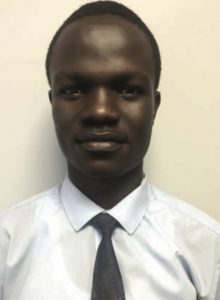
The JAF Foundation supports social welfare, conservation, and human rights programs, including academic scholarships. In the College of Law’s case, the Foundation provides scholarship support for scholars from Africa. Isaac Onyango, an LL.M. student from Kenya, received the JAF Foundation Scholarship for the 2020-2021 academic year.
Dedicating his career to advocating for persons with intellectual disabilities, Onyango works as a consultant and strategist for the Downs Syndrome Society of Kenya. There, he leads the investigation of cases involving abuse and exploitation of persons with intellectual disabilities, often traveling to rural areas to interview and collect information for reports to the local police and governing authorities.
Onyango also conducts training for members of the judiciary, prosecutors, and police officers on the rights of persons with intellectual disabilities, and he writes on domestic and international legal frameworks designed to provide and protect these rights and proposed changes and improvements to the laws.
Not surprisingly, as an LL.M. candidate at the College of Law, Onyango is focusing his studies on disability law and international human rights. Explains Onyango,
“The JAF Foundation scholarship is a beacon of hope to international students like myself, and it has enabled me to expand my field of vision and deepen my knowledge in international human rights and disability law, in order to defend the disabled.”
Deepening and translating knowledge into practice —that’s exactly what the Wonderland Foundation aims to promote.