
Not everyone interested in pursuing a law degree lives in a large metropolitan area or near a bustling college town. In fact, many students enrolled in Syracuse University College of Law’s hybrid online JDinteractive (JDi) program are located in faraway places, whether a small Alaskan city, an island in the middle of the Pacific Ocean, or rural areas throughout the U.S. For many of them, remaining in their communities is not just practical but purposeful due to personal obligations or a long-held desire to serve their communities. At the same time, they demand a law degree that offers a rigorous curriculum, opportunities to take part in law clinics, student organizations, and advocacy competitions coupled with the ability to develop bonds with classmates, faculty, and alumni.
Meet four recent graduates from out of the way places who have successfully joined the legal profession through the JDi program —proving that distance is no barrier to earning a Syracuse Law degree.
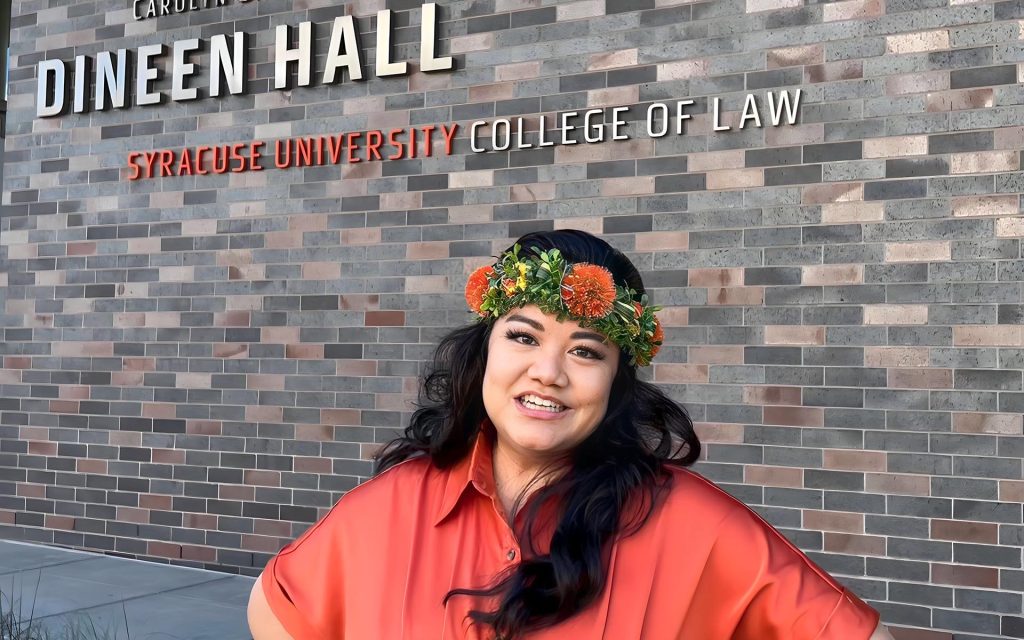
Dawnelle Forsythe L’26, Oahu, Hawaii
As a native of Hawaii, Dawnelle Forsythe L’26 lives in a small city of 44,000 on the Big Island of Hawaii. Back in the early 2000s, she wanted to become a lawyer, but the only law school in Hawaii was on Oahu, and the travel and expense was prohibitive. Instead, she went to work for the County of Hawaii Office of Housing and later the State of Hawaii Department of Hawaiian Home Lands under the Native American Housing Assistance and Self-Determination Act, which helps provide affordable housing to qualified native Hawaiians.
However, in 2019, two pivotal events made Forsythe reconsider law school. She says the first was “fate” when she saw an article about a newly established hybrid JDi program at Syracuse University that could enable her to earn a law degree without leaving home.
Around the same time, she accompanied her husband to observe a protest centering around the construction of a massive Thirty Meter Telescope at the top of Mauna Kea, the Big Island’s highest mountain and an area considered sacred by the native people.
When they arrived, over 100 protestors had formed a protective human wall in front of the kūpunas (revered elders). The kūpunas had sought to halt the construction of the 18-story telescope atop Mauna Kea and were blocking the road from construction vehicles, while the crowd chanted in support of preserving land put in trust for the Hawaiian people to ensure the continuation of their culture. As Forsythe watched, state troopers began removing those blocking the road.
“Some of the troopers were related to the aunties and uncles they were arresting, and many on both sides were crying together,” explains Forsythe. “It was such a somber event, and it made a lasting impact on me. I decided then that I had to go to law school to be an advocate for my ‘Ohana’ (family), the people of my community.”
She quit her current job at a hospital with only one thing in mind—the JDi program. “Not only would it allow me to stay at home, but I was drawn to its trial advocacy program that would help me become an attorney ready to go into court and advocate for people,” she says.
Forsythe was accepted into the JDi Class of ’26 and is now thrilled she found “her New York Ohana” made up of the “geniuses in her cohort,” as well as faculty she admires, including Distinguished Professor of Law Nina Kohn and Associate Dean for Academic Programs Shannon Gardner.
Forsythe graduates this May and must first return to work in local government to pay off her school loans. But she is committed to soon using her law degree pro bono to help Hawaiian residents, particularly those facing land rights cases who lack money for legal representation.
“It isn’t about making money; it’s about something that will totally fulfill my heart,” she says of helping her people. “I’m excited to finally reach my goal of becoming a lawyer, and I know that it would not have been possible without Syracuse Law’s JDi program.”
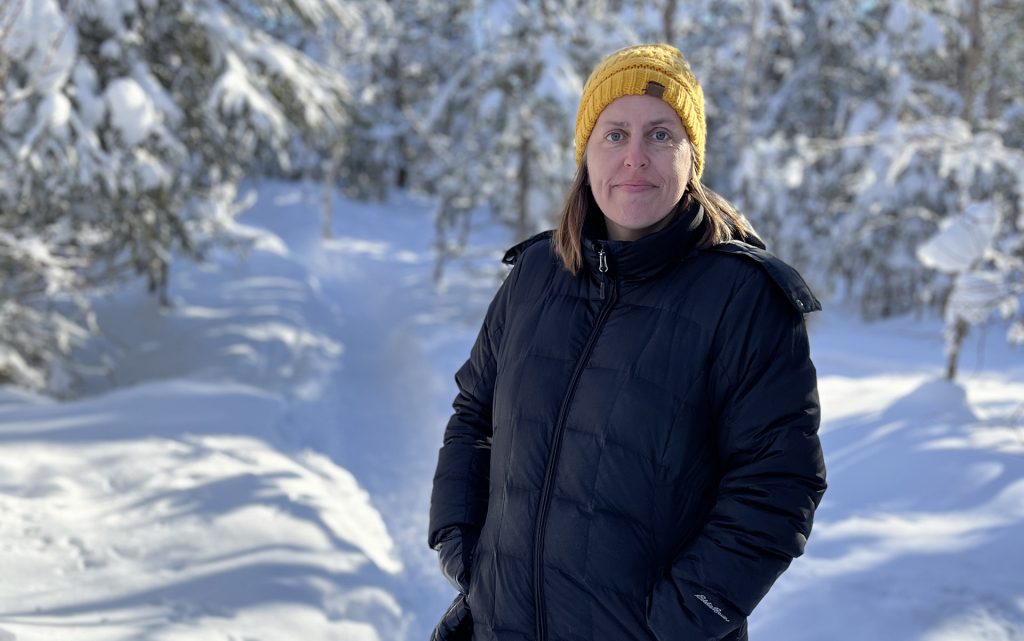
Sarah Frank Roberts L’22, Kenai, Alaska
There are no law schools in Alaska, so when Sarah Frank Roberts L’22 decided to pursue a law degree, she knew her options were limited. A mother of six, Roberts lives with her husband and family in Kenai, Alaska, a town of about 5,000 people, most of whom work in the fishing or oil and gas industries.
When Roberts discovered the JDi program, it seemed to be a solution. She could take classes and get her work done after her children went to sleep, and the four-hour time difference between Alaska and New York was manageable. She was accepted into the program’s second cohort since its founding in 2019.
“The experience was rigorous,” Roberts says. “There was no hiding in the back of the room when professors like Nina Kohn could see your face up close on the screen. I certainly got the same high level of education that those in an on-campus program received.”
According to Roberts, there is a huge need for lawyers, particularly public defenders and district attorneys, in Alaska, but with no law schools, people tend to leave to go to school and never return. Roberts was able to stay because of the JDi program, and today she is an assistant public advocate and conflict counselor for the state of Alaska, focusing on family issues like custody and guardianship.
“I get to help people, many of whom have made a lot of mistakes but still deserve representation,” she explains. “My role isn’t designed to ‘win’ but instead help families get the best outcomes for their situations, as well as allow them to see what opportunities there are to work toward their goals.”
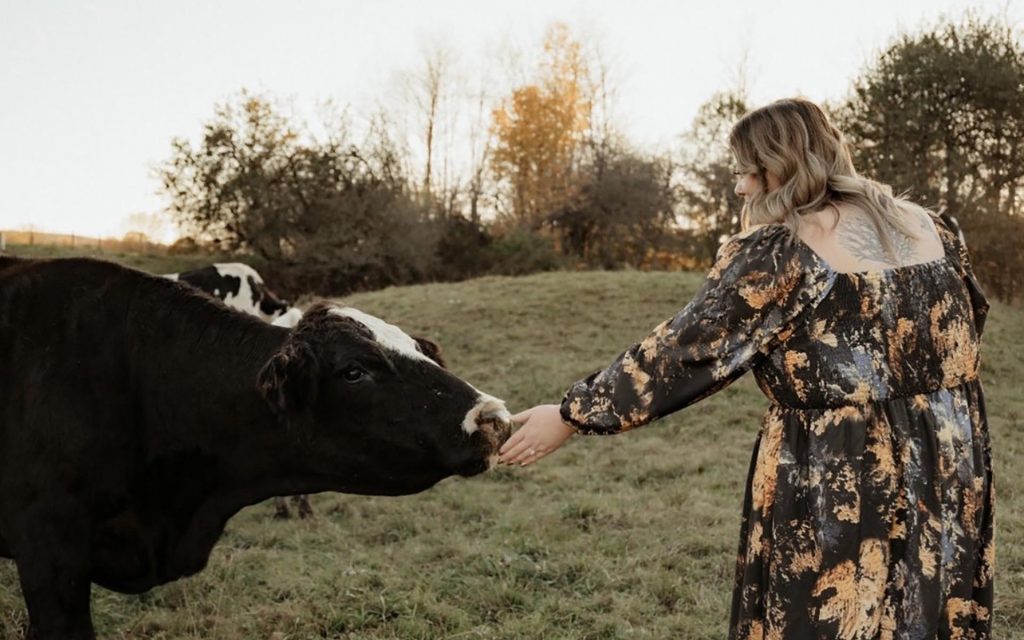
Megan Poole L’23, Cortland, New York
Megan Poole L’23 grew up on a dairy farm in Cortland County, New York, but, knowing the challenges of farming, her parents encouraged her to pursue a different career. Still, she felt most at home in her rural community.
After earning an undergraduate degree in criminology, Poole wanted to be a probation officer but didn’t get the position she originally intended. Instead, she says, “Rejection is divine redirection,” and decided to take the LSAT and pursue law school.
In the meantime, she was offered a job in the Cortland County Department of Social Services (DSS) as a case worker handling foster care, child protective services, and adoption cases. She still wanted to go to law school, but she was “too heartbroken to leave” the difficult job of helping families in need. However, when she found the JDi program, she realized she could pursue a law degree while continuing her job with DSS and helping on the family farm.
“The JDi program was certainly just as difficult as an on-campus program,” she says, adding she found great camaraderie within her online cohort. Poole especially enjoyed the required in-person residencies, where she was able to interact with fellow students and faculty both on-campus and in various other cities.
After completing the JDi program, she continued to work at the DSS in Cortland. About a year later, the Hon. A.L. Beth O’Connor, a family court judge in the 6th Judicial District of New York, which includes Cortland County, reached out to Poole about being her court attorney.
“I see both the terrible and the good, but that’s part of the job,” she says. “I think I’m making a big difference in my community, particularly for people who don’t have the resources for good legal counsel, and the JDi program was a big part of making that possible.”
An added bonus of becoming a lawyer was the opportunity for Poole, her mother, and sister to turn the family farm into Spring Valley Views, a woman-owned LLC, with plans to for it to expand it into a venue and campground.
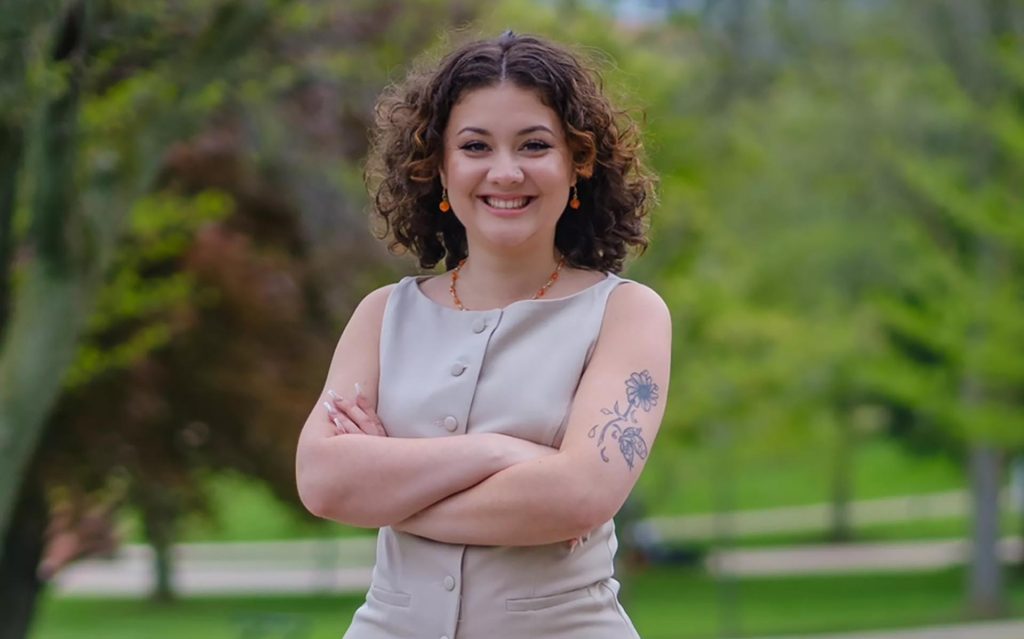
Tania Rivera Bullard L’25, Houston County, Georgia
Tania Rivera Bullard L’25 earned an undergraduate degree in psychology, figuring she would be a social worker, like her mother. But, soon after, she decided she wanted a career where she felt she could see things through from beginning to the end. Rivera Bullard decided to pursue a path offered to military spouses to become a paralegal. As she studied for her paralegal certification, she started to think, “Why can’t I be a lawyer?”
Interested in being a public defender or a civil rights attorney, she was accepted into a J.D. at an on-campus law school that required a four-hour round-trip commute from her home in rural Georgia. However, a complicated pregnancy made it impossible, and she was forced to defer her start. Rivera Bullard began looking for alternatives and found the Syracuse Law JDi program, which would allow her to remain with her family while pursuing a law degree.
Not long after, the mother of a 2 year old and an 8 month old, began the Syracuse Law JDi program and found it manageable. “I became a night owl,” she explains. “After the kids went to sleep, I would concentrate on asynchronous work and getting my reading done, and I spent long hours on the phone with my dear friend Nathan McKay L’26, my study partner, who made such a difference for me. It certainly was a careful balancing act, but if you’re willing to find the time, you can make it happen.”
After finishing her law degree and passing the Alabama bar exam, she went to work as an assistant public defender for the Houston County (GA) Public Defenders Office. She was allowed to practice in Georgia under military spouse reciprocity.
“As a public defender, you handle felony cases that nobody else wants, and, arguably, you’re experiencing the toughest, scariest times of people’s lives. I get to help them through a system that, to many, feels like it is set up to fail them,” Rivera Bullard says. “At the end of the day, I go home and feel good about the work I’ve done in my community. The Syracuse JDi program really made it possible for me to achieve my goals.”