
As the U.S. reflected on the 60th anniversary of the Voting Rights Act of 1965, Syracuse University College of Law marked the moment by bringing students to the heart of the conversation. The new Voting Rights and Policy residency, designed for hybrid online JDinteractive students and open to on-campus J.D. students, was held in Washington, D.C. for four days in December and was taught by Ryan Suto G’13 M.S. (NEW), G’13 M.S. (MAX), L’13, senior government affairs manager at FairVote.
The residency addressed the urgency surrounding voting rights in today’s political climate while also examining the law’s origins, impact, and the ongoing challenges related to protecting Americans’ right to vote throughout history.
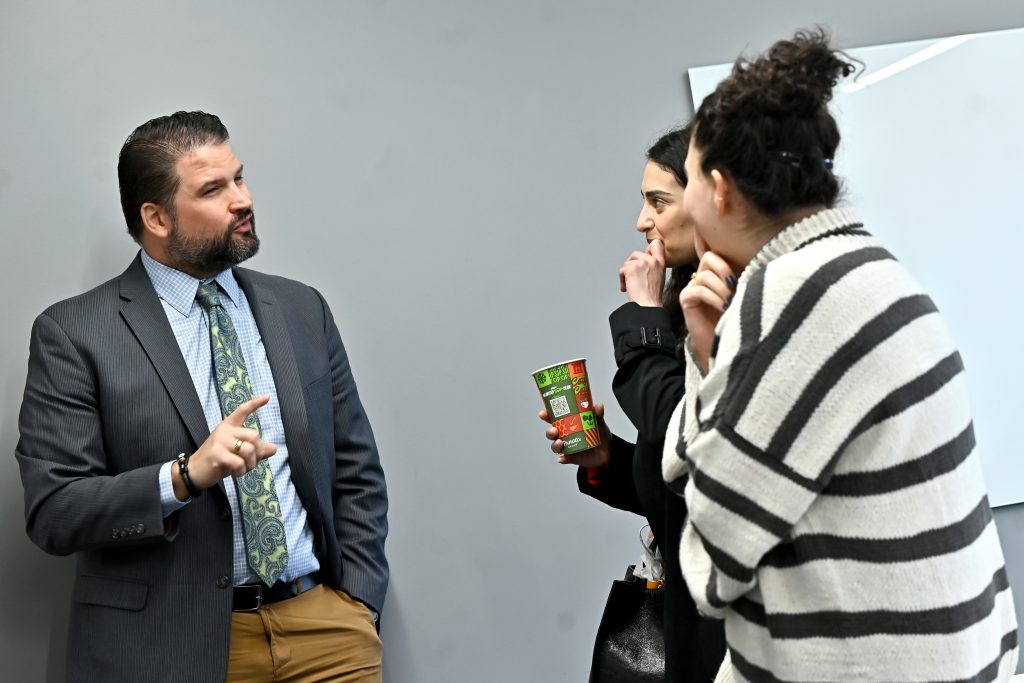
A Universal Right Not Stated in the Constitution
“There is actually no individual right to vote in the Constitution. Instead, it protects voting through a number of constitutional amendments. The history of voting rights is intertwined in our country’s history, and this residency was a good frame to understand the struggle for civil rights, disability rights, the rights of Black and Latino communities, and more,” says Suto. “Familiarity with voting rights helps our students understand the difference between equality and equity.”
In response to student interest, Syracuse Law reached out to Suto about creating this new residency. He designed the course to familiarize students with major federal and state court decisions and federal legislation, deepen their understanding of how federal and state governments interact with voting rights, and prepare them to critically assess and participate in future developments within the area of law.

JDi Students Found Topic Valuable in Wake of Current Events
Ryan Dudley L’26 enjoyed attending the residency. He currently works as the state policy manager for the Freedom from Religion Foundation.
“I chose this residency because I was very interested in this topic, especially given the current political climate around redistricting and the Supreme Court’s interest in taking a further look at the Voting Rights Act,” he says. “It gave me a clearer understanding of the Voting Rights Act, the history of the laws, and the threat to the law and voting rights in general.”
“One of the best parts, however, was the opportunity to have in-person interaction with others in my cohort,” he adds. “The JDi program is great because, although we are all participating from all over the country, there is a real sense of friendship and camaraderie within our group, and it’s great to connect with others at the residencies.”
Highlights of this residency included several prominent speakers: Sara Rohani, assistant counsel of the NAACP Legal Defense Fund; Fred McBride, Ph.D. senior advisor, voting rights, for the Southern Poverty Law Center; and Robert Weiner, director of the Voting Rights Project, The Lawyers’ Committee for Civil Rights Under the Law.
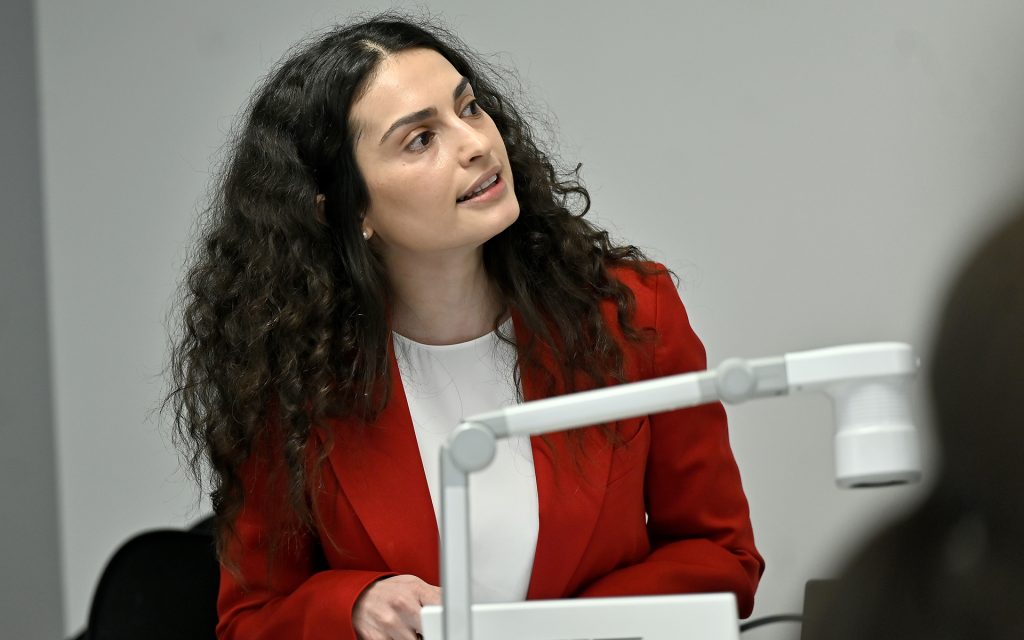
Residency Brought Together Students with Diverse Expertise
Even though many of these students may not pursue careers specifically in voting rights, they wanted to understand how the law shapes and impacts communities. And because JDi students tend to be working professionals attending law school to advance or change their careers, they also brought real-life experiences to the topic. For example, one student was an elected official in Pennsylvania, another worked in state government, and another was a teacher, adding depth and practical relevance to the conversations in the room.
Michael Roach L’26 is the county judge of Stephens County, Texas.
“In my role as a county judge, I see firsthand how voting rules affect both election administrators and voters on the local level,” he explains. “I was particularly interested in getting a deeper understanding of how federal voting rights policy has developed, been interpreted, and implemented beyond the courtroom.”
“One of the most valuable aspects of the residency was exposure to practitioners working directly in the voting rights space, including our guest speakers who shared real perspectives for advocacy and enforcement,” Roach says. “And Professor Suto brought a unique level of insight, drawing on his experience at the forefront of drafting and advising on legislation designed to promote fairness, access, and integrity in the electoral process. All of the information throughout the residency helped connect legal theory to real policy outcomes.”
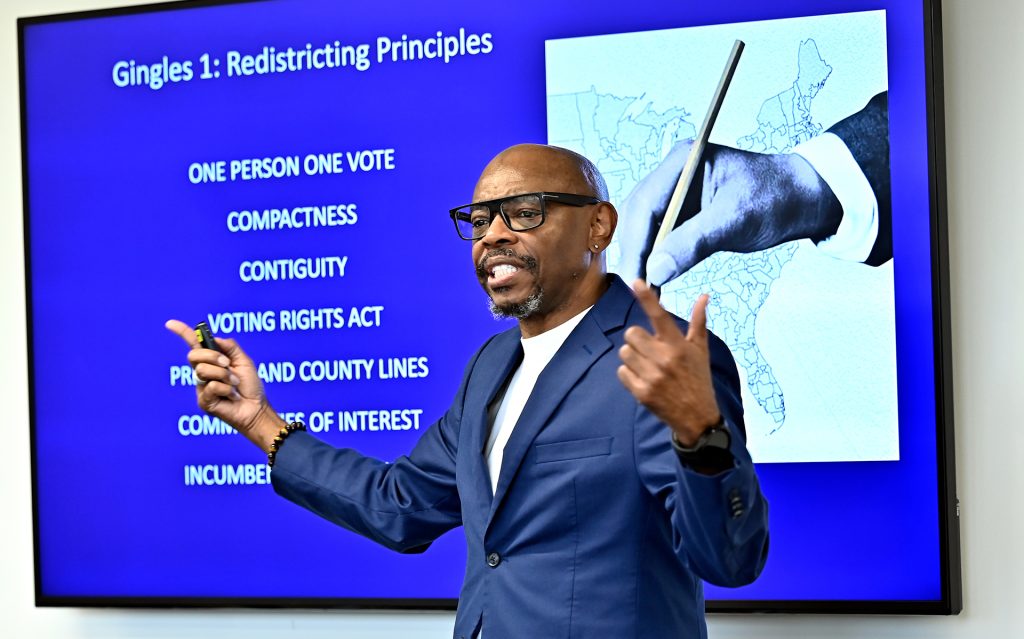
Students Tasked With Final Assessment of Writing Bill
According to Suto, the residency emphasized familiarity with voting rights and statutory drafting, instead of analyzing what someone else had already written.
“I like the exercise of saying, ‘This is the jurisprudential frame. What would you do in the middle of that?’ and asking students to see the gap between law and politics,” Suto explains, adding that the final assessment of the residency was to draft a bill.
The inaugural Voting Rights and Policy residency was a success. According to Suto, he received very positive, informal feedback from those who participated. Given the headlines voting rights have been making in today’s political climate, he hopes to present a similar residency to students in the future.

See here for more information on upcoming JDi residencies.