Criminal Law and Policy

Professor Lauryn Gouldin’s “Defining Flight Risk” Paper Quoted in Prison Policy Initiative Article

Professor Lauryn Gouldin’s University of Chicago Law Review paper “Defining Flight Risk” is quoted in the recent Prison Policy Initiative article “High stakes mistakes: How courts respond to “failure to appear”.

The Prison Policy Initiative article examines reasons behind missed court dates or “failure to appear”, analyzes causes and outcomes, and provides examples of how advocates are addressing the issue.

According to the Prison Policy Initiative article, “Professor Gouldin proposes a different approach involving a policy distinction between “True Flight” and “Local non-appearance.” The idea is to differentiate between someone who has left the area and someone who missed court but remains in the area and is easy to locate. She suggests the court assess absences along a matrix of persistence, cost to the court, and willfulness. Where implemented, this would represent a meaningful and commonsense improvement to court responses.”

Professor Paula Johnson’s Perspective on the New National Emmett Till Monument Quoted in The Hill

Perspectives from Professor Paula Johnson, director of the Cold Case Justice Initiative, were quoted in the article “Biden designates new national monument to honor Emmett Till, Mamie Till-Mobley” in the Hill.

“This country owes so much to the Till family for insisting that what was always known to be wrong someday would be made right,” said Johnson. “But individuals, officials, and institutions repeatedly failed them.”

Her comments continue, “These national monuments are a testament that efforts to quash truth will not succeed and that memory, legacy and the never-ending demand for justice will prevail. As the nation pays honor and gratitude to the Till family through these monuments, we are reminded that we must face all that we are if we ever hope to be all that we can be.”

Professor Cora True-Frost Discusses the International Criminal Court in Two-Part National Security Law Today Podcast

Formed in response to the Rwandan and former Yugoslavian genocides in the early 1990s, the International Criminal Court (ICC) was established with a crucial mission: to bring to justice those accountable for the most heinous crimes of global significance. 

In this two-part episode of the National Security Law Today Podcast, Professor Cora True-Frost L’01 accompanies host Elisa Poteat to uncover the inner workings of the ICC—its organizational framework, extensive jurisdiction, and the intricate processes involved in investigating and prosecuting war crimes. Together, they shed light on the vital role played by the ICC in upholding accountability and seeking justice for victims worldwide.

Professor Paula Johnson Discuss the Impact of the Allen v. Milligan Ruling

Professor Paula Johnson was interviewed on WSYR radio to discuss the impact and effect of the Allen v. Milligan SCOTUS ruling.

“As we enter into some critical election seasons, we will want to be sure that the voting rights of all of our citizens are going to be recognized and going to be observed and that the fundamental right to vote is going to be something our country recognizes as a matter of law, of Constitutional law, and something important for all of us to recognize,” says Johnson.

Listen to the full interview.

Professor Lauryn Gouldin Discusses “Specific Suspicion” at Law and Society and Law of Policing Conferences 

Does the Fourth Amendment require officers conducting searches to have suspicion of a specific crime? Professor Lauryn Gouldin examines these topics in a current work in progress, “Specific Suspicion.” This project follows a related article, forthcoming in the Emory Law Journal, “Crimes of Suspicion,” that analyzes whether officers conducting street stops need reasonable suspicion of specific crimes. 

Gouldin presented her research last week at the Law and Society Conference in San Juan, Puerto Rico, and will present at the Law of Policing Conference at the University of Chicago tomorrow, Wednesday, June 7.

Professor Lauryn Gouldin Discusses New York State Bail Reform on WCNY’s Connect NY

Crandall Melvin Professor of Law Lauryn Gouldin discussed the status and future of bail reform in New York on WCNY’s Connect NY program.

In response to a question about trying to gauge, not just what is happening but why things are happening the way they are in New York State, Gouldin says “I think the biggest thing, picking up on the point about recidivism is when we talk about bail reform, I think we don’t focus enough on the fact that pretrial detention leads to recidivism. There is study after study that demonstrates that detaining people before trial is not a public safety gain overall. We have long-term negative public safety impacts from detaining people before trial. So I applaud the fact that the reforms included more data collection. I think we need to do a lot more data analysis. Trying to figure out what causes crime to go down, or what, you know, led to this example of recidivism or that is really complicated so the more data that we have, the better. But I don’t– I think it’s been very hard to sort of dig through pretty fraught political conversation and actually get to the real facts and try to analyze what is actually going on.”

She was joined on the panel by Onondaga County District Attorney William Fitzpatrick L’76, First Assistant Public Defender for Monroe County and College of Law Adjunct Professor Erik Teifke, and Albany Times Union reporter Josh Solomon.

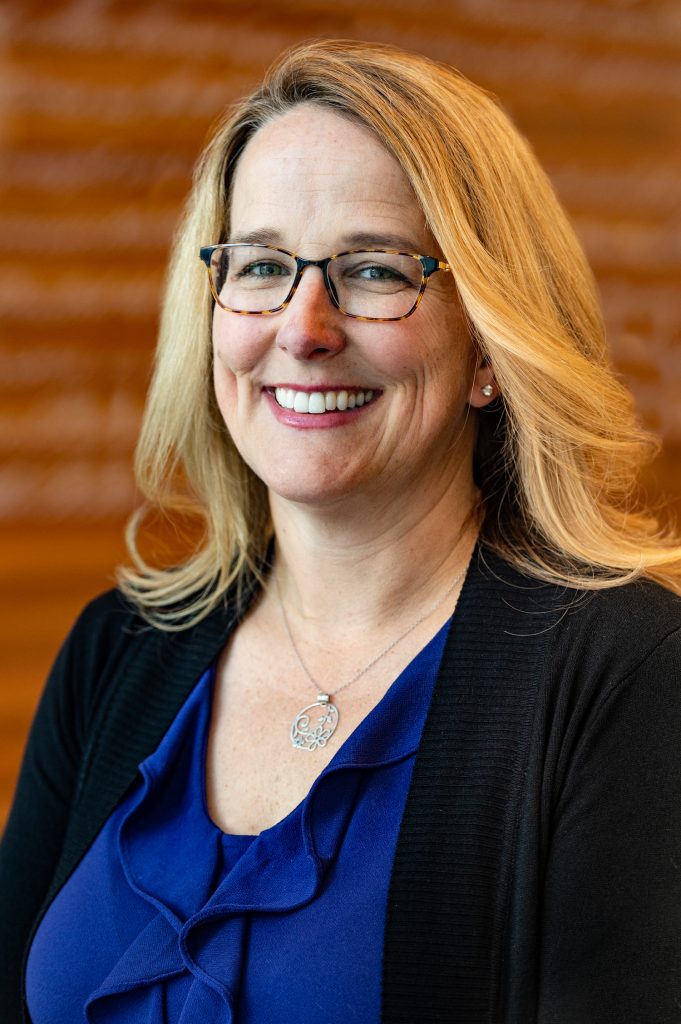
Professor Lauryn Gouldin Participates on an Arizona Criminal Law for Legislators Panel on Criminal Law

Professor Lauryn Gouldin was an invited speaker at the Arizona Criminal Law for Legislators Panel on Criminal Law, hosted by the Academy for Justice at the Sandra Day O’Connor College of Law at Arizona State University—in conjunction with the Arizona Prosecuting Attorneys’ Advisory Council.

Professor Gouldin spoke on the issue of pretrial decision-making during the Initial Appearance, Arraignment, and Pre-Trial Release session.