Criminal Law and Policy

The U.S. Army Court of Criminal Appeals will be sitting at the College of Law on Tuesday, Nov. 7 in the Melanie Gray Ceremonial Courtroom

The hearing will begin at 12:00 p.m. for the case of U.S. v. U.S. Army Staff Sergeant (E-6) Daniel D. Herman.  The case concerns an Army soldier who was convicted of wrongfully broadcasting intimate visual images and making a false official statement.  Representing the appellant will be Major Mitchell Herniak and Mr. Jonathan Potter.  Representing the government will be Captain Stu Miller and Major Chase Cleveland.  The Court Commissioners are Captain Andrew O’Grady and Captain Alex Vanscoy.

The three-judge panel will consist of Appellate Military Senior Judge Colonel Elizabeth Walker, Associate Judge Colonel Tim Hayes, and Associate Judge Colonel LaJohnne Morris. 

Herman was tried at Fort Hood, Texas, before a general court martial appointed by Commander, III Corps and Fort Hood, Lieutenant Colonel Scott Z. Hughes, presiding.  On May 14, 2022, a military judge sitting as a general court-martial convicted Herman (the appellant), contrary to his pleas, of six specifications of wrongful broadcast of intimate visual images and one specification of false official statement in violation of Articles 117a and 107, Uniform Code of Military Justice, 10 U.S.C. §§ 917a and 907 [UCMJ].  The military judge sentenced Herman to reduction to the grade of E-1, confinement for 13 months, and a bad conduct discharge. On May 23, 2022, the convening authority approved the findings and sentence as adjudged. On June 13, 2022, the military judge entered judgment. 

Arguments will be heard on the following issue: “Whether the military judge erred by denying the appellant’s motion to suppress statements and derivative evidence.”  

Professor Beth Kubala who arranged the court’s visit added, “This hearing should appeal to a number of students at Syracuse Law.  The proceedings may be rooted in Military Law, but the matters the Court will discuss include issues pertinent to all law school students – constitutional rights, the privilege against self-incrimination, custodial interrogation, and even policy considerations.” 

More information about the case can be found at this link.

Following the hearing, there will be a question-and-answer session with the judges, as well as a reception with judges and representatives of the Judge Advocate General’s Corps from Fort Drum in the Levy Atrium. 

The History of the U.S. Army Court of Criminal Appeals

Before the Uniform Code of Military Justice (UCMJ), Army courts-martial were prosecuted using the Articles of War. The Articles of War were initially established in 1775 and amended most extensively in 1874. Military justice lacked uniformity and some sentences were excessive. There was no system of appellate review. The commander, as reviewing authority, conducted the only post-trial examination of the record of trial in peacetime.

 On Aug. 23, 1917, in Houston, Texas, African-American Soldiers of the 24th Infantry rioted, killing 15 white men, including civilians, police officers, and National Guardsmen. In November 1917, 63 African-American Soldiers were court-martialed in the largest murder trial in American history. Fifty-eight were convicted. Thirteen of the convicted Soldiers were sentenced to death. Article 48 of the Articles of War authorized the command to carry out death sentences without submitting the case for further review or confirmation. The 13 Soldiers were hanged the next day with no appellate review and no clemency.

The Houston riot and ensuing executions exposed the lack of appellate review in court-martial proceedings. Soon after the executions, the War Department promulgated General Order No. 7 on Jan. 17, 1918, requiring the execution of any sentence involving death or dismissal of an officer to be suspended pending review and a determination of legality by the Office of the Judge Advocate General.

The UCMJ was enacted by the U.S. Congress in 1950 and took effect on May 31, 1951. Article 66 of the UCMJ gave The Judge Advocate General the power to create Boards of Review. The Boards could review all cases where the sentence approved by the convening authority affected a general or a flag officer, extended to death, a punitive discharge, or included confinement of one year or more. The UCMJ empowered the Boards to “weigh the evidence, judge the credibility of witnesses, and determine controverted questions of fact, recognizing that the trial court saw and heard the witnesses.” Boards of Review could set aside findings or sentences, order a rehearing or, where it found the evidence insufficient, order the charges dismissed. Significantly, the UCMJ created the United States Court of Military Appeals to provide civilian review of courts-martial.

 The Military Justice Act of 1968 changed the Boards of Review to the Courts of Military Review and made the board members judges. Though commanders initiated courts-martial, the emphasis shifted to attorneys conducting the proceedings under the watchful eye of a trial judiciary. The Act changed military justice practice to closely mirror the civilian court system, including a tiered system of appellate review.

 Major General Kenneth J. Hodson, serving as The Judge Advocate General of the Army, advocated for the Military Justice Act of 1968. After retiring as The Judge Advocate General, Major General Hodson was immediately recalled to duty as Chief Judge of the Army Court of Military Review in 1971. He also held the concurrent title of Commander, U.S. Army Legal Services Agency. Major General Hodson was the first general officer to serve as the chief judge.

 In 1994, the U.S. Army Court of Military Review was renamed the U.S. Army Court of Criminal Appeals. The name change coincided with the renaming of the U.S. Court of Military Appeals to the U.S. Court of Appeals for the Armed Forces.

Presently, the U.S. Army Court of Criminal Appeals is composed of three judicial panels. Each panel includes three appellate judges (with one judge appointed as the senior judge of that panel) and a commissioner. The Chief Judge, while not assigned full-time to a single panel, sits on cases with judges from all three panels and is also assigned a chief commissioner. The Clerk of Court staff provides paralegal support to the Court.

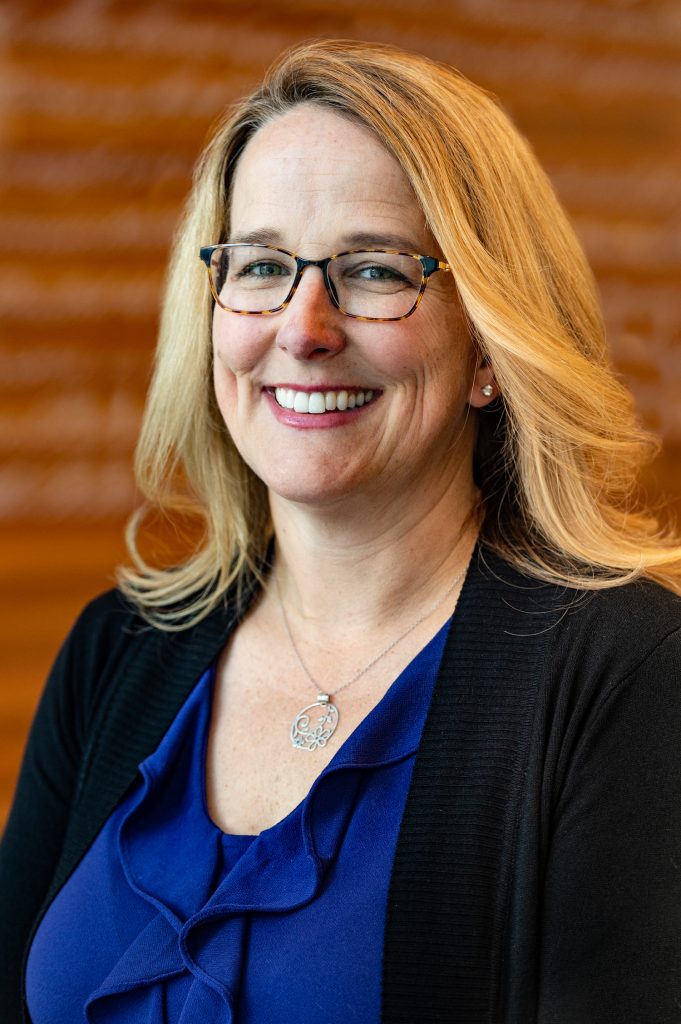
Professor Lauryn Gouldin Discusses the Federal Gun Charges Filed Against Hunter Biden with the BBC

Crandall Melvin Professor of Law Lauryn Gouldin provided insight to the BBC into the gun charges filed against Hunter Biden.  The argument over the constitutionality of one of the charges – a ban on gun possession for drug users – rests on a Supreme Court ruling that expanded gun rights last year.

In the ruling, the conservative-leaning court said that firearms restrictions must be consistent with the “historical tradition of firearm regulation” in the U.S.

Gouldin noted that under that ruling, the Supreme Court would “likely” find the charges against Biden unconstitutional.

Professor Lauryn Gouldin’s “Defining Flight Risk” Paper Quoted in Prison Policy Initiative Article

Professor Lauryn Gouldin’s University of Chicago Law Review paper “Defining Flight Risk” is quoted in the recent Prison Policy Initiative article “High stakes mistakes: How courts respond to “failure to appear”.

The Prison Policy Initiative article examines reasons behind missed court dates or “failure to appear”, analyzes causes and outcomes, and provides examples of how advocates are addressing the issue.

According to the Prison Policy Initiative article, “Professor Gouldin proposes a different approach involving a policy distinction between “True Flight” and “Local non-appearance.” The idea is to differentiate between someone who has left the area and someone who missed court but remains in the area and is easy to locate. She suggests the court assess absences along a matrix of persistence, cost to the court, and willfulness. Where implemented, this would represent a meaningful and commonsense improvement to court responses.”

Professor Paula Johnson’s Perspective on the New National Emmett Till Monument Quoted in The Hill

Perspectives from Professor Paula Johnson, director of the Cold Case Justice Initiative, were quoted in the article “Biden designates new national monument to honor Emmett Till, Mamie Till-Mobley” in the Hill.

“This country owes so much to the Till family for insisting that what was always known to be wrong someday would be made right,” said Johnson. “But individuals, officials, and institutions repeatedly failed them.”

Her comments continue, “These national monuments are a testament that efforts to quash truth will not succeed and that memory, legacy and the never-ending demand for justice will prevail. As the nation pays honor and gratitude to the Till family through these monuments, we are reminded that we must face all that we are if we ever hope to be all that we can be.”

Professor Cora True-Frost Discusses the International Criminal Court in Two-Part National Security Law Today Podcast

Formed in response to the Rwandan and former Yugoslavian genocides in the early 1990s, the International Criminal Court (ICC) was established with a crucial mission: to bring to justice those accountable for the most heinous crimes of global significance. 

In this two-part episode of the National Security Law Today Podcast, Professor Cora True-Frost L’01 accompanies host Elisa Poteat to uncover the inner workings of the ICC—its organizational framework, extensive jurisdiction, and the intricate processes involved in investigating and prosecuting war crimes. Together, they shed light on the vital role played by the ICC in upholding accountability and seeking justice for victims worldwide.

Professor Paula Johnson Discuss the Impact of the Allen v. Milligan Ruling

Professor Paula Johnson was interviewed on WSYR radio to discuss the impact and effect of the Allen v. Milligan SCOTUS ruling.

“As we enter into some critical election seasons, we will want to be sure that the voting rights of all of our citizens are going to be recognized and going to be observed and that the fundamental right to vote is going to be something our country recognizes as a matter of law, of Constitutional law, and something important for all of us to recognize,” says Johnson.

Listen to the full interview.

Professor Lauryn Gouldin Discusses “Specific Suspicion” at Law and Society and Law of Policing Conferences 

Does the Fourth Amendment require officers conducting searches to have suspicion of a specific crime? Professor Lauryn Gouldin examines these topics in a current work in progress, “Specific Suspicion.” This project follows a related article, forthcoming in the Emory Law Journal, “Crimes of Suspicion,” that analyzes whether officers conducting street stops need reasonable suspicion of specific crimes. 

Gouldin presented her research last week at the Law and Society Conference in San Juan, Puerto Rico, and will present at the Law of Policing Conference at the University of Chicago tomorrow, Wednesday, June 7.

Professor Lauryn Gouldin Discusses New York State Bail Reform on WCNY’s Connect NY

Crandall Melvin Professor of Law Lauryn Gouldin discussed the status and future of bail reform in New York on WCNY’s Connect NY program.

In response to a question about trying to gauge, not just what is happening but why things are happening the way they are in New York State, Gouldin says “I think the biggest thing, picking up on the point about recidivism is when we talk about bail reform, I think we don’t focus enough on the fact that pretrial detention leads to recidivism. There is study after study that demonstrates that detaining people before trial is not a public safety gain overall. We have long-term negative public safety impacts from detaining people before trial. So I applaud the fact that the reforms included more data collection. I think we need to do a lot more data analysis. Trying to figure out what causes crime to go down, or what, you know, led to this example of recidivism or that is really complicated so the more data that we have, the better. But I don’t– I think it’s been very hard to sort of dig through pretty fraught political conversation and actually get to the real facts and try to analyze what is actually going on.”

She was joined on the panel by Onondaga County District Attorney William Fitzpatrick L’76, First Assistant Public Defender for Monroe County and College of Law Adjunct Professor Erik Teifke, and Albany Times Union reporter Josh Solomon.

Professor Lauryn Gouldin Participates on an Arizona Criminal Law for Legislators Panel on Criminal Law

Professor Lauryn Gouldin was an invited speaker at the Arizona Criminal Law for Legislators Panel on Criminal Law, hosted by the Academy for Justice at the Sandra Day O’Connor College of Law at Arizona State University—in conjunction with the Arizona Prosecuting Attorneys’ Advisory Council.

Professor Gouldin spoke on the issue of pretrial decision-making during the Initial Appearance, Arraignment, and Pre-Trial Release session.