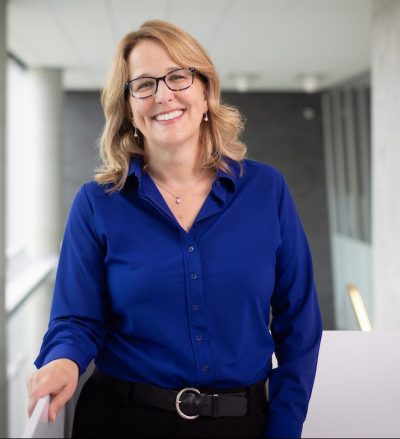
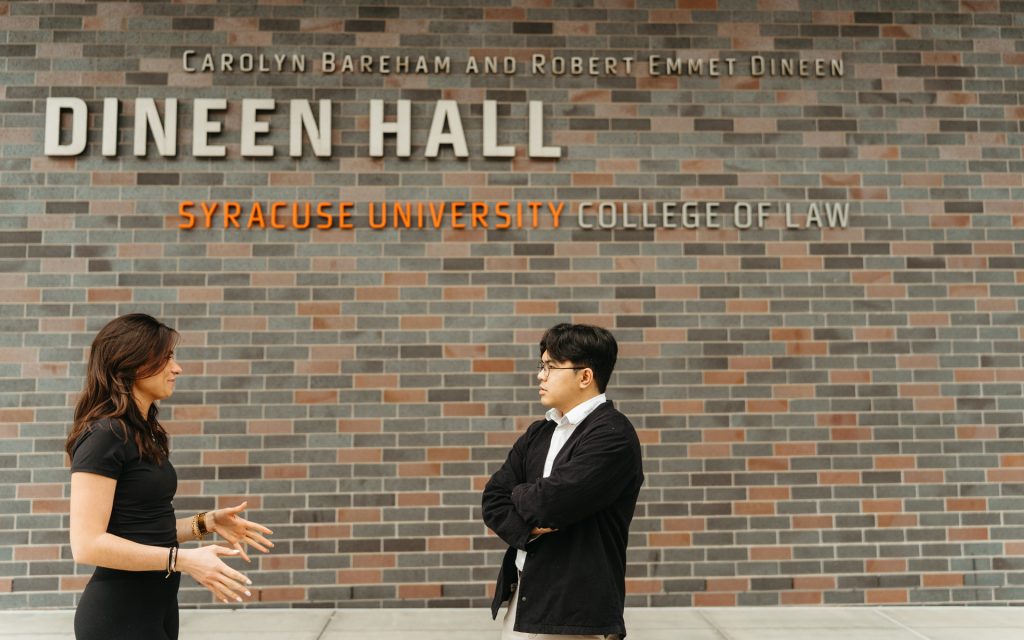
Shannon Chamberlain L’24 wrote the Top Student Paper in the Law and Policy Division of the Association for Education in Journalism and Mass Communication (AEJMC) competition and presented the paper at their recent conference.
Chamberlain’s paper is ESCAPING LIABILITY FOR THE “GRAVEST OF THREATS”: EXPANDING ARTICLE 1, SECTION 6 IMMUNITY AND NARROWING BRANDENBURG INCITEMENT.
“This was an exceptional paper on a novel and contemporary issue with a compelling legal analysis and argument. I know the judges were impressed, too,” says Professor Roy Gutterman L’00. “Congratulations to Shannon for this achievement in a very competitive media law scholarship competition.”
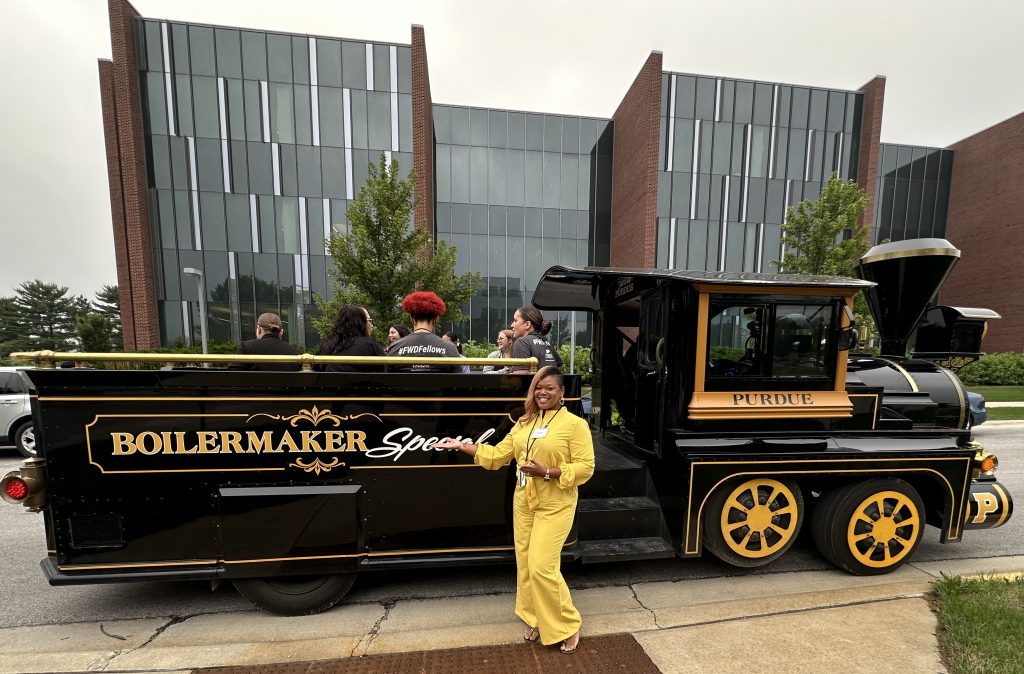
Angela R. Hamilton L’25 was selected as one of 25 women student veterans for a 2024 Focus Forward Fellowship, hosted by the Military and Family Research Institute at Purdue University.
The Fellowship connects Purdue faculty and women student veterans and service members from around the country to help the student veterans grow their professional network and reach their career and academic goals. The cohort of Fellows are provided with mentors and coaches whom they met at a recent four-day in-person residency at Purdue. The Fellows will continue to meet in an online community throughout the year. The mentors help the Fellows harness new skills, strengthen self-confidence, and facilitate community building.
Hamilton is a retired veteran of the U.S. Navy. At Syracuse Law, she participates in the Betty and Michael D. Wohl Veterans Legal Clinic and is a member of the Military and Veterans Law Society.
The ‘Cuse Vet Fest, a collaboration between the U.S. Department of Veterans Affairs Syracuse VA Medical Center and Syracuse University College of Law’s Military and Veterans Law Society (MVLS), will be held on Friday, September 6 from 10 a.m. to 3 p.m. in Dineen Hall’s Levey Atrium.
The event is free and open to all Syracuse-area veterans, including Syracuse University student, faculty, and staff veterans who are not enrolled in VA health care and want to learn more about eligibility and how to sign up.
Attendees can:
Enroll in VA Healthcare (Please bring a copy of DD214 and Photo ID)
File a claim with VBA
Obtain a Veteran Health ID Card (Please bring a Photo ID)
Learn how the PACT Act (Honoring our Promise to Address Comprehensive Toxic Acts) expands healthcare benefits for Veterans who served in the Vietnam War, Gulf War, and post-9/11 eras and were exposed to burn pits, Agent Orange, and other toxic substances. PACT Act also extends eligibility to survivors of these exposed Veterans.
Engage with VA professionals
Visit with a variety of local community resources
Representatives from Syracuse University’s Office of Veteran and Military Affairs and the Office of Veteran Success will be in attendance. MVLS students will guide attendees and facilitate interactions with partner organizations.
“For me, the decision to pursue a career in law is deeply rooted in the desire to effect positive change, provide client advocacy and foster relationships and community support. For these reasons, there was no better place for me to begin my legal career than Syracuse Law.”
—Ryleigh Peterson L’26
A Central New York native, Ryleigh Peterson L’26 only applied to one law school—The Syracuse University College of Law. “For me, the decision to pursue a career in law is deeply rooted in the desire to effect positive change, provide client advocacy and foster relationships and community support,” she says. “For these reasons, there was no better place for me to begin my legal career than Syracuse Law.”
While earning a bachelor’s degree in media studies with a minor in legal studies at Hunter College in New York City, Peterson worked as a legal personnel intern at Cravath, Swaine & Moore LLP. Her interest in being a paralegal led to a position as a collateral review intern with the firm. Upon graduation, Peterson accepted a corporate paralegal position at Cravath, where she assisted the banking and credits, and mergers and acquisitions practice groups. However, she eventually returned to her hometown of Skaneateles, New York, and went to work as a business paralegal at Bond, Schoeneck & King, PLLC, in its Syracuse office. Not long after, she decided to pursue law school.
Since starting at Syracuse Law in Fall 2023, Peterson has been finding her way, making friends and figuring out what practice of the law she’d like to pursue. Returning to academia after three years of working professionally took some adjusting, but Peterson found comfort knowing she is where she belongs.
“As a 1L, I am passionate about learning, and I enjoy analysis and critical thinking,” she explains. “I like connecting the dots from my time as a paralegal to my current studies of the law.”
Already, she has learned some valuable lessons. “Law school has prepared me to get out of my comfort zone and learn new skill sets,” Peterson says. “I’m constantly pushing myself and doing things that I wouldn’t have done before I started here. Syracuse Law is preparing me to think critically, tackle difficult problems and shape myself into a future working professional.”
Peterson currently works as a law ambassador, giving tours of the school to prospective students, and also as a work-study student in the admission and financial aid office. She has also made a tight-knit group of friends who understand the pressures and expectations of law school.
“We’re all going through this process together. Law school is not easy but having a support system that understands what you’re going through makes it more manageable,” she says, noting that her parents, sisters and boyfriend have been “her rock” during the process.
Peterson is looking forward to returning to Bond, Schoeneck & King as a summer law clerk. “Right now, I think I’d like to work in corporate law because that’s the kind of experience I had as a paralegal, and I have thoroughly enjoyed it,” she says. “But, I still have a lot of learning to do, so who knows? I’m open to possibilities as I continue to take more classes.”
Peterson already has some advice to offer students just beginning the law school path. “Have confidence in yourself and be kind,” she says. “Law school is challenging, but you and your classmates are all going through this process for the first time. It’s a learning curve for everyone, and everyone learns differently. Stay true to yourself, and don’t compare yourself to anyone else. This experience is extremely rewarding in many ways, so embrace it!”
The Hon. James E. Baker recently chaired the National Academy of Public Administration (NAPA)/Federal Justice Center panel that examined the workplace practices across the Federal judiciary in a study of the workplace climate in the Article III judiciary.
The panel has issued its report “Enhancing Efforts to Coordinate Best Workplace Practices Across the Federal Judiciary.” Judge Baker was a guest on NAPA’s Management Matters podcast to discuss the key takeaways and lessons learned from the report that researched best workplace practices across the Judiciary.

According to Brooke Hasegawa-Nakaoka L’22, inclusivity resonates with her family. In her native Hawai’i, it is known as “’the aloha spirit,’ a celebration of kindness and compassion appreciating all things we are given and all those that surround us and, where we include everyone,” she explains. That sense of inclusivity extended to her experience in the JDinteractive (JDi) program at Syracuse University College of Law. “’Aloha’ is diversity, equity and inclusion, and finding a school, employer, social circle and community that appreciated and included ‘aloha’ in its mission was very important. Syracuse Law provided that to my ohana (family),” Hasegawa-Nakaoka says.
“’The aloha spirit,’ [is] a celebration of kindness and compassion appreciating all things we are given and all those that surround us and, where we include everyone.’Aloha’ is diversity, equity and inclusion, and finding a school, employer, social circle and community that appreciated and included ‘aloha’ in its mission was very important. Syracuse Law provided that to my ohana (family).”
—Brooke Hasegawa-Nakaoka L’22
Born and raised on the island of Oahu Hasegawa-Nakaoka earned a bachelor’s degree in business from the Marshall School of Business at the University of Southern California (USC) and started her career as a financial advisor for Morgan Stanley in Los Angeles. Later, she worked as a senior account executive in sales and marketing at Paradise Media Group, LLC, and a lecturer at the Shidler College of Business at the University of Hawai’i at Manoa. During this time, she also pursued an MBA and graduated cum laude from the University of Hawai’i in 2008.
Brooke Hasegawa-Nakaoka L’22 moderating a fireside chat with fellow alumna Melanie Gray L’81 at the Los Angeles Bankruptcy Residency.
In 2011, she had a family, and “life soon became filled with visits to the zoo, juice pouches, and cheese sticks,” according to Hasegawa-Nakaoka. For the next four years, she raised her family and continued as a lecturer in global management and organizational behavior. But, when her son started kindergarten, she decided it was time to pursue law, earning a master’s degree in the study of law (M.S.L.) from USC in 2019. With a preliminary legal foundation, she applied to the Syracuse University School of Law’s JDinteractive (JDI) program.
“Like so many JDi students that I meet, law school was something I always wanted to do,” she says. “I just had a few other things I needed to do first.”
“Like so many JDi students that I meet, law school was something I always wanted to do. I just had a few other things I needed to do first.”
—Brooke Hasegawa-Nakaoka L’22
Her experience was positive, as she participated in online classes all the way from Hawai’i. She remembers her initial visit to the Syracuse campus during her cohort’s first residency, led by Associate Dean for Online Education Shannon Gardner. “It was a warm welcome that empowered me to remain committed to the JDi program. Dean Gardner was my first introduction to Syracuse Law and the first person I thought to notify when I passed the bar exam three years later,” says Hasegawa-Nakaoka.
“Dean Gardner was my first introduction to Syracuse Law and the first person I thought to notify when I passed the bar exam three years later.”
—Brooke Hasegawa-Nakaoka L’22
On the day of her first residency at Syracuse Law, Hasegawa-Nakaoka chose a seat that serendipitously put her in front of her soon-to-be “law school bestie” Eliseo Arebalos L’22, who became her confidant over the next three years.
“Because of Syracuse Law, my son has Uncle Eli in his life, and my family and I are forever blessed with his friendship,” she says.
Brooke Hasegawa-Nakaoka L’22 giving back her time to current JDinteractive students at the Los Angeles Bankruptcy Residency
While pursuing her law degree, Hasegawa-Nakaoka had an externship that honored her Hawaiian roots and community when she worked 821 hours as a law clerk with the Legal Aid of Maui. (Her great grandfather, the Hon. George K. Hasegawa, was a magistrate of the District Court of Lahaina and Lanai. He retired from the bench after 11 years of service to the community. In addition, both her paternal grandparents and maternal grandfather were proud graduates of Lahainaluna High School and members of the Lahaina community that made headlines around the world when it was decimated by wildfires in August 2023.) Hasegawa-Nakaoka felt it was important to honor her roots and community by doing legal aid work for those who needed help. As a result of her commitment, she received the Arthur T. Ueoka Memorial Scholarship presented by the Maui County Bar Association in 2021 and was later awarded the 2022 Outstanding Pro Bono Service Award by Syracuse Law.
With her law degree in hand—Hasegawa-Nakaoka was the first female in the JDi program to pass the bar—she is currently working as an associate with the International Reproductive Law Group of Los Angeles, where her law school friend Arebalos is a managing partner. She also works as vice president and house counsel for Progressive Communications, LLC, based in Honolulu. Her family is located in both Los Angeles and Hawaii, as her son wanted to pursue opportunities on the mainland, while her husband’s business is still on the islands. “Our family has adopted the ‘Live with Aloha’ mindset, which has aided our transition to Los Angeles,” she explains.
“Syracuse Law gave me so much more than a law degree. Even though I was taking classes online from across the country, the ‘aloha spirit” at Syracuse Law made me feel right at home, and for that I am grateful.”
—Brooke Hasegawa-Nakaoka L’22
Her journey has been a long one, in time, effort and distance, but she is pleased that she can now practice law. Says Hasegawa-Nakaoka, “Syracuse Law gave me so much more than a law degree. Even though I was taking classes online from across the country, the ‘aloha spirit” at Syracuse Law made me feel right at home, and for that I am grateful.”
Kenneth W. Irvin L’92, Zabrina Jenkins G’97, L’00, and The Hon. Nazakhtar (Nazak) Nikakhtar G’02, L’02
Syracuse University College of Law has added Kenneth W. Irvin L’92, Partner, Energy, M&A, Securities Enforcement and Regulatory at Sidley Austin LLP; the Hon. Nazakhtar (Nazak) Nikakhtar G’02. L’02, Partner, Chair, National Security Practice and Co-Chair, Committee on Foreign Investment in the U.S. at Wiley Rein LLP; and Zabrina M. Jenkins G’97, L’00, Executive Advisor to the Office of the CEO at Starbucks to its Board of Advisors.
“As the legal world evolves at an unprecedented pace, we need the diverse expertise that Ken, Nazak, and Zabrina bring to the Board to help lead our College and students into the future,” says Acting Dean Keith J. Bybee, Paul E. and Hon. Joanne F. Alper ’72 Judiciary Studies Professor.
“I would like to welcome Ken, Nazak, and Zabrina to the Board of Advisors,” says College of Law Board of Advisors Chair Melanie Gray L’81. “These impressive alumni bring extensive experiences from law firms, government, and consumer businesses to the Board that will benefit our students and College as we deliver a legal education for today’s ever-changing world.”
Kenneth W. Irvin L’92 is a co-leader of Sidley’s global Energy practice area team, and represents clients on a variety of regulatory, enforcement, compliance, and transactional matters involving the U.S. wholesale electricity and natural gas markets, as well as with respect to the energy transition. Irvin has extensive experience representing clients in regulatory and investigations proceedings before the Federal Energy Regulatory Commission (FERC) and multiple state energy regulatory agencies, which includes handling FERC enforcement matters and self-reports. Irvin graduated from the College of Law, magna cum laude in 1992 and from Clarkson University with a B.S. in Electrical Engineering in 1987.
The Hon. Nazakhtar (Nazak) Nikakhtar G’02, L’02 is an international trade and national security attorney at Wiley Rein LLP where she is the Chair of Wiley’s national security practice and Co-Chair of the Committee on Foreign Investment in the U. S. practice. From 2018 to 2021, with unanimous confirmation by the U.S. Senate, Nikakhtar served as the Department of Commerce’s Assistant Secretary for Industry & Analysis at the International Trade Administration. She also fulfilled the duties of the Under Secretary for Industry and Security at Commerce’s Bureau of Industry and Security. Nikakhtar earned Juris Doctor and Master of Economics degrees from Syracuse University, where she served as Editor-in-Chief of the Syracuse Journal of International Law and Commerce, and a B. A. degree from the University of California, Los Angeles.
Zabrina Jenkins G’97, L’00 is executive advisor to the Office of the Chief Executive Officer of Starbucks. She is a member of CEO Laxman Narasimhan’s extended executive leadership team providing strategic counsel and support in several key areas including corporate strategy, public affairs, talent development, inclusion and diversity, and legal and stakeholder engagement. Previously, she was acting executive vice president and general counsel for Starbucks, leading legal and regulatory affairs, global security, and ethics and compliance for the company. Additionally, Jenkins serves as an executive champion to the Starbucks Black Partner Network and an advisor to the diversity committee for the Law & Corporate Affairs department. Zabrina received a B. S. in business administration from Central Washington University, an M. S. from Syracuse University School of Education, and a J. D. cum laude from Syracuse University College of Law.
Originally from Chicago, IL, Alexandra Stolfe L’25 has always pictured her post-graduate life beginning in New York City. She loves roaming the art galleries, reading books in Central Park, and trying as many new restaurants as she possibly can.
Stolfe came to Syracuse Law as a part of the 3+3 partnership with the Syracuse University Martin J. Whitman School of Management, where she graduated with a degree in finance and accounting. At law school, she was elected as Senior Notes Editor for the Syracuse Law Review. She is also involved with the Alternative Dispute Resolution team of the Travis H.D. Lewin Advocacy Honor Society and tutoring 1Ls as an Academic Success Fellow. She is interested in working in transactional law, something that has been solidified for her through her current externship with the asset finance group at Holland & Knight.
Thanks in part to the Externship Opportunity Fund, Stolfe could make connections, study, and begin to set up a life for herself in New York City. She is also learning a great deal about what her future work will be, already sitting in on client negotiations, drafting sale and purchase agreements, and even supporting her firm at the Airline Economics Conference.
Overall, she loved working with the people at Holland & Knight the most. “The associates and partners were patient with my questions and eager to teach me,” she explains. “The partners always created time to give me feedback and share stories about their impressive careers and the associates took the time to give extra instruction when I needed it. This made me feel like an integrated member of the office. I received incredible mentorship.”
While the office operates with a high level of professionalism, Stolfe appreciated the warmth and friendliness of her coworkers. The welcoming and supportive environment helped her feel more confident asking questions and contributing her own opinions and thoughts on work products.
Stolfe credits the guidance of Richard Furey L’94, Partner, Holland & Knight, with shaping her externship experience. She believes that working with him and observing how he leads the practice truly showed her what it means to be a leader, in both the office and in his field.
Richard Furey L’94, Partner, Holland & Knight
“I have always greatly admired and appreciated the Syracuse alumni network,” she says. “They are always ready to provide help when you need it. I would not be where I am today if not for these connections.”
Stolfe plans on building upon the lessons and skills she learned at Holland & Knight to her summer associate position this summer. This includes not only technical skills related to asset finance, contract drafting, and aviation law but also the interpersonal skills that define what it means to be an attorney.
When Craig Boise went to law school in the 1980s, there wasn’t much talk of a value proposition. He received a rigorous legal education at the University of Chicago and, of course, intensive study. Still, says Boise, “There was a real disconnect between the doctrine we were learning and how to use it. We had large stacks of books and no real sense of how it all would apply in practice. That’s the gulf I’ve tried hard to span.”
When he became Dean of the College of Law in 2016, Boise was determined to redefine the value proposition of law school. “We are focused on ensuring our students attain the kinds of jobs they dream about. Certainly, they receive an excellent education, but they also get the support they need to pass the bar, the connections to externships and the clinical work that positions them to excel when they graduate. Law school is an investment. We make it worth their while.”
Those who worked closely with Boise during his tenure as Dean—as advisors, colleagues, faculty and staff—and students who obtained their law degrees over the last eight years say they have reaped the benefits of his vision and determination.
“During my first trial assignment, one of the senior attorneys said to me ‘I had no idea you were so well trained.’ I didn’t have to be taught how to do a direct exam or develop a strategy for cross-examination. The core was all there and it shocked some of my colleagues. I can hold my ground because of the training I received at Syracuse University College of Law.”
Tyler Jefferies L’21, Deputy Attorney General, Pennsylvania Office of Attorney General
Tyler Jefferies L’21 is testimony to the value proposition Boise envisioned. Now Deputy Attorney General at the Pennsylvania Office of Attorney General, Jefferies says she’s the youngest in the office by far. “During my first trial assignment, one of the senior attorneys said to me ‘I had no idea you were so well trained.’ I didn’t have to be taught how to do a direct exam or develop a strategy for cross-examination. The core was all there and it shocked some of my colleagues. I can hold my ground because of the training I received at Syracuse University College of Law.”
Jefferies’ advocacy skills were honed through the many trial competitions and advocacy classes that bring distinction to the College. “I consider us an elite program,” says Professor Todd Berger, Director of Advocacy Programs. “We do things that are more creative and more innovative than any other law school in the advocacy space.” Berger credits Boise for targeting areas of distinction, such as advocacy, and providing the resources to expand and strengthen those programs.
“Dean Boise never turned down a new idea to innovate,” says Jefferies. “When Professor Berger proposed the idea of a 14-week competition that operates like professional sports playoffs, the Dean said ‘Great. Let’s hammer out the logistics and just try it!’ We have been a trailblazer in the competition world and other schools are trying to do similar things. Dean Boise’s ability to see the bigger picture and support it was really important to the growth of the program.”
Brian Gerling L’99 meets with students at a table in the Innovation Law Center
“Craig had a forward-thinking attitude toward growing the law school and providing students with the most well-rounded education possible and practical learning experiences and opportunities to make them more marketable and more successful graduates.”
Brian Gerling L’99, Executive Director of the Innovation Law Center
Trailblazer and innovator are words often used to describe Boise. “Craig had a forward-thinking attitude toward growing the law school and providing students with the most well-rounded education possible and practical learning experiences and opportunities to make them more marketable and more successful graduates,” says Brian Gerling L’99, Professor of Practice and Executive Director of the Innovation Law Center (ILC). Today, more than 97% of graduates are employed or enrolled in another graduate program within 10 months of graduation, an impressive achievement for law schools and just one of many measures of success realized during Boise’s tenure.
Gerling recalls that as a law student at Syracuse Law in the ‘90s, he was aware of professors and courses that were considered ahead of their time. But he credits Boise with investing in and structuring comprehensive programs that would bring new distinction to the College and success to students. “He infused enthusiasm and capital and leadership, engaging alumni and donors in supporting programs that are nationally recognized.”
“We knew we needed a visionary leader with innovative ideas and a diversity of life experiences, who was also a team player and bold in vision and action,” says Melanie Gray L’81, who served on the University Board of Trustees and the College of Law Board of Advisors when Boise was hired. At the time, the College was running a multi-million dollar deficit and putting a drain on the university.
Melanie Gray L’81 standing outside of the Melanie Gray Ceremonial Courtroom.
“We knew we needed a visionary leader with innovative ideas and a diversity of life experiences, who was also a team player and bold in vision and action.”
Melanie Gray L’81, College of Law Board of Advisors, University Trustee
Chancellor Kent Syverud, himself an attorney and former law school dean, believed that Boise could turn things around with his bold vision and commitment to academic excellence. When Boise was appointed Dean in 2016, Syverud said “He is the ideal person to lead the College of Law into a new era.”
Craig Boise and Chancellor Syverud meet with students in Dineen Hall.
“Dean Boise’s creativity and drive helped the College of Law launch one of the first and one of the best online law degree programs in the nation. He has embraced and advanced priorities of the university, including disability advocacy and advocacy for veterans and military-connected students.”
Chancellor Syverud
“Dean Boise brought innovation to a discipline steeped in tradition,” says Chancellor Syverud. “Dean Boise’s creativity and drive helped the College of Law launch one of the first and one of the best online law degree programs in the nation. He has embraced and advanced priorities of the university, including disability advocacy and advocacy for veterans and military-connected students. I am so grateful to Dean Boise for his outstanding and entrepreneurial leadership over the last eight years and thank him for his distinguished service to Syracuse University.”
Boise says he was drawn to the opportunity because he knew the Chancellor truly appreciated the value of a top-notch legal education and describes Syverud as a mentor. “Still, it was a bit daunting,” he admits. And he had a lot more questions than answers. “How am I going to distinguish myself as a dean? What am I going to bring that is both important and instrumental in moving the institution forward?”
What Boise brought to the College was an incredibly diverse background of life experiences that uniquely qualified him to manage transition and lead through transformation. Raised in a small town in Missouri by Southern Baptist parents, he worked summers on a family farm in Nebraska and, at first, envisioned a career as a farmer or rancher. But his musical talent as a classical pianist earned him a scholarship to a conservatory and a new vision for his future. Then, economic realities set in and Boise left college for the workforce. He worked in a warehouse for a while, as a messenger in a law firm, and enrolled in the police academy. He still sips from his POLICE KCMO mug, a souvenir from his five years as an officer in Kansas City. That’s where he became interested in the law and a different vision for his future and enrolled at University of Chicago Law School. With his J.D. and later an LL.M. in taxation from New York University School of Law, he worked as a corporate lawyer, then switched to academia, eventually becoming dean at Cleveland State University’s law school.
Mark Neporent L’82 and Craig Boise pose for a photo after the fireside chat at the Denver JDinteractive Residency.
“Perhaps it was the police training, but like a good officer, Craig recognizes points of tension and embraces them. He knows how to deescalate situations and calm things down and bring people along to see his point of view. I’m a big fan and very appreciative of what’s he’s done for the law school and the University.”
Mark Neporent L’82, College of Law Board of Advisors, University Trustee
“There’s a force and energy within his lived experiences that stood out and differentiated him from all other candidates,” say Gray, who was on the Syracuse University search committee that recommended him for the position. Like Gray, Mark Neporent L’82 served on the Board of Advisors and was a University trustee. “Perhaps it was the police training, but like a good officer, Craig recognizes points of tension and embraces them,” says Neporent. “He knows how to deescalate situations and calm things down and bring people along to see his point of view. I’m a big fan and very appreciative of what’s he’s done for the law school and the University.”
In his first year as Dean, Boise launched an assessment of the law school’s assets to better understand what could distinguish it from the other 200+ law schools in the country. Four areas stood out: the Advocacy Program, Disability Law and Policy Program, Innovation Law Center, and the Institute for National Security and Counterterrorism (now known as the Institute for Security Policy and Law). “When we looked at the genesis of these programs, they were big innovations from the start,” says Boise. In fact, these programs provided a foundation for defining and securing the law school’s distinctive brand as an innovative law school. “We have a history of innovation that we could point to, which made it possible to tie the past to where we are going in the future.”
Craig Boise (middle front) and Sophie Dagenais (middle front) pose with colleagues at the College of Law at Kyung Hee University.
“Craig was steadfast in his determination to build on this history of innovation. To him, that was the brand and brand was mission critical. That meant providing the resources needed to deepen expertise, bringing in new faculty, expanding experiential learning opportunities in each area, engaging alumni, and telling the story of these assets and attributes more effectively to attract new students and drive philanthropic support.”
Sophie Dagenais, Former Assistant Dean for Advancement and External Affairs.
“Craig was steadfast in his determination to build on this history of innovation. To him, that was the brand and brand was mission critical,” says Sophie Dagenais, who served as Boise’s Assistant Dean for Advancement and External Affairs. “That meant providing the resources needed to deepen expertise, bringing in new faculty, expanding experiential learning opportunities in each area, engaging alumni, and telling the story of these assets and attributes more effectively to attract new students and drive philanthropic support.”
“We have a responsibility to our students to be at the forefront of legal innovation. When we are, we not only better prepare them for the future, but we also shape the future.”
Craig Boise, Dean
“There’s nothing I love better than new ideas and fresh ways of thinking about things, whether it’s curricular—what we are teaching our students—or new ways of teaching or innovation in operations. These things get me excited,” says Boise. “We have a responsibility to our students to be at the forefront of legal innovation. When we are, we not only better prepare them for the future, but we also shape the future.”
Perhaps nowhere is this innovative spirit and impact more apparent than in JDinteractive, the first hybrid online J.D. program of its kind in the nation, combining virtual class sessions with self-paced online instruction, short courses, in-person residencies and a legal externship. The concept of an online program was under development when Boise was hired, but there were questions about its viability. Boise worked closely with faculty to design a program that would get American Bar Association (ABA) support, bring new revenue to the law school, attract and expand a diverse pool of students, and enhance the law school’s reputation. “I was fortunate to work with faculty who were willing to help build the plane while we were flying it,” says Boise.
“It was like a field of dreams. We built it and they came,” says Nina Kohn, David M. Levy L’48 Professor of Law. Kohn who was Associate Dean for Research and Online Education when Boise was appointed dean, admits that she and other faculty members were skeptical at first, because online education was often perceived as low-quality by academicians. “One thing that the launch of a program like this offers is the chance to talk seriously with all constituents—our students, alumni and faculty—about who we are as a college of law and why what we do matters. Our goal was to offer the best possible legal education that meets the needs of the profession. We created a space for those individuals for whom the residential program was not an option: people who have jobs and are not living near excellent night programs; people who have caregiving responsibilities; people who are in the military and don’t live in one place for very long. The people we built this for are now our graduates, and many of them serve in communities that are historically underserved. So we are not only helping students get the legal education they dreamed of, we’re helping communities as well.”
“When Craig came on board, it was his passion that helped push the program forward,” says Shannon Gardner, Teaching Professor and Associate Dean for Online Education. “He’s leading for the future, committed to innovation and 22nd century lawyering.” Gardner teaches the first five-day on-campus residency course for the JDi students. “I just fell in love with the students. Most have wanted to go to law school for so long, but thought it was an unattainable dream. They have so much gratitude and it’s gratifying for us to see them be able to join the legal profession.”
“When Craig came on board, it was his passion that helped push the [JDinteractive] program forward. He’s leading for the future, committed to innovation and 22nd century lawyering.”
Shannon Gardner, Teaching Professor and Associate Dean for Online Education
“I went to Zoom school before it was cool,” says Tiffany Love ’22, who was in the first cohort of JDi students. A military spouse, she had put her law school dreams on hold. But while stationed in Germany, she was accepted into the JDi program. “I was literally in class from midnight to 4 am, and then worked full time as a paralegal for the Army JAG.” Though she was concerned at first about how her credentials would be perceived by potential employers, she says the quality of a Syracuse law degree was an asset, no matter how it was attained. Now, Love is a second year associate at Phelps Dunbar LLP in Tampa.
“The JDi program single-handedly changed the trajectory of my life; it made a law degree accessible with the reputation of a national security powerhouse. Along with other College of Law visionaries, Dean Boise created this future for me. I know my legal contributions made a difference. I am forever grateful.”
Meghan Steenburgh G’97, L’23, Assistant General Counsel with the Department of Defense
Meghan Steenburgh G’97, L’23 is also living her dream, thanks to JDi. Now Assistant General Counsel with the Department of Defense, she said the program allowed her to pursue a law degree while caring for her children and helping her parents while living in three different states. “The JDi program single-handedly changed the trajectory of my life; it made a law degree accessible with the reputation of a national security powerhouse,” says Steenburgh. “Along with other College of Law visionaries, Dean Boise created this future for me. I know my legal contributions made a difference. I am forever grateful.”
The popularity and success of JDi also changed the fiscal trajectory of the law school. Further, concerns about quality are a thing of the past, with increased LSAT scores among applicants and impressive bar passage rates. JDi’s success has had ripple effects throughout the university, with the creation of the nation’s only online joint J.D./MBA program, a significant expansion of the Center for Online and Digital Learning to provide support for other degree programs, and, the inclusion of JDi students in other stellar programs like Advocacy and Syracuse Law Review. For example, JDi students are included in virtual trial competitions, preparing students for more virtual practice in the real world. “They have a leg up,” says Jefferies, noting that she recently had three court cases in which she appeared virtually. She now coaches JDi students for virtual advocacy competitions.
A pilot program with JDi students will contribute to a significant expansion in enrollment in the ILC, says Gerling. Gerling also credits Boise with bringing the University’s tech transfer office into the ILC, giving law students the chance to do real-world work on commercializing new technology generated by researchers across the campus. “That’s a real feather in Craig’s cap,” says Gerling. “His vision and leadership led to a productive working relationship between the Office of Research and the law school. We’ve also developed internships with the Office of the General Counsel. Our students not only learn how to think like lawyers but practice the skills necessary for the practice of law.”
And it was Boise’s outreach to alumni that made it possible for students to develop so many new skills. “Craig engaged alumni in unique ways,” says Dagenais. “Our alumni stepped up and delivered content for JDi residencies, teaching short courses for a weekend or several days and enabling our students to do a deep dive into specialized sectors of the law.”
Boise’s ability to articulate the vision engaged alumni in ways that will benefit the law school for years to come. “He’s an impressive guy,” says Frank Ryan L’94, DLA Piper’s Global Co- Chair, Global Co-CEO and Americas Chair. Ryan rejoined the Board of Advisors in 2017 after Boise met with him in New York City and persuaded him to get re-engaged with his alma mater. “Craig’s ideas on how to transform legal education connected with me. He read the tea leaves and offered an understanding of how to compete against other law schools and how we as alumni could help.”
Now, Syracuse Law has the highest rate of alumni engagement of all twelve University schools and colleges, along with the highest alumni giving participation, exceeding its goals for the Forever Orange Campaign a year ahead of schedule. Ryan calls Boise an “exceptional team builder. He empowers people and then lets them go and do their jobs.”
Benita Miller L’96
“Craig just has a way about him. He was willing to hear the hard stuff and discuss the pain points shared by Black alumni from the 1990s like myself. He created space for diversity that did not alienate the traditions that were so important to the institution.”
Benita Miller L’96, Vice President of U.S. Programs for the Center for Reproductive Rights
Benita Miller L’96 credits Boise’s for engaging alumni in meaningful ways by “creating space for everyone at the table.” Now Vice President of U.S. Programs for the Center for Reproductive Rights, Miller says she had not felt “at home” at the law school until Boise reached out, painted the vision, listened to her concerns and ignited her passion to serve the students. Today, she is on the Board of Advisors and mentors JDi students. “Craig just has a way about him. He was willing to hear the hard stuff and discuss the pain points shared by Black alumni from the 1990s like myself. He created space for diversity that did not alienate the traditions that were so important to the institution.” Miller cites JDi and the Orange Advance pipeline program with HBCU institutions as innovations that “are really important to our profession. We’re contributing to a more expansive legal community.”
“Craig focused the value proposition of law school on opening the aperture for our students to have more career opportunities and reach life goals,” says Lily Yan Hughes, Assistant Dean of Career Services and Student Experience. Having had a prolific career in corporate law, Hughes was intrigued when Boise approached her in 2021 to help him reimagine career services. “My team’s ‘tagline’ is that we are not just resume readers or a job bank. We are here to help students think more strategically and to be CEO of their own careers.”
Lily Yan Hughes, Assistant Dean of Career Services and Student Experience and team at the Syracuse Law Career Expo.
“Craig focused the value proposition of law school on opening the aperture for our students to have more career opportunities and reach life goals.”
Lily Yan Hughes, Assistant Dean of Career Services and Student Experience
Evidence of the value proposition at work: The last four years have seen a 55% increase in overall student externship placements. Last year, 195 students were placed in externships in 29 states, many of them made possible because of the Orange alumni network. The rate of employment ten months after graduation jumped 21% from 2018 to 2023.
As graduates fan out into careers in the courtroom or the boardroom, in public service or private equity, and use their degrees to practice law or bring a different way of thinking to other industries, they are the living legacy of the tenure of a dean dedicated to innovation and bringing a new value proposition to their education.
The Board of Advisors recognized that legacy in creating a new scholarship in his name, to be awarded to a student who has demonstrated an entrepreneurial and innovative spirit. With emotion in his voice as the scholarship plaque was presented to him, Boise expressed his gratitude. “This was such a perfect gift because it reflects what I value most—opportunities for our students to pursue meaningful careers in a world that requires their vision, integrity and a steadfast commitment to justice.”
As Boise prepares to take his first sabbatical in 21 years, he’s looking forward to contributing to further innovations in legal education. He plans to teach a JDi course and work with the Center for Online Design and Learning to integrate new technologies into course design. But first, he says, he’ll focus on other passions. He’ll play more piano, especially the works of Rachmaninoff and Chopin who were both considered innovators in their time. He also plans to set sail, steering a boat through whatever turbulence he might encounter to find peace and calm in the expanse of the seas.
Who wouldn’t want to take in the ancient architecture of Rome while studying international law or see landmarks like Big Ben and Buckingham Palace while learning about comparative trial advocacy in the heart of London? Who can resist the rush of adrenaline found in a bustling New York City law firm while learning about asset finance or the glitz and glamour of Los Angeles while studying bankruptcy law? These are just a few of the options offered to students enrolled in the Syracuse University College of Law’s JDinteractive (JDi) hybrid online program, as they work to complete six required in-person residencies.
“Our residencies have become a hallmark of our JDi program, and we will continue to promote this type of high-quality experiential learning moving forward.”
Shannon Gardner, Associate Dean for Online Education
A Warm Orange Welcome
The first and second of the six required residencies have the JDi students traveling to the Syracuse University campus. The first residency, Legal Foundations, happens the week before the start of fall classes. Students spend five days in Dineen Hall getting a solid foundation in U.S. government and legal systems, as well as a clear understanding of the rigors of law school study methods and other skills, to set them up for a successful experience.
“This puts everyone at the same starting level with an equal base knowledge to succeed in the JDi program,” says Gardner. “It also helps students feel connected to Syracuse Law right from the start, whether they are participating from across town or the country.”
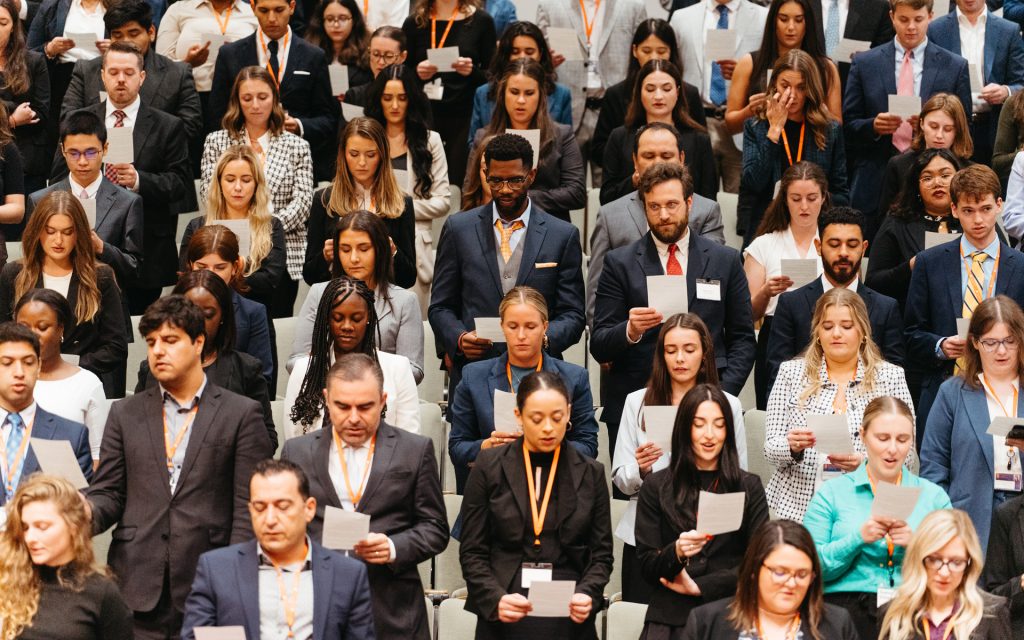
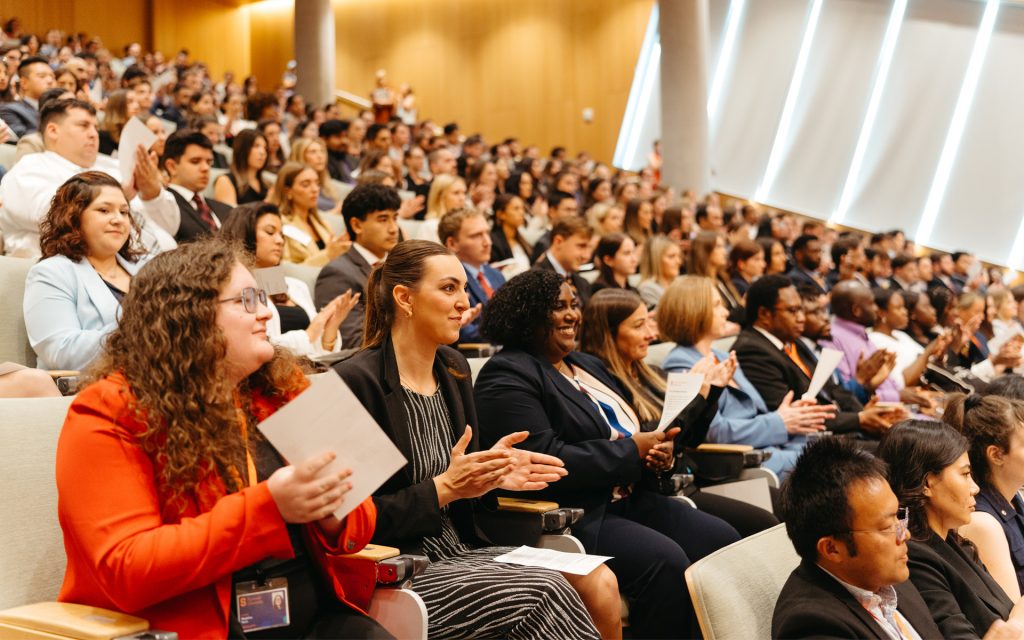
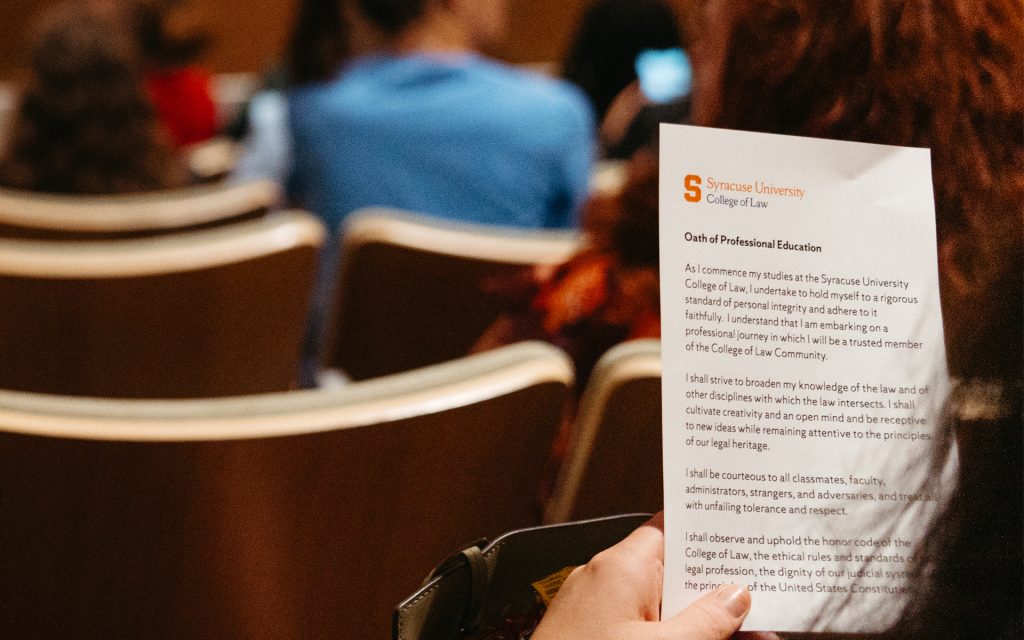
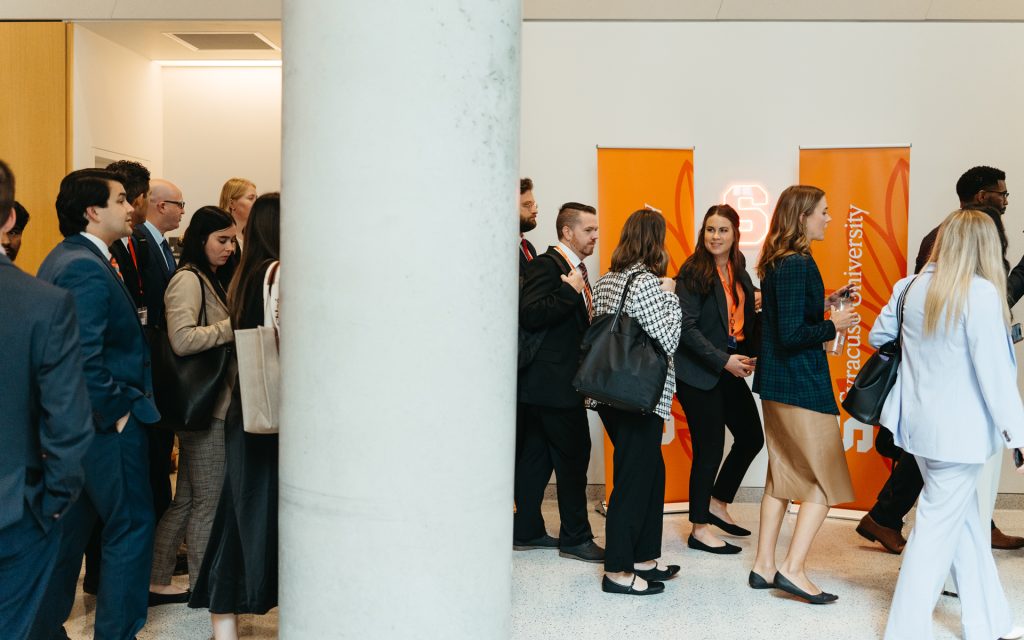
Members of the JDi incoming Class of ’27 came to the Syracuse campus in August 2023 for their first residency experience. Not only did they take away a lot of knowledge, but they also had the chance to walk the campus, experience the city, and, of course, stop to purchase some Syracuse University merch to wear proudly back home. Students were officially welcomed during Convocation, along with the incoming residential law students, as Zabrina Jenkins G’97, L’00, former general counsel for Starbucks, gave the keynote address.
Students had the opportunity to visit the James M. Hanley Federal Building and U.S. Courthouse in downtown Syracuse. And, lunch at the world-renowned Dinosaur Bar-B-Que added a flavorful touch to their visit. In addition, the Dean’s Dinner, hosted by Dean Craig Boise, gave students a valuable opportunity to network with faculty, staff, and classmates, and an event at Skaneateles Country Club connected them with more area alumni.
JDi students returned to campus again just before the start of the spring semester for Legal Applications, a five-day residency on practical skills like public speaking, negotiations, interviewing, research, and writing. The 1Ls also visited Salt City Market, a downtown attraction featuring a diverse menu from local vendors, and later went to a networking event sponsored by the Student Bar Association.
Zabrina Jenkins G’97, L’00, former general counsel for Starbucks, speaks to a class of JDi students on campus for the General Counsel residency in August, 2023Students had the opportunity to visit the James M. Hanley Federal Building and U.S. Courthouse in downtown Syracuse.Students had the opportunity to visit the James M. Hanley Federal Building and U.S. Courthouse in downtown Syracuse.Students network with their classmates at Dinosaur BBQ.Students enjoy a beverage together at the Salt City Market.
Back to Campus to Learn Professional Skills
The third and fourth residencies, Professional Skills, take place together at the Syracuse Law campus over five days, allowing students to choose from a variety of topics at the start of their fifth semester of the JDi program. Last January, options included Negotiations, Trial Advocacy, Legal Ethics in National Security, Advanced Litigation, Criminal Investigation, Media Training, Administrative Representation for Veterans, Oral Communications, Lawyer as Counselor, Title IX Investigations, and The Right to Equal Access to the ADA.
Some students who attended the 2024 spring residencies had the chance to hear from the Hon. James Baker, Professor and Director of the Institute for Security Policy and Law, as he spoke on the ethical challenges that arise in national security policy and legal practice.
“I value the exposure to different styles of negotiations amongst my peers and how it compares to my style. The residency made me uncomfortable but pushed me to advocate in unfamiliar territory and collaborate with classmates I never worked with before.”
Professor Beth Kubala, Executive Director of the Betty and Michael D. Wohl Veterans Legal Clinic gave JDi students the opportunity to learn more about working through the regulatory requirements of the U.S. through the Administrative Representation for Veterans course. And, Professor Todd A. Berger, Director of Advocacy Programs, helped students learn to be a trial counsel in simulated exercises, including practicing opening and closing arguments and cross-examinations. Still, other JDi students received media training, a vital skill for many attorneys, from Professor Kevin Noble Maillard, under the lights at the Dick Clark Studios at the University’s S.I. Newhouse School of Public Communications.
“Hands down the best residency was my most recent with Professor Todd Berger and Professor Raul Velez,” says Yendi Fontenard L’26, a manager in the employee labor relations and workforce compliance department at Jackson North Medical Center in Miami. “I selected this option not because I want to be a trial attorney but because I want to be quicker on my feet and understand the courtroom dynamic.”
“A close second was negotiations with Professor (Antonio) Gidi,” she says. “I value the exposure to different styles of negotiations amongst my peers and how it compares to my style. The residency made me uncomfortable but pushed me to advocate in unfamiliar territory and collaborate with classmates I never worked with before.”
Yendi FontenardL’26 takes the stand during a mock trial.Students meet with a client in the Betty and Michael D. Wohl Veterans Legal Clinic.Students present in the courtroom during a mock trial.Professor Kevin Maillard works with a student in Dick Clark Studios during his media training course.
Advanced Legal Topics
While time on campus is a dream come true for many, the outstanding opportunities to travel to other parts of the country and even internationally through the Advanced Legal Topics residencies, offered several times each semester, are truly a highlight. These advanced residencies last from four days to a week and allow students to take a sharp focus on specific topics of interest, while also visiting somewhere new. Topics and locations vary from year to year to offer a wide range of learning opportunities in fascinating locations. There are several Advanced Legal Topic residencies available on campus, as well.
“Our Advanced Legal Topics mirror a traditional law school seminar class,” says Gardner, noting that most have between 20 and 30 students enrolled. “There are a number of options, so students can pick and choose according to their interests. And, we are fortunate that many alumni host us at their law firms or other places of business and give our students access to sites they might otherwise not get to experience.”
London, England: Comparative Trial Advocacy
Students traveled to the U.K. to spend a week in London in May 2023 to see firsthand the various aspects of trial advocacy in a global setting and hear the diverse perspectives and insights from barristers and solicitors from a wide cross-section of criminal and civil practice areas.
“British law is the mother of U.S. law, so this was an amazing opportunity to be fully immersed in British law in a hands-on way that was very dynamic.”
George Saad L’25
Comparative Trial Advocacy was coordinated by Professor Berger and A.J. Bellido de Luna, assistant dean for advocacy programs and Hardy Service professor of law at St. Mary’s University School of Law in Texas, a visiting professor at Syracuse Law. It exposed students to the fundamentals of influential storytelling, case analysis, witness examination, and persuasive arguments. Students gained knowledge of the differences and similarities between the U.K. and the U.S. legal systems through guest lectures given by local practitioners and visits to civil and criminal courtrooms and law offices throughout London. And, they were given a tour of the Supreme Court of the United Kingdom and allowed to sit in the chamber.
“British law is the mother of U.S. law, so this was an amazing opportunity to be fully immersed in British law in a hands-on way that was very dynamic,” says George Saad L’25, who after a 20-year career managing K-12 international schools in 20 countries is now managing partner, Capital Sourcing and Placement, in Phoenix, Arizona, and principle at NEXUS Associates, a consulting group. “I had gone to boarding school in the U.K., so traveling to London was of interest to me, and I was eager to do some work in trial advocacy, as I hadn’t had a chance to do that yet. It was a great immersive experience.”
Students pose for a photo in the Supreme Court of the United Kingdom.
New York City: Asset Finance
In fall 2023, Syracuse Law held the Asset Finance residency, hosted by Richard Furey L’94, a distinguished attorney with a focus on international and domestic asset and infrastructure finance, specifically in the areas of aviation and maritime. The residency was held at Holland & Knight LLP, in Manhattan, where Furey is a partner, and for some JDi students, this was their first look at a big city law firm. The information was a holistic approach to understanding asset finance of aircraft, ships, rail cars, and automobiles, as well as fundamental financing structures, regulations, treaties, tax matters, insurance, and bankruptcy issues related to the residency’s topic.
In addition, the JDi students had a unique opportunity to visit the headquarters of JetBlue in Queens, New York, to further enrich their understanding of asset finance in the aviation sector. This visit was made possible through Syracuse Law alumna Joanna Geraghty G’97, L’97, who is CEO of the airline and a former partner at Holland & Knight.
Richard Furey L’94 teaching asset finance in a conference room at Holland & Knight in Manhattan.Richard Furey L’94Students stop to take a selfie in front of the JetBlue sign at JetBlue headquarters.Students visit JetBlue headquarters to learn more about asset finance in the aviation sector.
Denver, Colorado: Arbitration
Seventeen JDi students met in Denver in early January 2024, along with four students from Syracuse Law’s LL.M. program for the Arbitration residency. Professor Jack Graves led the class at the firm of Sherman & Howard, LLC, courtesy of alumnus Skip Netzorg L’76. The Arbitration residency provided an introduction to the law and practice of arbitration with the students drafting arbitration agreements, navigating enforcement of such agreements during disputes, conducting fair and efficient arbitration proceedings, and learning about enforcing the final awards issued by arbitrators. By the end of the residency, students had gained a solid foundation of the use of arbitration in resolving legal disputes, as well as insight into the issues that often arise during the drafting and implementation of arbitration agreements.
“The residencies have been such a great part of the JDi program, and Denver was no different. It was wonderful to interact with classmates and professors in person.”
The group also had time for some socializing, as they attended an alumni networking event at a local brewery. In addition, Mark Neporent L’82, chief operating officer, senior legal counsel and senior managing director, Cerberus Capital Management; and Dean Craig Boise held a fireside chat, where they advised the JDi students about entering and navigating the legal profession. Neporent told his story of moving from in-house practice at a law firm to one of the largest global hedge funds.
“The residencies have been such a great part of the JDi program, and Denver was no different. It was wonderful to interact with classmates and professors in person,” says Amanda Higginson L’25, associate dean for student affairs, clinical sciences and clinical professor of pediatrics at the Brody School of Medicine, East Carolina University. “Professor Graves’ class on Arbitration was amazing and really exposed me to a field of law I didn’t know much about, and it was great to see Dean Boise out in support of the JDi program.”
Students networking in the office of Sherman & Howard.Amanda Higginson L’25 (second from the left) chats with classmates at Sherman & Howard between sessions.A JDi student poses with her baby at the alumni event at Wynkoop BreweryMark Neporent L’82 meets with students after the fireside chat.Skip Netzorg L’76 and colleagues from Sherman & Howard speak on at a panel event on arbitration. LL.M. students chat outside on the street in Denver.
Los Angeles, California: Bankruptcy
Taught by Richard Levy Jr. L’77, a bankruptcy and creditors’ rights counselor and litigator at Pryor Cashman, LLP, the Bankruptcy residency in Los Angeles took place in March 2024. Goodwin Proctor LLP hosted the students for lectures on the rights and treatment of secured and unsecured creditors under the U.S. Bankruptcy Code. In addition, the course examined a range of creditor remedies under state laws affecting creditors’ rights. Levy was assisted by several guest lecturers, including a U.S. bankruptcy judge and a federal bankruptcy trustee.
“One of my favorite parts of the trip was the camaraderie between the class and the time I got to spend with the people in my cohort. These residencies offer such a priceless bonding moment on personal and legal levels that have a positive ripple effect far beyond the classroom.”
Kelsey Grant L’25
In addition, Melanie Gray L’81, chair of Syracuse Law’s Board of Advisors and retired complex commercial and bankruptcy litigation partner at Winston & Strawn LLP, was a keynote speaker and joined the students later for a fireside chat. The students also visited the U.S. Bankruptcy Court followed by an alumni networking event later that evening.
“The highlight of the trip was listening to Melanie Gray talk about her experience as a woman in law and how she’s faced adversity throughout her career,” says Kathryn Martin L’24, a tax director at a private trust firm in Nevada, whose trip to Los Angeles was her sixth residency.
Others in the program agreed that the residency was a success. “I’ve never been to downtown L.A.,” says Kelsey Grant L’25. “One of my favorite parts of the trip was the camaraderie between the class and the time I got to spend with the people in my cohort. These residencies offer such a priceless bonding moment on personal and legal levels that have a positive ripple effect far beyond the classroom.”
Richard Levy Jr. L’77 lectures at the bankruptcy residency in the conference room of Goodwin Proctor.Richard Levy Jr. L’77Melanie Gray L’81 fireside chat.Melanie Gray L’81 meets with students after her fireside chat at Goodwin Proctor.Students took a trip to the U.S. Bankruptcy Court: Central District of California.
Geneva, Switzerland: International Tax Law
Through an invitation from Marnin Michaels G’96, L’96, a member of the Syracuse Law Board of Advisors and Senior Partner at Baker McKenzie in Zurich, the International Tax Law residency was held in Switzerland and led by Dean and Professor of Law Craig Boise. JDi students, as well as a few residential law students, prepared for the trip by attending two lectures with Boise prior to departure to ensure that the group already had a solid overview of international tax law before the residency began.
The first stop was three intensive days in Geneva, where they were invited by Michaels to use the international law firm of Baker McKenzie as their home base. He also served as an adjunct professor, working with Boise.
Students learned about the foundational principles of international tax law and gained a better understanding of tax competition, the practice of international tax law in civil law and common law jurisdictions, concepts of business and tax advising relative to transfer pricing, measuring risk and intangibles, common reporting standards under the Organization for Economic Cooperation and Development and other related issues.
The time in Geneva included meetings with two private banks that primarily deal with high net worth individuals: The Pictet Group and UBP Private Banking; a visit to the World Health Organization, where students learned how lawyers handled issues related to the pandemic from a legal standpoint; and a trip to the World Trade Organization and International Labor Organization, where they saw how taxes affect what other organizations do and how lawyers carry out their responsibilities. The group also heard from Prof. Dr. Réne Matteotti, University of Zurich, a tax attorney and professor who specializes in Swiss European and international tax law.
After staying in Geneva, the group traveled to Saas Fee, where they had a few mornings free to enjoy the beauty of the area and take in some skiing in the Swiss Alps. Lectures and networking opportunities took place later in the day, including a presentation from Professor of Law Dr. Robert Danon from the University of Lausanne, on the role and impact of arbitration in tax disputes.
“It was really helpful to get a broader picture of how international taxation works,” says financial advisor Benjamin Muladore L’25. “The biggest thing we learned is how international tax law is very different from domestic tax law in terms of what lawyers do to help their clients. In the U.S., we think of taxes as one day of the year and tax lawyers as those who help us with the IRS. But international tax law is much more complicated with goods and services, multiple countries, complexities, and more. It’s much different from what we learn in our domestic tax law class.”
Students pose for a photo at the World Health OrganizationMarnin Michaels G’96, L’96, Syracuse Law Board of Advisors and Senior Partner at Baker McKenzie in ZurichSaas-Fee, Switzerland
Rome, Italy: Comparative Legal Systems
Elaine Sharpe L’25 chose to attend the residency on Comparative Legal Systems in Rome in March 2024 for two reasons: the topic and the location.
Sharpe is a member of the Syracuse Journal of International Law and Commerce and was very excited about the opportunity to take a comparative law course, which also fulfilled her international law course requirement for her law journal.
“I have lived and worked overseas and always enjoy learning about different cultures, so a comparative law course studying how legal systems differ between the U.S. and an E.U. member nation like Italy was a perfect fit for me,” she says.
The course, taught by Distinguished Lecturer Luca Arnaudo, Senior officer at the Italian Competition Authority and adjunct professor at LUISS Guido Carli University (Rome, Italy), not only provided students with information about the civil legal system of Italy but also allowed them to gain a greater understanding of how European law operates and interacts with the legal system of individual member states. In addition, the information aimed to help students develop a greater appreciation for the American legal system and its place on the world stage.
Highlights of the residency included a guided tour of the Italian Constitutional Court, guest lectures from Italian law professors, scholars, and practicing attorneys in international law who highlighted both similarities and differences between practicing law in a common law jurisdiction, such as the U.S., versus a civil law jurisdiction, such as Italy. Other activities included a study visit to the Curtis Law Firm, followed by a cocktail reception with Arnaudo and local attorneys; and an off-site visit to law firm Manfredi de Vita/Curtis, Mallet-Prevost, Colt and Mosle, LLP.
In keeping with the expression “When in Rome…,” students also took part in a pasta and tiramisu-making class and had some time to take in the historic city sites, local culture, and delicious cuisine.
“Residencies like this are a great part of the JDi program because these courses give students the opportunity to practice our legal skills through immersive experiences, face-to-face interaction and hands on exercises that allow us to apply the knowledge we have learned through our classes,” says Sharpe. “And, it was an excellent networking opportunity that allowed JDi students to connect and socialize with those in our cohort that we may not otherwise have classes with, making it a fun and instructive week.”
Luca Arnaudo arrives at class on a Vespa.
Washington, D.C.: Corporate Sustainability, Federal Practice, Elder Law
In late April, the JDi program held three different residency programs simultaneously in Washington, D.C:
The Corporate Lawyer in a Sustainable World: In-House Lawyering for Sustainability/Responsible Sourcing Programs taught by Prashanth (PJ) Jayachandran G’98, L’98, chief supply chain counsel at Colgate-Palmolive
Federal Practice taught by Yan Bennett L’08, deputy chair/ course coordinator—multilateral diplomacy and climate for the Foreign Service Institute
Elder Law taught by the David M. Levy Professor of Law Nina Kohn
“Education has evolved so much in the past few decades, and I am incredibly impressed by the level of engagement, sophistication of the students’ questions, and their depth of understanding.”
Rostin Behnam L’05, Chairman of the U.S. Commodity Futures Trading Commission
Led by Jayachandran, The Corporate Lawyer in a Sustainable World residency provided students with an understanding of the role of in-house counsel in giving legal and business advice for global corporate and sustainability programs. Students came to see how sustainability has pivoted from corporate “citizenship” to a recognition that corporations have a responsibility to promote and maintain a sustainable world.
The course also outlined how volunteer sustainability efforts have intersected with increasing global compliance, including sustainability laws. Classes and panel discussions were hosted at Miller & Chevalier, as well as Morgan Lewis & Bockius. Guest speakers and lecturers included Michael Levine, chief sustainability officer, UnderArmour; Professor Jay Golden, Syracuse University Maxwell School of Citizenship and Public Affairs; and Vance Merolla, senior vice president and fellow, global sustainability, Colgate-Palmolive.
“During the residency, we learned about a concept and then split up to do group exercises. For the lesson on corporate DEI programs, our professor asked visiting attorney Ray Williams, an expert on these policies, to weigh in on what each group presented. There’s a quickly shifting legal landscape on DEI, and it was really interesting to get his feedback.”
Samuel Hudzik L’24, News Director at New England Public Media
Speakers addressing modern slavery and human right due diligence included Amy Lehr, assistant general counsel for human rights and sustainability, Mars; Richard Mojico, trade lawyer, and Mary Mikhaeel, senior associate, both from Miller & Chevalier; and Sarah Altschuller, business and human rights counsel, Verizon. Other participants who lend their expertise were Ken Kulak, partner, Morgan Lewis; Michael Littenberg, partner, Ropes & Gray LLP; Heather Welles, counsel, O’Melveny; and Ray Williams, senior counsel, DLA Piper.
“I went to undergrad at George Washington University in D.C., so I loved walking around, exploring and remembering the city,” says Samuel Hudzik L’24, news director at New England Public Media. “During the residency, we learned about a concept and then split up to do group exercises. For the lesson on corporate DEI programs, our professor asked visiting attorney Ray Williams, an expert on these policies, to weigh in on what each group presented. There’s a quickly shifting legal landscape on DEI, and it was really interesting to get his feedback.”
The Federal Practice residency led by Bennett focused on the American interpretation of international law, the interconnection between domestic law and foreign relations, and the constitutional and statutory basis for the practice of international law within the federal law system, as well as the rules-based world order and what role the U.S. should play in international leadership. It included guest lectures from the federal government and agencies, as well as private practitioners of international law, including Elizabeth Loftus-Reich, Leah Bellshaw, Amy Granger, and Elizabeth Donnelly from the U.S. Department of State, Office of Legal Advisor; Will Fork, partner at Pillsbury Winthrop Shaw Pittman; Nishi Gupta, regulatory advisor to cryptocurrency and blockchain companies, McDermott Will & Energy; Dan Hamilton, U.S. cyber command, Booz Allen Hamilton; and Dan Orr, partner, Womble Bond Dickinson.
Kohn’s residency on Elder Law and the issues that surround it was hosted by Board of Advisors member Vincent H. Cohen Jr. ’92, L’95 at Dechert LLP where he is a partner. The course provided practical knowledge for advising older adults and those assisting elderly friends or family members and covered topics that ranged from age discrimination and access to health care to advanced planning and guardianship and elder abuse and neglect. The impact that cognitive and physical impairments can have on an elderly person’s legal rights and the ability to exercise those rights was emphasized. Marie-Therese Connolly, coordinator, Elder Justice and Nursing Home Initiative at the U.S. Department of Justice, and senior trial counsel in the civil division, addressed the group.
At the end of the Washington, D.C., residencies, all participants were invited to an alumni networking event featuring Rostin Behnam L’05, chairman of the U.S. Commodity Futures Trading Commission, held at Morgan Lewis & Bockius. Students had the opportunity to ask Behnam questions about his time at Syracuse Law, the uncertainty around crypto regulations, and a recent demand from U.S. senators for information about his meetings with Sam Bankman-Fried before cryptocurrency exchange FTX imploded.
“Many individuals supported me throughout my professional career, sharing their experiences and guiding me to look for opportunities and take chances. I can only hope to do the same for the next generation so that they can better navigate their careers.”
Rostin Behnam L’05, Chairman of the U.S. Commodity Futures Trading Commission
“Many individuals supported me throughout my professional career, sharing their experiences and guiding me to look for opportunities and take chances. I can only hope to do the same for the next generation so that they can better navigate their careers,” says Behnam. “Education has evolved so much in the past few decades, and I am incredibly impressed by the level of engagement, sophistication of the students’ questions, and their depth of understanding.”
Prashanth (PJ) Jayachandran G’98, L’98, chief supply chain counsel at Colgate-Palmolive, looks down at his notes during a lesson in the Corporate Sustainability residency in Washington, D.C.Panelists at Miller & Chevalier during the Corporate Sustainability residency.Yan Bennett L’08, deputy chair/ course coordinator—multilateral diplomacy and climate for the Foreign Service Institute teaches the Federal Practice residency.Guest lectures from the U.S. Department of State during the Federal Practice residency.Professor Nina Kohn teaching during the Elder Law residency.Rostin Behnam L’05, chairman of the U.S. Commodity Futures Trading Commission.Rostin Behnam L’05 and student moderator, Samuel Hudzik L’24 during the fireside chat.
All of the recent residencies have been successful, and JDi students have given positive reviews on the content, locations, and the ability to network with alumni and, most importantly, others in their cohort.
“I cannot express my appreciation enough to my staff, members of our faculty, alumni, and other Syracuse Law partners who have made these residencies happen and given our JDi students unprecedented access to places, opportunities, and thought leaders that have certainly made an indelible impression on everyone who has attended,” says Gardner. “Our residencies have become a hallmark of our JDi program, and we will continue to promote this type of high-quality experiential learning moving forward.”
Plans for the 2024-25 academic year are already in the works and include topics like Crypto & Digital Assets, Civil Rights Litigation, and Immigration and Employment Policy scheduled to take place on the Syracuse Law campus in the fall of 2024, as well as Consumer Law and Mediation, both scheduled for Miami also in the fall of 2024. In the spring of 2025, International Human Rights and Comparative Disability Law residencies are planned for Syracuse, while Franchising Law is scheduled for Charlotte, North Carolina.