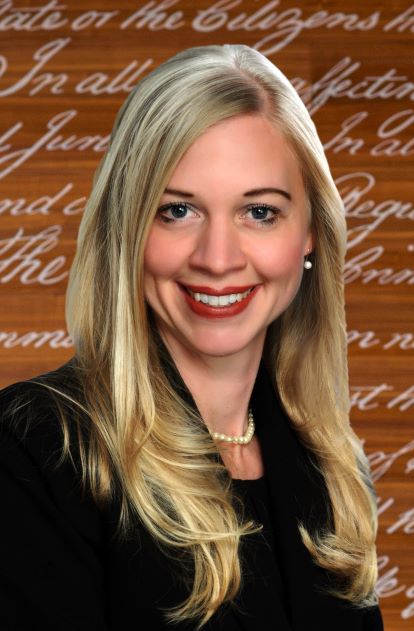
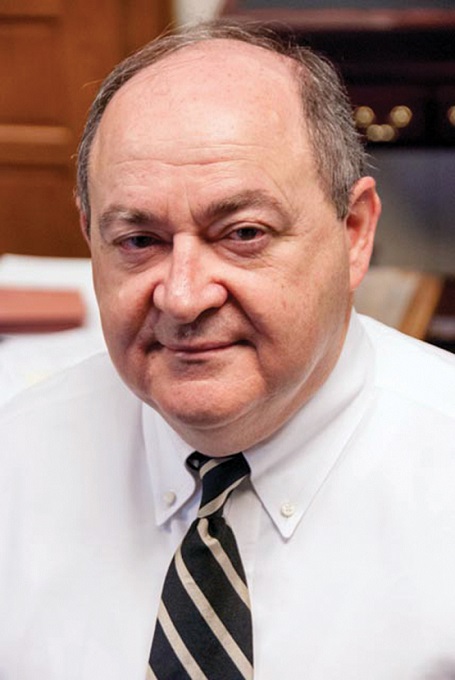
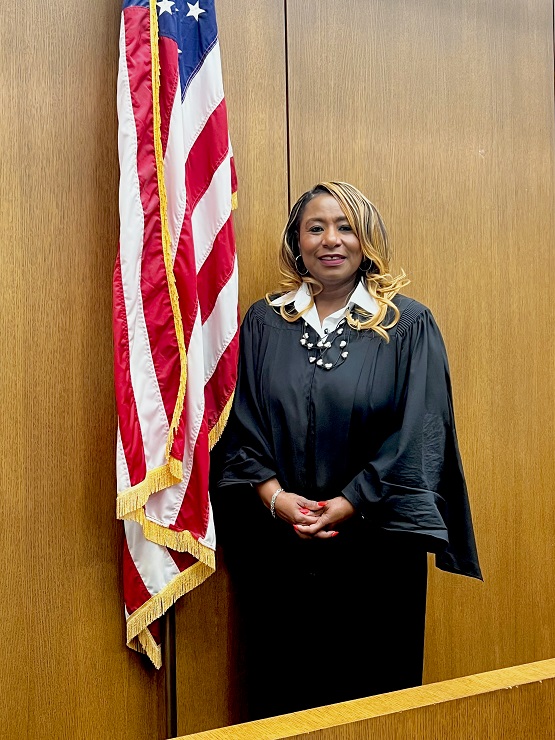
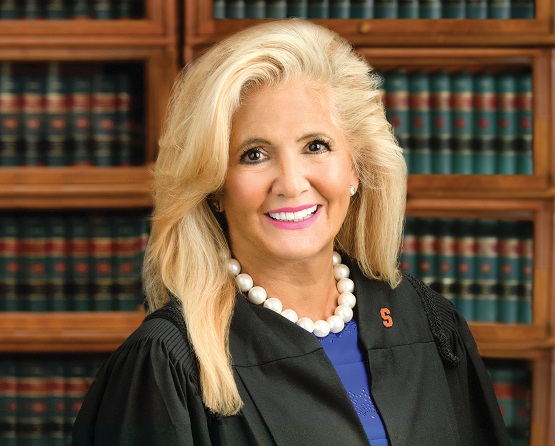
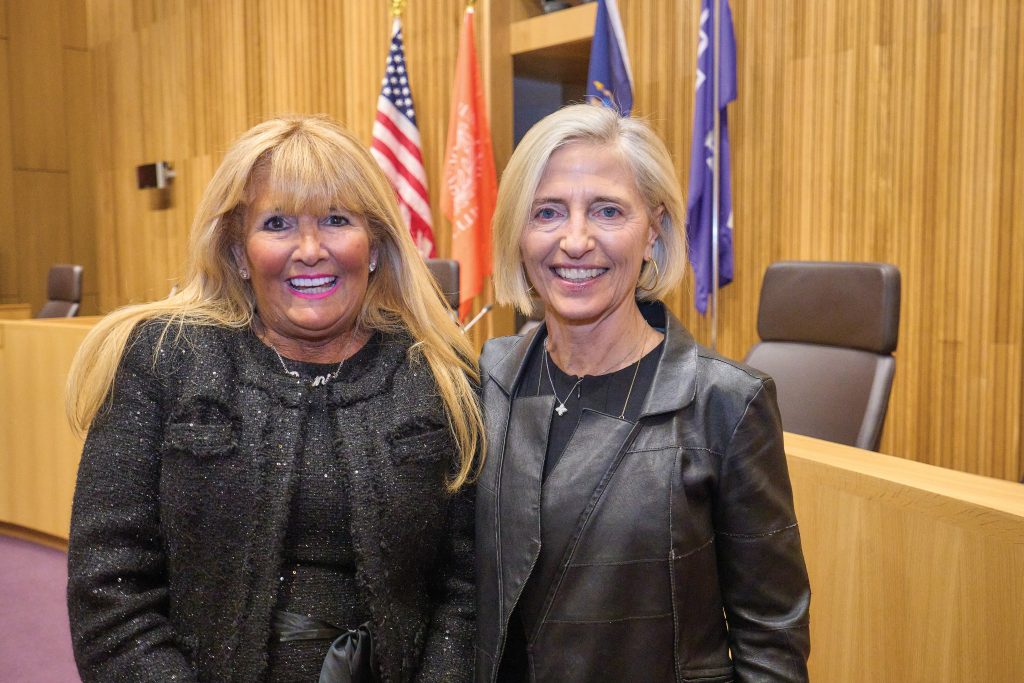
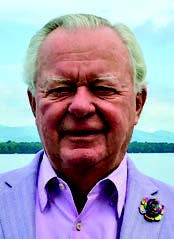
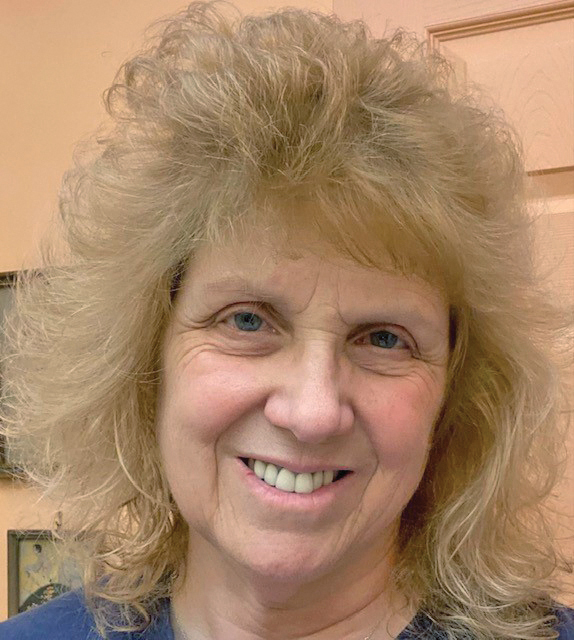
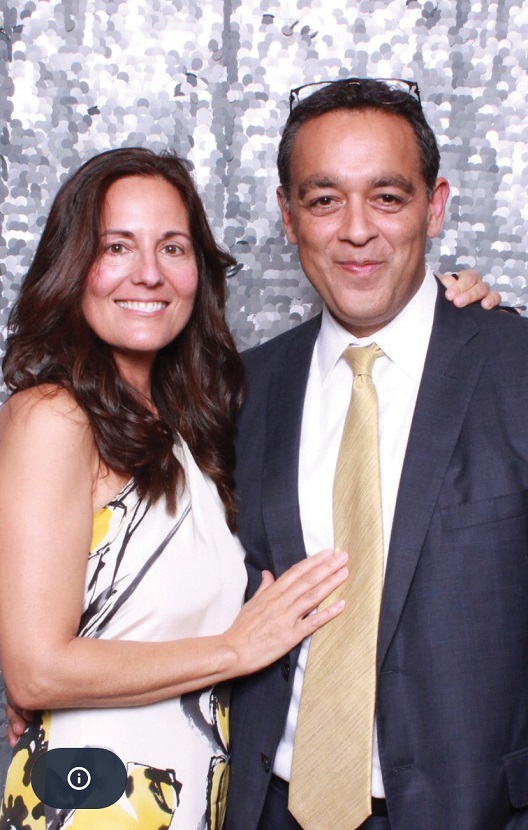
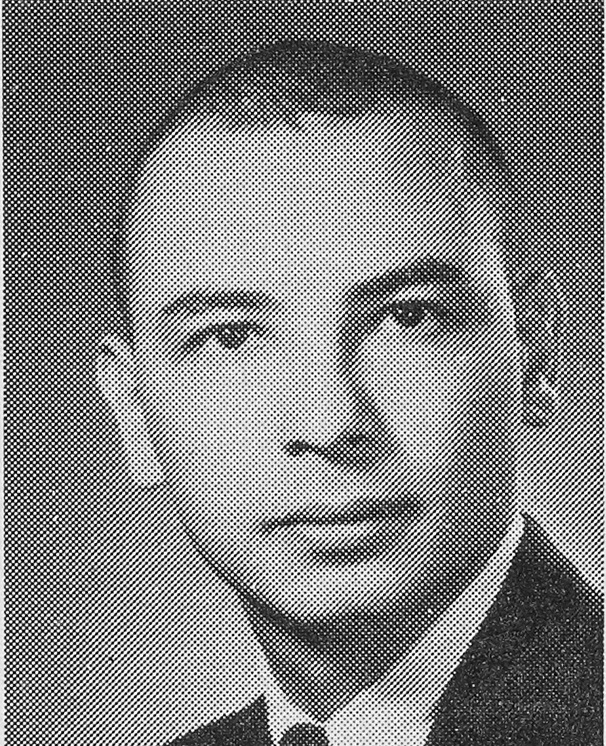
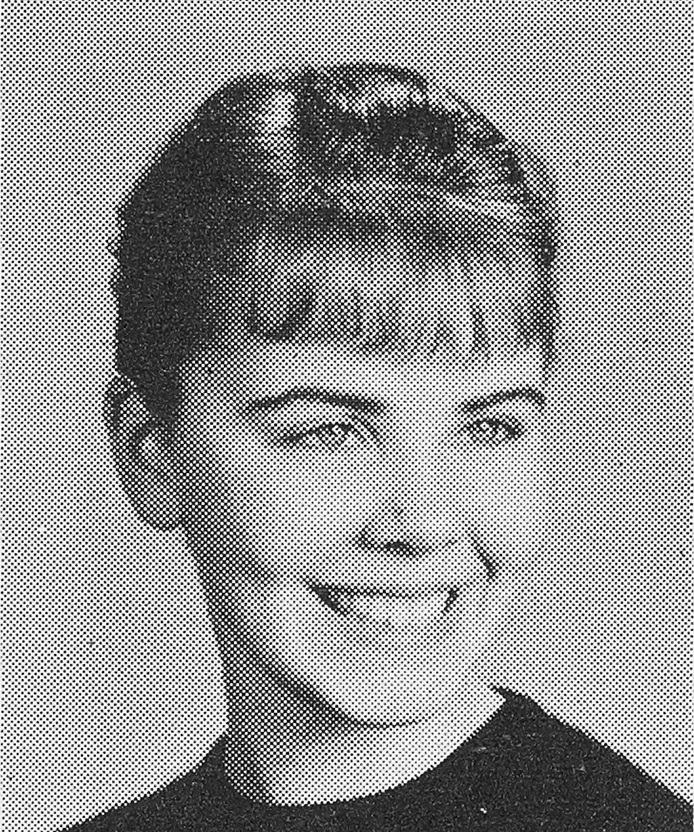
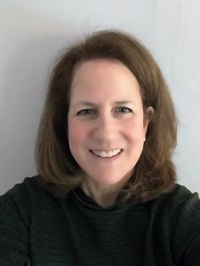
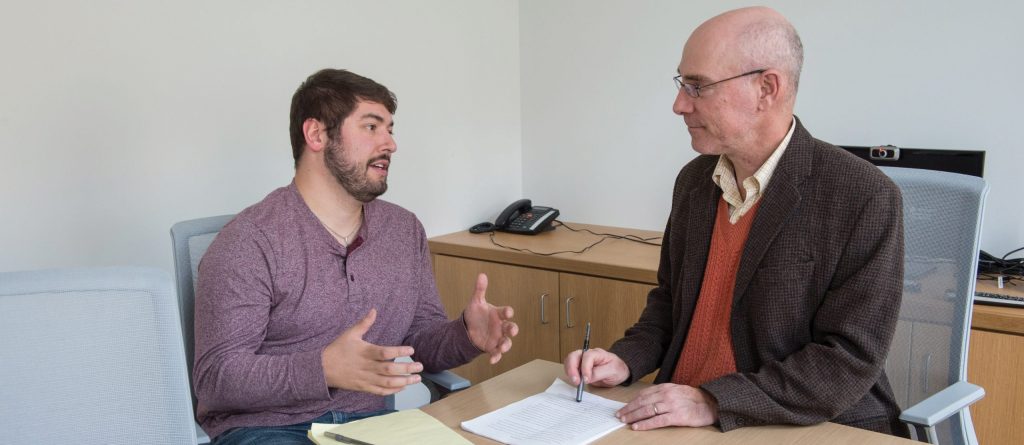
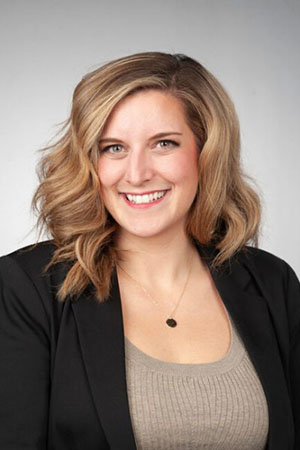
(Syracuse, NY | January 17, 2023) Kristin Walker L’08 has joined Syracuse University College of Law as a Professor of Practice and Faculty Director of Externships. Walker’s responsibilities include teaching Legal Writing and Advanced Litigation Skills; overseeing and teaching the externship placement seminars, and directing the Pro Bono Scholars Program.
“For the past four years, Professor Walker has taught several classes as an adjunct professor and helped direct our expanding externship program,” says Dean Craig M. Boise. “I’m delighted that she has chosen to join our vibrant faculty ranks. Her practical experience will benefit our students enormously.”
Prior to joining the College of Law, Walker practiced law at local firms including William Mattar Law Offices Catalano Law, Alexander & Catalano, where she handled plaintiff’s matters, Barclay Damon, and Costello, Cooney, and Fearon where she managed numerous insurance defense and insurance coverage matters. Before that, Walker was an associate at McCarter & English LLP in New York City in the firm’s corporate, securities, and financial institutions practice group.
Walker received her J.D. from Syracuse University College of Law, cum laude, in 2008 where she served as managing editor of the Syracuse Law Review. While in law school, she clerked for Judge David N. Hurd of the U.S. District Court for the Northern District of New York and interned at the U.S. District Attorney’s Office. She received her B.A., magna cum laude, from Villanova University.
Alums Reflect on Their Journey from Law School to the C-Suite
The College of Law has produced extraordinary leaders throughout our history. Today, our alumni include the President of the United States, elected and appointed officials at all levels of government, judges, public servants, C-suite business and nonprofit executives, entrepreneurs, writers, managing partners and law firm chairs, and so many others in positions of influence.
In past Stories Books, we have examined how College of Law alumni have navigated their way to C-Suites and other positions of leadership and explored the impact of their law degree on their current position.
This year, our fourth such feature, we are looking at another type of executive leadership: judges. Hundreds of Orange lawyers serve or have served on the bench, at the local level all the way to Federal courthouses throughout the country. We spoke with three judges to learn how the College helped pave the way to their judicial chambers and hear about the challenges they are facing as they preside over busy dockets.
What else could make these judges even more special? Their daughters are also graduates of the College of Law!
THE HON. ROBERT MARIANI L’76
United States District Court of the Middle District of Pennsylvania
The Hon. Robert Mariani L’76
When Judge Robert Mariani L’76 arrived at the College of Law he was intent on studying and pursuing labor law. “I saw it as a way to help our workforces who are of modest means and modest origins, who deserve protection and to be compensated to be able to live a decent life,” Mariani says. “It was a principle that was passed down to me by my parents and grandparents.” Mariani was born and raised in Scranton, PA, a center of coal mining and an area with “a rich labor history,” he says.
Mariani remembers many great professors, in particular Professor Robert Koretz, who taught labor law. “He had a wealth of knowledge in this area of law, and he was extremely good to me,” Mariani says. Mariani went on to become Professor Koretz’s research assistant. After graduating from the College of Law, Mariani returned to Scranton and practiced labor law for 34 years. In 2011, President Barack Obama appointed Mariani to the United States District Court of the Middle District of Pennsylvania.
“It was a whole new world,” Mariani remembers. “I was in the thick of the criminal justice system. I accepted the challenge.” While he has served as a judge for more than a decade, there are aspects of the job that never get easier, he says, primarily “the extreme difficulty of having to sentence someone to prison. It can be gut-wrenching. Sentences in the Federal Court System can be severe and imposing them is an enormous responsibility.”
COVID-19 presented many problems for the courts, creating a disruption of the legal system, and a fair amount of backlog, Mariani says. “It made many types of proceedings extremely difficult to carry out.” One change made during COVID-19 that has remained in place is how juries are selected. Whereas before COVID-19 up to 90 people may have been in a room together during jury selection, a new process staggers the groups, so they are more likely to be in groups of 30.
Mariani stays closely connected to the College of Law and has hired several graduates as law clerks over the years. “I try to give them this opportunity that’s important in establishing their legal career,” he says.
He was pleased when his daughter Jeanne Michele Mariani L’16, G’16 decided to come to Syracuse. “I encouraged her,” he says. “It was her choice of course, but my experience at Syracuse was a very good one. People were very helpful to me. And I shared that with her.”
Jeanne Michele Mariani is counsel for General Motors and works in global privacy and cybersecurity. She is based in Philadelphia.
THE HON. MICHELE PITMAN L’88 Associate Judge of the Circuit Court of Cook County, Illinois
The Hon. Michele Pittman L’88
From a young age, 12 or 13, Michele Pitman L’88 knew she wanted to be a lawyer. She traces the interest to the old TV show Perry Mason, which she watched as a child. “I was interested in how the protagonist developed an argument and used that to convince jurors. I got caught up with the advocacy part of it.”
Pitman, who has served as Associate Judge of the Circuit Court of Cook County since 2001, grew up on the South Side of Chicago. She headed to Northwestern University to study Political Science, always with the mindset of pursuing her law degree after graduation.
She applied to the College of Law and was accepted in 1985 and headed east to Syracuse, a city she’d never been to. She found Syracuse Law to be a perfect fit. “Law school is tough,” Pitman said. “What I loved about it, is that it gave me the education and the training to do what I wanted to do.” Her favorite course was Constitutional Criminal Procedure, and she also enjoyed Torts. She knew all the coursework would be essential once she launched her career. “Law school was a time to learn my craft. I learned the law, and I learned to advocate for victims.” At the College of Law, she was notes and comments editor of the Syracuse Journal of International Law and Commerce 1987-88, and the plaque marking this honor still hangs in her judge’s chambers.
Pitman began her career as Assistant States Attorney in the Cook County Attorney’s Office, and over the next 13 years prosecuted gang and narcotics cases. She went on to become Chief of the Municipal Division and in that role was responsible for all the Municipal Courts across Cook County. Today she presides over many high-profile murder cases in the Sixth Municipal District. She also teaches newly elected and appointed judges about running a criminal courtroom, always emphasizing “you want the trial to run smoothly, with procedural fairness.”
“COVID-19 had a big effect on the court system,” Pitman says, noting that the State of Illinois suspended the right to a speedy trial in 2020, citing the “extraordinary circumstances of the pandemic.” “For criminal defendants the pandemic was a very tough thing. It had the real potential of infringing on their constitutional rights.” For a time, jury trials were out of the question. COVID-19 was running rampant in jails, and “I could not put 12 people in a room together,” Pitman says.
During COVID-19, she and other Illinois judges released many prisoners who were not accused of violent offenses. Hearings were held via Zoom, even though “not many of us had ever heard of Zoom,” she says. Today, Pitman’s courtroom reflects a hybrid model. During trials, everyone is in the courtroom. But for status checks, for example, virtual meetings are becoming the norm. And from Pitman’s perspective, this is a good thing.
“At a bond hearing, some people are at work. I see them in their McDonald’s hat, and they go into a closet to meet with me over Zoom, to log into court proceedings. This is good, they are at work.” While before the pandemic, 15 or 20 defendants would come in on a bus for lengthy court proceedings, now status checks and discovery can be handled virtually, which in some ways is more efficient for all parties. It is a change that the tragedy of COVID-19 brought about, and ironically, a change for the better, Pitman says.
When Pitman’s daughter Ursula Simmons L’19 was applying to law schools, Pitman encouraged her to look at the College of Law. “I told her you’ll get a solid legal education, and you’ll pass the bar the first time, which I did, and she did.” Pitman said she was “very pleased” when her daughter chose to follow in her footsteps and head to Syracuse. Simmons is now Assistant Chief Counsel at the U.S. Department of Homeland Security.
THE HON. BERNADETTE ROMANO CLARK L’89 Supreme Court Justice for the Fifth Judicial District of New York
The Hon. Bernadette Romano Clark L’89
It’s been more than 30 years since Bernadette Romano Clark L’89 graduated from the College of Law, but she talks about her law school days with such joy and enthusiasm, it seems like she just walked across the stage for her diploma.
“I can tell you unequivocally that law school was amazing. I couldn’t wait to get there in the morning. I just soaked it all up. It wasn’t a chore.”
Clark, Supreme Court Justice for the Fifth Judicial District of New York, entered the College of Law as a non-traditional student. She had graduated from St. Mary’s College of Notre Dame and then worked for 12 years in sales and marketing for a pharmaceutical company. After she attended brother Bernard J. Turi L’85‘s graduation from the College of Law, Clark decided that’s what she wanted, too.
Since she had not been in a classroom for some years, Clark enrolled in the New York Legal Education Opportunity Program (NY LEO), an intensive program that runs the summer before classes officially begin. Emil Rossi L’72 was the professor. “I hung on his every word. He is my hero,” Clark says.
Early in the first semester, Clark met fellow classmate Julie North L’89. North was living in Clinton, NY at the time and Clark was living in nearby New Hartford. They began commuting together each day, meeting at the Westmoreland Thruway entrance. The ride began a friendship that continues to this day.
Clark was impressed by North’s legal acumen, even when they were just beginning as students. “I would have the opportunity to question her,” she says. “It’s like the day at law school started an hour early.” This year, in March, Clark and North both returned to the College of Law to judge the 45th Annual Lionel O. Grossman Trial Competition (see story below).
Clark began her career at Bond, Schoeneck & King. In 1994 she was appointed First Assistant District Attorney in Oneida County, and in that position started the county’s Special Victims Unit. She became the first elected female judge for Oneida County in 2000. She is also the first female Supreme Court Justice for the Fifth Judicial District of New York.
One of the most significant changes Clark says she has witnessed throughout her tenure is the effect of the COVID-19 pandemic. The pandemic required significant changes in how courtrooms operated, with online platforms such as Zoom and Teams taking the place of in-person hearings. “It was very challenging,” Clark says. “It was difficult, but it was necessary.” The logistics of the virtual hearings could be frustrating, with the judge in chambers, a court reporter in another room, and the witnesses in their homes. Internet interruptions or other issues sometimes required backtracking. Clark missed being in the same room, with attorneys and clients. “I like the personal interaction,” Clark says, including the ability to see a person’s facial expressions and demeanor, and having the attorneys interact with each other. “If everyone is in the courtroom, there are more opportunities to resolve the case. And my goal is to resolve the case.”
Clark says she has noticed a change in the attitude of attorneys who, early in the COVID-19 days, did not want to take depositions virtually, and now in many cases prefer to. “It’s saving with travel, it saves the client money, and the attorneys can handle more cases in a day,” she says.
For Clark, returning to the College of Law to judge advocacy competitions is a joy, and a chance to reflect on her education. “That’s why I like to give back to the College of Law. I feel like I owe the College so much,” she says.
Clark was proud that her daughter Alexandra J.L. Romano L’21 followed in her mom’s footsteps. Romano is now with the Boston firm Melick & Porter.
College of Law Moot Court Stars and Classmates North and Clark Return to Syracuse Law
The Hon. Bernadette Romano Clark L’89 and Julie North L’89
Julie North L’89 says she wasn’t one of those people who always dreamed of being a lawyer. “I was kind of naïve, and there weren’t any lawyers in my family,” she says. After graduating from Hamilton College with a bachelor’s degree in psychology and history, North began working in the development office for Hamilton. She applied to law school, confident in her writing and public speaking skills. She found it was the perfect fit. “I loved every class I took,” she says. “I did well because law school really played to my strengths.”
North is retired now after a long career at Cravath, Swaine & Moore in New York, where she was a partner. Her practice included antitrust, general commercial, mergers and acquisitions, and securities and shareholder derivative actions. She advised clients on antitrust regulatory clearance issues in connection with numerous mergers and acquisitions. North says working with Cravath also taught her the importance of non-profit and probono work and she continues to lend her expertise as a board member for a number of non-profit organizations.
North remembers first meeting Clark at the College of Law and observing how she commanded a room. “She had really interesting observations,” North says. She remembers well the legal conversations they would have on the New York State Thruway, some so compelling that they would miss their exit. “We were lucky to have each other,” she says. One attribute that still stands out to North is Clark’s effort to “see the other side” when working on a case. “That’s the way she would think about things. She would listen and work to understand the other side.”
In law school, North especially enjoyed her Moot Court experience, and being coached by Professor Christian Day. “I definitely learned the skill of thinking critically and persuasive writing,” North says. “I remember Chris Day sitting with me, and looking at my argument and saying, ‘How can you make this more persuasive?’” North returned to the College of Law in March, guest lecturing with Clark in Professor Kristin Walker’s L’08 class, and again to judge the 45th Annual Lionel O. Grossman Trial Competition alongside her moot court partner the Hon. Bernadette Romano Clark. It was North’s first time seeing the new law school, which she deemed “amazing.”
While fully retired from the practice of law, North still stays involved in the discipline, teaching a course each Spring semester at Columbia University Law School, titled “The Nuts & Bolts of Securities and Litigation: The Practitioner’s Perspective.” It’s a project she finds very fulfilling.
“I liked seeing the joy in other people, realizing that if you know the facts and you can marshal them, you can make a persuasive argument,” she says. “I like helping other people refine the skill of lawyering.”
For many alumni, a tradition of lifelong giving is often tied to personal stories and fond memories of their alma mater.
Here, alums share their philanthropic journeys. Tell us yours.
Thomas Moynihan L’63
What inspired you to study law and why study at the College of Law? When I was in my senior year at Holy Cross College, I wasn’t really sure what I was going to do after graduation. Two of my friends, Bradley “Buddy” Carr L’63 and Jim Fitzpatrick L’63 were from Syracuse and were applying to the College of Law. I had several conversations with them and a family friend who was a graduate of the College of Law and decided to apply for admission. As the saying goes, “It was love at first sight.”
What law school memories stand out? It was during the first year that I became interested in Student Government and I was elected President of my class; a very memorable experience which later led me to being selected as Magister of the Phi Delta Phi legal fraternity. During my third year, I served as Editor-in-Chief of the Alumni publication The Syndicus.
Did a particular law professor have a lasting impact? Professor Robert Miller who taught Criminal Law and Evidence had a lasting impact on me…he served as a prosecutor in the Japanese War Crimes trials after World War II…and made every class very interesting. I worked as an intern in the Onondaga District Attorney’s Office during that time. Following graduation, I became a defense attorney and later the County Judge of Warren County, NY. Were it not for Professor Miller, later Dean Miller, I might not have found the career path that I did.
Why is philanthropy, in particular supporting the College of Law, important to you? Annual giving is my way of saying thank you to the College for the education that I received. I believe that recent graduates should consider giving back when they can afford to do so to also show gratitude for the tremendous educational opportunities provided by the College of Law.
Karen Linen L’83
What inspired you to study law? I more or less knew going through high school that I was going to be either a music education major or a pre-law major, based upon my extensive choral involvement and piano studies, and in speech competitions. After spending my first two years of college as a Music Ed. major, I determined that teaching was not my profession of choice. I ultimately changed my major to History on a pre-law track and graduated from Barnard College of Columbia University with a B.A. I entered the College of Law the following fall.
What brought you to the College of law? I participated in the Maxwell School of Citizenship & Public Affairs’ high school scholarship program and was very impressed by the Syracuse University campus. I also had family in the area, having spent childhood summers with my aunt and uncle in Oswego (my uncle was a SUNY Oswego professor). We spent a lot of time enjoying outings to Syracuse and the environs, and I felt very much at home in Central New York.
What law school memories stand out? I needed to maintain employment during my law school years to cover my expenses. I had a great work-study experience at Student Legal Services and as a research assistant for one of the on-campus organizations and a university professor. And of course, there were fun social times with friends!
Did a particular law professor have a lasting impact? Professor of Law Emeritus Richard A. Ellison, who taught Family Law. In addition to having great command of procedural and substantive law, he reminded us constantly that our clients in this area of practice were, by definition, vulnerable, and dependent upon attorneys who should have a high level of expertise. I have thought many times over the years of the ever-present compassion that infused Professor Ellison’s teaching, particularly in my work as a law guardian, assistant county attorney, law clerk, and almost 30-year support magistrate in Family Court, Sullivan County, NY.
Why is philanthropy, in particular supporting the College of Law, important to you? There is no equal in the life of a young adult like the college and graduate school experience. The College of Law provided me with the seminal tools to create a very satisfying career, and my contributions are just a way of giving back. I want every student at the College of Law to enjoy their tenure there and the wide variety of legal experiences it offers as much as I did.
In what ways have you given back to the College of Law? Primarily via monetary donations, but a child support forms manual (and accompanying diskette) that I authored in 1997 (published by the New York State Office of Court Administration) is also part of the alumni collection in the law library. I pray that I will be blessed with many more years of giving back, particularly now that I am semi-retired and residing a short distance away in one of the Syracuse suburbs!
Do you have a message to recent graduates about giving back? There is a Biblical verse in Ecclesiastes: “Cast your bread upon the waters, for it shall return to you after many days.” I believe in karma. Maybe some people who don’t think about giving are unusually lucky anyway, but I believe that the rest of us reap what we sow from our generosity. If one other struggling law student’s life is made easier or more enjoyable because of my commitment, my joy will be complete; and my message to newly minted alumni is another Biblical admonition: “Go thou and do likewise,” even if it’s just $10 or $15 or $25 per year. You won’t regret it!
Sandeep (Sandy) Qusba L’94 and Dawn Rhodes L’94 could almost say they met on the first day of law school—but actually, they met even before classes had begun. They both were part of a program for students interested in international law that began a week before the rest of the law school students arrived on campus. Sandy had been in Syracuse for several days before the program began. During a tour of the law library, “Sandy was looking to socialize,” Dawn remembers. “I was interested in learning about the library, like where the copy machine was, and he was talking about getting a group together to go out. He was very distracting,” she laughs.
Dawn Rhodes L’94 and Sandeep (Sandy) Qusba L’94
Sandy and Dawn, and Dawn’s roommates, who were SU graduate students, ended up going to Faegan’s Pub that very night. When law school began in earnest, Sandy and Dawn had all their classes together. They became study buddies, and within a month were a couple. Married since 2000, Sandy and Dawn live in New York City and are parents to two daughters, Aryanna, a student at Dartmouth College, and Cereese, a high school senior heading to Cornell University in the fall.
Dawn grew up in Northwest Indiana and earned a bachelor’s degree from the Kelley School of Business at Indiana University. She first thought about a career in law as a high school student and remembers a few people (including her mother) saying it might be a good fit for her personality. “I liked to push back on things,” she says. In law school, she found criminal law classes fascinating. Professor Travis H.D. Lewin was her coach on the National Trial Team and a big influence. “He made the subject of evidence compelling,” she says. After graduating, Dawn became an Assistant District Attorney, a position she occupied in the Bronx for eight years, working in both a trial unit and an investigations unit. Now, she is in the final stages of writing a novel, a project she has been working on for several years.
Sandy grew up in Avon, CT, although he spent a few years in Syracuse as a child while his father worked for Crouse-Hinds Company. Sandy was a political science and philosophy major at Tufts University and was drawn to the College of Law in part because of SU’s strong philosophy department. While in law school, he took graduate-level philosophy courses which enriched his study of law, as did his close connection with Professor J.M. Donnelly, who taught Philosophy of Law and wrote many jurisprudence articles.
It was through Professor Donnelly’s courses in commercial transactions and bankruptcy law, however, that Sandy became fascinated with the restructuring practice. “It really drew me in, learning about the philosophical underpinnings of Chapter 11,” he says.
Sandy is a partner at Simpson Thacher & Bartlett in New York City, where he heads the firm’s restructuring practice, and enjoys the challenge of “getting everyone around the table to hash things out.” The term “everyone” here includes equity holders, secured lenders, unsecured bondholders, trade creditors, and others, Sandy explains. “Orchestrating a restructuring among all these different constituents requires negotiating with groups, understanding their leverage and goals.”
Sandy and Dawn have many good memories from their College of Law days, including hiking in the Adirondacks on weekends, and walks with their dog and an eclectic group of Syracusans (and their dogs), beginning at 4 p.m. at Barry Park each day.
With their daughters now getting ready to choose their own career paths, Sandy and Dawn are hoping they’ll consider law. “They both recognize it can be beneficial in many areas of life,” Dawn says. “It’s there if you want to practice law, but it’s also foundational for other things you want to explore and do.”
The Orange legacy of the family of Charles (Charlie) Raffe ’60, L’62 and Olivia Gruschow Raffe ’61, pictured above, reaches back to the early 1900s, but the couple’s own story began in 1959 when Olivia asked Charlie for a ride back to campus one evening. That evening eventually led to 61 years of marriage. And, while they were committed to one another and their family, they also remained devoted to Syracuse University, both through their financial support and their enthusiasm for their alma mater.
Charles Raffe ’60, L’62 and Olivia Gruscho Rafffe ’61
Charlie and Olivia’s generosity to the University dates back to 1972. They both felt strongly about making education accessible for all and gave a number of donations to help that happen for others. Over the years, most of their gifts were directed to the College of Law, but they also gave to the College of Arts and Sciences, as well as the University’s Annual Fund.
Before Charlie died suddenly in February, 2023, he documented some of the family’s connections to the University. It began with Olivia’s grandfather, Everett S. Elwood, 1908, who attended what was then called the Liberal Arts College and started the family legacy at Syracuse University. He was the first director of the University’s marching band. In 1921, Everett went on to become the executive secretary and treasurer of the National Board of Medical Examiners and was the only nonmedical member of the board.
Olivia’s great aunt, Ruth White Carr 1914, also attended Syracuse University as a sociology major at a time when there were not many women pursuing a college degree. A trailblazer to be sure, she traveled to China twice as a missionary after college. Ruth later married and settled in Massachusetts.
Everett’s daughter, Barbara Elwood ’38, followed in her father’s footsteps and attended Syracuse. There she met George F. Gruschow ’36, G’38, who graduated from the University affiliated State College of Forestry (now called the SUNY College of Environmental Science and Forestry) and went on to earn his master’s degree from SU. The couple married in 1939.
George went to work for the U.S. Forest Service. Having been involved in ROTC while in college, he was called to serve in the U.S. Army during World War II shortly after the attack on Pearl Harbor. At the end of his military career, he held the rank of major. From there, George went back to work for the U.S. Forest Service at the Lee Experimental Forest in Buckingham, VA. Over the years, George authored many scientific articles and was a member of the Society of American Foresters, as well as Xi Sigma Pi, a national forestry honor society. In 1966, he was named assistant director of research support services at the Intermountain Forest and Range Experiment Station in Ogden, Utah. He retired in 1974 after 36 years with the U.S. Forest Service.
Barbara and George were parents to five children, the oldest of whom was Olivia. Olivia grew up in various places as the family followed her father’s career with the U.S. Forest Service. She attended high school in Virginia in the 1950s where schools were segregated. Not wanting to go to a teacher’s college, which was the path most women were encouraged to take at that time, and eager to continue her education in a place that was not segregated, she chose to attend her parents’ alma mater and enrolled in the College of Arts and Sciences.
During her four years at the University, she worked at the Maxwell School Library and was an active member of Chi Omega, as her mother had been, too. Like her father, she was proud to be Orange, and the two of them celebrated their 25th and 50th college reunions, respectively, together on campus in 1986.
Charlie Raffe was a member of Delta Upsilon while an undergraduate at Syracuse. He often remarked that he appreciated that Syracuse took a chance on him by granting him admission to the school—and Charlie did not disappoint. After earning his undergraduate degree and then graduating from the College of Law, he returned home to Riverhead, NY, to practice with his father, Solomon Raffe, at what would become Raffe & Raffe Attorneys at Law. Charlie was especially proud that he was appointed a special town attorney in Riverhead to assist with the development of the town’s parking district. Charlie and Olivia had three daughters: Catherine McNeill, Melinda Trovini, and Deirdre Quinn.
Always philanthropic, Charlie was an active member of a number of organizations, including the American Cancer Society and the Kent Animal Shelter. He was an avid animal lover with a particular fondness for horses—a common interest he shared with his mother, Flora Raffe. He also loved to play cards, achieving the status of life master bridge player. And, he was the most senior member of the Southampton Golf Club for 64 years, where he often provided legal advice as a member of the board.
In 1991, the couple bought a house in Savannah, GA, and divided their time between there and their home in Riverhead, NY, although Charlie remained active in his law firm until he retired just a few years ago. In Georgia, he continued his love of golf as a 30-year member of The Landings Club. During his time out on the links, Charlie achieved every golfer’s dream— two holes-in-one: one at The Landings Club and another at the Southampton Golf Club!
While none of their daughters attended Syracuse University, the legacy did not end with Charlie and Olivia. This May, one of their four grandchildren, Emily McNeill ’23, will graduate from the S.I. Newhouse School of Public Communications as a photography major. (Emily is the daughter of the Raffes’ oldest daughter, Catherine, and her husband, Joseph McNeill, of Colts Neck, NJ.) Olivia is looking forward to attending Emily’s commencement, as she has not been back to campus since the 1980s.
When Emily made her decision to attend Syracuse, her grandparents were elated. Olivia pulled out a Syracuse University diploma belonging to her great aunt, Ruth White Carr, to show her granddaughter and express how proud they were both part of an extended legacy of strong women who attended the University. Emily’s grandfather, Charlie, was equally excited, eagerly showing his granddaughter a Syracuse University pennant he had saved since his college days adorned with a number of pins from the various organizations to which he belonged. Both Charlie and Olivia were especially proud that their granddaughter was accepted into the Renée Crown Honors Program.
“Having my grandmother with me will make a special day even more special,” said Emily, who is headed to work as a product photographer for Fisher-Price in East Aurora, NY. “She always reminisces about all the great times she had here, as well as the story of how she met my grandfather and how his time at the College of Law was so important to our family. I’m proud to extend the Orange legacy of the Raffes, Gruschows—and now the McNeills.”
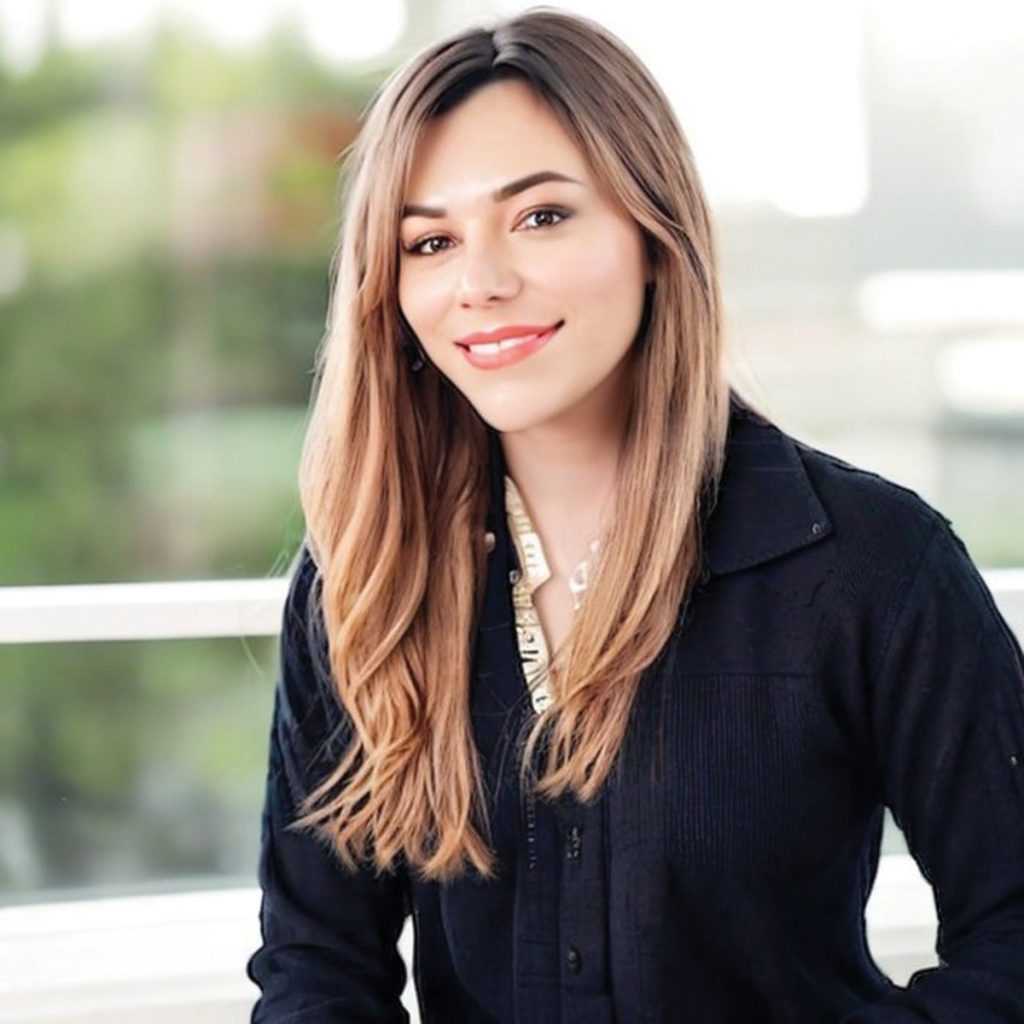
Already an attorney in Argentina and about to complete a master’s degree in international relations at Harvard University, Betania Allo LL.M.’20 was searching for a way to combine law and policy with her interest in cybersecurity and technology. While attending a career fair at the U.S. embassy in her native country, she spoke to Andrew Horsfall L’10, Assistant Dean of International Programs, who told her about the Master of Laws (LL.M.) Program, a two- or three-semester program for foreign lawyers, judges and academics who want to broaden their knowledge of the U.S. legal system. Today, after completing the program, Allo is using her collective professional skills and education at the United Nations, where she is a senior officer, program specialist, at the Office of Counter-Terrorism.
Allo was drawn to Syracuse Law’s Institute for Security Policy and Law, an interdisciplinary collaboration among the College of Law, the Maxwell School of Citizenship and Public Affairs and other schools and colleges across the University. At the Institute, students learn from experienced professionals on topics ranging from counterterrorism law and policy, cybersecurity, emerging technology, international humanitarian law, international relations, and more. The program also offers guest lectures, symposia, research seminars and simulation-based experiences, as well as networking opportunities with legal professionals from around the globe. As an LL.M. student, Allo was a graduate research assistant at the Institute.
Determined to make the most of her time at the College of Law, Allo carefully planned out all the courses and activities she wanted to experience before the program even started. One that she hadn’t anticipated, however, was a blockchain course through the School of Information Studies (iSchool) she discovered through Associate Professor Lee McKnight, who was co-teaching Allo’s Cyber Security Law Policy course at the law school.
“I was very eager to gain more technology skills than the average lawyer might have, so I asked if I could audit his blockchain class,” she explained to Lee, who is a member of the iSchool faculty, “He encouraged me to take the class for credit, and it turned out to be one of the most wonderful experiences during my time at Syracuse University. It helped me expand my knowledge of how law, policy, and technology work together.”
“I wanted to learn to speak the same language as innovators and policymakers to address legal voids, human rights challenges, and regulations that come with addressing emerging technologies, and I was able to explore that on many levels while at the College of Law,” she added of her interest in this field.
Following the completion of her LL.M. degree, Allo accepted an opportunity at the United Nations in New York City as a legal intern with the Counter-Terrorism Executive Directorate. That eventually led to a position as an associate political affairs officer, where she used data-driven political analysis and research to help craft counterterrorism solutions.
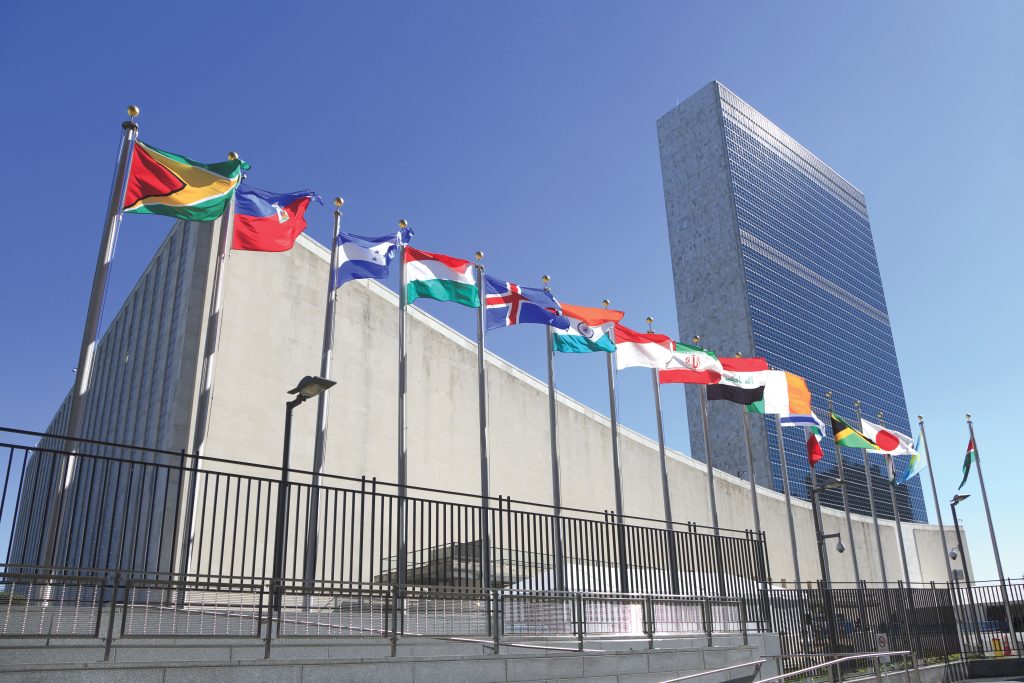
New, York, NY, USA – September 24, 2016 – United Nations Headquarters in New York City: The United Nations General Assembly opens.
Last September, Allo was promoted to her current role of a senior officer, program specialist, at the Office of Counter-Terrorism at the UN, where she continues to integrate her knowledge of law, technology, and policy in areas related to counter-terrorism, human rights, and fundamental freedoms.
Allo acknowledges that most people think that a lawyer only knows about the law, but she is determined to keep discovering new information and broadening her network. To that end, she is currently pursuing a Doctor of Engineering in Cybersecurity from The George Washington University.
Allo hopes her expertise in cybersecurity, policy, and law will open new possibilities within the United Nations and beyond. She also intends to expand her role as a speaker at international conferences on cybersecurity. Allo is determined to continue to leverage her valuable experiences at Syracuse University.
“I believe I really took advantage of so many of the resources from the College of Law and adapted them to fit my specific interests,” she said. “For me, the LL.M. program was a very fulfilling experience.”
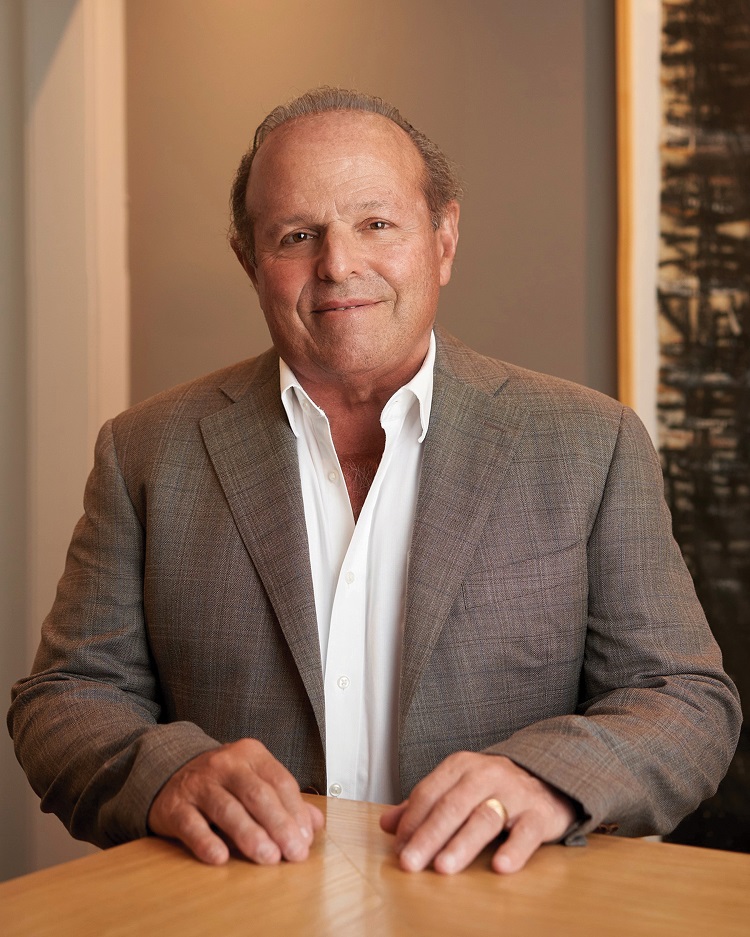
The arrival of Michael Wohl ’72, L’75 on the campus of Syracuse University in the late 60’s was inevitable. After all, his father and mother were proud alumni who literally placed a fraternity pledge pin in his bassinet! But it wasn’t just the Orange spirit that seemed to pass down in his DNA. It was a generational commitment to philanthropy and the idea that “doing well” and “doing good” are synonymous.
Michael Wohl ’72, L’75
Today, it all makes sense for a man who built a successful career by meeting the needs of the less fortunate. Wohl co-founded Pinnacle Housing Group in 1997, which came to be recognized as the leading producer of affordable housing in the southeast United States, creating homes for countless families across three states.
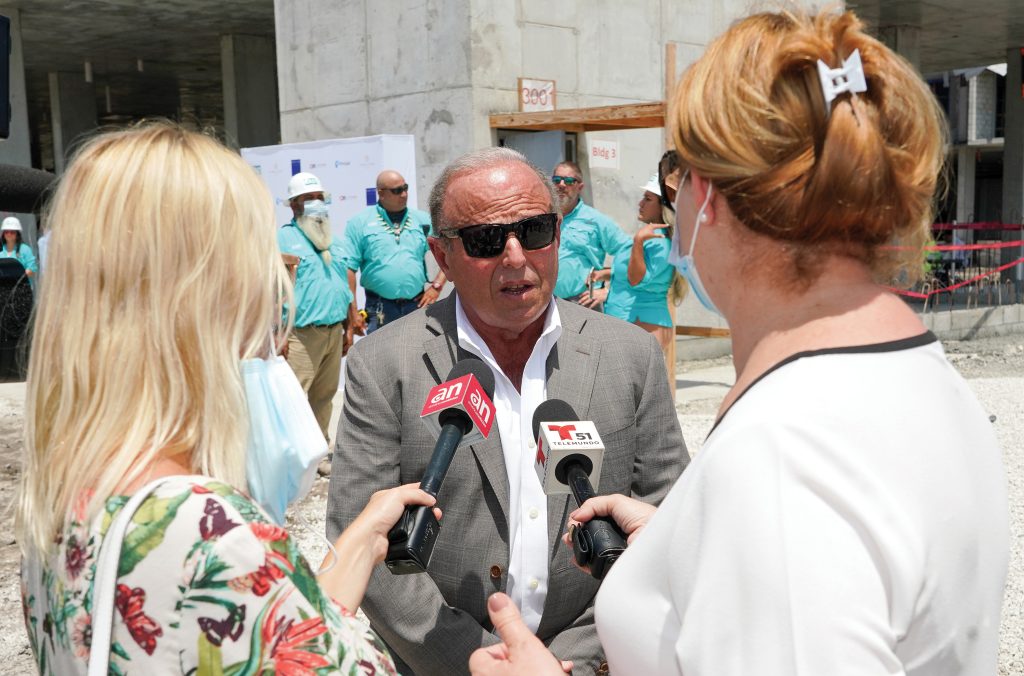
“I’m very passionate about affordable housing and providing for the workforce, for the elderly, and for those transitioning out of homelessness,” says Wohl, who is now a principal in Coral Rock Development Group, LLC, a real estate investment firm focused on mixed-use developments that help communities prosper. One of its most recent projects is in North Miami, FL where a new affordable housing complex will feature 138 apartments. “The fact is that this form of real estate development is a very lucrative business and it has allowed me to engage in philanthropy. What is better than doing well by doing good?”
Real estate investment has allowed Wohl to invest in the future of others, especially students at Syracuse University and its College of Law. Wohl has invested his own “time, treasure and talent” in the development of the campus, its programs and services, and its students. He served on the College of Law’s Board of Advisors; is a Life Trustee of the University; was a driving force behind the development of the Barnes Center (the connecting lobby is named for Michael and his wife Betty) and the development of Dineen Hall; provided support for the Betty and Michael D. Wohl Veterans Legal Clinic at the College of Law; funded the Sheila and Alfred Wohl Dining Center at the Winnick Hillel Center for Jewish Life in honor of his parents and the Alfred Wohl ’34 Lacrosse Field behind Manley Field House; and supports the academic success of promising students through the Alfred Wohl Memorial Law Scholarship funds. His daughter, Heather Wohl Herzberg ’12 has carried on the family tradition for philanthropy, naming the Dean’s Suite at Falk College.
Wohl says that investing in law students pays lasting dividends because so many of them go on to contribute to their communities (and to the College) after graduation. In a letter of thanks to Wohl, one scholarship recipient wrote:
“The College of Law has provided me with a number of incredible opportunities to grow as an aspiring attorney and, more importantly, as a person. I am incredibly grateful. I hope that one day I will be able to help students achieve their goals, just as you have done for me.”
Just as his father set an example for him, Wohl says his philanthropy is motivated by a deep desire to show others “what you can do with your education, your life, your background and your affiliation with Syracuse University.”
When he majored in sociology as an undergraduate, focusing on the study and dynamics of small groups, Wohl had no idea how it would come to serve him in his career. “All of my business involves dealing with groups of people, recognizing the dynamics and understanding how to utilize those dynamics to achieve success.”
Similarly, Wohl entered law school with an open mind for knowledge and no predisposition to any particular aspect of the law. He recognized the usefulness of a broad legal education. “I knew that law school was going to be a huge stretch for me in terms of academics and discipline. I wasn’t like many of my classmates who had the scales of justice hanging above their cribs, destined to be lawyers. I did not. But I had a tremendous sense of the value of my law school education,” says Wohl. “The skill sets that you acquire—having the ability to dissect material, to reason and think logically, to speak publicly, to stand up and advocate for a position. These are invaluable in business and in life—and they came from my law school experience.”
Dean Craig M. Boise says it is Wohl’s sensitivity and vision for how a legal education can amplify any career that makes him such a valuable advisor, engaged alumnus, and philanthropist. “Michael is supportive of initiatives that make the College of Law more relevant and contemporary in meeting the needs of students and ensuring that their education enhances their professional opportunities. He has taken many of our graduates under his wing and helped them succeed beyond the College.”
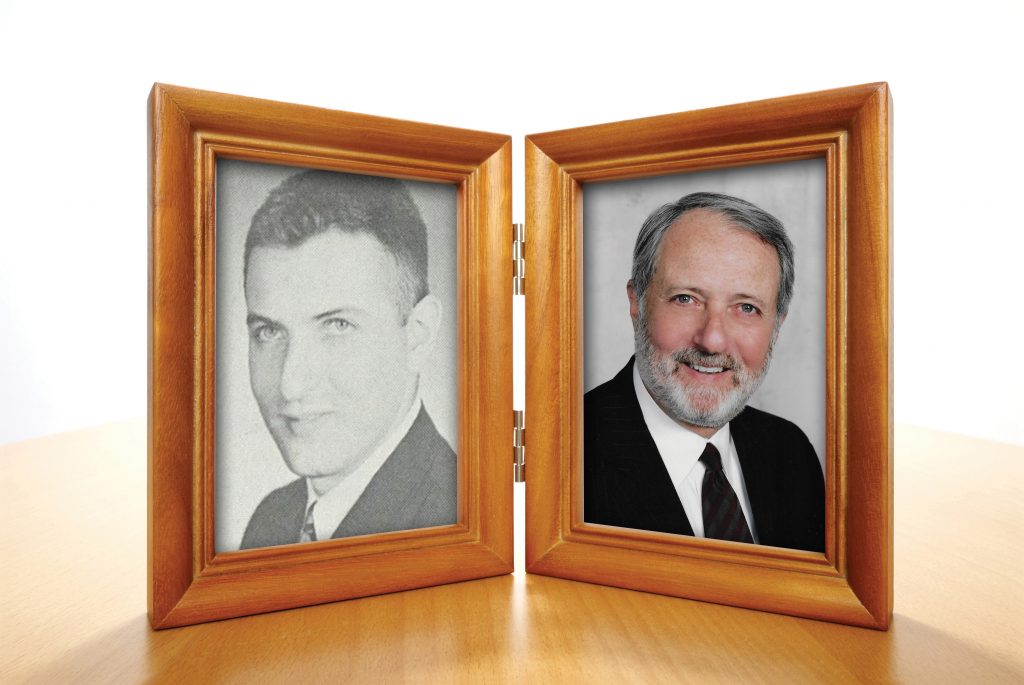
As his father before him, Wohl used his law degree to excel in the real estate business. Alfred Wohl ’34 consulted in the construction of apartment houses, commercial buildings, industrial buildings, shopping centers and post office buildings. As his success increased, so did his generosity. “My father started some amazing things,” says a very proud son. “He founded the largest boys and girls club in the United States, in Queens, and he was co-founder of the Long Island Jewish Medical Center, the place where the first COVID-19 vaccine was administered.”
When his father passed away, Wohl was in charge of managing his estate and assets, which included a lot of apartment developments in Manhattan. That’s when he really fell in love with the real estate business and saw the value of his legal training. He structured sales that ultimately reaped huge benefits for his estate. In the 1990s, there were a lot of distressed properties for sale. Wohl seized the moment and the momentum. “I built my first affordable housing complex in the Little Havana area of Miami, and the 35 units sold out quickly,” he recalls. “Again, what is better than doing well by doing good?”
The business of affordable housing not only aligned well with the philanthropic legacy of his father, it also “played into my social consciousness, if you will, that grew out of my academic experiences and being a child of the 60s.” Wohl was at Woodstock in the infamous summer of 1969, just as his Syracuse University student experience was being shaped.
“Music had a profound influence on me in the 1960s and 1970s,” reflects Wohl. “Perhaps the most beautiful lyric ever written came from the Beatles: ‘And in the end, the love you take is equal to the love you make.’”
A fitting phrase for a man who has created opportunities for so many through the love of giving.
Humility. Compassion. Empathy. These are the words used by Syracuse University College of Law students to describe their experiences working in the Low Income Taxpayer Clinic (LITC), which offers pro bono assistance to lower-income taxpayers who have controversies with the Internal Revenue Service involving collections, audits, appeals, and other matters.
How fitting, then, that the LITC is now named the Sherman F. Levey ’57, L’59 Low Income Taxpayer Clinic in honor of its founder, a man often described by those same three words: humility, compassion, and empathy.
“I remember Professor Levey stressing the grave importance of exemplifying and showing the utmost empathy and compassion when the students of the LITC were dealing directly with the individuals/clients who were probably already fearful and scared of the IRS,” says Kathryn Messenger L’03, who was in the first-ever LITC class when it was launched in 2002.
“The clinic is all about developing empathy, and there’s just no way you get that from law books or lectures,” says Brian Krastev L’20 and is now an International Tax Associate at PwC.
Levey, who passed away in April 2018, is credited with having established the LITC in 2002 while teaching at the College of Law. He secured the clinic’s original funding. Former colleague and now Emeritus Professor Martin L. Fried recalls conversations with Levey as the idea for the LITC was taking shape, in which they discussed the need to offer law students an alternative to the criminal law clinic that was popular at the time. “We wanted to be able to give students who were more interested in business and the commercial sphere a chance to get some clinical experience in the real world and insight that could make them better lawyers,” says Fried. “Sherm was the mover and shaker behind the LITC, seeing that it could help our students and people who would never have had a chance against the IRS.”
Levey devoted countless hours to the LITC, on top of teaching and full-time private law practice in Rochester, NY. “It was Sherm’s baby,” says Professor Robert Nassau, who co-directed the LITC with Levey during its first several years and now directs the clinic. “Sherm recognized that the clinic would be an invaluable learning experience for students while filling a critical need for underserved residents of this region.”
“My father always supported the underdog because he started as one,” says Lynn Levey L’94, G’94. “He was entirely self-made. His own father died when he was only 17, thinking his son would not have the means to go to college. But Syracuse University awarded him a full scholarship.” He received degrees in accounting and the law in a 3+3 program. “They gave him a chance he would not have had otherwise, and they could not have made a better investment when they chose my father. It’s a true ‘Circle of Life’ thing that my father should found the low income taxpayer clinic because he himself began as a low income taxpayer. He did not die a low income taxpayer, but he served others throughout his career. He loved the practice of law and wanted the students to love the practice, to see there were all these different things you could do with it, that it was fun and that you could serve others.”
Lynn Levey L’94, G’94
Lynn used her law degree to improve the criminal justice system’s response to violence against women, has taught at the College of Law, and now works on national Title IX initiatives. Her siblings are both service-oriented in their professions: brother Ted teaches English to high school students, and sister Amy does international development work. Together, the siblings and Sherm’s cousin Edith D. Warner, decided to honor his life and legacy of service and learning with a significant gift to the College of Law.
Though tax clinics in general can trace their history back to the 1970s, there were only a handful of law schools offering such clinics in the year 2002, when Levey “got the ball rolling” at Syracuse, according to Nassau. Levey and Nassau first met while they were both in private practice at different firms—at monthly luncheons attended by tax lawyers in Rochester. Eventually, Levey convinced Nassau to join him as an adjunct professor teaching tax courses at the College of Law. Now, Nassau is a full-time teaching professor, executive director of the Office of Clinical Legal Education, and Director of the LITC.
“Even after Sherm stepped away from the LITC, he talked about it whenever we got together,” recalls Nassau. “He took so much pride in how it grew and what it did for the community.”
Low Income Taxpayer Clinic Director Robert Nassau (right) instructs a clinic student.
In a recent summary of accomplishments, Nassau called the student attorneys of the LITC “Public Defenders of Tax.” Among the many tax controversies they helped resolve last year were those involving the earned income tax credit and other child-based tax benefits, stimulus payments, identity theft, innocent spouse relief, and collection alternatives. Notably, they helped a client obtain a proper New York State tax refund after a hearing in the Bureau of Conciliation and Mediation Services; and successfully resolved a long-running Tax Court case involving the proper tax treatment of a post-bankruptcy deed in lieu of foreclosure.
“As a former tax attorney, I can certainly appreciate the need for the kind of assistance provided by the students in the LITC and the role it plays in our community,” says College of Law Dean Craig M. Boise. “It also plays a vital role in legal education. Sherm Levey was a visionary. He understood the importance of law students gaining practical skills and was a key player in the evolution of clinical programs that make Syracuse College of Law both distinctive and relevant.”
Nassau has diligently tracked “the cash money we have been able to put into people’s pockets” since the start of the LITC. It approaches $2 million! That doesn’t count the dollars saved by sparing people from having to pay the IRS (reducing their liability)—that amounts to an average $200,000 each year. And no one has measured the total value of time put in by the students working pro bono for LITC clients—but given that it’s a three-credit clinic in which ten students are doing 7 hours of work each week for a 14 week semester, that totals nearly 1,000 hours of pro bono legal work per semester. Over 20 years!
But the success of the LITC isn’t just in the numbers. Here’s how Nassau defines success: “First, we represent and consult with as many taxpayers as possible. The fact is that the LITC almost never turns away an eligible tax controversy client and never declines to provide a consultation to anyone who contacts us. Second, we are getting the correct tax result in each and every tax controversy case, based on the facts and the law.”
Also critical to success, says Nassau, is the student attorney experience: “We ask ourselves: Did the student attorney learn a new and important body of tax knowledge and how to implement and deploy it in real-life situations? Did the student attorney help to resolve a taxpayer’s legal controversies—particularly a lower-income taxpayer’s legal controversies—and experience the joy and professional satisfaction that flows from such work? Did the student attorney develop a respect for the work done by employees of the Internal Revenue Service and other branches of our Government? Happily, in most cases, I can see knowledge and empathy and excitement blossoming in the brains and hearts of our student attorneys.”
And that’s exactly what Levey envisioned all those years ago when he and Nassau launched the clinic. “My father was a problem solver, first and foremost,” says Lynn Levey. “He easily conveyed the joy of solving problems to his students.” In an interview referenced in Syracuse Law magazine, Sherm Levey said: “What I like about practicing law is dealing with real people and real problems. I never quite believed in the grandeur of the law. But I do believe in the rule of law trying to solve problems in a civilized way by an orderly process. The law is basically a framework by which society attempts to solve, or hopefully avoid, problems among people.”
As Krastev looks back on his LITC experience, he describes it as “your first real-world glance at real-world practice.” As much as law school classes use simulations and mock exercises, they can’t match real human interaction with a client. “It was invaluable to get on the phone with a client, talking through the problem, exchanging emails. In a typical law school classroom setting, you’re just looking for the right answer. The clinic is totally different. You can’t just talk to a client as if they’re an exam question. A big tax bill is very daunting to a client. It’s an anxiety-inducing, very stressful situation. The LITC experience helped me put myself in the client’s shoes, and see the world through their lens. And that has made a difference in my career.”
That sentiment is echoed by Messenger. Though she works full-time as senior corporate counsel for Aspen Dental, she spends off hours helping individuals deal with their personal legal problems. “I do my utmost best whenever I am dealing with someone who is not an attorney to show the utmost compassion and understanding with the issues they are facing,” says Messenger. “I think the (LITC) clinical experience helped to teach humility and the need to always remember that when helping the less fortunate and individuals who are unable to easily navigate through the daily challenges they may be facing, we should not take for granted the opportunities provided to us as attorneys.”
Both Messenger and Krastev represent the living legacy of the LITC and the impact of inspiring professors like Levey and Nassau. “Professor Nassau is one of the smartest people you’ll ever meet, but he’s also very down to earth,” says Krastev. “He makes the learning process feel effortless, not like a chore. I was never into tax law before I took his course on the Introduction to Federal Income Tax. After that course, I took every single tax class and the clinic.”
“I believe it’s part of my father’s legacy that Rob Nassau is there and he is so beloved,” says Lynn Levey.
Nassau is a four-time recipient of the College of Law’s Res Ipsa Loquitor Award, recognizing an outstanding member of the faculty for his service, scholarship and stewardship to the students. He also received the Meredith Teaching Recognition Award for Continuing Excellence in 2020 from the University. “Like my father, Rob doesn’t seek the limelight. He just does his work and does it well.”
Similarly, Lynn says her father didn’t seek recognition for his own work. His interest was in helping others. When he was given a Lifetime Achievement Award posthumously by The Daily Record in Rochester, he was celebrated and honored by colleagues at Boylan Code, the law firm where he worked until his death at the age of 82. They noted that “even after death, there’s no doubt that Sherm’s impact, accomplishments, and overall commitment to Rochester and the legal community live on.”
Lynn recalls one of her father’s colleagues coming up to her at the event: “She told me, ‘Your father was a champion of many.’ My eyes filled with tears. He was indeed a champion of many, and he was so quiet about it. In fact, he probably would not have approved of having his name on the LITC. But it’s absolutely the right thing to do.”
The right thing to do. That’s what Sherm Levey stood for, in the practice of law, in the teaching of his students and in the legacy of the Low Income Taxpayer Clinic.
Syracuse University College of Law has hired Adrienne Graves as its Director of Alumni Relations. Graves brings more than ten years of experience in higher education and alumni relations. Graves will lead the Office of Advancement and External Affairs’ alumni engagement work, with the goal of meaningfully engaging College of Law alumni and promoting philanthropic support of the College of Law’s mission. In her role, Graves will report to Assistant Dean of Advancement and External Affairs Sophie Dagenais and be responsible for maintaining and growing the College’s relationship with the Syracuse University Law Alumni Association (SULAA.)
“Adrienne’s extensive experience in alumni relations, her strong marketing and communications background, and her passion for Syracuse University’s mission and vision will help sustain our positive momentum, deepen the College’s bond with our alumni, and inform new pathways for engaging them meaningfully in service of our students who will follow in their footsteps,” says Dagenais.
Graves comes to the College of Law from Syracuse University’s School of Information Studies where she has held director-level roles in alumni relations and undergraduate recruitment.
“Our alumni play an essential role in shaping and executing on our mission. I am thrilled to welcome Adrienne to our team and look forward to capitalizing on her proven track record as a relationship builder as we cultivate our greatest ambassadors,” says Dean Craig M. Boise.
Graves holds a bachelor’s degree in in Communications; Public Relations and Advertising and a master’s degree in Professional Education with a Higher Education Concentration from LeMoyne College.
Students: See our Study Aids webpage for access to many of the top legal study aids packages. Students will find links to CALI lessons, the Aspen Learning Library, West Academic Study Aids and the LexisNexis Digital Library.