Professor Katherine Macfarlane recently spoke with the Financial Times about reasonable accommodations for sleep in the article, “How much sleep does a banker need? A US court will decide.” The case is being heard in federal court.
In the News
Professor William Banks Speaks with The Guardian on Immigration Arrests on U.S. Military Base
Professor of Law Emeritus William Banks discussed possible Posse Comitatus Act violations during traffic stops on a U.S. Military Base in California with The Guardian. His comments are in the story, “‘We got hooked’: arrests on US army base spark fear of military coordination with ICE.”
The traffic stops and on-base detentions at Fort Hunter Liggett appear to violate the spirit of the Act and represent a “creep in the wrong direction toward military participation in law enforcement”, said Banks.
Banks also said the traffic stops at Fort Hunter Liggett set a dangerous precedent of harnessing military resources for domestic political goals.
Professor Katherine Macfarlane Comments on Department of Homeland Security’s Civil Rights Staffing
Professor Katherine Macfarlane, director of the Disability Law and Policy Program, spoke with Mother Jones for the article, DHS Axed Its Civil Rights Staff—And Opened the Door to a Major Lawsuit.
In the article, Macfarlane raised concerns that Troup Hemenway, the DHS’ Office for Civil Rights and Civil Liberties acting head, “doesn’t appear to have typically relevant civil rights expertise.”
Professor Katherine Macfarlane Comments on Department of Homeland Security’s Civil Rights Staffing
Professor Katherine Macfarlane, director of the Disability Law and Policy Program, spoke with Mother Jones for the article, DHS Axed Its Civil Rights Staff—And Opened the Door to a Major Lawsuit.
In the article, Macfarlane raised concerns that Troup Hemenway, the DHS’ Office for Civil Rights and Civil Liberties acting head, “doesn’t appear to have typically relevant civil rights expertise.”
Professor Jenny Breen Provides 10th Amendment Fact-checking to Politifact
Professor Jenny Breen discusses the 10th Amendment and sanctuary city laws in the Politifact article, “Trump leaders say Minnesota officials withhold detained immigrants from ICE. Is that true?”
Breen said sanctuary city laws, including in Minneapolis, recognize the right of states and cities to refuse to do the work of the federal government. “States may not refuse to permit the federal government itself from doing that work, but they are not obligated to enforce federal laws themselves,” said Breen.
Professor Keith Bybee Discusses the Current State of Civility in America with WUSF/NPR
Professor Keith Bybee, the Paul E. and Hon. Joanne F. Alper ’72 Judiciary Studies Professor, spoke with WUSF/NPR on the state of civility one year into the Trump presidency.
Bybee, author of How Civility Works, discussed the history of civility in society, the ways norms of civility were broken throughout American history, and the impact of the current climate on civility across the political spectrum.
“There is some sense that if they go low and you don’t go high, then you become reduced to the level of the person you are disagreeing with,” said Bybee. “I would suggest something different, which is to focus on the real stakes of what are the boundaries of polite society, who gets the benefit of decent treatment and behavior in our society, who is owed basic respect. If we focus on that as the goal, perhaps it will make it less imperative that we engage in tit-for-tat or f-bomb-for-f-bomb.”
Associate Dean of Students and Professor Kelly Curtis Honored with Prestigious Award for Excellence in Legal Education
Associate Dean of Students and Teaching Professor Kelly Curtis recently received a significant honor highlighting her exceptional contributions to legal education: the American Association of Law Schools (AALS) Section on Academic Support Impact Award.
Curtis received the AALS Impact Award at the association’s recent Annual Meeting, where she also presented her current work in progress, “The Invisible Crisis: How Generative AI Transforms Risk Detection in Legal Education” at the “Fostering Impact and Resilience: Institutional Academic Support for Law Students and ASP Faculty” session, which demonstrates her leadership in shaping best practices across legal education.
The AALS Impact Award recognizes legal educators who are “inspiring students and peers in the academic support profession today and catapulting us forward to a stronger tomorrow.” Recipients must demonstrate significant impact through student support and mentoring, promoting diversity and expanding access to the legal profession, or developing innovative ideas and practices.
Under Curtis’s leadership, Syracuse Law has built comprehensive support systems that guide students from admissions through the bar exam. She has developed and now leads two critical offices: the Office of Student Experience (OSE), which fosters an engaging and inclusive environment for the entire law school community and oversees more than 30 student organizations; and the Office of Academic and Bar Support (OABS), which provides strategic academic guidance and programming tailored to each student’s success.
“Professor Curtis is dedicated to the growth and success of our students. Her professional, personal approach to guiding our students through their legal education sets them for success in their careers and as members of the communities they serve,” says Dean Terence Lau L’98.
In addition to her administrative leadership, Curtis maintains an active teaching portfolio, instructing courses in Professional Responsibility, Feminist Jurisprudence, and Law and Sexuality—work that earned her the Meredith Teaching Recognition Award for her sustained commitment to excellence in the classroom.
“I am honored to receive these awards. Everyone at Syracuse Law places our students’ success at the forefront of everything we do, and I’m grateful to be part of a community so deeply committed to providing an exceptional student experience,” says Curtis.
Professor Emeritus William C. Banks Discusses the Insurrection Act with CBS News
Professor Emeritus William C. Banks provided insight on the Insurrection Act to CBS News.
“The basic idea, which emerged early on in the United States, is that there might be circumstances when state and local law enforcement resources and state and local militia, now the National Guard, would not be able to adequately contain protests or disturbances on the ground in their communities,” said Banks. “So the Insurrection Act allows the president to call forth the regular military or other federal forces to come into state or local communities and engage in law enforcement in an emergency circumstance.”
He noted that the basis for triggering the act “is incredibly open-ended” and the statute “basically says the president can do this whenever he determines that it’s impractical to enforce the laws.”
“The U.S. would lose the 21st Century” – Professor Jamie Baker Discusses Greenland and NATO
The Hon. Jamie Baker, Professor and Director of the Syracuse University Institute for Security Policy and Law, was interviewed on NPR’s On Point podcast about President Trump’s statements on Greenland and the possible impact on NATO. Baker’s interview begins at 21:39 of the podcast.
In response to the question, what would the US lose if there were no NATO, Baker replied, “The U.S. would lose the 21st Century. It would lose the cooperation, the assistance, bases, and intelligence support throughout the NATO countries and bases in Norway and intelligence capacity in Norway that helps secure the arctic and secure the sea routes in the arctic. You would risk the Article 5 border in the Baltics. America thought it could avoid European entanglements and war in Europe before. How did that work out with the First World War and the Second World War? We risk greater war if we pull out of NATO.”
College of Law’s LondonEx Externship Program Featured in National Jurist
The College of Law’s long-running LondonEx externship program was featured in the National Jurist article “Summer programs at home and abroad add perspective, build practical skills.”
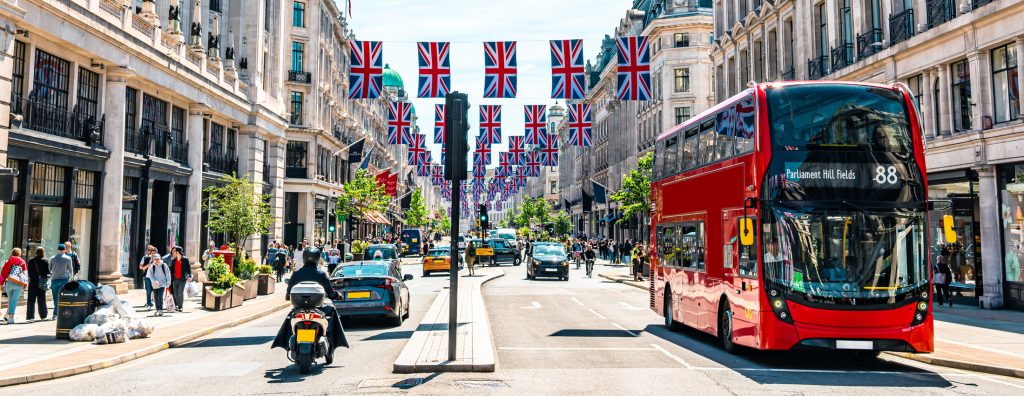
LondonEx is a summer externship program in London, U.K., hosted by Syracuse Law. During a seven-week international summer experience, students gain exposure to clients, partner with professionals for personalized mentoring, and enjoy boundless cultural opportunities – in one of the world’s most dynamic cities. LondonEx is open to any full-time or part-time student from an ABA-approved law school who is in good standing.
In the article, Andrew Horsfall ’05, L’10, LondonEx Program Specialist, said a willingness to situate oneself in a novel area of legal practice in a foreign locale shows future employers a certain level of resilience.
Horsfall said one of the things that comes out in the first two or three weeks is just how pleasantly surprised the students are at the level of accessibility that they have to their mentors and just how good their mentors are.
“I think the students are in awe watching their mentors work, whether it’s arguing in court or presiding from the bench. They come to respect the level of preparation required and the level of detail necessary to do this work and do it well,” he said. “It leaves a meaningful impression on the students because they’re working with people who are operating at a very high level in their respective practices.”
The application for LondonEx is open through February 1.