In August 2020, 3L Lisa Cole was among 12 law students from around the country honored with a Ms. JD Fellowship. According to Ms. JD—a non-profit, non-partisan organization that seeks to support and improve the experiences of women law students and lawyers—fellows are selected based on their academic performance, leadership, and dedication to advancing the status of women in the profession.
The Father-Daughter Duo Taking on the College of Law Scott and Lauren Deutsch
In November 2020, father and daughter law school students Scott and Lauren Deutsch were profiled by Syracuse University News: “He told me how welcoming the school was,” Lauren—a rising 2L—says, referring to her father’s advice about choosing Syracuse Law. “I want to be at a school where everyone is welcome, where the diversity is enormous, and I’ve found that here.”
In the story, rising 3L Scott—an Army veteran—notes Syracuse’s strong commitment to veterans and their families: “It’s a major point of pride; you see why veterans are drawn to campus.”
Powers Awarded Scullin Scholarship Leita Powers
At a December 2020 ceremony, rising 3L Leita Powers was awarded the Northern District of New York Federal Court Bar Association Scullin Scholarship. The award—named for the Hon. Frederick J. Scullin Jr. L’64—is given each year to an exemplary College of Law student who shows a keen interest in federal practice.
Yanez Chosen for Prestigious AAPD Summer Internship Matthew Yanez
In January 2021, rising 2L Matthew Yanez—recipient of a Dean’s Scholarship and a JK Wonderland Scholarship—was chosen to be an American Association of People with Disabilities (AAPD) summer intern. “This is a prestigious summer internship that receives hundreds of applications each year from undergraduate and graduate students with disabilities from all academic fields within the US,” explains Professor Arlene Kanter, Director of the Disability Law and Policy Program. “Only a fraction of those students are selected each year.”
Frimpong Becomes the First Black Student to Lead Syracuse Law Review Hilda Frimpong
In February 2021, rising 3L Hilda Frimpong was elected by her peers as the first Black student to lead the Law Review as Editor-in-Chief since it began publishing in 1949. “I am honored to break down barriers as the first person of color and first Black woman in this role. I am proud that my expertise and unique perspective will be added to the legacy of the Law Review,” says Frimpong.
Added Law Review Faculty Advisor Professor Robin Paul Malloy, “This is wonderful news for Hilda, the Law Review, and the College. I am proud to serve as Advisor during this groundbreaking and overdue moment in its history.”
Thevenin Trades Her Running Spikes for Law Books Tia Thevenin
In her March 2021 Syracuse Stories profile, rising 2L Tia Thevenin ’18—a former standout Syracuse University hurdler—discusses picking herself up from the disappointment of not competing for Team Canada in the 2020 Olympics due to the coronavirus pandemic: “I had planned to go to law school anyway, so I sped up my timeline. Walking away from the sport—and Team Canada—was one of the hardest decisions I’ve ever had to make. It’s also exciting to do something new.”
Thevenin adds, “Studying law is not so different from running track. My goal is not to compete with my classmates but to inspire them to reach their fullest potential.”
Jasper Pursues His Dream of a Law Degree Online Joseph Jasper
In his March 2021 Syracuse Stories profile, Joseph Jasper—a rising 2L and US Army Chief Warrant Officer—spoke about how the “stars aligned” after transferring to Fort Drum in Upstate New York and learning about Syracuse Law’s JDinteractive program: “I was enticed by the hybrid format and the fact that it was accredited by the American Bar Association.” For Jasper, attending law school is a “dream come true:” “I have not stopped being excited about the opportunity to attend such a reputable university in pursuit of my legal education.”
A Powerful Voice for Justice Mazaher Kaila
In the third March 2021 profile, Syracuse Stories turned the spotlight on rising 3L Mazaher Kaila, an immigrant from Sudan who is driven by civic engagement: “It’s a core value for me. I have always aspired to help the communities I’m from.” Kaila is not waiting until she graduates to assume the role of advocate and change-maker. She serves as President of the Black Law Students Association and is leading efforts to help the University administration address issues of diversity and inclusion.
Marquette Receives Best for Vets Award Ryan Marquette
At its May 2021 awards ceremony, rising 3L Ryan Marquette received the Student Veterans Organization’s Best for Vets Award, given to the student veteran who has done the most to help fellow student vets succeed on and off campus. Marquette serves as President of Veterans’ Issues, Support Initiative, and Outreach Network (VISION) and President of the National Security Student Association.
Otasowie MCs ROTC Review Sharon Otasowie
Sharon Otasowie L’21—an Air Force ROTC Cadet and US Air Force JAG Corps graduate law candidate—had the honor of performing MC duties at the 104th Chancellor’s ROTC Review Ceremony in April 2021. The Chancellor hosts the annual ceremony to recognize the distinguished performance of cadets in the University’s Army and Air Force ROTC programs. Law Students Awarded ICCAE Downey Scholarships Rising 3Ls Abigail Neuviller ’19, Penny Quinteros, and Meghan Steenburgh G’97, and rising 2L Miriam Mokhemar, were among a group of 13 undergraduate, graduate, and law students awarded Downey Scholarships by the Syracuse University Intelligence Community Center for Academic Excellence (ICCAE) in May 2021. The award recognizes academic excellence, commitment to public service, and potential to bring diverse and distinctive backgrounds and experiences to the US Intelligence Community.
IN MEMORIAM John Goerner The College of Law mourns the passing of John P. Goerner, a Class of 2023 student in the JDinteractive program, in April 2021. An avid hockey and rugby player, Goerner held a B.S. in Information Systems from Bellevue University, Nebraska, and an M.B.A. from Alvernia University in Reading, PA.
John planned to use his law degree to represent the less fortunate. “John was a fighter,” Associate Dean for Online Education Kathleen O’Connor told The Daily Orange. “He was a wonderful student and an exemplary man.”
Professor Ghosh Submits Public Interest Statement to Trade Commission
Professor Shubha Ghosh
Submitted to the US International Trade Commission, Professor Shubha Ghosh’s Public Interest Statement raises questions around a finding that Daewoong Pharmaceuticals had misappropriated Medytox’s trade secrets in developing and importing Nabota, a competing botulinum toxin product. Ghosh expressed concerns about the anti-competitive effects of the administrative judge’s determinations.
Professor Johnson Appointed to Judicial Commission
Professor Paula Johnson, Co-Director of the Cold Case Justice Initiative, was appointed to the Franklin H. Williams Judicial Commission. The Commission advises decision-makers throughout the New York court system on issues affecting both employees and litigants of color. All members are appointed by the Chief Judge of the New York Court of Appeals.
Professor Kanter Moderates Fulbright ADA Panel
Arlene Kanter Portrait
Professor Arlene Kanter, Laura J. and L. Douglas Meredith Professor of Teaching Excellence and Director of the Disability Law and Policy Program, moderated a panel discussion in celebration of the 30th Anniversary of the Americans with Disabilities Act. Part of the Fulbright Impact in the Field Panel Series, the discussion convened more than 300 Fulbright alumni scholars with disabilities, accessibility and inclusion advocates, and legal experts.
Beth Kubala Appointed US Army Civilian Aide
Professor Beth Kubala joins fellow civilian aides to the Secretary of the Army at an August 2020 swearing-in ceremony.
Teaching Professor Beth Kubala, Executive Director of the Betty and Michael D. Wohl Veterans Legal Clinic, was named one of six civilian aides to the Secretary of the Army. CASAs promote good relations between the Army and the public and advise the secretary on regional issues.
Thanking the new CASAs, Secretary of the Army Ryan D. McCarthy said, “These are unprecedented times, and the Army is fortunate to have you in the community interacting with civic leaders, educators, and businesses.”
SEPTEMBER 2020
Professor Barnes Named Associate Dean for Faculty Research
Professor Kristen Barnes
Kristen Barnes—an expert in property and housing law, anti-discrimination, and civil rights—succeeded Professor Lauryn Gouldin as Associate Dean for Faculty Research.
“As Associate Dean, Professor Barnes leads the College’s continued placement of faculty scholarship in top-tier law journals, brings noted law experts to Dineen Hall to facilitate the exchange of ideas, encourages grant-funded research projects, and broadens our faculty’s involvement with noted institutions around the world,” says Dean Boise.
Professors Ghosh and Gouldin Appointed as Crandall Melvin Professors
Recognizing their significant scholarship and thought leadership, as well as their excellence in teaching, Dean Boise re-appointed Professor Shubha Ghosh as Crandall Melvin Professor of Law and appointed Professor Lauryn Gouldin as Crandall Melvin Associate Professor of Law, each for a five-year term.
NOVEMBER 2020
DHS Senior Executive Matthew Kronisch Joins SPL
Professor Matt Kronisch
The Institute for Security Policy and Law (SPL) welcomed Matthew L. Kronisch as a Distinguished Fellow-in-Residence. Kronisch is the first-ever Department of Homeland Security Office of the General Counsel Senior Executive assigned to an academic institution under the Intergovernmental Personnel Act.
Kronisch conducts research, teaches homeland intelligence topics, and serves as a career advisor for the Syracuse University Intelligence Community Center of Academic Excellence.
DECEMBER 2020
Professor Dorfman Publishes 2020 Israeli Municipal Accessibility Index
Professor Doron Dorfman
For the second year—in his capacity as an affiliated researcher at aChord-Social Psychology for Social Change—Professor Doron Dorfman led a study on attitudes toward disability in Israel and the state of disabled Israelis. The Municipal Accessibility Index also examines Israeli public opinion about experiences during the COVID-19 pandemic.
JANUARY 2021
Faculty Participate in Society of Socio-Economists Annual Meeting
Several College of Law faculty members participated in the 2021 Society of Socio-Economists Annual Meeting, hosted by the College of Law and titled “Pressing Social Issues.” Joining Professor Robert Ashford, Program Co-Chair for the AALS Section on Socio-Economics were professors Christian Day, David Driesen, and Shubha Ghosh.
APRIL 2021
Professor Gardner Receives Meredith Teaching Recognition Award
Professor Shannon Gardner
Teaching Professor Shannon Gardner was awarded a Syracuse University 2021-2022 Meredith Teaching Recognition Award for Continuing Excellence in Teaching, recognizing her contributions to teaching and learning. The award is one of the highest teaching honors bestowed by the University.
MAY 2021
Wentworth-Mullin Appointed to NYSBA Committee on Veterans
Chantal Wentworth Mullin
Chantal Wentworth-Mullin, Managing Director of the Betty and Michael D. Wohl Veterans Legal Clinic, was appointed to the New York State Bar Association Committee on Veterans.
Wentworth-Mullin will assist her colleagues in program development, advocacy, and strategic collaborations that address the legal issues and needs of military servicemembers, veterans, and their families.
Dean Boise Appointed SU Board of Trustees Representative
Dean Craig M. Boise
As Dean Representative to the Board of Trustees, appointed by Chancellor Kent Syverud, Dean Boise will participate, ex officio, on the Board of Trustees Academic Affairs Committee, and report to the Board at Executive Committee and full Board meetings.
JUNE 2021
Professors Berger and Gouldin Promoted
Dean Boise announced that—with the concurrence of Chancellor Syverud— and the University Board of Trustees, professors Todd Berger and Lauryn Gouldin have been promoted to the rank of full professor.
Dean Boise Joins Governing Advisory Council of ABA Legal Education Police Practices Consortium
In October 2020, Dean Boise joined a 10-member Advisory Council to govern the newly formed ABA Legal Education Police Practices Consortium. As a member of the Advisory Council, Dean Boise will help lead Consortium efforts to leverage expertise across the ABA and among collaborating law schools to develop projects that promote better police practices throughout the United States.
“As a former police officer and commissioner on the Cleveland, OH, Community Police Commission, I care deeply about building positive community/police relations,” said Dean Boise. “Syracuse is fully committed to helping the Consortium use the combined power of the bar association and law schools to effect change to police practices. The Consortium also will provide our students with meaningful opportunities to contribute to the imperative work of police reform locally and nationally.”
First-Time and Ultimate Bar Passage Rates Released
First-time and ultimate bar passage rates for Syracuse Law graduates were posted in March 2021. Of first-time bar exam takers in the New York jurisdiction, 81.31% passed (compared to the state average of 85.93%).
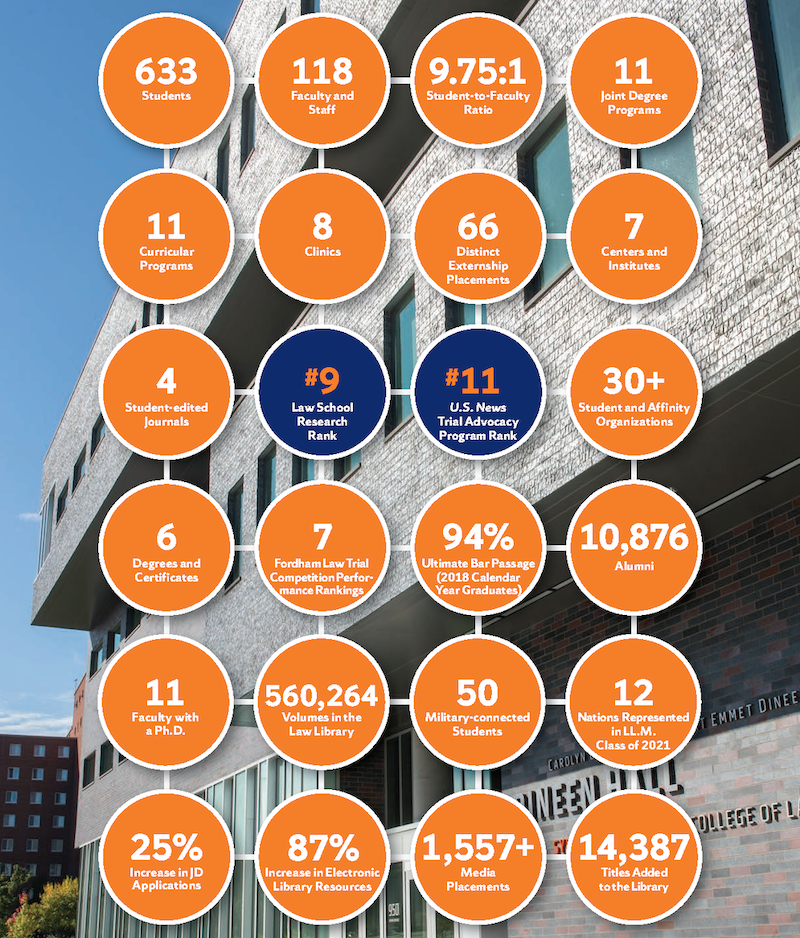
The Ultimate Bar Passage rate for students graduating in the 2018 calendar year was 94.08%.
College of Law Rises Nine Place in U.S. News Rankings
The College of Law rose nine places in the 2022 edition of the U.S. News & World Report law school rankings, released in April 2021. Among drivers of this improvement, the College’s median LSAT rose one point to 155 and the Undergraduate GPA increased from 3.33 to 3.53. In fact, Syracuse Law was among just 25% of law schools that improved both LSAT and UGPA, tying for the largest increase in UGPA.
The College’s selectivity improved by seven percentage points, the bar passage rate climbed from 85% to 88%, and the influential Judges/Lawyers Assessment Score went from 2.9 to 3.0. Notably, the Advocacy Program climbed from #15 to #11, marking a 16-place rise in the rankings in the last two years.
“The U.S. News rankings are just one way to measure our success,” noted Dean Boise. “Despite their pervasiveness, we remain singularly focused on our mission, which is to graduate extraordinary law students who go on to lead extraordinary lives enriched by all they learn and experience at Syracuse Law.”
Celebrating Classes of 2020 and 2021
(L to R) Dean Boise, Professor Laura Lape, and Vice Dean Keith Bybee at the filming of the special 2021 Commencement ceremony.
On May 7, 2021, Syracuse Law celebrated the graduation of both the classes of 2020 and 2021 with a virtual Commencement ceremony featuring an address by Joanna Geraghty L’97, President and COO of JetBlue.
“The rule of law can never have enough friends across the globe, where it can appear to be under siege at different times and in different circumstances,” Geraghty told the graduates. “Syracuse taught you that, be a friend to the rule of law wherever and whenever you come across it—and you will.”
Class of 2021 President Troy D. Parker and SBA LL.M. Senator Fildous Hamid offered their colleagues words of congratulations and encouragement. Alicia Loomis L’19, an associate at Costello, Cooney & Fearon PLLC, sang the National Anthem and Alma Mater. In addition to the virtual Commencement, on May 6 the College held a virtual awards ceremony honoring student, faculty, and staff excellence.
Disability Rights Luminaries Speak at DLPP/Syracuse Law Review ADA Symposium
The College hosted a star-studded Americans with Disabilities Act Symposium in April 2021, commemorating the ADA’s 30th anniversary, as well as the Disability Law and Policy Program’s 15th anniversary and a special ADA volume of the Syracuse Law Review.
Guest speakers included disability law luminaries Alison Barkoff, Acting Administrator and Assistant Secretary for Aging, US Department of Health and Human Services; international disability rights activist Judy Heumann; and Arlene Mayerson, Founding Directing Attorney Emerita, Disability Rights Education and Defense Fund.
Many of the papers discussed during the symposium will be published in a future edition of the Law Review, focusing on the past, present, and future of disability rights domestically and internationally.
CCJI Helps Launch Wharlest and Exerlena Jackson Legacy Project
Wharlest and Exerlena Jackson Legacy Project
To honor the sacrifice and memory of two civil rights activists from Natchez, MS, Professor Paula Johnson and students in the Cold Case Justice Initiative helped launch the Wharlest and Exerlena Jackson Legacy Project with a two-day virtual symposium for public junior and senior high school students in both Natchez and Syracuse on March 26-27, 2021.
In addition to honoring the Jacksons’ service and sacrifice (both were active in the NAACP, and in 1967 Wharlest was killed in what the FBI considers a Ku Klux Klan attack), the Legacy Project aims to provide resources to enable students to achieve their life and career goals and to continue the Jacksons’ dedication to civic engagement.
To assist the project, Syracuse Law students have volunteered as “Life Buddies”—or mentors—to help school students navigate the next steps in their lives. Junior high and high school students who register in the Life Buddies program will be assigned a law student who can answer questions about the path to college and other career decisions.
Syracuse Law Hosts Policing Reform Panel Discussion
Exploring policing reform efforts in Onondaga County and connecting those local and community efforts to the broader national conversation about policing practices, Syracuse Law hosted the “Policing and Reform in Onondaga County and Beyond” panel discussion in April 2021.
Sponsored by the Syracuse Civics Initiative and hosted by Dean Boise and Professor Lauryn Gouldin, the discussion featured Syracuse Police Chief Kent Buckner; Lisa Kurtz, Innovative Policing Program, Georgetown Law; Jimmy Oliver, Syracuse Police Director of Community Engagement; Sarah Reckess L’09, Director, Center for Court Innovation-Syracuse Office; and Onondaga County Legislator Vernon Williams Jr.
The panel addressed key provisions of the Police Reform and Reinvention Plans recently developed by Onondaga County and the City of Syracuse, including use-of-force policies, police-community relations, and alternatives to arrest.
Professor Nina Kohn has become a leading voice for reforming long-term care in the wake of the coronavirus pandemic. Her recent articles on regulating nursing homes and other forms of long-term care have been published in The Washington Post, The Hill, Georgetown Law Journal Online, and elsewhere. She has been quoted in more than 600 news stories in the past year, and has testified on long-term care issues before the New York legislature.
Also the Solomon Center Distinguished Scholar in Elder Law at Yale Law, Kohn is the author of Elder Law: Practice, Policy, and Problems (Wolters Kluwer, 2d ed. 2020). At Syracuse Law, she teaches torts, elder law, and trust and estates. This short article was originally published in Spring 2021 in Bill of Health, the blog of Petrie-Flom Center at Harvard Law School.
Long-Term Care Reform
Between May 2020 and January 2021, 94% of US nursing homes experienced at least one COVID-19 outbreak.1 And nursing home residents—isolated from family and friends,2 dependent on staff often tasked with providing care to far more residents than feasible, and sometimes crowded into rooms with three or more people3—succumbed to the virus at record rates. By March 2021, nursing home residents accounted for a quarter of all US COVID-19-related deaths.
The poor conditions in nursing homes that have been exposed by the pandemic are symptomatic of long-standing problems in the industry. Fortunately, as I discuss in the Georgetown Law Journal Online,4 there are a series of practical reforms that could readily improve the quality of nursing home care, in large part by changing the incentives for nursing home providers.
The Danger of Chronic Understaffing
A key problem exposed by the COVID-19 pandemic is the danger of chronic under staffing in nursing homes. Low staffing levels—and especially low levels of nursing staff 5—predict facilities’ inability to control COVID-19 outbreaks and avoid fatalities.6
The dangers of understaffing were an open secret long before the pandemic. Even before the pandemic, researchers had shown that most facilities lacked the staff necessary to avoid systemic neglect.7 Likewise, pre-pandemic nursing homes’ inspection reports provided ample evidence of facilities lacking the staff needed to care for residents, such as those needed to help residents eat without choking, maintain mobility, or simply stay clean. ProPublica’s database of nursing home inspection reports, for example, turns up scores of cases of residents with maggot-infested wounds and skin in the two years preceding the pandemic.8
Chronic understaffing doesn’t just result in bad care: it can be lethal.
For example, when staff members are not available to assist residents who need help to stand or walk, residents may fatally injure themselves attempting to get about on their own. Understaffing is also associated with abusive practices.
A 2018 Human Rights Watch report found that US nursing homes routinely over medicate residents with dementia to make them docile and easier to control.9 This practice can increase the risk of death and strip residents of their personalities—as one daughter put it, her mother became a “zombie.” Nevertheless, as a 2017 review found, understaffed facilities appear to use psychotropic medication as a “cost-saving alternative to hiring additional RNs.”10 Understaffing is commonplace because while federal regulations set expected outcomes for facilities, regulators do not hold nursing homes accountable for those outcomes. Instead, when nursing homes are found to have violated federal regulations designed to protect residents, they typically face no fine or other penalty; they are simply directed to correct the deficiency.
Therefore, unscrupulous providers can increase profits by short-staffing facilities. Indeed, private equity firms continue to buy low-quality nursing homes11 because of the profit such facilities can generate—especially when owners are willing to sacrifice resident safety to maximize profit.12
The Power of the Federal Wallet
To address this issue, federal regulators could change the way nursing home penalties are assessed and enforced, imposing more significant fines and using the full range of penalties that federal statutes already authorize. This includes not only monetary fines but also holds on new admissions and suspensions of payment.
Regulators also could require facilities to have minimum direct care staffing levels that accord with what researchers have found necessary to provide humane care (slightly over four hours per resident, per day).13
In addition, regulators could require facilities to use a substantial portion of their revenue to care for residents. For example, New Jersey has adopted legislation requiring nursing homes to spend 90% of annual aggregate revenue on direct resident care. This approach could prevent unscrupulous providers from pocketing funds needed for resident care.
The key will be to require financial transparency so that facilities cannot hide profit as expenses and to set spending minimums high (such as New Jersey’s 90% requirement and unlike the 70% threshold New York adopted as part of its 2021 Budget Bill).14
The federal government—the primary payer for long-term care services in the US—could use the power of its wallet to incentivize better care. It could pay nursing homes that provide high-quality care more than those that provide substandard care. Elsewhere in the US healthcare system, pay-for-performance is the norm. But nursing homes that provide excellent care are generally still paid the same as those that provide shoddy care.
“The good news is that, by exposing the dangers of the current system, the pandemic could create an opening for these types of meaningful law reform.”
The federal government also could improve long-term care by fixing a fundamental market failure that it has created. The federal statute governing Medicaid requires states to cover long-term care services provided in nursing homes to Medicaid beneficiaries, but it allows states to choose whether to cover those services in more integrated settings.
States that wish to provide home and community-based services (HCBS) to Medicaid beneficiaries needing long-term care typically apply for a “Section 1915(c)” waiver from the federal government. Under this waiver program, states are not required to provide HCBS on equal terms with institutional long-term care services, but rather they may cap the number of beneficiaries served under the waiver and the cost of services provided.
The result is that most states have waiting lists for at least one type of Medicaid-funded HCBS care, and approximately three-quarters of states limit how many hours of care they provide to beneficiaries receiving services through an HCBS waiver program. This institutional bias could be eliminated by amending the underlying statute, as draft legislation being circulated by Michigan Congresswoman Debbie Dingell (D-Mich.) and a handful of US senators would do.15
But Is There an Appetite for Reform?
The good news is that, by exposing the dangers of the current system, the pandemic could create an opening for these types of meaningful law reform.
Unfortunately, the political response to COVID-19 provides a reason for skepticism about the extent of reform it will spark. At both the state and federal levels, policymakers’ primary response to concerns about COVID-19 transmission within nursing homes was not to protect nursing home residents, but rather to protect the nursing home industry.
As I outline in The Hill, roughly half the states in the US granted immunity to nursing homes amid the crisis (some even went so far as to grant immunity from criminal liability and from acts that would otherwise be construed as gross negligence).16 Similarly, the US Secretary of Health and Human Services used his authority under the Federal Public Readiness and Emergency Preparedness Act (the “PREP Act”) to bar state and federal claims against nursing homes that unreasonably administer or use infection “countermeasures” such as masks and testing.17
In addition, policymakers responded by waiving—and even eliminating in some cases—existing requirements designed to protect residents. The Centers for Medicare and Medicaid Services initially responded to the COVID-19 pandemic by waiving a series of regulatory requirements for nursing homes and suspending most enforcement actions. Arkansas even rolled back its minimum staffing requirements in response to industry lobbying.
That said, there are some promising measuring under consideration. For example, at the federal level, there is the Dingell proposal, as well as a Senate bill introduced by Pennsylvania’s senators that would expand the number of poorly performing nursing homes subject to additional inspections.18 Moreover, the Biden Administration has proposed an additional $400 billion (over eight years) for HCBS, which would help increase access to alternatives to nursing home care, although it would not eliminate Medicaid’s bias in favor of institutional care.
States also are considering reform. For example, proposed legislation pending in Rhode Island would require nursing homes to provide the 4.11 hours of care per resident, per day19 that research has indicated is necessary to avoid neglect (see footnote 13).
In short, policymakers interested in improving long-term care have a variety of straightforward options available to them. Accordingly—as I suggested in The Washington Post, examining the politics of nursing home reform20—the key question is not what can be done to fix America’s long-term care crisis. The key question is whether there is the political appetite to make the changes that are so clearly needed.
Endnotes
[1] “COVID-19 in Nursing Homes: Most Homes Had Multiple Outbreaks and Weeks of Sustained Transmission from May 2020 through January 2021,” US Government Accountability Office (May 2021). [2] “Is Extended Isolation Killing Older Adults in Long-Term Care?” AARP (Sept. 3, 2020). [3] “Black and Latino Nursing Home Deaths in Illinois Linked to Overcrowding,” WMAQ-TV (NBC Chicago) (April 30, 2021). [4] “Nursing Homes, COVID-19, and the Consequences of Regulatory Failure,” Georgetown Law Journal Online Vol. 110 (Spring 2021). [5] “Nurse Staffing and Coronavirus Infections in California Nursing Homes,” Policy, Politics, & Nursing Practice Vol. 21, No. 3 (August 2020). [6] “Staffing Levels and COVID-19 Cases and Outbreaks in US Nursing Homes,” Journal of the American Geriatrics SocietyVol. 68, No. 11 (November 2020). [7] “Registered Nurse Staffing Falls Short in Most Nursing Homes,” Skillednursingnews.com (March 15, 2018). [8] “Nursing Home Inspect,” Propublica.org (May 2021). [9] “’They Want Docile:’ How Nursing Homes in the United States Overmedicate People with Dementia,” Human Rights Watch (February 2018). [10] Variation in Use of Antipsychotic Medications in Nursing Homes in the United States: A Systematic Review,” BMC Geriatrics Vol. 17, No. 1 (January 2017). [11] “Private Equity Ownership Is Killing People at Nursing Homes,” Vox.com (Feb. 22, 2021). [12] “Does Private Equity Investment in Healthcare Benefit Patients? Evidence from Nursing Homes,” NYU Stern School of Business (Nov. 12, 2020). [13] “The Need for Higher Minimum Staffing Standards in US Nursing Homes,” Health Services Insights Vol. 9 (April 2016). [14] State of New York, Budget Bill S.2507/A.3007 (Jan. 20, 2021). [15] “Draft: A Bill to Amend Title XIX of the Social Security Act to Require Coverage of Home and Community-Based Services Under the Medicaid Program” Rep. Debbie Dingell (D-MI) (2021). [16] “Nursing Homes Need Increased Staffing, Not Legal Immunity,” The Hill (May 23, 2021). [17] “Guidance for PREP Act Coverage for COVID-19 Screening Tests at Nursing Homes, Assisted Living Facilities, Long-Term-Care Facilities, and Other Congregate Facilities,” US Department of Health & Human Services Office of the Assistant Secretary for Health (Aug. 31, 2020). [18] US Congress (116th), Nursing Home Reform Modernization Act of 2020 S.4866 (October 2020). [19] State of Rhode Island, Nursing Home Staffing and Quality Care Act S.0002 (January 2021). [20] “Covid Awakened Americans to a Nursing Home Crisis. Now Comes the Hard Part,” The Washington Post (April 28, 2021).
Adapted from an article first published in the Tufts Fletcher School of Law and Diplomacy’s Fletcher Security Review.
“Humanity is waging war on nature. This is suicidal. Nature always strikes back, and it is increasingly doing so with growing force and fury … we must use 2021 to address our planetary emergency.1 —António Guterres, State of the Planet Speech, Columbia University (December 2020)
The climate-security century is here. With global temperatures rising, climate change is poised to massively destabilize the physical environment.2 This century may well be defined by our ability (or inability) to reduce our collective greenhouse gas emissions. We must also adapt and respond to climate change’s multivariate security impacts. From raging wildfires in Australia and California to melting ice sheets and permafrost in the Arctic, climate change acts as both a threat accelerant and a catalyst for conflict.3
Climate change is also unlike any other traditional security threat. It accelerates and exacerbates existing environmental stressors, such as sea level rise, extreme weather, drought, and food insecurity, leading to greater instability.4 Climate change impacts are already taking center stage this century, forcing us to think more broadly about climate change’s relationship with human security and national security.5
Complicating matters, climate-driven temperature increases do not rise in a neat, uniform fashion around the globe. The pace of climatic change unfolds unevenly and erratically. Some parts of the world—such as the Arctic—are warming at a rate two to three times faster than the rest of the world.
Three specific climate-security “hotspots” foreshadow greater destabilization and serve as climate “canaries in a coal mine”—a sneak preview of our climate-destabilized future: The Arctic—transformed by climate change and a new operational environment, opening trade routes and sparking a potential race for natural resource extraction in the High North.
Pacific Small Island Developing States—where climate-driven sea level rise is swallowing nations whole, raising the specter of climate refugees and possible nation extinction.
The African Sahel—where climate change is leading to increased drought and food insecurity, serving as a tinderbox for resource conflicts.
Hotspot #1: A Climate-Transformed Arctic
Due in large part to the pace of climate change, the Arctic is quickly emerging as a region of increasing military and economic importance. The Arctic is warming faster than the rest of the planet, driven by a self-reinforcing feedback loop known as the albedo effect, which accelerates the melting of polar ice caps and permafrost.
In turn, melting polar ice sheets are forming new trade routes through Canada (the Northwest Passage) and along the Russian border (the Northern Sea Route). Along the Arctic’s continental shelf, climate change is renewing interest in natural resource extraction, where close to 30% of the world’s untapped natural gas resides.
The “Law of the Arctic” is largely governed by the work of the Arctic Council, the United Nations Convention on the Law of the Sea (UNCLOS), and an assortment of laws and bilateral agreements among the eight Arctic states.
In contrast to its South Pole cousin—governed by the comprehensive Antarctic Treaty System (ATS)6 —there is no Arctic Treaty. The Arctic Council is characterized by an evolving “soft law” system of collaboration among the eight Arctic Council states: Canada, Denmark (via Greenland), Finland, Iceland, Norway, Russia, Sweden, and the United States. Critically, China is not a voting member of the Arctic Council, although China has declared itself a “near-Arctic” nation and has increasing ambitions in the region. Of these eight members, Denmark, Russia, United States, Norway, and Canada are Arctic “coastal states”—with a continental shelf in the Arctic Ocean—and can potentially extract natural resources.
Despite the potential for conflict and tension, the Arctic Council has enjoyed some success in managing competing Arctic interests. It has demonstrated a remarkable capacity to tackle increasingly complex issues, such as an agreement addressing unregulated fishing and Arctic search and rescue.
However, in the face of climate change, tension points are starting to emerge. By its own mandate, the Arctic Council is prohibited from addressing matters of military security.7 This is largely left to NATO and individual nations to navigate. Canada, Denmark, Iceland, Norway, and the US are original NATO members, providing a counterweight to growing Russian militarization. As Russia has invested heavily in Arctic military infrastructure, the NATO members of the Arctic Council have shown a renewed interest in military exercises in the region.
While the Arctic Council’s 2008 Ilulissat Declaration reaffirmed the Arctic Council’s commitment to the Law of the Sea framework, one key Arctic Council member—the United States—remains an outlier as a non-party to UNCLOS.8 This international treaty, often referred to as the “Constitution of the Oceans,” largely governs maritime issues in the Arctic Ocean to include the increasingly important rights of Arctic innocent and transit passage.9 Additionally, UNCLOS establishes the Commission for the Limits on the Continental Shelf (CLCS), which provides technical expertise to help ascertain the breadth of each individual nation’s continental shelf claims.10
Four of the five Arctic coastal states have submitted information to CLCS in support of continental shelf claims. The United States has not made a similar submission for its enormous Alaskan continental shelf. As a non-party to UNCLOS, the US likely will not be able to avail itself of the CLCS process.
In 2007, Russia shocked the world by planting its flag on the North Pole. This was an act of no legal significance but nevertheless signaled broader Russian ambitions in the Arctic. Today, Russia claims an outer continental shelf that extends to the Lomonosov Ridge—an enormous area with vast untapped oil and natural gas resources that overlaps with the North Pole.
While remaining a non-party to UNCLOS, the US has nevertheless served as a good law of the sea partner. For example, the US views UNCLOS’s key navigational provisions as binding customary international law. Additionally, the US Navy has complemented and enforced many key UNCLOS provisions via freedom of navigation operations and diplomatic assertions around the world.
Despite the US Senate’s failure to provide its advice and consent to UNCLOS ratification, a remarkably diverse coalition of American national security experts, environmentalists, and business interests support the US becoming a party to the convention. The U.S. should ratify UNCLOS as it is contrary to our long-term national security and economic interests in the Arctic and elsewhere.11
Outside of natural resource extraction, two seasonal waterways—the Northwest Passage and the Northern Sea Route—are both found in the Arctic. Canada has long viewed the Northwest Passage as their internal territorial waters.12 While the US and Canada have “agreed to disagree” on the legal status of the Northwest Passage, tensions have risen regarding Russia’s authority to regulate shipping along the Northern Sea Route. Russia has increasingly asserted an expansive view of its authority over ice-covered areas along the route, requiring prior notification from foreign ships before transiting.
Perhaps most importantly, what happens in the Arctic does not stay in the Arctic. The melting permafrost in Greenland and Arctic tundra increases the possibility for cataclysmic “green swan” events causing dramatic sea level rise, impacting coastlines and small islands, as discussed below.
Hotspot #2: Small Island Developing States & Nation Extinction
Far away from the Arctic, scientists predict that four Pacific Small Island Developing States (SIDS) may become uninhabitable by mid-century due to climate change-driven sea level rise and wave-driven flooding.13
The specter of potentially “stateless” UN member states—Kiribati, Maldives, Republic of Marshall Islands, and Tuvalu—strikes at the core of the UN Charter system, raising novel questions of both international law and environmental justice. It also exposes a governance gap in international law, which does not adequately protect climate migrants fleeing from climate-driven weather impacts and uninhabitability. The 1954 World Refugee Convention, for example, is silent on migrants fleeing environmental or climate disasters.
Since World War II, the UN Charter has played an important role in stabilizing international order by upholding national territorial integrity and the sovereign equality of each member nation.14 While SIDS are relatively small, they have equal standing as sovereign nations.
Several questions now arise: With climate change undermining the territorial integrity and sovereignty of these nations, what is the responsibility of developing nations to alleviate this slow-moving tragedy? Can international governance institutions afford to remain silent while nations face climate-driven statelessness? What are the legitimate costs of both action and inaction?
The plight of global climate migrants is an issue of increasingly grave concern.15 By one estimate, more than 150 million people will be displaced by rising sea levels by the year 2050.16 One recent study found that two-thirds of the world’s population faces severe water shortages, a catalyst for cross-border human migration.17
In addition, many small island nations are uniquely vulnerable to extreme weather patterns. Scientists now link climate change, rising temperatures, and the increased likelihood of extreme weather,18 to which small island nations often lack the capacity to adapt and respond. In 2020, when Cyclone Harold struck several Pacific island nations, it triggered an estimated 99,500 displacements.19
Finally, critical US national security infrastructure in the region is increasingly at risk. The US operates a key military installation and radar facility at Kwajalein Atoll in the Marshall Islands that helps protect the US from North Korean missiles. Rising seas may cause parts of the Marshall Islands to become uninhabitable as early as 2035.
Hotspot #3: The African Sahel and the Climate-Conflict Nexus
In a cruel twist, climate change disproportionately harms nations that contributed the least to global greenhouse gas emissions and have the fewest resources to adapt to climate change’s impacts. This includes both SIDS and the poverty-stricken African Sahel, an area already suffering from climate-exacerbated food insecurity and conflict.20
The Sahel region of West Africa, for example, is one of the poorest regions in the world with 40% of the population living on less than US$1.90 per day. The region’s population is growing at an astonishing rate, expected to double by 2045,21 yet the climate is warming in the Sahel far faster than in the rest of the world.
In a recent Security Council debate on climate and security, the World Meteorological Chief Scientist stated that climate change has a multitude of security impacts “increasing the potential for water conflict; leading to more internal displacement and migrations … it is increasingly regarded as a national security threat.” 22
There is a growing body of scholarship that connects climate change’s multivariate impacts and violent conflict.23 In 2020, the International Committee of the Red Cross estimated that 12 of the 20 most vulnerable countries to climate change were in a state of conflict.24 An estimated 1.25 million people have been displaced in Burkina Faso, Mali, and Niger due to extreme rainfall and flooding.25
Climate change’s destabilizing role in the African Sahel is forcing international legal institutions to reimagine what role they might play in addressing underlying causes of conflict and instability.
Consistent with its mission to maintain international peace and security,26 the UN Security Council (UNSC) has begun to address climate change. It first recognized the link between environmental security and international security in the aftermath of the Persian Gulf War (1992) and the destruction of oil fields.27 Recognition of other non-traditional security threats followed, such as HIV/AIDS (2000) and Ebola (2014).
In 2017, UNSC took the historical step of linking climate change with the deteriorating security situation in the African Sahel. In Resolution 2349, the “adverse effects of climate change and ecological change” in destabilizing the security situation in the Lake Chad Basin is specifically highlighted.28 Since this Resolution was issued, the Council followed up with additional resolutions for Somalia, Darfur, West Africa, and the Sahel, and Mali.29
While it has yet to make the formal determination that climate change effects are a “threat to the peace” within the meaning of UN Charter Article 39,30 there is a growing precedent for UNSC to use its authorities to address non-traditional security threats.
As the earth warms, climate hotspots such as the African Sahel will increasingly bear the brunt of climate change’s impacts. In the coming years, the UN will be under increasing pressure to address climate-driven security matters in some fashion.31 An Article 39 declaration serves as the legal key, opening the door for the Council to use its awesome Chapter VII authorities.
A Climate-Security Reset for the United States?
Within a month of taking office, President Joseph R. Biden Jr. L’68 released two important executive orders on climate-security matters: (1) “Executive Order on Tackling the Climate Crisis at Home and Abroad” and (2) “Rebuilding and Enhancing Programs to Resettle Refugees and Planning for the Impact of Climate Change on Migration.”
“Tackling the Climate Crisis at Home and Abroad” makes clear that the world faces a “profound climate crisis” and that US international engagement “is more necessary and urgent than ever.” 32 In the EO, President Biden makes it clear that climate considerations “shall be an essential element of US foreign policy and national security.” In re-energizing climate-security matters, the new Administration understands that it is simply too important to be left solely in the hands of the defense or state departments.
By elevating several people within his Cabinet who have deep experience in climate change and security matters, and by favoring a whole-of-government approach, President Biden acknowledges that climate change requires integrated national security planning. For example, as Special Envoy for Climate former Secretary of State John Kerry will have a seat on the National Security Council—a historic first. Additionally, former EPA Administrator Gina McCarthy serves as the nation’s first National Climate Advisor, leading a new interagency National Climate Task Force.
President Biden’s EO on resettling refugees emphasizes that human migration is often due to climate change impacts.33 This order reinvigorates the role of the United States Refugee Assistance Program throughout the immigration process “in a manner that furthers [American] values as a Nation.”
This EO also requires that National Security Advisor Jake Sullivan develop a comprehensive report for the President on climate change’s impact on migration as well as its international security implications. While it remains unclear how the results of this report will be implemented, this signals an important willingness to think broadly about the relationship between climate change and immigration patterns.
Relatedly, a reinvigorated role for climate-security matters in the forthcoming National Security Strategy (NSS) is expected, a document that sets the tone for the new administration’s national security policies.
Since President George H.W. Bush, every US president has issued an NSS that squarely addresses climate change and national security. For example, President Barack Obama’s 2015 NSS stated that “The present-day effects of climate change are being felt from the Arctic to the Midwest. Increased sea levels and storm surges threaten coastal regions, infrastructure, and property. In turn, the global economy suffers, compounding the growing costs of preparing and restoring infrastructure.”34
In a prescient nod to the importance of recognizing non-traditional security threats, the 2015 NSS made clear the high priority of “meet[ing] the urgent challenges posed by climate change and infectious disease.”
While climate change was omitted from the Trump Administration’s 2017 NSS, the Biden Administration’s Interim NSS states that “The climate crisis has been centuries in the making … if we fail to act now, we will miss our last opportunity to avert the direst consequences of climate change for the health of our people, our economy, our security, and our planet.”35
Endnotes [1] Quoted in The Washington Post (Dec. 15, 2020).[2] J.B. Ruhl and Robin Kundis Craig, 4°C (2021 manuscript).[3] “Threat Multiplier: The Growing Security Implications of Climate Change—A Conversation with Sherri Goodman,” Fletcher Security Review (July 2018); Center for Naval Analyses, “National Security and the Threat of Climate Change,” (2007).[4] Marwa Daoudy, The Origins of the Syrian Conflict: Climate Change and Human Security (Cambridge 2020).[5] “Climate Tipping Points: Too Risky to Bet Against,” Nature Vol. 575 (2019, corrected April 2020).[6] “Polar Opposites: Assessing the State of Environmental Law in the World’s Polar Regions,“ Boston College Law Review Vol. 59 (2018).[7] Declaration on the Establishment of the Arctic Council/Ottawa Declaration (1996).[8] The Ilulissat Declaration, Arctic Ocean Conference (May 2008).[9] UN Convention on the Law of the Sea, Art. 17 (Right of Innocent Passage) and Art. 38 (Right of Transit Passage).[10] UN Convention on the Law of the Sea, Art. 76 (Definition of the Continental Shelf).[11] “Polar Opposites: Assessing the State of Environmental Law in the World’s Polar Regions,“ Boston College Law Review Vol. 59 (2018).[12] “The US-Canada Northwest Passage Dispute,” Brown Political Review (April 8, 2020).[13] “Most Atolls Will Be Uninhabitable by the Mid-21st Century Because of Sea Level Rise Exacerbating Wave Driven Flooding,” Science Advances Vol. 4, No. 4 (2018). [14] UN Charter, Art. 2, Para. 1.[15] “Forced Migration After Paris Cop21: Evaluating the ‘Climate Change Displacement Coordination Facility,’” Columbia Law Review Vol. 116, No. 8 (Dec. 2016).[16] “Refugees Flee from the Earth,” The New York Times Magazine (July 26, 2020).[17] “Two-Thirds of the World Faces Severe Water Shortages,” The New York Times (Feb. 12, 2016); Human Rights Commission, Figures at a Glance (August 2020).[18] “Explaining Extreme Events of 2017 from a Climate Perspective,” Bulletin of the American Meteorological Society Vol. 100, No. 1 (January 2019).[19] World Meteorological Organization, Provisional Report on the State of the Global Climate 2020 (December 2020).[20] “Addressing Security Council, Pacific Island President Calls Climate Change Defining Issue of Next Century, Calls for Special Representative on Issue,” United Nations (July 11, 2018).[21] “Climate Change in the Sahel: How Can Cash Transfers Help Protect the Poor?” Brookings Future Development (Dec. 4, 2019).[22] “Climate Change Recognized as ‘Threat Multiplier’, UN Security Council Debates Its Impact on Peace,” UN News (Jan. 25, 2019).[23] “Climate Wars? A Systematic Review of Empirical Analyses on the Links between Climate Change and Violent Conflict,” International Studies Review Vol. 19, No. 4 (December 2017).[24] “Climate Change and Conflict Are a Cruel Combo that Stalk the World’s Most Vulnerable,” ICRC (July 9, 2020).[25] WMO, State of the Global Climate 2020.[26] UN Charter, Art. 24.[27] UN Security Council, “Provisional Verbatim Record of the Three Thousand and Forty-Sixth Meeting” (Jan. 31, 1992).[28] UN Security Council, Res. 2349 (March 31, 2017).[29] UN Security Council, Res. 2408 (March 27, 2018).[30] UN Charter, Art. 39.[31] “Is Climate Change a Threat to International Peace & Security?” Michigan Journal of International Law (forthcoming 2021).[32] “Executive Order on Tackling the Climate Crisis at Home and Abroad,” Executive Office of the President (January 2021).[33] “Executive Order 14013: Rebuilding and Enhancing Programs To Resettle Refugees and Planning for the Impact of Climate Change on Migration,” Executive Office of the President (February 2021).[34] “National Security Strategy,” Executive Office of the President (February 2015).[35] “Interim National Security Strategic Guidance,” Executive Office of the President (March 2021).
Organized by the National Guardianship NetworkHosted by Syracuse University College of Law and Syracuse Law Review
The National Guardianship Network, with the support of the State Justice Institute, the Borchard Foundation Center on Law and Aging, and the Syracuse University College of Law, brought together 125 advocates, family guardians, judges, lawyers, scholars, and other stakeholders for the Fourth National Guardianship Summit during the week of May 10, 2021. These participants gathered virtually for four days to discuss the current state of the nation’s adult guardianship system and to develop recommendations for reform and improvement around the theme of maximizing autonomy and ensuring accountability.
Six working groups convened to address the rights of persons subject to guardianship; supporting decision-making; limited guardianship, protective arrangements, and diverting guardianship pipelines; rethinking monitoring and addressing abuse by guardians; fiduciary responsibilities and tensions; and developing guardianship court improvement programs.
Seventy-five summit participants served as delegates for National Guardianship Network member and other sponsoring organizations, and had the opportunity to vote on the draft recommendations developed by each working group. On the final day of the summit, for five hours participants discussed, debated, and amended the recommendations offered by the working groups. At the conclusion of the summit, delegates approved 22 final recommendations to improve and reform the adult guardianship system in the United States.
Summit Purpose: Learn more about the goals for this event
The Fourth National Guardianship Summit gathered invited delegates and observers for four half-days of virtual discussion on May 10, 11, 12, and 14, 2021, with the goal of developing consensus recommendations for the future development and reform of state guardianship/conservatorship systems.
Organized around the theme of Maximizing Autonomy and Ensuring Accountability, the virtual summit brought together a vibrant mix of aging and disability advocates, judges, attorneys, court managers, professional and family guardians, adult protective services staff, and others. Through a series of structured discussions, the invitees voted to adopt 22 recommendations as the key summit outcome.
This fourth summit followed a history of similar national meetings, the last held in 2011. The nation has undergone dramatic demographic shifts in aging and disability populations, striking developments in information technology, marked medical advances, continued reform of state guardianship law, and a new uniform guardianship act during the 10 years since the last national guardianship summit. For example, the concept of supported decision-making (SDM) continues to gain traction as an autonomy-increasing alternative to guardianship.
While much progress has been made, the past decade continued to see reports of financial exploitation and abuse by guardians, and limited resources to track and monitor guardian activity. Stronger court oversight, better monitoring technology, and creative judicial solutions are imperative. The National Guardianship Network (NGN), a group of national organizations dedicated to improving guardianship services, convened the Fourth National Guardianship Summit to catalyze needed updates in law, policy, and practice.
Discussion Topics & Issue Briefs: Access background materials prepared for the Summit
Twenty-one authors prepared background papers in preparation for the summit. Each article addressed a cutting-edge issue that bears on strengthening individual autonomy, preventing and addressing guardianship abuse, or both:
Many of these papers will be included in a summit symposium edition to be published by the Syracuse Law Review.
Concise issue briefs were also developed to distill key article points and served as a rich set of resources to inform summit working group discussions:
Twenty-one authors prepared background papers in preparation for the summit. Each article addressed a cutting-edge issue that bears on strengthening individual autonomy, preventing and addressing guardianship abuse, or both:
Many of these papers will be included in a summit symposium edition to be published by the Syracuse Law Review.
Concise issue briefs were also developed to distill key article points and served as a rich set of resources to inform summit working group discussions:
Guardianship includes adult guardianship, conservatorship and any other corresponding terms used by a state or tribe. The term includes both guardianship of the person and guardianship of the property unless otherwise specified.
State or states includes the District of Columbia and all U.S. territories.
Supported decision-making means “a series of relationships, practices, arrangements, and agreements, of more or less formality and intensity, designed to assist an individual with a disability to make and communicate to others decisions about the individual’s life.” (Prof. Robert Dinerstein)
The National Guardianship Network intends to reach out to Indian tribes to discuss the recommendations and how the recommendations may be applicable to various tribes.
I. Rights-Based Guardianships – Enhancing Rights of Persons Subject to Guardianship
Recommendation 1.1: The National Guardianship Network (NGN) should convene a task force with representatives that include NGN members; national disability and aging organizations; persons currently at risk of or formerly subject to guardianship; and family and professional guardians to develop an enforceable bill of rights.
• The bill of rights will identify the rights of adults subject to guardianship for passage by state legislatures, inclusion in court rules and policies, and adopted in state guardianship regulatory, licensing, training, monitoring and reporting requirements, as applicable. Such bill of rights should be in plain language understandable by adults subject to guardianship.
• The task force will identify those inherent rights which cannot be restricted, those rights which can be restricted but cannot be delegated, and those rights which can be restricted but only with further due process protections which ensure the decision is consistent with the adult’s preferences and values, regardless of a determination of legal decision-making status or appointment of a guardian.
• The task force will consider, but not be limited to, the following specific rights to ensure dignity, privacy, autonomy, and the opportunity to fully participate in all decisions which affect them: marriage, divorce, relationships and association, communication, due process and notice, voting, education, employment, health care (including reproductive health and end of life), place of residence, community integration, free practice of religion, and personal choices.
Recommendation 1.2: States and courts must ensure that all judicial proceedings which may impact any of an adult’s rights to legal capacity provide meaningful due process, which includes:
• Right to a qualified and compensated lawyer, paid a reasonable fee through the use of public funds if the adult is unable to pay, and appointed by the court should the adult not have a lawyer of their own choosing.
• Reasonable notice provided in the adult’s preferred language in an understandable and accessible format, served in a manner that ensures timely receipt.
• An impartial, valid, and reliable assessment by a compensated and qualified person conducting a capacity assessment who has knowledge and training about decision-making in the area(s) related to the proceedings, inclusive of the adult’s preferred reasonable accommodations and method of communication.
• Protection of the adult’s right to participate in the proceeding consistent with their preferences, including preferred communication accommodations, after the right to appear and the purpose of the proceeding have been explained to the adult through the means the adult understands.
Recommendation 1.3: States and courts must ensure full access to a full or partial restoration of rights as soon as possible after a right is legally restricted. The process to restore rights includes:
• A clearly defined statute, regulation, court rule or policy which sets forth the procedures and the evidentiary burden and timelines.
• Representation of the adult whose rights were legally restricted by a qualified and compensated lawyer, paid a reasonable fee through the use of public funds if the adult is unable to pay, and appointed by the court should the adult not have a lawyer of their own choosing.
• A process triggered by informal or formal means.
• Notice to the adult whose rights have been legally restricted of the opportunity to restore their rights, annually and upon a change in the applicable law, regulation, rule or policy.
• A meaningful periodic review by a court or other appropriate entity, inclusive of the perspective of the adult whose rights were restricted, of whether it is necessary to continue to restrict the adult’s rights.
• A guardian trained on the rights restoration process and the guardian’s obligations in regards to the restoration of rights, the training to occur initially upon appointment and upon a change in the applicable law, regulation, rule or policy.
• Courts and lawyers trained on the rights restoration process.
• A prohibition on guardian interference with the restoration of rights, and as appropriate guardian facilitation of the restoration of rights.
Any party seeking to restore any right or rights of an adult whose rights have been legally restricted need only demonstrate the right to restoration by a preponderance of the evidence.
II. Supporting Decision-Making
Recommendation 2.1: States, the federal government, and the National Guardianship Network organizations should provide education, training, and outreach programs about supported decision-making (see preface definition).
• Direct education, training and outreach to stakeholders including state courts, guardians, the education system, families, anyone at risk of or subject to guardianship, health care providers, and other third parties, including government officials, financial institutions, advocates and protective entities, lawyers, Working Interdisciplinary Networks of Guardianship Stakeholders, and the general public.
• Develop campaigns and training curricula around availability, feasibility, and utilization of supported decision-making.
• Include in education, training, and outreach experiences from and presented by decision-makers and supporters.
• Target education, training, and outreach to marginalized populations and individuals across the lifespan/spectrum of support for diversity of disabilities.
Recommendation 2.2: Governments and organizations should expand supported decision-making practice and principles through promotion and expansion of sustainable (funded) pilot projects targeting diverse populations.
• Focus pilot programs on diverse populations as defined by differing disability issues and conditions (including, but not limited to, intellectual and developmental, physical, psycho-social, mental health, substance use, traumatic brain injury, communication, dementia, and other cognitive impairments), linguistic and cultural and intersectional identities, and across the life span.
• Establish, replicate, and scale up promising or best practices for sustainable supported decision-making practices and models.
• Identify gaps where supported decision-making best practices are not evident or used (e.g., older adults at risk of guardianship, geographical, and other marginalized populations) as a basis for determining funding priorities.
• Fund pilot projects targeting older adults at risk of guardianship.
Recommendation 2.3: Statutes, court rules, policies, and processes in every state should require courts to consider supported decision-making as one of the alternatives to guardianship at appointment and periodically thereafter by requiring that:
• Petitioners for guardianship plead affirmatively that supported decision-making as one of the alternatives has been tried or why it is not feasible.
• Before guardianship can be imposed, the court find by clear and convincing evidence that supported decision-making is not feasible.
• Courts institute procedures for periodic review of the need to continue guardianship, which includes an affirmative determination that supported decision-making and other less restrictive alternatives are not feasible.
Recommendation 2.4: The Department of Justice and other federal and state agencies should recognize that supported decision-making can be a reasonable accommodation under the Americans with Disabilities Act of 1990, as amended, in supporting an individual in making their own decisions and retaining their right to do so.
III. Limited Guardianship, Protective Arrangements and Diverting Pipelines
Recommendation 3.1: States should adopt and implement the Uniform Guardianship, Conservatorship, and Other Protective Arrangements Act (Uniform Act), including the provisions mandating representation by a lawyer of all adult respondents. State guardianship laws need to ensure better avenues, stronger protections, and greater independence for individuals being considered for guardianship, and persons seeking to terminate or modify guardianship orders.
• Key provisions of the Uniform Act include, among others: (1) prohibit guardianships where less restrictive alternatives would meet an adult’s functional needs; (2) require specific court findings before certain critical rights (e.g., to marry, vote, choose visitors) are abridged; (3) require petitioners to state whether less restrictive alternatives have been tried and justify any failure to do so; (4) create mechanisms that adults subject to guardianship and others can use to trigger modification or termination of an order; (5) clarify that a lawyer for a respondent, or adults subject to guardianship, must represent the adult’s wishes; and (6) enable protective orders (or single transaction orders) instead of guardianship, thus expanding alternatives to guardianship.
• States should align practice with the requirements of the Uniform Act.
• Standardized evaluations and forms should contain details in plain language that provide courts with sufficient information to fully understand the adult’s abilities.
• In all guardianship proceedings, including termination or modification, state law should require the appointment of a qualified and compensated lawyer to represent the adult’s expressed wishes, paid a reasonable fee through the use of public funds if the adult is unable to pay, and appointed by the court should the adult not have a lawyer of their own choosing.
Recommendation 3.2: States should eliminate plenary guardianship, allowing people to retain the maximum of rights, and if guardianship is imposed, require tailored guardianship orders in all cases.
• The person should retain the right to make certain choices such as association, free practice of religion, personal choice, marriage, and voting unless the court makes a specific finding that a restriction is essential.
• All jurisdictions should review existing plenary guardianship orders to determine if continuation is justified, with the presumption being that continuation is not warranted.
Recommendation 3.3: Every state should have a guardianship diversion program tasked with facilitating alternatives to guardianship, reducing the likelihood that guardianships will be granted where not necessary, and monitoring for the continued need for the guardianship. Such programs could be operated as a multi-disciplinary approach in collaboration with schools, adult protective services, healthcare, aging and disability service providers, the legal community, and other entities.
• Diversion should include education and facilitation about specific tools such as use of powers of attorney, health care consent statutes, and supported decision-making.
• The diversion program should design and implement ongoing training and public information about alternatives to guardianship.
Recommendation 3.4: States should provide accessible, practical and tailored training to individuals and entities known to be pipelines to plenary guardianship (e.g., lawyers, judges, schools, nursing homes, health care providers, evaluators, investigators, adult protective services) on (1) the impact of guardianship; (2) legal and ethical obligations to exhaust alternatives to guardianship before pursuing it; (3) alternatives to guardianship including supported decision-making, formal and informal services and supports, advance directives, voluntary fiduciaries, other legal and non-legal interventions; and (4) orders that are limited in scope and limited in time.
IV. Rethinking Guardianship Monitoring and Addressing Abuse
Recommendation 4.1: The state’s highest court should require ongoing collection of timely guardianship data through the following steps:
• Establish a multidisciplinary user group to review and adopt data standards reflective and inclusive of the community’s diversity, based upon the National Open Court Data Standards and the Conservatorship Accountability Project standards.
• Develop and implement technology that includes mechanisms to validate reports, flag potential problems, and track monitoring.
• Establish a multidisciplinary user group reflective and inclusive of the community’s diversity to develop monitoring reports of the status and well-being of adults, and to manage cases effectively, develop and evaluate policy, conduct research, and budget.
Recommendation 4.2: States and courts should enhance the wellbeing and safety of all adults who have court-appointed guardians by implementing a post-appointment, person-centered monitoring system that includes the following elements:
• Uniform statewide forms available online and in hard copy, in multiple languages, with clear instructions and sample completed forms in plain language.
• Written care and financial management plans serving as baselines for subsequent reports, which can be filed electronically or in hard copy.
• In addition to regular review of guardian reports and accountings, periodic in-person visits, verification of financial reports, and status review of the appropriateness of the choice of guardian and implementation of less restrictive options to enhance autonomy.
• An independent statewide entity to investigate the guardian’s conduct in appropriate cases.
Recommendation 4.3: The state’s highest court and state legislature should establish, and identify or appropriate funding for, advocacy measures to safeguard the rights of adults subject to guardianship and to augment the court’s review process, including:
• Annual judicial in-person review.
• Continuing representation by a qualified lawyer for the adult appointed at the outset of the case, preferably a legal services, public defender, or other public service lawyer to minimize expenses to the estate.
• A complaint process for response to guardianship conduct that is accessible, user-friendly, transparent and effective for all, including those with access and functional needs which is in compliance with Title V of the Rehabilitation Act of 1973, as amended, and the Americans with Disabilities Act of 1990, as amended.
• An advocacy program for adults subject to guardianship using trained volunteers to visit and advocate for the adult’s rights and preferences throughout the case, similar to the Court-Appointed Special Advocate Program (CASA) for children, but which does not supplant the right to a lawyer.
Recommendation 4.4: The U.S. Department of Health and Human Services Administration for Community Living should take the lead, in partnership with relevant federal agencies, national aging and disability organizations, and Protection and Advocacy agencies, to promote state and local collaborations at the policy level concerned about adult abuse or guardianship (i.e., adult/elder abuse multi-disciplinary and multi-system networks and teams, Working Interdisciplinary Networks of Guardianship Stakeholders) to address abuse by guardians:
• Developing protocols for case reporting and management that include the collection and recording of reports made, identification of the lead system responsible, and facilitation of cross-referrals as necessary.
• Ensuring membership representation from adult protective services, law enforcement, the courts, and self-advocates or self-advocacy organizations.
• Educating professionals and the public about how to report abuse by guardians and how the problem is addressed by its multiple responsible systems.
V. Addressing Fiduciary Responsibilities and Tensions
Recommendation 5.1: States should regulate court-appointed professional guardians through licensure or certification, or both, with sufficient funding for an agency to implement and oversee licensure and certification and to vet, train, test and discipline these guardians, with flexibility in implementation, and with standards for education and training.
Recommendation 5.2: National Guardianship Network member organizations should address fiduciary conflicts by expanding, developing, and encouraging education for all stakeholders about:
• Person-centered planning and supported decision-making.
• Options for alternative dispute resolution.
• Less restrictive alternatives.
• Services delivered in the most integrated setting, in compliance with the Americans with Disabilities Act of 1990, as amended.
• Tools for resolving fiduciary conflict, including mediation, eldercaring coordination, Protection and Advocacy agencies, appointment of a guardian ad litem, use of Achieving a Better Life Experience (ABLE) accounts and special needs trusts.
States and organizations should address fiduciary conflicts through revisions of the relevant uniform acts, and statutes and rules addressing the gap in subject matter jurisdiction when conflict issues arise.
Recommendation 5.3: State courts and other stakeholders should encourage training, education and support to enhance autonomy, and reduce reliance on approaches that restrict individual rights to:
• Provide information on less restrictive alternatives to guardianship to adults who use or may use these arrangements, including supported decision-making, as well as family members, lawyers, judges and other professionals.
• Establish options for assistance with completing and submitting guardianship reporting forms, such as volunteer lawyers, law school clinics, lawyer for the day, and booklets for lay people.
• Support, educate, and train family and friends about guardianship issues.
• Encourage more states to establish Working Interdisciplinary Networks of Guardianship Stakeholders groups.
Recommendation 5.4: The National Center for State Courts and National College of Probate Judges should support states to develop rules, forms and procedures to implement the Uniform Guardianship, Conservatorship, and Other Protective Arrangements Act.
VI. Guardianship Court Improvement Programs
Recommendation 6.1: Congress should establish a Guardianship Court Improvement Program modelled on the successful Child Welfare Court Improvement Program, and provide funding directly to the highest court in each participating state in order to enhance the rights and well-being of adults subject to, or potentially subject to, guardianship by: • Effectuating consistent and meaningful data collection.
• Improving oversight and accountability.
• Avoiding unnecessary or overbroad guardianship.
• Enhancing collaboration and education among courts, agencies, and organizations that have an impact on adults subject to, or potentially subject to, guardianship.
Recommendation 6.2: The Guardianship Court Improvement Program should include:
• Inter-agency and multi-disciplinary collaboration among guardianship stakeholders, building upon groups such as Working Interdisciplinary Networks of Guardianship Stakeholders.
• Funding authorized at a level similar to the $30 million per year currently authorized for the Child Welfare Court Improvement Program and allocated on a formula basis.
• Wide latitude given to participating courts to set priorities and create implementation plans after an initial assessment and planning period.
Recommendation 6.3: The Guardianship Court Improvement Program legislation should include creation of a national, non-profit capacity-building and/or resource center with appropriate expertise to provide training, technical assistance, and collaborative learning opportunities to participating courts and to coordinate national efforts.
History of Guardianship Summits: Learn more about previous guardianship summits and their impact on law reform
1988 Wingspread Conference
In 1988, following the release of the historic 1987 Associated Press published Guardianship of the Elderly: An Ailing System, the American Bar Association Commission on Law and Aging and the Commission on Mental and Physical Disability Law sponsored a landmark multidisciplinary guardianship symposium at the Wingspread conference facility in Wisconsin. The Conference assembled 38 multidisciplinary experts from across the country, who agreed on 31 sweeping recommendations to improve guardianship law and practice. The Wingspread recommendations became a fundamental element of system reforms to better preserve the rights of society’s most vulnerable at-risk adults while providing for their needs.
2001 Wingspan Conference
Over a decade after the Wingspread Conference, a second national conference entitled “Wingspan,” assessed progress in the interim and offered recommendations for the future. More than 80 national experts gathered at the Stetson College of Law in Florida to take a hard look at the adult guardianship system.
Primary sponsors of the Wingspan Conference were the National Academy of Elder Law Attorneys; Stetson University College of Law, host of the conference; and the Borchard Center on Law and Aging, a program of the Albert and Elaine Borchard Foundation. Co-sponsors included the ABA Commission on Legal Problems of the Elderly, the National College of Probate Judges, the Supervisory Council of the ABA Section on Real Property, Probate and Trusts, the National Guardianship Association, the Center for Medicare Advocacy, the Arc of the United States, and the Center for Social Gerontology.
The Wingspan Conference produced 68 key recommendations in law, practice, education, and research. The recommendations, an introduction, seven key law review articles prepared for the conference, and two additional comments are included in Wingspan – the Second National Guardianship Conference
2004 Wingspan Implementation Session
In 2004, the National College of Probate Judges, the National Academy of Elder Law Attorneys, and the National Guardianship Association held a joint meeting in Colorado Springs to plan for implementation of the Wingspan recommendations, resulting in a set of Action Steps.
2011 Third National Guardianship Summit
In 2011, NGN convened the Third National Guardianship Summit: Standards of Excellence at the University of Utah’s S.J. Quinney College of Law in Salt Lake City.
With 92 delegates, observers, authors, funders, and facilitators participating, the Summit was a consensus conference on post-appointment guardian performance and person-centered decision-making for adults.
The Summit delegates adopted a far-reaching set of recommendations for guardian standards, as well as additional recommendations for action by courts, legislatures, and other entities. These documents from the Summit laid the groundwork for nationally recognized standards for guardians of adults and formed the foundation for changes to the Uniform Guardianship and Protective Proceedings Act. The Third National Guardianship Summit also resulted in a set of articles published in the Utah Law Review in 2012.
A panel discussion on initiatives and opportunities in Central New York and beyond.
March 31, 2021 | Noon to 1:30 p.m. ET | VIA ZOOM
TO REGISTER
CART will be provided. If you require other accommodations to fully participate in this event, please make a request to Christy Ramsdell at ceramsde@syr.edu by March 27, 2021.
Kenton Buckner, Chief of Police, Syracuse Police Department
Lisa Kurtz, ABLE Project Director, Innovative Policing Program, Georgetown Law
Jimmy Oliver, Director of Community Engagement, Syracuse Police Department
Sarah Reckess L’09, Director, Center for Court Innovation, Syracuse Office
Vernon Williams Jr., Onondaga County Legislator
Moderator: Lauryn Gouldin, Crandall Melvin Associate Professor of Law and Director, Syracuse Civics Initiative
About the Policing and Reform Panel Discussion
This program will explore police reform efforts in Onondaga County over the past year and connect those efforts to the broader national conversation about policing practices, including the work of the Legal Education Police Practices Consortium, a joint effort between the American Bar Association and law schools to contribute to the national effort to examine and address legal issues in policing and public safety.
The panel will discuss topics including:
Police use-of-force policies
Active Bystander Training for Law Enforcement (ABLE Project)
Police-community relations
911 Diversion Program
Suicide Prevention Task Force
Alternatives to arrest
Along with other key provisions of the Police Reform and Reinvention Plans recently developed by Onondaga County and the City of Syracuse.
Sponsored by Syracuse University College of Law, the Syracuse Civics Initiative, the American Constitution Society, and the Criminal Law Society.
On March 22, 2021, students from the Spring 2021 Washington, DC, Externship Program (DCEx) heard from Joseph Di Scipio L’95, who offered a seminar discussing FCC compliance issues for broadcasting stations.
Di Scipio is an accomplished legal expert in FCC regulatory compliance who currently serves as Senior Vice President, FCC Legal & Business Affairs and Assistant General Counsel at Fox Corporation. He is responsible for all FCC regulatory matters relating to Fox Corporation’s television stations, including negotiating retransmission consent and other distribution agreements, spectrum issues, M&A activity, and other special projects.
Also holding an M.P.A .from Syracuse University Maxwell School of Citizenship and Public Affairs, Di Scipio serves on the National Association of Broadcasters Board of Directors and has previously served as the President of the Syracuse University Law Alumni Association. Di Scipio continues to provide support to Syracuse Law students and alums.
In preparation for the seminar, students viewed various political candidate and issue-related advertisements along with substantiation documents which compared claims made in the advertisements to the facts collected from the public record.
After presenting these recent case studies, Di Scipio led an in-depth analysis and discussion surrounding FCC compliance with respect to political and issue-related advertisements. Di Scipio discussed with students his decision-making process, which includes a step-by-step analysis and risk-balancing test that takes into account the brand’s reputation, candidate rights to air advertisements, and sustaining ad revenues.
Amazon company workers at a warehouse in Bessemer, AL, are trying to organize a union, what many analysts see as a milestone event for the American workforce, while Amazon continues its efforts to disrupt a possible “yes” vote.
The Voice of America Eurasia Division asked labor law expert Professor Emily Brown for her analysis.

 Lisa Cole
 Scott and Lauren Deutsch
 Leita Powers
 Matthew Yanez
 Hilda Frimpong
 Tia Thevenin
 Joseph Jasper
 Mazaher Kaila
 Ryan Marquette
 Sharon Otasowie
 John Goerner



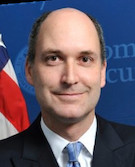
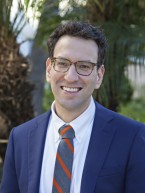






 Professor Nina Kohn
 Long-Term Care Reform