Professor of Law Cora True-Frost G’01, L,01, Laura J. and L. Douglas Meredith Professor of Teaching Excellence 2024-2027, recently provided disability inclusion training to the National Agency for Social Protection of Uzbekistan.
True-Frost discussed disability inclusion in social services, supported decision-making, equality, stereotypes, and discrimination of persons with disabilities. This is part of the United Nations Convention on the Rights of Persons with Disabilities, which focuses on person-centered planning.
The National Agency for Social Protection of Uzbekistan is the main government organization in social services and social assistance delivery in the country. The training was funded by the United Nations Development Programme.
Professor Katherine Macfarlane’s essay Self-Accommodation has been published in the University of California Health Humanities Press collection “Legal Determinants of Health: From Incarceration to Accessibility,” edited by Brian Dolan and Juliet McMullin. The online, open-access version of the book is available here.
The “Legal Determinants of Health: From Incarceration to Accessibility” brings together six cutting-edge essays that expose how legal systems—through incarceration, detention, disability law, tort doctrine, and human subjects research—profoundly shape health outcomes and perpetuate structural inequality.
Professor Macfarlane serves as Director of the College of Law’s Disability Law & Policy Program and is a leading expert in reasonable accommodations.
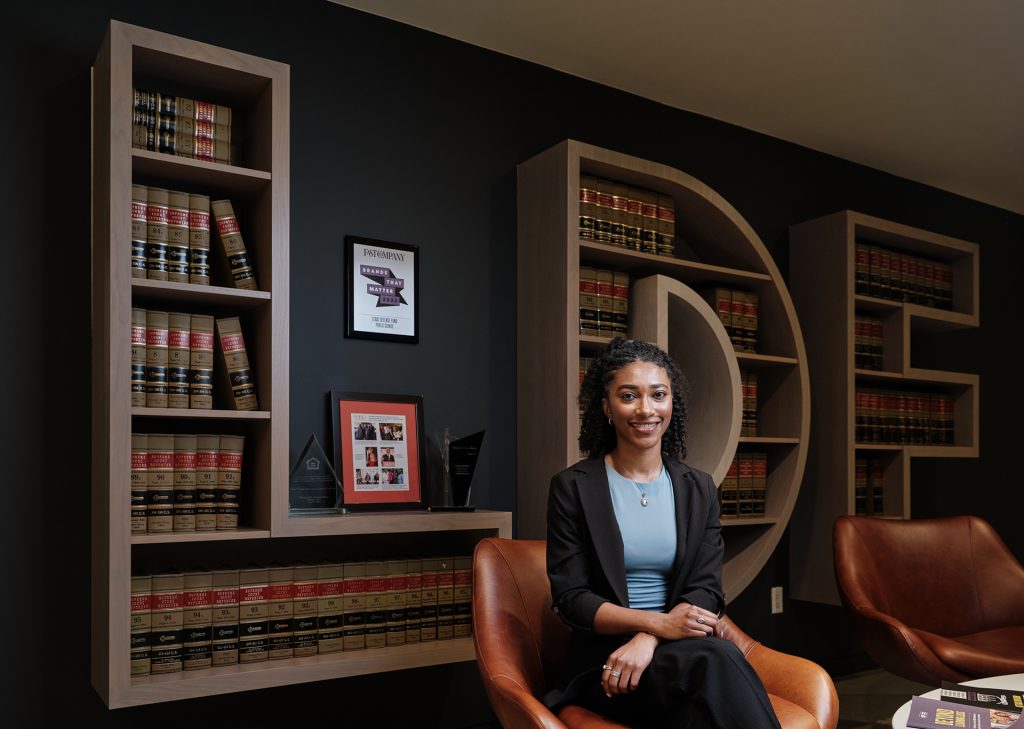
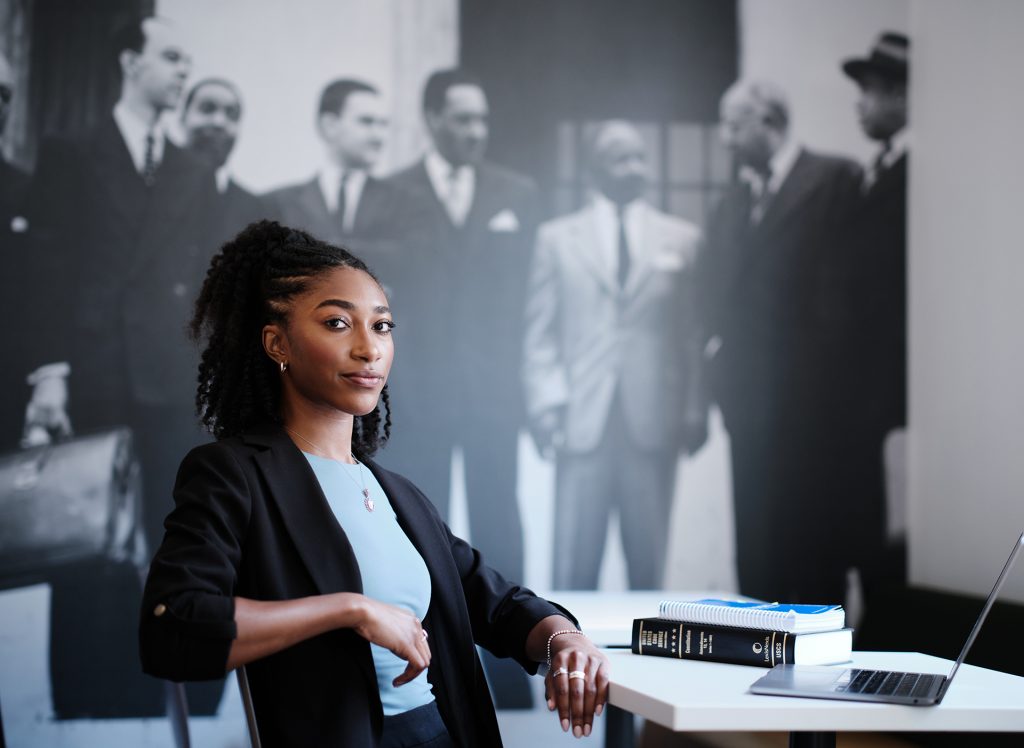
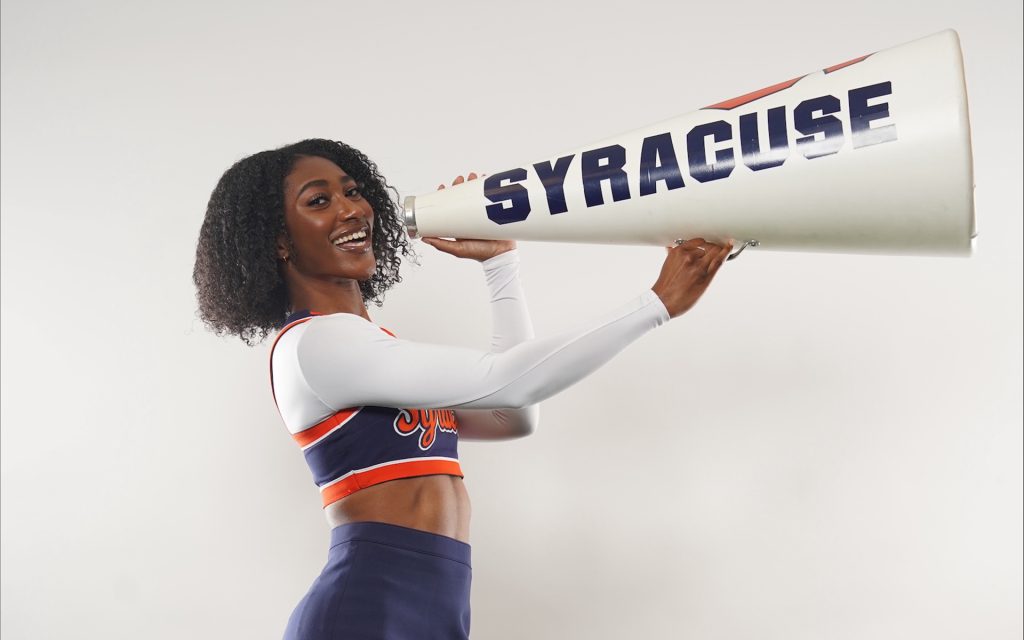
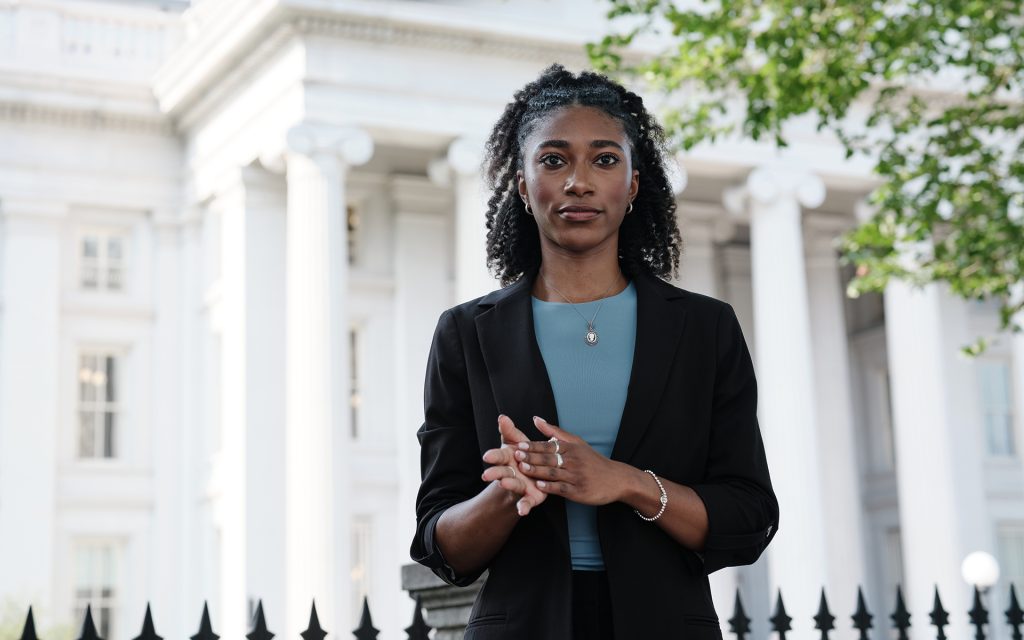
Whether she’s cheering for the Orange in the JMA Wireless Dome or spending her summer interning at the NAACP Legal Defense Fund (LDF) in the nation’s capital, Lela Lanier L’26 is making the most of the resources and opportunities available to her through the Syracuse University College of Law.
When Lanier decided to attend law school, she knew she wanted to go somewhere she could pursue her interests in advocating for those with disabilities, take on topics related to civil rights and also continue her passion for cheerleading. While that might sound like a tall order, she found her place at Syracuse Law.
A rising 3L, Lanier worked at the LDF this summer in Washington, D.C., as a litigation intern. This gave her a chance to focus on impact litigation around issues of civil rights that ranged from racial injustice, economic injustice, voting participation, criminal justice and desegregation.
Two specific projects assigned to her during the LDF internship focused on researching the reproductive freedom and the rights of Black women and also desegregation in education examining disciplinary action that disproportionately targets Black students.
“The work was so fulfilling, and I was proud to be a part of it. I thrived off of the passion of the attorneys at the LDF, most of whom were people of color working for the betterment of our community. I could see their passion and goals of helping people, and it was so refreshing,” she says. “There are a lot of civil liberties in question right now, but I am proud to have contributed and was fortunate to have so many opportunities tailored to the kind of work I want to do in the future. It was just an incredible experience for me overall.”
As she prepares to return to campus at the end of the summer break, Lanier will gear up not only for her final year of law school but also her last year as a member of the Syracuse University cheer team. While few law students take part in Syracuse athletics, Lanier has cheered throughout her time at the College of Law and will complete her last year of eligibility during the 2025-26 academic year. She has been involved in competitive cheerleading since high school, participating at Towson University, where she majored in deaf studies, volunteered with Deaf and Deaf Blind communities and developed her passion for disability rights.
“When I started law school, my plan was to take advantage of every opportunity I was given, and I think I’ve done a good job of that,” she says. “I’ve stepped out of my comfort zone and struck a good balance with my coursework and various co-curricular activities, while showing others it’s possible to take advantage of all that Syracuse Law has to offer and still pursue a law degree.”
In addition to cheerleading, those co-curricular opportunities include serving as the incoming vice president for the Black Law Students Association; a student outreach coordinator for the Disabled Law Student Association; a member of the Travis H.D. Lewin Advocacy Honor Society; and the incoming editor-in-chief of the Journal of Global Rights and Organizations, for which she is working on a paper about accessibility to voting rights in Nigeria. Last summer, she also completed an internship with the Disability Rights Education and Defense Fund in San Francisco, where she saw first-hand the impact of litigation through some groundbreaking cases.
These experiences, along with her classes at the College of Law, have expanded her world view on the scope of disability law. “I think my professors have been so instrumental in how I’m learning law and in explaining the fantastic history of constitutional law,” Lanier says. “It’s important that people understand that we, as Americans, have a lot of protections that have been put into place, but right now many are at risk of being taken away.”
In addition, Lanier is eager to explore her options when it comes to her legal career.
“Right now, I’m open to all possibilities. I want to go into some kind of disability law and/or civil rights law for a nonprofit— but then maybe it will be civil litigation. I’m just looking forward to soaking in everything I can during my last year here, and I’m so appreciative for all the opportunities Syracuse has afforded me,” she says. “When we receive our degrees at graduation next May, you can be sure I’ll be the one cheering for each and every classmate as they cross that finish line alongside me.”
The article examines how the Americans with Disabilities Act (ADA) has evolved to perpetuate the medical model of disability, rather than the social model of disability, regarding documentation of a disability to receive accommodations. The article features a personal experience Macfarlane encountered when requesting accommodation for a disability.
Macfarlane writes, “Documentation of disability can be so expensive that it is impossible for people with disabilities to obtain it. However, documentation requirements also impose costs on the employers — and colleges and universities — that create them. Someone must collect and review the documentation. Follow-up requests for additional documentation, which are common, are also time-consuming. The bureaucracy that has arisen around the documentation requirement is incredibly expensive. And for what? Is it truly necessary to have an employee on staff whose sole job is reviewing forms and records submitted by a person asking for an additional restroom break? What do we accomplish with bloated systems like these?
Not much, I argue. It’s time for the extra-statutory documentation requirements to be re-examined, if not abandoned outright. This sort of change can happen immediately. No law requires documentation.”
Macfarlane will participate in the ABA webinar “Disability Rights: A Conversation with Human Rights Magazine Authors.” The free webinar is scheduled for Friday, July 25, from 3:00 – 4:30 PM ET. Register at: https://www.americanbar.org/events-cle/mtg/web/452129295/?login
The article appears in the July 2025 issue on Disability Rights: The Work Continues.
A 3L at Syracuse University College of Law, Kaitlin Sommer L’26 is always planning ahead. Throughout her life, she has continuously asked herself, “Is there a better or more efficient way to do this?”, “Am I advocating for what I need?”, “How can I figure this out by myself?” And, while this way of operating is a great skillset for any lawyer, Sommer has developed this method out of necessity and independence, as she navigates the world as a wheelchair user, as well as a child of Deaf adults (CODA).
Sommer attended Rochester Institute of Technology (RIT) as a political science major for her undergraduate degree as part of a 3+3 program with Syracuse Law, which allows students to transfer from RIT to the Law School after three years to finish their bachelor’s degree and at the same time start studying law.
As she prepares for her last year at Syracuse Law, Sommer has taken full advantage of many of the opportunities that come from being a law student—attending the Ms. JD Fall 2024 Leadership Academy Intensive hosted by the Harvard Women’s Law Association at Harvard Law School, and presenting at her alma mater’s third annual Together RIT: A Day of Dialogue centered on the theme of Deaf culture, disability and neurodiversity in her first ever public speaking appearance.
In January, Sommer added another responsibility to her already busy schedule: co-president of the Disability Law Society (DLS) at Syracuse Law, a position she shares with Emely Recinos L’26. The organization serves as a community for students with disabilities and their allies at Syracuse Law, while also raising awareness and providing related information across the greater University.
“This is a new venture that I’m really excited about. We are a small group of students at Syracuse Law, and it’s important that we have our voices heard,” she says, noting that only about 1.4% of lawyers in the U.S. self-identify as having a disability according to the American Bar Association. “Emely, who also has a disability, and I have a new take, which revolves around being more vocal about disabled students’ experiences and how the University can best support us. I want the Disability Law Society to see where we can set permanent roots and have a noticeable space to make our voices heard. And, of course, having this kind of community at the Law School has helped me to know that I’m not alone.”
When Sommer started at Syracuse Law, it seemed to make sense that she go into disability law, but some great advice from Professor of Law Katherine Macfarlane, a leading expert on civil rights litigation, disability law, and civil procedure, gave her the freedom to consider other areas, as well.
“Professor Macfarlane said that just because I’m a person with a disability doesn’t mean I have to go into disability law,” Sommer explains. “She made me see that being a disabled person in any legal space is also representative, and my personal experience will make me a better professional no matter which field of law I choose. She has been such a good mentor and support system for me and has encouraged me to advocate for what I want and need.”
Now, Sommer is very interested in pursuing national security law, while possibly finding a way to intersect that with disability law, too. She has since taken courses through Syracuse Law’s National Security Program and is working on her Certificate of Advanced Study in National Security and Counterterrorism.
Her hope is to live and work in Washington, D.C., in the future. As an undergraduate, she interned for Congressman Joe Morelle (D-NY) in the nation’s capital. Sommer recently completed an intern at the POPVOX Foundation, a nonpartisan organization that advocates for improvements in Congress. And, this summer, she is interning with The Spinal Cord Injury Law Firm, PLLC, in Washington, D.C. Despite these impressive opportunities, she is eager to learn more through her coursework and seek out other experiences to prepare to graduate from Syracuse Law in 2026.
“Having a disability does make things harder, but, at the end of the day, I’m so grateful. My own life experiences, along with lessons from the Law School, like critical thinking, have really helped me see how important it is to assess facts to see if what seems to be true really is true. This has made me a more open-minded person and will make me a better lawyer, too,” she says.
“After all, I never want people to make assumptions about me just because I use a wheelchair. I hope to be a positive example of a compassionate and knowledgeable disabled lawyer who can better connect with my work through my life experiences, and Syracuse Law is helping me get there.”
The DANCING Project investigates the extent to which the protection of the right to participate in culture of people with disabilities and the promotion of cultural diversity intersect and complement each other in the European Union (EU) legal order.
True-Frost will speak on the June 19 panel “DANCING Contribution to Advance the Human Rights Model of Disability” at Maynooth University.
Macfarlane states that “Self-accommodation should be viewed as a rational response to inaccessible systems, not as the result of an information deficit that can be easily cured. Once self-accommodation is better understood, reducing reliance on it starts with improving formal accommodation processes.”
The case revolves around a disability discrimination lawsuit by a fired cocktail waitress who’d asked to wear comfortable black shoes to work instead of the required high heels.
One takeaway was to keep essential job functions gender-neutral when possible. Macfarlane said it depends on the job, and how the employer defines what it considers an essential function.
“With a cheerleading uniform, you could say that you want to have everyone in the same thing, you want to be able to maximize what is most attractive,” she said, in an example of an all-woman professional cheer squad. “But we’re far afield from that … this is a job where people are supposed to be able to deliver drinks quickly.”
In fact, Macfarlane continued, she might argue that high heels could be a liability in a work environment that depends on speed and carrying heavy trays of food or drink.
The idea that the black high heels are an essential function of the work of cocktail servers at this company “should have been interrogated,” she said.
Another takeaway was that granting an accommodation may be the easiest solution, even as the ADA doesn’t actually require workers to produce a doctor’s note at all — let alone produce a note containing specific prescriptive language for a certain brand of shoes — in order for them to wear what works best for them.
“The interactive process is supposed to be flexible, and a conversation. If you can defer to the employee’s preference, you should,” she said. “There’s something really irrational and punitive about the way this came down, because the easy solution is, ‘Of course, you can wear your Skechers. Thank you for letting me know.’ Move on.”
She said it’s a bad human resources decision that led to lawyers on both sides “because someone wants to wear black Skechers.”
The College of Law recently held a Disability Awareness Panel, a part of Syracuse’s Disability Cultural Center’s Disability Pride Month.
Rachel Dubin and Professor Cora True-Frost L’01, two of the featured panelists, shared their personal experiences and legal insights in navigating education for people with disabilities.
The two highlighted the challenges people face in education, including finding accommodations, and the need for legal intervention in preventing non-inclusive policy.
“Law really matters, and so the person who is protected needs to understand what their possible accommodations can be legally, and finding that answer can be very difficult for the person who has disabilities and is entitled to these protections,” said True-Fost.
Mercy Renci Xie LL.M.’20, who is currently pursuing an S.J.D. at the College of Law, recently had papers selected to be presented at Stanford’s Law & Humanities Workshop and the 2025 Law & Society Annual Meeting.
She will present her paper “Guanxi Paradox in Chinese Relational Legal Consciousness” at the Law & Humanities Workshop at Stanford University on June 9-10.
Her paper “Navigating Power Dynamics: Contingent Second-Order Legal Consciousness of Chinese Disabled People,” was selected to be presented at the 2025 Law & Society Annual Meeting in Chicago May 22-25.