In the article, Macfarlane raised concerns that Troup Hemenway, the DHS’ Office for Civil Rights and Civil Liberties acting head, “doesn’t appear to have typically relevant civil rights expertise.”
In the article, Macfarlane raised concerns that Troup Hemenway, the DHS’ Office for Civil Rights and Civil Liberties acting head, “doesn’t appear to have typically relevant civil rights expertise.”
Professor Katherine Macfarlane, Director of the Syracuse University College of Law’s Disability Law and Policy Program, was elected to Chair the Association of American Law Schools (AALS) Section on Women in Legal Education (WILE), the largest AALS section.
She was previously the section’s Chair-elect and Treasurer. Macfarlane has also served as chair of the AALS Section on Disability Law and co-founded the first AALS affinity group for disabled law professors and allies. She frequently presents and writes about students, lawyers, and professors with disabilities, and the challenges they face in obtaining reasonable accommodations.
“It is an honor to lead this important and influential section,” said Macfarlane. “I am excited for this opportunity to give back by providing leadership and mentorship to all women in legal education.”
According to the AALS, “The Section on Women in Legal Education provides information to its members respecting the integration of women and women’s concerns into the legal profession and the law, promotes the communication of ideas, interests and activities among members of the Section, makes recommendations on matters concerning the administration of law schools and on the status of women in legal education and makes recommendations on matters of interest in the teaching and improvement of the law school curriculum.”
At the recent WILE Conference held at Boston University School of Law, Macfarlane participated in the Gender and Status in the Legal Academy and Profession panel.
Macfarlane teaches Civil Rights Litigation, Constitutional Law, and Disability Law and is a Senior Fellow at the Burton Blatt Institute. He scholarship has appeared in or will appear in the Georgetown Law Journal, Ohio State Law Journal, Washington Law Review, North Carolina Law Review, Fordham Law Review, Alabama Law Review, Yale Law Journal Forum, Columbia Law Review Forum, American University Law Review, William and Mary Bill of Rights Journal, and the Stanford Journal of Civil Rights and Civil Liberties, among others.
Please join the Disability Law and Policy Program (DLPP) on March 17, 2026, from 6:00 pm – 7:30 pm, for a webinar featuring Mary J. Goodwin-Oquendo L’09 focused on “Accommodations in Higher Ed & Professional Licensing.” Her remarks will address her experience as a civil rights lawyer who represents people with disabilities. The webinar will be co-moderated by DLPP Director Professor Katherine Macfarlane, and Disabled Law Students Association leaders Kaitlin Sommer and Emely Recinos.
Goodwin-Oquendo advocates for individuals with cognitive, physical, and psychiatric disabilities who have experienced discrimination in school and/or require accommodations on high stakes admissions and licensing examinations. Prior to starting her own practice, she worked closely with activist, attorney, and NYS Assembly Member Jo Anne Simon of Jo Anne Simon P.C. During her time at Jo Anne Simon P.C., Ms. Goodwin-Oquendo collaborated with various affinity groups to provide vital feedback to the United States Department of Justice and Equal Employment Opportunity Commission, which was incorporated into the agencies’ final rules enforcing the Americans with Disabilities Act Amendments Act of 2008.
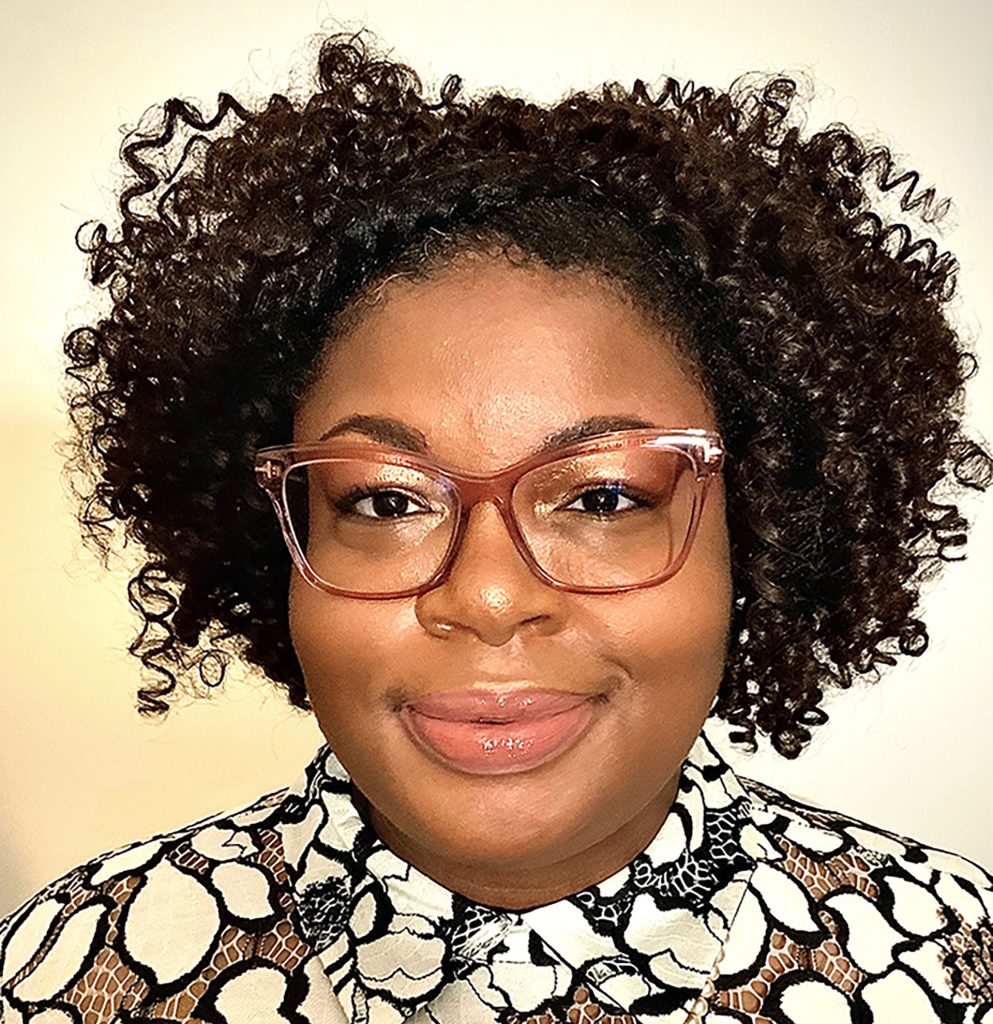
Mary Goodwin-Oquendo L’09
Goodwin-Oquendo is a member of the New York State Bar Association, and an appointed member of the association’s Committee on Disability Rights. She has developed continuing legal education coursework and currently serves as one of the editors of the New York State Bar Association’s disability treatise. She is also a member of the Disability Rights Bar Association, the National Employment Lawyers Association/New York, the New York City Bar Association, the American Bar Association, and previously served on the executive board of the New York Urban League Young Professionals and the National Urban League Young Professionals Programs Committee. She also serves as a Fordham University School of Law adjunct professor. She earned her BA in History and Political Science from St. Joseph’s College, where she was class valedictorian, and her J.D. from Syracuse University College of Law. Goodwin-Oquendo was recently featured in a Syracuse University Today profile, available here.
If you require accommodations for the webinar, please contact Anna Dallam, atdallam@syr.edu.
Professor Robin Paul Malloy, the E.I. White Chair and Distinguished Professor of Law and Senior Fellow at the Burton Blatt Institute, delivered the opening and closing Keynote remarks at the Real Estate Transactions Symposium at Stetson University College of Law, on Feb. 21, 2026.
Malloy discussed real estate transactions and disability law in the morning and then close the day with a “fire side” conversation focused on the market context for real estate transactions.
Malloy’s opening session addressed the critical role that real estate development plays in creating communities that are safe, and easy to navigate by people with disabilities and by those seeking to age in place. The address emphasized the importance of designing and developing the built environment in ways that empower diverse populations to participate fully in community life.
The address also explored how we must adjust our approach to the built environment in response to the civil rights of people with disabilities. “This in turn requires that we consider local real estate law in the context of federal civil rights law,” said Molloy. He spoke on the tension between the desire for greater accessibility and the cost of providing the inclusive designs, assistive technologies, and accessible infrastructure needed for enhancing access.
A central focus of the lecture was the key economic considerations in disability law as they relate to real estate development and access to our built environment. “The overall goal is to engage real estate lawyers on the difficult issues involved in improving accessibility to our built environment,” said Malloy.
The symposium brought together legal scholars, practitioners, and students to examine contemporary issues in real estate law. Malloy’s keynote sets the stage for a day of discussion on how law and policy can advance inclusive, accessible communities.
True-Frost writes, “The ‘back of the bus’ battle has been replaced by inaccessible stations, unreliable service and funding cuts that disproportionately harm the same marginalized communities Rosa Parks fought for.”
Anyone taking on the rigors of law school expects it to be demanding, but Emely Recinos L’26 has the added challenge of reading case law, breaking down briefs, and participating in late night study sessions—all without the ability to see. Now a 3L preparing to graduate, Recinos has proven that what some might consider a barrier has instead helped her find her own voice and ignite a passion for advocating for marginalized people facing the legal system.
Diagnosed with a degenerative eye condition at age 7 that led to blindness, Recinos remembers doctors and school administrators telling her family that getting an education would be difficult. School made her feel isolated and depressed, and other children didn’t understand her disability. “It was a dark time without a lot of positivity around it,” she says.
Thankfully, a devoted teacher who worked with the visually impaired made it her mission to be sure Recinos left sixth grade with the ability to read and write braille—an essential foundation for her future success. She also convinced Recinos to use her white cane, increasing the young girl’s independence and providing an outward sign to others that she was blind. It was a turning point, allowing her to grasp the many possibilities ahead of her. Recinos didn’t know it then, but one of those things was studying to become a lawyer.
Understanding the Legal Needs of Other Marginalized Groups
Recinos excelled in college, earning an undergraduate degree in international relations from New York University. Upon graduation, she worked as a case support associate for the Young Center for Immigrant Children’s Rights in New York City. It was there that she came to understand first-hand how other marginalized groups—specifically unaccompanied immigrant children—needed reputable legal representation. This struck a chord and inspired her to pursue a law degree as a way to create meaningful change.
Recinos understood that navigating Syracuse Law would require thoughtful preparation. Before beginning law school, she worked with an orientation specialist to familiarize herself with Dineen Hall and continues to map out the routes to her classes ahead of each semester.
The staff at Syracuse University’s Center of Disability Resources has also helped her access course material in an accessible format. Recinos uses screen reader software on her laptop that turns digital content into synthesized speech, as well as a device with a Perkins-style braille keyboard that allows her to take notes and can be connected to her laptop.
Getting Involved and Exploring Orange Flex
Recinos was eager to get involved in activities at the law school. As a 2L, she joined the Disabled Law Students Association, a student organization that provides support and information for those with disabilities, that is open to all Syracuse Law students. The association helps connect members with volunteer opportunities, brings in speakers on pertinent topics, and promotes individuality throughout the entire Syracuse University campus. This year, Recinos is serving as co-president of the organization.
Starting last summer, Recinos was placed at the New Jersey Consortium for Immigrant Children, a nonprofit helping minors with immigration matters, including those with no legal guardians in the U.S. According to Recinos, the current political climate has resulted in continuous changes in fees and rules for obtaining special immigrant juvenile status, so the organization works to ensure minors have effective legal representation.
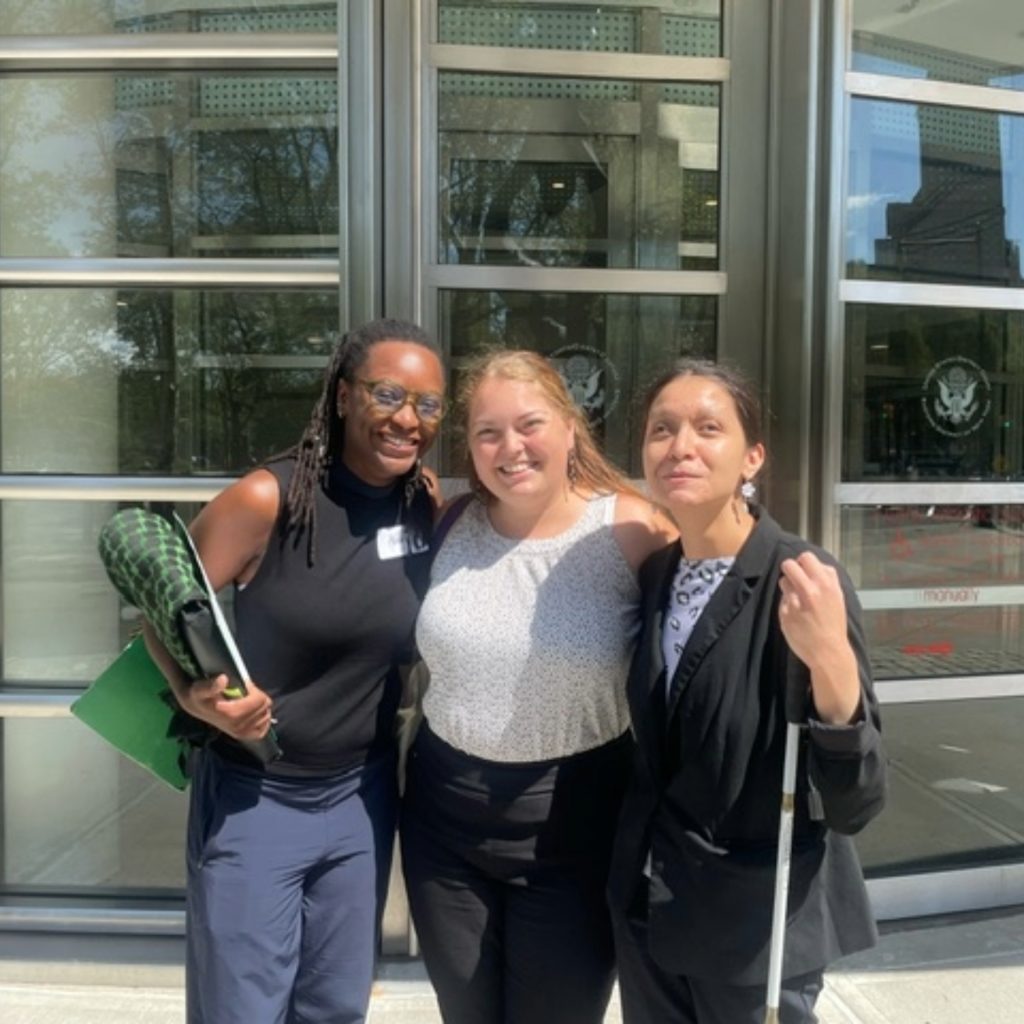
Emely Recinos ‘26, right, visited the U.S. District Court for the Eastern District of New York during her 2025 fall internship with the New Jersey Consortium for Immigrant Children. Pictured with her are, left to right, Abena Hutchful, policy and litigation attorney at the Young Center for Immigrant Children’s Rights, and internship supervisor Katarina Martucci.
Over the course of her internship, Recinos assumed expanded responsibilities, including serving as a lead on a case under attorney supervision and drafting certification briefs. She liked the work so much that she requested to stay on for the fall 2025 semester.
“I enjoy immigration law and working with children who feel like their voices aren’t being heard,” she adds, noting that her fluency in Spanish was helpful in her role. “When I was a child, I often felt people were speaking for me or over me, and I want to do what I can to make sure these children have a voice.”
Realizing Her Education Came With Options
Through her experiences at Syracuse Law, Recinos realized that having a disability didn’t mean her only option was to practice disability law. She has discovered that there are many ways her personal and professional experiences intersect with education, employment, civil rights, and international human rights.
As she prepares to graduate, Recinos wants to continue to help those with immigration issues or disabilities access to quality legal representation. She is currently exploring post-graduate opportunities with various civil rights organizations. Recinos also recently wrote “The Overlooked Tourist: Enhancing the Market for Disabled Travel,” soon to be published by the College of Law’s Journal of International Law and Commerce.
Eventually, Recinos sees herself working on policy to ensure that those with disabilities or anyone who feels unheard due to their circumstances will be protected under the law.
“I feel like I’ve been able to accomplish so many things here at Syracuse Law, particularly how to use my own voice to advocate for myself and others,” she says. “I’ve found wonderful mentors, a community of peers, and professors who’ve taken that extra step for me. I know I have a lot of options moving forward, and I’ve been empowered by that.”
This December I was contacted by a woman, let’s call her Jackie (not her real name). Jackie was in a dispute with a neighbor. The dispute involved Jackie’s placement of a deck and a wheelchair ramp along the side of her house in between her house and that of her neighbor. The ramp allowed Jackie to have easy and safe access to an entrance to her home, and a deck enabled her to enjoy her side yard. The issue with the neighbor arose because the width of the ramping and deck came within two feet of the neighbor’s property line, and the neighbor’s house was built very close to that line. The neighbor tried to block the installation of the deck and ramp.
Typically, these disputes involve compliance with public zoning regulations, but in this case the point of contention was a private restriction in the deed to Jackie’s property. At one point, Jackie’s land and that of her neighbor had been one parcel. When a portion of that parcel was sold to Jackie, a deed restriction in Jackie’s deed was included that prohibited Jackie from building any structure within 15 feet of the property line that separates her from the now complaining neighbor.
This posed an interesting problem. Jackie went to the zoning board to obtain a permit and applied for a variance because the zoning code also had certain property line setback requirements that would be violated by the size and width of the deck and ramping. Jackie received an exception to the zoning code and a permit to build based on her disability and the granting of a reasonable accommodation under Title II of the ADA. Based on the permit, Jackie added her deck and ramp. However, in her case, the neighbor objected, properly pointing out that while a public zoning board can adjust public land regulations, it has no authority to adjust a private restriction contained in a deed. The deed restriction can be enforced by the neighbor unless the neighbor voluntarily consents to waive the restriction. The neighbor sued for removal of the deck and ramp.
Even though she has a disability, Jackie does not have a remedy or a defense against her neighbor under the ADA because the ADA Title II does not apply directly to this private deed restriction. ADA Title II applies to programs, services, and activities of state and local government. This means it applies to everything that a planning and zoning office might do in regulating land uses. It does not apply to purely private land restrictions. However, Jackie does have a remedy under the Fair Housing Act (FHA). Under the FHA, Jackie can sue her neighbor for violating her right to a reasonable accommodation with respect to the private deed restriction. Jackie had formally requested a reasonable accommodation from her neighbor to permit the building of the ramp and deck. The neighbor said no. The neighbor must consider the request in terms of is it reasonable (does it impose an undue financial or administrative burden), are the deck and ramp necessary to address the disability so that Jackie can enjoy her property in a way similar to others without a disability, and does granting the accommodation fundamentally alter the ability to use the property. Of course, while not determinant, the conclusion of public zoning officials in favor of issuing a permit provided some evidence of reasonableness on the matter. Nonetheless the case must be made, and a decision is reviewable in court.
Jackie referred her case to the Department of Housing and Urban Development (HUD) alleging discrimination by the neighbor for failure to grant her a reasonable accommodation. This is one path to consider when seeking to address such matters. HUD agreed to take up the matter. This way the case is handled by HUD and Jackie does not have to take the neighbor to court on her own. Failure by the neighbor to grant a reasonable accommodation is actionable discrimination under federal law.
The lesson here, is that private deed restrictions must comply with our disability laws. Just because a land regulation is created under private law, as opposed to public land use and zoning law, does not mean that disability law is inapplicable. Even when the ADA does not apply, the FHA accomplishes the same outcome in many situations.
(A version of this article appeared in the Jan. issue of The Republican Newspaper, Danville, IN – serving Hendricks County)
“Remote work is what I’m hearing about” most often, Macfarlane said. Yet some employers remain staunch in their resistance to telework as an accommodation, thinking disabled workers are getting something they don’t deserve, she said.
The disability bias cases this year show judges are taking telework more seriously and seeing physical presence isn’t required for all jobs, the professor said.
Mary J. Goodwin-Oquendo L’09 learned what true advocacy looks like long before she ever stepped into a law school classroom. Growing up, she watched her mother tirelessly fight to secure appropriate educational services for her younger brother, who has autism and learning disabilities. Seeing firsthand how complex systems can fail families, she began to ask a powerful question: Who helps students who do not have anyone able to challenge the system for them?
Today, Goodwin-Oquendo is that advocate. As the founder of The Goodwin-Oquendo Law Firm in New York City, she champions disability civil rights, particularly related to education, standardized testing, professional licensing, and employment. Getting to this point took grit, talent, and determination. She credits Syracuse University College of Law for providing the foundation, flexibility, and mentorship she needed to earn her law degree and pursue the work that drives her— advocating for others through the legal system.
Goodwin-Oquendo will speak about her experiences and the process of advocating for bar exam accommodations in the spring of 2026 at a webinar hosted by the Disability Law and Policy Program (DLPP). The presentation was purposefully planned as a virtual event, as it accommodates Goodwin-Oquendo’s disability-related needs, as well as those of attendees with disabilities, and allows both on-campus and online JDinteractive students, in addition to other guests around the country, to participate.
Walking in the Steps of Justice Ruth Bader Ginsburg
Goodwin-Oquendo’s desire to be a lawyer started early. She studied at the James Madison High School Law Institute in Brooklyn, New York—the same school the late United States Supreme Court Justice Ruth Bader Ginsburg attended. The four-year program helps students understand the legal system through law classes, moot court, and mock trials. She came to see attorneys as “helpers,” and realized the law could be her pathway to advocate for those who needed a voice.
Facing Her Challenges and Finding a Mentor
While pursuing her undergraduate degree at St. Joseph’s University in New York, Goodwin-Oquendo was diagnosed with fibromyalgia and learned first-hand how difficult it was to navigate higher education with “an invisible, poorly understood disability.”
However, she learned how to self-accommodate her disabilities, graduated as valedictorian, and set her sights on law school. She ultimately chose Syracuse Law because of its various clinics, particularly The Family Law Clinic, because she knew the challenges from clients who felt vulnerable or unheard would make her a more respectful and transparent lawyer.
Her first year wasn’t easy, as Goodwin-Oquendo navigated the demands as a 1L while managing a physical condition that fluctuated day to day. This was compounded by her lack of health insurance (prior to the Affordable Care Act), which limited her ability to receive the care she needed.
“I went from graduating first in my class in college to struggling in my first semester of law school because I didn’t have the physical stamina to keep up the pace,” she explains. “Some of the strategies that had worked in high school and college just didn’t work anymore because the expectations of law school were much higher.”
Fortunately, she enrolled in a class led by Professor of Law Arlene Kanter, who took emeritus status in 2024, Kanter is an acclaimed expert in international and comparative disability law and helped Goodwin-Oquendo understand the accommodations she was entitled to. (Kanter founded the DLPP at Syracuse Law in 2005, one of the nation’s most extensive disability law programs in the U.S.) She is forever grateful to Kanter, who remains a role model, for helping her find ways to manage her disability and continue to succeed. For the past five years, Goodwin-Oquendo has been an adjunct professor at Fordham University School of Law, in part, she says, “to be for my students what Professor Kanter was for me.”
“Professor Kanter had many resources, including this ‘holy book’ of disability law firms in the New York area, which were few and far between,” explains Goodwin-Oquendo. “She encouraged me during my 2L year to reach out to Jo Anne Simon, a disability civil rights attorney in Brooklyn, who later became a state assembly member, to learn more about working in this part of the legal field.”
They connected, and soon Simon offered Goodwin-Oquendo a summer job at the firm. In 2008, the Americans with Disabilities Amendments Act was passed, reaffirming Congress’s commitment to disability rights. That law shaped a lot of the work Goodwin-Oquendo did at the firm.
“It was not light work,” she says, “but the job training I received was nothing short of phenomenal—so much so that I joined her firm after law school and stayed there for the next 14 years. Jo Anne remains a dear friend and mentor, and she has done so much to advance the rights of individuals with disabilities.”
Establishing Her Own Firm for Educational Advocacy
In 2024, she launched the Goodwin-Oquendo Law Firm in New York City, dedicated to representing individuals with cognitive, physical, and psychiatric disabilities who face discrimination or need accommodations in education for admissions tests, professional licensing exams, state bar exams, and medical boards.
“People come to me because they clearly need certain accommodations to fully access and complete an exam, for example, and they are being denied this for the highest stakes exam of their lives,” she explains, noting there is still a level of ignorance around the use of technology on examinations.
“Others come to me because they’ve received a diagnosis later in life or have been living with a disability that wasn’t as challenging for them until they reached college, law school, or medical school, and now they need someone to help them understand their options and advocate for their rights.”
Goodwin-Oquendo operates her firm virtually, which not only accommodates her disabilities but also allows her to assist clients around the country. “Business is booming, which sounds great, but it is actually a little sad because that means there is still a lot of discrimination for those with disabilities,” she says.
She recently hired Syracuse Law alumna Ptahra Jeppe L’19 as counsel to the firm. Jeppe started as a client and mentee but was so impressive that Goodwin-Oquendo asked her to join in 2025. Jeppe has dyslexia and practiced special education law for several years, which has added another area of mastery to the practice.
Goodwin-Oquendo’s advocacy continues at Syracuse University, where she now serves on the Center on Disability and Inclusion’s Advisory Committee. She’s also involved in the broader legal community as a member of the Disability Rights Bar Association and the New York State Bar Association, serving on its Committee on Disability Rights, where she enjoys creating Continuing Legal Education (CLE) courses for attorneys and serves as one of the editors of its disability treatise.
She finds value in serving others. “I want to keep pushing myself, and what keeps me going are the former clients who reach out and say, for example, they passed the bar, or they are now a licensed physician or educator,” Goodwin-Oquendo explains.
“Their unique experiences will enrich these fields. I am grateful for the education, advocacy, and overall encouragement from Syracuse Law that helped me get to where I am today. And it will be a full circle moment to share my experiences with students at the College of Law this spring.”