Disability Law

Professor Kat MacFarlane Discusses Disability Discrimination in “Trial puts Howard Hughes Medical Institute—and disabled scientists—in the spotlight”

Professor Kat Macfarlane, director of the College of Law’s Disability Law and Policy Program, discusses Vivien Cheung’s lawsuit against Howard Hughes Medical Institute for disability discrimination. In the Science article “Trial puts Howard Hughes Medical Institute—and disabled scientists—in the spotlight”, she observes that a jury trial in this situation is rare, instead of being settled or tossed from court. The lawsuit touches on the science and research community and discrimination against those with disabilities.

“I’m shocked in a very refreshing way that this is going in front of a jury,” Macfarlane says. “The applicable legal standards are very challenging for plaintiffs with antidiscrimination claims to meet.”

Professor Kat Macfarlane’s Forthcoming Article “Accommodations Discrimination” Quoted in Psychology Today

In the recent Psychology Today web post “Accommodations and Accessibility: What’s the Difference?”, Professor Kat Macfarlane’s forthcoming American University Law Review article on accommodations is quoted.

Macfarlane’s article Accommodations Discrimination is referenced in the Psychology Today article’s discussion of accommodations that a neurodivergent person may need in a work environment, quoting “Reasonable accommodations should be tools of equality yet can feel more like punishment than remedy.”

Professor Kat Macfarlane Named Director of the Syracuse University College of Law Disability Law and Policy Program with Founder Professor Arlene Kanter Retiring after the 2023-24 Academic Year

Noted disability rights scholar Professor Kat Macfarlane is the new Director of the Syracuse University College of Law’s groundbreaking Disability Law and Policy Program (DLPP). Macfarlane comes to the College from the U.S. Department of Education’s Office for Civil Rights where she was Special Counsel. DLPP founder and director Professor Arlene Kanter is planning to retire next year, after teaching for more than 35 years at the College of Law.

Created by Kanter in 2005, DLPP is the most extensive disability-related law school program in the United States. Students who participate in this program often go on to jobs in the areas of disability, education, special education, children’s rights, civil rights, labor, employment, trusts and estates, and international human rights law. It also houses the nation’s first joint J.D./M.S. degree program in Law and Disability Studies as well as a Curricular Program in Disability Law and Policy. DLPP students also can work in the Disability Law Clinic and at disability-related externships, gaining valuable hands-on experience with real clients.

“Professor Kanter is a globally recognized expert in disability law and a steadfast advocate for people with disabilities. While her retirement is well-deserved, she will be missed by our faculty, staff, students, and alumni,” says College of Law Dean Craig M. Boise. “And we’re all anxious to see the direction Professor Macfarlane will lead the DLPP as she builds on the College’s position as the leader in the disability space in legal education.”

Prior to joining the College of Law faculty, Professor Macfarlane served as an associate professor at Southern University Law Center and the University of Idaho College of Law and as a teaching fellow at the Louisiana State University Hebert Law Center. Prior to joining academia, Professor Macfarlane was an Assistant Corporation Counsel in the New York City Law Department serving as lead counsel in federal civil rights actions. As an associate in Quinn Emanuel Urquhart & Sullivan’s Los Angeles and New York offices, she represented plaintiffs in securities litigation. She clerked for the District of Arizona and the U.S. Court of Appeals for the Ninth Circuit.

One of the accomplishments of the DLPP has been to recruit lawyers from around the world who wish to specialize in disability law by enrolling in the College of Law’s LL.M. and S.J.D. Programs, with Kanter serving as their advisor. Since its founding, hundreds of students have completed the joint degree, certificate program, Clinic, or disability concentration in the LL.M. program.  The DLPP is also the recipient of an international award for innovation in higher education.

“I am happy to know that Professor Macfarlane will continue the important work that the DLPP does in preparing future generations of disability lawyers, policymakers, and scholars,” says Kanter. “As a renowned scholar, Professor Macfarlane brings a deep understanding of disability law and the importance of using the law to  advocate for a more inclusive society.”

Graduates of DLPP now work for federal and state government agencies, private law firms, domestic and international non-governmental organizations, public interest law offices, legal services offices, school districts, policy organizations, and think tanks. Other graduates have started their own law practices or pursued LL.M. or Ph.D. degrees. 

“I am honored to become the new director of the Disability Law and Policy Program. Professor Kanter is a pioneer in the education of lawyers in the field of disability law and I plan to honor the impact she has made on disability law by ensuring the program continues to meet the needs of advocates worldwide,” says Macfarlane.

Both Professors Kanter and Macfarlane are recipients of the American Association of Law Schools’ Disability Law Section’s Distinguished Service Award.

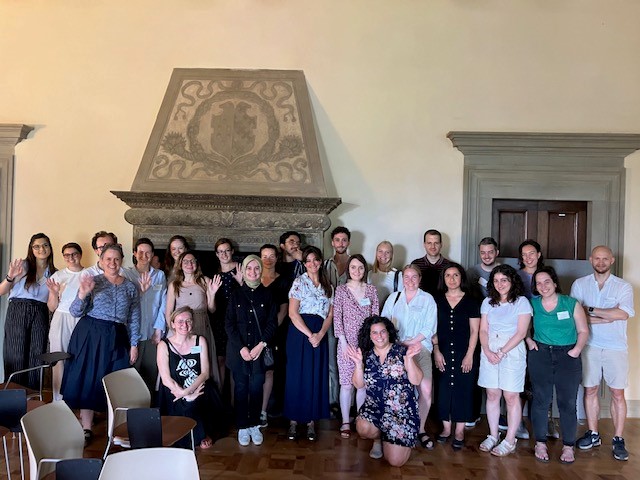
Professor Cora True-Frost G’01, L’01 Spearheads and Leads Important International Disability Law and Theory Discussions with European Scholars and Legal Practitioners

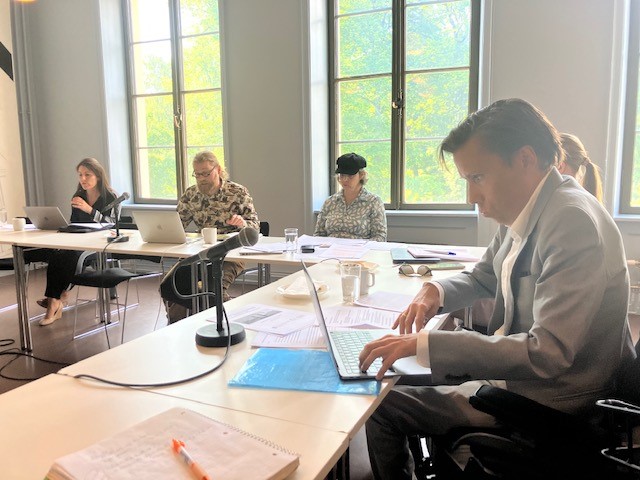
Bond, Schoeneck & King Distinguished Professor Cora True-Frost G’01, L’01, along with Professor Jan Grue at the University of Oslo, conceptualized and received a grant to convene leading European disability scholars to present and discuss work on the timely topic: Unburdening Access and Inclusion: European Tribunals, International Disability Law: from Disability Studies to Studying Ableism.”  Funding for the workshop was provided by PluriCourts – Centre for the Study of the Legitimate Role of the Judiciary in the Global Order at the University of Oslo. This workshop was an outcome of Professor True-Frost’s 2022 Fulbright Scholarship at PluriCourts.

Presenters discussed themes including the shift from the medical to social model of disability, the need to shift from disability studies to studying ableism; positive and negative rights in international disability law; and European legal doctrine regarding accessibility, capacity, and reasonable accommodation. Professor True-Frost presented her draft work ‘Unburdening Access: Clarifying Accessibility, Reasonable Accommodation and Anti-Discrimination Rights before the ECHR.”

Professor True-Frost also taught a course on international disability law to European lawyers and judges at the European University Institute Academy of European Law as part of the Summer Human Rights Seminar at the Academy of European Law in Florence, Italy.  The course, “Equality Before the Law: The Difference Disability Makes”, encouraged students to analyze the ways in which the United Nations Convention on the Rights of Persons with Disabilities (CRPD) interacts with and sometimes conflicts with conceptions of equality in international human rights law.  The course provided a doctrinal and theoretical assessment of major issues pertinent to the substance of disability equality through two central case study inquiries: 1) who has legal capacity before the law, and 2) who is able to exercise a fundamental liberty of movement within their community, their home country, and the global community.

PluriCourts workshop.
Participants in the Summer Human Rights Seminar at the Academy of European Law

Professor Kat Macfarlane Provides Guidance on a Sensitive Question About Workplace Accommodations

In a recent New York Times Magazine The Ethicist column, a reader submitted a question: My Disabled Colleague Is Struggling at Work. Am I Responsible for Her Care?

Professor Kat Macfarlane, director of the College of Law’s Disability Law and Policy Program, provided some insight and guidance in helping to answer the question. Macfarlane notes that “that people with disabilities may hold on to a position because they need the health care benefits that come with it.” The response says “Managers would do well to consult with your colleague to figure out ways of accommodating her limitations without imposing a hardship on other employees.”

You may encounter a paywall in accessing this article.

Professor Kat Macfarlane Co-authors “A Categorical No to Categorical Accommodation Denials Related to COVID-19?” Essay

Professor Kat Macfarlane, director of the College of Law’s Disability Law and Policy Program, and Professor Irina Manta, Founding Director of the Center for Intellectual Property Law at the Maurice A. Deane School of Law at Hofstra University, have co-authored an essay on COVID-19 accommodations denials.

At the Bill of Health blog, Macfarlane and Manta write that post-2021, faculty and students with disabilities’ requests for accommodations to teach or attend classes remotely have not been met. The essay examines Oross v. Kutztown University where the plaintiff requested remote teaching and office hours accommodations due to health reasons. They were denied by the defendant and deposition testimony revealed that university staff had developed form language used to deny all remote teaching requests by Kutztown University faculty.

The Eastern District of Pennsylvania granted summary judgment in Oross’s favor as to his Rehabilitation Act claims for intentional disability discrimination and failure to accommodate.

The authors conclude that “In any case, the Oross decision represents a victory for individualized assessment, and a rejection of categorical bans on COVID-19 accommodations. Universities should heed the case’s warning and halt any pro forma denials.”

Professor Kat Macfarlane Discusses Accommodations in a City Environment

Professor Kat Macfarlane, incoming director of the Disability Law and Policy Program, was quoted in a recent New York Post article on a man who is fighting parking tickets he receives even though he has a disabled parking permit issued by New York City.

In the article “NYC man faces fines and has car auctioned off — despite having a disabled permit”, Macfarlane says, “It’s no mystery that life is difficult for people with disabilities. Fighting for the benefits the law entitles you to is exhausting. There is so much complexity that is built in.”

Professor Kat Macfarlane Speaks with The New York Times on Workplace Accommodations

Professor Kat Macfarlane, director of the College of Law’s Disability Law and Policy Program, was interviewed for The New York Times article “What a Human-Centered Approach Can Do for Workers With Disabilities.”

In the article, Macfarlane discusses her challenges getting accommodations as a faculty member of another law school. Even with the Americans with Disabilities Act, there are many obstacles to gaining needed accommodations.

“There’s a huge gap between what the law was intended to do and what the experience of employees with disabilities really are,” said Macfarlane.

Read about Macfarlane’s challenges in her Fordham Law Review paper “Disability Without Documentation.”

Professor Arlene Kanter Speaks with Bloomberg Law on How Remote Work is Impacting Disability Law

Professor Arlene Kanter, director of the Disability Law and Policy Program, spoke with Bloomberg Law for their article “Covid’s Remote Work Experience is Slowly Changing Disability Law.”

Federal judges are somewhat less likely to side with employers that deny requests for telework as a disability accommodation after the Covid-19 pandemic sparked a remote work revolution.

Employers prevailed in nearly 60% of federal court rulings over the past two years on whether they could reject employees’ disability-related remote work requests, according to a Bloomberg Law review of cases.

That’s a drop from employers’ 70% win rate in a previous Bloomberg Law analysis of cases in a two-year pre-pandemic period spanning from February 2017 to February 2019.

In the article, Kanter says “The Covid experience has taught people to question whether in-person attendance is essential.”