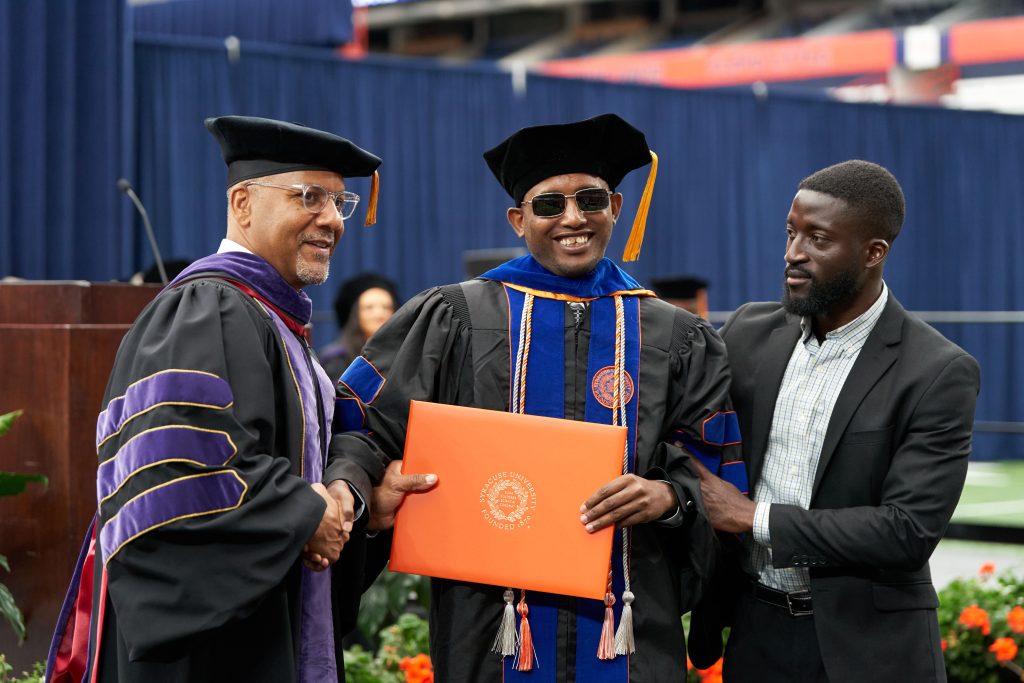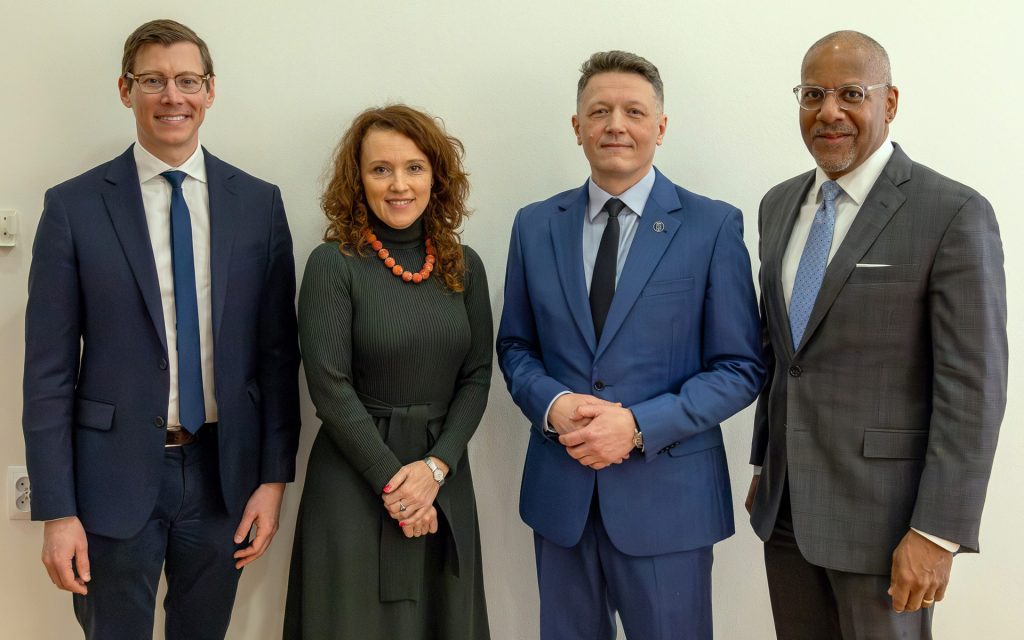
While the University of Bialystok and its Faculty of Law in Bialystok, Poland, may be more than 4,000 miles away from Syracuse Law, the exchange and collaboration of faculty, students, and knowledge on both sides have created a close relationship that has heightened learning on the legal, political, and cultural fronts, expanding a world view for so many, here and there, at a time when cross-cultural, global understanding may be more important than ever.
In 2016, Professor Izabela Kraśnicka, former vice dean for international cooperation and development at the University of Bialystok and head of the international department; and Professor Maciej Perkowski, head of the Department of Public International Law at the University’s Faculty of Law, were involved in a number of projects related to disability issues, including autism.
At the time, the University of Bialystok was proud to have its first Ph.D. student with autism, Maciej Oksztulski, who was working on his doctoral thesis, International Legal Standards of the Right to Education and Their Practical Implementation by National Scientific Institutions in Relation to Students on the Autism Spectrum, a comparative analysis that referenced Poland and the U.S. He had received a grant to complete further research, which required a comparative aspect to learn how foreign universities attracted and accommodated students with autism. To support Oksztulski’s work, Perkowski, who supervised his thesis, thought it was necessary to approach high-profile institutions like Harvard and Yale. Kraśnicka went to great lengths to convince Oksztulski that while those schools may hold prestige, it was also important to consider that other universities in the U.S. may be better suited to support his work.
“We needed a school that had extensive experience with supporting people with disabilities,” says Kraśnicka. After much research, she discovered Syracuse Law. Kraśnicka was drawn to the school’s Disability Rights Clinic, an initiative with a reputation for excellence directed by Associate Professor of Law Michael A. Schwartz, a supervising attorney and faculty member.
Kraśnicka coordinated with Schwartz and Andrew Horsfall L’10, assistant dean of International Programs, to arrange a visit for Oksztulski and a few faculty members from the University of Bialystok in 2017. Not only did this allow him to further his research, but he was able to see first-hand the ways autism was supported and recognized in the U.S. (Oksztulski successfully defended his thesis in 2022 and is now on the faculty at the Department of Public International and European Law at the University of Bialystok.)
From this initial collaboration, Kraśnicka and Horsfall launched a new partnership between their two institutions that would mutually benefit their faculty and students.
In 2019, Schwartz, who is deaf, was the first Syracuse Law faculty member to travel to the University of Bialystok to participate in the Axiological and Legal Aspects of Disability conference held at the University of Bialystok’s Faculty of Law to create a space for scientific research and the exchange of viewpoints regarding disability law. Schwartz presented Valuing Disability Rights: A Deaf Insider’s Perspective at the conference.
During his visit, he was hosted by the Student Legal Clinic at the University of Bialystok Faculty of Law, where he exchanged experiences with Polish students on how law clinics operate in Poland versus the U.S. His visit culminated by publishing an article, titled: Providing Effective Communication Access for Deaf People: An Insider’s Perspective in the University of Bialystok’s legal studies journal.
Soon after Schwartz’s visit, Kraśnicka identified funding available through the prestigious Erasmus+ grant program that broadened the partnership and exchange with additional Syracuse Law faculty members. The grant program, among other things, supports teaching, research, networking and policy debate on European Union (EU) topics. After coordinating with Hirsfall in May of 2022, the exchange was set up. Professors Cora True-Frost L’01 and James Baker were on their way to Poland.
“There is always a celebration when a U.S. professor comes to visit,” says Kraśnicka of True-Frost and Baker. “Our students are very interested in their experiences, and they want to see and learn from U.S. faculty and students, as well as hear about human rights from an American common law perspective.”
While in Bialystok, Baker and True-Frost were welcomed by Maria Cudowska, then a faculty member at the University of Bialystok Faculty of Law, who came to Syracuse Law for a sabbatical leave for the 2022-2023 academic year. Later, in July of 2023, Sylwia Leszczuk and Ewa Szpiganowicz, both graduates of the Faculty of Law and part of the University of Bialystok’s International Cooperation Office, came to Syracuse.
A Robust Exchange of Information
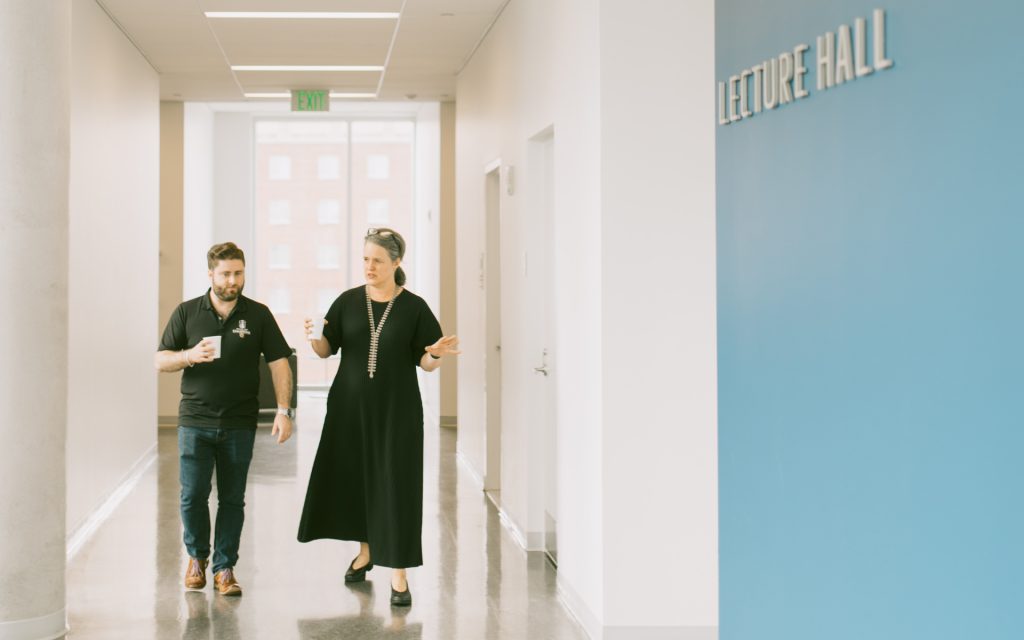
True-Frost is the Bond, Schoeneck and King Distinguished Professor of Law, director of the Journal of Global Rights and Organizational/Impunity Watch News, and a faculty advisor to the Journal of International Law and Commerce. With an interest in global and human rights, she described her visit as a “full, robust week of exchanging information.” She gave several lectures at the University of Bialystok related to her scholarship and work in international human rights law and international law, while also pursuing information on her interest in nongovernmental organizations (NGO) working in disability law and responding to Russian aggression by receiving Ukrainian refugees. NGO partners from the University of Bialystok arranged meetings with both disability advocates and recently arrived Ukrainian refugees to Poland at the time when Russia’s invasion of Ukraine had just begun.
“Experiencing and understanding world events from various perspectives is critical to my teaching and scholarship in international law,” True-Frost says. “Although I was raised in Germany as an Army brat, I had never visited, let alone worked, in Poland. The Erasmus exchange in Bialystok offered tremendous insight into the daily experience of what Russia’s invasion of Ukraine means to Eastern and Northeastern Europe.”
“As a result, the exchange deepened and broadened my own perspective of Russia’s invasion, including the calculus of my own government’s response,” she adds. “Comparing migration and disability issues in Poland with related discussions in Europe and in the United States adds texture to the basic value of dignity, the right to life and the right to not be invaded, details which I have woven into teaching disability rights law and international law. I look forward to continued collaborations with our partners in Bialystok and the region.”
Visiting Scholar Turned Fellow Embraces Opportunities at Syracuse Law
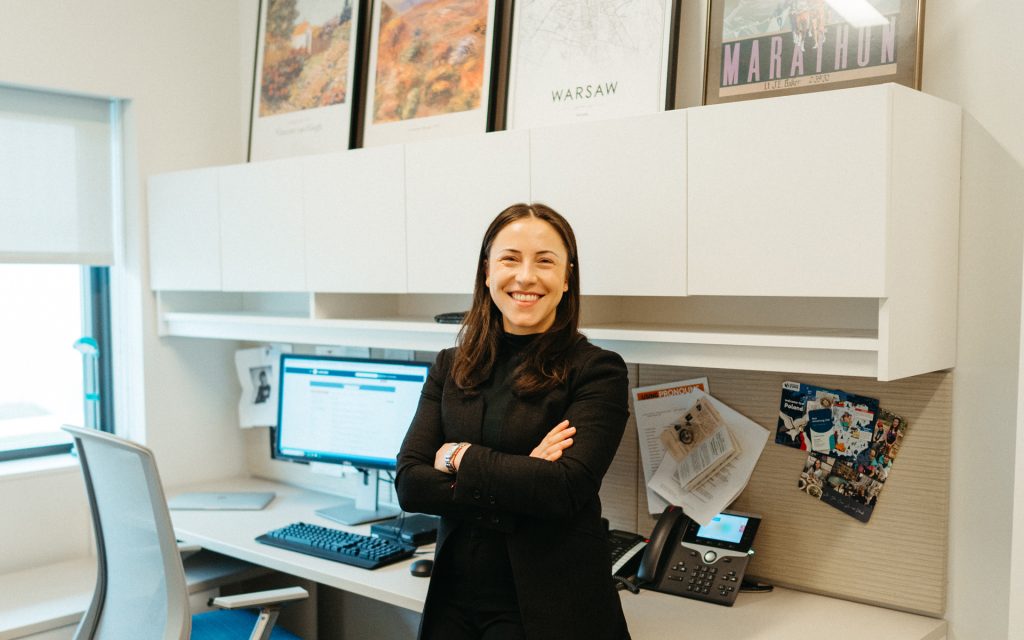
When True-Frost and Baker first visited the University of Bialystok, they were hosted by Cudowska, who graduated from the University of Bialystok with a Ph.D. in 2019 and a post-doctoral degree in legal translation in 2021. Cudowska graduated from Michigan State University (MSU) of Law with an LL.M. She continued her research at MSU Law as a Polish American Kosciuszko Foundation research fellow in 2021. As a licensed civil facilitative mediator, Cudowska retains ties with the state of Michigan by chairing the Board of the Southeastern Dispute Resolution Services.
Cudowska never imagined she’d be spending three years in Central New York at Syracuse Law. Her expertise and collegiality with the professors from Syracuse led to a sabbatical from Bialystok, which she chose to accept. Enthusiastic about bringing her research interests to the U.S., she was on her way to Syracuse Law in the fall of 2022 for a year-long stint as a visiting scholar.
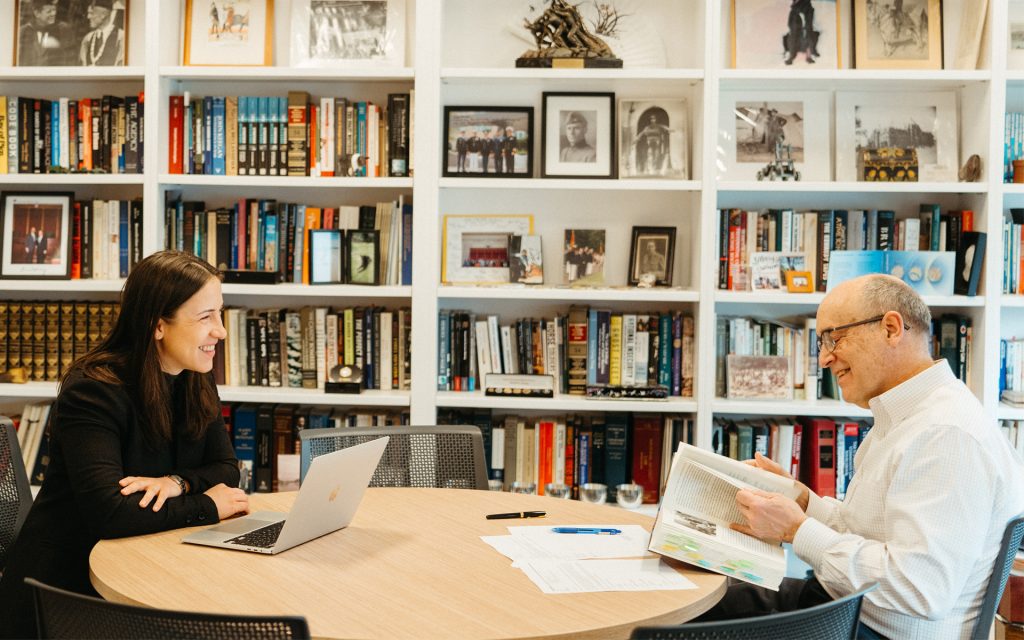
As a visiting scholar, Cudowska worked under the guidance of True-Frost researching disability rights and human rights. Cudowska’s independent research projects concerned dispute resolution, as well as climate change, national security law, and international relations. When approached to consider a two-year fellowship with the Institute for Security Policy and Law (SPL), Cudowska jumped at the chance to continue her work in the U.S.
“Organically, the stars aligned. It wasn’t planned, but there was a Research Fellow position, and I applied,” she explains. She received the fellowship, which began in August 2023 and will run for two academic years through spring 2025. Cudowska is very grateful for the support of her colleagues at Syracuse Law, especially Baker, for encouraging her to accept and for supporting her in her current role.
She spent the fall 2023 semester focused on grant writing to help move the SPL projects forward, including Ring Around Russia (RAR), while also preparing two classes that she taught this spring: National Security, co-taught with Baker; and a National Security Research Seminar, which focused on national security and climate change.
“What stands out is the collegiality coupled with the level of care, attention to detail, and help that I received on all fronts: openness, kindness, and friendliness,” she says of her experience at Syracuse Law. “I’ve developed a number of professional relationships here that have become friendships, and I have the opportunity to teach at a prestigious U.S. institution, which means a lot in terms of my experience and career. I hope to make the most of my stay here and dive into every advantage and opportunity of academic life.”
Continuing the Partnership
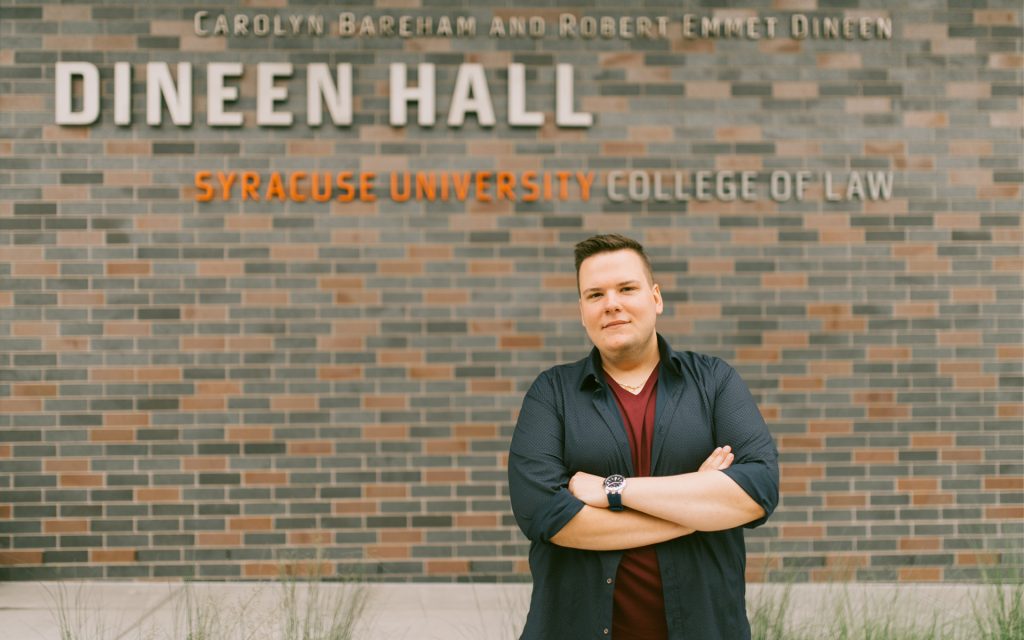
While Cudowska will continue her work in Syracuse through the 2024-25 academic year, and Baker will continue to travel back and forth in his efforts with Bialystok’s Szymanski, other faculty on both sides of the Atlantic have also been able to take advantage of the partnership:
In Spring 2023, Professor Anand pursued research on the law of the European Union on a sabbatical that took him to the University of Bialystok as a visiting scholar, Adam Mickiewicz University, also in Poland, as a visiting scholar, and to the Max Planck Institute for Comparative Public Law and International Law in Heidelberg, Germany, as a visiting researcher.
In Fall 2023, Michal Stokowski from the University of Bialystok came to Syracuse Law to further his research on his Ph.D. thesis, The Act of August 31st, 1944: On the Punishment of Fascist-Hitler Criminals Guilty of Murdering and Abusing the Civilian Population and Prisoners of War, and Traitors to the Polish Nation, known as August Decree. Stokowski researched WWII legislation from a comparative perspective under Baker’s supervision.
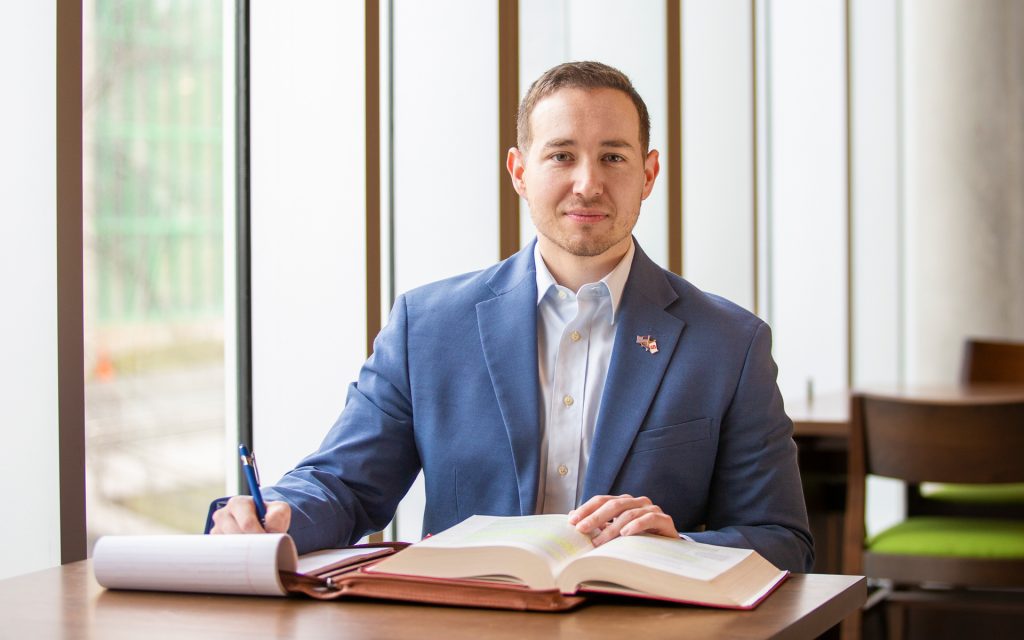
R.J. Naperkowski L’23 has been working with Baker on RAR, writing grants pertinent to the rule of law, national security pedagogy, and veterans affairs. In December 2023, Naperkowski and Baker traveled to Slovakia to attend Helping Ukrainian Refugees, a Visegrad Fund V4 minigrant project, in Oravice, Slovakia, and Witow, Poland. The project’s idea arose from the general concept of the RAR, with the greater goal of helping Ukraine. It focuses on helping young people in the Visegrad and selected neighboring countries to enhance their democratic values and civic virtues. Kraśnicka, Szymanski, Baker and Naperkowski, along with their Slovak counterparts, Dr. Martin Bulla and Dr. Miroslava Mittelmannova, both from Trnava University; and Professor Miroslava Chekh from Ukrainian Catholic University were lecturing on the importance of the role of law and civil society.
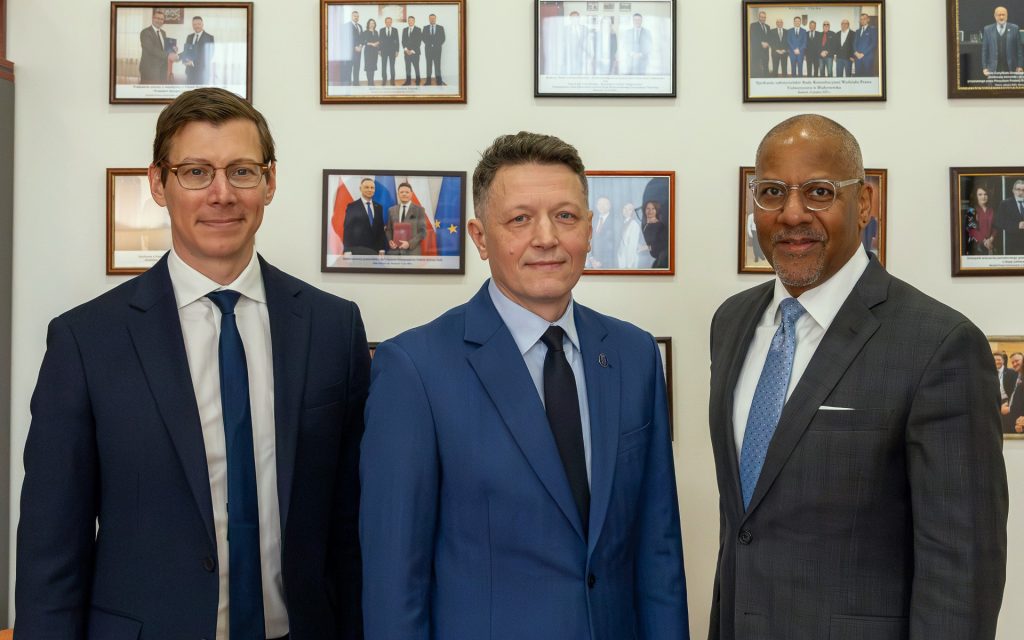
In March 2024, Dean Craig Boise and Horsfall made their first visit to the Faculty of Law at the University of Bialystok to meet with counterparts there in furtherance of an already well-established and robust partnership. Horsfall and Kraśnicka explored expanding the partnership into new areas, including short-term study abroad courses where students from both schools can visit the other to explore various subject matter and content of interest. They also discussed hosting exchange students at Syracuse for a semester using grant funding that Bialystok recently received through the EU’s Erasmus program. According to Horsfall, Syracuse will host its first exchange student from Bialystok in the fall of 2024 as part of this new feature of the partnership.
Office of International Programs Offers Pathways to Syracuse Law
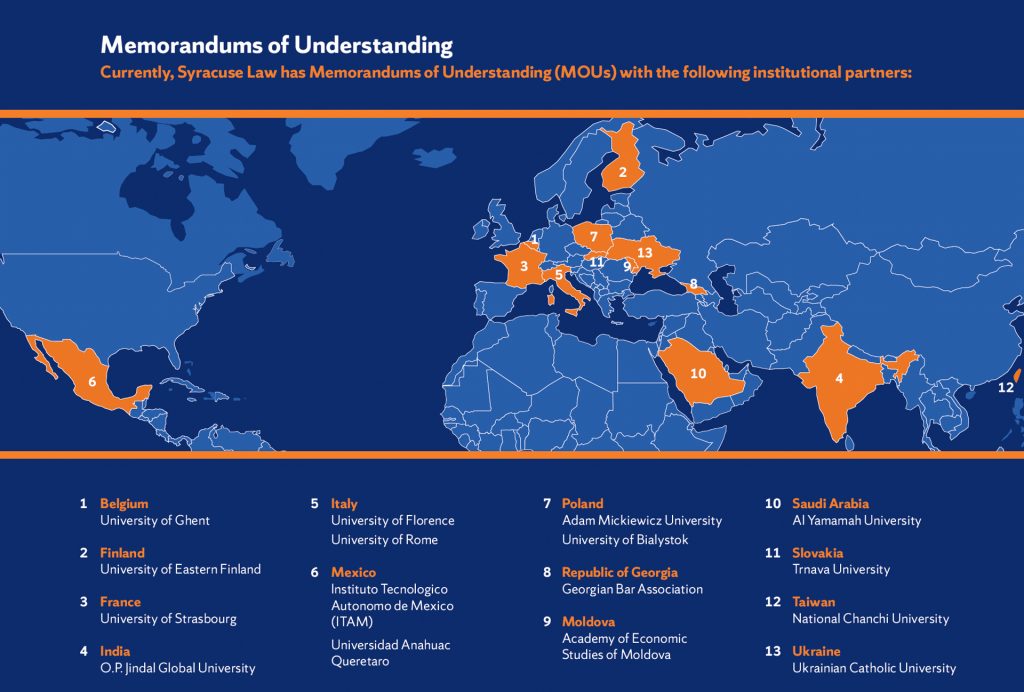
Horsfall believes the University of Bialystok is an outstanding example of the importance of establishing relationships with international law schools, bar associations, and other partners and institutions. He notes that Syracuse Law has a number of Memorandums of Understanding (MOUs) with schools throughout Europe, Asia and South America, all of which serve as a channel to bringing visiting scholars, exchange students, or those interested in the LL.M. program for foreign attorneys looking to be educated in the American legal system.
“The strong relationship we’ve developed with the University of Bialystok would not be possible without the hard work and dedication of Andrew Horsfall,” says Dean Boise. “Andrew has had the vision to see the opportunities that benefit our faculty and our students. Syracuse Law has been open to understanding the development of law both within Poland and throughout the E.U. Our partnership with Bialystok, and, in particular, Andrew’s counterpart, Izabela Kraśnicka, has facilitated that possibility, even as faculty and students there have learned from the American legal experience. Our connection with Bialystok will continue to grow and make a significant impact on both schools.”
As can be seen from just some of these examples, the expansion of Syracuse Law’s international footprint around the world has engaged faculty, students, staff, and even alumni in meaningful and exciting ways,” says Horsfall. “It continues to be a significantly worthwhile endeavor to bridge understanding across various legal cultures. I’m grateful to be working at an institution and alongside colleagues to share in these values.”
Syracuse, Bialystok Students Collaborate Through New Online Law Course
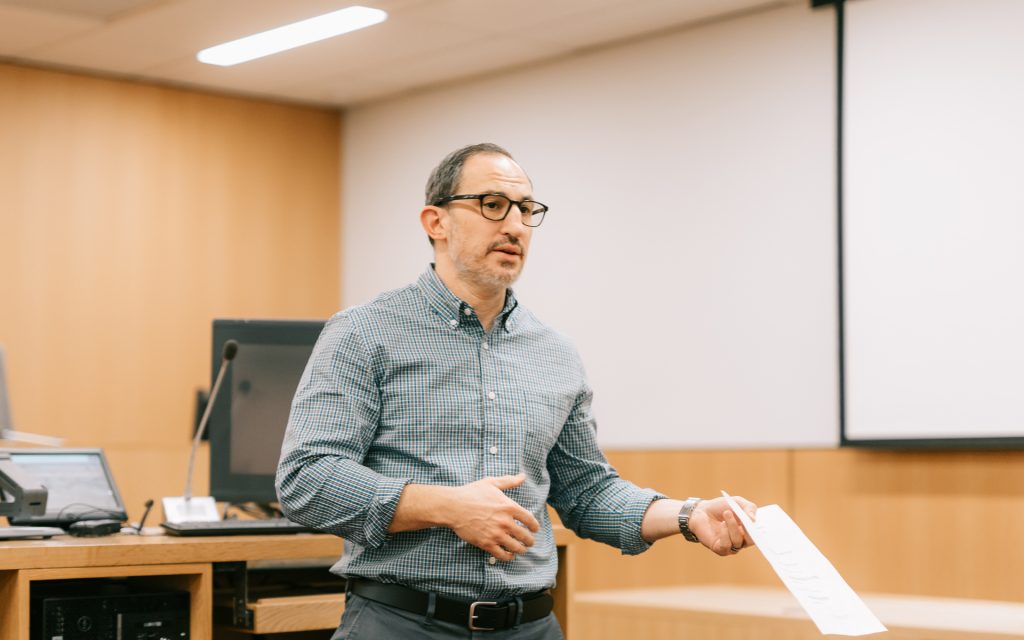
This spring, Professor Todd Berger, director of advocacy programs, debuted an online collaborative course with the University of Bialystok focusing on transnational alternative dispute resolution. Ten Syracuse Law students, five residential and five JDi, along with another 10 from the University of Bialystok Faculty of Law took the one-credit class, which was taught together with Dr. Marta Kuklo, a faculty member at the University of Bialystok, who is an international expert in negotiations and mediation.
The course focused primarily on negotiations, mediation, and the universality of the skills sets used in both, as well as building a cross-cultural and transnational context specifically through the comparison of how the mediation process works in the U.S. versus Poland. Several guest lecturers on transnational negotiations were invited to the class, which was a very popular component. The class was taught in English, and all the students and instructors had to navigate the six-hour time difference. Students often worked in pairs (one from the U.S., one from Poland) on experiential exercises in negotiations and mediations throughout the course.
According to Berger, the class was very successful, and plans are in the works to expand it to a 2-credit course next year. “It was a great experience to teach with someone like Marta, who is so accomplished in her field, and I learned from her myself,” he says. “And, the exposure that both students got working with others from across the world built competencies that will most certainly help them succeed in the 21st century, as it continues to be more interconnected and diverse.”