Around Syracuse Law

Colleen Gibbons L’17 Receives Inaugural Emerging Leadership Award for Outstanding Engagement with Syracuse Law

Colleen Gibbons L’17 calls her education from Syracuse University College of Law “first class” and recalls an “immediate sense of warm and welcoming humans in the building” from the day she started her law degree. Today, as she thrives in her legal career, Gibbons continues to be an outstanding alumna of Syracuse Law as a mentor, speaker, competition judge, and more, bringing in fresh ideas and educational opportunities by tapping into her  professional network to help today’s students have a law school experience as outstanding as she recalls her own.
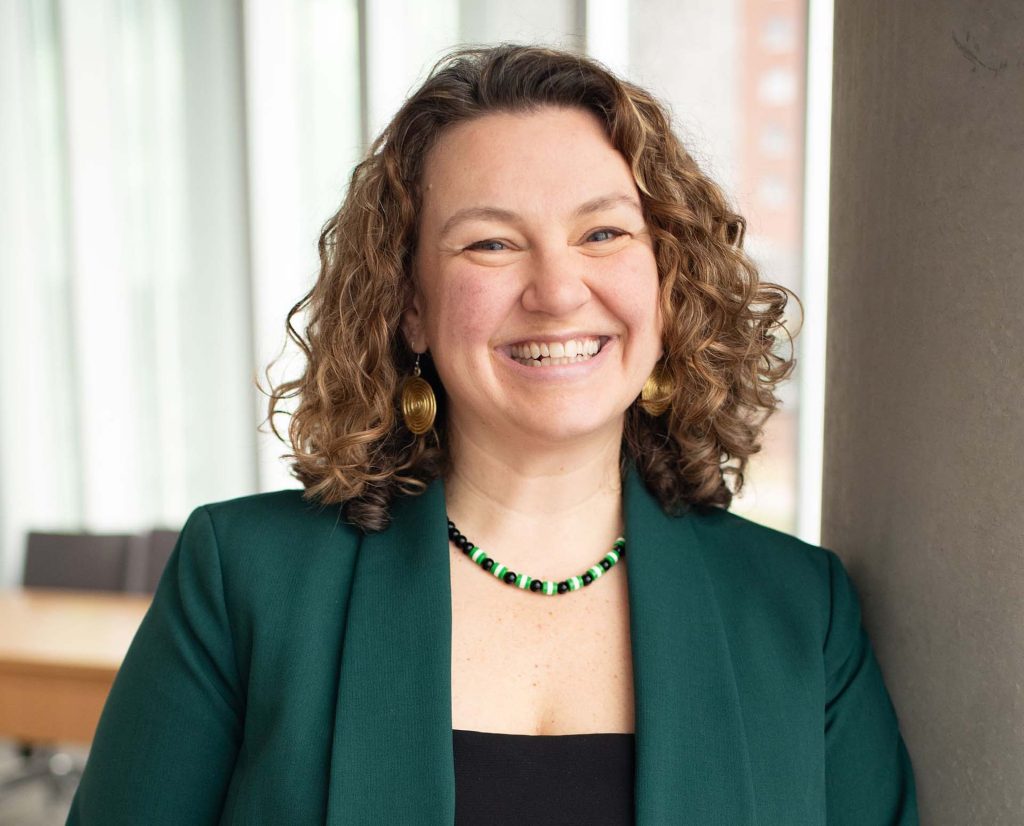
Colleen Gibbons stands in front of a window, wearing a green blazer and a black shirt

This spring, Gibbons was honored by Syracuse Law with the inaugural Emerging Leader of the Year Award for being one of the law school’s most dedicated volunteers, contributing her time and expertise in ways that make a lasting difference for law students and the broader Syracuse Law community.

“There are so many reasons why Colleen is deserving of the Emerging Leaders Award, as she gives of herself genuinely for all the right reasons without any expectations that the favor she extends is to be returned,” says Teaching Professor Suzette M. Meléndez, a mentor to Gibbons as a student and an influential colleague today.

“Colleen is a role model for others in that she brings her intellect and experience to bear in positive ways. She proposes great ideas, as well as recognizes those coming from others, and she doesn’t just comment on the sidelines but will actually roll up her sleeves to help do the work in the field. Her collaborative spirit enables her to bring good people together in multiple settings, and her authenticity and dedication to justice transcends boundaries. Colleen’s commitment defines her both personally and professionally, and we are all the beneficiaries of what she brings to the profession,” adds Meléndez.

From Teacher to Lawyer: Combining the Law, Justice and Community Systems

Currently the principal law clerk to Hon. Danielle M. Fogel L’04, J.S.C., New York State Unified Court System, Gibbons started her career as a special education teacher before earning a master’s degree and Ph.D. in human and community development with a concentration on students with disabilities from the University of Illinois-Champaign. She then returned to her hometown of Syracuse, when she accepted a job at Burton Blatt Institute.

It was during this time that she discovered Syracuse Law had a program specifically for disability law in the Disability and Policy Program, and started thinking that a law degree might fit nicely with her interest in justice and community systems. She applied and was offered a full scholarship, enrolling in 2014.

Impactful Mentors, Experiences Instilled Importance of Giving Back

Gibbons immersed herself into law school, participating as a student attorney at the Disability Rights Clinic where she represented clients in state and federal courts with a focus on the Americans with Disabilities Act and other federal disability laws; as a student attorney at the College of Law’s Sherman F. Levey ’57, L’59 Low Income Taxpayer Clinic; and as a legal intern for the Volunteer Lawyers Project of Onondaga County representing families on issues related to eviction, divorce, and more. Not only did these experiences educate her, but she was able to interact with countless individuals from the law school, its clinics and the greater Syracuse legal community who mentored and inspired her as she learned ways to advocate for others through the law.

“Syracuse Law didn’t just teach me how to be a lawyer. It instilled in me the love of the law, the rule of the law, and the excitement for practicing the law,” says Gibbons. “The law school gives its students so many opportunities to engage with practitioners and build a solid network, as well as participate in community outreach opportunities aligned with students’ interests. These experiences instilled in me the importance of giving my time and energy back to the law school. After I graduated, it became my turn to be a mentor and guide to current students in whatever ways I can do the most good.”
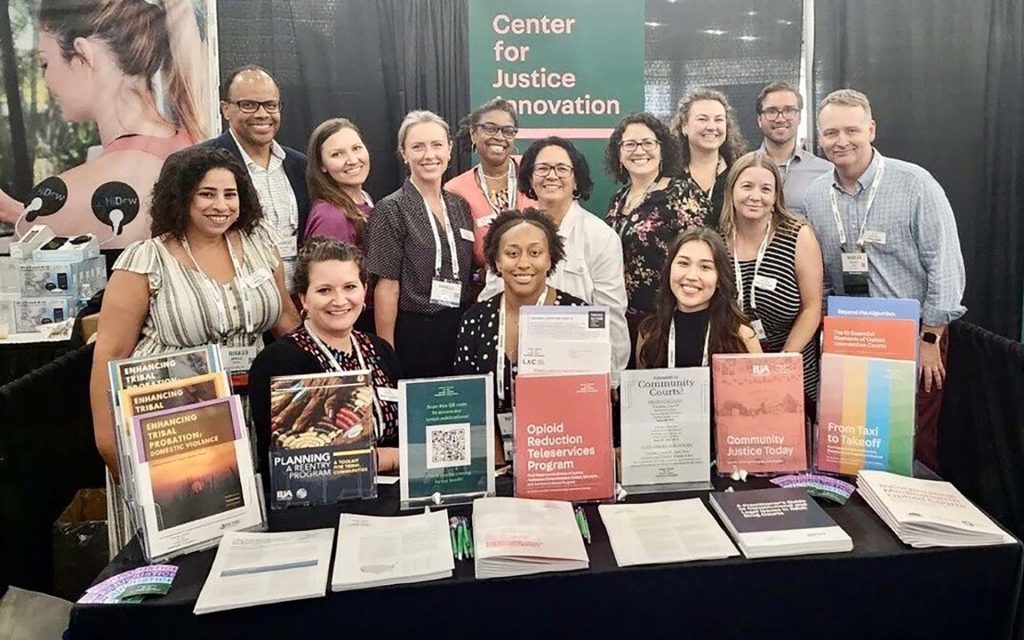
Gibbons with her Office of National Initiatives colleagues, Center for Justice Innovation.

After receiving her law degree, Gibbons joined Bousquet Holstein, PLLC, as an associate. Two years later, she became the Upstate deputy director and then senior program manager for the Center for Justice Innovation, a national training and technical assistance team focusing on adult and juvenile drug courts, veterans treatment courts, and best practices to drive justice for marginalized individuals.

Through it all, Gibbons continues doing good for the College of Law and the larger community, including through the Central New York Women’s Bar Association, of which she is the current president; the College of Law’s Alumni Association, of which she is past president; and the law school’s Women’s Law Student Association, where she recently helped coordinate The Karen DeCrow 2026 Panel, an annual gathering that brings together a group of female lawyers and judges to discuss current topics, while honoring the work DeCrow L’72 did to advance women within the legal field.  
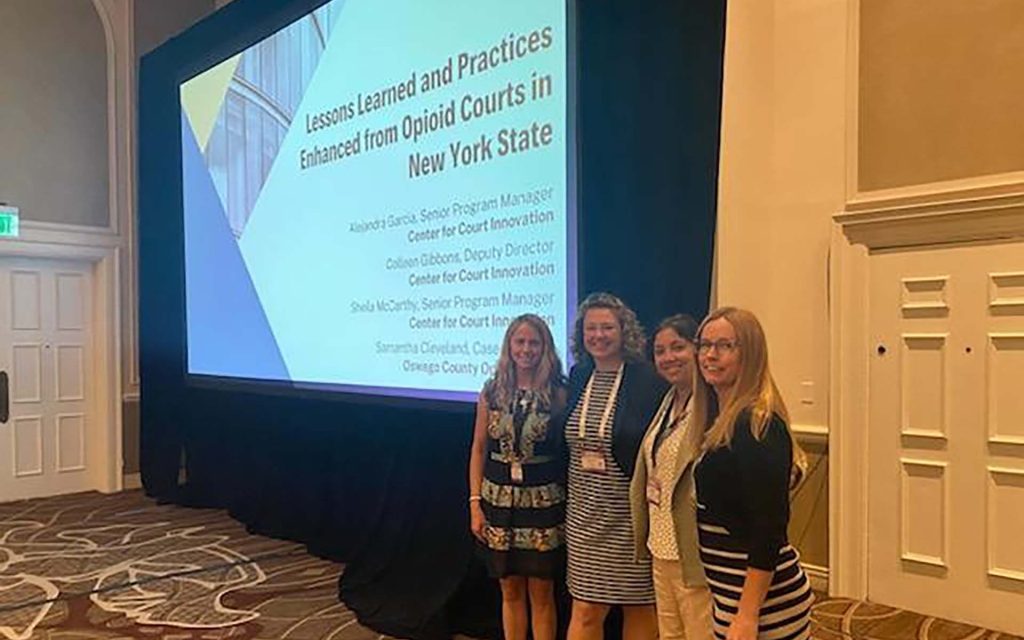
Gibbons presenting at the All Rise conference with colleagues and treatment court providers.

Gibbons Encourages Others to Stay Involved, Lift Up Students and Alumni

“I am pleased to be a part of the interconnected legal network that continues to help strengthen the Syracuse University College of Law,” says Gibbons of her involvement over the past decade. “I enjoy building mentor relationships with students and young alums by saying, ‘Here’s the lessons I’ve learned. Take them or leave them, but I’m happy to assist.’”

Leading by example, Gibbons encourages others to give back, as well. “There are always ways to stay involved with the law school,” she says. “I’ll continue for as long as I can to show up, offer support, propose an interesting speaker or event, lift up other students and alumni, and encourage them indefinitely. I’m roped in now, and I couldn’t be happier about it.”
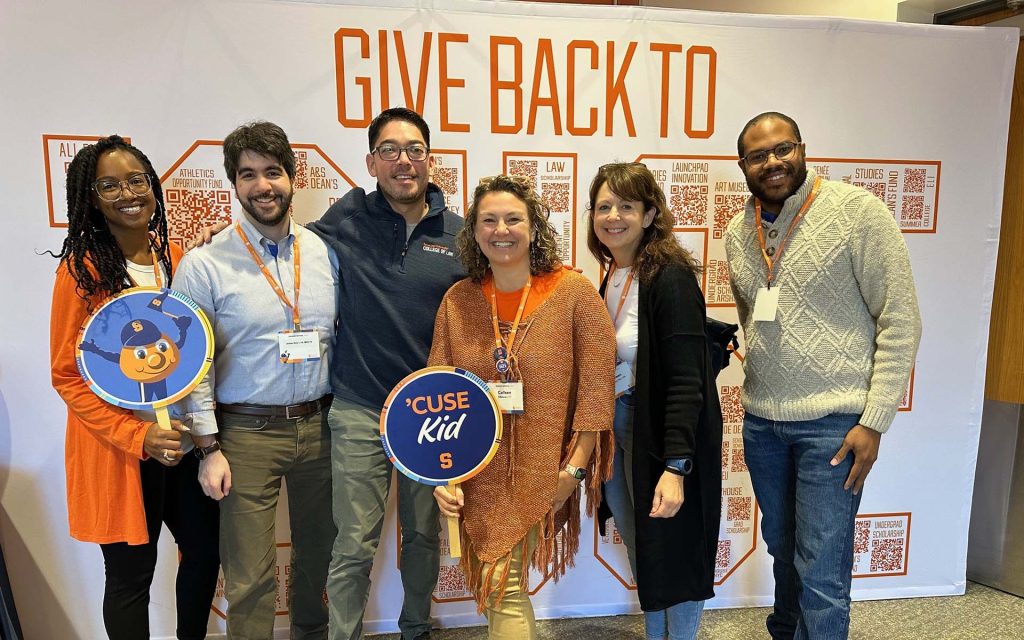
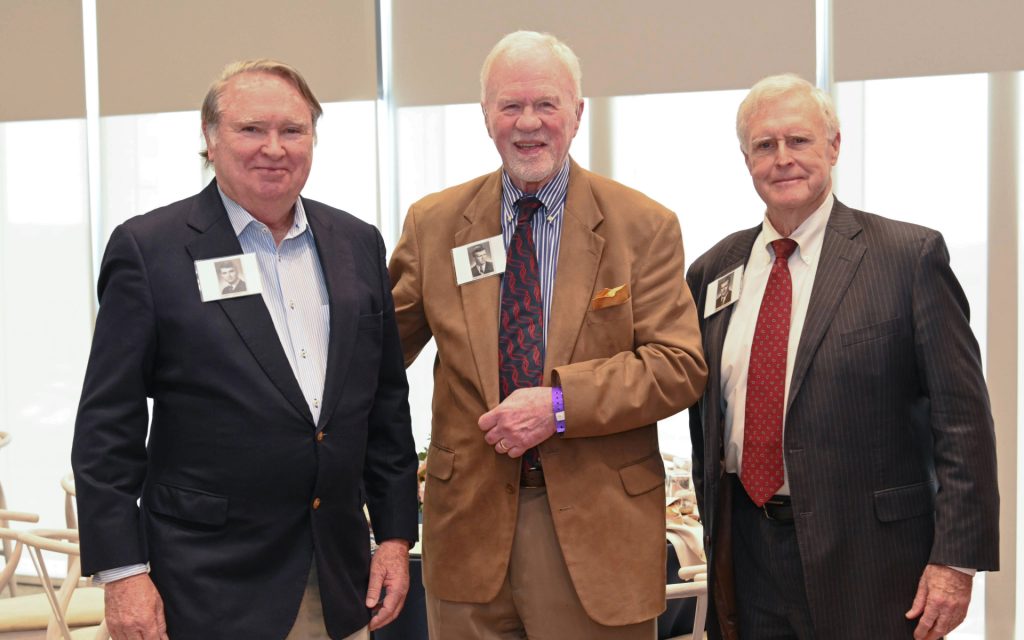
Gibbons and fellow Syracuse Law alumni return to Syracuse for alumni weekend!

Syracuse Law JDinteractive Program Expands Access to Legal Representation in Rural Communities

Not everyone interested in pursuing a law degree lives in a large metropolitan area or near a bustling college town. In fact, many students enrolled in Syracuse University College of Law’s hybrid online JDinteractive (JDi) program are located in faraway places, whether a small Alaskan city, an island in the middle of the Pacific Ocean, or rural areas throughout the U.S. For many of them, remaining in their communities is not just practical but purposeful due to personal obligations or a long-held desire to serve their communities. At the same time, they demand a law degree that offers a rigorous curriculum, opportunities to take part in law clinics, student organizations, and advocacy competitions coupled with the ability to develop bonds with classmates, faculty, and alumni.

Meet four recent graduates from out of the way places who have successfully joined the legal profession through the JDi program —proving that distance is no barrier to earning a Syracuse Law degree.

Dawnelle Forsythe L’26, Oahu, Hawaii

As a native of Hawaii, Dawnelle Forsythe L’26 lives in a small city of 44,000 on the Big Island of Hawaii. Back in the early 2000s, she wanted to become a lawyer, but the only law school in Hawaii was on Oahu, and the travel and expense was prohibitive. Instead, she went to work for the County of Hawaii Office of Housing and later the State of Hawaii Department of Hawaiian Home Lands under the Native American Housing Assistance and Self-Determination Act, which helps provide affordable housing to qualified native Hawaiians.

However, in 2019, two pivotal events made Forsythe reconsider law school. She says the first was “fate” when she saw an article about a newly established hybrid JDi program at Syracuse University that could enable her to earn a law degree without leaving home.

Around the same time, she accompanied her husband to observe a protest centering around the construction of a massive Thirty Meter Telescope  at the top of Mauna Kea, the Big Island’s highest mountain and an area considered sacred by the native people.

When they arrived, over 100 protestors had formed a protective human wall in front of the kūpunas (revered elders). The kūpunas had sought to halt the construction of the 18-story telescope atop Mauna Kea and were blocking the road from construction vehicles, while the crowd chanted in support of preserving land put in trust for the Hawaiian people to ensure the continuation of their culture. As Forsythe watched, state troopers began removing those blocking the road.  

“Some of the troopers were related to the aunties and uncles they were arresting, and many on both sides were crying together,” explains Forsythe. “It was such a somber event, and it made a lasting impact on me. I decided then that I had to go to law school to be an advocate for my ‘Ohana’ (family), the people of my community.”

She quit her current job at a hospital with only one thing in mind—the JDi program. “Not only would it allow me to stay at home, but I was drawn to its trial advocacy program that would help me become an attorney ready to go into court and advocate for people,” she says.

Forsythe was accepted into the JDi Class of ’26 and is now thrilled she found “her New York Ohana” made up of the “geniuses in her cohort,” as well as faculty she admires, including Distinguished Professor of Law Nina Kohn and Associate Dean for Academic Programs Shannon Gardner.

Forsythe graduates this May and must first return to work in local government to pay off her school loans. But she is committed to soon using her law degree pro bono to help Hawaiian residents, particularly those facing land rights cases who lack money for legal representation.

“It isn’t about making money; it’s about something that will totally fulfill my heart,” she says of helping her people. “I’m excited to finally reach my goal of becoming a lawyer, and I know that it would not have been possible without Syracuse Law’s JDi program.”


Sarah Roberts stands in a snowy field with evergreen trees in alaska, wearing a black coat and a yellow yat.

Sarah Frank Roberts L’22, Kenai, Alaska

There are no law schools in Alaska, so when Sarah Frank Roberts L’22 decided to pursue a law degree, she knew her options were limited. A mother of six, Roberts lives with her husband and family in Kenai, Alaska, a town of about 5,000 people, most of whom work in the fishing or oil and gas industries.

When Roberts discovered the JDi program, it seemed to be a solution. She could take classes and get her work done after her children went to sleep, and the four-hour time difference between Alaska and New York was manageable. She was accepted into the program’s second cohort since its founding in 2019.

“The experience was rigorous,” Roberts says. “There was no hiding in the back of the room when professors like Nina Kohn could see your face up close on the screen. I certainly got the same high level of education that those in an on-campus program received.”

According to Roberts, there is a huge need for lawyers, particularly public defenders and district attorneys, in Alaska, but with no law schools, people tend to leave to go to school and never return. Roberts was able to stay because of the JDi program, and today she is an assistant public advocate and conflict counselor for the state of Alaska, focusing on family issues like custody and guardianship.

“I get to help people, many of whom have made a lot of mistakes but still deserve representation,” she explains. “My role isn’t designed to ‘win’ but instead help families get the best outcomes for their situations, as well as allow them to see what opportunities there are to work toward their goals.”


Megan Poole L’23, Cortland, New York

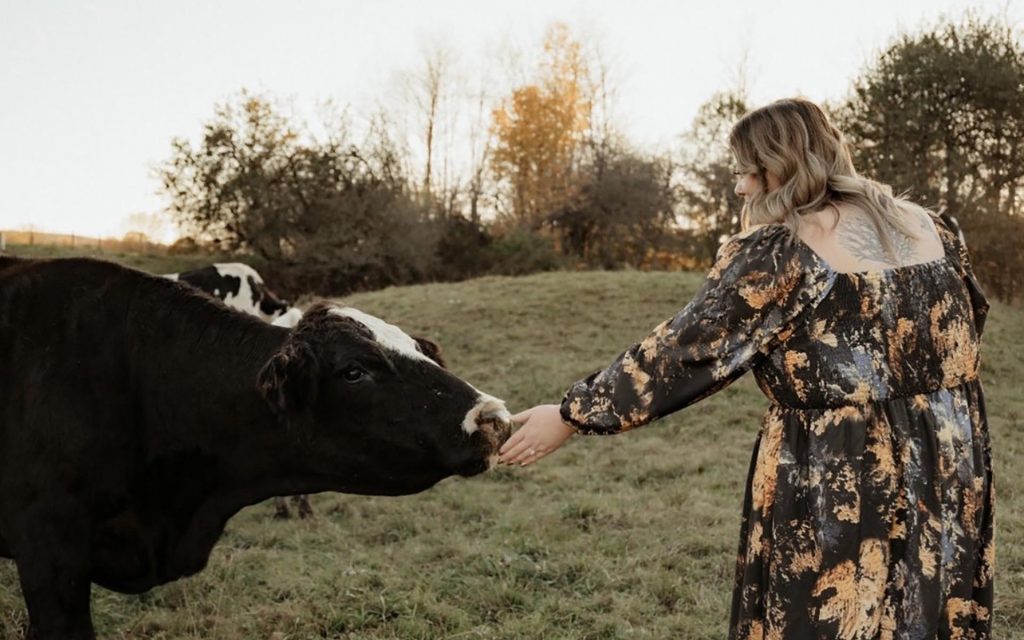
Megan Poole L’23 grew up on a dairy farm in Cortland County, New York, but, knowing the challenges of farming, her parents encouraged her to pursue a different career. Still, she felt most at home in her rural community.

After earning an undergraduate degree in criminology, Poole wanted to be a probation officer but didn’t get the position she originally intended. Instead, she says, “Rejection is divine redirection,” and decided to take the LSAT and pursue law school.

In the meantime, she was offered a job in the Cortland County Department of Social Services (DSS) as a case worker handling foster care, child protective services, and adoption cases. She still wanted to go to law school, but she was “too heartbroken to leave” the difficult job of helping families in need. However, when she found the JDi program, she realized she could pursue a law degree while continuing her job with DSS and helping on the family farm.

“The JDi program was certainly just as difficult as an on-campus program,” she says, adding she found great camaraderie within her online cohort. Poole especially enjoyed the required in-person residencies, where she was able to interact with fellow students and faculty both on-campus and in various other cities.

After completing the JDi program, she continued to work at the DSS in Cortland. About a year later, the Hon. A.L. Beth O’Connor, a family court judge in the 6th Judicial District of New York, which includes Cortland County, reached out to Poole about being her court attorney.

“I see both the terrible and the good, but that’s part of the job,” she says. “I think I’m making a big difference in my community, particularly for people who don’t have the resources for good legal counsel, and the JDi program was a big part of making that possible.”

An added bonus of becoming a lawyer was the opportunity for Poole, her mother, and sister to turn the family farm into Spring Valley Views, a woman-owned LLC, with plans to for it to expand it into a venue and campground.


Tania Rivera Bullard L’25, Houston County, Georgia

Tania Rivera Bullard L’25 earned an undergraduate degree in psychology, figuring she would be a social worker, like her mother. But, soon after, she decided she wanted a career where she felt she could see things through from beginning to the end. Rivera Bullard decided to pursue a path offered to military spouses to become a paralegal. As she studied for her paralegal certification, she started to think, “Why can’t I be a lawyer?”

Interested in being a public defender or a civil rights attorney, she was accepted into a J.D. at an on-campus law school that required a four-hour round-trip commute from her home in rural Georgia. However, a complicated pregnancy made it impossible, and she was forced to defer her start. Rivera Bullard began looking for alternatives and found the Syracuse Law JDi program, which would allow her to remain with her family while pursuing a law degree.

Not long after, the mother of a 2 year old and an 8 month old, began the Syracuse Law JDi program and found it manageable. “I became a night owl,” she explains. “After the kids went to sleep, I would concentrate on asynchronous work and getting my reading done, and I spent long hours on the phone with my dear friend Nathan McKay L’26, my study partner, who made such a difference for me. It certainly was a careful balancing act, but if you’re willing to find the time, you can make it happen.”

After finishing her law degree and passing the Alabama bar exam, she went to work as an assistant public defender for the Houston County (GA) Public Defenders Office. She was allowed to practice in Georgia under military spouse reciprocity.

“As a public defender, you handle felony cases that nobody else wants, and, arguably, you’re experiencing the toughest, scariest times of people’s lives. I get to help them through a system that, to many, feels like it is set up to fail them,” Rivera Bullard says. “At the end of the day, I go home and feel good about the work I’ve done in my community. The Syracuse JDi program really made it possible for me to achieve my goals.”

Preparing Law Students for AI Transformation in Legal Practice

Artificial Intelligence (AI), and generative AI in particular, is no longer a distant concept for lawyers and soon-to-be lawyers. This is a new technological revolution in the legal industry. James Kelly L’99, member of the Board of Advisors of Syracuse University College of Law, and partner and chair, New York Private Equity, at DLA Piper LLP (U.S.), who has a role in helping shape his firm’s AI transformation efforts, shared insights on how AI is changing the practice and advice on what law students can do now to build their AI skills.

“AI is transforming legal service delivery models and empowering legal professionals in ways not previously possible,” Kelly says. 

At his firm, he helps lead a cross-functional team of lawyers and business professionals to integrate AI into its client service and its business functions. Responsible adoption of this technology by lawyers demands clear objectives, client transparency, and adherence to ethical and professional obligations. It should also leave some room for experimentation;

Kelly says, “This will allow lawyers to focus more on solving the complex problems of their clients.”

According to Kelly, the “true Nirvana state” is when “the technology, tools, and workflow design are able to seamlessly leverage subject matter expertise and proprietary practice data,” to deliver better solutions for clients.  

He notes that “This is somewhat quixotic at least in the near term because the practice of law is a living thing, and so too is the market, and the technology will chase that human capital and lawyering aspect when it comes to nuance, judgment, and experience. But it’s a big leap forward and changing the way things can be done. Students should be ready.”

Efficiency and Speed but With Accuracy and Trust

“Maintaining trust in the delivery of your services is paramount. If you don’t have trust, you don’t have a client,” Kelly says, emphasizing that efficiencies gained through speed and automation do not diminish the lawyers’ responsibility to always deliver their highest-quality work. 

“The sweet spot today is a task that is repetitive and time-consuming but easy to verify. You need to choose your spots carefully in terms of where, when and how you want to integrate AI into your client service delivery,” he adds. “A lot of thinking, planning, and training goes into making that choice. This is not so much about balancing something opposite of trust, as that the quality of the work can never be sacrificed. This is about leveraging AI as a tool to drive better outcomes for clients consistent with the duties we as lawyers owe to them.”  

Lawyers are now able to rapidly review vast quantities of documents or instantly analyze contracts while flagging critical provisions, tasks that may have been prohibitively time-consuming and costly in years past, depending on the volume of the data set.  

“This has the potential to enable lawyers to offer clients data-driven advice that is far more sophisticated than previous data sets,” says Kelly. “These capabilities free up attorneys to focus on higher-value work and creative problem-solving, making the overall delivery of legal services faster and more insightful without any compromise with regard to trustworthiness.”

A Big Mindshift

Only a handful of years ago, many clients prohibited their law firms from using AI. Today, some clients mandate that it be utilized in service delivery. And many clients remain neutral, leaving it to their lawyer to determine how and when to use AI ethically and responsibly. 

“I believe that it is generally expected at this point that leading law firms will leverage the best generative AI technology to deliver faster, cost-effective, and data-driven solutions. It is not just a select few using this,” Kelly says. “At my firm, every lawyer has the ability to use AI but only after completion of mandated ethical training.”

This is in part driven by the big mind shift in the market and with clients. “The notion that service businesses must strive to always be ‘faster, better, and cheaper’ has been subtly shifting in this AI era to what I call ‘immediate, perfect, and free,’ in certain aspects of the delivery model. But again, this may just allow for more time spent on what truly matters to our clients in a technology-enhanced way,” he says.    

AI can accelerate research, surface patterns in large data sets, and generate initial drafts—while attorneys remain responsible for strategy, judgment calls, client communication, and relationships. The result is technology-enabled subject matter expertise. 

“AI should be used to elevate, not replace, the human element in legal service. As fiduciary advisors rooted in trust, we’re uniquely positioned to deploy AI to enhance the human elements of our value,” Kelly says.  

AI in Legal Education at Syracuse Law 

The rapid rise of AI is transforming not only legal practice but legal education as well—and Syracuse Law is positioning itself at the forefront of that shift. Through a combination of coursework, practical learning, and real-world application, the College integrates AI across the curriculum, ensuring students understand both the opportunities and ethical considerations that come with emerging technologies.

“Syracuse Law’s forward-looking approach reflects the firm belief that today’s law students must graduate as AI-proficient professionals to excel in the modern legal landscape,” says Dean Terence Lau L’98. 

The curriculum is designed to evolve alongside the profession, incorporating practical exposure to tools such as generative AI, legal research platforms, and data-driven analysis, while also emphasizing responsible use, client confidentiality, and professional judgement.

Syracuse Law continually monitors which technology skills are most valuable in legal practice and adjusts its curriculum accordingly, often tapping into the expertise of experienced alumni like Kelly. 

Lau adds, “This collaboration between academia and the legal industry is particularly critical in times of great technological change to ensure that our programs are at the leading-edge—and to prepare our student talent for the challenges that await them in their legal careers.” 

Because AI tools evolve so quickly, what students learn as 1Ls may look very different by the time they enter practice. To stay ahead, Syracuse Law emphasizes early and consistent exposure to AI technology. Students are encouraged to familiarize themselves with common AI platforms by their second semester, as many will encounter these tools during 1L summer internships and externships. By the time they earn their J.D., Syracuse Law graduates will have a strong foundation in AI applications for law, giving them a competitive edge as they enter firms where junior associates are now expected to use AI tools as soon as they begin practice.

“If I were a law student or junior associate today, I would spend at least 90% of my free time figuring out generative AI and how it can be used in the practice of law,” advises Kelly, noting that advancing the skills to navigate this technology will be essential for career growth. “Overcoming fear of using this new AI machine will become a major differentiator of future talent.” 

By contrast, those who avoid the technology will likely fall behind their AI-prone peers. “Best to start now, in law school, while you can freely experiment and collaborate with your fellow classmates. It’s a wonderful time to be a student when a digital revolution is underway,” says Kelly. “I was a law student when the internet was just getting out of the gate in a real way. The internet created massive opportunities for new lawyers, and AI will too.”


Alumni Combine Law With AI, Technology in Fascinating Careers

Syracuse University College of Law alumni are putting their legal training to work at the forefront of Artificial Intelligence (AI) across various industries, combining law with other expertise to drive real impact.

Headshot of Jeff Saviano
Jeffrey Saviano L’92

Expert in Ethical AI Strategy and Governance; Business AI Ethics Leader, Harvard University Safra Center for Ethics; Senior Lecturer, Massachusetts Institute of Technology; Retired Partner, Emerging Technology Strategy and Governance Leader, EY
Pete Su L’94

Vice President and General Counsel, Moley Robotics; Expert in AI Robotics and patent strategy; Former Partner at Silicon Valley office of Dentons U.S.; Practiced intellectual property law at Fenwick & West; Co-chair of San Francisco Regional Council of Syracuse University; IAM Strategy 300 Global Leaders, IAM Strategy 300, Design Engineer at AMD
Headshot of Melissa Vierling
Melissa Vierling L’07

Assistant General Counsel, Technology Contracts, IP, and AI Attorney, Primerica, Inc.; Co-founder AI Governance Collective (AIGC); Speaker on Legal AI

The Class of 1968 Returns to Syracuse Law to Celebrate President Biden

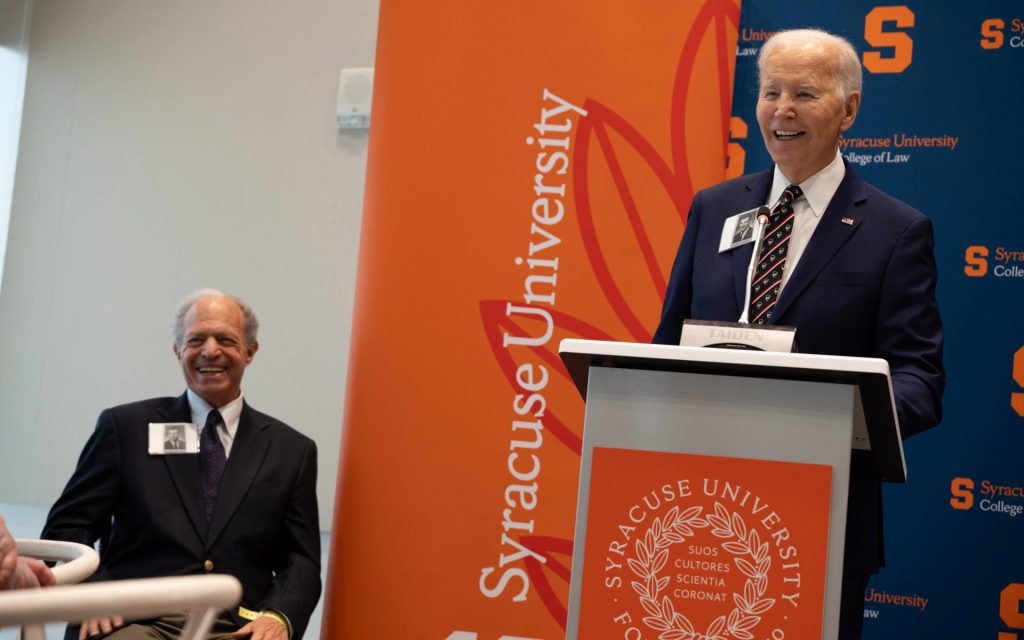
Syracuse University College of Law celebrated a historic event with the unveiling of an official portrait of Joseph R. Biden Jr. L’68, H’09, the 46th President of the United States, now hanging permanently in the Bernard R. and Carol K. Kossar Reading Room in the College of Law library.

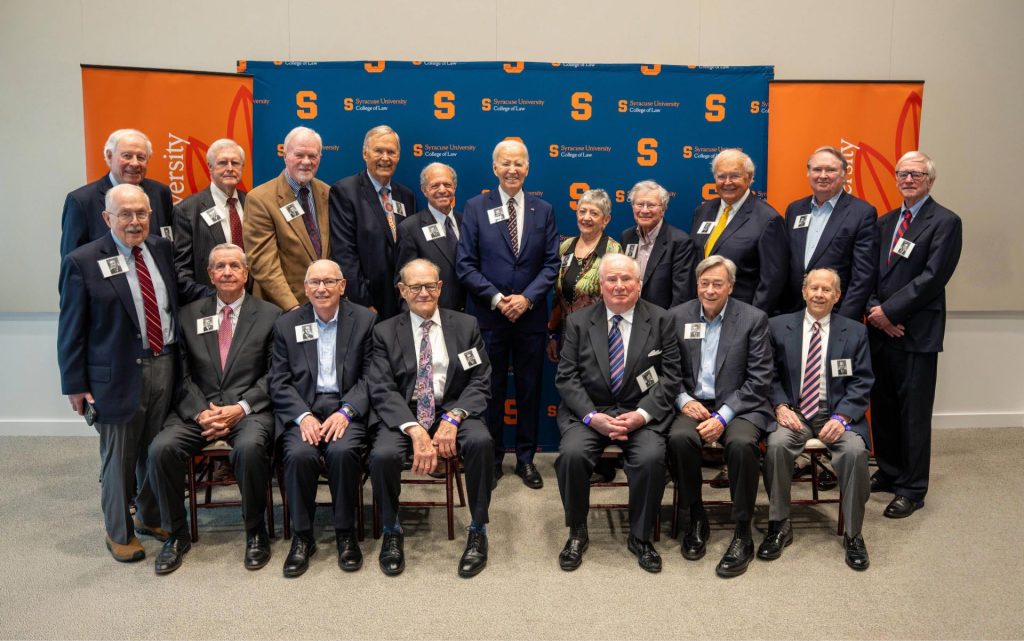
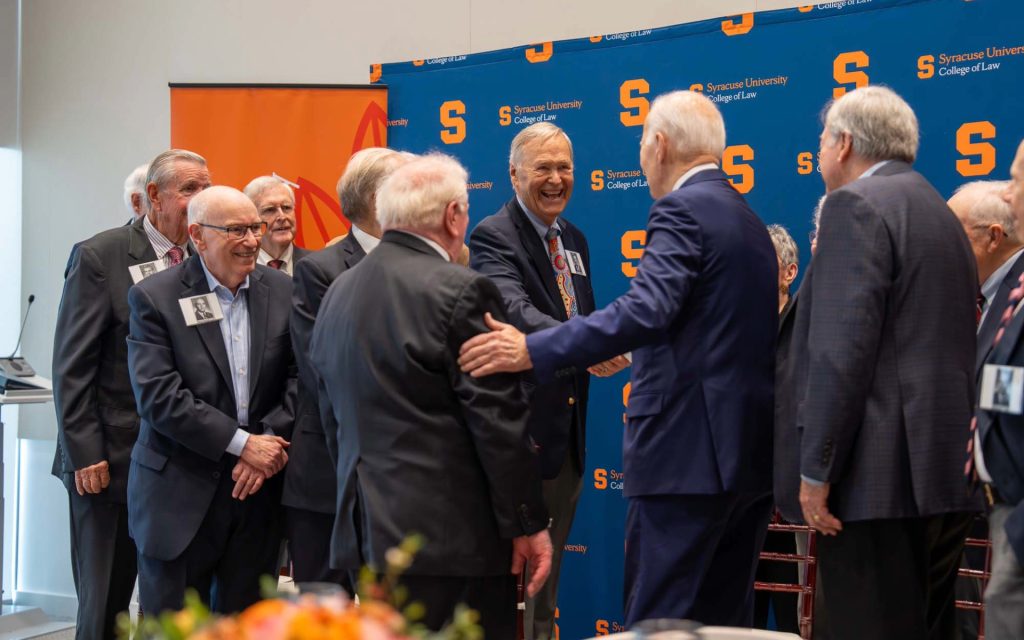
17 members of the Class of 1968 gather for a group photo in front of the Syracuse University step-and-repeat.
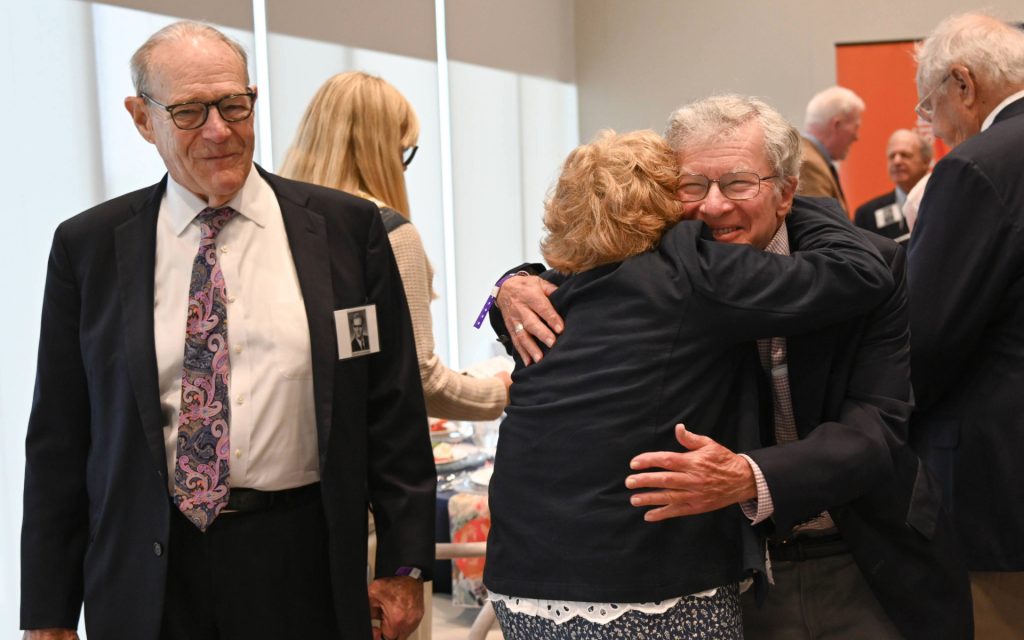
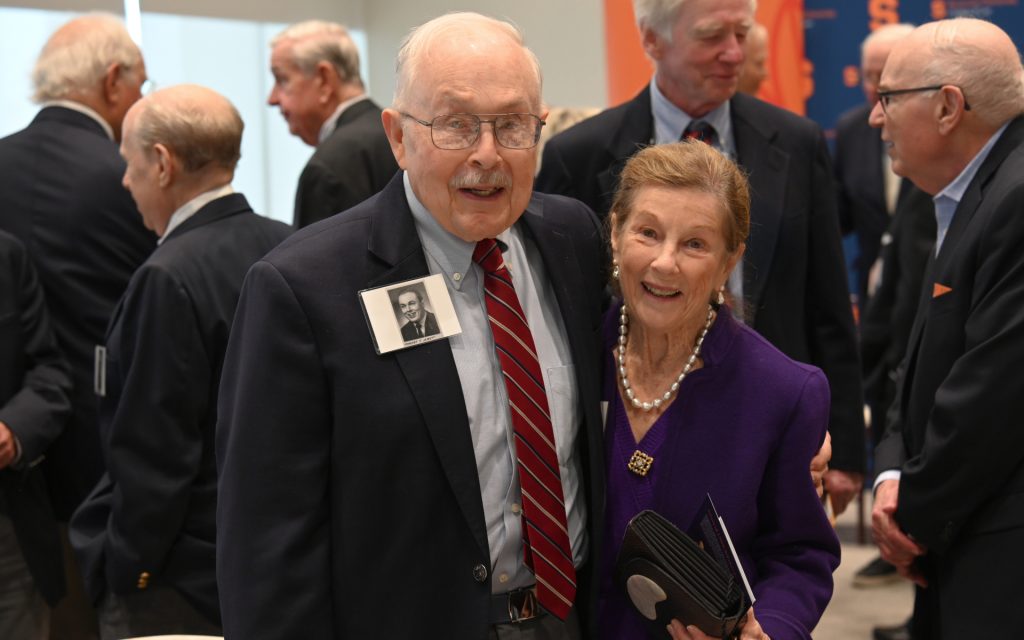
17 members of the Class of 1968 return to Syracuse Law for a reunion lunch before the Portrait Unveiling.

The Portrait Unveiling was preceded by a joyful Class of 1968 reunion lunch, which welcomed President Biden back among his classmates and introduced two students who embody the class’s enduring investment in the next generation: 3L Gabby Kehoe, recipient of the Class of 1968 Scholarship Fund, and 3L Lacey Caputo, the Beau Biden Memorial Scholar.

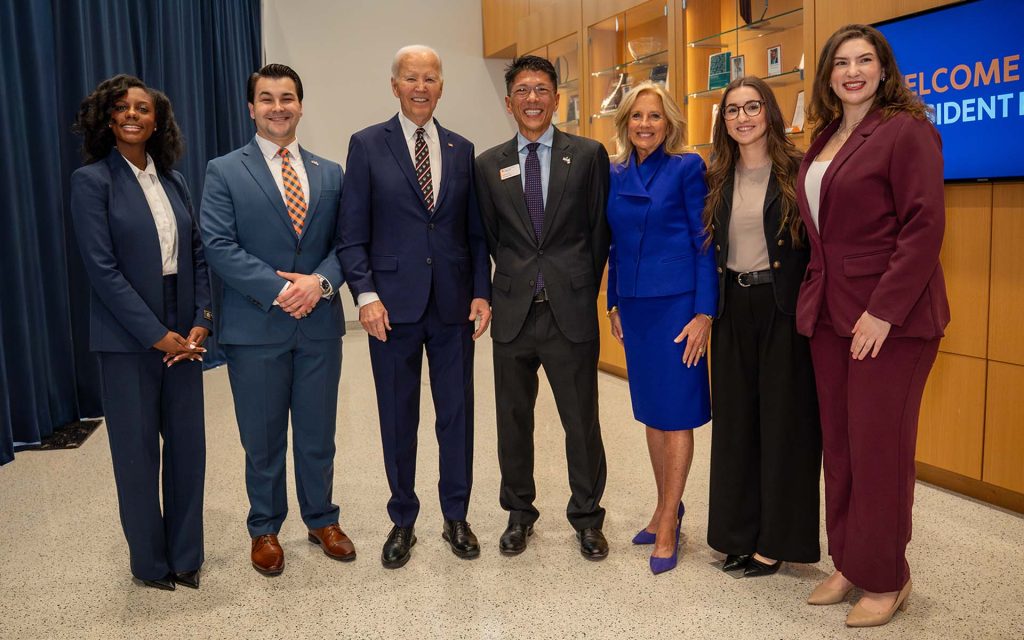
Devin McDuffie L’26, Anthony Ruscitto ’22, G’23, L’27, Lacey Caputo L’26 (Beau Biden L’94 Memorial Scholar), and Gabby Kehoe L’26 (Class of 1968 Scholar) join Dean Terence Lau L’98 to welcome President Biden and Dr. Jill Biden to Syracuse Law.

In meeting these students, the reunion achieved its most meaningful purpose — connecting a class that helped shape the law with the young men and women who will carry it forward.

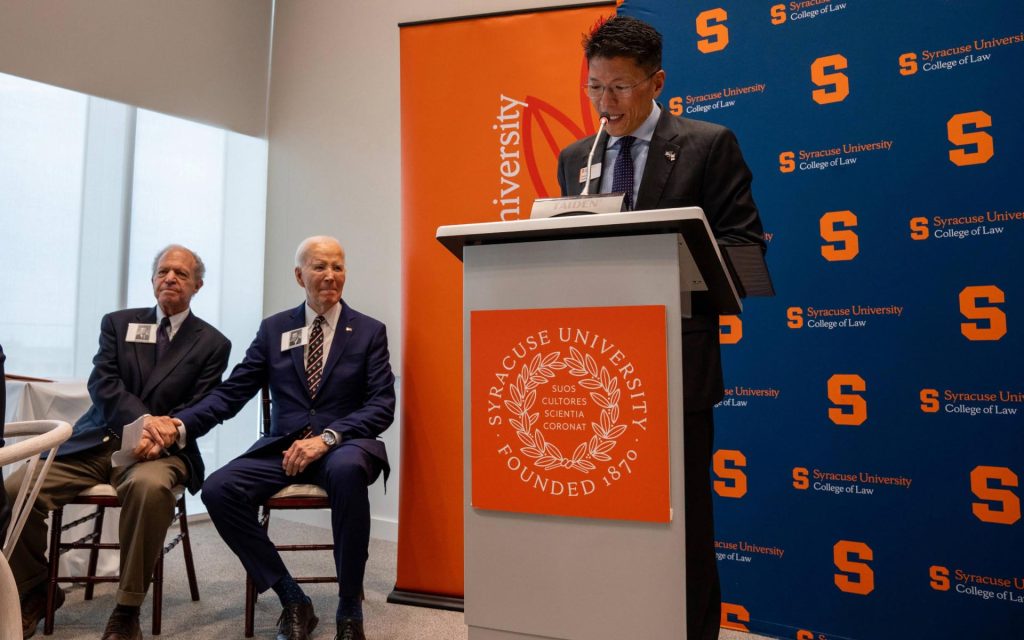
Dean Terence Lau L’98 welcomed President Biden and his classmates in a speech that transported the room back to the spring of 1968 and the world they were preparing to enter as new lawyers. The Vietnam War raged on, and in the span of a single month, President Johnson announced he would not seek reelection, Dr. Martin Luther King Jr. was assassinated, and the Civil Rights Act of 1968 and the Fair Housing Act was signed into law.

Dean Terence Lau L’98 offers remarks to the Class of 1968.

“You were young. You were about to become lawyers. You had your whole lives ahead of you,” Lau reflected. “But the world outside these walls was on fire.”

Yet the class graduated, went out into that world, and many built careers dedicated to service, leadership, and justice. Lau drew a direct line from that turbulent moment to today, noting that current students are asking the same questions the Class of 1968 once asked: What kind of lawyers does this moment need us to be?

His answer, he said, was already written in their lives. “You show up. You do the work. You use your training not just to argue cases, but to build something.”

Lau also offered special thanks to Syracuse University Trustee William Brodsky ’65, L’68, whose dedication to honoring his classmate and their shared alma mater brought the project to life.

Syracuse University Trustee William Brodsky ’65, L’68’s dedication to honoring his classmate and their shared alma mater brought the Portrait to life.

Speaking to his classmates, Biden said, “Since the time I left Syracuse, life has handed me significant highlights and very low blows. The Syracuse community has been with me through it all.”

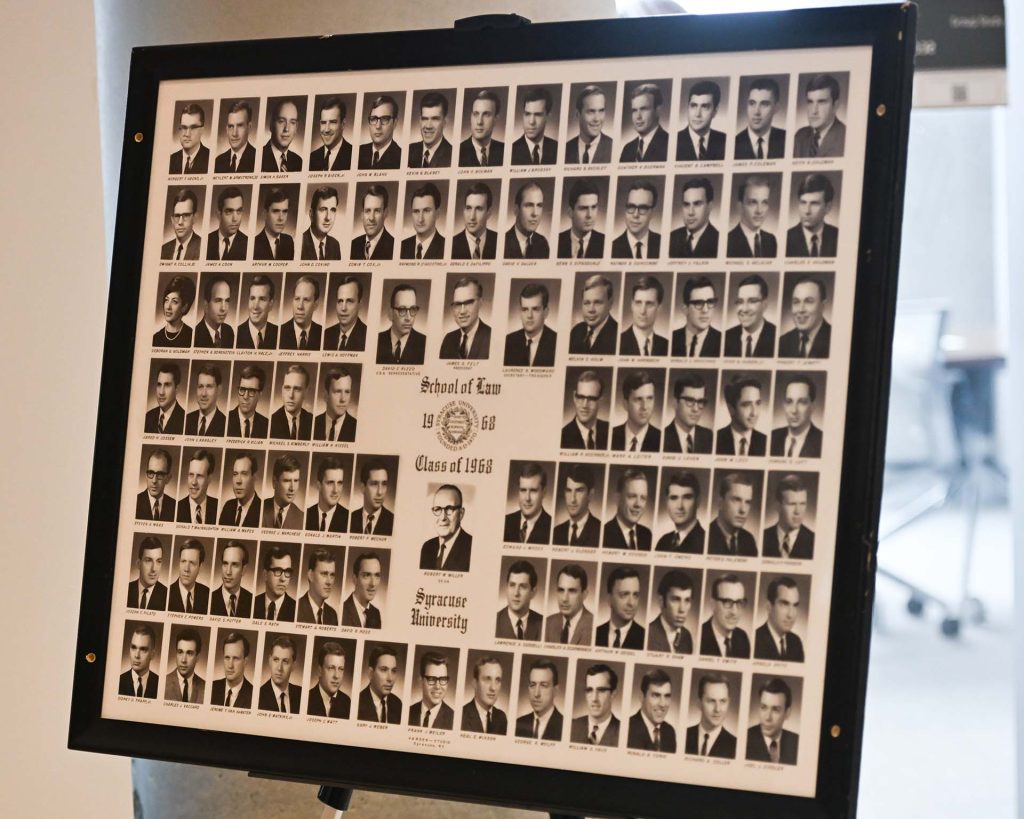
The 17 members of the Class of 1968 who returned to Syracuse Law made this occasion more than a ceremony. Graduating at one of the most consequential moments in modern American history, the class has maintained deep ties to Syracuse Law across six decades — returning not only to celebrate and support one of their own, but to mentor students and invest in the institution’s future.

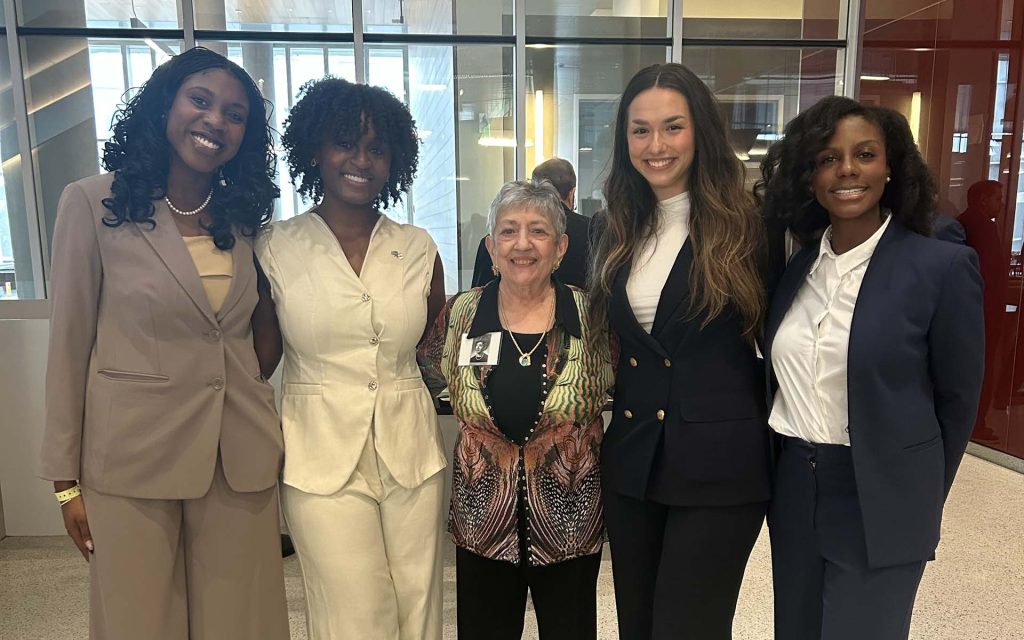
Debby Goldman L’68, the only female in her graduating class, joined by the all-female presidents of Syracuse Law: Kayzjah Charles, 3L Class President, Class of 2026, Ariel Box, 1L Class President, Class of 2028, Emery Bielecki, Executive President of SBA, and Devin McDuffie, 2L Class President, Class of 2027.

Among those in attendance was Deborah Goldman L’68, who graduated as the only woman in her class. Today, 52% of Syracuse Law’s incoming Class of 2025 is female, and all four of the College of Law’s current student body presidents are women — a measure of how much, and how deliberately, the institution has changed.

For the Class of 1968, the reunion was a reminder that the bonds formed at Syracuse Law have proven as durable as the law itself.

President Biden welcomes his classmates and family members at the Class of 1928 reunion lunch.

Before the Bar: How Syracuse Law’s Innovation Law Center Prepares Students to Practice Patent Law Prior to Graduation

In 2025, Samsung Electronics had 7,054 patent grants in the U.S. alone. Apple Inc. had 2,277, and Google/Alphabet, Inc., received 1,782. And, it is estimated that more than 152,000 patent applications specifically related to artificial intelligence (AI) were recorded in the U.S. last year with Google, Microsoft, and IBM leading the charge. Add to that the thousands of innovators and researchers across the country filing individual patents every day, and it’s apparent why patent agents and patent attorneys are in high demand.

First the Patent Bar, Then the State Bar: Alumni Donation to Help Defer Costs for ILC Students

Syracuse University College of Law’s Innovation Law Center (ILC) received a gift from Rodney Ryan L’97 that will be used to officially establish a patent law program in summer 2026 to academically and financially assist students in preparing for the United States Patent and Trademark Office (USPTO) registration examination, commonly known as the patent bar. Passing the patent bar is a significant achievement as doing so gives students credentials to become a patent agent who can draft, file, and prosecute patent applications and is a necessary step to becoming a patent attorney.

To be eligible for the new program, students must have an undergraduate degree in science, engineering, or tech-related fields; complete required coursework and be actively engaged in the ILC.

For prospective students, the program represents a rare opportunity to enter the legal profession already credentialed as a patent agent and positioned for immediate career impact at law firms, corporations, and startups.

“We are very grateful for this gift, which will allow the ILC to formally establish a patent law program and reimburse students for the patent bar preparation and exam— removing a financial barrier that will open this opportunity to even more qualified students,” says Professor of Practice Brian Gerling L’99, executive director of the ILC.

“The program is designed so students will complete the patent bar exam well before having to study for state bar exams after graduation, while also giving them the opportunity to hone those skills as a patent agent during law school.”  

The patent agent law program at the ILC will also assist early stage entrepreneurs through filing of provisional patent applications, thereby avoiding public disclosure bars or risking their ideas to commercial theft.

Senior Research Assistants Carl Graziadei L’26 and Madison McCarthy L’26

3Ls Work as Patent Agents at Local Law Firm

Carl Graziadei L’26 and Madison McCarthy L’26 are Syracuse Law students who helped pilot the idea for the formalized program. Both have already passed the patent bar and are currently working as senior research assistants at the ILC and part-time law clerks at local law firm Bond, Schoeneck & King, PLLC.

Graziadei earned an undergraduate degree in mechanical engineering with a minor in electrical engineering at Clarkson University and passed the patent bar right out of college. When researching law schools that allowed him to mesh his engineering background with the legal field, he discovered Syracuse Law’s ILC.

“Professor Gerling is really the reason I decided on Syracuse, as he showed me how my engineering background would be a great fit for the ILC,” Graziadei explains. “He confirmed my belief that going into patent law was the right move and explained the demand was high, and the opportunities were endless in law firms, corporations, and startups.”

A professor and two students look at a laptop and collaborate in the Innovation Law Center

McCarthy studied biological sciences and neuroscience as an undergraduate at the University of Buffalo and also came to Syracuse Law with the goal of becoming a patent attorney. While working in the ILC, she passed the patent bar as a 2L.

Both excelled through the ILC, honing their research and writing skills, and building confidence communicating with actual clients, while also gaining experience through internships. Graziadei interned at Lallemand, a French company optimizing natural fermentation processes. McCarthy was an extern in patent litigation at Kiklis Law Firm, PLLC, in Virginia, which focuses on trials at the USPTO’s Patent Trials and Appeals Board, and a general counsel extern at Upstate Medical University.

“I fell in love with the faculty and the ILC because I had so much freedom and the chance to interact with entrepreneurs and innovators about their inventions through the law,” says McCarthy, who is currently editor-in-chief of the Syracuse Journal of Science and Technology Law.

As 3Ls, McCarthy and Graziadei are senior research assistants at the ILC helping 2Ls assist clients. Both are also working part-time at Bond, Schoeneck & King, using their skills as patent agents. They each have been offered positions as full-time associates at the firm upon graduating this spring.

“Because I am already a patent agent, I will be a licensed patent attorney once I pass the New York State bar, and the experience I have had through Syracuse Law has been incredible preparation,” says McCarthy. “I’m grateful to have found a program where I could combine my interests in science, innovation, and the law, and I look forward to what’s ahead.”

College of Law Launches the Nation’s First Joint J.D. and M.S. in Sport Analytics Program

Syracuse University College of Law now offers the nation’s first joint J.D. and M.S. in Sport Analytics program in conjunction with the Syracuse University David B. Falk College of Sport. The joint program, to be offered starting the Fall 2026 semester, allows College of Law students to earn their J.D. and M.S. concurrently, typically graduating in three years and at no cost beyond that of the J.D.

College of Law on campus students entering their second year can apply for the J.D./M.S., the College of Law’s 13th joint program.

The master’s degree requires 36 credits. A total of 15 credits from the sport analytics program can be counted toward the J.D. Further, six designated law credits will count toward both the J.D. and the M.S. electives. Law students enrolled in the joint JD/M.S. must take 72 unique law credits and 30 unique M.S. credits. Therefore, obtaining the joint J.D./M.S. requires completing 102 total credit hours.

“This is a program that only Syracuse can offer. Our College of Law and the Falk College of Sport are literally next door to each other, and that proximity translates into a truly integrated curriculum. No other law school in the country can pair a J.D. with a world-class sport analytics program under one roof,” said College of Law Dean Terence J. Lau L’98.

The joint J.D./M.S. is designed for law students interested in working in the front office of sports teams, the legal departments of sports leagues, sports agents, sports gambling companies, and others involved in sports.

“Being able to combine a law degree with a master’s degree in sport analytics provides our law students with an advanced credential that will set them apart when entering the workforce,” said College of Law Professor Todd Berger.

The M.S. follows Falk College’s established graduate Sport Analytics curriculum that emphasizes Applied Statistics, Econometrics, Databases and Machine Learning, R/Python Programming, Sport Gambling Analytics, and Visualization, among other disciplines.

“There is increasing demand for professionals who can navigate the complex intersection of law, analytics, and sport business. The combined J.D./M.S. degree prepares graduates to meet this demand by equipping them with both legal acumen and advanced quantitative skills these roles increasingly require,” said Rodney J. Paul, Ph.D., Professor and Chair in the Department of Sport Analytics at the Syracuse University David B. Falk College of Sport.

“Analytics has been largely popularized in the sport industry, but it has the ability to impact many other industries. Based on my personal background as a sport lawyer, bringing analytics into the study of law is a natural extension for Falk College of Sport. But it is also an incredibly valuable tool for practicing attorneys and even judges to better understand trends and precedents in the law and to predict probable outcomes of cases,” said David B. Falk ’72, Syracuse University Life Trustee and Founder & CEO, Falk Associates Management Enterprises.

Graduates will be uniquely positioned for roles in compliance, regulation, governance, player representation, sport betting and gaming law, collective bargaining, and analytical decision-making across professional teams, leagues, sportsbooks, and regulatory agencies.

Switzerland Course Offers Students First-Hand Look at the Influence of International Tax Law

Where better to learn about international tax law than Switzerland? Its prominence in global taxation comes from a combination of low tax rates, financial privacy, and political stability, which has long attracted multinational corporations and wealthy individuals. With a sophisticated financial sector, favorable tax treaties, and a highly developed business environment, Switzerland is a hub for international wealth management and corporate structuring, making it a powerful influence in the field of international tax law.

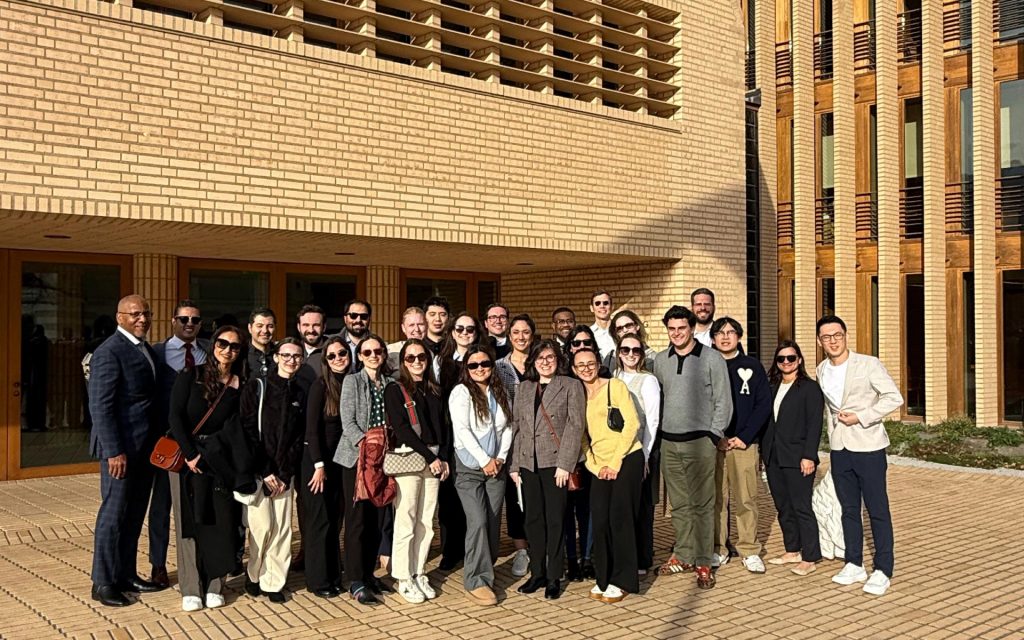
In March, 25 students from Syracuse University College of Law got an inside look as they traveled to Zurich to take part in a three-day course, The Evolving Role of International Tax, Transparency and Tax Equalization, led by Dean Emeritus and Professor of Law Craig Boise and Marnin J. Michaels G’96, L’96, a partner at global law firm Baker McKenzie Zurich, known for its high-end, cross-border corporate, finance, and tax expertise.

Syracuse Law students in a group photo outside building in Switzerland

“Throughout this trip, students realized just how critical tax law is because taxes are one cost that every company, everywhere, has, and is always trying to reduce,” says Boise, who practiced tax law before entering academia. “This experience gave students insight into why tax planning is so important to how companies structure themselves around the world and how many corporate decisions are actually driven by taxes and tax laws.”

Open to on-campus and hybrid online JDinteractive (JDi) students, the course offered presentations from a prestigious slate of Swiss-based tax attorneys, government officials, and corporate experts brought together through Michaels’s extensive professional network. Topics included tax treaties, cross-border business structures, trade issues, trust and wealth planning, and the renewed interest, particularly in the U.S., in tariffs.

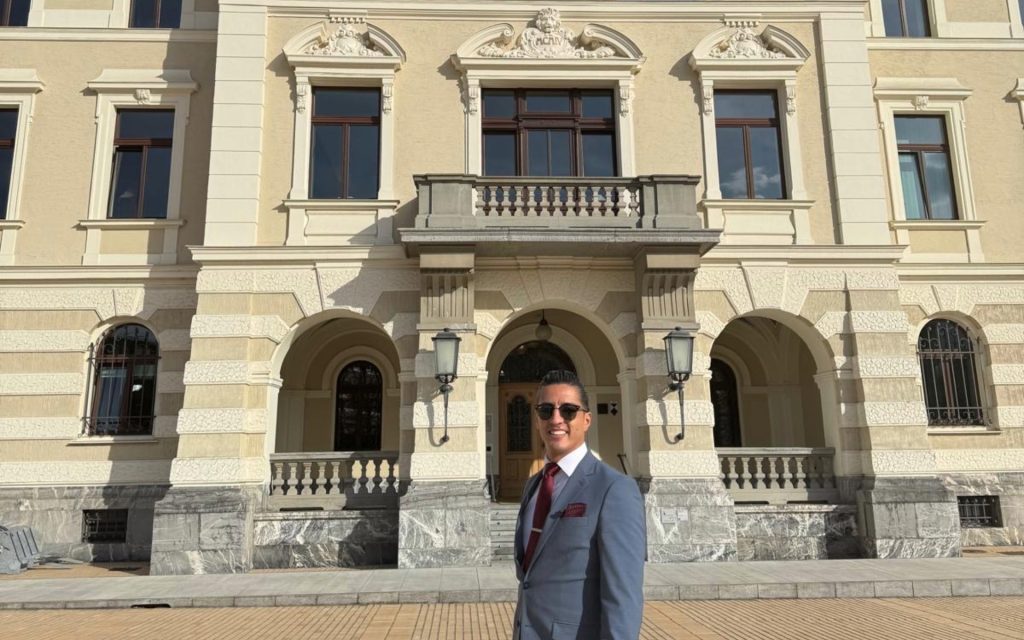
Syracuse University law student in front of building in Switzerland

“What stayed with me most was a presentation by Pablo Bentes, a partner at Baker McKenzie, on the convergence of taxes, tariffs, and sanctions,” says Omar Ismael Nuno L’27. “What made it so impactful was the way he explained that there are no longer isolated policy tools but those that increasingly work together as revenue generating and geopolitical instruments. That really changed the way I think about international legal systems because it showed how economic policy, cross-border regulation, and global power can all intersect.”

The group was hosted by Baker McKenzie and also visited Bank Vontobel, a leader in private banking and investment service with global presence and vast expertise in wealth management services.

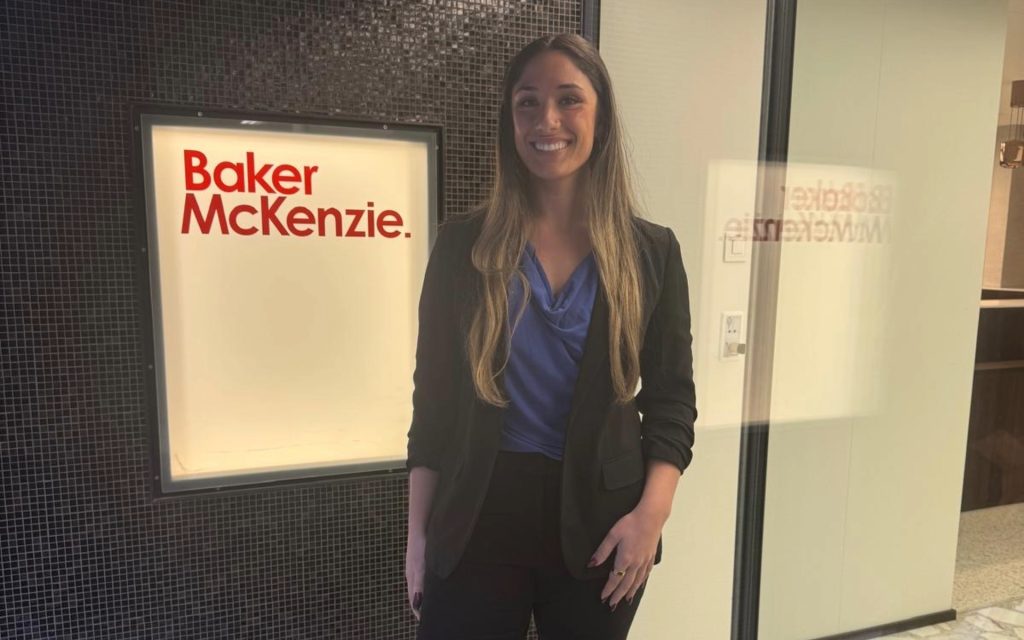
Syracuse University Law Student standing in front of Baker McKenzie sign in Switzerland.

One of the three days was spent in Liechtenstein, where students visited Kaiser Partner, a family-owned financial service group and private bank specializing in wealth management, family office services, trusts, fund administration, and investment advice.

Students also had time to experience the people, sites, and culture of Switzerland. This is the third time Syracuse Law has offered a course on international tax law outside the U.S. with this being the largest group to date, a testament to its popularity. Olivia Roberson L’27 was most impressed by the long global reach of Syracuse Law.

Syracuse Laws student standing in front of water and views in Switzerland

“Marnin Michaels truly exemplifies that there are no boundaries for us as law students, as he went to Syracuse Law and now works at Baker McKenzie in Zurich,” she says. “This shows that our opportunities are endless, and our legal careers can bring us anywhere in the world.”

Father-Daughter Duo Enroll in JDi Program with Shared Values of Helping Others Through the Law

When Emma Boehme Grant L’29 was accepted into the Syracuse University College of Law’s JDinteractive (JDi) program, she looked forward to sharing experiences with others studying the law through the hybrid online program. However, Emma was fortunate to already have someone very special in her corner to help her acclimate to law school — a 3L who just happened to be her father, George Boehme L’26.

Shared Values Draw Father/Daughter to JDi Program

George is currently completing his last semester in the JDi program, after retiring from a successful career in newspaper publishing and starting his “second act” in his 60s by enrolling at Syracuse Law.

Feeling he hadn’t done enough to make the world a better place throughout his career, George decided that a law degree would allow him to offer pro bono legal services to those in need and possibly  teach law at some point. Located in Houston, George found Syracuse Law’s JDi program allowed him to stay in Texas while achieving his goals.

Emma lives in Memphis, Tennessee, where she works full-time as the homeless management information systems director at the Community Alliance for the Homeless.

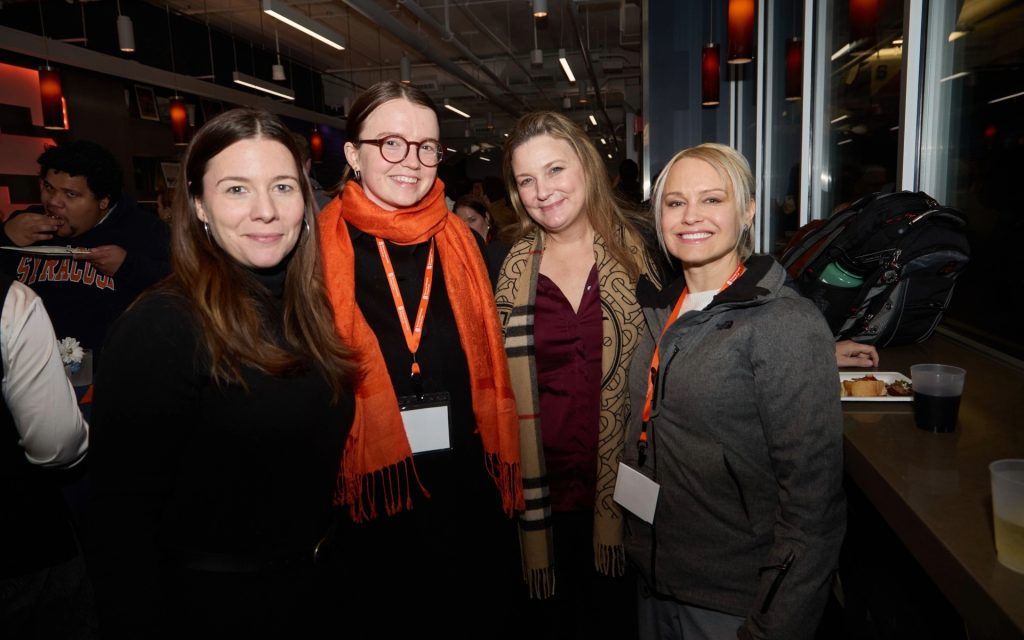
Emma Boehme (orange scarf) at a January 2026 JDi Residency in Syracuse, NY with fellow classmates Jenny Blanch Dickinson, Heather Winnie and Jill Ayers.
Emma Boehme Grant (orange scarf) at a January 2026 JDi Residency in Syracuse, NY with fellow classmates Jenny Blanch Dickinson, Heather Winnie and Jill Ayers.

She always wanted to contribute to the “greater good” and, at first, focused on art, culture, and community as a way of empowering people and creating change. Later, she chose to be a preschool teacher to impart good values, morals, and decision-making on young children.

“It was gratifying, but neither was fulfilling me the way I had hoped,” she says of her early career choices. However, Emma’s current job has shown her the many challenges organizations and the people they serve face that could benefit from someone with a formal legal background to guide them.

“Through a combination of my life experience and the current political climate, I see law school as a step in positively impacting the world around me,” she says.

Crossing Paths and Sharing Experiences

At the time, George was already enrolled in the JDi program, and Emma admits he was an inspiration to her. Seeing how much her father valued the JDi program, she decided to explore it herself and quickly realized that its flexibility and online courses could be an ideal fit for her, too.

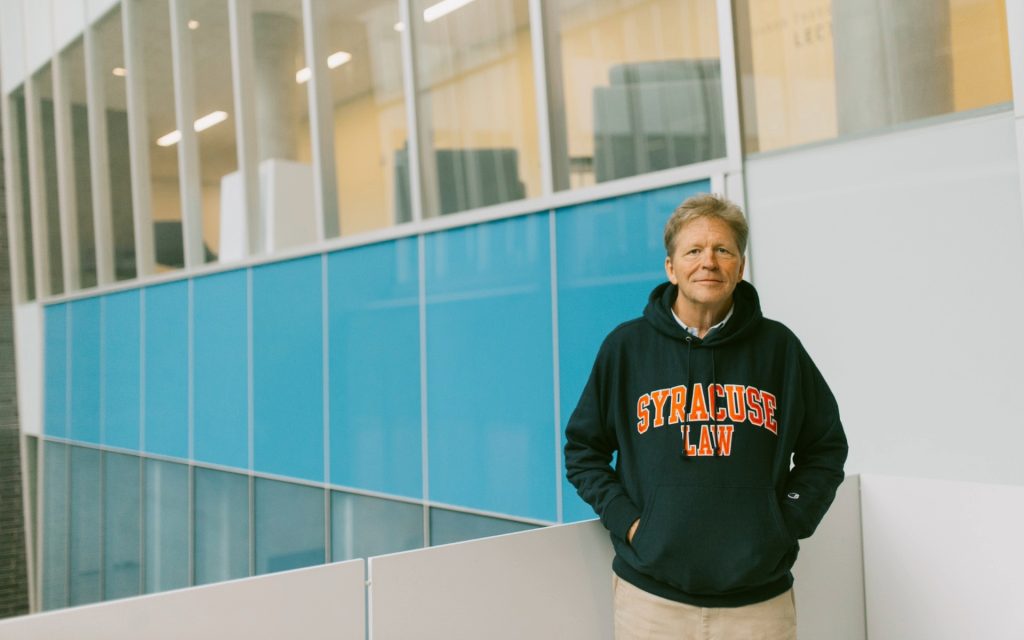
George Boehme L’26 standing in staircase in Dineen Hall.

“When my daughter first asked me about Syracuse’s JDi program, I was flabbergasted, as she had never mentioned an interest in the law before,” George says. “I wasn’t sure if she was serious at first, and I didn’t want to scare her off. But now that she is a student here, too, I am incredibly proud. I tend to be a big cheerleader for the Syracuse JDi program, as I can’t find a single flaw in my own experience, so I love telling others about it— and that included my daughter.”

Because George is two years ahead of Emma in the program and classes are held online, she did not expect much interaction with her dad. But she did not anticipate that he would serve as an academic success fellow for Civil Procedure during her first semester and for Contracts this semester.

“It just worked out that way, and it’s nice to know he’s there for me, but he doesn’t give me special privileges. He still makes me schedule office hours with him, and not just pop on the phone and say, ‘Dad, can you help me?’” Emma explains, noting that most people at the College of Law are aware that they are father and daughter.

“But, it is an advantage that he knows better than anyone how my brain works and how I process information, so, of course, he helps me and is very forthcoming with letting me know what resources are available to me at the law school,” she adds.

While Emma has a way to go in the program, she is eager to continue. George is preparing to graduate this May and start his legal career.

“Honestly, I’m disappointed that my Syracuse Law experience is about to be over, but I’m eager to see what’s in store for me after graduation, as I’ve been working hard towards that goal,” George says.

“I’m confident my daughter will have a similar experience over the next two years. And I can’t wait for the day I’ll be able to say that both father and daughter are alumni of Syracuse University College of Law.”

George Boehme L’26 and daughter Emma Bohme Grant L'29 pictured with brother and mom and dog. Picture of them all younger than today.

Retiring From the Bench, the Hon. Thérèse Wiley Dancks L’91 Leaves Legacy of Paying it Forward to Students at Syracuse Law

The Hon. Thérèse Wiley Dancks L’91 retired from the bench this February after a respected career that spanned several decades. Her accomplishments included serving as a federal magistrate judge for the U.S. District Court for the Northern District of New York since 2012, the first woman in this role; as a founding partner of the law firm of Gale & Dancks LLC with a focus on civil litigation and trial work; a highly involved member and leader of state, local, and specialty bar associations and community organizations, including past president of the Central New York Women’s Bar Association; and the recipient of numerous awards from Syracuse Law, legal organizations, and the Central New York community that reflect her contributions to the law.

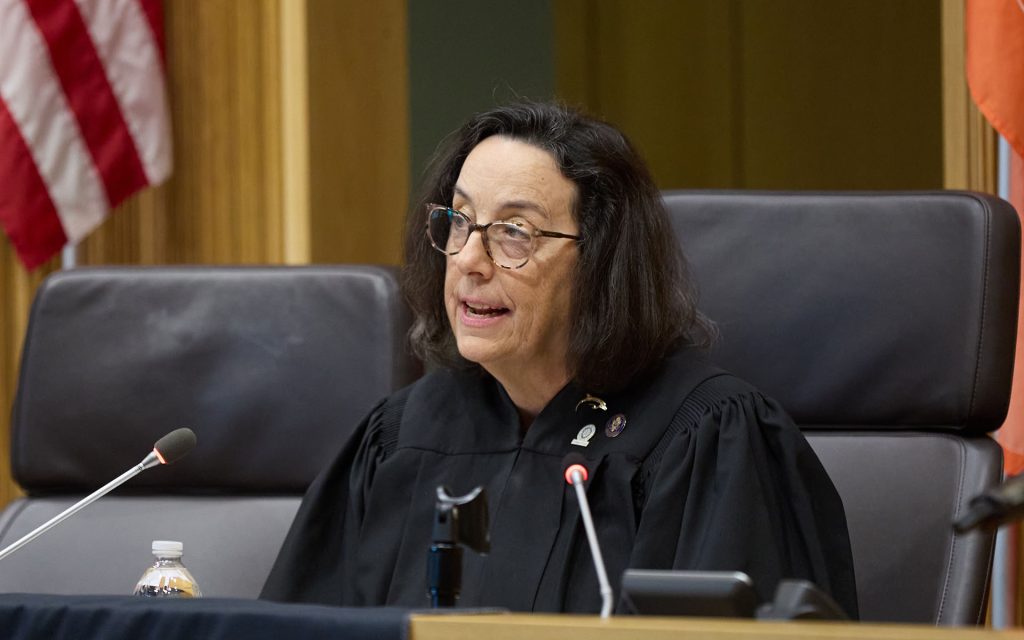
Hon. Thérèse Wiley Dancks L’91 sitting at the Judges desk speaking into microphones.

Yet, despite all her achievements, Dancks believes one of her greatest has been mentoring law students and young lawyers, particularly women, as they navigate the legal field.

“It has been my mission throughout my career to pay it forward to the next generation of lawyers,” says Dancks, who has demonstrated that commitment at her alma mater, Syracuse University College of Law, by serving as a mentor to many and offering externships to numerous Syracuse Law students, as well as those at a few other law schools. 

She also credits her law clerks who always enthusiastically embraced helping the law students who worked in chambers.

Giving Back and Paying It Forward

Growing up in East Syracuse, New York, as the youngest of eight children, Dancks loved to read and always knew she wanted to help people. Her mother was an early influence, often sharing stories of her job as a court reporter. As an undergraduate at Le Moyne College, Dancks credits her father, who was a professor there, for encouraging her to explore her options and take business law classes. The experience sparked her interest, though she didn’t earn her J.D. from Syracuse Law until age 30. After reaching that milestone, Dancks became committed to helping others do the same.

“Right out of law school, I didn’t necessarily have the financial resources to give, so I gave my time to the College of Law. I always enjoyed talking to groups of students or speaking to them one-on-one, and I also helped to judge moot court and other competitions,” she explains. “I did this in the hope that students, particularly women, would see someone who graduated from the same law school they were attending had been successful and know they could do the same.”

While her career thrived, her commitment to Syracuse Law never wavered. When she became a judge, she continued to guide students at the College of Law.

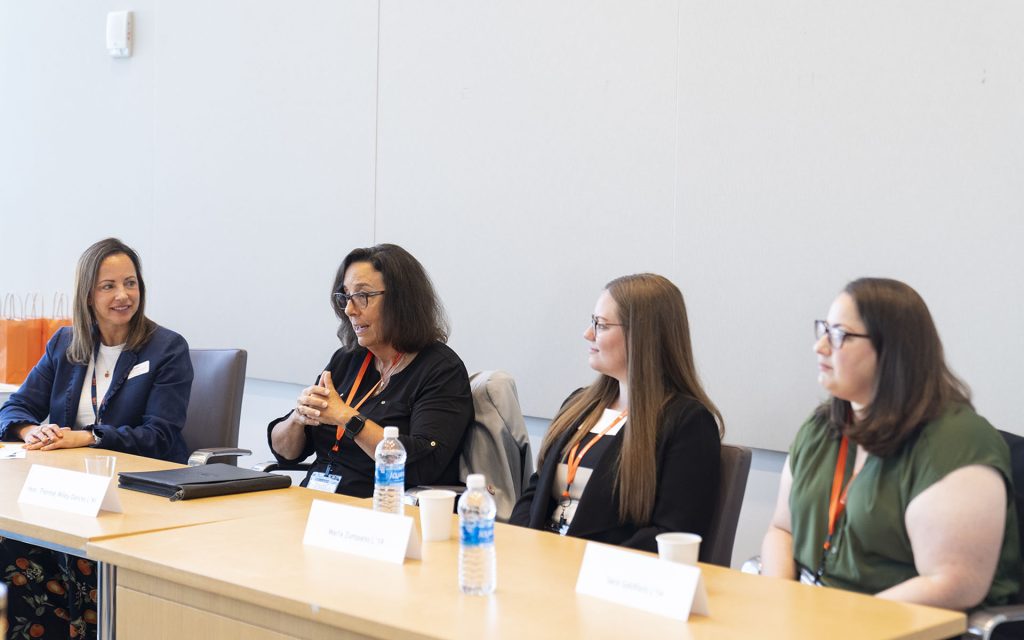
Hon. Thérèse Wiley Dancks L’91 sitting on a panel with 3 other people speaking.

“I loved having student law clerks in my chambers because they are fresh and new, and it’s all very exciting to them,” she says. “It helped me from becoming jaded, and it was refreshing to see the law through young people’s eyes.”

“I give out my email and tell students to reach out to me. Or if they want to talk we go to lunch, although students never pay for lunch—that’s my rule,” she adds.

“I just ask that they pay it forward and be a mentor or role model for other law students and help them on their career paths. If that’s my legacy, that would be awesome.”

Dedication Earns Respect of Colleagues

Her dedication has not gone unnoticed by her colleagues, including the Hon. Deborah Karalunas L’82, administrative judge for the Fifth Judicial District and an adjunct professor at Syracuse Law.

“Her energy in support of others—particularly in advancing gender equality—is boundless,” says Karalunas, who also applauds Dancks’s commitment to the legal community through her work with the Central New York Women’s Bar Association, Vera House, and the Onondaga County Bar Association.  

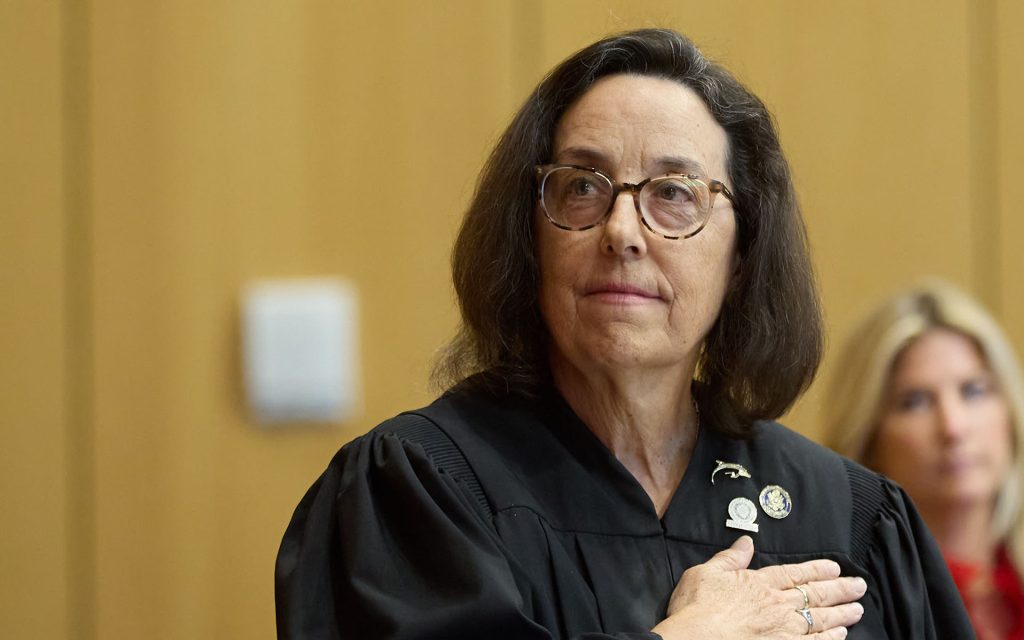
Hon. Thérèse Wiley Dancks L’91 looking away with her hand over her heart.

“Her commitment to the legal community began when she was a new lawyer and never wavered. Thérèse has given students exposure to practical legal experience, and she has helped them hone written and analytical skills critical to their success,” she adds.

Student and Alumni Cherish Her Time and Attention

What gives Dancks the most satisfaction, however, is knowing she has made an impact on Syracuse Law students who will contribute to the legal field in their own unique ways.

During an oral advocacy competition, Grace Frey L’25 first saw Dancks as she confidently led the event and gave kind but solid feedback to students.

“When I learned of Judge Dancks I didn’t yet know what a magistrate judge did, but people at the law school spoke so highly of her that I knew I had to work for her,” says Frey.

She eventually secured a “very rewarding” clerkship with Dancks. “Despite her busy schedule, Judge Dancks was available to me, especially in helping me decide what type of law I wanted to pursue. Not all judges would take the time,” Frey says. “When I passed the bar, Judge Dancks called and asked how my new job was going. She inspired me 1,000% and instilled in me the importance of giving back as you move forward.”

Frey is now a term law clerk to the Hon. Debra C. Poplin and the Hon. Jill E. McCook in the Eastern District of Tennessee, and she credits Dancks’s guidance for helping her secure the role.

Other Syracuse Law alumni have had the privilege of getting to know Dancks through organizations within the legal community.

“Judge Dancks is one of the most generous humans, and she had a truly demanding job yet would still go above and beyond,” says Colleen Gibbons L’17, current president of the Central New York Women’s Bar Association. “She is very thoughtful and genuine in a way that was really helpful to me—explaining her own career path, sharing her experiences, both good and bad; helping develop a strong network of women, and still having a depth of humility that is astonishing.”

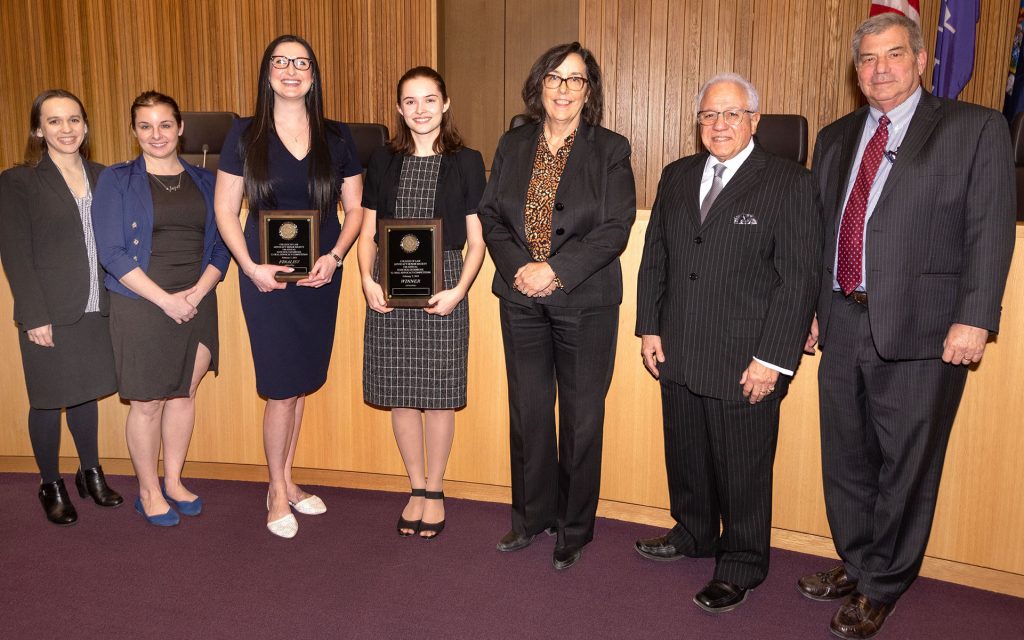
Hon. Thérèse Wiley Dancks L’91 with 6 other people, two holding plaques. Standing in front of Judges bench.
Judge Dancks with the winning team from the 2024 Hancock Estabrook 1L Oral Advocacy Competition.

Finding Her Next Chapter and Not Failing at Retirement

Dancks will probably never know quite how many people she has left a positive impression on, as there are too many to count. What she is certain of, however, is that she is “not going to fail at retirement.”

“I want to read by the water without having to drag work along with me,” she says. “I’ll keep my license for a few years, so I can do some pro bono work, possibly in landlord tenant court or small claims arbitration. Maybe at some point I’ll teach a class or a seminar. They know where to find me.”

Dancks also intends to volunteer for local organizations, which will probably include a cat shelter, a hospital, and reading programs in elementary schools, including the Read Across America Program, an initiative that the Central New York Women’s Bar Association has taken on to make sure children learn to love reading.

“It’s going to be a different rhythm, but I want some time to explore and see what I want to do in my next chapter,” Dancks says. “Whatever that is, I’m certain I’ll continue to work for justice in some way to help make the world a little bit better.”