The Institute for Security Policy and Law (SPL) has perhaps never been more relevant than the 2021-22 academic year, when Russia invaded Ukraine on February 24, 2022.
The Institute has sustained a partnership with Ukrainian civil society organizations and law schools since the summer of 2021, when the SPL director the Hon. James E. Baker participated in discussions via virtual presentations on AI, cybersecurity, and the Rule of Law. In the two weeks prior to Russia’s invasion, Baker conducted six virtual Zoom presentations to an audience of Ukrainian lawyers, professors, students, and government officials, including members of President Zelensky’s staff, the Ministry of Defense, and the Ministry of the Interior. The presentations anticipating Russian aggression, covered: Intelligence, Intelligence Oversight, Crisis Decision-making, Presidential Command and Control, the Law of Armed Conflict, and War Crimes. Four days after his last presentation, Russia invaded Ukraine.
The most frequently asked question during the sessions: Does law matter during times of existential threat? Baker’s answer: An emphatic yes. Adherence to law reflects a nation’s values, but it also contributes to the will to fight, underpins allied military and intelligence support, and as Baker states, channeling General George Washington, “leadership and obedience to law distinguish a professional military from an armed mob, or in the case of Russia, an army of war criminals.”
The Institute continues to work with civil society organizations, specifically in the countries of Georgia, Uzbekistan, and Ukraine in support of U.S. national security, the rule of law, and democracy. In May 2022, Baker virtually presented at the Diplomatic Academy of Ukraine on “The Future of International Law.” He also traveled to the University of Bialystok, Poland’s easternmost city, presenting on NATO security and the role of law. Back in the U.S., College of Law students learned about Russia’s war crimes this semester in class and during a teach-in conducted by Professor Laurie Hobart G’16 and Baker.
The Hon. James Baker
Baker is now seeking support for the Institute’s next project “Ring Around Russia,” a series of partnerships and exchange programs with universities and civil society organizations in countries along the eastern flank of NATO and the edge of Russia to reinforce the connection between law and security. Through academic exchange at the professorial and Master of Laws (LL.M.) student level, SPL hopes to instill in critical regional actors and thinkers an understanding of how good faith adherence to law supports security rather than impinges it. Doing so will help provide for NATO’s longer-term physical and legal security while building trans-Atlantic academic bonds.
In addition to the glaring impacts of the war in Ukraine, this year, students in the Institute learned about national security and its intersection with policy and law from real-world scenarios.
9/11 Lessons Learned
This past fall marked the 20th anniversary of the terrorist attacks of September 11, 2001. In anticipation of this milestone, the Institute balanced the need to honor the memory of 9/11 and contribute to a greater good in the longer term.
The SPL team worked on a series of lessons-learned essays published in a special edition of The Journal of National Security Law and Policy, drafted to inform the future rather than to adjudicate the past. Matt Kronisch, Associate General Counsel for Intelligence at the Department of Homeland Security (DHS) (on sabbatical as a College of Law Distinguished Fellow-in-Residence), led the “9/11 Lessons Learned Project.” Culminating in over twenty essays from leading practitioners and commentators, the project addressed lessons learned during the first 20 years after the terrorist attacks and how those lessons might be implemented to inform the next twenty years.
“Matt recruited a remarkable line-up of authors, whose essays are clear, short, direct, and geared toward policy and legal implementation,” said Baker. “They also represent a cross-section of practitioners and thought leaders.”
As a part of the release of the Special 9/11 Edition of the Journal of National Security Law and Policy, SPL hosted a 9/11 Remembrance Webinar/Podcast in coordination with the ABA Standing Committee on Law and National Security and ABA President Reggie Tucker, followed by a conversation between Baker, Amb. Anne Patterson, former Under Secretary of Defense for Intelligence Michael Vickers, and Rutgers Professor of Law Sahar Aziz.
Increasing Diversity in the Intelligence Community Workforce
Under the leadership of Deputy SPL Director, Professor, and retired Vice Admiral Robert Murrett, and with the assistance of Baker and Hobart, the Institute continued to implement an Intelligence Community (IC) grant to increase diversity in the IC workforce.
Robert Murrett
In addition to working with the consortium schools with underrepresented communities, and mentoring SU students, SPL hosted two intelligence symposiums this year.
The spring 2022 symposium addressed the use of intelligence to inform and shape U.S. policy following Russia’s invasion of Ukraine, and intelligence community policy issues, while also emphasizing career opportunities for a wide range of students.
Artificial Intelligence Transforms The Practice of Law
The Institute continues to play a leading role in addressing the intersection of AI, national security, law, and ethics. As artificial intelligence transforms the economy and American society, it will also transform national security, the practice of law, and the role of courts in regulating its use. What role should, will, or might judges play in addressing the use of AI? And relatedly, how will AI and machine learning impact judicial practice in federal and state
Law rarely, if ever, keeps pace with technology. The legislative and appellate processes simply do not move at the same pace as technological change. Likewise, scholars and commentators are currently better at asking questions than answering them. As AI applications and cases make their way to court, however, judges do not have the luxury of waiting for answers. As AI applications and cases arise in litigation, judges will confront novel issues. The common law of AI cannot wait.
In response, SPL first produced an “AI Framework for Judges” in the form of a Report issued by the Center for Security and Emerging Technology at Georgetown University. The Federal Judicial Center (FJC) subsequently asked the SPL AI team (Baker, Hobart, and outgoing Senior Fellow Matt Mittelsteadt G’20) to produce a first-of-its-kind FJC published booklet, “AI for Judges.” Both documents address the role of judges as evidentiary gatekeepers, constitutional guardians, and potential consumers of AI.
The FJC and National Research Council of the National Academies of Science subsequently asked SPL to prepare an AI chapter for the fourth edition of The Reference Manual on Scientific Evidence, the leading scientific manual for judges, which will be published in 2023.
A Full Year in Review
Keli Perrin
SPL defines its mission as “educating and inspiring the next generation of national security practitioners and thought leaders.” Twenty-six students graduated this spring with one or more of the Institute’s three NYS-accredited certificates of advanced study (CAS): National Security and Counterterrorism Law, Post Conflict Reconstruction, and Security Studies. The CAS program, administered by Professor Keli Perrin L’04, exposes students to a rich array of courses on national security, covering:
The law of armed conflict
Emerging technologies such as AI, quantum computing, and synthetic biology
Cyber law
Intelligence operations
Homeland security
Critical infrastructure
Privacy and surveillance
The rule of law in post conflict reconstruction
In addition, many 2022 graduating students were placed into jobs throughout the national security community this year. SPL, and its predecessor under Professor Bill Banks’s leadership, now counts more than 800 alumni in government positions.
Looking Ahead
Teaming with SPL, The Syracuse Law Review will hold its annual symposium in conjunction with Law Alumni Weekend 2022 (Sept. 22-24) on “Ukraine: Lessons Learned and the Future of Law.” Co-sponsored by the Intelligence Community Center of Academic Excellence (ICCAE), the symposium will feature Baker, Beth Kubala, Professor, Executive Director of the Betty and Michael D. Wohl Veterans Legal Clinic, and Murrett from the College of Law, along with a number of other panelists.
Beth Kubala
SPL will soon announce its new slate of Distinguished Fellows as well as a Distinguished Adjunct Professor who will offer students unparalleled access to a diverse set of national security role models and accomplished practitioners.
Holocaust survivor Elie Wiesel wrote, “We must always take sides. Neutrality helps the oppressor, never the victim. Silence encourages the tormentor, never the tormented.” The SPL team hopes that through teaching and applied scholarship SU students and graduates will be prepared to take sides in advancing the rule of law and defending the oppressed.
Three College of Law Students Receive Tillman Scholarships
The Pat Tillman Foundation has announced its 60 scholars nationwide for 2022 which includes three College of Law students: Natasha DeLeon(USMC Veteran), Amanda Higginson (Navy veteran), and William Rielly (Army veteran.) They join a fourth Syracuse University Tillman scholar, Anthony Ornelaz, Master of Fine Arts, College of Arts and Science, Air Force Veteran.
“Tillman Scholarships are extremely competitive and are only awarded to those who have made an impact through their service. I am both pleased and grateful that not one, but three College of Law students have been awarded Tillman scholarships for this year. Natasha, Amanda, and William are living extraordinary lives through their military commitments and now they are on the path to becoming extraordinary Orange lawyers,” said Dean Craig Boise.
The three students are enrolled in the JDinteractive (JDi) program. Reilly is in his second year, Higginson is in her first year, and DeLeon will start the program in August 2022.
First Generation Law Student Association Provides Support to Students
2L Erica Glastetter created the First Generation Law Students Association (FGLSA) in the fall of 2021, connecting with her other first-generation classmates to develop a network of mentors and prepare for the demands of the law school experience. FGLSA collaborates with the College of Law’s admissions office to connect with applicants who identify as first-generation law students. Around 60 mentors and mentees participated in the program this year, including 2L Caroline Synakowski, FGLSA’s treasurer.
“Imposter syndrome is a very real issue for law students and especially first-generation law students,” Synakowski said. “Knowing that I am surrounded by people with similar backgrounds and life experiences is truly encouraging.”
Voted the 2021-22 Student Organization of the Year by the Student Bar Association, the group is growing in both size and reach, recently announcing a new scholarship that will help pay for an SU first-generation law student’s education.
“We just formed this built-in support system,” Glastetter said. “If you’re struggling with something, we’re there to give you advice or tell you what not to do, because we learned the hard way by doing it ourselves.”
Renci “Mercy” Xie LL.M. ’20 and Current Doctoral Candidate, Speaks with National Public Radio on Disabled Chinese Citizens’ Fight for Disability Access
Renci “Mercy” Xie
National Public Radio interviewed Renci “Mercy” Xie LL.M. ’20 and is currently a doctoral candidate in the S.J.D. program for the story, “China excels at the Paralympics, but its disabled citizens are fighting for access.” Xie, who is focusing her degree on disability law, recounts the hurdles she faced growing up with a disability in China.
“I was in a car accident when I was 4 years old, and I lost my right leg. The teacher just tells my mom, so your kid is not OK for our school because we don’t have the accessible facility for her,” says Xie.
She and her mother fought hard to win entrance at the local public school in China so she wouldn’t have to go to a special school for the disabled.
“They were usually very far away from the city, our home. And you cannot return home every day with your family, which is one thing. Another challenge is that if you go to the special school, you cannot take the university entrance examination,” Xie says
It is no surprise that Xie is focusing her research and advocacy on promoting and advancing the rights of people with disabilities.
Ryan Marquette G’22, L’22 Announced as Syracuse University Student Veteran of the Year for 2022
Ryan Marquette
Ryan Marquette G’22, L’22 is Syracuse University’s 2022 Student Veteran of the Year. This award is presented by the Student Veterans Organization and the Office of Veteran and Military Affairs each year to a student who contributes both on and off campus to make Syracuse University “the best place for veterans.”
Marquette is a U.S. Army veteran and active member of the Army National Guard. He was a student veteran in the College of Law while simultaneously pursuing a master’s of public administration at the Maxwell School of Citizenship and Public Affairs. While his studies kept him busy, Marquette also regularly involved himself with veteran functions on campus and in the community and found the time to volunteer for the D’Aniello Institute for Veterans and Military Families, serving as a guest speaker at a Fort Drum Onward the Opportunity graduation.
During the height of COVID-19 in 2020, Marquette juggled school and his active role as a member of the National Guard as he responded to the pandemic in New York State. His efforts led to the distribution of 147,809 COVID tests, 36,661 meals, and 507 medical supply deliveries across the state. Off-campus, he leads the Leader-Scholar Scholarship in Rome, New York, where one student is awarded a scholarship for their leadership efforts throughout their high school career and volunteer work in their community. The scholarship was named after Marquette’s friend, Capt. John Levulis, who lost his life in a military training accident.
Marquette served as the president of the Operation Veteran Advocacy group at the College of Law and was an executive board member of the Syracuse Law Review. His accomplishments while at the University include receiving the 2021 Student Veterans Organization’s Best for Vets award and serving as the first-ever law school appointee to the Syracuse University Board of Trustees.
11 Students Help with the Syrian Accountability Project’s White Paper, “The 2022 Winter Olympics and Genocide: A History of Enabling Atrocities and the Path Forward”
The Syrian Accountability Project(SAP) has released the white paper, “The 2022 Winter Olympics and Genocide: A History of Enabling Atrocities and the Path Forward.” The paper recognizes the genocide occurring in the Xinjiang Uyghur Autonomous Region against the Uyghur people, documents the history of the International Olympic Committee (IOC) enabling the violation of human rights and the perpetuating of genocide, tracks the legal framework for holding complicit parties accountable, and identifies possible actions states and private entities may take to avoid complicity.
In summary, the paper indicates that “Most directly, the People’s Republic of China (PRC) is responsible for the genocide of the Uyghur people. Forced concentration camps, disappearances, and slave labor put the responsibility squarely on the shoulders of the PRC. However, the PRC does not shoulder responsibility for this atrocity alone.”
The 2022 Winter Olympics and Genocide: A History of Enabling Atrocities and the Path Forward can be downloaded from https://syrianaccountabilityproject.syr. edu/publications.
The paper was researched and written by 11 Syracuse University College of Law students along with students from the University of Michigan School of Law, Suffolk University, and the University of Washington in St. Louis under the direction of SAP founder and project leader David M. Crane L’80, Former Chief Prosecutor, Special Court of Sierra Leone and professor at the College of Law.
College of Law Students Help Former UN Special Prosecutor for International War Crimes Tribunal Write Report on War Crimes in Ukraine
Authored by David M. Crane L’80, Syracuse University Distinguished Scholar in Residence, and Syracuse University College of Law students, a new white paper, “Russian War Crimes Against Ukraine. The Breach of International Humanitarian Law by the Russian Federation,” offers in-depth accounting and accusations of crimes committed by the Russian Federation and President Vladimir Putin during the invasion of Ukraine.
The paper lays out an indictment of numerous war crimes, crimes against humanity, and crimes of aggression from February 24, 2022 to April 1, 2022, during the invasion of Ukraine. The report includes a sample draft of a criminal indictment against President Vladimir Putin for his war crimes. The white paper was created by the Ukraine Task Force, composed of law students and legal scholars, with the goal to create a non-partisan, high-quality analysis of open-source materials.
“Because of his aggressive acts and his intentional targeting of Ukrainian civilians, Vladimir Putin has lost all political legitimacy and has made Russia a pariah state. This white paper catalogs the horror he has unleashed and lays out a pathway for holding him accountable for aggression, war crimes, and crimes against humanity,” said Crane, the project leader of the white paper and Distinguished Scholar in Residence at Syracuse University College of Law.
Crane is the founding chief prosecutor of the Special Court for Sierra Leone, an international war crimes tribunal where he indicted Liberian President Charles Taylor, the first sitting African head of state in history to be held accountable in this way.
“The Ukraine Task Force established by the Global Accountability Network (GAN) was an incredible and unique experience that allowed law students to take an active part in international legal discourse,” said Syracuse Law student Christopher Martz L’22, the taskforce director and one of the lead writers of the white paper. “The Ukraine Task Force encountered serious difficulties in documenting war crimes in real time, especially considering the fact that GAN pulled students from all across the country. However, the leadership of Professor Crane and the commitment of GAN volunteers helped overcome these difficulties, resulting in an important living document that creates a framework of accountability moving forward.”
Disability Law Student 2L Matthew Yanez Featured by Syracuse Stories
Disability Law Student 2L Matthew Yanez Focuses on Being a Civil Rights Attorney
Matthew Yanez L’23 has seen the justice system at work firsthand. Growing up in California, Yanez had an uncle who was incarcerated at the Twin Towers Correctional Facility in Los Angeles. He and his father would visit his uncle on Saturday mornings, and that glimpse into the justice system sparked his interest in a career in law.
Yanez is a dual degree student in the College of Law, focusing on disability law and policy, and the Maxwell School of Citizenship and Public Affairs, where he’s studying public administration. He is certain the two degrees will help him achieve his career goal of working for the federal government in the Department of Justice to advocate for people with disabilities.
Matthew Yanez
Yanez has already gotten some great experience under his belt during the summer of 2021 when he interned for the U.S. Attorney’s Office for the Eastern District of Virginia, where he reviewed settlement agreements enforcing the Americans with Disabilities Act, drafted motions for civil litigation and put together a summary of Supreme Court cases involving disability rights. This exposure to his desired career path led him to join the Disability Rights Clinic at the College of Law so that he could continue working on amplifying the voices of those with disabilities in the Syracuse community. The Disability Law and Policy Program at the College of Law, directed by Professor Arlene Kanter, has given Yanez the guidance needed to pursue his dreams of becoming a civil rights attorney.
College of Law Deepens Law and Technology Faculty: Professor Dan Traficonte
Dan Traficonte
Dan Traficonte is Associate Professor at Syracuse University College of Law and a faculty affiliate of SU’s Autonomous Systems Policy Institute. In the previous academic year, Professor Traficonte was a Teaching Fellow at Sciences Po Paris, France. He received his J.D. from Harvard Law School and completed his Ph.D. in Political Economy at MIT, where he was also a research associate on the University’s Work of the Future Task Force. His research sits at the intersection of law, political economy, and innovation, with a particular focus on patents and the role of federal R&D programs and university research in shaping science and technology. He has published his scholarship in the Columbia Science and Technology Law Review as well as the Cardozo Law Review.
Why did you decide to teach law? What courses will you be teaching?
I think teaching law is all about helping students to develop new ways of thinking, which is really gratifying for me as an instructor. In other disciplines, there’s often a pre-set body of material that students have to master, but in law school, I think it’s really more about learning to “think like a lawyer” and hone specific ways of analyzing problems. When I taught law-related classes in the past, the most rewarding part was seeing students come away with some of these new tools. This year I’ll be teaching property and patents and trade secrets, and then adding a course on law and technology starting my second year.
What is the most important aspect of the law that students should know?
I think law students should know how the law can change and what lawyers can do to change it. I think many people encounter the law as this mystifying, rigid system that we’re all subject to and have very little say in. But the law is indeterminate and constantly evolving, and there are so many points of intervention—through direct advocacy, policy work, and other forms of law-related work—that lawyers can take advantage of and use to push the law in directions we want it to go.
What interests do you have outside of teaching and the law?
I’m originally from New England and am a pretty outdoorsy person—I like hiking and biking in the summer and fall, and I also surf in the winter (with a very thick wetsuit) when the waves are good on the East Coast. I like reading sci-fi books and have a habit of endlessly rewatching movies from the 90s. But I spend most of my free time these days hanging out with my wife and our new dog, Ollie.
What are you most looking forward to this year as you join the College of Law?
I’m thrilled to be joining the College of Law this year and exchanging ideas with all my new colleagues and students. As a big college basketball fan, I’m also excited to go to my first game at the Dome!
Alumni Return as Distinguished Guest Lecturers for JDinteractive Program Residencies
More than 11,000 Syracuse College of Law alumni live and work in every state and around the world. Tapping into this resource and global network, the JDinteractive program brought two accomplished alumni, Prashanth (PJ) Jayachandran L’98, G’98, and Richard Levy L’77, onto the teaching staff in 2021- 2022 as Distinguished Guest Lecturers. Teaching advanced residencies this year, they bring a breadth of knowledge and expertise to current students and future Orange lawyers. Jayachandran, who taught twice this year, and Levy will continue to offer their courses on an ongoing basis.
Jayachandran’s class, The Corporate Lawyer in a Sustainable World, provides students with an in-depth understanding and knowledge of the role of modern-day in-house counsel in giving legal and business advice for global corporate sustainability programs, with a focus on responsible sourcing and diversity, equity, and inclusion (DEI). Over the past several years, multinational corporations have developed robust corporate sustainability programs. The focus on sustainability initially began as corporate “citizenship,” a recognition that corporations have a vital role to play in promoting and maintaining a sustainable world. In recent years, however, voluntary sustainability initiatives have intersected with increasing global compliance. Corporate sustainability programs mix traditional labor and employment laws, environmental laws, and other global legal structures. This course gives College of Law students early advantages in understanding this complex web of compliance and business viability considerations.
Jayachandran is Chief Supply Chain Counsel for Colgate-Palmolive Company.
Levy’s course, Bankruptcy & Creditors’ Rights, examines creditors’ remedies under state statutes (e.g., collecting a judgment), the rights of secured and unsecured creditors under state law and the federal Bankruptcy Code, the protections available to individuals and businesses in bankruptcy cases, and the manner in which bankruptcy cases are administered under the Bankruptcy Code and the Federal Rules of Bankruptcy Procedure. Guest lectures of alumni and other speakers, including two United States Bankruptcy Judges and a federal bankruptcy trustee, deliver fresh, timely, and dynamic enhancements to the classroom experience.
Levy is a senior member of the Bankruptcy, Reorganization, and Creditors’ Rights Practice Group at Pryor Cashman LLP in New York City.
New for the 2022-23 Academic Year
In addition to Jayachandran and Levy, this spring will add Ted PearceL’77 to the JDinteractive Distinguished Guest Lecturers schedule. Pearce’s class, Franchising Law, will teach students the fundamentals of franchise law, as well as evaluate franchise agreements and examine their practical applications to the current franchise business model.
Pearce currently serves as counsel at Bradley Arant Boult Cummings LLP in Charlotte, NC with a practice primarily focused on franchising and over 30 years of experience as general counsel for iconic brands.
A 40-Year Legacy: A Model Professor and ‘Remarkably Good Man’
Jurist. Scholar. Historian. Professor. Poet. Painter. Mentor. Colleague. Mensch. At any given time, Christian “Chris” Day is any one of these descriptives and, sometimes, all of them at once.
Professor Christian Day
“Chris is a great colleague who has a unique appreciation for many aspects of the world beyond the law,” says Professor Margaret Harding of her long-time colleague at the College of Law. After four decades of teaching, Day is retiring, a milestone that his colleagues and former students see as an opportunity to reflect on the very best of what the College of Law has to offer. “He’s a great role model for all of us,” says Harding.
“He’s a superstar,” says Frank Forelle ’80, L’85, of his law school professor who also became his friend. “Chris is a true gentleman, old school, incredibly caring, and interested in seeing his students succeed. The impact he had on my life is more than any other professor I ever had. He’s just light years different from anyone else.”
Day is typically dismissive of accolades: “I’m someone who is uncoachable and unteachable. I don’t know how to teach students who haven’t learned how to learn. Sometimes I have a problem connecting sentences properly because I assume everyone is in the same conversation going on in my head.”
Day’s humility reflects a deep-rooted humanity that has guided him throughout his career and impacted generations of students.
“Law is a civilizing agent,” says Day. “It considers history, psychology, morals, and religious values. It permeates every aspect of our lives and offers a way of resolving problems. It’s a wonderful profession,” says the professor who has taught more than 20 courses ranging from antitrust law to restructuring of enterprises, and written dozens of articles on topics ranging from real estate finance to economic history. “I love teaching because
I like to see the excitement in other people’s eyes as they solve problems and enjoy themselves the way I do.”
For Day, it’s about giving students the tools to be problem-solvers. “I’ve worked with trial teams and appellate teams. Once you’ve grasped control over these wonderful tools and used them for good, it’s a joy.”
“As a professor, Chris offered tools, but more than that, he offered guidance to develop perspective and understanding,” says Donghoo Sohn LL.M.’13. Sohn came to Syracuse from South Korea and was part of the College of Law’s inaugural Master of Laws class. He later became a Visiting Scholar at the College and is now a corporate lawyer with Melvyn & Melvyn. “I learned from Chris that to be a good lawyer, you must be a good person. In corporate law, you learn many terms and cases that are useful in practice. But business is done by humans, and a successful business transaction must consider how it benefits people.”
“I teach commercial transactions, which is probably the most statutory of law courses,” says Day. “But I also teach that sometimes the solution to a problem is not a legal solution. A lot of things can be solved by a conversation among the parties involved.”
Former law student and now Professor of Law Cora True-Frost G’01, L’01 says Day’s willingness to engage in lengthy conversations—and debate—help make him so special. True-Frost describes herself as a “seemingly unteachable student” who arrived at the College of Law with “an affinity for public service and a strong suspicion of profit-making and corporate America.” In her classes with Day, she would debate with him over fundamental principles in corporate law: “Chris modeled professional ways to engage and mentor students that not all professors do. As my professor, he valued and engaged my opinions even though they differed from his own. Although he was the expert in this area, he welcomed my outsider perspective. He offered me an opportunity to exercise my voice and to do it with confidence. In the process, he modeled for me how to bridge the divide between professors and students, and how to do so professionally. For better or worse, he also persuaded me that there can be some value in profit-making. He values personal interaction and has always been willing to devote significant amounts of time to students. He became a very important part of my life and I have been incredibly fortunate to be his colleague.”
Day describes himself as “a red-meat-eating-capitalist” and True-Frost says the story of their friendship is a “message of hope for where the United States is right now. We remain on opposite sides of the political spectrum, but we respect each other and continue to learn from each other, and value each other’s very different perspectives. Everyone who works with him, and all his students would agree that Chris has a heart of gold, notwithstanding his strong belief that we should all be going after gold! He’s a truly endearing person…a true mensch in belt and suspenders.”
“Chris always put his students’ needs and interests first,” says Harding, who started teaching at the College of Law in 1994 and followed Day as Associate Dean for Academic Affairs in 2015. “Chris wanted to make sure his students were prepared for the practice of law. He has a true appreciation for the role lawyers play in our society and encouraged his students to understand the context within which clients’ problems arise. With this understanding, Chris believed that students would be well positioned to resolve clients’ problems holistically.”
“Lessons from his course on land use law have stayed with me throughout my career,” says Michael Walls L’84, who retired last year as Vice President of Regulatory and Technical Affairs at the American Chemistry Council. “I worked in the policy arena, and Chris gave his students a wonderful way of understanding how policy decisions play out, including the unintended consequences, and how the law can help resolve conflict.” Walls was one of Day’s first research assistants, an experience he says convinced him that Day was “a polymath in the classic sense of the word. He may have been writing about an IRS ruling, but he always brought other interests into his work—tax law, economics, how markets work, history, and finance. My experience with Chris not only demonstrated his abiding interest in the law but how it could be a force for good and for justice.”
An exhibit of Professor Day’s oil paintings were on display in the library and atrium during the spring semester.
Day says he enjoyed bringing his experience in the corporate world into the classroom. Before coming to Syracuse, Day practiced law in Philadelphia, spending several years at a firm specializing in real estate and litigation. Today, he stays in touch with many of his students and offers counsel in their real-world jobs. He says his 10 years of experience as Associate Dean at the College of Law honed his management skills. “I try to bring my observations of good people skills into the corporate setting. A lot of times, a legal problem is not a legal problem at all, but it’s a management problem or a personality problem.”
“Chris is a remarkably good man,” says Aviva Abramovsky, Dean and Professor of Law at the University of Buffalo School of Law. Abramovsky spent more than a decade at Syracuse University College of Law, much of it working closely with Day in the Law in London program. Day was co-director of the Law in London Program from 2004-2007, and director of the Law in London Externship Program from 2008-2017. “Chris is a real believer in corporate responsibility. He is a man of great character and commitment, the kind every institution needs and not enough have.”
She notes that Day’s appreciation for history and other cultures made him the perfect person to help shape the London program. “In many ways, the British have the greatest English language lawyers in the world,” says Abramovsky. “It is a privilege and pleasure to watch the barristers, with their wigs and robes. It helps us understand the common law system we inherited from the British. Given Chris’s love of history, literature, theaters, and Shakespeare, he was very much at home.”
“For many students in the London program, it was their first time outside the U.S.,” says Day. “They worked with good mentors. Every student matured from their placement.” Day tried to integrate British culture into the London law experience. “The Brits work at a slightly different pace—and their manners are better than ours generally,” he notes with a touch of humor.
“Knowing Chris for well over 30 years is like attending a lovely dinner party in the English countryside,” says colleague Robin Paul Malloy, E.I. White Chair and Distinguished Professor of Law and Kauffman Professor of Entrepreneurship and Innovation. “It is quite the treat. There is so much to enjoy and to learn from the conversation being served. Chris always brings a love of history and legal tradition to the table. Most of all, he takes pleasure in relaying stories about the successes of his many students.”
Part of Day’s legacy is the redesign of the London program. Similarly, he leaves an enduring legacy in the design of Dineen Hall which redefined legal education. A decade in the planning and construction, Dineen Hall is a magnificent 200,000-square-foot space that was named one of the most impressive law school buildings in the world by Best Choice Schools. Day was a member of the “Gang of Five” that directed the construction of Dineen Hall.
“I had a strong interest in architecture and as a corporate real estate lawyer, I worked with engineers and builders, so it was my pleasure to work with architects and others from start to finish,” says Day. “It gave me a chance to do what I love doing in practice— solve problems.” He describes the result as “a glorious place to learn and teach and work.” And, ever attentive to detail, Day adds: “They brought it in on time and under budget!”
Most important to Day was creating a building that would allow nature’s beauty to be felt. “Even on the gloomiest of days, there’s natural light in the building. It’s such a wonderful thing.” Says Harding: “Syracuse can be so gray, yet so much light comes in the classrooms. The design integrates faculty offices with classroom spaces and the atrium is a place to both work and socialize. It’s very beautiful.”
Day says the interior staircase that runs from the ground floor to the fourth floor is reminiscent of Fallingwater, the iconic home in Laurel Highlands, PA, designed by renowned architect Frank Lloyd Wright. Fallingwater is described as “organic architecture: the harmonious union of art and nature.” Day says it was his goal to bring together art and nature in a place that would nurture those who study and work at the College of Law.
“Surroundings are just so important,” says Day, a conviction captured in his other passion and avocation, his art. “I grew up in Wheatfield, Niagara County, Western New York. It was farm country. Farms are beautiful and important. They have dignity and heft,” says Day in the introduction to a catalog of oil paintings featured in a recent exhibition entitled Still Life, Still Land at Dineen Hall. “There is great beauty, power, peace, and longing in the farmland, lakes, and rolling hills of Central New York.”
Day started drawing and painting at the tender age of four and continued to develop as an artist, but decided on a career in law, so that he could make a living. He says his legal training and management skills have made him a better artist. “I’m efficient. I think a lot about the subject. I paint what I know. I paint what I love.”
Day’s students and colleagues believe there’s a natural connection between his vocation and avocation. “Chris loves teaching law students in the same way he loves painting,” says former student Sohn. “As an artist crafts a painting or shapes a sculpture, Chris crafts and nurtures law students into becoming fine lawyers.”
“His paintings are works of introspection,” says former student Forelle. “He zeros in on a scene. He’s focused.”
“His artistry is evidence of his sensitivity, his ability, and his desire to perceive and reflect what is beautiful in life,” says colleague True-Frost. Day displays that focus on what is beautiful in life in one of his favorite poems, entitled Ordinary Times: “…the gentle wind, the dying of the light, frost on the grass; petals staying the course, winter coming; life renewed, and gentle breeze, rising sun envelopes me…”
Day calls himself an “impressionistic realistic.” He paints what he sees, leaving an impression that is beautiful and inspiring. Similarly, he teaches the language of the law (he calls corporate finance a “bizarre sort of poetry”), leaving an indelible impression on four decades of College of Law graduates.
“For Chris, teaching was not about getting you to the right answer,” says Walls. “It was about getting you into the ballpark with the ability to play around. It was never just the one-and-done answer. He helped his students understand the broad parameters of the law—to see the entire landscape and figure out ways to interpret that landscape in a meaningful way.”
“Every person who studied under or works with Chris will tell you that he is generous with his knowledge, but that’s not what makes him unique,” says Dean Craig Boise. “He channels his many passions—as a true Renaissance man—into his teaching and gave his students a unique vision of what the law could help them accomplish in the world. There’s a little bit of Chris—his voice, his spirit, his goodness—in hundreds of College of Law graduates making a difference around the globe.”
Professor Margaret Harding spoke about Professor Day and his impact on the College at the end of his final class.
Professor Cora True-Frost G’01, L’01 Awarded Fulbright to Research European Tribunals and International Disability Law
Cora True-Frost G’01, L’01, Bond, Schoeneck and King Distinguished Professor, has been selected by the U.S. Department of State and the Fulbright Program to join the University of Oslo, Pluricourts as a Fulbright Scholar. Beginning in August 2022, True-Frost will conduct her research and scholarship on European Tribunals and International Disability Law: Definitions, Discrimination, and Involuntary Detention.
Cora True-Frost
“Fulbright Scholarships are prestigious academic achievements and Professor True-Frost is a deserving recipient and representative of the College of Law in this program,” says Dean Boise.“Her scholarship at the intersection of international law and politics and the rights of the disabled is being justly recognized. Cora is a gifted classroom teacher and will ultimately enrich this field and our students, building connections between leading international courts and our law school.”
Q: What is your research focus for this distinguished appointment, and what are your intended outcomes?
True-Frost: I will be examining contests between European tribunals and international bodies over the interpretation and application of international law, with a specific focus on international disability law norms within Europe by the Court of Justice for the European Union (CJEU) and the European Court of Human Rights (ECtHR.) Several substantive areas in the Convention on the Rights of Persons with Disabilities (CRPD) are provoking high-stakes contests of legitimacy and authority between and among both international-level treaty bodies, and regional courts. I intend to initially engage an admittedly broad question, but through a methodologically narrow approach: In the 2020s, what relative roles do international courts, regional tribunals, as well as “soft law”-makers, such as human rights treaty bodies and the European Commission (“EC”), play in determining the rights of people with disabilities in Europe?
While national domestic legal systems work to avoid conflicts by permitting appeals only within a strict hierarchy of authority and constrained jurisdiction, the same is not true of the international system. The complexities and sophistication of the judicial system of the European Union (“EU”) offer a perfect opportunity to examine conflicts and variations arising in the legal interpretation and application of a relatively new international law, the CRPD. Within Europe, multiple sources of law and policy protect people with disabilities—national legislation, European Union Directives, European Commission subsidiary organs, regional conventions, the European Disability Forum, and Council of Europe policies. International law, such as the CRPD, also protects people with disabilities in Europe.
My past scholarship has examined the effects of the CJEU’s efforts to respect and observe its international legal obligations. To give an example, a past project examined the impacts of the Kadi & al-Barakaat case, in which the CJEU struck down a Council of the European Union (“Council”) law for violating fundamental rights1 in implementing the UN Security Council’s (UN SC) resolution. The CJEU decision took pains to emphasize the EU’s compliance with international law even in the face of a particularly draconian UN SC resolution. My work showed how the CJEU decision in turn helped push the powerful UN SC to reform its procedures related to targeted sanctions in the fight against terrorism post-9/11.
My broader scholarly focus on international-level tribunals and organizations inevitably and frequently overlaps with decisions of regional tribunals such as the CJEU and the ECtHR. For example, although my forthcoming article, “Listening to Dissonance at the Intersections of International Human Rights Law” contributes to the fragmentation literature by focusing on conflicts between the interpretations of provisions of treaties by international-level treaty bodies; through analyzing issues related both to the horizontal allocation of authority and the impacts of conflicting interpretations on different norms, my research continuously led to the jurisprudence of the CJEU and ECtHR.2 I am excited to be able to take this next step in my research.
Q: What are your intended outcomes from your research?
True-Frost: I will be developing a qualitative series of case studies of contests of authority and legitimacy focused on various EU Directives implementing the CRPD and CJEU judicial decisions regarding these Directives. This will form the core research. The first phase of this project will map and analyze various consistencies, conflicts, and variations in European tribunals’ articulation of three substantive areas of disability law in relation to international disability law standards: defining disability,3 applying employment discrimination law,4 and setting forth standards for involuntary detention.5 In its second phase, the project will develop normative implications both for the legitimacy of international and regional courts and for the substance of disability law.
I very much welcome the opportunity to closely engage CJEU and ECtHR decisions in conversation with the community of many scholars working on Pluricourts’ international tribunals research in Norway, and would plan to make research trips, as needed, to Geneva, Luxembourg, and Strasbourg. My work overlaps with the literature’s focused on at Pluricourts. I have written regarding almost all of the research topics, particularly: the legitimacy of international tribunals; the proper allocation of powers between different international and national lawmaking, executive, and judicial organs; the impacts of global administrative law, and best practices of international lawmaking bodies.
Q: Why did you pursue a Fulbright?
True-Frost: My international law scholarship has always benefitted and grown from my experience abroad. Pursuing this important research topic about conflicts between international and disability law in Europe will offer me the opportunity to meet with various stakeholders in European regional and domestic courts and do primary research.
I am an international law scholar with a focus on the development of human rights norms in international tribunals and organizations. However, my research over the last decade has continued to lead me to the jurisprudence of European tribunals, which have had a strong influence on the content of international human rights law.
Q: Why study European law in Norway in particular?
True-Frost: Norway has a unique relationship with the EU, so the opportunity to examine its own domestic interpretations of European and international human rights law will offer more context to my research on conflicts. Luckily, in 2020, when I decided to pursue my research with the Fulbright program in Europe to focus on European law, I learned that the University of Oslo offered a Fulbright grant focused on international courts and tribunals. I was already aware of the University of Oslo’s Pluricourts research center, which is a Center of Excellence funded by the Norwegian government, as I had the opportunity to attend the 11th Annual Conference of the European Society of International Law in Norway in September 2015, which Pluricourts had sponsored. During my brief visit, as a junior scholar on pre-tenure leave, I was extremely impressed by the University, its faculty, and its strong networks in international law. Over the course of the short conference, I saw many ways that the Pluricourts’ research agenda overlapped with my own research agenda. My interest in living and researching in Norway now is helped by the knowledge that two dear friends and former colleagues of mine from my earlier work on gender justice in East Timor, who are Norwegian, both live in Oslo now with their families. This is an example of how networking and staying in touch professionally builds bridges to future international experiences.
The Fulbright also offers me the opportunity for concentrated, comparative research in disability law, a new area of interest for me. At Syracuse Law, I have had the pleasure of teaching international and domestic law students who are Blind, Deaf, dyslexic, and wheelchair-using, among many other disabilities. I have seen the challenges my students, both domestic and international, face in securing the support and accommodations they require. In recent years, as international attention has rightly if belatedly, focused on too long-delayed calls for racial justice, my interest in race and intersectionality along with my experience with disabled students, have raised my awareness and concern about the many unnecessary challenges people with disabilities face.
Q: What impact will this have on your teaching?
True-Frost: I look forward to integrating connections and publications from this research project into both the ECtHR and International Human Rights Law classes I teach. I also look forward to connecting our students interested in international law with the work I will be doing abroad, by delivering remarks/observations to College of Law students via Zoom or Skype while I am at the University of Oslo. I look forward to learning more about Norwegian higher education techniques, as I have been able to do in France with our partners there during the ECtHR classes.
1 The ECJ held that the review of lawfulness applied only to the EC act purporting to give effect to the international agreement, and not to the international agreement itself. See, e.g., C. Cora True-Frost, Signaling Credibility: The Development of Standing in International Security, 32 Cardozo L. rev. 1183 (2011).
2 C. C. True-Frost, Listening to Dissonance at the Intersections of International Human Rights Law, 43 MiCh. J. int’L L. 361 (2022).
3 See, e.g., Case C-13/05, Sonia Chacon Navas v. Euerst Colectividades SA, 2006 E.C.R. I-6467 (defining “disability” as “referring to a limitation which results in particular from physical, mental or psychological impairments and which hinders the participation of the person concerned in professional life”); Case C-303/06,
S. Coleman v. Attridge Law and Steve Law, 2008 E.C.R. I-5603 (reaffirming the CJEU’s definition of “disability” from Chacon Navas); Joined Cases C-335/11 & C-337/11, HK Danmark, acting on behalf of Jette Ring v. Dansk almennyttigt Boligselskab and HK Danmark, acting on behalf of Lone Skouboe Werge v. Dansk Arbejdsgiverforening, acting on behalf of Pro Display A/S, 2013 E.C.L.I. 222 (in the aftermath of the EU’s ratification of the CRPD re-defined the concept of “disability” by writing that it “must be interpreted as including a condition caused by an illness medically diagnosed as curable or incurable where that illness entails a limitation which results in particular from physical, mental or psychological impairments in which interaction with various barriers may hinder the full and effective participation of the person concerned in professional life on an equal basis with other workers, and the limitation is a long-term one”).
4 A complainant proceeding before the CJEU in 2021 will find the CJEU’s interpretations of EU employment discrimination law to be far more harmonious with international disability law standards than they were in just 2015. See, e.g., Grainne de Burca, The Decline of the EU Anti-Discrimination Law?, __ n.Y. Univ. L. rev. (forthcoming); Michael Rubenstein, Recent and Current Employment Discrimination Cases in the Court of Justice of the European Union, 15 eqUaL rts. rev. 57 (2015); Vlad Perju, Impairment, Discrimination, and the Legal Construction of Disability in the European Union and the United States, 44 CorneLL int’L L. J. 280 (2011).
5 See, e.g., Oviedo Convention and its Protocols, CoUnCiL of eUr. (n.d.), https://www.coe.int/en/web/bioethics/oviedo-convention; Robert Adorno, The Oviedo Convention: A European Legal Framework at the Intersection of Human Rights and Health Law, 2 J. int’L BioteChnoLogY L. 133 (2005); UN Rights experts call on Council of Europe to stop legislation for coercive mental health measures, eUr. disaBiLitY f. (May 28, 2021), https://www.edf-feph.org/un-rights-experts-call-on- council-of-europe-to-stop-legislation-for-coercive-mental-health-measures/; Karolina Kozik, What Does the Council of Europe Have Against People with Disabilities?, hUM. rts. WatCh (Nov. 4, 2020), https://www.hrw.org/news/2020/11/04/what-does-council-europe-have-against-people-disabilities#.
University Professor David Driesen Selected as a Fulbright U.S. Scholar to Research the Impact of Carbon Pricing
University Professor David Driesen will study the impact of carbon pricing and produce scholarship on his findings as to the outcome of his Fulbright U.S. Scholar selection. Driesen will be conducting his research at the University of Ottawa, Canada beginning September 6.
“Professor Driesen is a leading scholar in environmental law and this support will further his thoughtful research in the area of carbon pricing and climate change,” says Dean Craig Boise. “Fulbright Scholarships are highly competitive and receiving one reflects the value and urgency of an applicant’s research. I look forward to David’s continued scholarship in this area and the impact it will have on our students.”
Q: What is your research focus for this distinguished appointment and what are your intended outcomes?
Driesen: My research focus is on new literature suggesting that carbon pricing (emissions trading and carbon taxes) has not worked very well. I want to evaluate this literature and put it into a kind of conceptual framework. Much of this literature builds on my previous scholarship in this area.
What are your intended outcomes from your research?
Driesen: I plan to publish a law review article and probably at least one short peer-reviewed piece reporting the results. I hope to improve the debate about the value of carbon pricing.
Q: Why did you pursue a Fulbright?
Driesen: The University of Ottawa has a “Smart Prosperity Institute,” which is very good, and its leadership encouraged me to apply. Canada has required each of its provinces to adopt some sort of carbon pricing program, so it’s a good laboratory for looking at how well it’s working.
Q: What impact will this have on your teaching/scholarship?
Driesen: I expect that this will inform my teaching of climate law and in one way or another inform the future direction of my climate scholarship. I’ve been doing more constitutional law work in the last few years, and this is a way of bridging back to the climate disruption work.
Professor Jennifer Breen and Associate Dean Kristen Barnes Awarded 2022 CUSE Grants
Professor Jennifer Breen and Associate Dean Kristen Barnes have both been awarded 2022 Collaboration for Unprecedented Success and Excellence (CUSE) grants from the Syracuse University Research Office.
Breen will receive a Seed Grant for her new research project on the Disparate Responses of Labor Unions to COVID Workplace Protections.
Associate Professor of Sociology Gretchen Purser is a co-primary investigator for this project. The research team is interested in understanding the variation in public health responses to the COVID pandemic from labor unions. According to Breen and Purser’s research, unions are important drivers of political participation, particularly among individuals with low levels of education. The team plans to explore how unions might drive political participation, also considering whether unions counter misinformation on the pandemic.
Barnes will receive an Interdisciplinary Seminar Grant for her inter-disciplinary series on Write2Vote: Curricula to Enhance Civic Engagement and Representation.
Barnes is one of the investigators on the team, along with Patrick Berry, Associate Professor of Writing Studies, Rhetoric, and Composition, Mark Brockway, Faculty Fellow in Political Science and Religion, Brice Nordquist, Associate Professor and Dean’s Professor of Community Engagement Writing Studies, Rhetoric, and Composition, and Hector Rendon, Assistant Professor of Communications. The primary goal of this interdisciplinary series is to develop and connect civically engaged courses, assignments, and experiences across a range of curricular contexts at Syracuse University and to assess the impact of implemented civic engagement on students, instructors, and community partners.
Professor Lauryn Gouldin Named 2022 – 2025 Meredith Professor for Teaching Excellence
Crandall Melvin Professor of Law and Director of the Syracuse Civics Initiative Lauryn Gouldin has been named a Meredith Professor by Syracuse University, recognizing her excellence in teaching.
The award is one of the highest teaching honors bestowed by the University, awarded to two appointed tenured faculty annually.
Gouldin teaches constitutional criminal procedure, criminal law, evidence, constitutional law, and criminal justice reform at the College of Law. Her scholarship focuses on the Fourth Amendment, pretrial detention and bail reform, and judicial decision-making. Her articles have appeared in the University of Chicago Law Review, BYU Law Review, Denver Law Review, Fordham International Law Journal, and the American Criminal Law Review, among others.
Professors Arlene S. Kanter and Cora True-Frost published in the American Journal of International Law Unbound Symposium
Professor Arlene S. Kanter, Laura J. and L. Douglas Meredith Professor of Teaching Excellence 2005-2008, Director of the Disability Law and Policy Program, and Faculty Director of International Programs, and Bond, Schoeneck, and King Distinguished Professor Cora True-Frost L’01, have contributed essays to the American Journal of International Law Unbound in response to the publication, “Disability, Human Rights Violations, and Crimes Against Humanity,” published by Cambridge University Press.
Kanter’s essay is entitled, “The Potential Benefits and Limitations of the New Human Rights Indicators for the Convention on the Rights of People with Disabilities.”
True-Frost’s essay is entitled, “Can International Criminal Law Help Express the Unrealized Value of Disabled Lives?”
This volume of the Unbound by symposium publication offers responses to the article, “Disability, Human Rights Violations, and Crimes Against Humanity” by William I. Pons (Senior Legal Advisor to the UN Special Rapporteur on the Rights of Persons with Disabilities), Janet E. Lord (Harvard Law School Project on Disability and Advisor to UN Special Rapporteur on Disability) and Michael Ashley Stein (co-founder and Executive Director of the Harvard Law School Project on Disability, and Visiting Professor at Harvard Law School.)
Professor Beth Kubala Elected as an Advisor to the West Point Association of Graduates
Professor Beth Kubala was recently elected as an advisor to the West Point Association of Graduates (WPAOG), the Alumni Association for the United States Military Academy (USMA). Kubala will serve as a member of the Advisory Council, a relatively large body responsible for advising the WPAOG Board of Directors on matters pertaining to the Association’s affairs. The WPAOG serves West Point and its graduates to further the ideals and promote the welfare of USMA.
Retired Lieutenant Colonel Beth Kubala, a class of 1993 West Point graduate, is a Teaching Professor and Executive Director of the Betty and Michael D. Wohl Veterans Legal Clinic. Kubala served in the United States Army for 22 years and had multiple leadership positions in the Judge Advocate General’s (JAG) Corps, including Military Judge at Fort Drum, New York.
“I’m honored to have been elected to this position by my fellow graduates and I look forward to giving back to West Point,” Kubala said.
In addition to her role as advisor, Kubala will be joining the WPAOG Development Committee. The Development Committee advises the Board of Directors on the Association’s fundraising program and helps foster philanthropic support for cadet activities, programs, scholarships, and facilities.
Law and the Invisible Hand: A Theory of Adam Smith’s Jurisprudence, by Professor Robin Paul Malloy
Professor Robin Paul Malloydiscussed his new book, Law and the Invisible Hand: A Theory of Adam Smith’s Jurisprudence (Cambridge
Robin Paul Malloy
Syracuse Law Symposium on the Threat of “Executive Authoritarianism”
University Professor David Driesen’s new book—The Specter of Dictatorship: Judicial Enabling of Presidential Power (Stanford, 2021)—examines how the U.S. Supreme Court’s presidentialism threatens democracy and what the United States can do about it.
Driesen’s new book reflects on the political turmoil of recent years, during which many Americans were left wondering whether the U.S .system of checks and balances is robust enough to withstand an onslaught from a despotic chief executive.
To answer this question, Driesen analyzes the chief executive’s role in the democratic declines of Hungary, Poland, and Turkey. He argues that an insufficiently constrained presidency is one of the most important systemic threats to democracy, and he urges the U.S. to learn from the mistakes of these failing democracies.
In spring 2022, Syracuse Law Review presented a day-long symposium that addressed Driesen’s major themes in panels that brought together the nation’s top legal scholars of constitutional law, the Supreme Court, and the rule of law.
Moderated by Professor Kristen Barnes, the first panel of the Symposium examined “The Unitary Executive, Autocracy, and American History” with Jed Shugerman of Fordham University School of Law; Jennifer Mascott of the Antonin Scalia Law School, George Mason University; and Noah Rosenblum of New York University School of Law.
Syracuse Law Professor Mark P. Nevitt moderated the second panel. Addressing “The Supreme Court’s Embrace of Executive Power,” the panel featured Julian Mortenson of the University of Michigan Law School; Tom Keck of Syracuse University’s Maxwell School of Citizenship and Public Affairs; and Heidi Kitrosser of the University of Minnesota Law School.
The final panel examined “Reforming Presidentialism: Comparative and Domestic Perspectives” with moderator Professor Cora True-Frost and panelists Andrea Katz of Washington University School of Law; Cem Tecimer of Harvard Law School, and Robert Tsai of Boston University School of Law.
Professor Paula Johnson Featured on Frontline Episode Exploring Unsolved Murder of 1960s Civil Rights Leader Wharlest Jackson Sr.
Paula Johnson
College of Law Professor Paula Johnson appeared on an episode of Frontline entitled “American Reckoning” on February 15, 2022. The episode examines the unsolved 1960s bombing murder of NAACP and civil rights leader Wharlest Jackson Sr., offering rarely-seen footage filmed more than 50 years ago.
“American Reckoning” examines Black opposition to racist violence in Mississippi, spotlighting a little-known armed resistance group called the Deacons for Defense and Justice, woven alongside the Jackson family’s decades-long search for justice amid the ongoing federal effort to investigate civil rights area cold cases.
Johnson was tapped for the episode due to her work as Director of the Cold Case Justice Initiative (CCJI) at the College of Law and her ongoing work on the Wharlest Jackson case. CCJI conducts investigations and research on unresolved cases, offers academic courses, public forums, and other special events, and serves as a clearinghouse for sharing and receiving information on active cases. College of Law student members of CCJI were also interviewed for the episode.
Professor Shubha Ghosh Invited by the Japan Patent Office to Participate in Two Patent Workshops
Crandall Melvin Professor of LawShubha Ghosh, Director of the Syracuse Intellectual Property Law Institute, participated in the workshop, “Research on Standard-Essential Patents and Patent Exhaustion,” held by the Japan Patent Office. Ghosh provided legal insight and perspectives on these timely patent issues.
In the Standard-Essential Patents (SEP) workshop, the program included a report on the latest global trends in SEPs and a panel discussion on standard essential patents from various perspectives, in addition to the interim report of the results.
In the Patent Exhaustion workshop, the program included a lecture on the state of Patent Exhaustion in the age of IoT and a panel discussion on the utilization of method patents in the change in industrial structure from “things” to “services,” in addition to the interim report of the results
Professor Doron Dorfman Testifies to House Committee About Vaccine Mandates
Professor Doron Dorfman testified to the United States House of Representatives Committee on Education and Labor Joint Hearing of the Subcommittee on Workforce Protections and the Subcommittee on Civil Rights and Human Services on the topic of “Protecting Lives and Livelihoods: Vaccine Requirements and Employee Accommodations.”
In his prepared remarks, Dorfman testified, “The main question underlying this testimony is whether a COVID-19 vaccine requirement in the private workplace can stand under the current antidiscrimination doctrines, specifically the need to provide accommodations in the form of modifications from certain workplace policies to protected classes. My answer is yes.”
He went on to describe how the well-established rule on the employer’s prerogative affects the ability of employers to require their employees to get the COVID-19 vaccine and discussed the proposed Occupational Safety and Health Administration COVID-19 Emergency Temporary Standard, which calls for covered employers to require their employees to be vaccinated against COVID-19 or to produce a negative COVID-19 test before coming to work.
Turning to the legal standards for requiring employers to provide accommodations/modifications to employees who are members of three legally protected classes, Dorfman discussed the accommodation mandate for employees who are religious observers, the accommodation mandate for employees with disabilities, and the accommodation mandate for pregnant employees.
College of Law Holds Commencement for Class of 2022
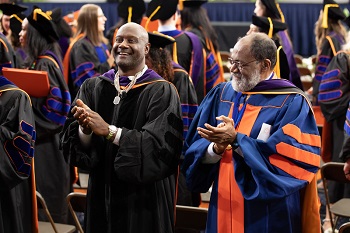
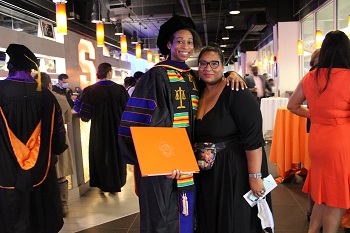
On Friday, May 6, Syracuse University College of Law held Commencement for its 199 J.D. and 33 LL.M. graduates. The event, the first in-person Commencement since 2019, featured the first graduating class of JDi students. Luke Cooper L’01 CEO of Latimer Ventures, Partner at Preface Ventures, and 2022 Visiting Scholar at the University of Maryland Baltimore was the Commencement speaker.
College of Law Commencement, 2022
Syracuse University Chancellor Kent Syverud provided remarks and announced the Hon. Theodore A. McKee L’75 Endowed Law Scholarship, thanks to the generosity of Board of Advisors Member Richard M. Alexander L’82, Chairman of Arnold & Porter, and his wife Emily. The scholarship will provide Syracuse Law students with the education and cultural context to enable them to carry forward the legacy of Judge McKee, who has served on the United States Court of Appeals for the Third Circuit for 27 years.
Professor Todd Berger received this year’s Res Ipsa Loquitur Award, given to a faculty member for “service, scholarship, and stewardship” to the students. Professor Richard Risman was voted by the LL.M. Class of 2022 as the recipient of the Lucet Lex Mundum Award, for his significant impact on the successes and experiences of the LL.M. students during their studies.
In his remarks to graduates, Cooper emphasized the importance of always embracing the most authentic pieces of ourselves and broadcasting how these strengths can play to our advantage in overcoming challenges. Reflecting on his personal journey, he also encouraged students to find their purpose and to find the “mud” that’s beneath and around all of us, and to ask themselves how they will help clear the mud and bring about a more inclusive world. “A great orator once asked, what’s most important… the flower… or the ground that grows it? In order for the flower to fully blossom and mature it must traverse a muddy path slowly, and with intention, bending it toward the light. That muddy path contains the secrets to its beauty… the secrets to its magic.”
Syracuse Law Graduates Inaugural Class of Ground-breaking Online JD Program
On May 6, 2022, students in the inaugural class of Syracuse University College of Law’s first-of-its-kind JDinteractive (JDi) program graduated alongside their peers in the College’s residential JD program. This fully ABA-accredited program is the first in the nation to combine live online class sessions with self-paced class sessions. Its innovative design served as a model for other law schools pivoting to online education amid the pandemic.
The members of the inaugural class, which comprised 45 of the 199 College of Law’s JD recipients this year, distinguished themselves in their legal studies. Many are graduating with honors and were active in extracurricular activities and pro bono work. Twelve served on the Syracuse Law Review or other journals, many participated in the Student Bar Association and other student organizations, and some started new student organizations.
“I’m extraordinarily proud of all our 2022 graduates, but I’m particularly pleased to see our inaugural JDi cohort earn their law degrees,” says Dean Craig Boise. “From across the country and around the world, they have studied with us year-round for more than three years, while balancing full-time work and family obligations. They are incredibly talented and motivated, and we’re honored to count them among our Syracuse Law alumni family.”
Consistent with the program’s goals of increasing access to legal education, the JDi graduates are a diverse group:
They hail from 25 different states, including Hawaii and Alaska, and have taken classes while living in multiple countries, including Germany, the Netherlands, and Japan.
Eleven are members of the military or military-affiliated, including high-ranking, retired veterans and spouses of active-duty military personnel based in Germany and New Mexico.
30% are students of color.
Their median age is 35.
“These students are the embodiment of the goal at the core of JDi: to expand access to legal education and the legal profession,” says Professor Shannon Gardner, Associate Dean for Online Education. “Without this program, this diverse group of talented, accomplished, and ambitious grads would not have been able to pursue their aspirations of becoming lawyers.”
“Designing JDi required us to rethink how we deliver education and gave us the opportunity to take the best of what we do in our residential program and translate it into the online space,” says Professor Nina Kohn, Faculty Director of Online Education, who led the design and launch of JDi. “We could not be prouder of these students for their achievements here. Their success shows that—with careful planning and an insistence on always putting student learning first—we can deliver a high-quality legal education to students no matter where they may be located.”
College of Law Adds Five New Board of Advisors Members
This year, the College of Law has appointed five new Board of Advisors members: Peter Carmen L’91; Prashanth (PJ) Jayachandran G’98 L’98; Terence Lau L’ 98; Benita Miller L’96, and David Wales L’95. These appointments reflect the heft of the College of Law’s alumni and underscore the College’s commitment to project on its board the diverse talent and leadership represented by its alumni community.
Peter Carmen
Chief Operating Officer, Oneida Indian Nation and its enterprises
Peter Carmen
In this role, Carmen works closely with Oneida Indian Nation leadership to oversee the daily operations and administration for Oneida Nation Enterprises LLC, which includes Turning Stone Resort Casino, YBR Casino & Sports Book, Point Place Casino, Oneida Innovations Group, The Lake House at Sylvan Beach, The Cove at Sylvan Beach, SavOn Stores, Maple Leaf Markets, The Preserve hunting grounds, Salmon Acres fishing lodge, five golf courses, three marinas, two spas, and dozens of restaurants. His role also includes oversight of Oneida’s administration, including Legal, Finance, IT, Human Resources, Governmental Affairs, Security, Marketing, and Supply Chain, and he works with the Oneida leadership in overseeing the Oneida Indian Nation Police Department.
Prashanth (PJ) Jayachandran
Prashanth (PJ) Jayachandran
Chief Supply Chain Counsel for Colgate-Palmolive Company
As lead counsel for the Global Supply Chain, Jayachandran oversees global commercial contracting, labor relations, and legal issues related to logistics, transportation, trade, manufacturing, and product distribution. Jayachandran also addresses key global policy issues related to human rights, environmental impact, and sustainability. In his prior roles for Colgate, Jayachandran served as Chief Human Resources and Benefits Counsel, and Division General Counsel for Colgate Asia.
Jayachandran serves as Distinguished Lecturer for the College of Law’s JDinteractive program, teaching a course related to corporate sustainability (“The Corporate Lawyer in a Sustainable World”).
Terence Lau
Dean, College of Business at California State University, Chico
Terence Lau
For the past four years, Lau has been Dean of the College of Business at California State University, Chico. Previously, Lau held several senior academic leadership positions at the University of Dayton School of Business Administration, including as Executive Director of Academic and Corporate Relations, at the University of Dayton China Institute; Associate Dean of Undergraduate Program; Department Chair, Department of Management and Marketing; Director, International Business Program; and Professor of Business Law.
Lau was also a U.S. Supreme Court Fellow, assigned to the Office of the Administrative Assistant to the Chief Justice, which aids the Chief Justice in his administrative, policy, and ceremonial responsibilities, among other tasks. Prior to his Fellowship, Lau was an attorney in Ford Motor Company’s International Practice Group
and served as director of Ford’s Association of Southeast Asian Nations (ASEAN) Governmental Affairs.
Benita Miller
Benita Miller
Executive Director, Powerful Families Powerful Communities; and Executive on Loan, State of New Jersey Department of Children and Families
Miller is currently the Executive Director of Powerful Families Powerful Communities and an Executive on Loan to the State of New Jersey Department of Children and Families overseeing a five-year demonstration project created to re-imagine New Jersey’s child welfare system through a human-centered design process that leverages the voice of community members as co-designers. She previously served as the President and CEO of Children’s Aid and Family Services in New Jersey. Prior to her work in New Jersey, Miller served as the Executive Director of Brooklyn Kindergarten Society where she expanded the agency’s early childhood education footprint from five to seven centers as well as built the first sensory gym co-located in New York City Housing Authority development.
Wales is recognized as a leading antitrust lawyer and has over 25 years of experience in both the private and public sectors. His practice focuses on providing antitrust advice to U.S. and international clients in a wide range of industries on all aspects of antitrust, including mergers and acquisitions, alliances, criminal grand jury investigations, dominant firm conduct, distribution arrangements, licensing, and competitor collaborations.
“The College of Law benefits greatly from our dynamic, engaged Advisors who provide essential guidance in support of our mission and our students,” says Dean Craig Boise. “Peter, PJ, Terence, Benita, and David bring varied backgrounds, perspectives, and experiences to our distinguished Board. I look forward to working with them closely as we continue to advance our mission and prepare our students for their careers in law.”
“Law schools must anticipate and respond to a rapidly changing legal profession, with innovative educational offerings and opportunities for students,” said Board of Advisors Chair Robert M. Hallenbeck L’83. “These four highly regarded lawyers and community leaders will help provide insight into the future of the profession that will ensure that the College of Law is well-positioned to meet the needs of our students and build a bench of influential and practice-ready Orange lawyers.”
The Cold Case Justice Initiative Announces the Second Annual Wharlest And Exerlena Jackson Legacy Project Interactive Program
The Wharlest and Exerlena Jackson Legacy Project and the College’s Cold Case Justice Initiative (CCJI) hosted the second annual Program on April 1 and 2, 2022 in honor of the memory of Wharlest and Exerlena Jackson for their major contributions and sacrifices to the cause of racial justice, civil rights, voting rights, and full civic engagement
This year’s program theme was: Honor Their Memories. Continue Their Legacy. The second annual program of the Wharlest and Exerlena Jackson Project was designed to recognize the sacrifices of the Jacksons for civil rights, to provide information and resources for students to achieve their aspirations and goals, and to continue the Jacksons’ legacy for racial and social justice.
The program featured a keynote presentation by Brad Lichtenstein and Yoruba Richen, directors of the PBS Frontline documentary, “American Reckoning,” about the lives of Wharlest and Exerlena Jackson, and the Black community’s resistance to racial injustice. There were remarks by Jackson family members, including Denise Jackson Ford and Wharlest Jackson, Jr., CCJI Director Professor Paula C. Johnson, and law students in the Cold Case Justice Initiative, among other presenters
IAPP, Syracuse Law Partner to Present Inaugural Kurt Wimmer L’85 IAPP Westin Scholar Award
The International Association of Privacy Professionals (IAPP), the largest and most comprehensive global information privacy community and resource, is partnering with the College of Law to present the new annual Kurt Wimmer IAPP Westin Scholar Award in memory of Kurt Wimmer L’85, a longtime privacy professional and 1985 graduate of the College of Law who passed away earlier this year.
With the growing need for well-qualified privacy and data protection professionals, this award will support law students who consider a career in privacy and data protection. “Kurt Wimmer was an exceptional privacy leader and lawyer and has left an indelible mark in the field,” says J. Trevor Hughes, IAPP President and CEO. “We’re pleased to offer this award in Kurt’s memory at a time when developing privacy professionals is essential to the privacy industry, and we look forward to recognizing outstanding students and emerging lawyers with this honor.”
Kurt Wimmer
As a privacy and technology lawyer, Wimmer had a passion for working closely with clients including Facebook, Microsoft, Samsung, and other multinationals, in addition to non-traditional clients such as the National Football League and National Hockey League. He provided invaluable counsel in navigating constantly evolving challenges with acumen and alacrity. Most recently, he had served as Co-Chair of Covington & Burling’s global data privacy and cybersecurity practice in Washington, DC.
Congratulations to 3L Clifton L. Stacy III for being named the inaugural Kurt Wimmer IAPP Westin Scholar. Stacy will receive a $1000 stipend, free membership to the IAPP for two years, and the opportunity to pursue career-advancing certifications for privacy professionals through IAPP, free of charge.
SPL, CSET Publish Groundbreaking AI Framework for Judges
As artificial intelligence transforms the economy and American society, it will also transform the practice of law and the role of courts in regulating its use. What role should, will, or might judges play in addressing the use of AI? And relatedly, how will AI and machine learning impact judicial practice in federal and state courts?
To provide a framework for judges to address AI, the Institute for Security Policy and Law at Syracuse University and the Center for Security and Emerging Technology at Georgetown University have published the first-of-its-kind policy brief “AI for Judges.”
Law rarely, if ever, keeps pace with technology. The legislative and appellate processes simply do not move at the same pace as technological change and could not do so if they tried. Likewise, scholars and commentators are currently better at asking questions than answering them.
To access the report and more news on AI and the law, visit securitypolicylaw.syr.edu/our-work/law-policy- artificial-intelligence
Syracuse Law Offers AccessLex Institute’s Helix Bar Review to Students at No Charge
In a national first, the College of Law has partnered with legal education nonprofit AccessLex Institute to offer AccessLex’s interactive Helix Bar Review prep course free of charge to all Syracuse Law students.
Helix Bar Review is a state-of-the-art, comprehensive bar review program that offers students full access to the program during their third year of law school, up to 20 weeks before the bar exam. Early access is one of the distinguishing characteristics of the Helix Bar Review, and it ensures that students with multiple responsibilities can start their review early and complete the entire course on the schedule they choose. Other bar preparation programs are not fully open until much later.
Helix Bar Review’s online, adaptive learning platform uses an integrated content approach, an active learning interface, personalized pathways, and flexible access options designed to adapt to individual learning styles and to help students efficiently use study time to confidently prepare for the bar exam.
While Helix Bar Review uses all the traditional components of a bar review course—such as substantive law outlines, practice questions, and flashcards—the program employs active learning and other methods that are based on the most up-to-date learning science and support long-term retention of knowledge. Learning methods include short videos, illustrations, checklists, and workshops called “Pass Classes.”
“Continuing our track record of innovation in legal education, I am thrilled that Syracuse Law is the first school to partner with AccessLex as they launch their new Helix Bar Review program. This groundbreaking program offers the tools and preparation our graduates need to efficiently and effectively prepare for the bar exam,” says Dean Craig Boise. “At Syracuse Law, we are laser-focused on student success at every step of the law school journey. This partnership will give our students a distinct edge in studying for the bar exam—setting them squarely on the path to career success—while reducing their debt by eliminating the need to finance a commercial bar prep course.”
“We are grateful, honored, and excited to be partnering with Syracuse Law in bringing Helix Bar Review to its students. At AccessLex, we have long said it is an accident of history that the bar exam preparation industry exists as it currently does, which makes this, potentially, a seminal moment in legal education,” says AccessLex President and Chief Executive Officer Christopher P. Chapman. “As the leader of a law school whose reputation for innovation and progressive action is well known, Dean Boise recognizes that the Helix approach to bar prep tracks with his strategic vision for student success. It is why we feel Syracuse Law is a perfect partner for the public launch of this game-changing endeavor.”
“We know there are law students who do not purchase a commercial bar prep program because of the cost implications,” says Kelly Curtis, Teaching Professor and Director of Academic and Bar Support at the College of Law. “The additional cost of bar prep should never be a barrier to a graduate’s success on the bar exam. With this partnership, we remove that barrier.”
Race and Justice in Central New York” Series Wins NYSBA Award
The New York State Bar Association Committee for Bar Leaders of NYS has announced that “The Bond, Schoeneck & King Series on Race and Justice in Central New York” is the 2021 winner of the NYSBA “Innovation Award” for medium-sized associations. The series—launched in the fall 2020—is a collaboration among the College of Law, Onondaga County Bar Association, Bond, Schoeneck & King PLLC, and other community partners and CNY law firms. The series was created with the goal of helping people examine and better understand the structure of local and national legal systems and their impact on disparate outcomes for those in historically disenfranchised groups.
As Professor Paula Johnson, Director of the Cold Case Justice Initiative and a “Race and Justice in CNY” project coordinator, explained at the series launch, “The deaths of George Floyd, Breonna Taylor, Ahmaud Arbery, and other unarmed Black people and people of color at the hands of law enforcement compelled the Bar Association and the College of Law to respond in ways that involved, informed, and collaborated across our community.”
The inaugural event in the series was the “Racial Justice Community Book Read,” which discussed the memoir, Just Mercy, by Bryan Stevenson. Professor Johnson and Associate Dean of Equity and Inclusion Suzette Meléndez, a member of this collaborative, were two of the facilitators who led these book discussions, along with other community members. The Series also included a June 2021 discussion of “The State of Police Reform in Central New York,” a Facebook Live event moderated by Professor Johnson that convened officials from Syracuse-area towns and law enforcement organizations.
Brian J. Gerling L’99 Named Executive Director of Innovation Law Center
Syracuse University College of Law alumnus Brian Gerling L’99 is the new Executive Director of the Innovation Law Center (ILC). Gerling, who brings nearly two decades of intellectual property and commercial litigation experience to the role, takes the helm from M. Jack Rudnick L’73, who will remain engaged with the ILC as Senior Advisor.
Gerling most recently served the College of Law as an adjunct professor, teaching innovation law and technology law courses. In his new role, he will continue to teach as a member of the College of Law faculty. He also will retain his Of Counsel affiliation with Syracuse law firm Bond, Schoeneck & King PLLC, where his practice focuses on IP, data privacy, emerging technology, and economic development.
Gerling serves on the Board of the Central New York International Business Alliance and on the Technology Council of the Manufacturers Association of Central New York, and he holds other ex officio board positions. In addition to his J.D., cum laude, from Syracuse University College of Law, Gerling holds a B.S. in Biology from the State University of New York at Binghamton.
As ILC Executive Director, Gerling oversees the center’s applied learning course—the Innovation Law Practicum—in which students from the College of Law and across Syracuse University gain practical skills and experience assisting companies with IP, regulatory, and market landscape research, as well as capital sourcing.
Gerling will work with Professor Shubha Ghosh and the Syracuse Intellectual Property Law Institute to administer the College’s Curricular Program in Technology Commercialization Law Studies. He also will direct the New York State Science and Technology Law Center (NYSSTLC), which is a grantee of the Empire State Development´s Division of Science, Technology, and Innovation (NYSTAR).
“As one of ILC’s brightest alums and biggest advocates—and a former student of its founder Ted Hagelin—Brian brings expertise and enthusiasm to the center. His deep and wide-ranging practice experience in IP law, and especially emerging technology, will enrich our students’ educational experiences,” says Dean Craig Boise. “I look forward to working with Brian to build on Jack Rudnick’s remarkable work expanding ILC and NYSSTLC so that our students continue to get real-world experience working with a wide variety of technology clients.”
As part of his ongoing scholarship, Professor A. Joseph Warburton examines investment products that are popular with the public. Warburton’s most recent research into two investment products finds that both contain risks that are not transparent to investors and come mainly in the form of embedded financial leverage or borrowed money that these investment products take on, putting investors’ money at risk.
In his Business Lawyer feature below, Warburton analyzes business development companies (BDCs), a type of investment company popular today among retail investors and retirees because of the high dividends BDCs pay. But because of leverage, BDCs incur more risk than the market benchmarks and significantly underperform once you account for that extra risk.
An earlier article in the Journal of Empirical Legal Studies co-written with Michael Simkovic of the University of Southern California, shines a light on a surprising degree of borrowing activity by the everyday mutual funds
Business Development Companies: Venture Capital for Retail Investors | 76 Business Lawyer 69 (January 2021)
A BDC is a type of investment company that finances small and growing American businesses. After raising capital in public markets, BDCs then fund companies considered too small or risky by traditional lenders. Many BDCs are open to retail investors and offer an alternative to private venture capital firms that are often out of reach. Investors are attracted to BDCs because of their potential to pay out high income, but the rewards come with risks.
BDCs are favored by Congress, which excused these types of companies from key provisions of the regulations that govern other investment companies. BDCs are allowed, for example, to incur greater leverage through borrowed money. The more capital BDCs can obtain from investors, according to Congress, the more BDCs can finance small and growing enterprises, thereby promoting job creation and economic growth. BDCs have largely stepped into a role that banks have vacated, becoming an important component of the financial system for small and midsize businesses. While Congress has championed BDCs as a way for small and midsize businesses to obtain financing and grow, it has not analyzed hard evidence on how BDCs perform for the investing public, as this article does.
This article is the first academic study to examine the BDC comprehensively. Why has the literature overlooked BDCs? One reason is the complexity of the regulatory framework. Another reason is the lack of available data. Warburton’s research and findings address both obstacles.
Through his research, Warburton explores the history of BDCs and their purpose. He dissects the laws that govern BDCs – which are neither exempt from the Investment Company Act of 1940 nor fully regulated by it. In order to fulfill their mission of assisting emerging enterprises, BDCs are highly restricted in their investments and activities. The Investment Company Act requires that BDCs finance primarily private or small public companies, which restricts their assets to illiquid or thinly traded securities. To promote the growth of BDCs (and the growth of companies in which they invest), key provisions of the Act are applied to BDCs in a relaxed manner. The rules permit BDCs to engage more freely in leverage and related-party transactions than other investment companies.
Next, Warburton’s research shows an empirical analysis of BDCs using a unique dataset built from hand-collected information from BDC filings. The figure below displays the number of BDCs in existence, by year, for all BDCs and publicly traded BDCs, revealing that BDC formation has come in two major waves: 2004–06 and 2011–15.
Number of BDCs
Today, there are more than 50 BDCs that are exchange-traded and available to retail investors. In addition, dozens of BDCs are public but not exchange-traded, and others that are private.
Looking at the performance of publicly traded BDCs over a 21-year period, the research shows that BDCs live up to their reputation for high income, with the typical BDC yielding about 10%. Moreover, the total returns (stock returns plus dividends) of BDCs appear to match or beat the benchmark indices (high-yield bonds and leveraged loans). However, BDCs incur substantially greater risk than the benchmarks. BDCs are permitted to be highly leveraged, nearly all BDCs employ leverage, and their performance is highly volatile. On a risk-adjusted basis, the typical BDC significantly underperforms the benchmarks, trailing by four to six percentage points per year.
During the March 2020 market crash at the outbreak of the COVID-19 pandemic, shares of publicly traded BDCs declined by over three times as much as the benchmarks, on average.
BDC Performance
The figure to the right shows the performance of $10,000 invested in an index of publicly traded BDCs during 2020, compared to the two market benchmarks (high-yield bonds and leveraged loans). The $10,000 investment in BDCs was worth $9,115 at the end of 2020, versus $10,711 if invested in high-yield bonds and $10,312 if invested in leveraged loans. BDCs were also more volatile over the year than the benchmarks, which themselves are among the riskiest parts of the fixed-income market.
Warburton advises retail investors and their financial advisors to consider the findings of this research before investing in publicly traded BDCs. Before adding a BDC to your portfolio, be sure to consider its track record and avoid BDCs with a history of negative risk-adjusted performance.
Mutual Fund Borrowing Poses Risk to Investors
Reprinted from the Harvard Law School Forum on Corporate Governance and Financial Regulation | A. Joseph Warburton and Michael Simkovic (University of Southern California), January 3, 2020
Millions of Americans rely on mutual fund investments to pay for their retirement, but mutual funds contain hidden, previously under-appreciated risks.
Warburton and Simkovic’s new study published in the Journal of Empirical Legal Studies, “Mutual Fund Borrowing Poses Risks to Investors”, provides evidence that mutual funds borrow in an attempt to improve their performance. Those attempts not only fail to boost average returns, they also increase the volatility of returns, potentially creating serious problems for those who need to withdraw their money at a time when the market is down.
The Investment Company Act of 1940 permits mutual funds to have a capital structure that is up to one-third debt. Warburton and Simkovic’s paper is the first to study the performance of open-end funds that exploit their statutory borrowing authority.
Through their research, the team constructed a database using information contained in annual filings of open-end domestic equity funds covering 17 years from 2000 to 2016. They discovered that a surprising number of funds—18 percent— bulked up at some point by borrowing money for leverage. These borrowing funds underperform their non-borrowing peers by 62 basis points per year on a total return basis, while also incurring greater risk. After accounting for risk, borrowers underperform by 48 to 72 basis points annually. The research explains that funds often borrow in an unsuccessful effort to juice performance after having lagged in the mutual fund rankings.
Mutual funds that borrow are plain-vanilla mutual funds, not exotic investment vehicles often associated with leverage, such as alternative funds and levered index funds. By contrast, Warburton and Simkovic found that funds that use derivatives and other financial instruments perform about as well as unleveraged mutual funds, before and after adjusting for risk, and with less volatility. This suggests that many mutual funds use derivatives to hedge risk rather than as a substitute for leverage through the capital structure.
Concerned about leverage, regulators have recently been examining funds’ use of derivatives, but that focus may be too narrow as borrowing also presents a risk to investors. The SEC has recently proposed new rules on the use and reporting of derivatives by registered investment companies. According to their research, Warburton and Simkovic suggest that regulators would benefit from collecting further data on mutual fund borrowing, to provide greater transparency into mutual fund capital structure.
Conclusion
Professor Warburton advises individuals to investigate leverage before putting money into any investment product. Although this can require digging into the fund’s annual report, a phone call to the fund might be sufficient. The effort is worthwhile in the end. Funds that borrow money for leverage carry extra risk. He adds, “If you decide that you are ok with that extra risk, then be sure to consider the fund’s track record. Avoid funds with a history of negative risk-adjusted performance when using leverage.”
In August, 2022, Syracuse University College of Law will offer an intensive, 2-credit course in Crypto & Digital Assets. Professor Jack Graves will formally serve as the course instructor but will make liberal use of cameos by a wide range of experts from both the private and public sectors, including SEC Commissioner Hester Peirce. This broad range of perspectives and expertise should be uniquely valuable in providing students with an appropriate analytical framework for taking on a variety of challenging legal issues arising in real time in this rapidly evolving area of commercial law.
This essay by Professor Graves delivers an overview of the course content and a brief survey of the dynamic concepts and features of cryptocurrency and digital assets and their implications.
An Introduction to Bitcoin as the Prototypical and Still Dominant Cryptocurrency
It all began with Bitcoin,1 a “peer-to-peer” version of electronic cash that would operate on a fully decentralized platform, without any need for intermediaries. Instead of relying on trusted intermediaries, the platform itself would supply the requisite trust by distributing copies of the public blockchain ledger to every node (individual computer) on this decentralized network. In effect, the digital chain of blocks on the ledger would function as the currency. This distributed public ledger would be made immutable (and therefore trusted) using cryptographic hashing functions. This would make it effectively impossible to change previous entries to the ledger without a majority of the CPU power of the nodes on the network participating (practically impossible and presumably against the interests of any majority as holders of a sizeable financial stake in the network).2
The idea of “law and crypto” is arguably oxymoronic at its core, as the early individuals who conceptualized, deployed, and nurtured the Bitcoin blockchain had little, if any, regard for any potentially applicable legal or regulatory structure. In fact, they were in large part motivated by dreams of creating an entirely autonomous, decentralized financial system that was independent of, and fully beyond the reach of, any government. Today, however, the newly emerging ecosystem of cryptocurrencies and digital assets has expanded far beyond that described by Satoshi Nakamoto in his famous 2009 white paper. While the Bitcoin protocol has largely remained true to its roots, as originally conceptualized, many of its digital offspring have significantly diverged in both concept and purpose. Virtually all, however, retain the basic idea, at least in principle, of employing digital blockchain technology to provide broader and more efficient accessibility to key elements of the global financial system.
Depending on what week it is, the total market capitalization of cryptocurrency and related digital assets is likely somewhere between 1 and 2 trillion US dollars (and reached closer to 3 trillion during late 2021). Somewhat over half of this total is, at any given time, represented by the two most popular cryptocurrencies—Bitcoin (the original) and Ether (or ETH), the coin of the Ethereum network, which tends to be used in a broader range of decentralized finance (DeFi) platforms beyond simple cryptocurrency trading. Of these two, Bitcoin’s market capitalization is a little more than double that of ETH, though the importance of ETH to DeFi broadly is particularly significant. ETH is also important for its efforts to change the way its blockchain is secured, as more fully addressed later in this essay.
Perhaps it shouldn’t surprise us that Bitcoin and its progeny have developed in somewhat of a legal vacuum. After all, the original Bitcoin idea arguably had deep anti-government (or at least a lack of trust in government) libertarian roots, and its market capitalization was relatively insignificant until about five years ago, only really taking off in the past couple of years. As such, we are presented today with a unique opportunity to examine the development and application of a new and evolving field of law. What follows is a very brief (in the limited space available) survey of some of the major issues.
Crypto Coins
A Few Key Concepts and Definitions
We should first set out key concepts and definitions. The value of a Bitcoin is entirely a product of market forces. With no obvious objective value, it is determined solely by supply (which is growing but ultimately limited) and demand (in effect, whatever the market is willing to pay). When first introduced by Nakamoto, it was worth nothing in the absence of the first buyer. Since then, however, the value has risen generally and fluctuated significantly over time, with a high in excess of $65,000 per Bitcoin in late 2021 and a current price as of this writing of about $30,000. To date, Bitcoin has shown a tendency to fluctuate in value over time to an extent much greater than most traditional currencies.
“Altcoins” are cryptocurrencies with floating values other than Bitcoin. These include ETH and a few dozen other coins with significant market caps, as well as hundreds of less financially significant altcoins. In contrast to Bitcoin and Altcoins, “Stablecoins” are pegged to a specific currency (such as the US dollar). Stablecoins are not typically intended as investments themselves (as they should not vary in value) but are instead typically used to facilitate transactions in Bitcoin or Altcoins by removing price uncertainties from one side of the transaction. Perhaps the ultimate stablecoin is one issued by a national central bank.
Digital assets also include what are called non-fungible tokens, or “NFTs” (unlike “fungible” currencies, each NFT is unique). The potential use of NFTs to represent specific property interests is arguably limitless, but we’ll address a few examples a little later below. With these basic concepts in hand, we now turn to some of the legal issues presented.
Anonymity
From the outset, one of the key features of cryptocurrency has been the anonymity of its owner (much like physical cash). Such ownership is reflected in the public blockchain ledger by a public cryptographic key visible to anyone. However, a corresponding private key is necessary to access and transfer ownership of the cryptocurrency at issue. The visible public key itself provides no information linking it to the holder of the private key (as a practical matter, the owner). For example, the original Bitcoin mined by Nakamoto is identifiable in the earliest blocks of the Bitcoin chain. However, this public information provides no help in identifying the real Nakamoto, as these blocks remain untouched today (leaving many to wonder if Nakamoto is still alive, has lost the private key, or simply has chosen, at least to date, not to try to cash in on a rather sizeable fortune).
This feature made Bitcoin particularly attractive for illegal activity in which the anonymity of a sender or receiver of funds was crucial. Perhaps the most famous was the modern-day version of “Silk Road,” which operated on the dark net during the early Bitcoin years. Ransomware attacks also frequently demanded payment in Bitcoin based on its perceived lack of traceability.
Many anonymous users of crypto are ultimately identified when they attempt to transfer or exchange anonymous cryptocurrency for other assets where the owner is identifiable on the other side of the transaction (much as the holder of “dirty” cash may be identified when attempting to deposit it into a bank account). The U.S. Department of Treasury Financial Crimes Enforcement Network (FinCEN) has been active in recent years in seeking to apply Anti-Money Laundering (AML) and Know Your Customer (KYC) laws to cryptocurrency transactions, with at least some degree of success.
FinCEN’s effectiveness has been challenged in at least two ways—one jurisdictional and one practical. Many cryptocurrency exchanges operate outside of the U.S. or operate only smaller more limited subsidiaries within the U.S., specifically to avoid U.S. regulation. Moreover, cryptocurrencies do not necessarily require institutional exchanges, as individuals can engage in transactions on the blockchain directly with “hard” wallets, or hardware that directly accesses the public blockchain ledger (the original anonymous means envisioned by Nakamoto). Regulatory oversight of these sorts of transactions is far more difficult until and unless the cryptocurrency is exchanged for assets through some sort of institution subject to AML or KYC rules. While institutional exchanges unquestionably facilitate the work of FinCEN, they also raise a variety of additional issues.
Cryptocurrency Exchanges
While the original developers of Bitcoin had no need for institutional “exchanges,” most subsequent investors in Bitcoin were far more comfortable buying and selling coins through a trusted intermediary. Unfortunately, the first such major exchange, Mt. Gox, rather spectacularly failed in 2014, through some combination of theft, fraud, and/or mismanagement, highlighting at this very early stage the potential risks associated with third-party intermediaries in transferring and custodying digital assets.
In the U.S., these exchanges are potentially subject to the full range of securities laws, as broker-dealers of securities governed by the 1933 Securities Act and 1934 Exchange Act, as well as the 1940 Investment Company Act and Investment Advisors Act. However, cryptocurrency exchanges also raise additional issues. While a traditional securities trading institution is required to segregate client shares, thereby protecting them from claims by creditors of the institution, a cryptocurrency exchange does not do so. As a result, if an institutional exchange fails, its customers are essentially treated just like general creditors in bankruptcy. In effect, a typical cryptocurrency exchange is in some ways more like a bank than a stockbroker—but unlike a bank, the customer’s assets are not federally insured.
Today’s crypto investor can choose from a variety of exchanges, most of which have come a long way since the days of the Mt. Gox fiasco. Nevertheless, the means and methods for regulating cryptocurrency exchanges appear very much in their infancy and will undoubtedly evolve along with broader regulatory issues, including one of the most fundamental questions—is cryptocurrency a security?
Is Cryptocurrency a Security?
Ethereum coin (ETH)
As originally envisioned, Bitcoin was arguably intended as a form of electronic currency—first and foremost intended as a form of payment or medium of exchange. Over time, however, Bitcoin has gained little traction in this respect (outside of its use in illicit transactions), at least in part because of its continuing fluctuation in value. While a variety of altcoins are specifically linked to transactional uses in an associated digital ecosystem, most buyers and sellers of Bitcoin today are almost certainly engaged in investment activities with a reasonable expectation of profit, thereby likely satisfying at least two out of three elements of the traditional Howey test used to identify a security. The more difficult question, at least as applied to Bitcoin and ETH (the cryptocurrency used on the Ethereum blockchain), is whether they meet the third element—in effect, whether such reasonably expected profits will arise “solely from the efforts of the promoter or a third party.”
To understand this issue better, we need to consider the nature of a “decentralized” blockchain. Rather than sitting on a centralized server, the public blockchain ledger sits on thousands of individual computer nodes within a broad network. Everyone is responsible for it, but no one owns it. So, who is responsible for generating expected investment profits on a truly decentralized blockchain?
Everyone? No one? And how should we apply the third element of Howey in this context? This is but one of the challenging questions presented in determining whether, how, or when to treat cryptocurrencies as securities—a subject on which there is a broad range of views within the SEC itself.
While Bitcoin and ETH arguably continue to adhere to the original decentralized model, many altcoins and other digital assets do not. Instead, they involve some sort of initial or ongoing promoter, whose efforts at least arguably drive any expected investment profits. In one of the earliest published opinions on the issue, the SEC found “The DAO,” an unincorporated organization, to have offered a security when selling DAO Tokens to its investors. Put simply, a generic “decentralized autonomous organization,” or DAO, is an organizational entity that functions entirely on a blockchain.4 This specific DAO (“The DAO”) was organized by a German corporation to run on the Ethereum blockchain, with investors spending ETH to purchase DAO Tokens. In this specific context, the SEC published a detailed report in which it had little difficulty finding DAO tokens to be securities based on reliance by investors on the efforts of the promoter and third parties to meet their profit expectations, thereby satisfying all three elements of the Howey test.5
Should any cryptocurrency that is not fully decentralized be deemed a security? Should a cryptocurrency be deemed a security even if it is fully decentralized? These are questions without clear and consistent answers from the SEC today (though we certainly have some thoughts from various Commissioners). Moreover, the idea of decentralization, in its purest sense, raises some additional interesting questions.
Other Issues with Decentralization
The above-discussed SEC DAO report addressed an event that is better known by many as the “DAO hack.” Once The DAO had been fully funded (with ETH valued at about $10 million), an unknown “attacker” managed to divert $3.6 million worth of this ETH to a blockchain address controlled by the attacker. Because of the way The DAO was structured, however, these funds could not be moved on from this new address for 27 days. In deciding what to do about this “hack,” the Ethereum blockchain faced a fundamental question. One of the most basic concepts underlying Bitcoin and its progeny was the idea that transactions on the blockchain were to be immutable and non-reversible. In effect, the code was to be law. Should the decentralized Ethereum blockchain violate this basic principle and essentially wipe clean the blocks containing the attack, thereby returning the blockchain to its pre-attack state? Ultimately, the majority of nodes on the network (remember, with decentralization, the majority at any given time rules absolutely) decided to wipe out all the blocks funding the DAO, thereby eliminating the effect of the attack and returning the ETH spent to the investors. However, the issue was sufficiently contentious to result in what is called a “hard fork,” effectively splitting the previously single chain into two independent forks— today called Ethereum or ETH (the majority) and Ethereum Classic or ETC (a minority adhering to basic principles and keeping the immutable original chain intact).
While the Ethereum hard fork is now ancient history in crypto terms, the issue is very much alive today in an arguably even more extreme form. When dealing with a blockchain, should the chain in fact be “irreversible,” as initially recognized by a majority of nodes on the decentralized network? If not, who, if anyone, should have the right to reverse a transaction, thereby arguably depriving someone with rights reflected in the blockchain, without due process? The decentralized Juno blockchain community recently voted to deprive a very large user of tokens (worth millions of dollars) that the community believed the user should not have received but had been conveyed to the user based on the blockchain code, as written. Should code be law as to the blockchain record? If not, should a majority be allowed to rewrite the record without due process? And if a community member is deprived of property, who is legally liable?
In theory, a decentralized autonomous organization (a DAO, here used generically) is an unincorporated organization. To the extent the purpose of the DAO is in some fashion to make and share profits, this likely means the DAO is a general partnership under most U.S. state law—a result with which most DAO members would likely be quite unhappy upon realizing the extent of their individual liability. In fact, most DAO members likely assume their unincorporated autonomous organization operates beyond state laws governing entity formation. Again, the law is just beginning to grapple with the issue. Vermont and Wyoming have each enacted legislation allowing a DAO to register as an LLC, which could help address a variety of the existing challenges. However, many DAO’s remain unregistered, and most states have yet to address the issue.
Is Cryptocurrency a Commodity— In Effect, Digital Gold?
Many within the trade have argued that cryptocurrency should be regulated as a commodity, rather than a security, analogizing it to “digital gold.” In fact, the analogies to gold, as a stable store of value and hedge against the inflation-driven devaluation of fiat currencies can be traced to Bitcoin’s earliest days. While attractive on its face, the approach is not without challenges.
The Commodities Futures Trading Commission (CFTC) regulates the sale of commodity futures (derivatives of the commodities themselves), rather than current sales of commodities. As such, the CFTC would provide little, if any, regulatory oversight with respect to current sales of cryptocurrency. Of course, this may be part of the attraction for the crypto trade, as market regulation would be far more limited under the CFTC than the SEC. However, there are also practical conceptual challenges in analogizing cryptocurrency to digital gold.
To date, the values of Bitcoin, specifically, and cryptocurrencies, generally, have behaved very little like gold or silver, often thought of as stable stores of value. Whatever one may think of the value of a cryptocurrency—and these views range from worthless to almost infinite—market values have demonstrated extraordinary fluctuation and have tended, generally, to track the most speculative of traditional equity investments, thereby lending little if any stability to the broader financial market. The “digital gold” concept also raises additional issues related to its mining.
Mining as the Basis for Crypto Security and Its Environmental Achilles Heel
Cryptomining
While Bitcoin remains the most significant cryptocurrency, by far, it arguably has a serious problem with its basic security mechanism—mining. New blocks are added to the blockchain containing new transactions (about 1 block every 10 minutes on the Bitcoin blockchain) when a digital miner solves a very difficult iterative math problem (it gets harder as miners’ computers get faster). Once solved, published, and accepted by a majority of the network, the blockchain record is essentially immutable, and the miner is rewarded with Bitcoins (the basic model is very much driven by libertarian financial incentives). However, because the financial incentives motivate the use of more and faster computer power in the quest for new coins, and the iterative math problem gets harder as the computers trying to solve it get faster, the Bitcoin carbon footprint is enormous and will keep growing indefinitely.
China has banned cryptocurrency, at least in part due to the mining issue, and many other countries have expressed concerns over its growing environmental impact. As a result, numerous new altcoins have moved from using “proof of work,” or PoW (the original Bitcoin mining concept) to “proof of stake,” or PoS (an alternative means of securing the content of the blockchain that uses far less energy). While Bitcoin and the Ethereum chain still rely on PoW, the Ethereum chain is attempting to move to PoS, but the success of this move remains unclear at this time. There is no indication to date of any intent to modify the Bitcoin blockchain to move it away from the original PoW model.
Stablecoins That Are Not
So far, we’ve largely focused on Bitcoin and altcoins that also fluctuate in value (arguably making them better potential candidates for investment than for payment mechanisms). Stablecoins are fundamentally different in that they are primarily intended as a means of exchange to facilitate payment. For this purpose, fluctuations in value are generally detrimental, so stablecoins are “pegged” to a fiat, or government-issued, currency, such as the US dollar. Of course, a stablecoin could be issued directly by a national government.
While China has banned private cryptocurrencies, it was one of the first countries to institute a national digital currency (a Central Bank Digital Currency, or CBDC) with the adoption of the “digital yuan.” The U.S. government has also suggested, in various statements and official publications, the potential for a government-issued CBDC. Potential options for use of a U.S.- issued CBDC might include large wholesale (e.g., central bank) transactions, retail (e.g., business-to-consumer) transactions, or both. In any event, a government-issued CBDC would be supported in much the same manner as any other government-issued fiat currency.
Privately issued stablecoins present additional opportunities and additional potential risks. In the absence of any current U.S.-issued CBDC, multiple private stablecoins have been issued and pegged to the US dollar. In theory, each of these is supported by sufficient assets (often including some combination of crypto and government currencies) to maintain the value of the currency at $1 U.S. per coin. While a handful of coins have emerged with sufficient market capitalization to be useful in fulfilling the role of a stable medium of exchanging more volatile digital assets, regulators have expressed concerns over the stability of the coins in the event of significant market stress. Indeed, we recently witnessed the spectacular crash of one of these preeminent stablecoins, the TerraUSD.
The stress of broader financial market downturns in May 2022 caused the TerraUSD to lose its peg (fall below $1 U.S.), which quickly led to a digital version of an old-fashioned bank run in the days before federal deposit insurance. Once started, confidence fell into an ever-accelerating death spiral until the TerraUSD stablecoin and its associated Luna altcoin (intended, at least in part, to provide support for the stablecoin) were essentially worthless.
Stablecoins undoubtedly fulfill a key transactional role as a digital means of payment or exchange, and there may be roles for both public and privately issued coins. However, the TerraUSD collapse provides an obvious example of the need for some sort of regulation in this area if stablecoins are to fulfill their intended transactional roles.
Non-fungible tokens are fundamentally different from coins, which are essentially fungible. One Bitcoin or ETH is functionally equivalent to another. In contrast, each NFT is, at least in theory, unique. An obvious example is digital art, where a single specific NFT controls ownership of a single specific piece of digital art. This raises some obvious legal questions as to the law governing such personal property. Should the law treat digital art like tangible physical works of art, or should we solely apply intellectual property rules? And what about digital real estate in virtual realities beyond the physical one?
Yuga Labs, the entity behind the Bored Ape Yacht Club NFT, recently engaged in a sizeable sale of “Otherside” (a virtual space in the Metaverse) property, offering virtual deeds in Otherside in exchange for Ape Coins (an altcoin minted by Yuga Labs).7 While these transactions focused on the virtual metaverse, the value of digital assets exchanged was in the hundreds of millions of dollars. Are deeds to virtual land in Otherside governed solely by code on the relevant blockchain, or does traditional real property law have a role to play in the metaverse? Or do we need to take entirely new and different approaches to apply law to the virtual world?
Bored Ape NFT
Responsible Development of Digital Assets
As the reader will likely note, it is challenging to capture even a brief overview of “the Law and Crypto” in a short piece like this, and there is an increasingly urgent need to begin to address the issues raised
in this survey, and many more. Earlier this year, President Biden issued an Executive Order on Ensuring Responsible Development of Digital Assets,8 essentially encouraging regulators and market participants to work together in a manner both encourages innovation and protects consumers. Achieving both will be no small order, but acknowledging the need is undoubtedly a significant step in the right direction.
SEC Chair Gary Gensler has characterized the current transactional environment involving digital assets as akin to “the Wild West,” which is likely true to a large extent. Others have suggested that perhaps this Wild West environment is helpful in promoting innovation. At the end of the day, however, even the Wild West was largely tamed over time, and the shape of the process of understanding and regulating digital assets while simultaneously promoting responsible innovation will undoubtedly be an interesting one for those of us in its midst. ■
1. While Bitcoin itself borrowed from a variety of earlier ideas, the first version of what we now think of as cryptocurrency initially appeared in a white paper published in 2009 by Satoshi Nakamoto (a pseudonym—the real author or authors remain anonymous). See Bitcoin: A Peer-to-Peer Electronic Cash System, at https://bitcoin.org/ bitcoin.pdf.
2. A detailed explanation of the blockchain technology upon which Bitcoin and other cryptocurrencies are built is beyond the scope of this article. However, an excellent video explanation can be found here: https://www.youtube.com/watch?v=bBC-nXj3Ng4&t=2s.
3 SEC v. W.J. Howey Co., 328 US 293 (1946).
4 The use of various DAOs, generally, is quite common, for example, in association with the Ethereum blockchain.
5 For a fuller explanation, see Securities and Exchange Commission, Securities Exchange Act of 1934, Release No. 81207 / July 2017, Report of Investigation Pursuant to Section 21(a) of the Securities Exchange Act of 1934: The DAO. Available at: https://www.sec.gov/litigation/investreport/34-81207.pdf.
6 The blockchain code had functioned as written but had been flawed, and this flaw was exploited by the attacker.
7 See https://cryptobriefing.com/yuga-labs-otherside-nft-sales-break-310m/.
8 See https://www.whitehouse.gov/briefing-room/presidential-actions/2022/03/09/executive-order-on-ensuring-responsible-development-of-digital-assets/
(Syracuse, NY | May 31, 2022) Syracuse University College of Law has added Dean of the College of Business at California State University, Chico, Terence Lau L’98 to its Board of Advisors, effective September 1, 2022. Lau has extensive experience as a lawyer and as a higher education leader, both domestically and internationally.
“Terence brings a unique, critical set of experiences to the College, as legal education continues to evolve at a rapid pace. His industry experience and his decades-long track record as a leader in higher education, particularly at the intersection of business and law, will certainly enrich our programs and practices,” says Dean Craig M. Boise. “By coming back to his alma mater as a member of our Board, Terence will help shape how we continue on our path to creating best-in-class 21st-century legal education.”
“On behalf of the Board of Advisors, I welcome Terence to our group and am looking forward to working with him on furthering educational excellence at the College,” says Board of Advisors Chair Robert M. Hallenbeck L’83. “His understanding of the challenges in higher education will greatly benefit the Board and College.”
“I am excited to give back to Syracuse Law, where I started my legal and academic career. The law school played an integral role in all facets of my professional life, and I believe what I’ve learned and experienced in academia will directly benefit the College,” says Lau. “Higher education continues to face myriad challenges that demand focus, creativity, and forward-looking solutions. I hope my involvement on the Board will help the College of Law meet those challenges.”
For the past four years, Lau has been Dean of the College of Business at California State University, Chico. Previously, Lau held several senior academic leadership positions at the University of Dayton School of Business Administration, including as Executive Director of Academic and Corporate Relations, at the University of Dayton China Institute; Associate Dean of Undergraduate Program; Department Chair, Department of Management and Marketing; Director, International Business Program; and Professor of Business Law.
Lau was also a U.S. Supreme Court Fellow, assigned to the Office of the Administrative Assistant to the Chief Justice, which aids the Chief Justice in his administrative, policy, and ceremonial responsibilities, among other tasks. Prior to his Fellowship, Lau was an attorney in Ford Motor Company’s International Practice Group and served as director of Ford’s Association of Southeast Asian Nations (ASEAN) Governmental Affairs.
Lau is the long-time editor of the American Business Law Journal and has written extensively on international business law topics in several law journals.
Lau received a Bachelor of Arts degree in political science from Wright State University in 1995 and his J.D. from Syracuse University College of Law in 1998.
Nana Gochiashvili LL.M. ’22, Disability Law Fellow from the country of Georgia, was recently awarded a one-year fellowship at Jindal Global University, located in Delhi, India. Gochiashvili will serve as an Assistant Professor and Assistant Dean of International Internships at the Jindal Global Law School (JGLS) of O.P. Jindal Global University. This is a competitive position and prestigious fellowship, with an application process open to interested candidates from all over the world.
Beginning in July of 2022, Gochiashvili will begin her fellowship by teaching, conducting research, and overseeing and monitoring the planning, development, and implementation of new courses in disability law. She will also conduct independent research, participate in workshops, and present public lectures. Content for her courses will be based on content from disability law classes taught by Professor Arlene Kanter, Faculty Director of International Programs, which Gochiashvili participated in during her 2021-22 LLM year.
Continuing her work in disability law, Gochiashvili will join Kanter on June 14-16 as one of five students to attend the Conference of States Parties Meeting on the Convention on the Rights of People with Disabilities at the United Nations.