Around Syracuse Law

Honoring Duty and Legacy: A 9/11 Story of Service at the Pentagon

In the days after the attacks of September 11, 2001, initial recovery at the Pentagon was supported by a mix of fire fighters, first responders, and military personnel.  Among them was current Syracuse Law student Jared Hansbrough L’29, at the time a Marine Captain, who volunteered to join fellow Marines in casualty recovery efforts over the ensuing week.  

On Sept. 13, the group recovered a Marine Corps flag that was standing in the wreckage, perched on the edge of a 4th floor office that had been split in half by the gaping hole left in the Pentagon.  The flag had somehow survived the attack unscathed. The group returned the flag to the Marine Corps, where it would symbolically become a reminder of the events of that week.  What began as a quiet act of service became a symbol of resilience and commitment to country — and a story that continues to inspire more than two decades later. 

Jared Hansbrough L’29 pictured on the far right in a white hazmat suit, alongside the recovered flag. Photo from the National Museum of the Marine Corps.

The Hon. James E. Baker, Director of the Institute for Security Policy and Law and Professor at Syracuse Law and the Maxwell School, also knows that flag. It once stood behind the desk of his mentor and close friend, Peter Murphy,  his son’s godfather and longtime Counsel to the Commandant of the Marine Corps. At 9:37 a.m. on Sept. 11, 2001, Peter was standing in front of it when Flight 77 struck the Pentagon. Though injured, he returned to work the next day, determined that the law was as present on Sept. 12 as it had been on Sept. 10 and Sept. 11.

The flag was subsequently carried to Afghanistan and into space on the shuttle Endeavor before being returned to Peter. Today, it is displayed at the National Museum of the Marine Corps, a lasting tribute to Peter’s service, the service of Marines, and most of all to the victims of 9/11. 

Photo from the National Museum of the Marine Corps.

Judge Baker said, “Peter, who was from New York, would have loved knowing that Jared had found his way to the law and to Syracuse, or as he might have put it, that Jared had chosen to continue to support and defend the Constitution as a lawyer.” 

After more than two decades of military service followed by public service at the U.S. Department of Health and Human Services, Jared is now pursuing his law degree through the online hybrid JDinteractive program, preparing for a career in private practice. Today, we honor Jared’s story, and the courage, sacrifice, and service of all who responded in the wake of that tragic day.

Read more in the Washington Post from Sept. 14, 2001.

Orientation and JDi Residency Week 2025: Syracuse Law Welcomes Incoming Classes

Syracuse University College of Law concluded orientation week activities with the successful addition of nearly 300 new students into the academic community. The incoming class, representing one of the largest enrollments in recent years, includes students from 156 colleges and universities across 17 countries.

Class Profile and Admissions Statistics

The entering classes of 2025 reflect both academic selectivity and professional diversity. From 2,902 applications received for the on-campus J.D. and hybrid JDinteractive programs, the College accepted 973 applicants, representing an acceptance rate of just 33.5 percent. A significant portion of incoming students hold advanced degrees, with many bringing military or veteran experience to their legal studies.

Meet the JDinteractive Class of 2029 Meet the On-Campus J.D. Class of 2028 Meet the LL.M. Class of 2026

“From the first residency in Dineen Hall to orientation week activities and interacting with our outstanding faculty and staff, students quickly connect with their professors, peers, and the resources available to them. It’s incredibly rewarding to see their excitement and confidence as they embark on what will be some of the most important years of their lives, discovering their path in the legal profession and knowing they have a strong foundation to guide them along the way,” says Dean Terence Lau L’98.

JDinteractive Legal Foundations Residency

The JDinteractive cohort completed their mandatory Legal Foundations residency this week, marking their first in-person experience at Dineen Hall before beginning hybrid online coursework. This year’s JDi students include practicing professionals such as healthcare executives, entrepreneurs, military officers, law enforcement personnel, and public officials, including a sitting mayor and a Foreign Service Officer. The diverse professional backgrounds reflect the program’s design to accommodate working professionals seeking legal education.

On-Campus J.D.and LL.M. Orientation Programming

The traditional J.D. program welcomed 171 students, joined by 16 LL.M. candidates and four students in the accelerated J.D. track. The orientation program included academic preparation sessions and introductory coursework designed to prepare students for the rigor of legal education.

Table of law students share a lunch together in the atrium of Dineen Hall

Four Alumni Federal Judges Speak on Advocacy

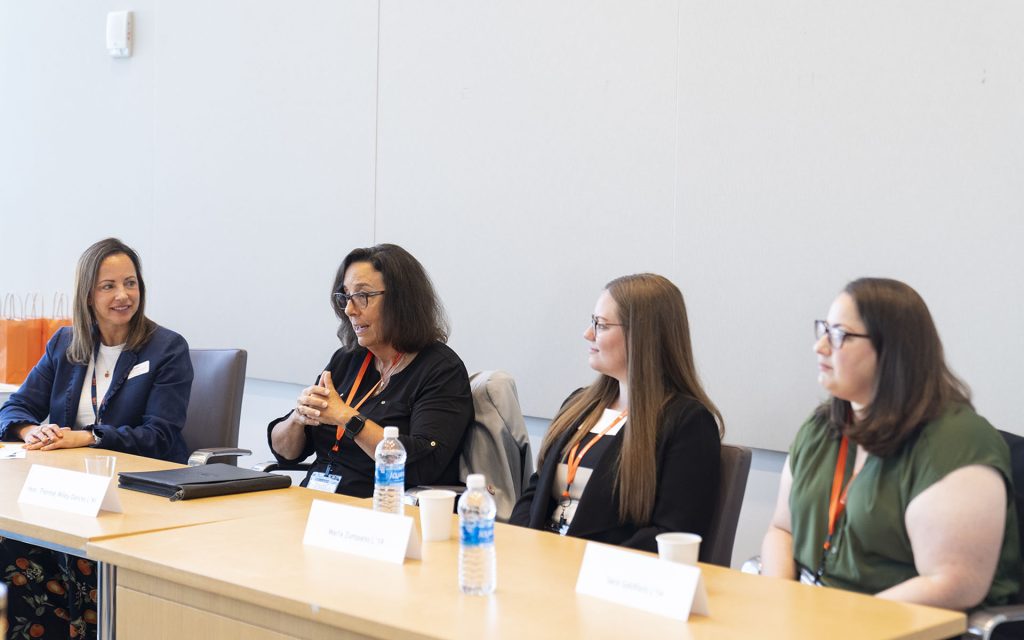
The JDi residency week featured several educational programs, including a judicial panel comprising four Syracuse Law alumni currently serving on the federal bench.

The participating judges were Hon. Thérèse Wiley Dancks L’91, Chief U.S. Magistrate Judge for the Northern District of New York; Hon. Robert D. Mariani L’76, U.S. Judge for the Middle District of Pennsylvania; Hon. David E. Peebles L’75, U.S. Magistrate Judge for the Northern District of New York; and Hon. Glenn T. Suddaby L’85, U.S. District Judge for the Northern District of New York.

The panel focused on effective advocacy practices and professional development.

130th Convocation Ceremony

The College held its 130th Convocation ceremony on Thursday, with Dean Lau presiding. In his remarks to incoming students, Dean Lau emphasized the institution’s commitment to both academic excellence and community engagement, stating, “You are welcome here. You were chosen not just for your academic achievements, but for what you bring to this community and what you’ll contribute to the profession.”

The convocation address was delivered by Stephanie Jones L’03, Assistant General Counsel for Intellectual Property, Legal Operations, Real Estate, and GM Energy at General Motors Corporation. Jones spoke about professional excellence and ethical responsibility, saying, ““May you show up—fully and brilliantly—in every room you enter. May you lay the foundation for greatness not just in your achievements, but in your interactions. May your words be powerful, but your actions even more so. Honor yourself and consider not only what you will accomplish, but how you will do so.” 

Alumni Professional Development Panels

The JDi residency concluded with four professional development panels featuring 14 local alumni, providing students with insights into various legal career paths and practice areas. Panel participants included Larry Bousquet L’80, partner at Bousquet Holstein; Tom Caruso L’14, General Counsel at Mirabito Energy Products and co-founder of the Betty and Michael D. Wohl Veterans Legal Clinic; and Hon. Ramon Rivera L’94, retired Court of Claims Judge from the NYS Unified Court System.

The panels addressed how legal education translates into professional practice and provided students with networking opportunities within the local legal community.

Beginning the Academic Year

With orientation and residency activities concluded, the students now begin their regular coursework. As classes commence, the incoming students join the broader Syracuse Law community to begin their legal education.

Syracuse Law Welcomes 171 Students to the Class of ’28 On-Campus J.D. Program

This August, Syracuse University College of Law proudly welcomed the newest members of its on-campus J.D. program to Dineen Hall. Over the course of orientation week, students connected with classmates, faculty, and staff while learning about the many resources that will support their success over the next three years.

One-hundred-and-seventy-one students from 28 states and four countries outside of the U.S. make up the Class of ’28. With an average age of 24 and a wide range spanning from 20 to 41, this class reflects a mix of traditional and non-traditional students, each bringing unique experiences, passions, and perspectives to the study of law.

“We are so pleased to welcome this year’s class of on-campus J.D. residential students, who have already begun to make their mark on Dineen Hall with their academic strength and energy,” says Associate Dean for Academic Programs and Teaching Professor Shannon Gardner. “We look forward to seeing all that this remarkable group accomplishes in their time here and as they launch impactful careers in the legal profession.”

Students of the On-Campus J.D. Class of 2028

Our on-campus J.D. students come from diverse backgrounds, united by a shared commitment to pursuing law as a way to create impact. Most are beginning their legal education directly after their undergraduate studies, while some bring professional experience, military service, or community leadership with them to the classroom.

Meet a few members of the On-Campus J.D. Class of 2028:

Christopher P. Fox L’28

Hometown: Webster, New York

Christopher Fox comes to Syracuse Law with a wealth of experience. He is a graduate of St. John Fisher University, a father to a 10-year-old son, a Freemason with a dedication to supporting charities in his community, and a disabled combat veteran of the United States Army, who was deployed to Iraq for Operation Iraqi Freedom.


Why did you choose Syracuse University College of Law?

“I chose Syracuse not only because it is a university where my mother met my father and told me stories of hearing Malcolm X give a speech but also because of the kind of education I wanted to receive in law. Every lawyer I have interned under or know personally that graduated from Syracuse Law is more than the personification of a professional, as well as a wealth of knowledge and a lover of the legal system. These Syracuse Law graduates are the men and women whose footsteps I desire to follow.”

What are your goals for your future in law?

“Interning under District Attorney Jim Ritts in Ontario County, New York, sealed my love for prosecution. I admire how his team not only fought so hard for the victims of crimes but also were looking for justice more than just another winning case. I hope to become an assistant district attorney in the same office in the future.”


Mira Gaitanis L’28

Hometown: Tallahassee, Florida

Mira Gaitanis is a 2023 graduate of Florida State University with a bachelor’s degree in media and communications studies and a minor in sociology, as well as a certificate in conflict resolution and consensus building from Florida International University. In her spare time, she loves to draw, write poetry and customize action figures. Her band, Flat Moon Theory, just released their third studio album, Give Your Flowers.


Why did you choose Syracuse University College of Law?

“Syracuse Law has the oldest and one of the most robust disability law and policy programs in the country, which I found out about through my mentor, Daniel Van Sant G’16, L’16, who is an alumnus. I was also drawn to the great selection of international study abroad programs and the opportunities to connect with students from a variety of backgrounds.”

What are your goals for your future in law?

“I am interested in pursuing international disability law and policy. My goal is to work with the United Nation’s Convention on the Rights of Persons with Disabilities.”


Olivia Vermeire L’28

Mount Pleasant, Michigan

Vermeire recently earned a bachelor’s degree in politics and Russian and Eurasian studies from Mount Holyoke College. While there, she was the disability committee chair for the Mount Holyoke’s Student Government Association. One of her talents is the violin, an instrument she has played for the past 17 years.

Why did you choose Syracuse University College of Law?

“Syracuse Law’s Disability Law and Public Policy program are something not found at any other law school, which was a big factor in my choice, as was the variety of classes.”

What are your goals for your future in law?

“I am interested in pursuing public interest law, especially disability law.


Looking Ahead

As they begin their legal education, the Class of 2028 reflects Syracuse Law’s mission to prepare students to lead with skill, purpose, and integrity. Their diverse talents and perspectives will not only enrich their time at Dineen Hall but also shape the impact they make in the legal profession and beyond.


See here for more information on Syracuse Law’s on-campus J.D. program.

Legal Professionals from Around the World Enroll in Syracuse Law LL.M. Program to Expand View of U.S. Law

Sixteen students from eight countries arrived at the Syracuse University College of Law this August to join its Master of Laws (LL.M.) Program. The LL.M. is an advanced law degree for international legal professionals to learn first-hand about the American legal process and its laws. Many of those in this year’s cohort hold advanced degrees and have notable careers as public prosecutors, corporate lawyers, judges and government officials. The LL.M. Program is completed over two semesters with an option to stay for a third, particularly for those planning to take the New York State Bar Exam.

“We welcome this year’s LL.M. cohort, most of whom come to Syracuse Law as highly trained legal professionals looking to further their knowledge of U.S. legal practices. We are privileged to have their global perspectives to further enrich our Law School community,” says Dean Terence Lau.


Meet a few students from the LL.M. Class of 2026:

Stanley Desmoulins LL.M.’26

Originally from Haiti, Stanley Desmoulins hailes from Montreal, Canada, and is a managing partner for Lexur Legal Services Professional Corporation in Toronto, which specializes in family law, business law and wills and estates. He is a graduate of the Law Practice Program of the University of Ottawa, Faculty of Law, a Juris Doctor Graduate of Law Faculty of Moncton University, and holds a bachelor’s degree in electronic engineering from Haiti State University and an MBA from the School of Management at the University of Quebec, Canada.

When he is not working or studying, Desmoulins is passionate about music, community involvement and sports — with a particular admiration for basketball greats Michael Jordan and LeBron James. He has a history of volunteering with Rotary International, which he hopes to continue while in Syracuse, as well as with Toastmasters to further develop his leadership and communications skills. In addition, he intends to integrate into the Central New York community through legal pro bono work.

Why did you choose to attend Syracuse University College of Law?

“I chose to pursue my LL.M. at Syracuse University College of Law for several reasons. First, I am pleased to be able to attend an LL.M. program that is in close proximity to Canada in order to remain close to my family and professional network while studying in the U.S. Next, the program will provide me with a solid understanding of the U.S. legal system and prepare me for admission to the New York State Bar, enabling me to practice in New York. The Law School has a strong bar preparation system in place, which will further support my professional goals. Syracuse Law also attracts students from across the United States and abroad, creating a diverse and enriching academic environment. Finally, my interactions with the faculty and staff at Syracuse Law have been professional and encouraging, and the excellent scholarship system reflects the Law School’s commitment to supporting students and investing in their success.”

What area of the law are you interested in pursuing?

“Looking ahead, I wish to continue my work in family law while also expanding into consulting and collaborating with businesses on legal matters. I aim to provide legal guidance to public figures in the areas of sports, entertainment, lobbying, and contract negotiations. This LL.M. will equip me with the necessary knowledge, skills. and international perspective to confidently pursue these diverse professional opportunities.”


Kimberly Ramos Gamez LL.M. ’26

Originally from the Philippines, Kimberly Gamez most recently worked in Manchester, U.K., as a qualified solicitor in England and Wales specializing in clinical negligence acting on behalf of claimants. She holds multiple degrees in law and international affairs from across Europe and Asia, including a post-graduate diploma in professional legal practice from the University of Law, Birmingham, and a post-graduate diploma in law from the University of Sheffield, both in the U.K; an LL.M. in international contracts and arbitration law from the University of Fribourg in Switzerland; and LL.M. in international and European Union Law from Tilburg University in the Netherlands; a master’s degree in global affairs from the University of Buckingham in the U.K.; and a bachelor’s degree in consular and diplomatic affairs from De La Salle-College of Saint Benilde in the Philippines. Earlier this year, Gamez served as a judge at the International Criminal Court Moot Court in the Hague, the Netherlands.

Why did you choose to attend Syracuse University College of Law?

“I chose Syracuse Law primarily because of its strong reputation in trial advocacy and litigation. Additionally, I had the opportunity to attend a webinar about the LL.M. program hosted by Syracuse’s Study Abroad Specialist Andrew Horsfall ’05, L’10. His presentation and the insights he shared about the program’s structure made me confident that Syracuse is the right fit for my academic goals.”

What area of the law are you interested in pursuing?

“I am interested in pursuing corporate law, particularly cross-border transactions because I enjoy the complexity of working across different legal systems.”


Halyna Rudych LL.M.’26 

Halyna Rudych has 11 years of legal experience as a Ukrainian attorney at law in corporate, business, family, real estate, labor, criminal law and more. She also has paralegal experience in the U.S. Originally from Zaporizhzhya, Ukraine, she lived in Watertown, Massachusetts, before moving to Syracuse for the LL.M. program. Rudych originally was a puppet show artist, receiving a diploma from the Dnipropetrovsk Oblast State College of Fine Arts and Theatre in Ukraine before earning a bachelor of laws and a master of laws from the Zaporizhzhia National University, Faculty of Law. Once she relocated to the U.S., she earned a certificate in paralegal studies from Mount Wachusett Community College and most recently worked at Centerboard, Inc., Community Center in Lynn, Massachusetts, where she helped conduct legal research and was responsible for ensuring the company’s practices were compliant with federal and state laws and regulations.

Why did you choose to attend Syracuse University College of Law?

“I had an interview with Study Abroad Specialist Andrew Horsfall, and we had a great conversation after which I felt that this school would be the right choice for me — and a great place to begin my legal career in the U.S. The law school also offered me a partial tuition scholarship, which means not only financial support but also faith in my legal future. I truly appreciate that.”

What area of the law are you interested in pursuing?

“I am interested in building a career as a public defender and civil litigation attorney. I have been working with the nonprofit Centerboard, Inc., to receive Department of Justice recognition and accreditation and provide immigration legal services for low-income individuals. I plan to accomplish this project after law school, and I hope it will help many people look forward to the future with optimism and confidence.”


See here for information on Syracuse University College of Law’s Master of Law (LL.M.) Program.

Syracuse Law Welcomes 100+ JDinteractive Students to the Class of 2029

This fall, Syracuse University College of Law welcomes the incoming JDinteractive (JDi) Class of 2029, a dynamic group of students balancing careers, families, and service to their communities while pursuing their legal education. Representing diverse backgrounds across continents, industries, and life experiences, they bring fresh perspectives to the study and practice of law. Some are boldly shifting careers, others are advancing in their current fields, and many are beginning new chapters after military service or even retirement from unrelated professions. What unites them is a shared commitment to expanding their impact through the power of a legal education.

Our new JDi students came to Dineen Hall in early August to attend their first on-campus residency. The JDi program is a hybrid format that allows students to take classes and participate in other law school programs and activities online, and  requires them to partake in six in-person residencies throughout their legal education, located on campus or in various locations across the country. One of the unique advantages of Syracuse’s JDi program is that students can continue working in their profession from home while earning their law degree.

“This year’s entering JDi class follows our strong tradition of making accessible a legal education to those who cannot pursue a J.D. in a residential program,” says Associate Dean for Academic Programs and Teaching Professor Shannon Gardner.

“Hailing from many different states and countries, with diverse backgrounds and a wide range of professional experiences, this extraordinary group is posed for success in law school and impact on the legal profession. Their drive and work ethic, as they pursue a J.D. while juggling work and family obligations, is a testament to all they can accomplish.”

Students of the Incoming JDinteractive Class of 2029

This year’s JDi cohort consists of 101 students from 25 states and three countries outside the U.S. The average student age is 37, with members ranging from 22 to 68. This highlights the program’s ability to attract accomplished professionals and leaders who bring deep expertise, fresh perspectives, and seasoned judgment to their legal education.

Students join the program from a wide range of sectors, including military and defense, law and legal services, education, healthcare, government and nonprofit work, corporate and finance, law enforcement and security, media and communications, and even fields as diverse as aviation and environmental conservation.

Collectively, they enrich the classroom with the knowledge and skills gained from years of real-world experience, making the JDi learning community as dynamic as the profession they are preparing to enter.


Meet a few members of the incoming JDi class:

Jared Hansbrough L’29

Hometown: Shenandoah, Virginia

Jared Hansbrough served as a U.S. Marine for over 23 years. He spent his military service driving amphibious assault vehicles and finished his service working at the Pentagon. This was followed by six years as the budget officer for one of the operating divisions of the U.S. Department of Health and Human Services.

Why did you choose Syracuse Law’s JDi program?

“I’ve long held an interest in pursuing a law degree, and the timing finally lined up, thanks, in part, to the Syracuse JDi program. When I began exploring the many law school options, I was fortunate to discover the JDi program. Syracuse Law’s quality of education offered through the blended hybrid of residencies and online instruction and incredible flexibility quickly made the JDi program my first choice.”

What are your goals for your future in the field of law?

“I plan to pursue private practice with a focus on estate planning.”


Jeffrey Hildreth L’29

Hometown: Los Angeles, California

Jeffrey Hildreth currently teaches corporate taxation and managerial accounting at the Leventhal School of Accounting at the University of Southern California (USC). He also consults in the mergers and acquisitions space, building on prior leadership roles in mergers and acquisitions tax advisory at both Big 4 and middle-market firms, as well as his experience as a chief financial officer in the out-of-home advertising industry. He and his service dog have traveled across the globe, making his pup an unexpected companion in both academic and professional settings.

Why did you choose Syracuse Law’s JDi program?

“I chose to pursue law to combine my background as a CPA with legal training, particularly to deepen my expertise in navigating complex financial, tax, and cross-border issues. Syracuse’s JDinteractive program stood out for its innovative hybrid structure, which allows me to pursue a rigorous legal education while continuing to teach and consult.”

What are your goals for your future in the field of law?

“I plan to focus on international law with an emphasis on cross-border transactions, tax and corporate advisory work.”


Kame Spencer L’29

Hometown: Seattle, Washington

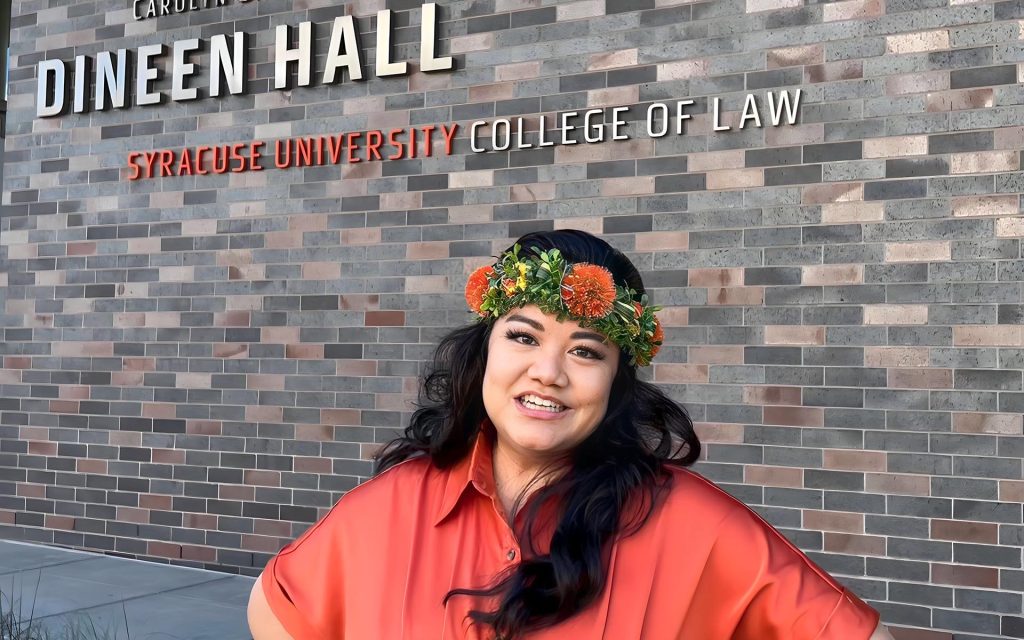
Originally from Haleiwa, Hawaii, Kame Spencer has worked for the Seattle Police Department for the past seven years as a patrol K-9 officer. Being a police officer has encouraged her to keep pursuing her desire to help people through the law — something she has known she wanted to do since she was in high school. When she’s not working, Spencer loves to travel and has visited eight countries in the past two years. She also loves trying her hand at recipes from her favorite cooking shows.

Why did you choose Syracuse Law’s JDi program?

“Syracuse Law offered not only a dynamic platform of specialties in law but also provides a personable and flexible program that wants students to succeed. It’s a program that allows me to complete my law degree while still holding my current job. Attending the residency on campus at the beginning of the program only assured me that I made the right decision.”

What are your goals for your future in the field of law?

“I aspire to practice criminal law, but I am also considering corporate or international law.”

Looking Ahead

As they begin their legal education, this incoming JDinteractive class reflects Syracuse Law’s mission to prepare graduates who lead with purpose, skill, and integrity. We look forward to seeing how they’ll shape the future of law, and the world.

See here for more information on the Syracuse Law’s hybrid online JDinteractive program.

Syracuse Law’s LondonEx Summer Program Celebrates 46 Years of Insight Into U.K. Legal Culture and Practice

What law student wouldn’t jump at the chance to work alongside a barrister with King’s Council (KC) status, an honor bestowed upon only the most experienced lawyers in the U.K.? Or assist judges in the Crown Court system, one of three senior courts in England and Wales?

These are just some examples of recent experiences that students undertook as part of Syracuse University College of Law’s LondonEx program. The  oldest and only program of its kind in the nation — celebrating its 46th year — LondonEx has been offering law students both from Syracuse Law, as well as other ABA-accredited law schools in the U.S. and Canada, a summer externship program that is a truly transformational experience.

Group of students in the LondonEx program tours Middle Temple Hall

What Makes LondonEx Unique

While other law schools offer semesters abroad or other international programs, LondonEx is unique in that it offers a fully immersive seven-week program in London. Students participate in tailored externships matched to their interests, gaining hands-on experience in a professional legal setting while refining skills and experiencing an up-close look at another legal system and culture.

“We are exposing law students to the practice of law in a global setting. Working to match their interests with outstanding opportunities, students work alongside — often at workspaces only a few feet apart from barristers, solicitors and judges,” says Andrew Horsfall, study abroad specialist for Syracuse University. “The law students are always pleasantly surprised at what their mentors do for them, when they bring them along to court, put them to work on actual research, provide meaningful feedback, and give them the opportunity to return to law school with written work product and an expanded view of the profession.”

Program Structure

Working with Syracuse Abroad and its London Centre, Faraday House, law students arrive in mid-May to embark upon the seven-week, 5-credit program.

  • Week One: The first week is spent in an intensive orientation that acquaints students with the British legal system through a variety of guest lecturers and cultural activities. They are immediately thrown into “Legal London” to see the Inns of Court and the Royal courts of Justice, often on the first day, in order to build context on the differences between the U.K. and U.S. legal systems before starting their placement experiences.
  • Weeks Two-Seven: Externships are held four days a week for a six-week period with Fridays reserved for learning activities like skills training, networking, negotiation and gaining professional insights from those working in London’s legal system, including Syracuse University alumni.
  • Program Conclusion: The program concludes with students presenting on topics of their choosing around a comparative aspect of law or legal culture they engaged with at their placements.

While the pace is quick, there is still time to soak in the culture of one of the world’s most dynamic cities as students take in a show in the West End, view the architecture of the Palace of Westminster, enjoy fish and chips at an authentic British pub or get a birds eye view of the Thames on the London Eye.

“Our seven-week program goes by very quickly, but its quick pace also allows students to wrap up the experience by early July with time to take on a second externship back in the U.S.— which some do every summer,” says Horsfall.

Group of students in a courtroom in London

Student Perspectives

This past summer, 14 students completed the LondonEx program — seven from Syracuse Law and seven from a mix of other law schools.

Syracuse Law student Eric Boutrous L’27 chose to attend the LondonEx program for the opportunity to gain hands-on legal experience outside the U.S. He was placed under the mentorship of barrister Mark Warwick KC at Selbourne Chambers in the heart of London’s Inns of Court, where he was able to work on a variety of complex real property and civil matters  involving easements, boundary disputes and professional negligence.

“I helped prepare arguments regarding implementing easements and necessity and had the opportunity to contribute research that was used in a court filing,” says Boutrous. “Presenting my work to my peers in the program challenged me to synthesize complex materials and communicate clearly the skills I know will be invaluable in my legal career.”

Boutrous also participated in a mediation session under Warwick’s supervision. “It was fascinating to observe how the parties and their legal teams approached negotiation, particularly in a system where mediation is increasingly encouraged,” he explains, noting he hopes to go into transactional law with a long-term goal of international litigation and arbitration.

Another Syracuse Law student, Kylee Peisher L’27, enjoyed the opportunity to learn a new perspective of the law while also traveling to new places. While in London, she worked for Powell Spencer & Partners Solicitors doing criminal defense work and shadowing barristers and solicitors at trials, sentencings and other steps of the criminal process.

“Before law school, I worked as a paralegal for a criminal defense attorney, so it was so interesting to learn the similarities and differences in the U.S. and U.K.’s approaches to criminal law,” she says, noting that in London she had the opportunity to watch an intense, two-week Crown Court trial from start to finish.

“It was really amazing to finally be able to sit right in the middle of it and experience it first-hand, and it definitely gave me a broader perspective. Overall, I got to see a lot of great advocacy and other lawyering skills during LondonEx that will stay with me as I start my professional career.”

Richard Everett Jr. L’26 joined the group from Creighton University School of Law. He was assigned to a judge at the Inner London Crown Court of His Majesty’s Crown Court, giving him an insightful comparison of how the American and British criminal legal systems differ.

His favorite part of the experience, however, was conferring over lunch with the judges on a daily basis. “This hour provided me with unprecedented access to the Crown Court judges, giving me the opportunity to ask questions about the proceedings I observed on a given day and clarify any points of confusion I may have had.”

After completing law school, Everett, who is currently an ensign in the U.S. Navy Reserve, will be joining the Navy’s Judge Advocate Generals (JAG) Corp.

“Syracuse’s LondonEx program has allowed me to observe how the criminal justice system of one of our allies functions,” he explains. “It’s crucial to be as diverse as possible in a global environment, especially when your job can take you anywhere in the world.”

A Lasting Impact

The experience of this year’s LondonEx program, as well as those over the past four decades, have left indelible impressions on the law students who have participated in this unique and up-close experience.

“London itself is a magnetic city full of history, culture and excitement, but that’s just the start of what our LondonEx students experience here as they enjoy unprecedented exposure to the people and places that truly represent a dynamic legal culture and system that is different from what they have been studying in law school,” says Horsfall. “Professionally, it can become  a game changer for many students.”

See more information on Syracuse University College of Law’s LondonEx program. The deadline to apply for Summer 2026 is February 1.

Clerkships Offer Invaluable Learning Option for New Graduates, Foster Relationships with Alumni Judges

While many students who graduate from the Syracuse University College of Law are hired straight into law firms, corporations, government agencies and nonprofits, some choose another route: one or two-year clerkships for state or federal judges. These prestigious roles offer invaluable insight into the innerworkings of courtroom operations and legal decision making and give budding attorneys the opportunity to develop their research and writing skills while working closely with judges.

“There is no better way to understand the legal profession than by securing a clerkship — from learning how decisions are made to seeing how a good lawyer should conduct him or herself in the courtroom,” says Hon. Frederick J. Scullin, Jr., L’64, senior U.S. District Court judge. “And, of course, you’ll be honing your skills in writing, which is key to the practice of law in federal courts.”

Hon. Stewart Aaron L’82, U.S. magistrate judge, Southern District of New York, adds, “Clerks get invaluable experience in how the process works on the court side and how judges go about analyzing cases, managing caseloads and making decisions. Learning how judges think and the practical things they need are invaluable.”

The Pathway to Clerkships

Clerkships offer recent graduates a unique opportunity to work closely with judges who provide mentorship, guidance and insight into the judicial process. At Syracuse Law, the Faculty Clerkship Committee, led by Associate Teaching Professors Laurie Hobart G’16 and Richard Wallach L’06, supports students throughout the highly competitive application process. With clerkships often secured by top-performing graduates, the committee helps students plan and position themselves for success in securing these prestigious roles.

Students typically apply for clerkships in the late spring and summer before their final year of law school. Those in the Class of 2026, for example, who are interested in a clerkship are in the midst of doing so now, according to Dafni Kiritsis L’97, director of externships and career services.

“We hope students will start thinking about clerking opportunities early on, and we are here to help them plan ahead as to what classes to take or the importance of being involved in something like Law Review or another law journal in order to make them stronger candidates,” Kiritsis explains. “Even if you don’t plan to be a litigator, it’s the experience that matters — the chance to work closely with extraordinary legal minds, perfect your writing and research skills, better understand how case law is drafted, and make and forge invaluable professional relationships. It’s some of the best legal training that you can get, and, if you succeed, will greatly benefit your career prospects.”

The Syracuse Advantage: Tapping into the Orange Law Network

Thanks to the strength of the Orange law network, many Syracuse Law graduates have been securing clerkships with judges who also call the College of Law their alma mater. It is a testament to both the alumni loyalty and the caliber of the recent graduates.

“Syracuse Law students have been a great source for me for hiring clerks, and I’ve had terrific experiences with them,” says Scullin. “Any federal district court judge would tell you that law clerks are the essence of your decision making. They pull things together and provide accurate and thorough information. It’s important to have term law clerks, and I’m proud to take them from my alma mater. I think we have an obligation to do that.”

Aaron feels much the same, explaining, “I enjoyed my time at Syracuse Law and feel a connection to the school and its students. Those from Syracuse have a grounding in how things work in not just the theoretical but the practical, which is very important to me as a magistrate judge.”

Another judge who is happy to “hire Orange” is Hon. Rodney Thompson G’93, L’93, a New Jersey Superior Court judge.

“I was exceptionally prepared to enter the practice of law, as the professors, moot court and clinical experiences were top notch. When I became a superior court judge and needed a law clerk, Syracuse was my first and only call,” says Thompson. “While clerking may present what initially appears to be a financial sacrifice, most law clerks actually do better over the long term in terms of preparation and financial stability. After a successful clerkship and a good recommendation from their judges, many law clerks will be rewarded by law firms and government agencies with higher starting salaries.  Syracuse was very good to me in the form of an excellent legal education, made possible by scholarships, and I feel duty bound to pay it forward.”


Clerks at Work

Syracuse Law graduates have clerked across the country and share their perspectives on why the experience was transformative:

Nate Linton headshot in front of a wood background

“I decided to pursue a clerkship because I thought it would be a strong foundation for the start of my legal career. As legal research, analysis and writing in general are critical to the practice of law, a clerkship is ideal in solidifying concepts taught in law school by providing real life experience. Every day, I am exposed to various areas of the law, and I have the opportunity to work with experienced clerks who provide invaluable insight and guidance on how to improve. The skills and knowledge I have acquired so far will be transferable to any practice area of law I decide to pursue.”

–Nate Linton L’24

Currently clerking as a court attorney for the New York Court of Appeals Central Legal Research Staff

Headshot of Emily Pascale

“I was drawn to clerking, particularly for a federal judge, given my interest in constitutional law and love of legal writing. I also knew that a clerkship would allow me to engage with complex legal issues early on in my career. During my clerkship I gained a unique perspective on how judges approach decision making, which has helped me improve my persuasive writing and influences how I present my arguments to a court.”

–Emily Pascale L’23

Clerked for the Hon. William Q. Hayes ‘79, G’83, L’83, United States District judge for the Southern District of California; currently a practicing attorney in healthcare and professional liability defense at Gordon Rees Scully Mansukhani in Raleigh, North Carolina

Headshot of Zebadayo in front of a gray wall

“Clerking was a great chance to work under a judge and learn more about the court environment behind the scenes. When you work for a judge, your writing and research both improve because of the level of specificity that is required. Also, working with court staff teaches you all the ins-and-outs, and the various deadlines help with time management and triaging.”

–Zebedayo Masongo L’22

Clerked for the Hon. Rodney Thompson G’93, L’93, New Jersey Superior Court judge; currently deputy attorney general, New Jersey Attorney General’s Office

Headshot of Lotta Lampela in front of a gray wall

“I love to research and write, so a clerkship seemed like the ideal placement to keep practicing those skills. It was a personal challenge, and I wanted to show myself that I could do it, despite a background in a civil law system. I have only positives to report, and I have learned so much, both about the American legal system in practice and this state (Vermont) in general. Thanks to the clerkship, I’ve become familiar with all the areas of law, including those I did not study in my LL.M. program, and thus it has prepared me for practicing law here. The judges are willing to guide you forward and also provide recommendations, and, I know that a clerkship can open doors further down the road.”

–Lotta Lampela L’23, (LL.M.)

Currently clerking for three judges and covering all dockets for the Vermont Superior Court

NASCAR Internship Puts 3L on the Right Track to Career in Sports Law

A lifelong NASCAR fan, Jenna Mazza L’26 has a photo of herself at age 4 standing with legendary driver Jimmie Johnson’s diecast car. So, imagine her elation when she had the opportunity to take a photograph with Johnson himself this May at the NASCAR Coca-Cola 600 held at the Charlotte Motor Speedway.

Jenna at age 4, standing with legendary driver Jimmie Johnson’s diecast car.

This once-in-a-lifetime experience is just one of the many benefits that came along as Mazza spent her summer working in NASCAR’s legal department in Charlotte, North Carolina. NASCAR’s Internship Program includes opportunities for law students to learn about various areas that its legal department deals with daily. Mazza had the opportunity to learn about and draft contracts for licensing agreements, real estate issues with various racetracks, intellectual property (IP) use, privacy and media law.  During her internship, Mazza was also able to attend a screening of American Thunder: NASCAR to Le Mans, which began streaming on Amazon Prime in June, while learning about rights and clearances and music licensing.

Jenna smiles with Jimmie Johnson in May of 2025 at the NASCAR Coca-Cola 600 held at the Charlotte Motor Speedway.

“I’ve learned so much and gotten exposure to the variety of work a legal department undertakes in a sports environment,” says Mazza, who will be a 3L at Syracuse University College of Law this fall.

Mazza has long had her sights on working in sports law with a particular interest in areas related to IP, like copyrights, trademarks and licensing of team logos. And while she’d be thrilled to build a career with any sports organization, the opportunity to work with NASCAR was a dream come true. Not only did she gain legal experience, but this NASCAR fan also enjoyed the chance to be right where the action is — going into the pits and the infield, and attending not only the Coca-Cola 600 but also the NASCAR Craftsman Truck Series Race and the developmental Arca Menards Series for prospective drivers at Charlotte Motor Speedway.

Jenna and her fellow Intern Group in Victory Lane at the Charlotte Motor Speedway.

“The internship program really immerses you into all aspects of NASCAR and makes it a great experience for the interns, not only in terms of preparing you for what it’s like to work as a general counsel in a sports organization but also to get a first-hand look at the innerworkings of the sport itself,” she says.

While her knowledge of NASCAR may have helped her secure this prestigious internship, the lessons learned at Syracuse Law, particularly classes she took as a 2L, provided her with the baseline legal knowledge in areas like intellectual property law and sports law that she believes also gave her a competitive edge.

Mazza adds the NASCAR internship to a list of other experiential learning opportunities she has had while at Syracuse Law, including working on two Congressional campaigns, an internship with the U.S. Attorney’s Office for the Northern District of New York and another internship for the Oneida County (NY) Public Defenders Office.

As she returns to Syracuse Law to complete her degree, she hopes to use her hard-earned legal experience with some type of sports organization or a law firm that specializes in sports law after graduation. However, she can’t help but to hope to eventually return to work for NASCAR.

“My internship at NASCAR has shown me that anything is possible, just as in this sport, where you can start from the back of the grid and still win the race,” she says. “The skills I’ve learned and the opportunity to be where the action is on the track are experiences I’ll never forget. And it’s very exciting to imagine what might be ahead for me.”

Jenna stands in front of the Charlotte Motor Speedway.

From Cheering in the Dome to Interning in the Nation’s Capital, Lela Lanier L’26 Is Making the Most of Her Syracuse Law Experience

Whether she’s cheering for the Orange in the JMA Wireless Dome or spending her summer interning at the NAACP Legal Defense Fund (LDF) in the nation’s capital, Lela Lanier L’26 is making the most of the resources and opportunities available to her through the Syracuse University College of Law.

When Lanier decided to attend law school, she knew she wanted to go somewhere she could pursue her interests in advocating for those with disabilities, take on topics related to civil rights and also continue her passion for cheerleading. While that might sound like a tall order, she found her place at Syracuse Law.

Lela Lanier sits in front of an LDF sign that is full of books  in the lobby of the NAACP

A rising 3L, Lanier worked at the LDF this summer in Washington, D.C., as a litigation intern. This gave her a chance to focus on impact litigation around issues of civil rights that ranged from racial injustice, economic injustice, voting participation, criminal justice and desegregation.

Two specific projects assigned to her during the LDF internship focused on researching the reproductive freedom and the rights of Black women and also desegregation in education examining disciplinary action that disproportionately targets Black students.

“The work was so fulfilling, and I was proud to be a part of it. I thrived off of the passion of the attorneys at the LDF, most of whom were people of color working for the betterment of our community. I could see their passion and goals of helping people, and it was so refreshing,” she says. “There are a lot of civil liberties in question right now, but I am proud to have contributed and was fortunate to have so many opportunities tailored to the kind of work I want to do in the future. It was just an incredible experience for me overall.”

As she prepares to return to campus at the end of the summer break, Lanier will gear up not only for her final year of law school but also her last year as a member of the Syracuse University cheer team. While few law students take part in Syracuse athletics, Lanier has cheered throughout her time at the College of Law and will complete her last year of eligibility during the 2025-26 academic year. She has been involved in competitive cheerleading since high school, participating at Towson University, where she majored in deaf studies, volunteered with Deaf and Deaf Blind communities and developed her passion for disability rights.

“When I started law school, my plan was to take advantage of every opportunity I was given, and I think I’ve done a good job of that,” she says. “I’ve stepped out of my comfort zone and struck a good balance with my coursework and various co-curricular activities, while showing others it’s possible to take advantage of all that Syracuse Law has to offer and still pursue a law degree.”

In addition to cheerleading, those co-curricular opportunities include serving as the incoming vice president for the Black Law Students Association; a student outreach coordinator for the Disabled Law Student Association; a member of the Travis H.D. Lewin Advocacy Honor Society; and the incoming editor-in-chief of the Journal of Global Rights and Organizations, for which she is working on a paper about accessibility to voting rights in Nigeria. Last summer, she also completed an internship with the Disability Rights Education and Defense Fund in San Francisco, where she saw first-hand the impact of litigation through some groundbreaking cases.

These experiences, along with her classes at the College of Law,  have expanded her world view on the scope of disability law. “I think my professors have been so instrumental in how I’m learning law and in explaining the fantastic history of constitutional law,” Lanier says. “It’s important that people understand that we, as Americans, have a lot of protections that have been put into place, but right now many are at risk of being taken away.”

In addition, Lanier is eager to explore her options when it comes to her legal career.

Lela Lanier stands while holding a book and wearing a black suit at her NAACP internship

“Right now, I’m open to all possibilities. I want to go into some kind of disability law and/or civil rights law for a nonprofit— but then maybe it will be civil litigation. I’m just looking forward to soaking in everything I can during my last year here, and I’m so appreciative for all the opportunities Syracuse has afforded me,” she says. “When we receive our degrees at graduation next May, you can be sure I’ll be the one cheering for each and every classmate as they cross that finish line alongside me.”

Student Veteran Anthony Ruscitto ’22, G’23, L’27 Honored as a Tillman Scholar

“Now what am I supposed to do with my life?” Veterans often face this question as they transition from active duty to civilian life. The thought terrified U.S. Marine Corps veteran Anthony Ruscitto ’22, G’23, L’27 when he contemplated his future in the spring of 2019.

Today, Ruscitto is a two-time Syracuse graduate and a rising second-year law student in the College of Law.