News

Recognizing Syracuse Law’s Pro Bono Scholars: National Pro Bono Week 2025

In honor of National Pro Bono Week, we are highlighting five of our students who have dedicated themselves to pro bono work at the College of Law!

Jared Park L’26

Headshot of Jared Park in front of a gray background

Jared Park has found his calling in public defense through his work with Hiscock Legal Aid and the Criminal Defense Law Clinic. From drafting briefs for incarcerated clients to representing real people in Syracuse City Court, Jared’s pro bono work embodies what it means to serve others through the law.

“There is no better way to learn than by doing, and no better use of our training than to serve communities who are too often overlooked by the legal system.”

Read More

Alyssa Rivera L’26

From the Federal Public Defender’s Office in Texas to the Veterans Legal Clinic at Syracuse Law, Alyssa Rivera’s pro bono work has given voice to those who often feel forgotten by the system.

“Every file placed on my desk contained a snippet of the life of a real person with a much larger story that deserves to be heard. Working in criminal defense taught me how powerful it can be to simply stand beside someone who feels forgotten by the system.”

Learn More

Kate Silverstrim-Jensen L’26

While representing tenants through the Volunteer Lawyers Project, Kate Silverstrim-Jensen learned what it truly means to advocate for others, and discovered her own confidence in her work in the process.

“There isn’t a single downside to doing pro bono work. It’s rewarding and has led to many more opportunities because it expanded my legal network, improved my confidence and experience levels, and gave me a positive legal reputation in the community.”

Learn More

Kate Turner L’27

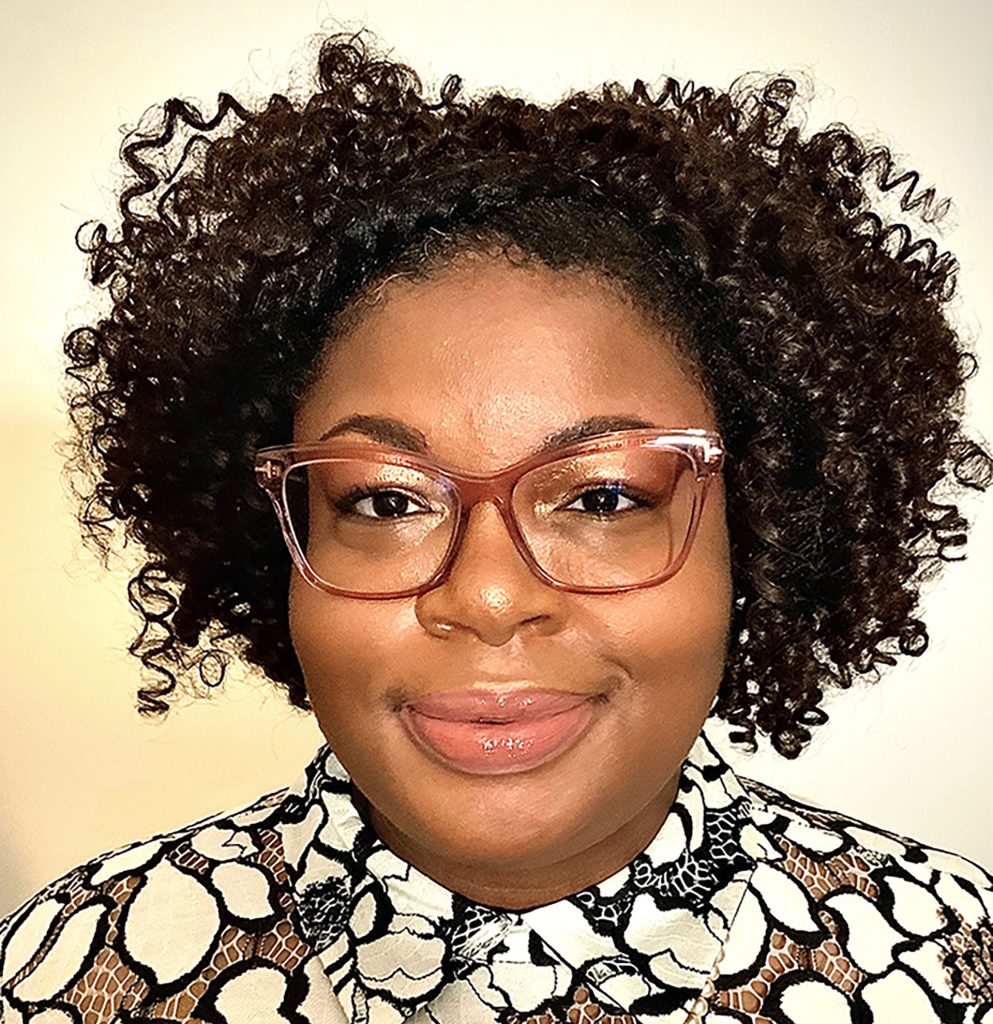
Headshot of Kate Turner in front of a gray background

Through her work with the Prince William County Public Defender’s Office and the Syracuse Law Housing Clinic, Kate Turner has provided legal support to those facing eviction and housing insecurity. This summer, she’ll continue her commitment to justice with the Legal Aid Society’s Wrongful Conviction Unit in Manhattan.

“Pro bono work reminds you that the legal system is built for people, not just precedent.”

Read More

Jude Unland L’26

Headshot of Jude Unland in front of a gray background

As part of the Volunteer Lawyers Project’s LGBTQ+ Rights Department, Jude Unland has helped many individuals legally change their names and reflect their identities. Their work is both personal and powerful, driven by a deep commitment to justice and belonging.

“Being able to literally change a person’s life gives me a personal sense of joy…These services are needed more than ever, and people are growing more desperate. Pro bono work helps fill that need.”

Learn More

JDi Waivers Allow Greater Access to New York State Bar, In-State Legal Practice

“As a first-generation immigrant balancing work, education and personal responsibilities, the flexibility of Syracuse’s JDinteractive program was the only realistic way for me to pursue a legal education while remaining committed to my career and community,” says Sebastian Szczebiot L’25.

When Szczebiot decided to enroll in law school, he was the assistant director of the Susan B. Anthony Center at the University of Rochester. He chose Syracuse University College of Law’s JDinteractive (JDi) program because pursuing a law degree in a residential program was simply not an option. However, to practice law in New York State, he knew he would have to apply for a waiver establishing “undue hardship” from the New York Court of Appeals to sit for the state’s bar exam.

While graduates of the JDi program are currently qualified to sit for the bar in 49 of 50 states, New York’s restrictions on distance education do not allow graduates from hybrid/online programs to do so without such a waiver.

Abstract photo of man's hands leafing through a book and a laptop and leather briefcase on a desk in front of him.

“While New York state’s bar exam waiver requirement initially gave me pause, I saw it more as an administrative hurdle than a barrier,” explains Szczebiot. “I trusted that the bar authorities would recognize the seriousness and rigor of my JDi path.”

Szczebiot was successful in obtaining a waiver. Today, he is an associate at Nixon Peabody LLP, in Rochester, New York.

Syracuse Law has offered its American Bar Association-approved JDi program since 2019, one of the nation’s first two accredited hybrid/online J.D. programs, according to Teaching Professor Shannon Gardner, associate dean for academic programs at Syracuse Law. The JDi program allows students from across the country—and the world—to take classes and participate in other legal experiences through a hybrid/online format, giving greater access to more people who want to contribute to the legal profession.

While the ABA requires Syracuse Law to disclose to JDi applicants that they may not qualify for bar admission, it has not dampened enthusiasm from prospective students. Many intending to practice in New York have been successful proving undue hardship and moving forward with the bar exam.

“I pursued my law degree through the JDi program because of my career in public service, but I was troubled at the thought of leaving my career as a caseworker with the Cortland County (NY) Department of Social Services, and I did not know how I could take care of my family without an income,” says Megan K. Poole L’22.

“The hardship I brought to get a waiver included my desire to continue my career in New York State and become a lawyer for the Department of Social Services. And not allowing me to take the bar exam would have been such a disservice to the State of New York, especially at a time when we need a younger generation of attorneys more than ever.”

Poole received her waiver, and today is senior court attorney for the Hon. Beth O’Connor, family court judge, Cortland County, 6th Judicial District.

While every case is unique, undue hardship has been proven for reasons ranging from the financial need to continue working, family obligations, socioeconomic factors, spouses’ careers, essential community involvement and more.

“I decided to go the JDi route when I was applying to law schools because it was the most realistic option for me as a full-time professional who traveled often for work,” says Grace Terry L’24. “My undue hardship application detailed that I was a life-long resident of New York with a partner who not only has an established job working for the state but also a child with an Individualized Education Program through New York State public schools. My economic circumstances required that I work while in law school, and choosing Syracuse Law’s JDi program allowed me to take classes in the evenings while working during the day to support my family.”

Terry, too, was successful in getting a waiver, and today she is a staff attorney for Legal Services of Central New York.

“While New York state is the most limiting for online graduates to sit for the bar, it is my hope that as hybrid/online legal education continues to prove itself, the state will recognize that and reduce restrictions, giving greater access to those who wouldn’t otherwise be able to earn a law degree,” says Gardner.

“Programs like Syracuse University College of Law’s JDi give greater access to both legal education and the legal profession for many, so allowing our graduates to join the bar in New York is something I think everyone can get behind.”

More About JDi

Congressman Ted Lieu Discusses JAG Corp. Advocacy and Public Service Careers with Syracuse Law Students

Congressman Ted Lieu, representing California’s 36th Congressional District, participated in a virtual discussion with Professor Todd Berger, director of advocacy programs, as the guest speaker in the Annual Syracuse Law Advocacy Lecture Series.

Lieu spoke at length about his time in the Air Force JAG Corp. and how that experience shaped his future public service career. Many questions from the students centered on the JAG, including keys to success, the role of the JAG beyond being a legal advisor and as an ethical and moral sounding board, and the current challenges faced by JAG officers.

The discussion also touched on Lieu’s long tenure in public service, starting on his city council, and why students should explore becoming involved in public service, and what it takes to run for office.

Lieu also spoke on legal and regulatory issues surrounding Artificial Intelligence, and well as Congress’s role as a regulator, and how AI is affecting the practice of law.

He also spoke about a different kind of advocacy he recently performed – that of the House Impeachment Manager in the second impeachment of President Donald Trump – and how his experience as a JAG prepared him for the trial.

“The field of advocacy and litigation is vast and encompasses many career options. The Advocacy Lecture Series’ goal is to bring successful litigators and advocates from different backgrounds and areas of the law to our students, so they are exposed to the wide-ranging careers in advocacy and litigation,” says Berger.

The Advocacy Lecture Series is an annual presentation given by a distinguished member of the legal profession. The lecture series aims to deepen our understanding of how advocacy is best practiced and taught by connecting prominent lawyers with the broader law school advocacy community.

Annual Supreme Court Preview Tackles Current Term Cases While Keynote Speaker David Lat Details the History of SCOTUS Clerks

Syracuse University College of Law hosted its Ninth Annual Supreme Court Review and Preview, an event that brought together judges, scholars, and practitioners to analyze the upcoming U.S. Supreme Court term and reflect on the role of law, learning, and civic engagement. The day began with a luncheon keynote by Hon. Mae A. D’Agostino L’80, U.S. District Judge for the Northern District of New York, followed by an engaging lecture from David Lat, founder of Above the Law and Original Jurisdiction. The afternoon concluded with a panel discussion moderated by Dean Terence Lau L’98.

Judge D’Agostino opened the program with a reflection on the responsibility and reverence inherent in the judicial process. She spoke about her deep respect for the law and for the institution of the courts. She emphasized that maintaining public trust in the judiciary depends not only on judges but on lawyers, law students, and citizens who understand the courts’ vital role in preserving democracy. Civic education, she noted, is essential to that mission, and she encouraged students to see themselves as stewards of that trust.

Following lunch, Lat delivered his keynote address, “The Evolution of Judicial Clerkships.” With humor, candor, and historical perspective, Lat described how the judicial clerkship has evolved from a behind-the-scenes assistantship into one of the most prestigious and coveted positions in the legal profession. Lat explained the relationship between judge and clerk as a professional partnership that shapes opinions, careers, and the rule of law itself. Tracing the transformation of clerkship hiring across generations, Lat discussed the influence of elite institutions, the persistence of “feeder” judges, and the delicate balance between access, merit, and diversity.

After the keynote, the panel turned to the Supreme Court’s most anticipated cases of the 2025–26 term. Dean Lau began with Learning Resources v. Trump, a case examining whether the International Emergency Economic Powers Act (IEEPA) authorizes the president to impose tariffs. He explained that while IEEPA was designed for national security emergencies, its use in trade policy raises fundamental questions about the outer limits of executive authority. Dean Lau noted that the statute’s ambiguity makes the Court’s direction “incredibly difficult to predict,” as the justices weigh deference to executive discretion against Congress’s constitutional role in regulating commerce.

Professor Rakesh K. Anand began with Little v. Hecox, exploring how this case forces the Court to confront complex questions of gender identity, equality, and free speech. Reflecting on the Equal Protection challenges to laws restricting participation in women’s sports, he expressed uncertainty about how the justices will engage with evolving social perspectives. He also examined Chiles v. Salazar, a First Amendment case that tests the line between professional regulation and viewpoint discrimination, suggesting that the Court’s reasoning could reshape the boundaries of professional speech for decades to come.

Associate Professor Jenny Breen brought the conversation to the administrative state and executive power, focusing on Trump v. Slaughter and Trump v. Cook. She explained that both cases revisit presidential removal authority over independent agencies, raising the possibility that the Court could overturn Humphrey’s Executor v. United States, a cornerstone precedent protecting agency independence. Breen described the Court’s use of the “shadow docket,” emergency rulings without full briefing or argument, as one of the most consequential shifts in modern jurisprudence. She explained how the shadow docket is now not just being used for procedural reasons but rather substantively shaping the balance of power in ways the public often doesn’t see.

Professor Roy Gutterman L’00, Director of the Tully Center for Free Speech, discussed First Choice Women’s Resource Centers v. Platkin, Landor v. Louisiana Department of Corrections, and Cox Communications v. Sony Music Entertainment. Gutterman examined how these cases intersect free expression, religious liberty, and digital accountability, highlighting their implications for online platforms, statutory remedies, and modern speech protections.

Rounding out the program, Lisa Peebles L’92, Federal Public Defender for the Northern District of New York, offered a practitioner’s perspective on Case v. Montana, Villarreal v. Texas, and Hamm v. Smith. Peebles explained how these cases raise real-world questions under the Fourth, Sixth, and Eighth Amendments. In Case v. Montana, Peebles described the challenges law enforcement faces in determining when an emergency justifies warrantless entry, while Villarreal v. Texas revisits whether barring a defendant from consulting counsel during an overnight recess violates the Sixth Amendment. In Hamm v. Smith, she explored how the Court may refine its approach to assessing intellectual disability in capital cases. Her thoughtful remarks highlighted the human stakes behind doctrinal debates.

At the conclusion, the participants reflected on the breadth of issues before the Court and the lively exchange of ideas that defined the day. Through their discussions, the program reinforced the value of public dialogue and the importance of staying informed and engaged with the law as it continues to evolve. The program was organized by Associate Dean Lauryn Gouldin and 3L Bess Murad, on behalf of the Syracuse Civics Initiative, and with support from the Northern District of New York Federal Court Bar Association, the Tully Center, and the Institute for the Study of the Judiciary, Politics and the Media.

Professors Roy Gutterman L’00, Jenny Breen, and Rakesh Anand.

Christina Bradic L’26 Participates on Panel on Complicity in Armed Conflict at the American Society of International Law’s Mid-Year Meeting Research Conference

Christina Bradic L’26 was a presenting author on the Complicity in Armed Conflict panel at the American Society of International Law’s mid-year meeting research conference. She presented her research on a proposed framework for updating evidentiary standards in determining complicity in genocide.

Bradic’s related paper, “State Complicity and the Threshold of Knowledge: From Fragmentary Evidence to Evidentiary Saturation,” has been selected for publication by the Case Western Reserve Journal of International Law.

“It May Be Effective” Professor Emeritus William C. Banks Comments on Governor Pritzker’s Establishment of the Illinois Accountability Commission

Professor of Law Emeritus William C. Banks spoke with the Wall Street Journal on Illinois Governor Pritzker’s establishment of the Illinois Accountability Commission in response to document federal immigration enforcement in Illinois.

Local or state prosecution over federal law-enforcement activity is uncommon, said Banks. While agents could be charged, they have broad authority to legally carry out their duties.

“It seems like they’re taking a very thoughtful approach to this,” Banks said of Illinois. “They have only certain cards that they can play, but this is one of them—and if they play it strategically and thoughtfully, it may be effective.”

New Board Member Brings Silicon Valley Insight to College of Law

Randy Haimovici L’00 has always challenged himself to find his passion. A self-admitted “average” student in high school, he joined the California Army National Guard and made a deal with himself: never get below a 3.0 GPA at the University of California, Davis, or join the military full time — the latter something he wasn’t eager to do.

Haimovici rose to the challenge, earning his undergraduate degree at UC Davis and setting his sights on a new goal. Believing he could make a greater impact by helping people through the law, he left the West Coast and enrolled at Syracuse University College of Law with plans to become a litigator.

“It was a practical way to interact with the world, have an exciting career, and still enjoy pro bono work and helping people,” he says. “I’ve never regretted becoming a lawyer.”

That path eventually led him to one of the most transformative companies of the 21st century: Uber. Today, Haimovici serves as associate general counsel, litigation and regulatory, for Uber, and, as of September, he is also a new member of the College of Law’s Board of Advisors.

Looking back at his law school foundation, he credits Syracuse Law’s Moot Court and Criminal Defense Clinic for developing his desire to pursue litigation and practice his legal talents in the courtroom.

“Syracuse was a great fit for me. I made three of my closest friends there, and it gave me the skills and opportunities to be an effective litigator,” he says, noting that Syracuse Orange sports were also an exciting draw.

Randy Haimovici with Amy Zell L’00, Eileen Walsh L’00 and her husband, Jeremy Walsh in an outdoor photo
Randy Haimovici with Amy Zell L’00, Eileen Walsh L’00 and her husband, Jeremy Walsh.

After graduation, Haimovici worked in San Francisco as an associate at Sedgwick LLP and a year later joined Shook, Hardy & Bacon as an associate litigating commercial and liability cases in state and federal courts. Through these roles, he gained vital experience in trials and negotiating settlements. He also developed and chaired the firm’s first digital crime practice. In 2009, Haimovici was named partner, continuing to represent high- profile clients like Starbucks, Ford Motor Company, and Microsoft.

A few years later in 2016, he had the opportunity to join an emerging company that didn’t even exist when he graduated from law school: Uber. At the time, Uber was still finding its footing, having been established in 2009 and launching its first cars in 2011.

“It was as fast-paced as you could ever have imagined, which made me fall in love with being a lawyer all over again,” explains Haimovici, who joined Uber as director of litigation at a time when the company was going through some growing pains. “Sometimes, it was like going to lawyer bootcamp because the technology and the products were changing daily and the legal issues were, and are, incredibly complex.”

As Uber expanded, so did his career. Haimovici was named associate general counsel, U.S. mobility and Canada, in 2021. His work has since evolved to provide legal counsel to business teams and company executives, manage domestic litigation and regulatory matters, ensure that complex legal challenges are handled with strategic foresight, drive industry innovation, and challenge regulations that negatively impact mobility, delivery services, and business operations.

“In my early days here, my job was about whether Uber could exist and operate, and today it’s about how Uber functions. Uber wants to provide great service and minimize laws that negatively impact our industry or how we run our business,” Haimovici says.

“Uber has become a part of American culture, and we’re still protecting our interests under the law as we move into artificial intelligence and testing autonomous vehicles, which comes with its own set of legal challenges,” he adds.

Despite his success, Haimovici has never lost his passion for helping others. In fact, he implemented a national legal advice initiative for Uber drivers who were impacted by executive orders issued by the president.

“It’s a privilege to have a skill set to offer people who need it,” he says. “It’s something I’ve always been passionate about and intend to continue for the rest of my career.”

As a board member of the College of Law, Haimovici is committed to giving back.

“I’m looking forward to helping Syracuse Law best serve its students in keeping up with various changes, challenges, and opportunities,” he says, noting that he is also eager to be a resource to students pursuing more non-traditional careers. “I like to tell students to follow their passions, find their piece of this profession, and love every day of it.”

Professor Emeritus William C. Banks Fact Checks President Trump’s Claims About the Insurrection Act

Professor of Law Emeritus William C. Banks fact-checked claims made by President Trump about the Insurrection Act for the CNN article “Fact check: Trump’s false claims about the Insurrection Act.

In response to claims that there would be no court cases if he invoked the Insurrection Act, Banks said it’s “categorically false” that there couldn’t be any court cases.

Banks said the act gives the president “tremendous discretion” and that it is “very heavily weighted on his side.” But it’s “of course not true,” Banks said, “to say a court wouldn’t review what he’s done”; the courts would consider lawsuits over whether there have been violations of the law’s own requirements or violations of the Constitution.

Pro Bono Student Spotlight: Kate Silverstrim-Jensen L’26

Kate Silverstrim-Jensen L’26

What type of pro bono legal service(s) have you performed?    

During my second year of law school, I did Pro Bono work through Volunteer Lawyer’s Project of CNY, or “VLP” in their Tenant Rights department. This program provides no-cost representation for qualified tenants facing eviction and judgement in the City of Syracuse’s special housing court. I began by observing court proceedings, conducting legal research, and completing application forms with prospective clients. Then, once I had a good understanding of the process, VLP agreed to sponsor my student practice order, which allowed me to represent clients and interact with the judge in court. 

What benefits did you experience from doing this work?

Through this experience, I learned how to manage a case from beginning to end. I completed intake and evaluation, researched claims, drafted and filed answers and counterclaims, negotiated with opposing parties, argued before the court, and ultimately made a real difference in our client’s lives. This was extremely rewarding and also grew my confidence exponentially. It’s one thing to watch other lawyers in court, but it’s a whole different experience to do it yourself and this experience proved to me that I could do that.  

What would you say to other law students considering pro bono work? Why would you recommend it to others? 

I would ask other law students considering Pro Bono, what are you waiting for? There literally isn’t a single down side to doing Pro Bono work. It’s a rewarding experience for everyone involved and has led to many more opportunities because it expanded my legal network, improved my confidence and experience levels, and gave me a positive legal reputation in the community.  

Pro Bono Student Spotlight: Alyssa Rivera L’26

Alyssa Rivera L’26

What type of pro bono legal service(s) have you performed?    

The summer after my first year of law school, I interned for the Federal Public Defender for the Western District of Texas. In my role as an intern, I was able to get hands-on experience and truly make a difference in people’s lives. I interviewed clients and their families, researched their cases, and worked with the appellate division to notify clients of any changes to the law that could help their case. However, what I found to be most rewarding was drafting sentencing memoranda and getting to humanize clients so that not only the judge, but everyone in the courtroom, understood that they are more than an indictment number. During my time here at Syracuse Law, I also participated in the Veterans Legal Clinic where I was able to provide pro bono services to unhoused veterans right here in Syracuse. Getting to give back to those who gave so much was truly an honor.  

What benefits did you experience from doing this work?

Working with individuals in the capacity that I have has been one of the most meaningful parts of my law school journey. Each case reminded me that every file placed on my desk contained a snippet of the life of a real person with a much larger story that deserves to be heard. Specifically, working in criminal defense taught me how powerful it can be to simply stand beside someone who feels forgotten by the system. I was able to be the person who treated them with dignity, listened to them without judgment, and help fight for their rights when many people thought they were undeserving of it. Getting to experience law in this raw of a setting is something that you simply cannot learn in class, and I believe that I am not only a better student, but person, because of it. 

What would you say to other law students considering pro bono work? Why would you recommend it to others? 

I would tell others to engage with pro bono work not because it might be a requirement for admission to a state bar, but because this work is the heart of the legal profession. As law students and future lawyers, we have both the skill set and the power to help people when they are at their lowest. Because of this, it is extremely humbling, inspiring, and grounding work that we should all be honored to do.