News

The Many Ways You Give Back: Cisco Palao-Ricketts L’03

In addition to your financial gifts, loyal and engaged Orange alumni help their alma mater in many other ways—from hiring graduates and hosting externs, to guest lecturing and teaching, to coaching and judging advocacy teams.
Every way you contribute makes a difference for our students, not least in the personal professional bonds that are formed among generations of Orange lawyers.
Here we offer a few vignettes about how alums have been offering their time and talent in the past year, and why they do it. 

HOSTING EXTERNS

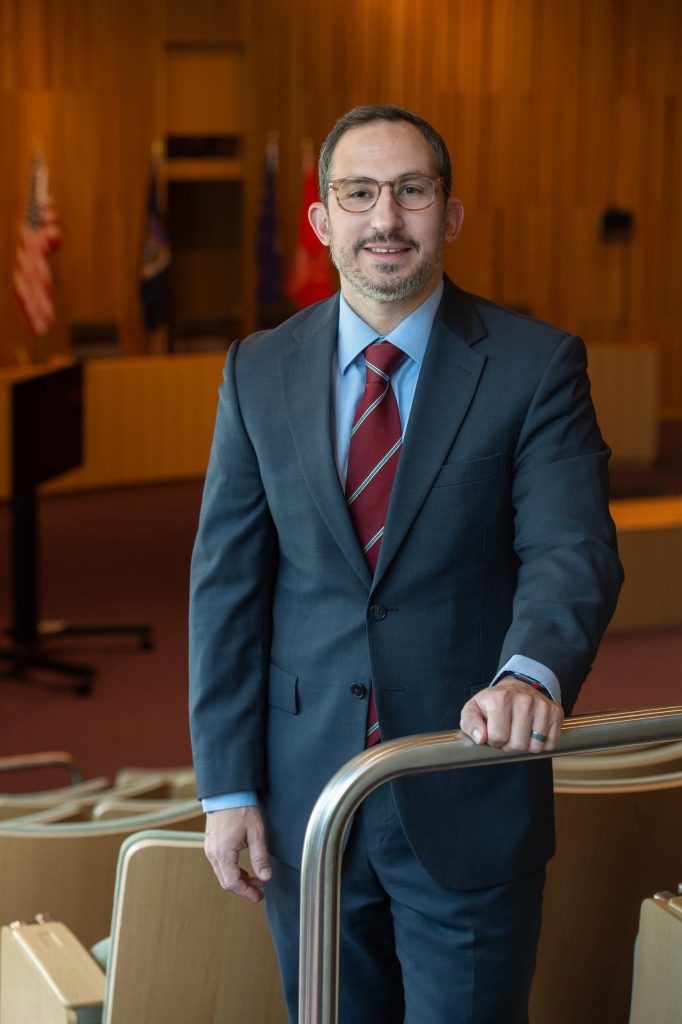
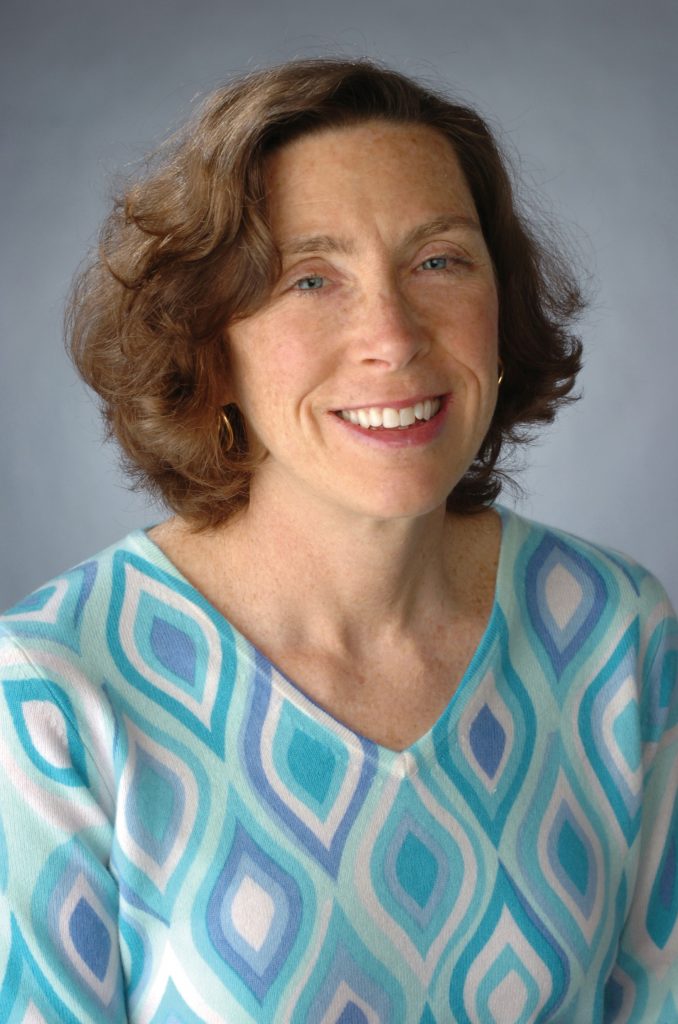
Headshot of Cisco Palao-Ricketts L’03
Cisco Palao-Ricketts L’03

For Cisco Palao-Ricketts L’03—a Partner in US Employee Benefits and Executive Compensation at DLA Piper and a member of the College of Law Board of Advisors— contributing to the College of Law’s success begins with staying in touch with your alma mater. In Palao-Rickett’s case, that engagement led to a new externship opportunity for students at DLA Piper, one of the world’s largest and best-known law firms.

“This new externship came about because Dean Boise visited the West Coast to meet with alumni,” says Palao-Ricketts. “We met over lunch to discuss how the school is doing. By being communicative like this, you can find out many different ways you can help.”

Palao-Ricketts took the initiative to create an applied learning opportunity at DLA Piper for Syracuse students passionate about learning tax law at a multinational law firm that represents leading companies across many industries.

To Palao-Ricketts, Syracuse’s tax program—and dedicated teachers such as professors Robert Nassau and Greg Germain—consistently produces strong graduates. “I told Dean Boise it would be good to let tax students showcase their wares at DLA Piper.”

Headshot of 3L Ki-Jana Crawford
3L Ki-Jana Crawford

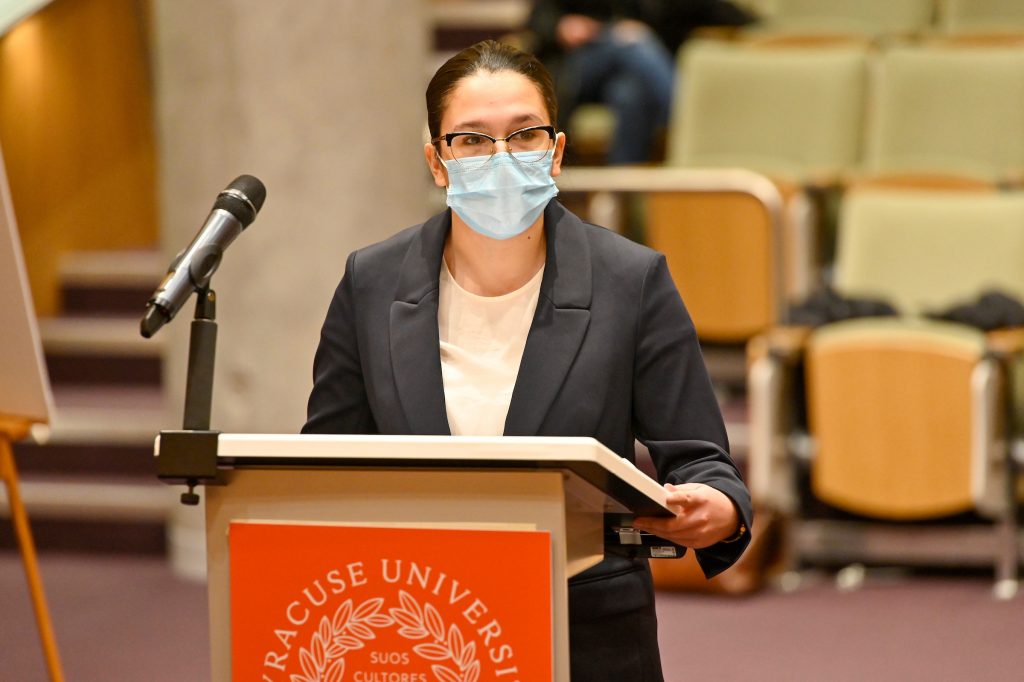
The first DLA Piper extern to take on this formidable challenge—in spring 2021—will be 3L Ki-Jana Crawford, an Illinois native with an undergraduate degree in finance and business administration from the University of Kentucky and an Assistant Notes Editor at Syracuse Law Review.

“Ki-Jana is a very bright student with a strong academic background and a strong interest in doing tax law,” says Palao-Ricketts. “This externship will be a great opportunity for him to earn credits and gain practical experience. It will be very useful to him.”

Palao-Ricketts adds, “I cannot tell you how quickly I would have been in line if this externship had been available to me!”

Due to the coronavirus pandemic, DLA Piper offices in Palo Alto—where Palao-Rickets is based—won’t return to in-person business until at least Jan. 1, 2021. “So we’ve adjusted the externship to be done remotely, but the projects we work on won’t change,” Palao-Ricketts explains.

Echoing his advice for alums looking to help the College, Palao-Ricketts says online communication between extern and supervisor will be the key to success.

The Many Ways You Give Back: Brian Gerling L’99

In addition to your financial gifts, loyal and engaged Orange alumni help their alma mater in many other ways—from hiring graduates and hosting externs, to guest lecturing and teaching, to coaching and judging advocacy teams.
Every way you contribute makes a difference for our students, not least in the personal professional bonds that are formed among generations of Orange lawyers.
Here we offer a few vignettes about how alums have been offering their time and talent in the past year, and why they do it.

TEACHING A PRACTICUM

Navigating Intellectual Property Legal Issues—Kinetically

Headshot of Brian Gerling L’99.

Every semester, College of Law students in the Innovation Law Center (ILC) benefit from the extensive expertise and broad experience of practitioners who supervise student research projects for real-world clients.

Often those practitioners are drawn from the ranks of alumni who have graduated from the College’s preeminent technology commercialization and intellectual property (IP) law program. One such adjunct professor is Brian Gerling L’99, Senior Counsel for Bond, Schoeneck & King PLLC (BSK).

“I found it fascinating”

At BSK, Gerling’s practice focuses on intellectual property, data privacy, cybersecurity, and economic development in the beverage, environmental, and plastics industries. He also is engaged with the autonomous systems industry, serving as legal advisor to local unmanned aerial vehicle businesses.

As an adjunct professor, Gerling oversees one of ILC’s experiential learning practicums, working with students, as well as ILC clients, to research the
technical, legal, and business aspects involved in bringing new technologies to market.

When did he first become interested in technology? “Even as a kid, I was curious how or why things worked,” recalls Gerling. “Whether it was electricity or the human body, I found it fascinating, and that’s what led me down the path to a degree in biology.”

During that process, Gerling studied medical and laboratory processes and equipment, which are often the result of innovative technological advancements. While studying for his undergraduate degree, he “discovered that I could marry my passion for biotechnology and the law, and that’s what brought me to Syracuse to focus on IP law.”

“[Students’] intelligence and eagerness to learn is kinetic. It is just a different vibe and energy from working with – or against – other attorneys.”

Hagelin and Rudnick: “True gentlemen”

Gerling’s reason for giving back to his alma mater—and specifically the Innovation Law Center—primarily came from wanting to settle back in Central New York after living away from the area after graduation.

In addition to his local roots, Gerling’s experience learning technology law under the late Professor Ted Hagelin drove his decision to get involved. While at the College of Law, Gerling says that he got to know Professor Hagelin through classes and by editing the Syracuse Journal of Science and Technology Law, and he marveled at not only Hagelin’s brilliant mind but also his character (“a true gentleman,” says Gerling).

“Professor Hagelin started the Technology Law Commercialization Program, the precursor to ILC, and he just left an indelible impression on me,” says Gerling. “I learned from him about navigating through legal issues, and even more about life. I have used the principles I learned while at the College of Law throughout my career.”

After a year or so back in Central New York, Gerling says he met ILC Director M. Jack Rudnick L’73 through local business circles. “After meeting Jack a couple of times, I thought to myself he was very much like Ted, a sharp legal mind and just a true gentleman,” says Gerling. “I then learned that he was running Professor Hagelin’s program. I discussed the ILC with Jack and ways that I could get involved, and here we are.”

“Really neat technologies”

When asked about his favorite part of joining the ILC team, Gerling says that his colleagues at the ILC are all accomplished, and it is just a joy to work with them. But he says his favorite part hands-down is working with the students. “Their intelligence and eagerness to learn is kinetic. It is just a different vibe and energy from working with—or against—other attorneys,” observes Gerling. “I look forward to class each week, and I enjoy and appreciate their perspectives on life and society. That is inspirational because it challenges me to be a more rounded educator and person.

Gerling says the companies that he and his students have worked on recently include technologies ranging from protecting energy grids, to biosensor masks, to unmanned aerial systems operations, “so the students have been exposed to a wide spectrum of really neat technologies.”

As far as adjustments due to COVID-19, Gerling’s team has had to navigate the challenges associated with a hybrid learning environment, but this format worked well in Gerling’s view. That success in this trying time, he attests, is a testament to not only to College and University leadership but also to the students.

The Big Board: Participation Rates by Class Year

Each year, your philanthropic engagement fills us with pride

Syracuse Law students sitting in classroom with covid masks on. Professor teaching in front.

In response to inquiries about how alumni giving to the College of Law stacks up by class year, in the 2018 Giving Book, we began publishing “The Big Board.” Here, starting with the Class of 1960, you’ll find a class-by-class giving participation breakdown, with arrows indicating an increase in percentage from last fiscal year, calculated by alumni who made gifts during Fiscal Year 2020 (July 1, 2019 to June 30, 2020). You will also find lifetime giving by class, through June 30, 2020.

Annual giving is the lifeblood of the College of Law, and each year there are new successes to celebrate. Early in FY20, the classes of 1959, 1979, 1994, and 1999 kicked off reunion year class challenges with enthusiasm, boosting class participation rates and raising more than $65,000 from 72 donors.

Syracuse University’s third-annual day of giving in November 2019 saw another record performance, with 581 donors making gifts to Boost the ’Cuse, nearly 100 additional gifts compared to the previous year.

In spring 2020, we were filled with gratitude by the outpouring of empathy from alumni who wanted to support College of Law students during the COVID-19 pandemic.

’Cuse Law Cares—part of the larger Syracuse Responds COVID-19 student aid and relief initiative—raised more than $50,000 to provide emergency grants to students facing financial hardships. Thanks to many gifts from alumni and available grant funding, more than 200 of these emergency grants were awarded, and this work continues as
the pandemic evolves. We are grateful to our many alumni who reached out with support during such a difficult time.

We are also grateful to the Class of 2020, which elected to make a special gift to ’Cuse Law Cares, as the University’s Class Act! senior class giving campaign was suspended due to the pandemic. Undeterred by the extraordinary events of 2020, the Class of 2021’s giving campaign is well underway, and class leaders are forging ahead with their philanthropic goals.

As we strive to overcome the new and unprecedented financial challenges for higher education, alumni support is particularly important. Your philanthropy fuels our innovation and progress. It helps us to build on what distinguishes our law school from the more than 200 nationwide. It propels our students into extraordinary careers such as yours. And gifts to the Law Annual Fund and scholarships assist our recruitment efforts by increasing selectivity and lowering class sizes.

Be sure to make your gift in time for next year’s participation report by donating today, and make sure to read next year’s Giving Book to see how your class did in FY21.

Graph showing donor participating rates by year.

Giving Through the Years: Betania Allo LL.M.’20

PHILANTHROPIC PROFILES

Our alumni’s generosity underwrites the College of Law’s success.

For many alumni, a tradition of lifelong giving is often tied to personal stories and fond memories of their alma mater. And what better time to reflect on their College of Law days than on the occasion of a class anniversary! Here, alums celebrating years ending in zero share their philanthropic journeys. Tell us yours by emailing us at su-law@law.syr.edu.

Headshot of Betania Allo
Betania Allo LL.M.’20

After graduation, Argentinian Betania Allo was selected for a Syracuse University Robert B. Menschel Public Service Fellows Fund award. She is using her Menschel Fellowship to complete service at the United Nations Security Council Counter-Terrorism Committee Executive Directorate, specifically in Information and Communications Technology (ICT) coordination, conducting technical assessments of member states and helping to mitigate terrorist use of technology.

What brought you to the College of Law?
I was looking for a master of laws program that would allow me to specialize in cybersecurity and tech law. Unfortunately, few law schools acknowledge the importance of educating tech-savvy lawyers. Syracuse was my top choice because I loved the course offerings, the outstanding faculty, and the opportunity to work at the Institute for Security Policy and Law to dig deeper into the convergence of law and emerging technologies.

What law school memories stand out for you?
Representing my L.LM. cohort before the Student Bar Association and performing senator duties gave wonderful memories. In addition, being the commencement speaker and sharing the Class of 2020 tribute video with professors and remarkable alumni—such as President-Elect Joseph R. Biden Jr. L’68—were true honors. Also, the Boost the ‘Cuse related events were so much fun! As Class Act! ambassador, I got the opportunity to get to know J.D. students and alumni better as we worked together toward a fulfilling cause.

When and why did you start to give back to the College of Law?
Ever since my first day at the College of Law, I started getting involved in projects, affinity groups, and student government to give back to the school and enhance my fellow students’ experience.

In what ways have you given back?
Giving back does not only mean donating money. Giving back also means putting time and talent to the service of the school. During the Boost the ‘Cuse events, I led the Class Act! fundraising efforts from LL.M. students, achieving an all-time record with 96.5% of my cohort donating to the College. In addition, I proudly represent the College of Law everywhere I go because I am grateful for the education I received. Here, I completed the competitive profile that today is awarding me so much professional success.

Why is philanthropy important to you?
Philanthropy is important because it opens opportunities. As an international student from Argentina, I wouldn’t have been able to attend Syracuse and pursue my LL.M. if it wasn’t for the generous donations to the College of Law Scholarship fund. Funds go to help students like myself pursue legal degrees to contribute toward a more equitable and just society.

Do you have a message to recent graduates about giving back?
Yes. Stay in touch and contribute with your time, leadership, talent, or donations to create opportunities for current and future students.

Giving Through the Years: Edward (Ted) Townsend L’10

PHILANTHROPIC PROFILES

Our alumni’s generosity underwrites the College of Law’s success.

For many alumni, a tradition of lifelong giving is often tied to personal stories and fond memories of their alma mater. And what better time to reflect on their College of Law days than on the occasion of a class anniversary! Here, alums celebrating years ending in zero share their philanthropic journeys. Tell us yours by emailing us at su-law@law.syr.edu.

Photograph of Edward Townsend with a wife Jennifer Townsend and 2 young children.
Edward (Ted) Townsend L’10

As an attorney in the Health Care and Human Services practice group at Rochester, NY-based Harter Secrest & Emery LLP, Ted Townsend advises hospitals, physician practices, and other health care providers, facilities, and organizations with a variety of operational, compliance, and governance matters.

What brought you to the College of Law as a student?
I was living in Boston at the time and made the decision to return to school after working for five years. My search focused on schools that offered broad opportunities and strong programs across the board. In addition, I did not want to be pigeon-holed into a particular geographic market, or area of law, after graduation.

After visiting Syracuse, there was really no other logical choice. I felt immediately comfortable. The students and staff were genuine. The programming was strong and diverse. Also, the collaborative nature of the student body was readily apparent, which was a distinction from other schools. In addition, although I did not end up pursuing it, the joint degree options with the Maxwell School were very appealing.

What law school memories stand out for you?
Without question, the day in February 2009 when I met my wife, Jennifer (Haralambides) Townsend L’11 . We use our law degrees very differently today, which is a testament to the range of legal education the College of Law offers.

When it comes down to it, what I miss about law school is my classmates and the relationships we developed. I found a community that was invested in working hard and supporting each other, but also not taking itself too seriously. Coming back after five years, I was not anticipating making lifelong friends at Syracuse, but that’s exactly what happened.

I was also Editor-in-Chief of the Syracuse Law Review—as was Jenn, which she insists I add!—and, while I look back on that as quite a challenge, I also have great memories of working with our Executive Board and the other members of Law Review.

When and why did you start to give back to the College of Law?
If it wasn’t the first year after graduating, it was certainly the second. We gave only what we were able to, but believe that participation, even at a low level, is important. Syracuse was an incredible experience for both of us. Through our continued support, we have been able to stay connected and involved to ensure that others can have a similar experience.

In what ways have you given back?
We have given back financially, served on panels, and have helped out at Orientation. We both remember what it was like to be there, we remember the support we had, and we try and contribute wherever possible.

Another way I help is through the hiring process, by doing on campus interviews on behalf of my firm and connecting with students informally to talk through their career options. Even if they don’t choose Harter Secrest, I try to make myself available as a resource for students who have questions about the next phase of their career.

Why is philanthropy important to you?
I think Jenn and I consider ourselves lucky to have had our opportunities, so our goal is to provide the same for others in any way we can.

Do you have a message for recent graduates about giving back to their alma mater?
It’s important to remember that even if you are not top of the ladder in terms of dollars, you can add value nonetheless. Any financial contribution goes a long way, and to the extent you can, that’s a great avenue for support. However, it’s not the only avenue. For instance, you can reach out to prospective students or offer advice to current students. If you stay involved, you can find great opportunities to contribute.

Giving Through the Years: Stephen J. Jones L’00

PHILANTHROPIC PROFILES

Our alumni’s generosity underwrites the College of Law’s success.

For many alumni, a tradition of lifelong giving is often tied to personal stories and fond memories of their alma mater. And what better time to reflect on their College of Law days than on the occasion of a class anniversary! Here, alums celebrating years ending in zero share their philanthropic journeys. Tell us yours by emailing us at su-law@law.syr.edu.

Photo of Stephen J. Jones L’00 and a woman.
Stephen J. Jones L’00

Stephen J. Jones is a Partner at Peabody Nixon’s Rochester, NY, office. Jones leads the firm’s Labor and Employment Class Action Team and is regularly called upon to defend “bet the company,” high-stakes litigation. His experience includes defense of approximately 100 class actions and collective actions under the FLSA, ERISA, FCRA, and Title VII of the Civil Rights Act.

What brought you to the College of Law?
I was drawn to the College for several reasons, including its strong reputation in oral advocacy, beautiful campus, an academic scholarship, and a big-time Division 1 college sports atmosphere.

What law school memories stand out for you?
My fondest memories are of the highly competitive moot court competitions (and even more competitive flag football league!); going to Cosmo’s Pizza with my good friend Roy Gutterman L’00; Professor William Wiecek’s intense lectures; nights out in Armory Square; and some great games in the Dome.

When and why did you start to give back to the College of Law?
I believe it’s critical for the future of the College that alums stay connected and invested. I also met my wife, Margaret (Lyons) Jones L’01, at the College 21 years ago during a moot court competition, and we now have three children together (ages 14, 12, and 10). So the College has deep personal significance for me as well.

In what ways have you given back?
My wife and I donate to the College annually, attend all of the Rochester alumni events, and return to the campus as much as possible for College of Law events and attend big games at the Dome.

Why is philanthropy important to you?
At the end of the day, all that matters in life is making the world a little better place than how we found it.

Do you have a message to recent graduates about giving back?
While it’s often difficult to give back soon after graduation, particularly when facing steep student debt, every little bit helps. Donations directly fund scholarships, facility improvements, and innovative programs. All of these factor strongly into the College’s reputation and standing in the legal community which, in turn, will be as asset on their career paths.

Giving Through the Years: James Domagalski L’90

PHILANTHROPIC PROFILES

Our alumni’s generosity underwrites the College of Law’s success.

For many alumni, a tradition of lifelong giving is often tied to personal stories and fond memories of their alma mater. And what better time to reflect on their College of Law days than on the occasion of a class anniversary! Here, alums celebrating years ending in zero share their philanthropic journeys. Tell us yours by emailing us at su-law@law.syr.edu.

Headshot of James Domagalski L’90
James Domagalski L’90

A Partner at Barclay Damon LLP, Jim Domagalski is Chair of the firm’s Construction and Surety Practice Area. He also practices in the Commercial Litigation and Labor and Employment practices, and he serves as the firm’s co-marketing partner.

What brought you to the College of Law as a student?
Two things. First, after spending four years at the University of Notre Dame in northern Indiana, I wanted to return to New York State. Second, the College’s Advocacy Program attracted me, and eventually I became a member of the College’s National Trial team.

What law school memories stand out for you?
The Class of 1990 was a collection of terrific people. We socialized together and created great memories outside of the classroom. I made lifelong friendships at the College of Law.

When and why did you start to give back to the College of Law?
I started giving back soon after graduation because of my very positive experiences and my desire to help make the College stronger.

In what ways have you given back?
Over the years I have supported the Law Annual Fund, and more recently, I have supported the College through the University’s Hill Society. I also serve as Chair of the Syracuse University Law Alumni Association Giving Committee.

Why is philanthropy important to you?
I strongly believe in the responsibility of citizens to give back to the cultural, civic, religious, and educational institutions that comprise the core of American life.

Do you have a message to recent graduates about giving back to their alma mater?
Some people might think that donating is only for more senior alumni, but a recent graduate should know that a donation of any size can make a difference as we pursue our fundraising goals.

Giving Through the Years: Golda Zimmerman L’80

PHILANTHROPIC PROFILES

Our alumni’s generosity underwrites the College of Law’s success.

For many alumni, a tradition of lifelong giving is often tied to personal stories and fond memories of their alma mater. And what better time to reflect on their College of Law days than on the occasion of a class anniversary! Here, alums celebrating years ending in zero share their philanthropic journeys. Tell us yours by emailing us at su-law@law.syr.edu.

Headshot of Golda Zimmerman L’80
Golda Zimmerman L’80

Golda Zimmerman is an internationally recognized expert and frequent speaker and lecturer on adoption law and family formation. She is currently retired from the active practice of law, but she continues to serve as an expert witness and consults on difficult cases nationally and internationally …

My story starts at the end of the 19th century. It begins with two left shoes. A young man is so poor that he could only afford two left shoes. He journeyed alone in steerage on a boat from his homeland. He came in search of freedoms, to worship as he desired, to have economic opportunity, and to be safe from the ongoing threat of attack and death.

He was a butcher and worked in New York City. He visited Syracuse to see some friends from his village. While in Syracuse he saw a beautiful young woman hanging clothes in her yard. So taken, he immediately asked her father if he could marry her. Her father said “no” as she was only 14 years old. He told the young butcher to come back in two years when she was 16. He did come back, and he married her. That young butcher and the beautiful young woman were my grandparents.

Perhaps this family story has been embellished over the years, but every new year for as long as I can remember we all were bought a new pair of shoes: one right and one left. The purpose of those shoes was to remind us of the wonderful opportunity and life we were blessed to have; to not forget where we came from; and most importantly to remember others and help them if we were able.

My family’s values and lifestyle have always encouraged philanthropy at whatever level is appropriate. My husband and I started to give back to the College of Law once we were somewhat established and knew that our family was secure. We began our efforts in the 1980s. (As an aside, one of my grandparent’s children and three of their grandchildren are graduates of the College of Law.)

I have always felt that my professional success started with the foundation I received at the College. Law school taught me how to ask the right questions and gave me the skills to seek out the answers. I have used these skills in my international and domestic practice.

My entire professional life has centered on children, especially international and domestic family formation. It was natural for us to support law students who were interested in pursuing the area of law most important to me.

Many of my closest friends are classmates from law school. Jeri D’Lugin L’80 and I have kept a close and important friendship these past 40 years. As we were not able to convene the celebration of our 40th reunion in person, we felt that a giving challenge might encourage our fellow classmates to remember that during these difficult times, the law school is especially in need of our financial support.

My advice to recent graduates starting their law career is simple. When the door of opportunity presents itself, have the courage to walk through it. The College of Law has well prepared you to be successful. Use what you have learned, remember your moral compass and life experiences, and be secure that you have the skills to succeed.

Giving Through the Years: Jeri D’Lugin L’80

PHILANTHROPIC PROFILES

Our alumni’s generosity underwrites the College of Law’s success.

For many alumni, a tradition of lifelong giving is often tied to personal stories and fond memories of their alma mater. And what better time to reflect on their College of Law days than on the occasion of a class anniversary! Here, alums celebrating years ending in zero share their philanthropic journeys. Tell us yours by emailing us at su-law@law.syr.edu.

Headshot of Jeri D’Lugin

Jeri D’Lugin operates her own retirement planning practice in Greensboro, NC as the owner of a wealth management company. After beginning her law career at a large law firm in Miami, FL, she returned to North Carolina where she headed the tax division of a bank’s trust department and eventually became a regional trust officer …

D’Lugin counts herself as one of the many College of Law graduates whose law degree helped propel her career in different and unexpected ways. “A law degree is great for anything you do in life, as it provides you with a broad background of knowledge and skills. You understand liabilities, where you can make mistakes, and it provides you with the intellect to avoid making those mistakes. Being an attorney has helped me with every career move I’ve made.

It was her first position out of law school, at a large Miami law firm, that set in motion D’Lugin’s continued engagement with the College of Law in many ways. “I felt fortunate to have the position at the firm, and the blend of my College of Law, Syracuse Law Review, and Maxwell School of Citizenship and Public Policy experiences played a big role in getting that position. As soon as I could, I started giving back to the law school,” explains D’Lugin.

D’Lugin is a consistent supporter of the Law Annual Fund, a fund that gives the law school maximum flexibility in addressing its most pressing needs. She’s also made a gift to dedicate a room in honor of her parents in MacNaughton and White halls.

Giving back to the law school encompasses more than monetary donations for D’Lugin. She welcomes any prospective or current College of Law student in her offices for discussions about law school and legal careers. She also served on the College’s Board of Visitors (now the Board of Advisors) during Dean Daan Braveman’s tenure.

To D’Lugin, giving back is an obligation to make the world a better place, if you are fortunate enough to be in a place to give back to your community and beyond. “I’ve heard a local gentleman put it best: ‘You need to put more wood on the pile than you have taken off the pile.’”

D’Lugin believes that recent graduates should begin to give back to the College as soon as they are able. “Recent graduates have benefitted from the alumni who preceded them and have given to the College, so they could get a good education at Syracuse with the best in technology and classrooms. Continuing that cycle is critical for those who will come after you,” she says. “And all alumni have a stake in the College of Law remaining a top law school because the reputation of the school reflects on all of us.”

When thinking about the challenges recent graduates face as they begin to make career decisions, D’Lugin looks to her career and the careers of her classmates for direction. “If you start in an area of law and feel that you haven’t found your niche, don’t give up,” she observes. “There are so many opportunities in front of you because of your law degree. A law degree is a door opener, whether it’s to leadership positions in non-profits, or financial services, or whatever.”

Her classmates and their diverse career paths continue to be an inspiration and point of pride for D’Lugin. “We have alumni who have gone on to be successful in real estate and financial services, a leading adoption law expert [that is, her dear friend Golda Zimmerman L’80] to a judge on the US Court of Appeals for the Fifth Circuit. There is no onesize-fits-all career path.”

To celebrate everything the Class of 1980 has accomplished and to help the next generation of Orange law students make their mark, D’Lugin and Zimmerman announced a Class of 1980 Challenge shortly after their 40th anniversary reunion over Law Alumni Weekend.

Adds D’Lugin, “After issuing the challenge in October, we quickly heard from classmates that our message encouraged them to give back to the College. I really believe we’ll have a great showing by the end of the campaign, and I thank all who give to the College.”

Giving Through the Years: Giuseppe Vincenzo “Joe” Vumbacco L’70

PHILANTHROPIC PROFILES

Our alumni’s generosity underwrites the College of Law’s success.

For many alumni, a tradition of lifelong giving is often tied to personal stories and fond memories of their alma mater. And what better time to reflect on their College of Law days than on the occasion of a class anniversary! Here, alums celebrating years ending in zero share their philanthropic journeys. Tell us yours by emailing us at su-law@law.syr.edu.

Photo of Giuseppe Vincenzo ”Joe” Vumbacco L’70 and a woman
Giuseppe Vincenzo ”Joe” Vumbacco L’70

Joe Vumbacco stood down as CEO, President, Vice Chairman of Health Management Associates Inc.—a $4 billion revenue organization managing more than 60 hospitals in the southeast and southwest—in 2008. “But I don’t consider myself retired.” Since 2008, Vumbacco has learned to speak and write Italian; gained a Certificate of Finance from Harvard Business School to manage his own investment portfolio; and has turned his hand to writing novels. The Ghost of Bowdoin College was published to acclaim in 2018, and Vumbacco has completed the manuscript for his follow story of “money, murder, and the mob:” The Return of the Ghost of Bowdoin College.

What was your favorite class and professor at the College of Law?
More than one person gave me a break over the years, but I’ll never forget what Dean Robert Miller did for me. I was married in my senior year at Bowdoin and my wife, Lee, and I had our first child in 1966. I wanted to go to law school, but coming from a factory background in Meriden, CT, I had little money, just enough to get through the first year and pay rent on married student housing.

But I felt responsible for my family, so I walked into Dean Miller’s office in the summer of 1968 and asked him to save my place, so I could work to raise more funds. I thought he wouldn’t know who I was, but he said he had reviewed class grades, saw I was near the top, and offered me a full scholarship. Not only that, he called his friend Gary Axenfeld in Syracuse and I went to work as a clerk at Axenfeld, Webb, Marshall, Bersani and Scolaro. From there I became Research Editor at Syracuse Law Review and was elected to Honor Court and the Order of the Coif.

My first year at Syracuse was also Professor Emeritus Travis H.D. Lewin’s first year. He went on to have a brilliant career, and he is an outstanding teacher.

How did your SU College of Law degree help you reach your career goals?
I wanted to be one of those people who broke the ceiling of non-Ivy League law graduates getting a job with a Wall Street corporation. After graduating, I practiced law in Manhattan with Mudge Rose Guthrie & Alexander before joining the “tough and tumble” world of beer and bread as a senior vice president of the F. & M. Schaefer Corporation. I then became the Executive Vice President of the Turner Corporation—the largest general contractor in the US—before leading Health Management Associates.

When and why did you start to give back to the College of Law?
When Lee and I got to the point when we weren’t poor, we started to give to certain causes, and top of the list was Syracuse. Later, I was asked to serve on the Board of Advisors during the period when Dean Hannah Arterian was raising money for Dineen Hall.

In what other ways do you practice philanthropy?
After leaving Health Management Associates, I became a Master Mason, and I helped to revive a scholarship program here in Maine. Plus, my wife and I helped to found a non-denominational “church without walls” in southwest Florida, the Jubilee Fellowship of Naples. I also try to do a lot of counseling with high school and college students. I have a cardinal rule for them: don’t strive to be the smartest person, be the most organized. Work first, then play.

What advice can you share with recent graduates just starting their law careers?
I learned the following from Gary Axenfeld. If you want to be a successful lawyer or businessperson, there are four things you have to do—answer mail, return calls, have big ears, and a small mouth. I’ve practiced that for 50 years. I worked very hard on listening, for instance, not just listening to important things, but everything. An example of having a “small mouth” is from my Turner days when we managed top secret government contracts. I had a reputation for never breaching confidence, which goes back to growing up in a rough place.