Around Syracuse Law

Internship and Externship Experiences, Faculty Mentors Helped 3L Find His Calling in Criminal Law

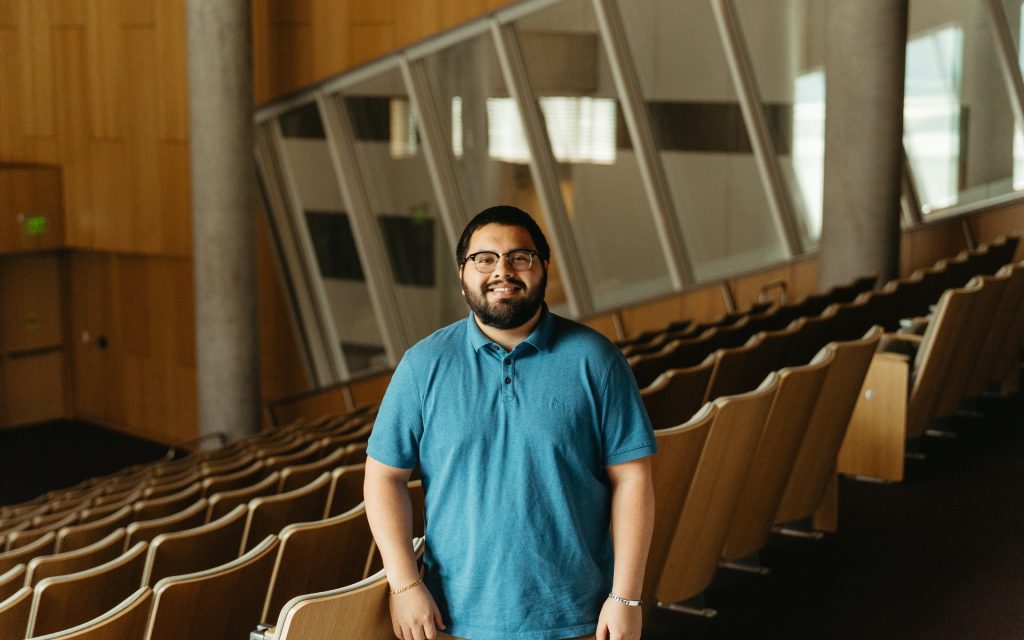
Peraza in the courtroom looking at the camera

When Daniel Peraza Soles L’24 started at the Syracuse University College of Law, he wasn’t sure what area of the profession he wanted to pursue. But, after taking classes from experts in the field and participating in externships and internships over two summers, he decided that criminal law was the way to go.

Two pivotal experiences helped shape his choice. The first was working in the summer of 2022 as an extern at the Public Defender’s Office for the Ninth Judicial Circuit Court in Orlando, Florida. He credits “four amazing felony attorneys” from the Public Defender’s Office for serving as mentors and allowing him to see what goes into preparing for a criminal court case.

“I was able to sit in on psychological evaluations, go into jail cells and meet with the clients and more,” he says. “It’s interesting work, and I started to see how this experience also helped people along the way.”

His second experience, in the summer of 2023, helped to solidify his decision when he worked as an intern with the Office of the Federal Public Defender for the Northern District of New York.

Peraza working on a laptop with classmates in Dineen Hall

“The work I did there was invaluable,” he says. “I was given many opportunities to come up with my own creative ideas to help the attorneys assist clients in any way possible.”

This led Peraza Soles’ interest in finding out more about the defendants’ backgrounds. “Part of the work of a criminal defense attorney is discovering as much as they can about an individual’s health or family struggles in order to bring these things to light and see how we can make their experiences known at sentencing,” he explains. “You’re dealing with someone’s life, so it’s incredibly important information to have at the time a person is sentenced. It’s not about asking for people to be let off for their actions, not at all. It’s more about wanting to make sure the court understands what each person has been exposed to and get them the help they need, so one day they might be able to reintegrate into society.”

His interest in criminal law led him to write “People Not Numbers,” a class assignment on Adverse Childhood Experiences (ACE), which, while not an exact indicator, can show the likelihood between the aspects of the home life of minors—negligence, abuse or exposure to drugs and alcohol, for example—and future criminal involvement.

Of course, his coursework and interaction with Syracuse Law faculty over the past three years has also helped affirm his decision. He is grateful to Lauryn P. Gouldin, the Laura J. & Douglas Meredith Professor of Teaching Excellence, Crandall Melvin Professor of Law and director of the Syracuse Civics Initiative, who teaches various courses related to criminal law for being a mentor to him. Gouldin’s scholarship focuses on the Fourth Amendment, and Peraza Soles is grateful to her for “helping me to understand criminal procedures and letting me talk her ear off about what I think about the Fourth Amendment,” he says.
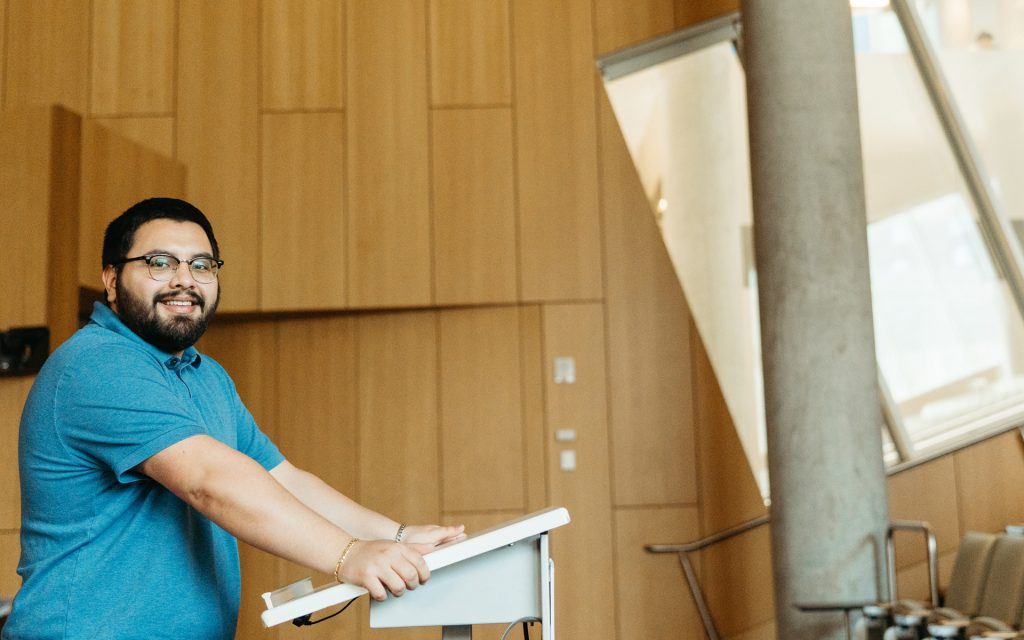
Peraza in the courtroom looking at the camera

He is also especially appreciative of Professor of Law Todd Berger, director, advocacy programs, and a former public defender, for helping him to understand what he could expect in criminal law and assisting him in developing his litigation skills; as well as Associate Teaching Professor Courtney Abbott Hill L’09 for helping him learn to properly prepare legal documents, providing feedback on resumes and cover letters, and encouraging him to take the Multistate Professional Responsibility Examination (MPRE) after 1L, so he wouldn’t have to stress about it as he studies for the bar this summer.

Peraza Soles has been very involved in Syracuse Law since he enrolled. As a 2L, he was vice president of the International Law Society and participated in three different advocacy competitions, most notably the Ulvaldo Herrera National Moot Court Competition. He is grateful for his involvement with the Advocacy Program, which he calls “fantastic advocacy learning experience.”

This year, Peraza Soles is the executive director of the Travis H.D. Lewin Advocacy Honor Society, something he encourages all students to look into, as it is ranked in the top 15 in the nation. And, thanks to his involvement and hard work, Peraza Soles was the recipient of the Syracuse Law’s Rhoda S. and Albert M. Alexander Memorial Scholarship in recognition of his commitment and dedication to public service.

Peraza chatting with a group of students in the hallway of Dineen Hall

Today, Peraza Soles is preparing for his next chapter post-graduation—a full-time job working at the Colorado State Public Defender’s Office. He is excited to use the skills developed over the past three years to represent the rights of others in a court of law.

“Law school is as challenging as people say it is, but if you can get through 1L, you’re golden,” he says. “Keep an open mind when you head to law school and look at different areas to see which ones appeal to you. You just never know. I didn’t imagine going in to criminal defense when I started here three years ago, but then something clicked, and I saw what I think is a great fit for me.”
Work in National Security, Military and Veterans Opportunities Guide Legal Career

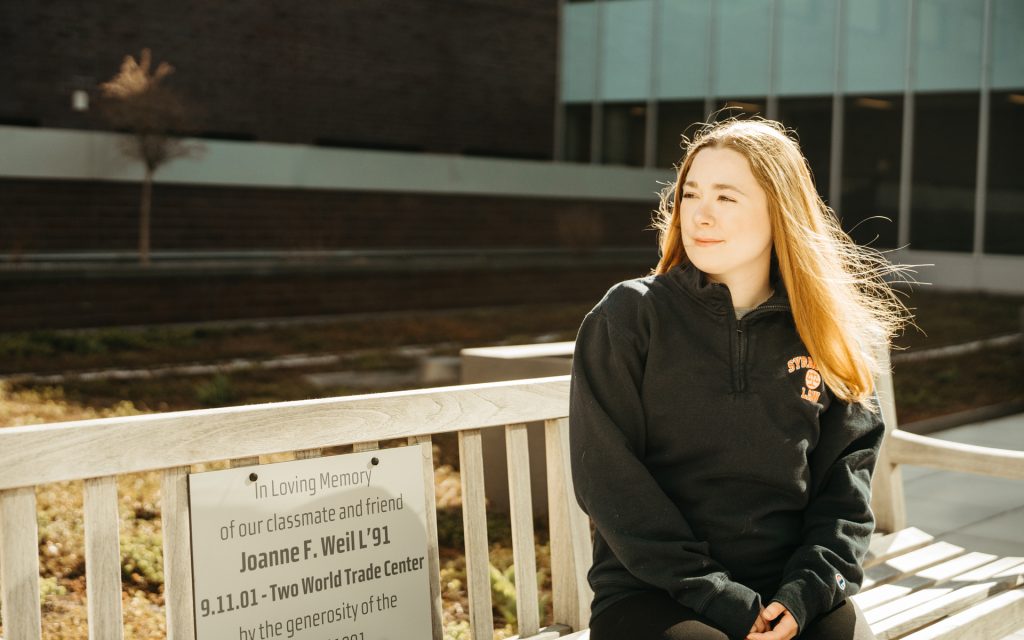
Meghan Wright sits outside on a bench in memory of an alum who passed away in the attack on the World Trade Center in 2001

Meghan Wright L’24 is too young to remember much about the events of 9/11, but, living in Westchester, New York, just outside New York City, her mother knew people who had died in the Twin Towers. This gave Wright a “healthy respect” for the attack on the U.S. and impacted her choice to study national security law at Syracuse University College of Law.

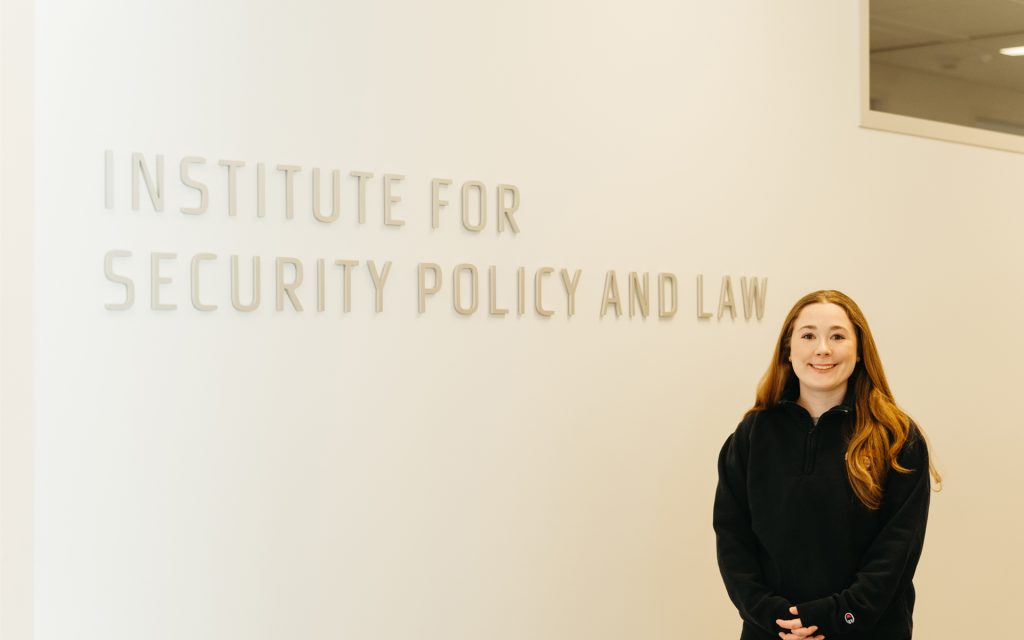
Meghan Write stands in front of a white wall and sign for the Institute for Security Policy and Law

Wright earned her bachelor’s degree in political science with minors in history and security threat assessment and terrorism studies from Iona College. As she began researching her next steps, she came across Syracuse Law’s Institute for Security Policy and Law (SPL) led by the Hon. James E. Baker and decided that was the path she wanted to pursue. Wright took a year off after graduating from college to give herself ample time to study for the LSAT, and, when the time came, Syracuse Law was the only place she applied. Wright credits that gap year for helping her score high enough on the exam to not only be accepted into Syracuse Law but also be a recipient of a Dean’s Scholarship, which helped make her goal financially possible.

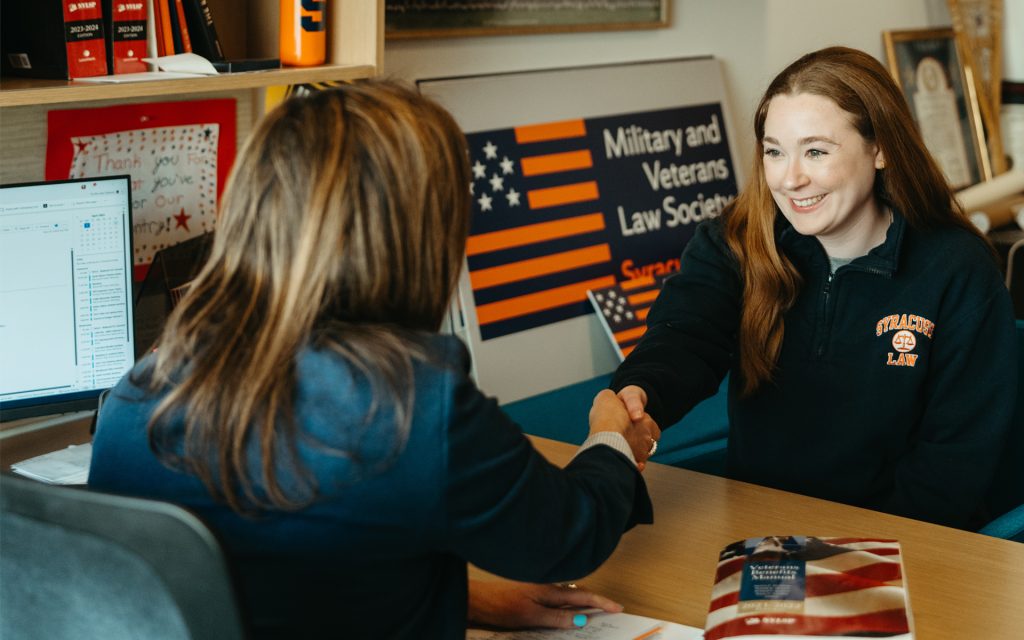
Since she began at Syracuse Law, Wright has fully immersed herself in her classes and the many other co-curricular opportunities the School offers. As a 2L, she served as president of the National Security Student Association, and, this year, she is the president of the Military and Veterans Law Society. Wright has also contributed to the Journal for the Global Rights Organization.

Meghan Wright shaking a woman's hand sitting at a desk in front of a Military and Veterans Law Society sign.

She is particularly proud of is the work she has done for Syracuse Law’s Betty and Michael D. Wohl Veterans Legal Clinic. Her work assisting veterans is especially important to her, as her father served in combat during Operation Desert Storm. At the clinic, she works with veterans on either discharge upgrade claims or claims for disabilities incurred in or because of service.

“It’s important to me to help the veteran community, as it has always been an important aspect of my life. My work has also prepared me for my career because neither the government nor a client wants to hear, ‘I missed that deadline,’ so I’ve learned to better organize tasks and prioritize other responsibilities,” she says.

Wright has enjoyed her course work over the past three years and credits Teaching Professor Elizabeth Kubala, a U.S. Army veteran and executive director of the Veterans Legal Clinic; and Associate Teaching Professor Laurie Hobart, a former national security lawyer within the U.S. intelligence community, as role models.

Photos of Meghan Wright as a child with her brother, holding a black lab puppy

Meghan Wright standing on a yellow ledge in front of a mountain range in Peru

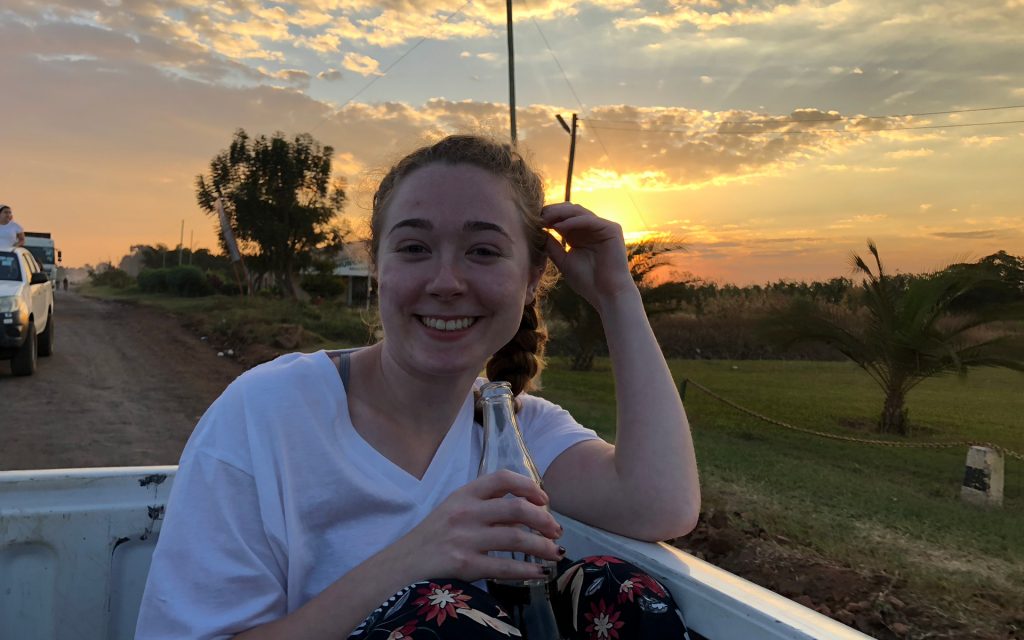
Meghan Wright sits in a truck drinking a soda while outside on a mission trip

Giving back to others was something instilled in her as a child. “My mom always had opportunities for my brother and me to participate in different service opportunities growing up. My family fostered dogs for Guiding Eyes for the Blind, which was always so much fun, and I took advantage of a lot of service opportunities while attending Iona,” she says, noting volunteer experiences at nursing homes and soup kitchens, as well as mission trips to Mississippi, Peru and Zambia.

“Serving others has always been a big aspect of my life, which is why I really enjoy the opportunities Syracuse Law offers, like the Veterans Legal Clinic, to use the skills I’m learning to help others.”

Meghan Wright L’24

Meghan Wright sits in a white chair in the hallway of Dineen Hall in front of windows.

As Wright prepares to graduate, she is eager to see what the future brings.

“In an ideal world, I would like a career that marries national security law and criminal law, while also being able to take on some pro bono cases for veterans’ benefits on the side,” she says. “My experience at Syracuse — from the course work to the prestigious faculty to the chance to put my legal skills to work helping others — has prepared me to take the next step, and I’m excited to make my mark.”

From Courtroom to Courtside: Externship Offers Insight into the Legal Side of Professional Sports

Zach Mazuzan site in front of Dineen Hall outside on a bench smiling

Zachary Mazuzan L’24
The Brooklyn Nets, Brooklyn Sports & Entertainment (BSE) Global, Brooklyn, New York

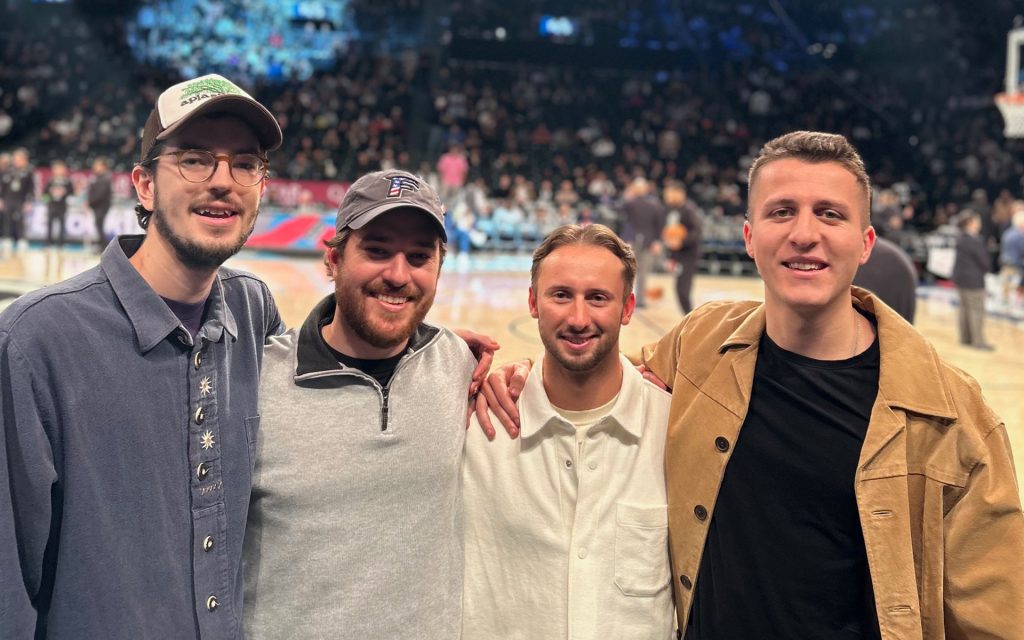
Zachary Mazuzan L’24 came to law school with an interest in learning about the intersection of law and business in the world of sports. In the fall semester, he was able to turn his goals into a reality through a full-time externship with Brooklyn Sports & Entertainment (BSE) Global. BSE Global is the parent company of Barclays Center, the Brooklyn Nets, the New York Liberty, NBA G League team the Long Island Nets, and NBA 2K League affiliate NetsGC. The position reported directly to Jeff Gewirtz, Executive Vice President of Business Affairs & Chief Legal Officer at BSE Global.

Zachary Mazuzan at a Brooklyn Nets game smiling for the camera courtside with three other friends

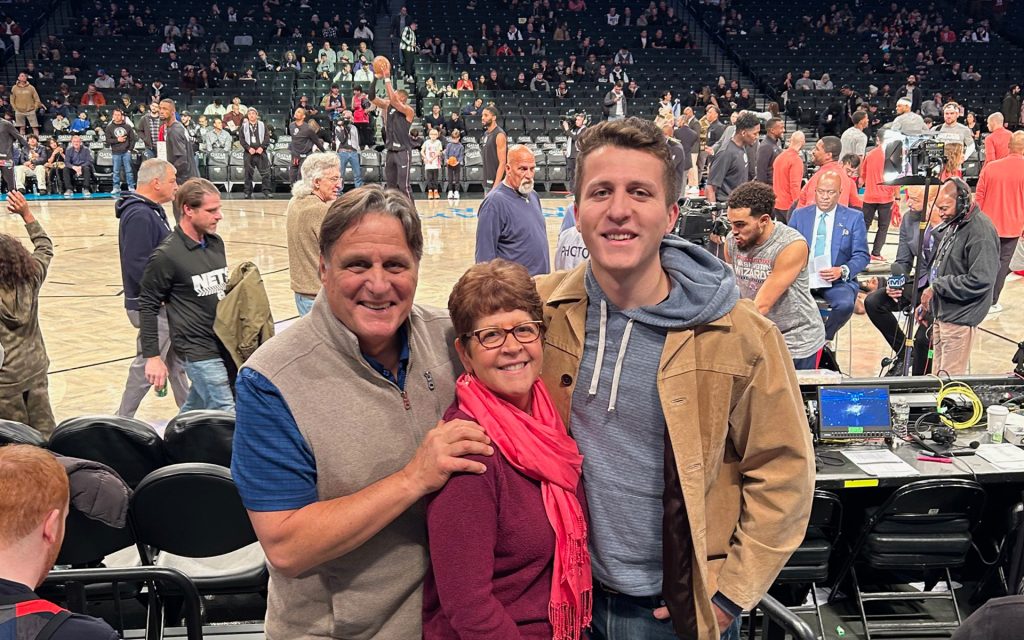
Grateful for the support from the Externship Opportunity Fund and generous alumni donors, Maruzan was able to ease the financial challenges associated with undertaking an unpaid externship in New York City for the semester. This assistance also provided an opportunity for him to explore a new field of law.

“My externship was an opportunity to see how a professional sports organization operated outside of just the athletic events that we as fans love to watch,” he reveals.

“From sponsorship agreements, marketing plans, and ticket sales, to proper insurance coverage, creating ways to bolster fan experiences, and staying up to date with new league rules, there are so many moving parts behind the scenes. This externship was an opportunity to learn about the true breadth of work that goes into how sports organizations function!”

Zachary Mazuzan L’24

Zachary Mazuzan in a courtside photo at a Brooklyn Nets game smiling with his parents.

Having a unique look at an in-house counsel legal role enabled Maruzan to see first-hand the diversity in workflow from day to day on a range of matters spanning different areas of the law. Many of the professionals that he worked with emphasized that finding success in the world of sports goes beyond simply loving the sport the team plays. Being a fan is simply a plus, and your focus needs to lie on honing your legal skills and being able to demonstrate value to the company.

Zachary Mazuzan sits at a table in the Neporant Cafe, working on a laptop with a coffee cup in front of him on the table

Back at school, Mazuzan is a member of Syracuse Law Review and a part of both the Trial and Alternative Dispute Resolution Divisions of the Travis H.D. Lewin Advocacy Honors Society.

Post-graduation, he has accepted a job with a law firm in Washington, DC. “I hope to work in their transactional practice groups,” he says, “because that seems to be the most transferrable skillset into an in-house role with a sports team. I hope to equip myself with a transactional skillset and stay in touch with the connections I have made to keep an eye out for future opportunities in the world of sports!”

Pursuit of Family Law Fulfills Path to Helping Children in Need

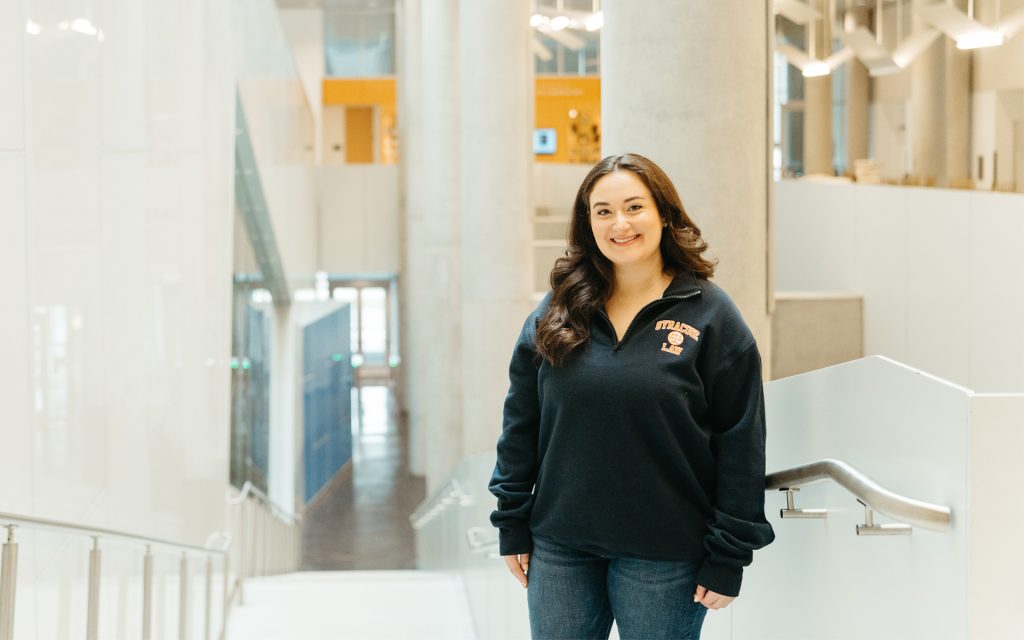
Alexis Gilman standing in Dineen Hall

Alexis Gilman ’20 (NEW), L’24 already loved Syracuse University before she applied to law school. After all, she had spent four years on campus as an undergraduate earning a bachelor’s degree in public relations from the S.I. Newhouse School of Public Communications. Gilman loved the atmosphere and the reputation of the University. So, when she decided to follow her passion into child advocacy/child welfare law, Gilman knew the next step was a law degree from the Syracuse University College of Law.

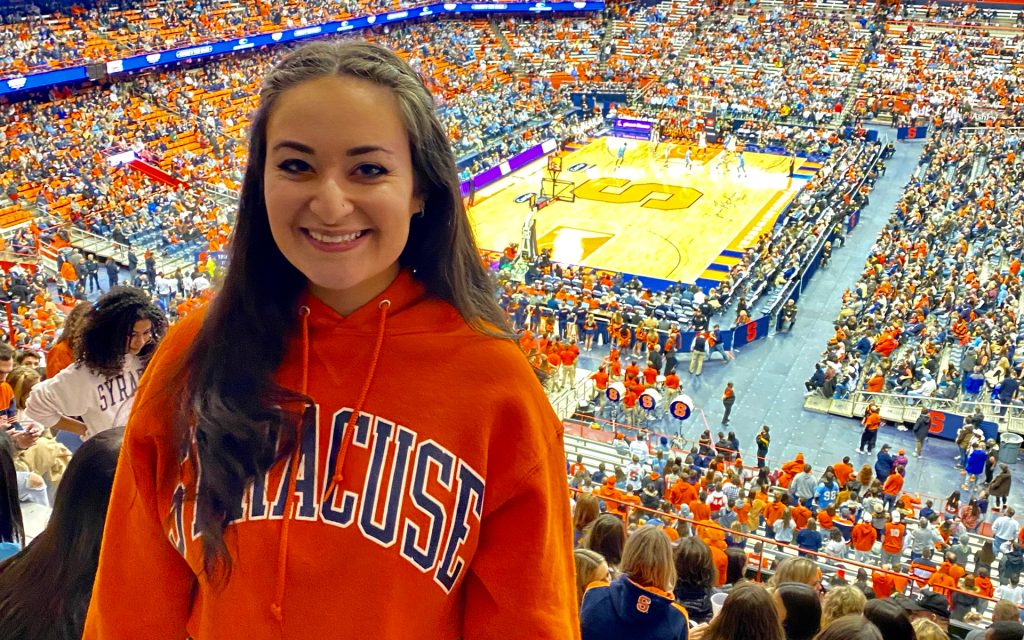
Gilman at a Syracuse basketball game in the JMA Wireless Dome during her undergrad

“I’ve always cared about helping children involved in the legal system,” she explains. “I knew that pursuing family law was a way I could truly help children faced with difficult situations, and I felt really drawn to that.”

While Syracuse Law does not have a specific concentration in child advocacy, Gilman found experiential courses like Trial Practice and Family Law Mediation to be especially interesting. She also took advantage of an externship during her second year of law school with the Hiscock Legal Aid Society’s Family Court Program, which provides pro bono counsel to those who cannot afford representation in mandated cases.

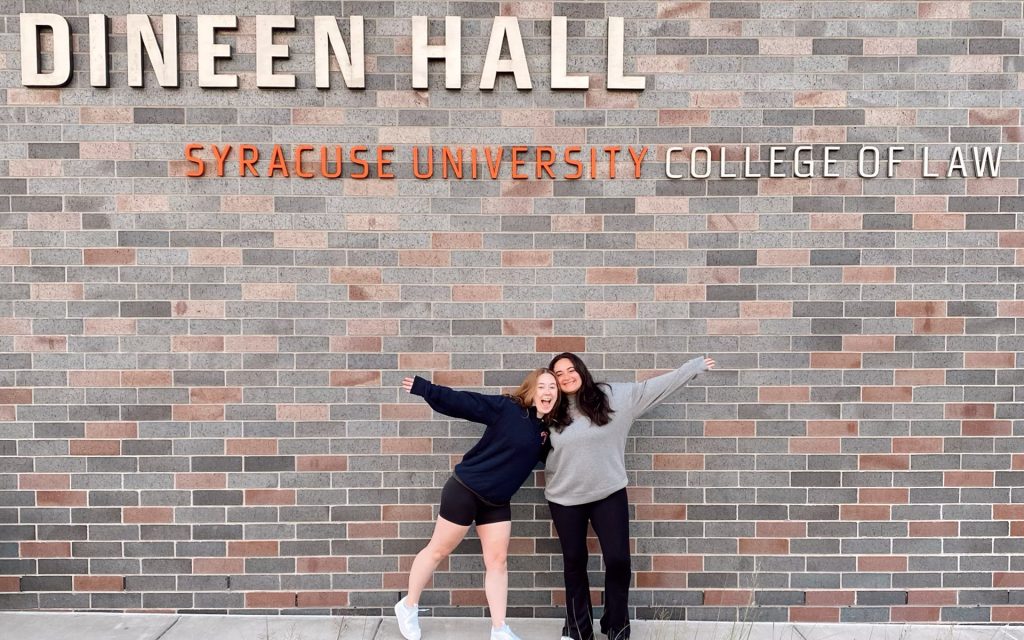
Gilman poses with a friend outside of Dineen Hall

“My experience here has made me much more confident in myself, both personally and professionally. It helped me see more clearly what kind of law I want to practice.”

Alexis Gilman ’20 (NEW), L’24

Gilman not only learned a lot from the experience, but she also found a role model in Amanda McHenry, managing attorney of the Family Court Program. “Amanda is so confident and such a good leader,” Gilman says of her mentor. “She has a lot of responsibility but is very graceful in the way she handles things. I look up to her, and being a part of the Family Court Program really helped me to solidify what kind of lawyer I want to be and how to be the best advocate possible in this area of the legal profession.”

Adding to her experience, Gilman spent last summer as a legal intern in the Domestic Violence Bureau of the Queens District Attorney’s Office. And, she is a member of Syracuse Law’s Family Law Society, an admissions ambassador and the senior notes editor of the Syracuse Law Review.

Gilman adds brochures to a folder in the admissions suite

Gilman says her decision to attend Syracuse Law has improved her life in so many ways. “My experience here has made me much more confident in myself, both personally and professionally. It helped me see more clearly what kind of law I want to practice. And, I also met my best friend in the whole world here,” she says.

After Gilman graduates this spring and passes the New York State Bar exam, she will go to work as an agency attorney for the Division of Family Court Legal Services at the New York City Administration for Children’s Services (ACS) in New York City. In this role, she will work on child abuse and neglect cases brought in front of the court, representing the commissioner of ACS in Family Court to obtain the best outcomes for children and families. Gilman will also work with Child Protective Services (CPS) and other child welfare specialists to further the agency’s mission to protect children.

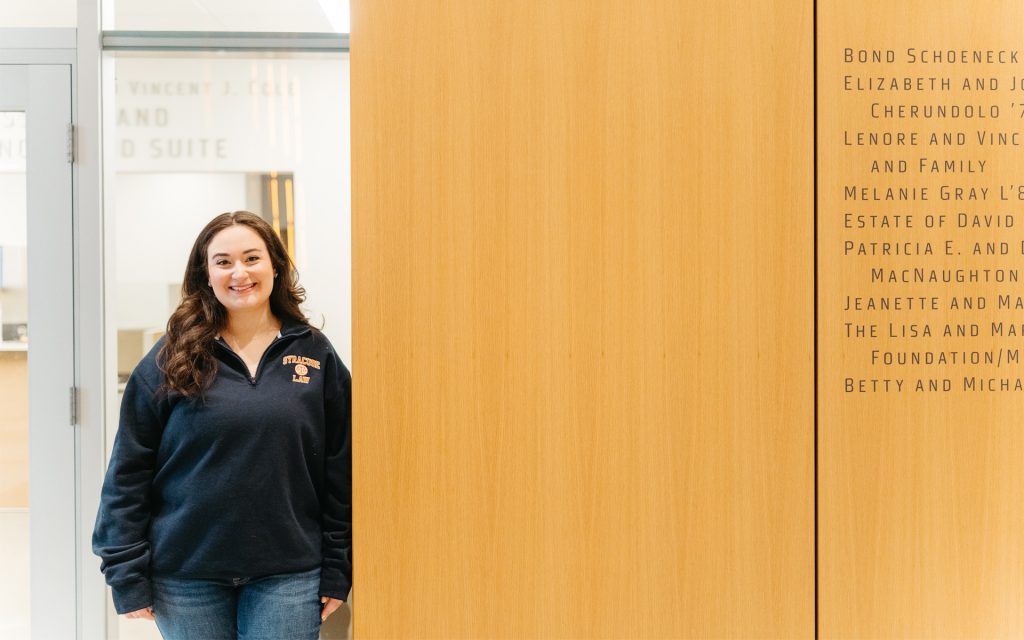
Gilman posing in front of the admissions suite

“This kind of work is not for everybody, but I think I have the heart to take on cases related to children and families who are often going through some of the worst times of their lives,” she says. “I’m confident that I’m someone who is empathetic and able to remain calm in emergency situations, and I hope to use these skills to help others and bring about some good. I am excited to take what I’ve learned at Syracuse Law and apply it to a career path I’m so passionate about.”

Lessons in Adversity Create Voice for Those Who Don’t Have One

Maheen Asim headshot

“The flower that blooms in adversity is the most rare and beautiful of all,” says Maheen Asim L’24, quoting her favorite line from Disney’s “Mulan.”

Blooming in the face of adversity, particularly as a woman of color, has been a lesson that Asim has been learning since she was a child who immigrated to the U.S. from Pakistan with her parents. The family had a good life, according to Asim, whose mother was a doctor and father worked in computer science, but her parents wanted to live where there were more opportunities for them and their daughter. They had few family members or friends in the U.S. and moved around a lot, often working menial jobs despite their education back in Pakistan. They were living in a basement in New York City when 9/11 occurred, and Asim remembers being called a “terrorist” by her kindergarten classmates—unsure what the word even meant. Later, when the family moved to Texas, she always felt she “couldn’t fit in with the brown kids but also didn’t fit in with the white kids.”

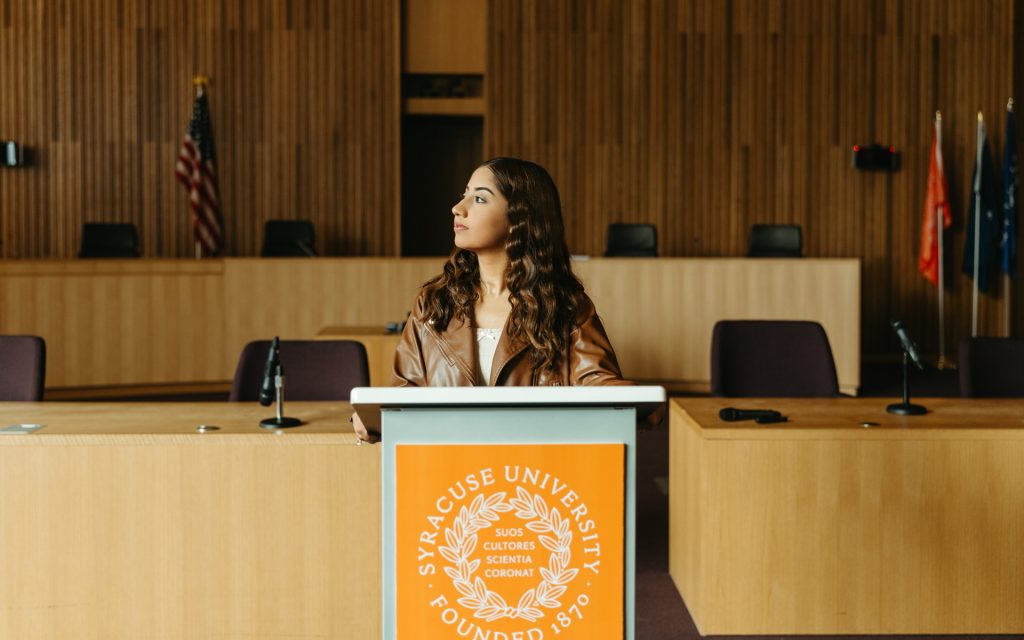
Maheen Asim at the podium in the courtroom looking out of the window

Still, the family persevered. It took her parents 20 years to recoup the education they had earned in Pakistan. Asim also pursued her education, graduating with honors from the University of Texas at Austin with a bachelor’s degree in government. She decided to attend law school to “be a voice for so many people who don’t have one”—like her parents at the time.

Asim was awarded a Dean’s Scholarship to attend Syracuse Law and eager to return to New York State. She took on many activities and leadership roles, including working as a research assistant for several professors, including Teaching Professor Monica Luna, Teaching Professor Andrew Greenberg and Professor of Law Todd Berger; competing on the National Moot Court Gabrielli Family Law Intercollegiate Team; working at the Criminal Law Defense Clinic with Teaching Professor Gary Pieples; and participating in the McKenzie Hughes Appellate Advocacy Competition and the Lionel O. Grossman Trial Competition. Asim also completed a summer associate position with the Nationwide Insurance Trial Division at the Law Office of Brian Rayhill in New York City and the Parsons Corporation in Syracuse. Her other legal experiences were with the 431st District in Dallas, where she clerked for a judge; Berry Appleman and Leiden LLP in Richardson, Texas; and Lexitas Litigation Firm, in Dallas.

Currently, Asim is the president of the Syracuse Animal Legal Defense Fund, the Estate Planning Society and the Criminal Law Society, as well as the appellate director for the Travis H.D. Lewin Advocacy Honor Society, Appellate Division.

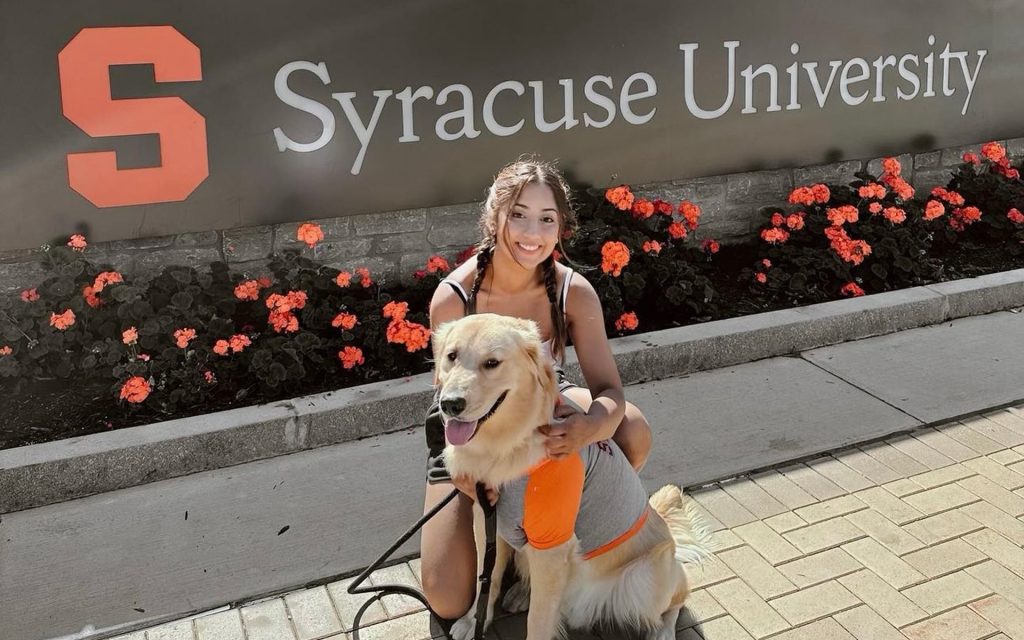
Maheen and her dog Clifford in front of the Syracuse University sign
Maheen and her dog Clifford

“When you are a leader and involved in many activities you have the opportunity to meet individuals from different backgrounds with different beliefs that help you develop a sense of responsibility that people respect,” Asim says. “It helps you grow as a person and see that being different isn’t a bad thing. My experiences here have taught me not to compare myself to others because the only one you can compare yourself to is you.”

While her mother is her biggest role model, she also looks to people like former First Lady Michelle Obama, the late Supreme Court Justice Ruth Bader Ginsburg, international human rights attorney Amal Clooney, Sen. Bernie Sanders and former Pakistani Prime Minister Imran Khan, all of whom she admires for their representation of women, human rights and their willingness to stand up for others.

Maheen on her laptop adorned with many stickers
Maheen on her laptop with an RBG dissent sticker displayed

She intends to work in criminal defense or prosecution in New York City after law school. She will be the first lawyer in her family, something particularly outstanding in her culture where expectations for women are generally marriage and a family.

Asim has truly bloomed in the face of adversity and is confident that will make her a talented lawyer. “I have had a lovely experience at Syracuse Law. I wish I could tell my 1L self that it’s all going to be OK — just push through, especially when it’s hard,” she says. “I never give up. I just don’t stop! And, that is what will help me continue to move forward always.”

Maheen and James Cameron laughing in front of the fireplace in Dineen Hall

Student Challenges Himself With  3+3 Program to Earn Degrees in Both Business and Law

Chris Salotto standing in the stairwell

Chris Salotto ’22 (WSM), L’24, is not one to back away from a challenge. So, when the Fishkill, New York, native chose a college for his undergraduate degree, he opted for Syracuse University’s 3+3 program, which combines a business degree from the Martin J. Whitman School of Management with a law degree from the Syracuse University College of Law. And, while his interests lean toward business, Salotto is confident that having a law degree will surely be beneficial to his career, as well.

The Whitman School and Syracuse Law allow students who are academically qualified to complete the core requirements of a business degree in just three years and then transition to the law school. Students must apply to the 3+3 program in the first year of their undergraduate studies, getting a conditional admittance to Syracuse Law. After their junior year at Whitman, students begin law school (assuming they meet the academic requirements) but do not receive their bachelor’s degree until the first year at Syracuse Law is completed. Aside from finishing both degrees in only six years, instead of seven, there are also financial benefits, including merit scholarships that can offset a significant portion of the College of Law’s tuition.

Chris Salotto standing in front of a glass wall
Chris Salotto as a student at the Whitman School of Management

Salotto successfully completed his first three years of undergraduate work as a supply chain management major, which included a summer internship at Boeing, before transitioning over to Syracuse Law. His desire to pursue law comes from his family. His father has worked in law enforcement for 25 years, and his mother is a family law attorney and town judge. That combined influence helped Salotto see the value of a law degree, but it also made him want to carve his own path toward corporate law, specifically a desire to work as in-house counsel one day.

“My mom played a huge part in encouraging me,” he says. “She told me that 1L is very rigorous, but to fight through it and graduate because, even if I didn’t want to ultimately become a lawyer, having that degree would open up a lot of opportunities for me.”
A student sits and studies with a book in a brightly lit space

He did persevere as a 1L and went on to succeed in the program. Salotto has gained a great deal of practical experience as a 3L, including working as a legal intern at CooperSurgical, Inc., a medical device company; and serving as a corporate counsel extern at SRC, Inc., a research and development company contracting with the federal government.

Salotto has taken an interest in activities on campus, too. This year, he worked at the law school’s Transactional Law Clinic as a student attorney, helping entrepreneurial-minded people in the community form their own businesses. His work led to the formation of a couple of nonprofit corporations, as well as the establishment of a few LLCs. As a 2L, he worked with the law school’s Innovation Law Center as a research associate, where local entrepreneurs can get information on patents and research the requirements for intellectual property (IP) protection. His work involved compiling reports and helping entrepreneurs apply the information gathered to their own innovations. Salotto found this work very rewarding and knew it was an important skillset for his future ambitions.

A student turns his head and looks out the window

While working on a 3+3 degree has certainly had its challenges, it is about to pay off as he prepares to cross the finish line at graduation this May. He intends to pass the bar and start his career at KPMG U.S., where he interned in the summer of 2023, as an international tax associate. He has been a KPMG campus ambassador while in law school and hopes to continue this role when employed there, building and maintaining a relationship between Syracuse Law and the Big Four accounting and professional services firm.

“I would tell anyone that is interested in business and the law to apply to the 3+3 program,” he says. “It keeps your possibilities open, and, even if you get a law degree, you don’t have to practice law a day in your life, but you’ll have that valuable background to bring into the business world. Best of all, it shows that you’re willing to invest in yourself, which is something any employer wants to see. It hasn’t been easy, but I already know it’s been worth it, and I’m eager to see what the future holds for me.”
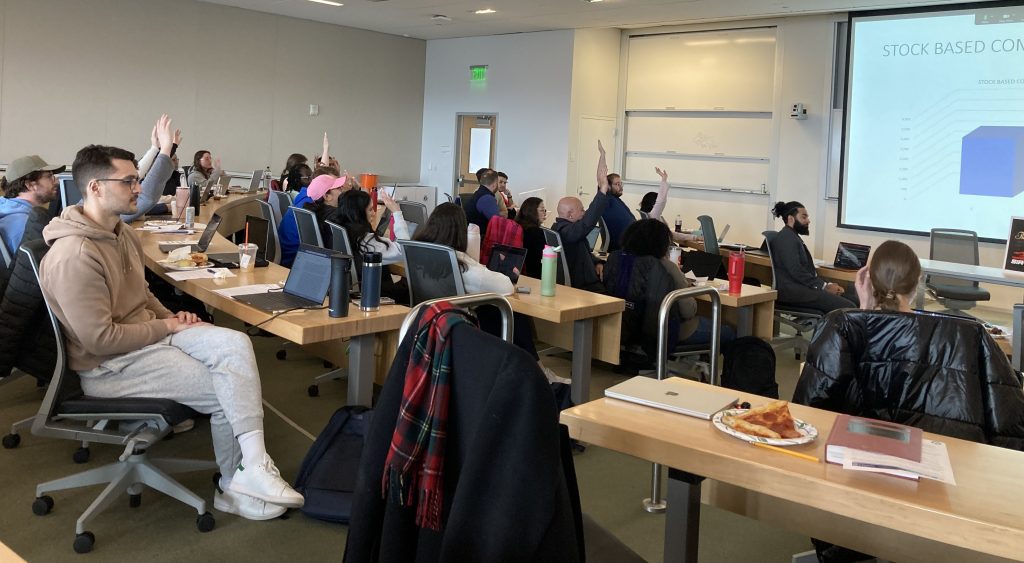
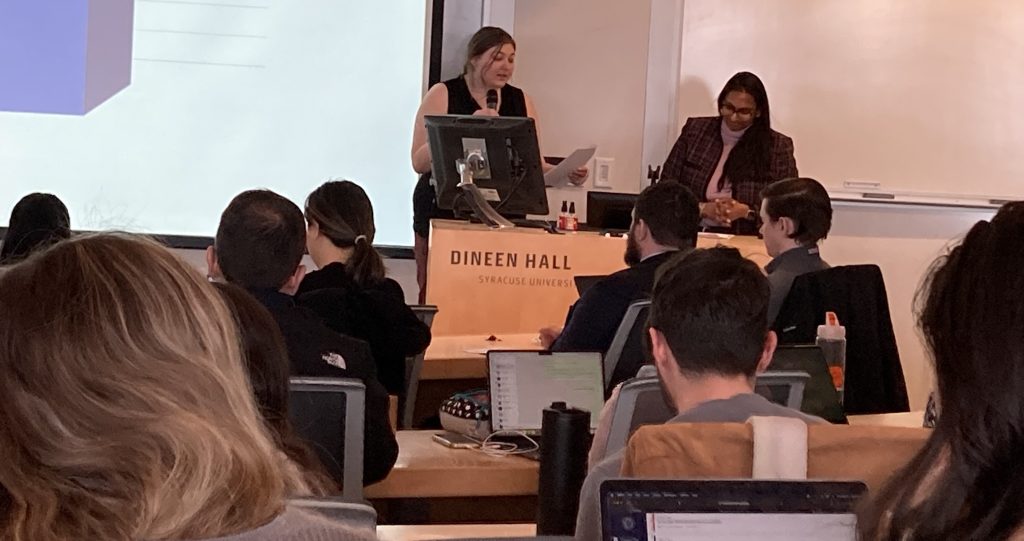
Professor Mary Szto Uses a Mock Shareholder Meeting to Teach Corporate Governance

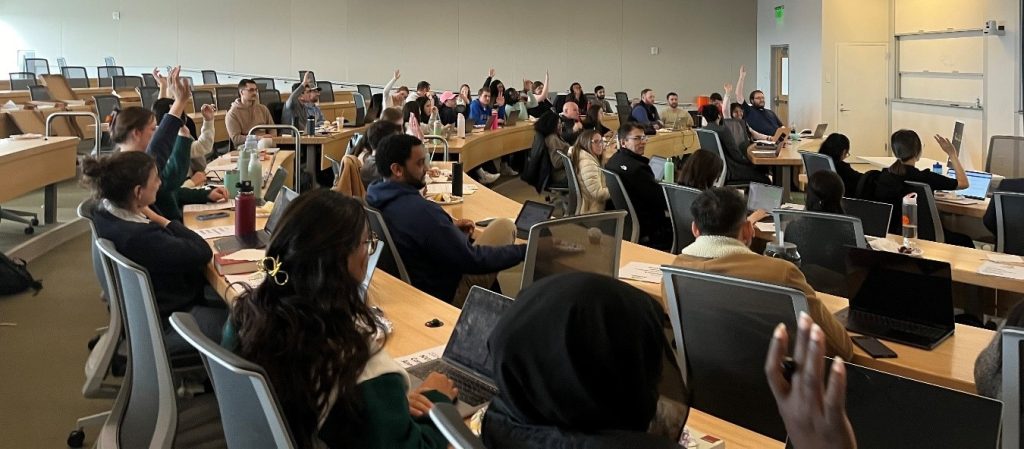
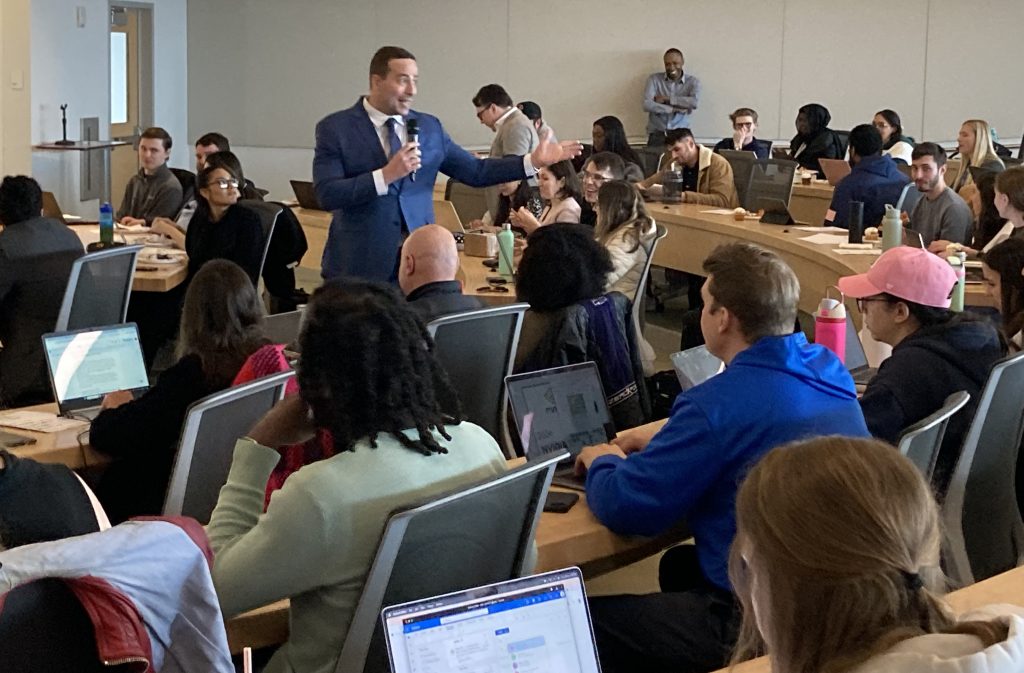
Professor Mary Szto’s Business Associations class recently held a mock shareholders meeting that featured a class-wide role-playing exercise. Students portrayed corporate C-suite executives, potential board members, and shareholders to demonstrate various legal issues and challenges in shareholder meetings.

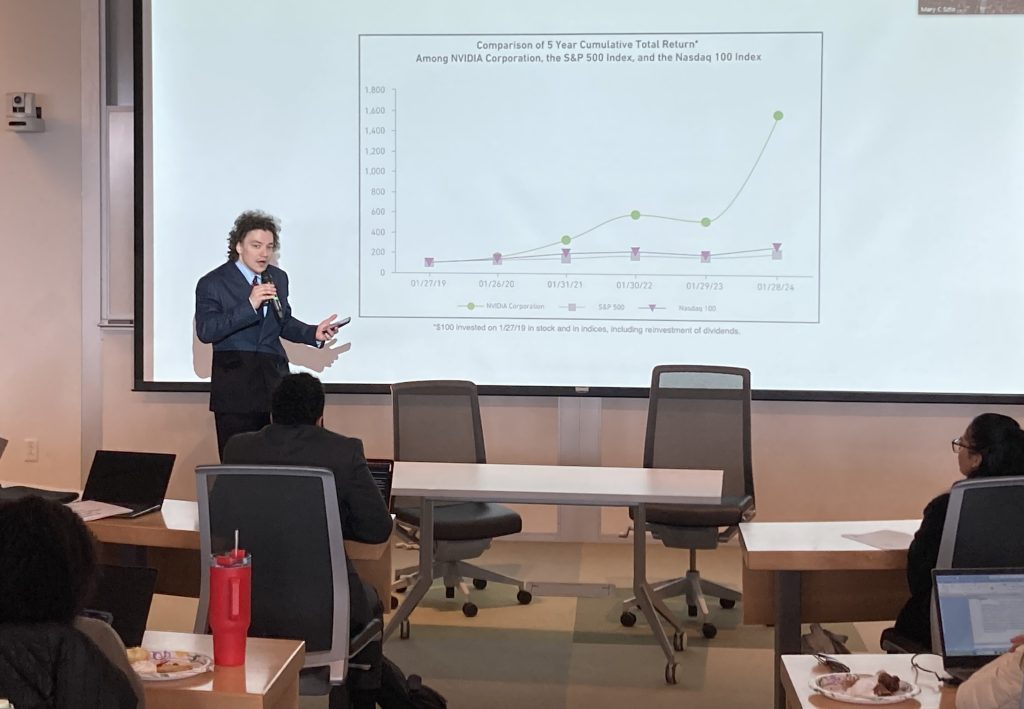
Students selected the company, Nvidia, the AI computing giant; volunteered for roles (CEO, CTO, Chief Legal Officer, Board of Director candidates, and more); and created shareholder proxy materials. They also drafted and presented shareholder proposals.

“They created a shareholder meeting that demonstrated how C-suite leaders tackle critical aspects of running a company,” says Szto. “The whole course came to life!  They demonstrated corporate governance of a public company, fiduciary duties, and risk management, among other concepts. I am proud of how well the whole class participated.  It was very lively and a lot of fun.”

Food for the shareholders meeting was provided by LexisNexis.

Report of the Mock Nvidia Shareholders’ Meeting

By the Media Team of Carlos Dominguez Scheid LL.M’24, Firdevs Okatan LL.M.’24, and Rabiya Shamim LL.M.’24.

In late March, in a culmination of weeks of preparation, the Business Associations course led by Professor Mary Szto, held a captivating Mock Nvidia Shareholders’ Meeting. The students immersed themselves in the complexities of corporate governance, bringing theory to life in a practical setting. J.D. and LL.M. students worked together to recreate a shareholder’s meeting as real as possible.

As the room buzzed with anticipation the attendees took their seats. Executives took center stage, delivering compelling presentations.  CEO LL.M. student Paulo Andrade, Chief Legal Officer (CLO) 2L Ahmad Salman, Chief Financial Officer (CFO) 2L Charles Sirotek, and Chief Technology Officer (CTO) 2L Amanda Winn each delivered speeches that captured the essence of leadership and vision.

The meeting covered the CEO’s vision of AI’s potential, the CFO’s positive financial report, and the CTO’s presentation of technological advancements. The Chief Legal Officer reassured shareholders about the company’s standards, while shareholder proposals for governance transparency and concerns about AI misuse were discussed. The meeting also involved electing a new Board of Directors, a Q&A session, and a dialogue on balancing technological progress with ethical responsibilities, concluding with the CEO’s call for ongoing engagement.

The agenda was meticulously planned, covering crucial aspects such as the approval of board nominees and shareholder proposals. Yet, what set this event apart was the students’ involvement in every facet. Teams orchestrated catering, music, media coverage, and financial reports with precision.

The atmosphere mirrored a real shareholders’ meeting, offering participants a glimpse into the process of corporate decision-making. As the event drew to a close, attendees departed with newfound insights and a deeper understanding of the corporate landscape. The Mock Nvidia Shareholders’ Meeting stood as a testament to the academic rigor and practical learning fostered within the Business Associations course.

JDi Program Allows Tax Manager to Pursue Career as Tax Counsel at Private Trust Company 

Kathryn Martin headshot

“I’m working with the best of the best, and that makes class discussions so much more diverse and valuable.”

Kathryn Martin L’24

With a background in finance and accounting, Kathryn Martin L’24 was working as a tax manager for a private trust company in 2011 when she started considering law school as a way to advance her career. It was the company’s president who told her that working in the private trust company industry would require a law degree if she wanted to move up the ladder.

Martin was living in Reno, Nevada, with her husband and children, while also caring for her dad and her mother, who has Parkinson’s disease. There was no way she could leave Reno to attend a residential law school. So, she put that idea on hold and instead earned a master’s degree in accounting from the University of Nevada, Reno, and became a CPA.

Seven years ago, Martin moved to another private trust company and again was told that a law degree was essential. A long-time fan of Syracuse Men’s Basketball, she looked into the JDinteractive (JDi) program at Syracuse University College of Law and thought an online program might work for her. “It was the one and only law school I applied to,” she says. “I just felt that I had to go there.”

The JDi program has proven to be a good fit with the demands of Martin’s job. “Time was a concern. I knew law school would be a lot of work, but, like any overachiever, you make it work,” she explains. “It’s not easy, but the flexibility of the program has really allowed me to keep my job, be with my family and go to law school at the same time.”

Students sit in a classroom

Aside from the flexibility, Martin has been pleased with the opportunities that the JDi program offers. She finds it interesting to learn about the backgrounds of others in her cohort, most of whom are high-level professionals. “I’m working with the best of the best, and that makes class discussions so much more diverse and valuable,” she explains.

Another advantage has been the variety of speakers who have come into online classes from wherever they are located—something that would not be possible in a residential program. “I took a class on activist investing and corporate governance from Adjunct Professor Jared Landaw, and he brought in very accomplished speakers almost every week to give their perspectives,” Martin says. “Having access to all of these different people from a variety of backgrounds has been completely rewarding.”

Martin has also attended six of the residency programs during her time in the JDi program. Most recently she traveled to Los Angeles for a residency on bankruptcy law with Distinguished Lecturer Richard Levy L’77. She says the highlight of the trip was listening to distinguished alumna and Chair of Syracuse Law’s board of advisors Melanie Gray L’81 talk about her experience as a woman in law and how she’s faced diversity in her career.

Students stand in a group and listen to an alumna speak
Melanie Gray L’81 interfaces with students at the Bankruptcy Residency in Los Angeles, California

“I soaked in everything she said like a sponge,” Martin says, noting she also had the opportunity to attend a bankruptcy hearing and ask questions of three judges afterwards. “It was interesting because a lot of times, people think of bankruptcy as a negative thing, but the judges spoke about how it allows people to take risks and have a safety net to fall back on.”

She’s been to the Syracuse University campus for all the other residencies: notably one on elder law with David M. Levy L’48 Professor of Law Nina Kohn. “This was my favorite residency, particularly because I’ve had to navigate the nursing home system due to my mom’s Parkinson’s disease,” she says.

“…I am grateful to the professors at Syracuse Law who helped me map out my career choices and prepared me for this next step. The Syracuse Law JDi program has been an excellent experience that has allowed me to build on my finance and accounting background by adding critical components of the law to my experience. It has opened a door to an exciting new chapter for me.”
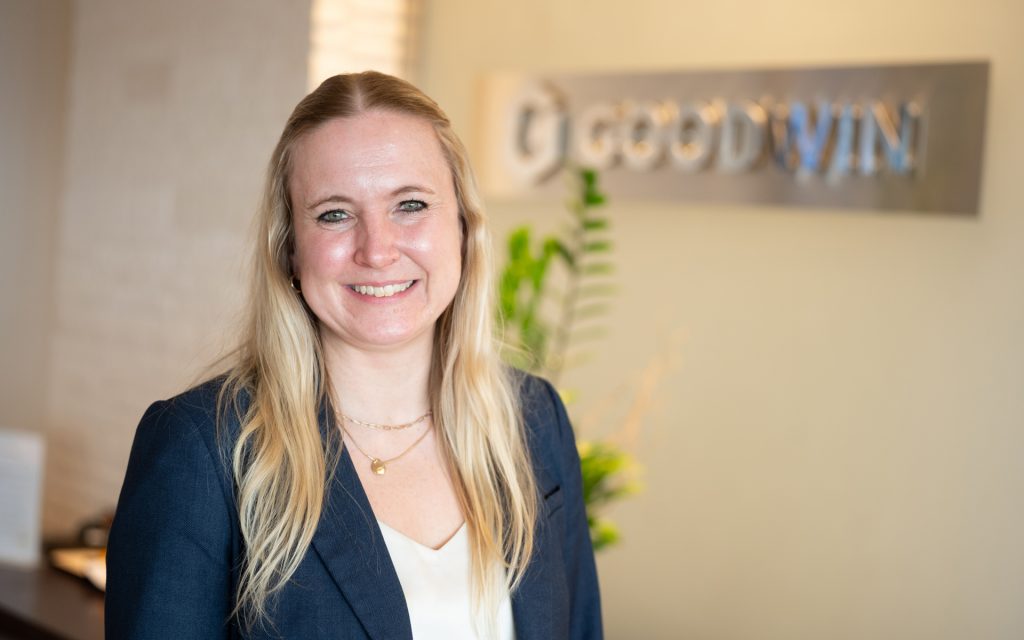
Kathryn Martin L’24

As Martin gets ready to graduate this spring, she is also preparing for a career change from tax director to a tax counsel position, working in tax and estate planning with her current employer.

“As a tax director, I often come into transactions once they are already underway, but having a law degree will allow me to help create strategies to assist our clients from the start,” Martin says. “I am looking forward to this shift in my career, and I am grateful to the professors at Syracuse Law who helped me map out my career choices and prepared me for this next step. The Syracuse Law JDi program has been an excellent experience that has allowed me to build on my finance and accounting background by adding critical components of the law to my experience. It has opened a door to an exciting new chapter for me.”

Students walk down a street in Los Angeles

A Serendipitous Connection

George and Sheliah smile for the camera at brunch

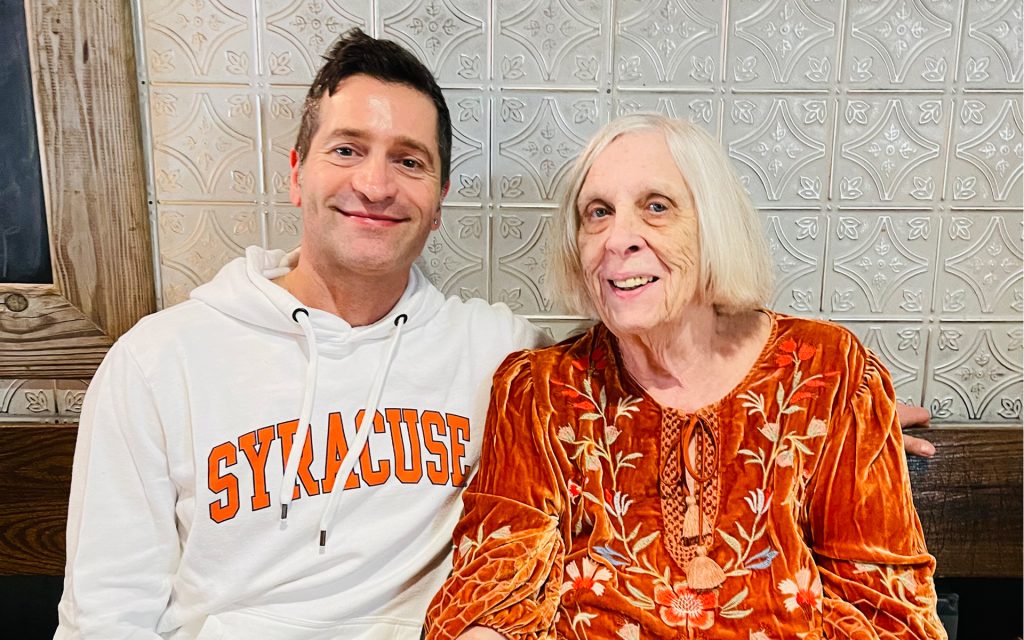
As a JDinteractive (JDi) student, George Saad L’25 has never let the distance from campus dampen his school spirit. On weekends, Saad often sports his favorite Syracuse University pullovers and baseball caps for comfortable afternoons around Phoenix, Arizona. It was one such weekend during brunch at a local diner that Saad’s Orange pride caught the attention of a fellow diner, Sheilah (Ragan) Lavelle ’59, L’62, leading to their introduction and the beginning of a remarkable bond.

Saad was fortunate to pursue his education in the United Kingdom before furthering his studies in Canada, where he attained both undergraduate and master’s degrees in economics. Subsequently, he ventured to the United States to embark on a career path centered on education and curriculum development. Despite achieving success in his field, Saad found himself grappling with frustration stemming from the complexities of the K-12 education system. Motivated by a desire for meaningful change, he pursued a career shift, earning a master’s in business administration (MBA) from Northeastern University.

It was during this transformative period that Saad discovered his passion for the law and commenced his quest for a J.D. He was particularly drawn to Syracuse Law’s JDi program, which offered him a pathway to realize his aspirations. Now enrolled as an online student, Saad is enjoying learning about the diverse practice of law and the deep bond he’s forged with his fellow JDi cohort, noting that “many have become lifelong friends.” Despite the physical distance separating him from campus, Syracuse Law is close to his heart, as evidenced by the Orange sweatshirt he proudly wore that fateful day in Phoenix.
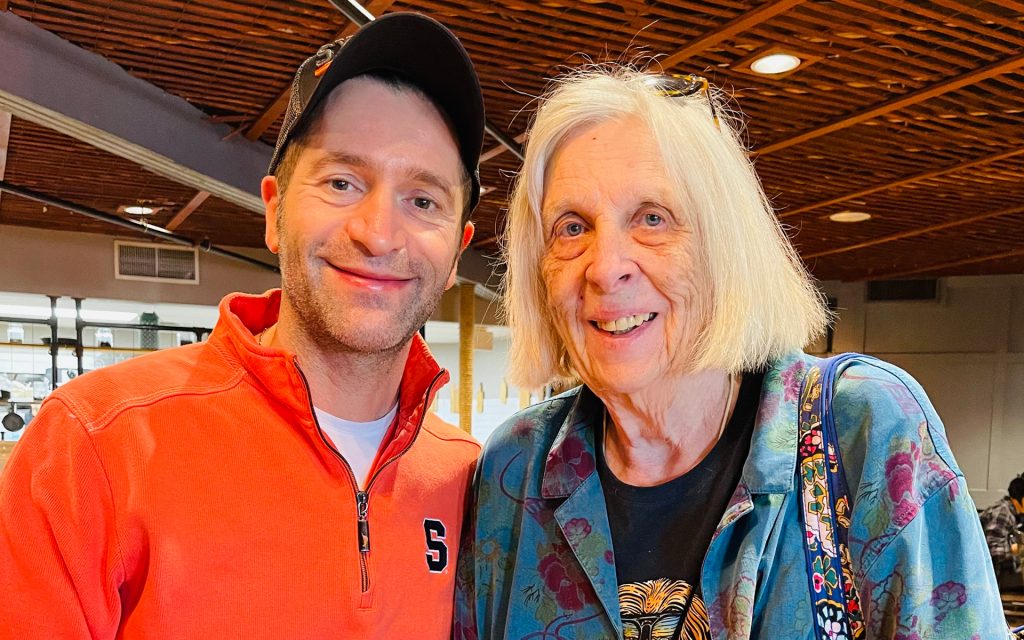
George and Sheliah smile for the camera

It was Lavelle who first noticed the Orange pride, asking Saad if he was a Syracuse alumnus. They were excited to learn they both shared a connection to Syracuse Law. While Saad is one of the early cohorts in the school’s JDi program, Lavelle was a trailblazer in her own right, being one of only two females to graduate in the Class of 1962. Lavelle always wanted to be a lawyer, even as a child growing up in Central New York. However, in those times, many—including her own family—didn’t see the value in legal education for women. It was her stepmother that encouraged her to pursue her J.D., after receiving her undergraduate degree from Syracuse’s Martin J. Whitman School of Management. In 1975, she relocated to Arizona with her late husband, John, where she established her own practice advocating for indigent youth who had experienced sexual and physical abuse. Lavelle’s dedication to serving her community continued until her retirement. Now a widow, Lavelle lives alone with her two rescue dogs, Trixie and Lily.

What began as a casual conversation over coffee has blossomed into a profound friendship grounded in mutual respect and a love for Syracuse University. Despite their differing backgrounds and life experiences, Saad and Lavelle found common ground in their alma mater, forging a connection that has become dear to both. “She’s such a gem,” Saad remarks, sharing how he and his partner, Jason, have become close to Lavelle, often helping with chores around the home or enjoying conversations over brunch.

Along with Saad’s partner, Jason, the three have become pillars of support for each other, offering guidance, encouragement, and a listening ear when needed most. In February 2023, Lavelle was deeply saddened by the passing of her classmate and dear friend, Charlie Raffe ’60, L’62. After one of Saad’s visits to campus for a JDi Residency, he returned to Phoenix with a heartfelt gift for Lavelle—a printed copy of her Class of 1962 composite, featuring photos of the young Lavelle and Raffe. This thoughtful gesture, along with the friendship and camaraderie, was a touching moment for Lavelle. Whether it’s assisting with home projects or simply enjoying each other’s company, their bond continues to strengthen with each passing day.

As they reflect on their journey from strangers to friends, Saad and Lavelle are reminded of the profound impact a chance encounter can have on one’s life. Through their friendship, they exemplify the enduring spirit of the Syracuse University community—a community built on connections, shared experiences, and a commitment to making a difference in the world. Though their paths may have diverged, George Saad L’25 and Sheilah LaValle ’59, L’62 will forever be united by their love for Syracuse Law and the special bond they share.

3L Amie Mbye Selected as the Inaugural Recipient of the Hon. Theodore A. McKee L’75 Endowed Law Scholarship

3L Amie Mbye is the inaugural recipient of the Hon. Theodore A. McKee L’75 Endowed Law Scholarship. The Scholarship was established with a generous gift from Syracuse University Trustee and College of Law Board of Advisors Member Richard M. Alexander L’82, a partner at Arnold & Porter, and his wife Emily, to honor the Hon. Theodore A. McKee L’75.

Mbye is the Diversity & Inclusion Chair and Computers Editor for the Syracuse Law Review. She is also a member of the Black Law Student Association and the Travis H.D. Lewin Advocacy Honor Society’s Black Law Student Association Mock Trial Team, which advanced from the regional round of the Constance Baker Motley Mock Trial competition in 2023 and 2024.

She has spent two summers as a Law Clerk in Barclay Damon LLP’s Syracuse office. After graduation in May, she plans on taking the patent bar and returning to Barclay Damon as a first-year associate with the Intellectual Property practice group.

Mbye holds an undergraduate degree in Neuroscience from Agnes Scott College.

The Hon. Theodore A. McKee L’75 Endowed Law Scholarship provides Syracuse Law students with the education and cultural context to enable them to carry forward the legacy of Judge McKee, who has served on the United States Court of Appeals for the Third Circuit for more than 27 years.

Judge McKee graduated from the College of Law in 1975 magna cum laude and as a member of the Order of the Coif and the Justinian Honorary Law Society. He began his legal career in private practice in Philadelphia, PA, before entering public service as an Assistant US Attorney for the Eastern District of Pennsylvania. He then served as Deputy City Solicitor for Philadelphia, as a lecturer at Rutgers Law School, and as General Counsel for the Philadelphia Parking Authority.

Judge McKee first took the bench in 1984 on the Court of Common Pleas of Philadelphia County. After a decade of service, he was nominated to the United States Court of Appeals for the Third Circuit by President William J. Clinton in 1994, receiving his confirmation and commission later that same year. Judge McKee served as the court’s Chief Judge from 2010 to 2016.

If you are interested in supporting the Hon. Theodore A. McKee L’75 Endowed Law Scholarship, please click here.