The College of Law’s long-running LondonEx externship program was featured in the National Jurist article “Summer programs at home and abroad add perspective, build practical skills.”
LondonEx is a summer externship program in London, U.K., hosted by Syracuse Law. During a seven-week international summer experience, students gain exposure to clients, partner with professionals for personalized mentoring, and enjoy boundless cultural opportunities – in one of the world’s most dynamic cities. LondonEx is open to any full-time or part-time student from an ABA-approved law school who is in good standing.
In the article, Andrew Horsfall ’05, L’10, LondonEx Program Specialist, said a willingness to situate oneself in a novel area of legal practice in a foreign locale shows future employers a certain level of resilience.
Horsfall said one of the things that comes out in the first two or three weeks is just how pleasantly surprised the students are at the level of accessibility that they have to their mentors and just how good their mentors are.
“I think the students are in awe watching their mentors work, whether it’s arguing in court or presiding from the bench. They come to respect the level of preparation required and the level of detail necessary to do this work and do it well,” he said. “It leaves a meaningful impression on the students because they’re working with people who are operating at a very high level in their respective practices.”
The application for LondonEx is open through February 1.
How are law firms currently applying AI in the workplace to maximize client services? What are the ethical implications of using AI in the legal field? How will AI impact the current role of lawyers, and what new jobs may emerge? Should AI be regulated, and, if so, how?
These were just some of the questions addressed during AI and the Virtue of Law, a one-week in-person residency held at Syracuse University College of Law in August designed for students in the JDinteractive (JDi) program, with participation also open to on-campus students. This deep-dive into AI was created and facilitated by Professor of Law Jack Graves, and students were eager to attend.
“I think AI will significantly transform law school education and the practice of law,” says Graves, noting that he sees AI as a means of more effective information sharing but also recognizes that many are “terrified” thinking that this technology could replace them. “We have to think about being nimble now because the essential human role today will likely be an AI role in just a few years, and we don’t want to be left behind. Through this residency, I wanted to help demystify generative AI because, used properly, it can be an extraordinary tool.”
Graves, who has taught in the JDi program for the past five years, has a unique blend of expertise in design, development and delivery of accessible and legal education in an online learning environment and 21st century technology-leveraged law practice. A graduate of the University of Colorado Law School, Graves taught technology-leveraged delivery of legal services at the Touri Law Center for 14 years, and prior to that worked in private practice with Chrisman, Bynum & Johnson PC in Colorado and as a judicial law clerk for the U.S. Court of Appeals.
First Time AI Residency Was Popular Draw for JDi Students
Logan Gorg L’26 is a JDi student living in Pennsylvania, who made the trip to the Syracuse University campus to attend the AI residency. She has worked as a paralegal at the law firm of Ross & Ross LLC for the past 10 years and is looking to focus on real estate and probate law upon graduation.
“I learned so much about what AI is, and the information at the residency helped to dispel some of the fears and focus more on where the profession is going,” Gorg says. “Sitting in a room with a group with diverse backgrounds and experiences talking about whether AI was doom or salvation was so interesting. I think the residency showed us that AI is unavoidable, but, if we get out in front of it, we can reap some of the benefits in the legal profession.”
Graves had been contemplating developing a semester-long course in AI for the JDi program, but ultimately he decided that the lightning speed of the technology would be better suited for a short-form, concentrated residency where students with different levels of familiarity could join together to think about being nimble and adapting to technology that is already changing the way the legal field operates.
AI Voice-Driven Technology Used to Teach, Demonstrate Abilities
Coincidentally, the residency took place just as ChatGPT launched Advanced Voice Mode, a significant upgrade that allows for natural, real time conversations using AI. Graves used “Max,” as he named the voice-driven AI technology, to help co-teach the residency and answer students’ questions directly.
“We would have a discussion, and I would say, ‘Max, what do you think?’, explains Graves. “At first students were uncomfortable with it, but once Max started responding and asking them questions using the Socratic method, they started to see how fascinating a learning AI tool could be.”
Approach to AI in the Law Resonated Well with JDi Students
Jenny Cameron L’27, who co-owns VIP Marinas with her husband in Florida, decided to enroll in law school to bring a legal perspective to her family business. She, too, attended the AI residency and walked away amazed.
“Honestly, it was one of those residencies that was life changing,” she says. “Before I attended, I was on the fringes of AI, barely using ChatGPT, but since then I’ve been using AI extensively in some form. Part of law school is practicing and knowing how to use AI better and faster, and what I learned at the residency was eye opening. I commend Syracuse Law and Professor Graves for taking the lead on this and helping guide us on how we should be approaching this technology.”
Another participant was Bryan Beene ‘26 a high school government teacher from Texas, who is pursuing law school to prepare for a second career once he retires. He hopes to work as a lawyer in the education or church law space.
“I registered for this AI residency for two reasons: one because Professor Graves was teaching it, and he is one of the best professors I’ve ever had, and two, I had never used AI except for Google searches, and I knew a lack of knowledge around this technology would be a detriment in representing a client,” Beene explains. He noted that he enjoyed learning more about the use of the available tools, as well as discussing the legal and ethical issues, and how regulations and the law are often not keeping up with this fast moving technology.
The newly introduced AI and the Virtue of Law residency received “incredible feedback” from students, according to Graves, who believes this is a topic that should be revisited once a year.
Graves says, “This is not a static course, as the technology is changing continuously, but I think the approach resonated well with the students, not only by teaching them skills but by allaying some of their fears while also emphasizing to them that AI technology in the legal field is advancing fast and furiously. So they need to prepare now.”
Mary J. Goodwin-Oquendo L’09 learned what true advocacy looks like long before she ever stepped into a law school classroom. Growing up, she watched her mother tirelessly fight to secure appropriate educational services for her younger brother, who has autism and learning disabilities. Seeing firsthand how complex systems can fail families, she began to ask a powerful question: Who helps students who do not have anyone able to challenge the system for them?
Today, Goodwin-Oquendo is that advocate. As the founder of The Goodwin-Oquendo Law Firm in New York City, she champions disability civil rights, particularly related to education, standardized testing, professional licensing, and employment. Getting to this point took grit, talent, and determination. She credits Syracuse University College of Law for providing the foundation, flexibility, and mentorship she needed to earn her law degree and pursue the work that drives her— advocating for others through the legal system.
Goodwin-Oquendo will speak about her experiences and the process of advocating for bar exam accommodations in the spring of 2026 at a webinar hosted by the Disability Law and Policy Program (DLPP). The presentation was purposefully planned as a virtual event, as it accommodates Goodwin-Oquendo’s disability-related needs, as well as those of attendees with disabilities, and allows both on-campus and online JDinteractive students, in addition to other guests around the country, to participate.
Walking in the Steps of Justice Ruth Bader Ginsburg
Goodwin-Oquendo’s desire to be a lawyer started early. She studied at the James Madison High School Law Institute in Brooklyn, New York—the same school the late United States Supreme Court Justice Ruth Bader Ginsburg attended. The four-year program helps students understand the legal system through law classes, moot court, and mock trials. She came to see attorneys as “helpers,” and realized the law could be her pathway to advocate for those who needed a voice.
Facing Her Challenges and Finding a Mentor
While pursuing her undergraduate degree at St. Joseph’s University in New York, Goodwin-Oquendo was diagnosed with fibromyalgia and learned first-hand how difficult it was to navigate higher education with “an invisible, poorly understood disability.”
However, she learned how to self-accommodate her disabilities, graduated as valedictorian, and set her sights on law school. She ultimately chose Syracuse Law because of its various clinics, particularly The Family Law Clinic, because she knew the challenges from clients who felt vulnerable or unheard would make her a more respectful and transparent lawyer.
Her first year wasn’t easy, as Goodwin-Oquendo navigated the demands as a 1L while managing a physical condition that fluctuated day to day. This was compounded by her lack of health insurance (prior to the Affordable Care Act), which limited her ability to receive the care she needed.
“I went from graduating first in my class in college to struggling in my first semester of law school because I didn’t have the physical stamina to keep up the pace,” she explains. “Some of the strategies that had worked in high school and college just didn’t work anymore because the expectations of law school were much higher.”
Fortunately, she enrolled in a class led by Professor of Law Arlene Kanter, who took emeritus status in 2024, Kanter is an acclaimed expert in international and comparative disability law and helped Goodwin-Oquendo understand the accommodations she was entitled to. (Kanter founded the DLPP at Syracuse Law in 2005, one of the nation’s most extensive disability law programs in the U.S.) She is forever grateful to Kanter, who remains a role model, for helping her find ways to manage her disability and continue to succeed. For the past five years, Goodwin-Oquendo has been an adjunct professor at Fordham University School of Law, in part, she says, “to be for my students what Professor Kanter was for me.”
“Professor Kanter had many resources, including this ‘holy book’ of disability law firms in the New York area, which were few and far between,” explains Goodwin-Oquendo. “She encouraged me during my 2L year to reach out to Jo Anne Simon, a disability civil rights attorney in Brooklyn, who later became a state assembly member, to learn more about working in this part of the legal field.”
They connected, and soon Simon offered Goodwin-Oquendo a summer job at the firm. In 2008, the Americans with Disabilities Amendments Act was passed, reaffirming Congress’s commitment to disability rights. That law shaped a lot of the work Goodwin-Oquendo did at the firm.
“It was not light work,” she says, “but the job training I received was nothing short of phenomenal—so much so that I joined her firm after law school and stayed there for the next 14 years. Jo Anne remains a dear friend and mentor, and she has done so much to advance the rights of individuals with disabilities.”
Establishing Her Own Firm for Educational Advocacy
In 2024, she launched the Goodwin-Oquendo Law Firm in New York City, dedicated to representing individuals with cognitive, physical, and psychiatric disabilities who face discrimination or need accommodations in education for admissions tests, professional licensing exams, state bar exams, and medical boards.
“People come to me because they clearly need certain accommodations to fully access and complete an exam, for example, and they are being denied this for the highest stakes exam of their lives,” she explains, noting there is still a level of ignorance around the use of technology on examinations.
“Others come to me because they’ve received a diagnosis later in life or have been living with a disability that wasn’t as challenging for them until they reached college, law school, or medical school, and now they need someone to help them understand their options and advocate for their rights.”
Goodwin-Oquendo operates her firm virtually, which not only accommodates her disabilities but also allows her to assist clients around the country. “Business is booming, which sounds great, but it is actually a little sad because that means there is still a lot of discrimination for those with disabilities,” she says.
She recently hired Syracuse Law alumna Ptahra Jeppe L’19 as counsel to the firm. Jeppe started as a client and mentee but was so impressive that Goodwin-Oquendo asked her to join in 2025. Jeppe has dyslexia and practiced special education law for several years, which has added another area of mastery to the practice.
Goodwin-Oquendo’s advocacy continues at Syracuse University, where she now serves on the Center on Disability and Inclusion’s Advisory Committee. She’s also involved in the broader legal community as a member of the Disability Rights Bar Association and the New York State Bar Association, serving on its Committee on Disability Rights, where she enjoys creating Continuing Legal Education (CLE) courses for attorneys and serves as one of the editors of its disability treatise.
She finds value in serving others. “I want to keep pushing myself, and what keeps me going are the former clients who reach out and say, for example, they passed the bar, or they are now a licensed physician or educator,” Goodwin-Oquendo explains.
“Their unique experiences will enrich these fields. I am grateful for the education, advocacy, and overall encouragement from Syracuse Law that helped me get to where I am today. And it will be a full circle moment to share my experiences with students at the College of Law this spring.”
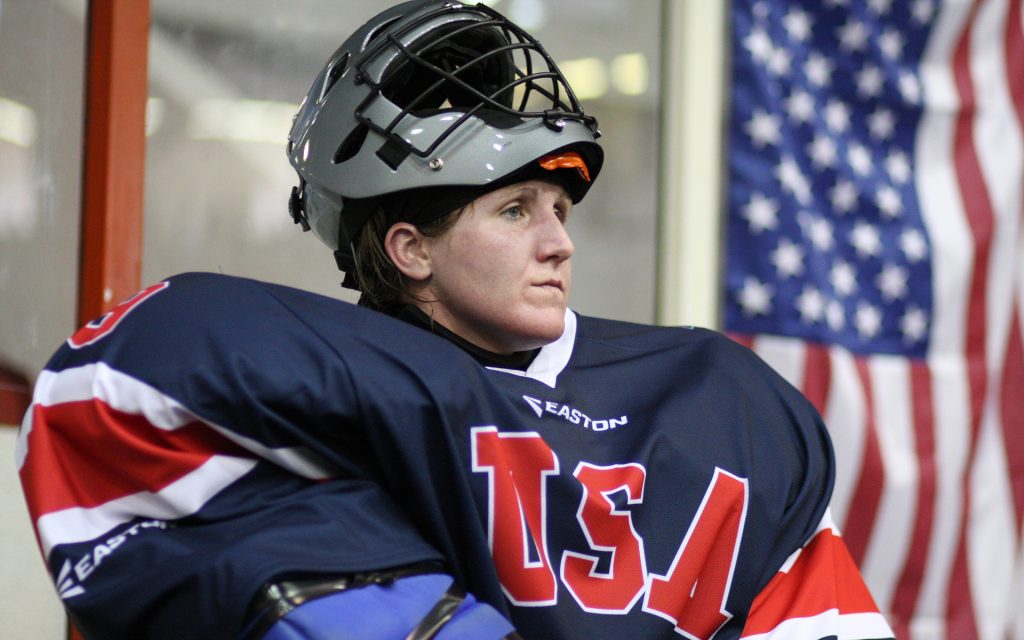
When Ginny Capicchioni L’27 decided to pursue a law degree to complement her extensive financial credentials and better serve her clients, she wasn’t sure how to fit it into her demanding schedule. Between running two companies, coaching lacrosse at the national level, and traveling often, the former pro goalie—known for blocking barriers as deftly as shots—didn’t think a full-time, in-person law school program was realistic. But true to her competitive mindset, she found the Syracuse University College of Law’s hybrid online JDinteractive (JDi) program to be the perfect fit, allowing her to stay in the game while advancing her education.
“Law school is difficult. They push us hard because most of us in the JDi program tend to have plenty of life experience, and we’re all making sacrifices to be here,” says Capicchioni, who is founder and president of Cap Financial Management (CFM) and founder of Gladiator Lacrosse. “If I hadn’t found Syracuse Law’s JDi program, I would imagine my experience would have been very different, so I’m grateful for that.”
A Full-Circle Syracuse Moment
Capicchioni’s connection to Syracuse began long before law school. As a women’s lacrosse player at Sacred Heart University in the late ‘90s, she admired Syracuse University’s lacrosse legacy so much that she bought a Syracuse jersey, wearing it to practice before every game. Years later, during tryouts for the 2011 U.S. Men’s National Box Lacrosse Team, she played exceptionally well, and the first person to congratulate her was Syracuse men’s lacrosse star Casey Powell ’98 (A&S), a four-time all-American. In hindsight, those moments now seem like a sign that she, too, would one day make her own connection to Syracuse University.
While most of the JDi program is held virtually, Capicchioni looks forward to getting together with others in her cohort during the required in-person residencies the JDi program holds each year.
“It’s great to meet the faculty and other students in the program face-to-face during the residencies,” she says. “There are some really accomplished people in my JDi cohort, which inspires me.”
A New Challenge for a Lifelong Competitor
Capicchioni is herself one of those “accomplished people” in the program, applying many of the lessons learned through sports to the rigors of the JDi program. She has spent decades breaking records and overcoming barriers in the sport of lacrosse. Initially recruited by Sacred Heart University as a field hockey goalie, she was encouraged to try women’s lacrosse. Despite being new to the sport, it was not long before she became a three-time Northeast Conference Goalie of the Year.
With no professional women’s lacrosse league to join after college, she discovered box lacrosse and made history as the first female in the country to sign with a men’s professional box lacrosse team. She played with the New Jersey Storm of the National Lacrosse League (NLL), spent nine years in the Canadian Lacrosse League (CLL), and later led the European Lacrosse League (ELL) in save percentages—all while playing alongside men. In 2011, she competed in the World Indoor Lacrosse Championship, helping Team U.S.A. win a bronze medal and marking the first time an American woman played for a men’s national team in any sport in an international tournament.
Coach, Entrepreneur, and Mentor
Capicchioni coached at several universities before launching Cap Financial Management in 2019. CFM offers financial advising and services to NCAA coaches, athletes, and other sports affiliates. Capicchioni holds a number of licenses in investments, accounting, insurance, and securities, and is a chartered trust and estate planner.
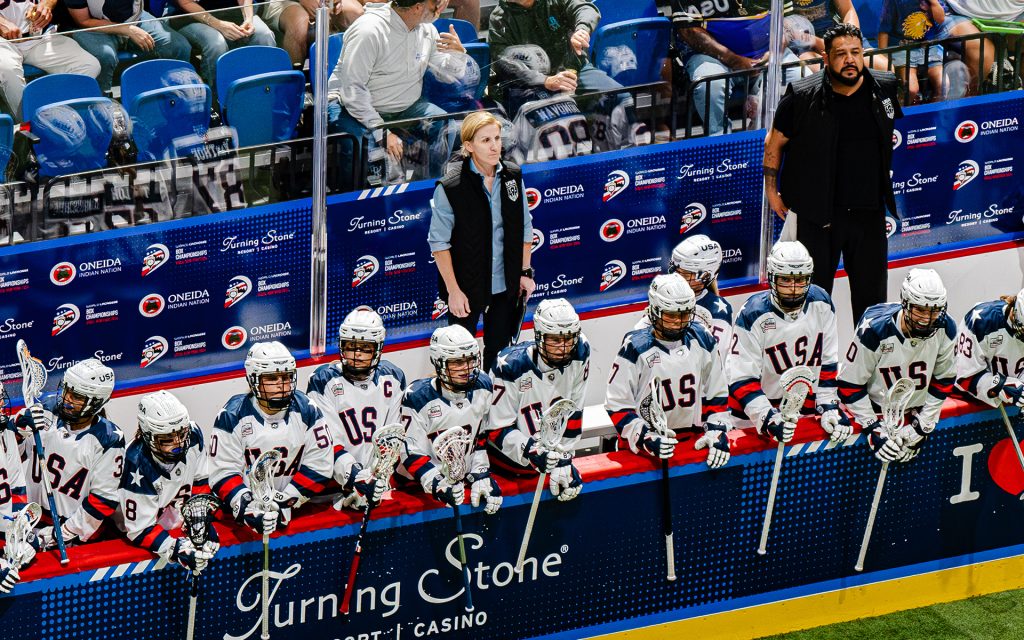
In 2023, she received a call that the U.S. was finally starting a women’s box lacrosse team and was asked to coach the U.S.A. National Team, a position she still holds today. The team trained for two years, and since the sport of box lacrosse was only just starting for women in the U.S., Capicchioni’s team decided to train against all men’s teams leading up to the 2024 World Box Lacrosse Championship. Ultimately, they took home the first gold medal in USA history, men’s or women’s.
“When we started, these women had played lacrosse but never box lacrosse or any kind of contact game,” explains Capicchioni. “My parents always told me, ‘If you can’t find a way, make your own.’ And that’s what we did. The women I coached essentially achieved the impossible!”
Pursuing the Challenge, Taking the Win
Today, Capicchioni is again making her own way, as she juggles many responsibilities including the demands of the Syracuse Law’s JDi program. She intends to keep her businesses running, continue to stay with the U.S.A. National Team, and also complete her law degree in order to offer her financial clients an even wider range of expertise.
“Attending law school through the JDi program will make me a lawyer, but it has already made me a better coach and is helping me in my financial management career, too,” she says. “None of it’s easy, but I’ve never walked away from a challenge, and the Syracuse Law’s JDi program is no different.”
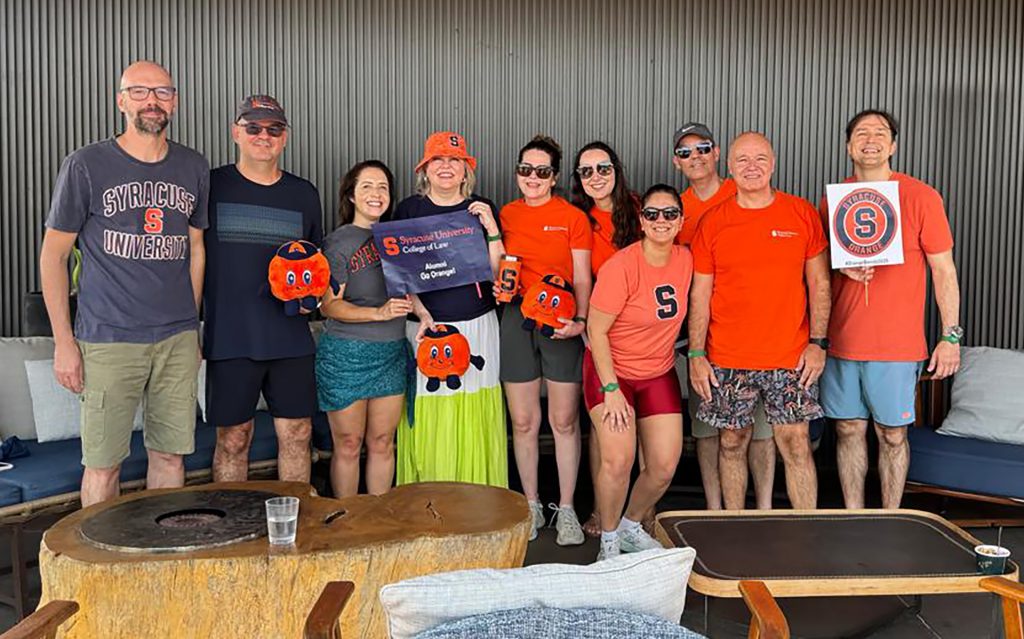
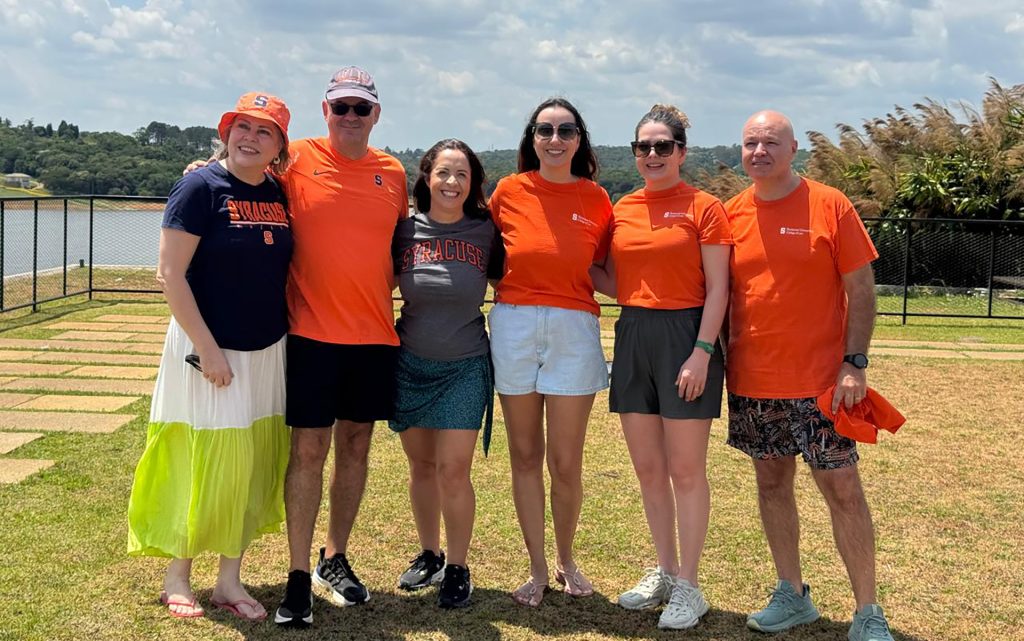
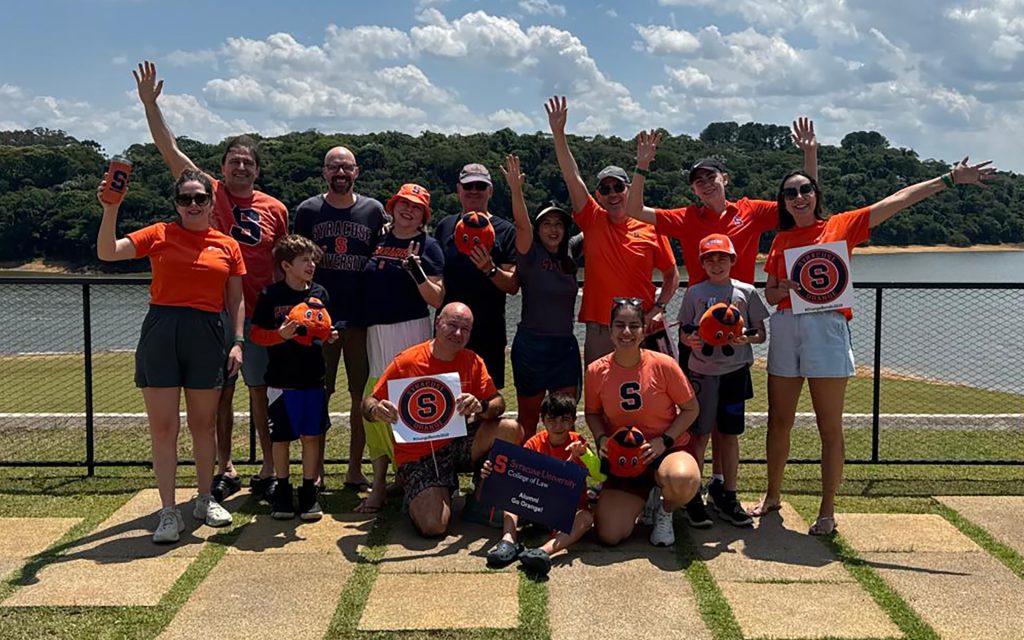
Jerusa Ferreira L’24 recently brought together members of the Syracuse Law L.L.M. Class of 2024 for a reunion in São Paulo, Brazil. Even though they’ve graduated and returned to their home countries, our international alumni are staying connected and keeping the Syracuse spirit alive across continents.
Thank you, Jerusa, for reminding us that the bonds formed at Syracuse Law extend far beyond graduation—and far beyond borders.
Pictured below from the Class of 2024: Jerusa Gabriela Ferreira, Renata Maximiano, Renata Felipe Ferrari, Flavia Bornéo Func, Renato Henry Sant’Anna, and Claudio André Raposo Machado Costa.
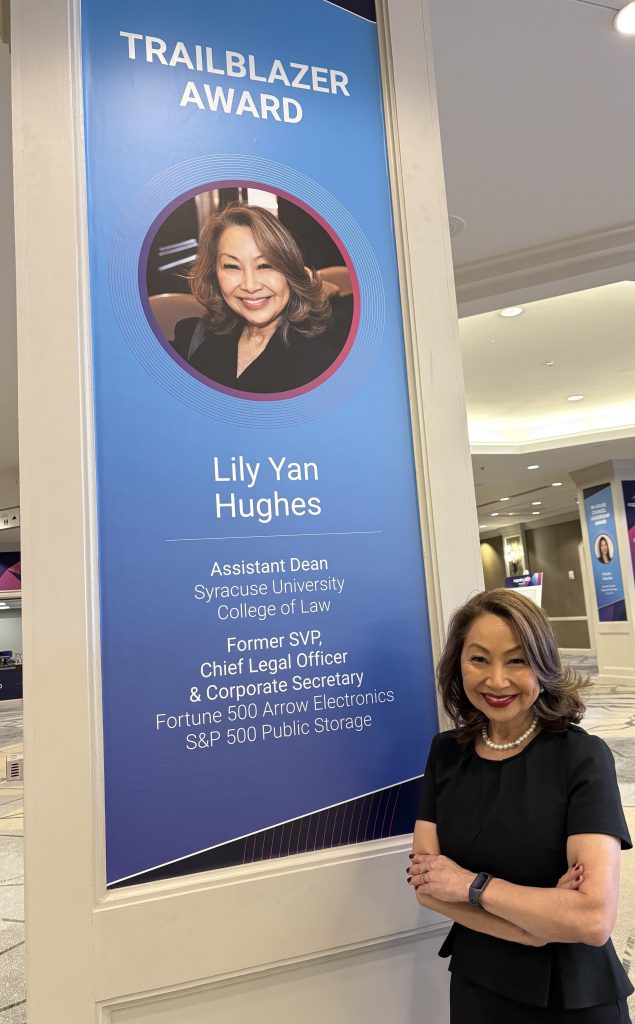
Assistant Dean Lily Yan Hughes is a recipient of the 2025 Daniel K. Inouye Trailblazer Award from the National Asian Pacific American Bar Association (NAPABA), the organization’s highest honor.
As Assistant Dean, Hughes oversees strategy and operations for the Admissions and Financial Aid Office, the Marketing and Communications Office, the Office of Career Services, and SU Abroad. Syracuse University Chancellor Kent Syverud appointed Hughes to the University Leadership Team in the 2023-2024 academic year, and she continues to serve in that capacity.
Hughes is currently Chair and has served on the Board of Directors of DirectWomen, a non-profit focused on increasing opportunities in the corporate board room, since October 2021 and, in October 2025, was elected as an Independent Director of Allbirds, Inc. (NASDAQ: BIRD), where she chairs the Sustainability, Nomination & Governance Committee and also serves on their Management Compensation & Leadership Committee.
Before joining the law school in 2021, Hughes practiced law for several decades, including as Senior Vice President, Chief Legal Officer, and Corporate Secretary of Fortune 500 Arrow Electronics and S&P 500 Public Storage.
“I want to congratulate Lily and the other outstanding recipients of this high honor,” said College of Law Dean Terence Lau. “Lily is an invaluable member of the College of Law and Syracuse University leadership who tirelessly works to ensure our students have an outstanding experience and can fulfill their career aspirations.”
The Daniel K. Inouye Trailblazer Award celebrates the outstanding achievements of lawyers whose leadership and dedication have left a profound mark on both the legal profession and the Asian American, Native Hawaiian, and Pacific Islander (AANHPI) community. This lifetime achievement award recognizes those whose vision, courage, and commitment have opened doors and paved the way for future generations of attorneys.
“I am humbled and honored to receive this prestigious award in the name of Senator Inouye,” said Hughes. “As I look back at my career at the time of this award, what I’m proudest of isn’t a title or a deal — it’s the people. The young lawyers who walked into my office unsure are now leading with confidence, mentoring others, and lifting as they climb. That’s what trailblazing really means. It’s not about being first. It’s about making sure you’re not the last.”
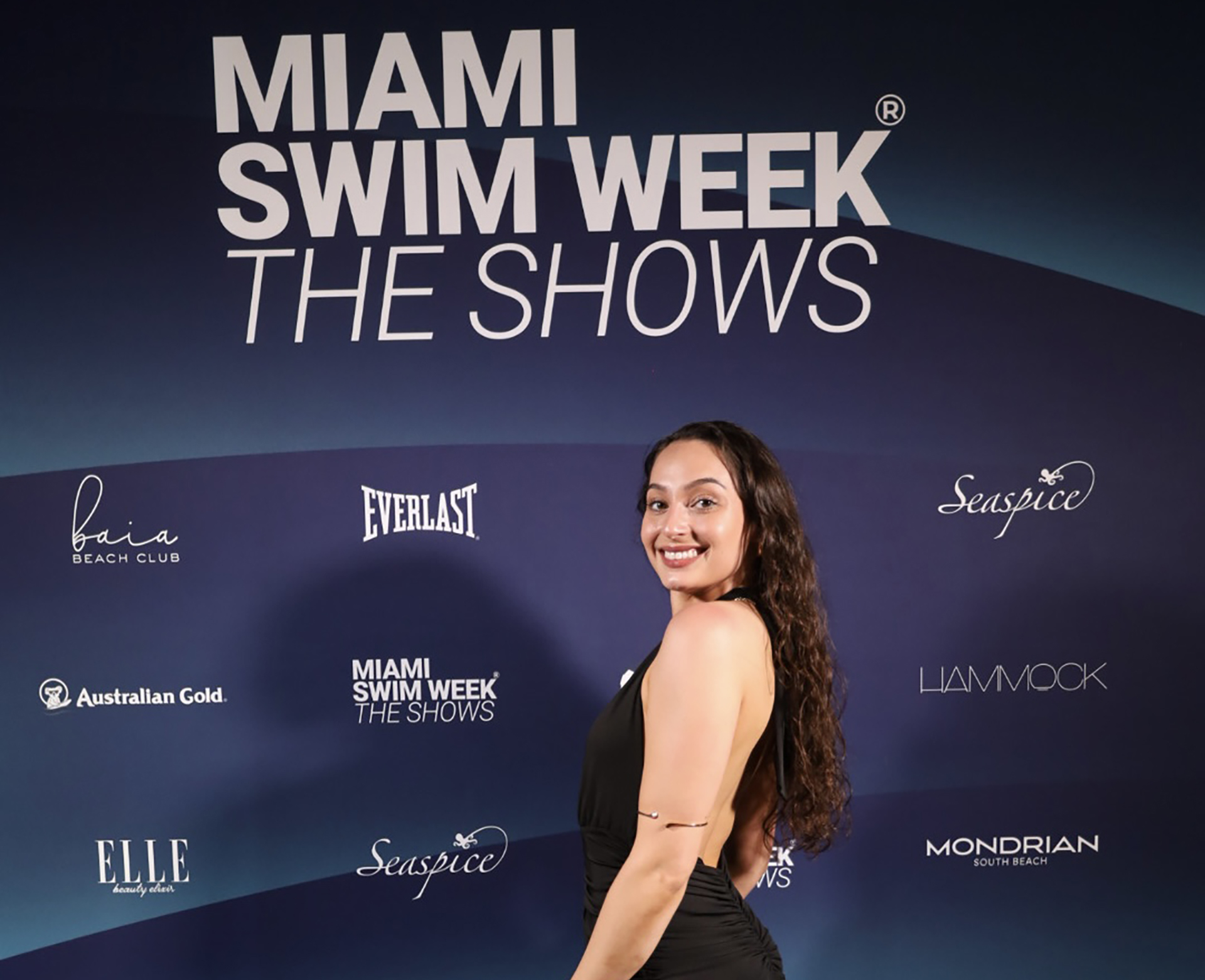
Jill Nelsen L’27 grew up in California playing soccer and loving sports. She was recruited to California State-East Bay with a four-year athletic scholarship to play women’s varsity soccer, while also earning a bachelor’s degree in kinesiology. When she later decided to pursue law school, she hoped to stay connected to the world of sports and entertainment—but she never imagined that Syracuse University College of Law would open doors to opportunities like Miami Swim Week and New York Fashion Week.
During her 1L year, Nelsen joined the Entertainment & Sports Law Society (ESLS) often attending networking events with alumni thriving in this space. At one such event, she met Riley Christian L’16, now an entertainment and sports attorney with Artifex Athleta P.C., a firm he founded in 2022.
Nelsen and Christian had a lot in common, as she had been a collegiate soccer player and he a collegiate baseball player. At the time, Christian was rebranding his boutique law firm in New York City to focus more on the areas of sports and entertainment that dealt with navigating the NCAA’s new Name Image and Likeness (NIL) rules for college athletes and handling legal issues related to artificial intelligence in the entertainment and music business.
She reached out to Christian shortly thereafter, asking if he might need an intern, and he agreed to bring her onboard. At first, she helped navigate the logo development for the firm’s rebranding, later moving on to legal research for defamation cases, statute of limitations issues, trademark infringements, and intellectual property, while learning as much as she could about the ever-evolving NIL rules.
Jill Nelsen and Riley Christian L’16 on the runway at New York Fashion week.
Piecing Together Sports, Fashion, and the Law
While all of this experience at her internship was very exciting, two highlights were attending Miami Swim Week and New York Fashion Week.
“Riley knew these big events would be good networking experiences for me, and he also knew I liked to talk to people and that would be a good way to spread the word about the rebranding of Artifex Athleta,” she explains.
The annual Miami Swim Week is the world’s largest swimwear and resort wear event that includes runway fashion shows, trade shows, and pop-up shops, as well as the chance to meet and network with all kinds of people connected to this area of fashion— from designers and buyers to athletes, agents, and the media.
“Yes, it was focused on swimwear, but there are so many aspects of the law attached to the fashion space, including trademarks, sponsorships, and negotiating and closing NIL and more,” she explains. “It was a fascinating experience to see it in action.”
She also attended New York Fashion Week, one of the “big four” fashion events in the world, showcasing what’s going to be “in” for the upcoming season. The biannual event includes exclusive runway shows by world-class designers that are attended by celebrities, influencers, fashion buyers, and the media. This, too, gave Nelsen an opportunity to network with a host of agents, attorneys, and other business leaders in the fashion space.
“The experience of not only attending these fabulous events but also having the chance to work with Riley helped me begin to make a name for myself as more than just an athlete,” she explains. “The younger version of me would be emotional to see all the things I’ve accomplished both in my course work, as well as internship opportunities. My take away from this entire experience is that I can do it, and there are people who truly believe in me and see my potential.”
Uplifting Women Is the Ultimate Win
After completing her education at Syracuse Law, Nelsen’s dream is to one day work as general counsel for a National Basketball Association (NBA) or National Football League (NFL) team and negotiate from the team’s side with players and their agents. But her ultimate goal is to one day be a general manager or even owner of a Women’s National Basketball Association (WNBA) team.
“Sports, and now working in sports—has always been the dream,” she explains, noting that her older sister has been a role model “moving mountains” as director of services and retention for the NBA’s Los Angeles Lakers.
“And I’ve also learned a lot about creating space for people like me, particularly as a first-generation Latina woman. I’ve been told I’m too much, too blunt, too Californian, but I’ve also been told ‘don’t dim your light to fit into a box that’s been predefined for you.’ I am proud to be a Syracuse Law student with the opportunity to contribute to uplifting women in the sports and entertainment business and also within the legal field. That is a real win for me.”
This is a profound loss for our community. Gary was a cornerstone of Syracuse University College of Law for fifty years, joining our faculty in 1975 and retiring just this past year in 2025. His impact on generations of students, colleagues, and legal professionals cannot be overstated.
A gifted teacher with an extraordinary memory, Gary was known for his ability to recall, in astonishing detail, cases, citations, and the doctrinal nuances that shaped the fields he loved. He taught an exceptional range of courses over the decades, including Criminal Law, Criminal Procedure, Evidence, Federal Indian Law, Federal Courts, and Conflict of Laws. His students, many of whom went on to serve as judges, prosecutors, defense attorneys, and leaders across New York State and the nation, regularly spoke of his rigor, high expectations, and deep commitment to their education.
Gary’s career reflected a rare blend of scholarly depth, teaching excellence, and meaningful engagement with the profession. His scholarship focused on the development of criminal procedure in New York State, and he shared his expertise widely through judicial trainings, attorney education programs, and service on statewide initiatives, including a gubernatorial appointment to the Grand Jury Project.
His professional service was equally remarkable. Over the years, he served as Chief Assistant District Attorney in Onondaga County, co-counsel in the Oneida land claim litigation, and counsel to several law firms. His work on behalf of victims targeted under J. Edgar Hoover earned him the Cleveland ACLU’s Civil Libertarian of the Year Award in 1978. Gary also co-directed our Law in London Externship Program and was a generous mentor whose door was always open, no matter how busy he was.
Beyond all of these accomplishments, Gary was a cherished colleague, thoughtful, witty, and unfailingly supportive. We know that many in our community will feel this loss deeply.
The Syracuse University College of Law is proud to announce three honorees featured on the 2025 Association of American Law Schools (AALS) Pro Bono Honor Roll, which recognizes individuals advancing access to justice through exceptional pro bono contributions.
Andrew S. Greenberg, Teaching Professor
Andrew S. Greenberg, Teaching Professor
Professor Greenberg has represented individuals and families in applications for asylum, green card applications, gaining temporary protected status, obtaining work authorization, obtaining refugee travel approval, and getting approval of a follow to join spouse. The work has allowed him not only to help a population in need, but it has brought him into relationships with committed colleagues and students to use their law school learned skills for the public good.
Colleen Denick, Law Clinic Office Coordinator
As Clinic Coordinator in the Office of Clinical Legal Education at Syracuse University College of Law, Colleen Denick plays an essential role in supporting the delivery of pro bono legal services to clients across seven in-house clinics. She provides critical operational and administrative support to student attorneys and faculty supervisors, ensuring that clients—many of whom face urgent legal needs related to housing, veterans’ benefits, healthcare, and economic security—receive timely and professional assistance.
Colleen’s deep commitment to access to justice is reflected in her exceptional client service, meticulous case management, and unwavering support of pro bono initiatives, including outreach events, student attorney swearing-in ceremonies, and community legal clinics. Her work embodies the spirit of service that defines Syracuse Law’s clinical program.
Garrison Funk L’25
Garrison Funk is a 2025 graduate of Syracuse University College of Law who completed over 500 hours of pro bono work with the Cornell Farmworker Legal Assistance Clinic, where he worked on immigration and employment matters on behalf of area farmworkers — representing individual clients, offering brief advice and referral services, and providing research support for farmworker rights organizations, and with the Volunteer Lawyers Project of CNY, Inc. where he provided assistance to individuals on a variety of family law matters in their Family Court Clinic.
As a result of this work, Garrison received the top Outstanding Pro Bono Service Award for the Class of 2025 at Syracuse Law.
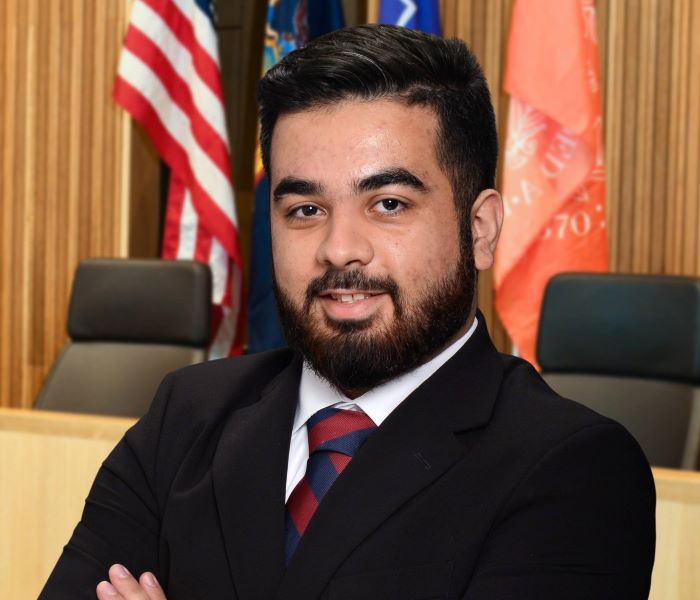
Syracuse University College of Law’s Mohammad Amer L’26 is the co-MVP/Best Advocate of the 2025 National Trial League (NTL) competition. The MVP award is given to the student who received the highest number of best advocate votes during the regular season.
The NTL is a competition format that provides multiple chances for students to hone their trial skills in a competitive, fast-paced, online setting throughout the Fall academic semester, creating opportunities for schools to compete outside the traditional weekend tournament structure. NTL features 14 trial teams competing against each other in a season format that resembles a traditional sports league with two conferences made up of seven teams each.
“Through seven rounds of brutal competition from August to November, against some of the best advocacy programs in the country, Mohammad tied for the most best advocate votes,” said Professor Todd Berger, director of Syracuse University College of Law’s Advocacy Program. “Without a doubt, because of the number of rounds, pace, and quality of teams, this competition is one of the hardest in the country. Winning the MVP in that context is truly an impressive accomplishment. Congratulations to Mohammad once again on this important achievement.”