Around Syracuse Law

Five Musician-Attorneys Discuss the “Duet” Between Music and the Law

Where do you stand on the “left brain v. right brain” debate? Anecdotally, you may know of effortlessly creative people—artists, actors, writers, musicians—who get a little flummoxed by math, and of brilliantly rational minds who wonder at the emotions others feel for paintings, songs, or movies.

But in reality, there is plenty of debate about whether our brains really are wired in such a strict, bicameral way. In fact, when it comes to practicing law, the ability to combine and balance our rational and artistic “sides” might give those entering the profession from creative disciplines special advantages. But what are they?

In the 2020 Stories Book, we explored the nexus of creativity and law with alumni who write fiction and non-fiction. In this issue, we turn our lens on five musician- attorneys—four alumni and one professor, representing a spectrum of instruments— and ask them about how their passion for music has affected their practice of law.

Organizing the article in a form familiar to musicians of all abilities, we present their perspectives in five lessons …

Lesson 1: Pursue your passions, both within and outside the law.

As a partner at Northern California firm Hanson Bridgett LLP, David Miller L’69 has enjoyed a long and successful career in public agency law. Over the years, he’s provided counsel to the Golden Gate Bridge Highway and Transportation District and the Caltrain commuter rail system, among other high profile clients, and this deep experience has meant invitations to offer his wisdom to graduating students.

“When you go into practice, don’t let go of what drove you into those other areas of your life. Be multidimensional.”
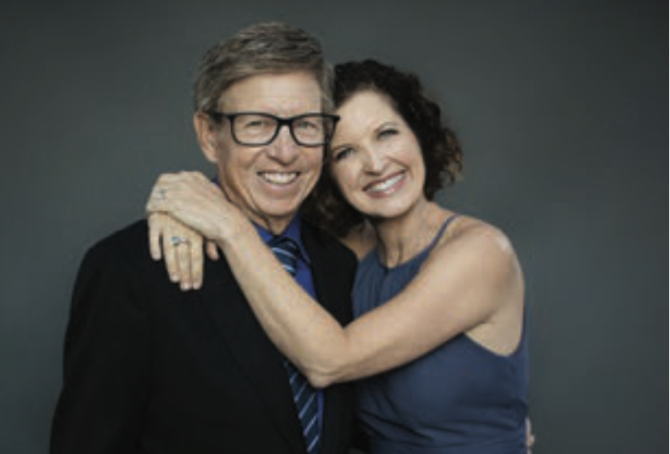
“I once gave a commencement address about pursuing one’s passions,” Miller recalls. “I told the graduates that you might be entering a field that you spend a good part of your day doing, but anything that’s an avocation is a vital piece to carry forward, be it acting or music or art. When you go into practice, don’t let go of what drove you into those other areas of your life. Be multidimensional.”

David Miller L’69 with his daughter, and singer, Rebecca DuMaine. (Rosaura Studios)

Miller certainly practices what he preaches. His avocation is piano, particularly jazz piano: “I was trained classically, but today I play a range of jazz styles.” His combo has been productive during the coronavirus pandemic, recording two CDs—featuring his daughter Rebecca DuMaine on vocals—for Summit Records, Someday, Someday and The Mask-erade. “Both CDs, but particularly Someday, Someday, include tunes that speak to loss of the types experienced by so many during the past year.”

Encouraged by his musically gifted family—and especially his maternal grandmother—to pursue musical study, Miller admits that the piano lid was closed while he studied law. But as a young attorney in California, his love of playing re-emerged, thanks in part to happenstance. Miller recalls a Hanson Bridgett function that had booked a three-piece jazz combo, but when the pianist didn’t show up, Miller filled in. “That function was 38 years ago. I wound up making a lifelong friendship and partnership [with drummer Bill Belasco] out of that gig!”

After that event, music continued to dovetail with his practice, often because his public service clients requested music at events. “One example was when I worked with former US Sen. Barbara Boxer. Through this relationship, I got to play political events and was invited to Senate retreats, where I would accompany musical shows the senators put on,” recalls Miller. “The connection between work and music seemed natural to me.”

Lesson 2: Music can balance a sometimes stressful occupation.

Also dovetailing—or to use a term familiar to a drummer, syncopating—his law career and love of music is Michael W. Tyszko L’15, a business and tax practice associate at Syracuse, NY, firm Bousquet Holstein PLLC.

Like many attorneys, Tyszko is active in his community, and for him that service has a musical flair. He plays drums in Bousquet Holstein’s company band, which has participated in Syracuse’s Rockin’ the Red House Battle of the Bands fundraiser (for the Red House theater) since 2016. His jazz combo— which includes fellow alum Joseph Frateschi L’14, of Baldwin, Sutphen & Frateschi PLLC, on saxophone— plays local fundraisers and other events, including for the Volunteer Lawyers Project of Onondaga County, the Women’s Bar of Central New York, and the College’s Law Alumni Weekend.
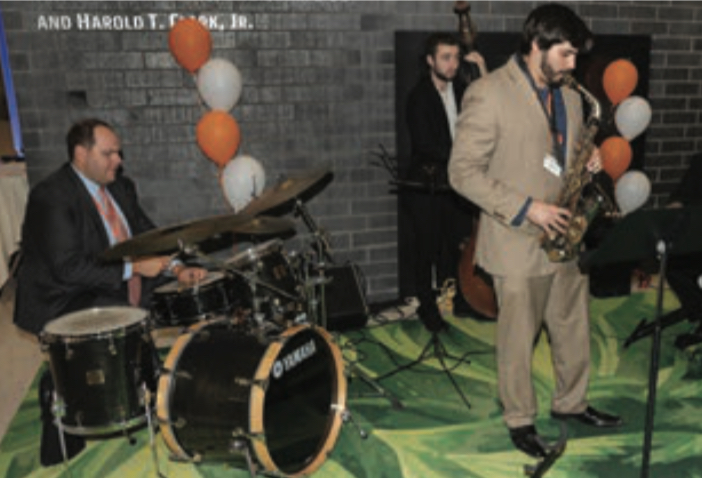
Mike Tyszko L’15 (drummer) and Joseph Frateschi L’14 (sax) play at the 2019 Law Alumni Weekend.

Rounding out the styles this versatile percussionist plays, Tyszko also has time for a brass ensemble. “Since before law school, I’ve played in the percussion section of the Syracuse University Brass Ensemble,” says Tyszko, who currently serves as Chair of the group’s Board of Directors. “It’s a great community of friends, and I want music to be like this, to be joyful.”

“I always had to prove my chops earlier in life,” says Tyszko, who holds a bachelor’s degree in music education from the University of Michigan and who at one point wanted to be a school music director. “Now I don’t want to take myself too seriously.”

“Law can be such a stressful profession at times,” Tyszko continues, admitting that during his undergrad studies, music “got wound up” with stress too. “I was starting to think of it as a job. I didn’t want my music to be like that, so that was the beginning of my move into law.”

Today, Tyszko says that he sees music as a “balance point” for his legal career, or as he observes— paraphrasing jazz drumming great Art Blakely—“music washes away the dust of everyday life.”

Lesson 3: Skills required by music can give lawyers an edge.

Miller and Tyszko address how music can both complement and balance a legal career, but what of skills that transfer between the two disciplines? It seems that, like a good duet, there’s plenty of interplay.

“In my opinion there is a great deal of transfer of skills,” says Tyszko, noting that one of these transferable skills is problem solving “which for a musician means working on a passage of music and being aware of how it is performed before presenting it.”

Another skill is what David Miller calls “refinement,” akin to a writer’s editing and shaping process. “What do we learn in law school? To refine our ability to communicate, to be logical and understandable, and to simplify complex issues,” he observes.

To these commonalities, Professor David Driesen offers another: “There’s a special skill both law and music require, to quickly and intuitively respond to a complex situation.” Much like musicians learning to play as an ensemble, lawyers must process and synthesize information quickly. In law, says Driesen, “You need to read a lot of cases, see patterns, and intuitively understand them.”

Like Miller and Tyszko, Driesen was formally trained—he holds a master’s degree in trumpet performance—before switching disciplines and becoming one of the nation’s leading experts on environmental law and the rule of law. Earlier in his music career, he played orchestral works, “but today I play in the SU Brass Ensemble and the Excelsior Cornet Band.”
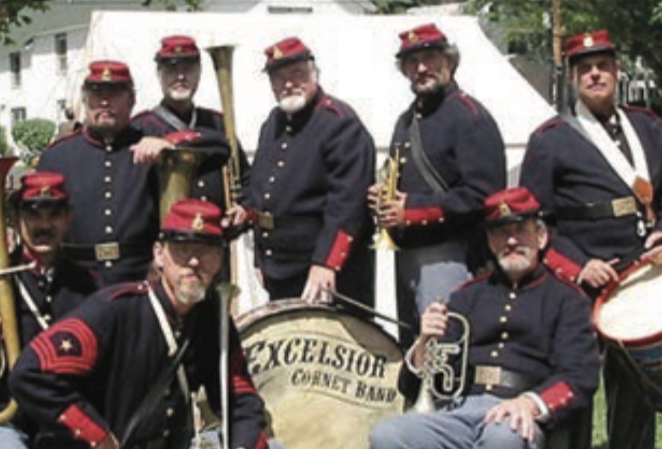
Professor David Driesen (back row, second from right) poses with the Excelsior Cornet Band.

The latter bills itself as New York State’s only authentic Civil War-era brass band, performing period music on 19th century instruments. That means Driesen must master a different kind of brass: the modern trumpet is a piston valve instrument, but for the cornet band he picks up the rotary valve Bb saxhorn (sometimes called a rotary valve cornet).

“It’s good exercise to flit back and forth between writing and music playing. That’s just good for your mind.”

Having been a professional musician in his 20s, Driesen says that—like Miller—playing took second fiddle once his law career began. Today, like Tyszko, he sees playing as “a sort of balance thing.”

“If you are working all day in one way, it gets stale. It’s good exercise to flit back and forth between writing and music playing. That’s just good for your mind,” says Driesen. “These days, I don’t have the time for three hours of practice a day and hustling for gigs. With Excelsior and the brass ensemble, I have found a nice balance.”

Lesson 4: A critical common skill is performance—whether playing for an audience or advocating for a client.

Fear of public speaking is a potential barrier for anyone entering the law. Whether being called upon in class, speaking in court, or advocating for a client in front of a stern hearing panel, young lawyers must learn to speak in front of others with confidence and flair.

Musicians call this fear stage fright, something which afflicts even top professionals, such as singer Barbra Streisand and guitarist Robbie Robertson. But it seems that if you can overcome stage fright, public speaking comes more naturally.

“I find public speaking to be a lot easier since I have been a professional musician,” observes Driesen. Similarly, Tyszko notes that, “As attorneys we must persuade and influence a court or third party to be favorable to our client. A lawyer’s work product can be thought of as a performance.”

Vocalist Gabriela Wolfe L’16, an Assistant Public Defender in the Monroe County (NY) Public Defender’s Office, knows the trials of public performance only too well. In fact, pushing through a bad turn and eventually triumphing is at the heart of one of her enduring law school anecdotes.

“It’s tradition for a 3L to sing the national anthem at Commencement,” Wolfe recalls when asked about singing the National Anthem at the 2016 ceremony. That year, Wolfe—who has no formal training in music but grew up singing in church—decided she would audition, not knowing that the speaker would be now President Joseph R. Biden Jr. L’68.
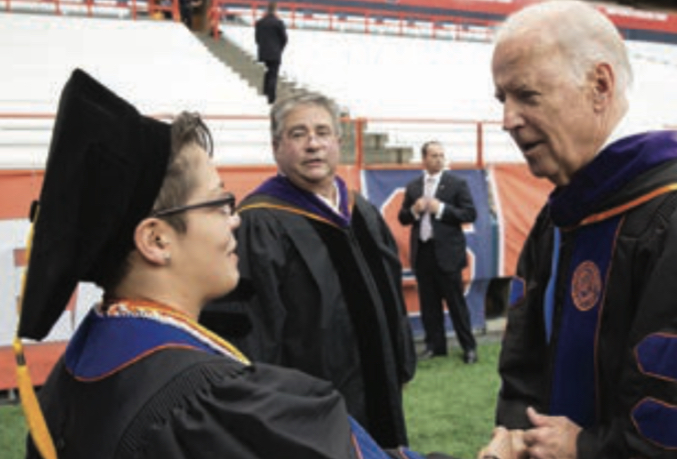
Gabriela Wolfe L’16 meets now President Joseph R. Biden L’68 at the 2016 College of Law Commencement.

“I was very nervous and remember warming up my voice in my car before the audition,” Wolfe recalls. She hadn’t sung in a while, and initially the audition did not go well. “When I reached a high note, my voice cracked,” she says. “So I yelled an expletive, touched my toes, took a few breaths, and was determined to try again.” The judges looked as though they had seen enough, she says, “but I insisted.” Suggesting they turn their chairs around, the judges let Wolfe have another go. “I sang again, and I got the part.”

Asked whether Biden’s presence made her nervous on the day all over again, Wolfe explains, “By the time I heard he was speaker, I was so nervous in general, it didn’t make much difference!”

In the end, Biden helped Wolfe relax, and her performance was flawless. “I didn’t realize I’d have so much interaction with him. As soon as he shook my hand, it calmed me down.”

The take-away? “For me, performing is about proving to yourself that you are capable,” Wolfe says. “I’m the first in my family to go to college, so
I always want to throw my hat in the ring. When showtime comes, I give it all I’ve got. I’m so grateful I didn’t let my first attempt to sing the anthem be the end of it.”

Lesson 5: There’s a reason they call it “practice”.

For pianist and Board of Advisors Member Susan K. Reardon L’76, two threads that bind music and law have intertwined throughout her successful career—which culminated in her serving as Director of International Policy, Worldwide Government Affairs, and Policy at Johnson & Johnson—and into her retirement, which came in 2014.
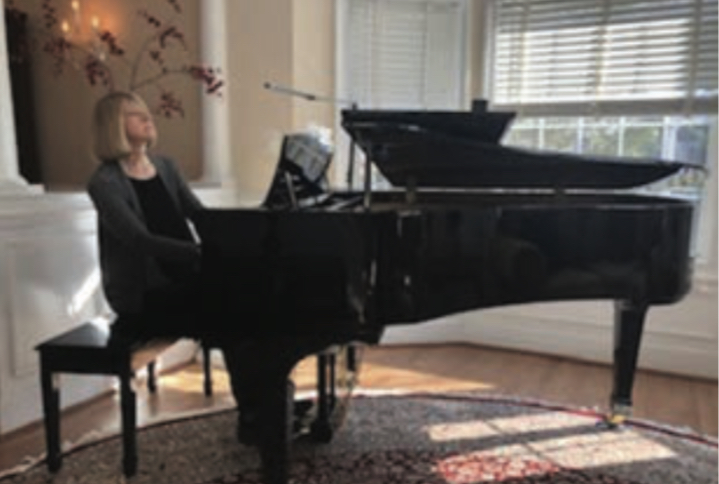
Susan K. Reardon L’76 sitting at piano playing.
Susan K. Reardon L’76 continues to play piano at home “almost daily.”

First is the ability of music to balance stress. “Playing piano requires total concentration, so you are immediately removed from daily and global sources of stress,” says Reardon, who took lessons in childhood at Baltimore’s Peabody Institute of Music and who would sneak into the University’s Crouse College piano practice rooms to play as a student. “When I was working, I still managed to set aside most Sunday evenings to play two or three hours with my duet buddy before I delved into what I had to do in the week ahead. That planning was made less stressful with the lingering joy of music making.”

Second is performance. Although these days Reardon mostly plays solo or with her duet partner, there was a time when she gigged. “That was many years ago at a Gay 90s bar in Ocean City, MD, as part of a trio with banjo and trumpet. That is the only time I was paid to play. We weren’t very good though!”

“Both music and law require, to a degree, showmanship,” Reardon continues. “As a lawyer, I brought those skills together to perform for judges, juries, clients, and employers. As a pianist, I perform almost daily, albeit mostly for myself. Music and the law have contributed enormously to my quality of life.” Ultimately, Reardon says, both music and law “are characterized by order, discipline, and beautifully crafted language. Learning to read music and learning how to think like a lawyer require training your brain through hard work and concentration.”

“Playing piano requires total concentration, so you are immediately removed from daily and global sources of stress.”


To an outsider, it might seem odd that lawyers “practice” their profession. Don’t you already have a law degree?! But Reardon gets at the heart of why the two disciplines share that word in common, for both require the constant application and exercise of skills and craft built over a lifetime.

Or, as Mike Tsyzko puts it with a drummer’s final crescendo: “Law is called a ‘practice’ because you are improving all the time and working on the fundamentals, working toward more refinement.”
Adom M. Cooper L’12 Finds Risk and Reward at the State Department

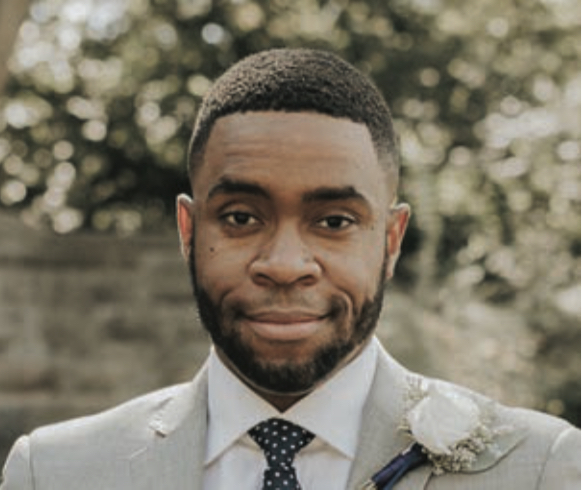
Headshot of Adom M. Cooper L’12
Adom M. Cooper L’12

Given his current line of work, one of Adom M. Cooper’s L’12 pieces of advice to current law students is entirely appropriate: if you want to enter the field of national security and international affairs, he says, “really think about what risks you are willing to take.”

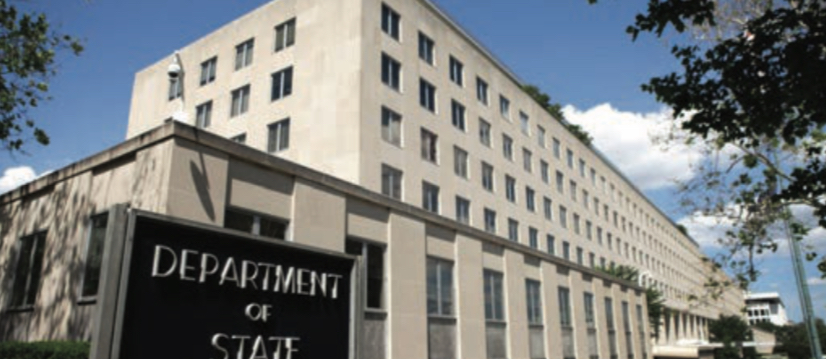
As an Operations Planning Specialist, High-Threat Programs at the US Department of State’s Bureau of Diplomatic Security, Cooper works in a part of the state department that spends a great deal of time assessing hazards for those who serve abroad in embassies and consulates. His journey to this niche career in public service was itself filled with risk—and plenty of reward.

“Hooked on learning”

At the University of Michigan, Cooper—whose father is an anesthesiologist— was contemplating a science and biology track before he took his first risk and switched to political science and communications. But when he took part in a summer 2008 WorldTeach service project in Namibia, his career began to bend toward the law and specifically its interaction with diplomacy, development, security, and social justice.

“In Namibia, I helped schools and teachers get acquainted with computer literacy and the Internet after the Ministry of Education passed a law mandating that all teachers must have a basic, working knowledge of computers. Many of them had never used a computer before,” Cooper says.

“I can’t tell you how many information interviews I have done, even with my peers. As an African American, there are constant barriers to entry, and you have to squeeze every resource around you for all they are worth.”

His post was in the far north of the country, beyond the “red line,” a 600-mile fence (officially for pest control measures) that demarcates the rural north from the former colonial south. “I helped a school get its first Internet connection, and I became hooked on learning how laws worked differently in different countries.”

Returning home to the 2008 economic crash, Cooper decided to take another chance and switch from journalism—where jobs were becoming scarce—toward legal studies and Syracuse.

Another big leap saw Cooper return to southern Africa at the end of his 1L year. “I wanted to get involved in international law, so in summer 2010 I studied abroad at the University of the Western Cape in South Africa, as part of a Howard University-run program.” While in Cape Town, Cooper took international law classes, worked at a law firm, and in the evenings enjoyed World Cup games being played across South Africa that year.

Back in Syracuse, Cooper continued to specialize, taking national security classes with professors William C. Banks and David Crane L’80, international law classes—such as Law of the Sea with Professor Tara Helfman—and international relations classes at the Maxwell School.

“Squeeze every resource”

Graduating with certificates in national security and postconflict reconstruction, Cooper spent time networking and shopping his resume, especially at the United Nations headquarters in New York City.

His second piece of advice to students is borne out of these experiences. “Find ways to get connected to people in your chosen field,” he
observes. “I can’t tell you how many informational interviews I have done, even with my peers.”

“As an African American, there are constant barriers to entry, and you have to squeeze every resource around you for all they are worth. Many internships and fellowships, which lead to great job opportunities, are unpaid. This instantly rules out candidates from marginalized and untapped communities.”

His determined networking eventually led to a job at the UN Population Fund, where he helped edit a landmark report called “Marrying Too Young: End Child Marriage.” He also coordinated legislative initiatives pushing countries to raise their legal age of marriage to 18 and organized a high-level panel event for the 2012 International Day of the Girl Child, which included luminaries such as Desmond Tutu and Michele Bachelet. “I later packaged up the report and sent it to all 193 member countries,” he adds.

After that essential experience, Cooper moved to Washington, DC, as an International Law Fellow at the American Society of International Law (ASIL). Because of the fellowship’s low stipend, Cooper notes that “I was only able to move to DC as my godparents live here and were gracious enough to host me, changing my career trajectory.”

Department of State building

“A historical lens”

After ASIL, Cooper joined consultants Lee Bayard Group LLC as Legislative and External Relations Director. Then, after responding to an ad on a Syracuse University listserv, he moved to the state department in early 2015.

Cooper says the focus on “high threats” at the Bureau of Diplomatic Security is a response to the 2012 attack on US government facilities in Benghazi, Libya, which led to the deaths of two diplomats and 10 government investigations.

One recommendation from the 2012 unclassified Congressional Accountability Review Board called on the state department to reform its security approach at “high threat posts,” or embassies and consulates in conflict zones. With his background in national security, development, and international law and relations—as well as his experiences abroad—it’s work Cooper is well- suited to do.

Today, in addition to his state department duties, Cooper is a fellow at the Truman National Security Project, a leadership development project of the Truman Center for National Policy for which Cooper has returned to another of his vocations: writing.

“The Truman Center encourages its members to get their voices out there. So in 2020, I started writing and publishing more,” says Cooper, whose work has been featured in Just Security, NY Daily News, USA Today, and elsewhere. “I write about things that aren’t often addressed, and I like to look at contemporary issues of national security through a historical lens.”

“Find your tribe”

Cooper’s Just Security article— “US ‘National Security’ Must Apply to the Entire Nation”—is an example of his approach. It connects his maternal grandfather’s service on a World War II submarine chaser to his and his African American compatriots’ experiences before and after the war (“continually exposed to domestic enemies at home, in the forms of institutionalized racism and hate groups”), to the importance of the US “effectively addressing foreign policy and national security challenges and issues” by doing more “to acknowledge, accept, and confront its flawed history.”

Recently, Cooper contributed a personal narrative to a Truman Center report— “Transforming State”—about modernizing and diversifying the state department.

Like his opinion pieces, this narrative also interrogates the nation’s “flawed history.” He writes about his uncomfortable experience passing Confederate flags and monuments while on a temporary tour of duty (TDY) near Charlottesville, VA, at the time of the notorious 2017 “Unite the Right” rally. “The fact that I was working on international security issues during this TDY while there were clear and present domestic security issues close to me is sadly ironic and dysfunctional.”

Cooper urges the state department to find “the personnel, ethos, or resources” to ensure the safety of its increasingly diverse personnel, “and it must address this domestically in the same manner that it does abroad.”

This latter comment brings us to Cooper’s final piece of advice to students, especially “students who look like me interested in this kind of career.” It echoes his “Transforming State” narrative and its call to support people from marginalized and untapped communities in national security.

“You will need a close group of friends to bounce ideas off and to vent to,” he notes, admitting that the path won’t always be smooth. “Every day, I still connect with three other African American alums—David Chaplin L’13, G’13; Yemi Titus Falodun G’12; and Jonathan Marshall G’11—via a group text we started before we graduated. No topic is off limits, and we support each other. We talk about everything: relationships, finances, sports, politics, and life decisions. So, I’d tell students to ‘find your tribe!’”

The View from the Corner Office: Stories Book 2021

ALUMS REFLECT ON THEIR JOURNEY FROM LAW SCHOOL TO THE C-SUITE

The College of Law has produced extraordinary leaders throughout its history. Today, our alumni include a president of the United States, congressional representatives, a state attorney general, college presidents, numerous judges, and other public servants, as well as business and nonprofit executives, entrepreneurs, managing partners, and many others in positions of influence.

In this second edition of The View from the Corner Office, we celebrate not only the journeys four alums have taken from the classroom to the executive suite but also their exemplary public service, on local, national, and international stages.

Along the way, we learn that for an Orange lawyer, almost any career benefits from a Syracuse law diploma. Look for more C-suite stories in future issues of the Stories Book!

John Hartmann L’88

COO, Bed Bath & Beyond; President, buybuy Baby

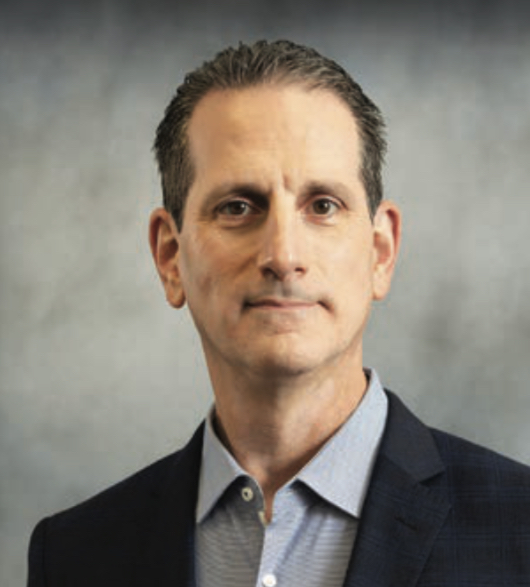
Headshot of John Hartmann L'88

As career changes go, John Hartmann’s move from a special agent for the Federal Bureau of Investigation to Executive Vice President and Chief Operating Officer of Bed Bath & Beyond and President of buybuy BABY may seem unusual, but in this interview he explains the organic logic of his path and the skills he easily transferred from public service to corporate leadership.

Hartmann’s path from the FBI to BBB began with a senior role at Cardinal Health, a health care services and logistics firm, where he leveraged his skills as an operative and his knowledge of the pharmaceutical industry he’d gained at the Bureau. His time at Cardinal Health led him to the logistics of the home improvement industry, first serving as Chief Executive Officer of Mitre10 then joining The Home Depot and HD Supply, where he had roles in technology, strategy, and mergers and acquisitions.

Tapped to be President and Chief Executive Officer of True Value Company, he led the company—one of the world’s largest hardware wholesalers—through its transition from a dealer-owned co-operative to a network of independent retailers. Under his leadership, True Value implemented a successful “hyperlocal” marketing model and doubled the size of its sales force.

It is no surprise, therefore, that Hartmann’s journey eventually led him to his current position at one of the largest houseware goods specialty stores in the nation.

Did you imagine in law school that you’d eventually land in a corporate leadership role? 

I knew that my Syracuse education would prepare me for an exciting career, but I didn’t know I’d end up in a senior leadership role. As I progressed through law school, I was preparing for parallel career options. On one track I was preparing to be a practicing attorney in a law firm or company, but I was also interested in federal law enforcement and intelligence. After I took the bar exam, I became an FBI agent.

I’ve always had a passion for leadership. I was a member of the Army Reserve and President of the Law Student Senate while at Syracuse. During my tenure in the FBI, other leadership opportunities presented themselves. In my final year, I was a supervisory special agent, working with teams across the country and around the globe. I also investigated how foreign governments steal American technology, so economic espionage became a focus, and I learned a lot, about a lot of industries, such as in one particular investigation about pharmaceuticals.

That experience helped my transition to Cardinal Health, where I was exposed to all aspects of business, which led me to The Home Depot in 2002.

How did law school prepare you for your current role?

Everything that is gained in a legal education can be applied to business. That includes critical thinking, listening to different perspectives, learning how to negotiate, and analytical thinking, which helps get at the root causes of business challenges and their solutions.
“Part of the fundamental intersection between my law school training and my experience at the FBI is the critical and analytical thinking, as well as emotional intelligence, that my day-to-day work at BBB requires.”

What elements of your legal training—and your work at the FBI—do you apply in your position at Bed, Bath & Beyond?

Part of the fundamental intersection between my law school training and my experience at the FBI is the critical and analytical thinking, as well as emotional intelligence, that my day-to-day work at BBB requires.

At the FBI, you learn interpersonal and hone investigatory and problem solving skills. The vast majority of an agent’s time is spent interviewing people, searching for truth and data points, and asking pertinent questions. You also gain social experiences by talking to thousands of people from all walks of life, all demographics. In turn, those critical formative experiences help develop emotional intelligence, which is very important in whatever direction you take your career.

In a rapidly changing world, what innovation has most affected your industry?

There’s nothing more dramatic in retail than the proliferation of data and the ability to use that data to satisfy a customer’s desire for prompt and effective solutions. Consumer expectations have changed dramatically. Now transactions take place in stores and online at about the same rate, and that dynamic continues to evolve.

How has your business overcome challenges posed by the COVID-19 pandemic?

Bed Bath & Beyond pivoted dramatically to continue to serve customers even while the majority of our stores were closed. Our online fulfillment model was already underway, but we accelerated our digital transformation to ship products and to offer curbside pickup and “buy online/pickup in store,” or BOPIS, once stores reopened.

There is still absolutely a place for the store experience, however. Our customers desire it, and they help us inform that experience. We continue to meet the customers where they are and curate an experience that is inspirational, whether online, curbside, or in store. In the end, COVID-19 accelerated the direction retail was already heading.

What memory from your law school days is dearest to you?

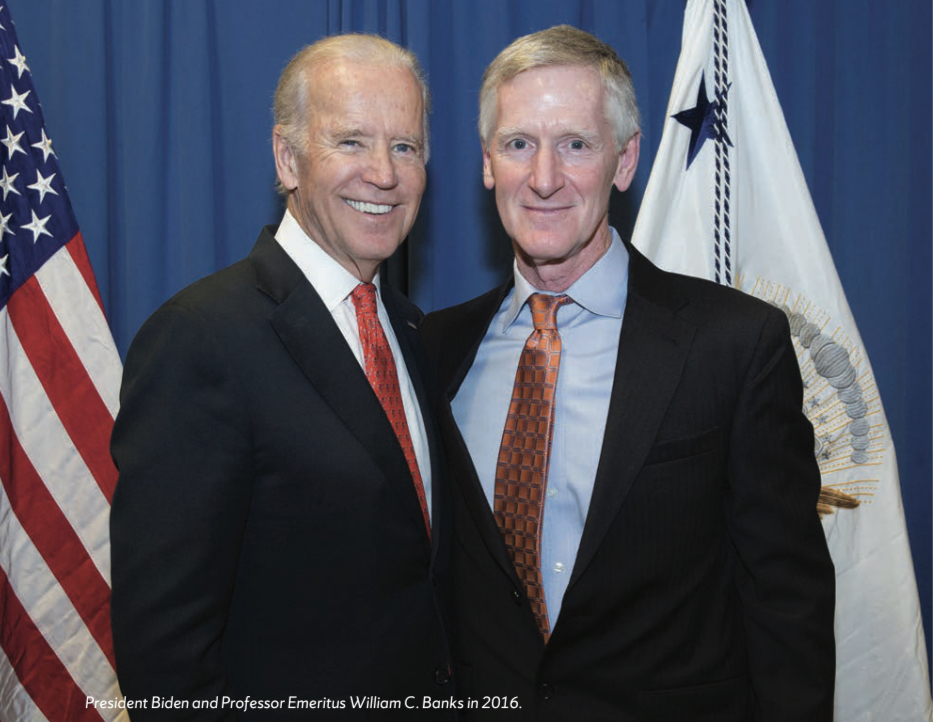
Thinking of the formal side of law school, there was my experience on the Law School Senate and the superb relationships I developed with professors, especially Professor William C. Banks. I admire Professor Banks not only for the work he did teaching us Constitutional Law but also for his work in national security law and for the United States in general. He’s a tremendous asset to the law school and the country.

Informally, there was a group of us that would go out on Thursday nights together. We weren’t of extravagant means back then, but we would head to a local establishment and talk about our experiences, decompress, and build the kind of Orange experience that Syracuse promises—and delivers.

Art Lussi L’88

President, Crowne Plaza Lake Placid

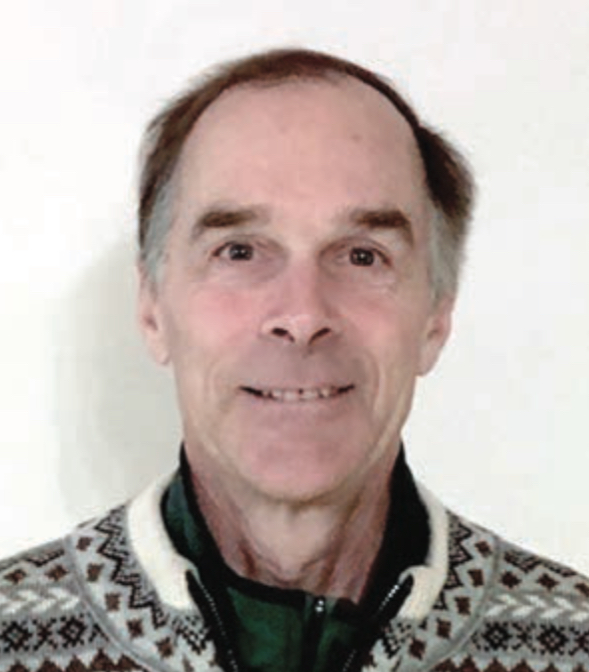
Headshot of Art Lussi L’88

Art Lussi is President of the Crowne Plaza Lake Placid, a resort in the Adirondack village that hosted the 1932 and 1980 winter Olympics. Restored and expanded, the resort now spans more than 1,000 acres of the Adirondacks and includes 45 holes of championship-level golf.

A Lake Placid native, Lussi excelled in tennis and skiing at Dartmouth College, and during law school he skied in the World University Games in Czechoslovakia. Admitted to the bar in New York State and Washington, DC, Lussi worked as a ski coach in Vail, CO, before returning to Lake Placid to help his family operate the Holiday Inn, now the Crowne Plaza.

A member of the Lake Placid Vacation Corporation since 1991, Lussi was involved in the village of Lake Placid and town of North Elba Community Development Commission, which produced a Comprehensive Plan in 1997, mapping the economic future of the area. He is also a Commissioner for the Adirondack Park Agency and a Board Member of the Olympic Regional Development Authority and New York Ski Education Foundation, having served as the foundation’s Chairman for 10 years.

Did you imagine in law school that you’d eventually land in a corporate leadership role? 

I thought I would be a sports agent, but I soon learned that you have to be an extremely aggressive negotiator and marketer to be successful, so I decided to coach ski racing after law school. After three years in Vail, teaching, working in a ski shop, and meeting my wife on the chairlift, I decided to join my family in the hospitality business.

How did law school prepare you for your current role?

The summer legal educational opportunity program helped me realize that I could become a lawyer, and it was professors Samuel Donnelly and Emil Rossi L’72 who gave me the confidence to lead a business and stand up for environmental protection. Professor Robert Anderson was the zoning guru who prepared me for years as an Adirondack Park Agency Commissioner. Now I lead our family through local zoning issues in resort development.

What elements of your legal training do you apply in your position at Crowne Plaza? 

Thinking like a lawyer really works! I’m an active listener—to employees, customers, and my family—and I document when the parking lot is plowed and the sidewalk shoveled! I also have defended employees in court when our insurance companies have recommended we retain outside counsel, and those wins have been especially sweet.

“I also have defended employees in court when our insurance companies have recommended we retain outside counsel, and those wins have been especially sweet.”

In a rapidly changing world, what innovation has most affected your industry?

People now make reservations at the last minute in resort areas based on weather reports and real time adjustments, and we are fixated with online reservation services, so keeping up reservation availability and rate structures remains challenging.

How has your business overcome challenges posed by the COVID-19 pandemic?

We are fortunate to be in a remote area where visitors can play outside on our mountains and in our parks, on our golf courses, and on our ski slopes—and still remain socially distanced. We “super clean” our hotel rooms, and we are lucky to be able to provide fresh air directly to our guest rooms through sliding glass doors.

What memory from your law school days is dearest to you?

In January 1987 I was selected to represent the College in Alpine skiing in the World University Games in Czechoslovakia, but I needed Acting Dean Stephen Wechsler’s approval. He said, “Young man, you do not take three weeks off to go ski racing in Europe and stay in law school.” However, Professor Peter Bell supported me, and the Dean relented—but he gave me my only D in law school later that spring, in contracts.

There was no internet back then, and I remember on my return, in a cab in DC, asking the driver how the Orange was doing in the Big East Tournament. The driver said, “Man, Where you been? Them Orangemen’s in the Sweet Sixteen of the Big Show.” SU kept on winning, and I ended up flying to New Orleans with fellow classmate— and now judge—Mike St. Leger L’88 for the Final Four!

Erica White-Dunston L’98

Director and Chief Diversity Officer for the Office of Civil Rights for the Office of the Secretary, US Department of Interior (DOI)

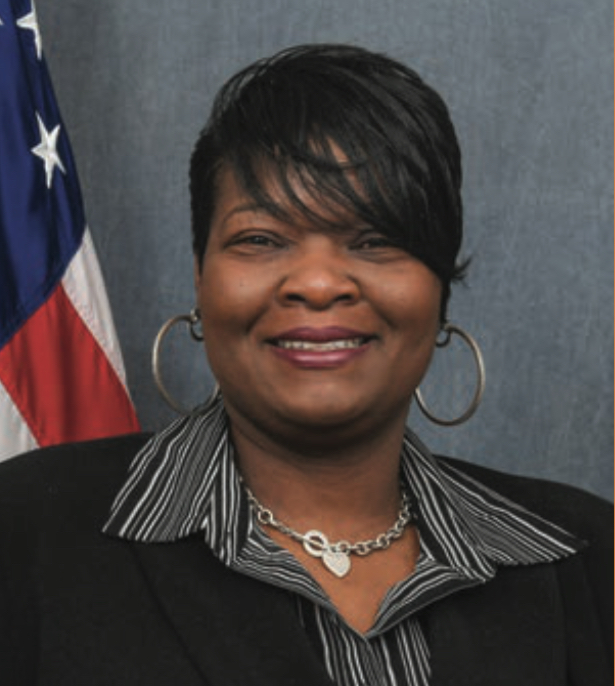
Headshot of Erica White-Dunston L’98

An expert in civil rights and employment law, Erica White-Dunston is Director and Chief Diversity Officer for the Office of Civil Rights for the Office of the Secretary, US Department of Interior (DOI). As Director, White-Dunston is responsible for developing and implementing workplace strategies that aid DOI in promoting equity, diversity, and inclusion. She also provides oversight to DOI bureaus, identifying and eliminating discriminatory practices via applicable Title VI and Title VII laws.

From 2001 to 2010, White-Dunston worked at the US Equal Employment Opportunity Commission (EEOC), first in the Office of General Counsel as a trial attorney in systemic litigations, with collateral duty assignments with the Office of Federal Operations and the Office of Equal Opportunity (OEO). In 2006, White- Dunston was reassigned to OEO, where she performed federal sector review for complaint processing. In 2008, she chaired the agency’s Disability Task Force, which resulted in the restructuring of the agency’s Disability Program.

Recognizing her superior knowledge in human rights and Equal Employment Opportunity laws and training, in 2014 White-Dunston became one of only 11 Internal Revenue Service employees named a Department of Treasury Certified Strategic Partner. In 2015, she became a Presidential Management Council Interagency Fellow, a program to nurture excellence through cross- agency exposure, and she served a six-month detail to the Chief Human Capital Officers’ Council at the Office of Personnel Management. In May 2016, White-Dunston returned to EEOC as the new OEO Director.

As a law student, White-Dunston received the Seely Johnson Award for Outstanding Leadership in an African American student, the Ralph Kharas Award for Outstanding Leadership in Moot Court, and the Order of the Barristers.

Did you imagine in law school that you’d eventually land in a government leadership role?

No! I knew I would be focused on serving underserved communities, but not in this capacity.

How did law school prepare you for your current role?

My class was comprised of a spectrum of races, national origins, and religions, and there was always something to learn from everyone, so I developed skills that focused on collaborative partnerships and the interpersonal and negotiation skills necessary to obtain buy-in from differing points of view.

What elements of your legal training do you apply in your position at the US Department of the Interior?

I use every bit of my legal training when assessing claims of discrimination and delivering findings. I approach questions through the IRAC (issue, rule, analysis, and conclusion) model, which I learned in law school and which I have taught my staff.

In a rapidly changing world, what innovation has most affected your industry?

The ability to electronically file and respond to complaints of discrimination increases opportunities and access to address not only Title VI and VII complaints, but all equity, diversity, and inclusion-related concerns in the workplace.

How has your department overcome challenges posed by the COVID-19 pandemic?

Because my department was already heavily focused on complying with tech requirements as mandated by the EEOC, we were not as affected by the pandemic challenges. We were immediately able to meet our customer needs while working from the safety of our homes with little to no break in customer service and organizational support.

What memory from your law school days is dearest to you?

The friendships that I still have cannot be over-emphasized, but my dearest memory is of the Hon. James Graves L’80. During one of the Coming Back to Syracuse events, I told him of the challenge I was having with administrative law. Despite his busy schedule, he tutored me by phone. His willingness to help has never been forgotten because it made such a difference for me. I never forgot how a small act of kindness can have a huge ripple effect. Because of that kindness, I strive to provide that type of support daily.

“A Really Exciting Time!”

The Role of a Government Diversity Officer Under a New Administration
Erica White-Dunston L’98 became Director and Chief Diversity Officer in the Department of the Interior’s Office of Civil Rights in September 2019. DOI employs 70,000 people across 11 bureaus and seven offices. To understand her critical role within her department and the government— especially under the transition to the President Joseph R. Biden Jr. L’68 administration—we asked White-Dunston to describe her mandate and how it is evolving …
My mandate is to ensure that every employee has an employee life cycle that provides a work environment that is free from discriminatory animus and hostility.

I ensure that Title VII, and all of the discriminatory bases covered by it, are not evidenced in the workplace. To the extent they are, my role is to ensure that the department eradicates and corrects such behavior. We do this is a number of ways, ranging from proactive prevention with training and consultative services for employees and management to findings of discrimination that may result in compensatory damages and/or some form of discipline for bad actors.

With the recent change in presidential administration, there is a significant change in the Equity, Diversity, and Inclusion (EDI) community— as it is known in the federal sector—because of the issuance of executive orders 13985 and 13988 by President Biden.

Those EOs specifically reinstate diversity and inclusion training that had been held in abeyance since the former administration issued its Combating Race and Sex Stereotyping order in September 2020. The new EOs mandate that every federal agency review its policies, practices, and contracts to determine whether they are being conducted with an EDI consideration.

The Biden EOs also require federal agencies to review whether EDI programs are sufficiently funded to combat the disparity in the employee life cycles of underrepresented groups in federal government.

This review is unprecedented in that there has never been a requirement for this level of consideration of EDI on governmental services. Needless to say, I’m incredibly busy because the work of my program is now a department priority. It is a really exciting time!

Eric Sigmund L’12

Chief Operating Officer, Reddy Vineyards

Headshot of Eric Sigmund L’12

Eric Sigmund has been Chief Operating Officer at Reddy Vineyards since 2019. “My path to wine came somewhat unexpectedly,” he says. While working in international law in Washington, DC, he took a weekend job at Total Wine & More stocking shelves and selling wine to help pay off student loans.

“Then I made a dramatic shift and took a full- time job at Total,” Sigmund explains, becoming first a sales associate, then a supervisor, then wine manager at the flagship store in Maryland, before landing the role of assistant French Fine Wine Buyer.

An introduction from Sumeet Batra L’12— now a senior business analyst at Amazon who grew up with Akhil Reddy—connected Sigmund with the vintner as he planned to launch the estate-grown Reddy Vineyard wines and build a new state-of-the-art winery. With his extensive on-the-job wine experience and mind for business and law, Sigmund was a good fit.

In February 2019, Sigmund moved his family to Texas to work full-time with the Reddys. Today, the Brownfield, TX-based vineyard has planted more than 300 acres on the fertile Texas High Plains. “I believe in 10 to 15 years, Texas wines will be right up there with California, Oregon, and Washington,” says Sigmund.

Did you imagine in law school that you’d eventually land in a corporate leadership role?

My initial career plan looked much different! After graduating, I worked as a legal adviser for the American Red Cross. It was a wonderful and challenging opportunity, but institutional challenges made it difficult to continue our work. At the same time, I had begun to be interested in wine working at Total Wine & More. This interest developed into a passion. I quickly earned multiple promotions until I became Assistant Wine Buyer at the company’s national headquarters, where I was responsible for procurement, logistics, and compliance for the company’s French wine portfolio.

How did law school prepare you for your current role?

Due to my international law focus, I spent a lot of time with Professor David Crane L’80. He knew how to motivate through honest and direct feedback that would build your confidence, he showed compassion, and he always found a way to elevate my game. Professor Sanjay Chhablani, revered as a no-nonsense teacher, taught me how to truly prepare for a task and to think critically.

“In my opinion, experiential learning is the single most powerful tool educators can use to prepare their students for the real world.”

What elements of your legal training do you apply in your position at Reddy Vineyards? 

The law and the alcoholic beverage industry are intertwined in ways that many people are unaware. Legal compliance touches many facets of my job—from production parameters; to how wines are labeled; to taxes, logistics, interstate sales, reporting, and more. Whether it’s navigating the Alcohol and Tobacco Tax and Trade Bureau’s regulations or strengthening direct-to-consumer sales, I use the research, analytical, and writing skills I developed in law school.

In a rapidly changing world, what innovation has most affected your career?

Looking back on my law education, I’d say that experiential learning had the most dramatic impact on my career. Role-plays and simulations prepare students to be far more competent practitioners. In my opinion, experiential learning is the single most powerful tool educators can use to prepare their students for the real world.

How has your business overcome challenges posed by the COVID-19 pandemic?

COVID-19 presented significant challenges to our business, but it also presented unique opportunities that we were able to capitalize on in order to grow our business. COVID forced brands to be flexible and evolve industry marketing tactics by years in a matter of months. Reddy Vineyards was very quick to pivot our sales strategy to optimize our digital presence, and we adopted virtual strategies to bring our products directly into peoples’ homes.

We also doubled down on our wholesale strategy, something that very few producers in Texas have chosen to pursue, even accelerating our production timelines to launch a new line of wines to provide greater access to the retail marketplace.

As a result, we found success through the off- premise (retail) alcohol boom, and our products are now distributed statewide in partnership with the nation’s largest distributor. We will continue to diversify our business model this year by opening our first tasting room, looking to capture the rise in wine tourism as the state reopens.

Next year is the 25th anniversary of Reddy Vineyards, so we are already preparing programming to celebrate that occasion. I am incredibly proud of our team’s hard work, and I am excited to see the company continue to grow.

What memory from your law school days is dearest to you?

The College of Law had a unique way of bringing people at all levels together through openness, respect, mentorship, and a desire to elevate everyone in the school. I am grateful to be a part of the family!

Always Ready To Take A Risk

Ahmed Hmeedat LL.M.’16 on Using Law and Art to Empower Fellow Palestinians

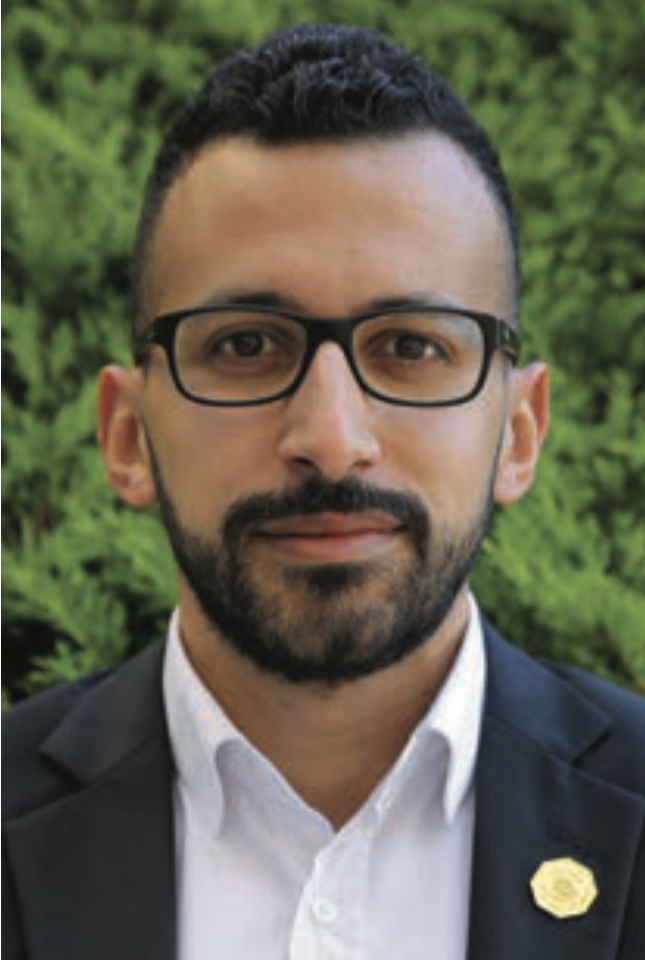
Headshot of Ahmed Hmeedat LL.M.’16

In his remarks during the Class of 2016 Commencement exercises—at which now President Joseph R. Biden Jr. L’68 delivered the formal address—Ahmed Hmeedat LL.M.’16 told of growing up a refugee and the importance of the rule of law.

Hmeedat recounted how he was raised in a refugee camp built near Jerusalem for internally displaced Palestinian people. During high school, he started to study the law, believing that “the rule of law and the development of a strong civil unoccupied society was what my country needed the most.”

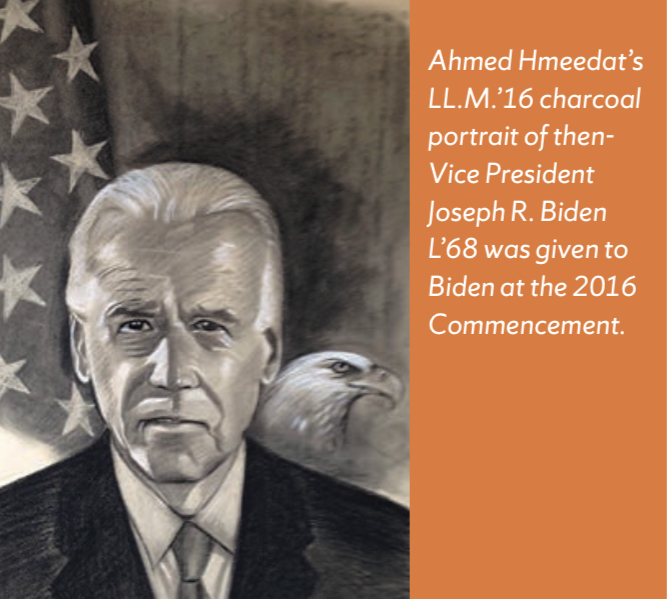
In his speech, he noted the ongoing injustices in Israeli-occupied Palestine, and at its conclusion, he shook Biden’s hand and offered him an open invitation to visit Bethlehem. Biden welcomed the gesture, as well as a gift of a charcoal portrait of himself that Hmeedat had drawn.

After his studies in Syracuse, Hmeedat moved to Washington, DC, to support humanitarian work, first as a legal assistant with Physicians for Human Rights and then at Usilaw, a firm that provides immigration services and solutions.

Although helping immigrants was rewarding, Hmeedat decided to return home, choosing to work at his former undergraduate university, Al-Quds Bard College for Arts and Sciences in Jerusalem.

In addition to the role he plays as a member of the College’s administration, he has developed and now teaches a course incorporating his two passions: art and law.

We recently caught up with Hmeedat to see how his career is progressing in Palestine…

How has your training at the College of Law helped in your current position?
Law school taught me to be organized, professional, and a hard worker. During my time at Syracuse, I familiarized myself with a rigorous study style. I’d spend five to six hours daily at the library after classes. That became a habit even on brutally snowy days.

Also, serving as the LL.M. senator and representative for the Student Bar Association helped my professional journey. In my current role—as an Al-Quds Bard College communication and recruitment officer and a lecturer in human rights and international law—I am constantly applying what I learned at Syracuse Law on different levels. For example, in law school I organized student events, whereas now I organize college fairs and tours. Also at Syracuse, I wrote long legal research papers and practiced presentations; now I teach students the same writing, research, and presentation skills.

What is your fondest memory at the College of Law?
Sharing the Commencement podium with law school deans and Joe Biden and delivering a Commencement speech was a very profound experience. I got to speak to a huge crowd and truly be myself. I loved it because I sensed the trust that my fellow LL.M. students put in me to represent them at that landmark event.

Outside of school, I greatly enjoyed exploring Central New York, and I miss the area’s natural beauty. On Fridays and Saturdays, I hosted gatherings at my home on Ostrom Avenue for international students. These were fun times to socialize and cook together.

What advice do you have for a foreign lawyer who wishes to study in the United States?
I do not like to advise. Advising is about telling people what to do and what not to do. It is like forcing others to try a shoe that only fits my foot.This would not be practical or helpful. I’d rather suggest some thoughts that people might benefit from:

  1. Have a five- to 10-year plan thought out and written down before you graduate.
  2. Find a mentor and ask about their experience.
    For instance, if you have a passion to be a criminal law attorney, find someone who is working in that field. You can get connections with many alumni through the law school’s LinkedIn page. Then, ask that person for a Zoom or phone call. The goal is to find someone in the same field you dream to work in. When you meet, ask how they feel about their current role and what a typical workday is like. Next, visualize yourself in that position and ask if this is what you envision for yourself? If yes, pursue that path, knowing the law school will point you like a torpedo towards that goal. If no, adjust your plan and use the school to further explore the things you are passionate about.
  3. Ensure balance. Try to manage your time to include room for shopping for healthy food, working out, and socializing. Expand your networking circle outside of the master’s degree class. Meet with
    J.D. students and participate in other clubs. Such connections might help refer you to jobs. You never know when you will use these connections, so always network.

“In my current role, I am constantly applying what I learned at Syracuse Law on different levels.”

You’ve been described as a gifted artist and presented Biden with a portrait at your Commencement. Do you think it might be hanging at the White House?!
It was the idea of the law school to present my work as a gift from the college. I visited the art store in Syracuse for nearly 30 minutes to buy the needed supplies. I used charcoal to create the portrait, which took me at least four hours. I sat for quite a while to think about how I could make a detailed portrait that would resemble him. It can be quite easy to create a portrait but to achieve resemblance is quite challenging.

I wasn’t allowed to present the portrait directly to Biden, but it was given to one of his consultants who said it would be delivered as a gift. I can’t say if it is now hanging at the White House, but it would be great if I could know where it ended up!

Ahmed Hmeedat LL.M.’16 charcoal portrait of then Vice President Joseph R Biden L.'68.

How would you describe the relationship between art and law?
For some, the relationship between art and law might be arbitrary; however, I have found a compromise. I see art as creativity—thinking out of the box, being adventurous, and willing to take risks. Law is about rationalization, circumstances, and reasoning. I like to blend these.

Regarding law, I am always ready to take risks and jump into new tracks. I have used both vocations to create the syllabus for a new course, which I taught in spring 2021. In this interdisciplinary course—“Resistance: Art of Activism and Human Rights”—I bridge the gap between art and law. Students read texts about the Palestinian citizenship legislation, and they study art projects that empower their sense of citizenship.

Syracuse Law Leaders in Public Service

Will Barclay L’95

“Think about it. Nine generations. It’s an incredible fact.” William A. Barclay L’95, New York State Assemblyman from the 120th District, who currently serves as Assembly Minority Leader, is referring to his deep roots in the small Central New York village of Pulaski, NY. That’s where his family settled on a farm in the early 19th century, on the banks of the Salmon River, known worldwide for its excellent fishing.

Today, Leader Barclay and his family—wife Margaret and sons Harry and George—live on that 500-acre farm, as does his mother Sara (known as “Dee Dee”), wife of the late H. Douglas Barclay L’61. A Life Trustee of Syracuse University and a former New York State Senator in Albany, NY (1965-1984), who served as US Ambassador to El Salvador from 2003 to 2006, Ambassador Barclay passed in March 2021 (see the In Memoriam for Ambassador Barclay on page 60).

If there’s a thread that connects bucolic Pulaski to Syracuse to Albany to El Salvador, it’s the Barclay family’s stewardship of the natural beauty and resources that abound on and around their homestead. In recent generations, care for the land has grown into a sense of duty and service for the people and communities who share and depend on those resources.

“We’re blessed to have these natural resources,” says Leader Barclay. “These are some of the best fisheries in the world. We do our best to protect them, and that really informs how we take care of our property. It’s something that’s in the blood.”

“I’ve done a lot of things in my life that didn’t leave me with a great impression, but that was not my experience at Syracuse Law.”

Asked whether stewardship of the land informed his decision to go into public service, Leader Barclay points out that while “people provide for their communities in many ways, be it volunteering at church or for not-for-profits. I naturally enjoy politics, which has given me the ability to be a voice for the community where I grew up, that has shaped so many generations of my family.”

Something Deeper

That enjoyment may come from the fact that Leader Barclay—the youngest of five children— had his formative years during the peak of his father’s political career.

“I’m the only one of my siblings who became an attorney and went into public service,” he explains. “When my older siblings left, I was still with my father. I admired and respected what he did, and that was a big influence on me. I always liked the political side of things, and I would go to events with dad.”

But before Leader Barclay followed his father’s footsteps to Albany, there was Syracuse University, another enduring family legacy. “I am an Orange fan, so going to Syracuse was an easy decision,” he observes. “My dad did have an influence on that decision, but there’s also something deeper that runs in my family.”

Leader Barclay notes that he has uncles who are Orange alumni, “and my grandfather on my mother’s side was a three-sport letterman.” Then there are Leader Barclay’s sisters— Susan Barclay G’91 and Dorothy Chynoweth G’88—and niece Sara Chynoweth ’15 and nephew William Chynoweth ’18, G’19.

Of course, many College of Law graduates will know Ambassador Barclay for the White Hall library named in his honor. “It was sometimes tough to be studying in the Barclay Library at 2 a.m.,” says Leader Barclay, noting the portrait of his father that hung outside. “I got a little ribbing for that.”

A Good Feeling

It’s hard to underestimate the influence Ambassador Barclay had on the University. As a Trustee (1979-2007; Chairman, 1992-1998), he chaired the committee that selected Kenneth “Buzz” Shaw as the 10th Chancellor and President, and he was awarded the George Arents Pioneer Medal for Excellence in Law and Public Service in 1984. He also led the University’s first major capital campaign, surpassing the initial $100 million goal by $60 million, enabling endowed professorships, merit scholarships, and other expansive academic goals to be realized. Ambassador Barclay also served as a College of Law Board of Advisors member.

(L to R) Margaret Barclay, Ambassador H. Douglas Barclay L’61 (1932-2021), and Assembly Minority Leader Will Barclay L’95.

Nevertheless, Leader Barclay admits there was some trepidation when he stepped
on the campus after receiving his undergraduate degree from St. Lawrence University in Canton, NY. “Syracuse University is a much bigger institution, and I didn’t know what to expect,” he says. “But starting with Dean Michael Hoeflich, I always felt I was part of a community at Syracuse Law, which was a big concern for me coming from a small place like Canton, but I made great friends immediately.”

Leader Barclay recalls that in particular professors William C. Banks and Robert Rabin made him feel at home. “I’ve done a few things in my life that left me feeling unfulfilled, but that was not my experience at Syracuse Law. I made great friends, got a great legal education, and I left law school with a good feeling and an important foundation.”

Ambassador Barclay hoods Will Barclay at his son’s 1995 law graduation.

Respect & Compassion

After graduating law school, Leader Barclay served as a clerk for the Hon. Roger J. Miner of the United States Court of Appeals for the Second Circuit, before joining the law firm of Hiscock & Barclay, now Barclay Damon, the firm his father first joined in 1961. Whereas Ambassador Barclay specialized in banking and administrative law, the younger Barclay—now a partner—concentrates his practice on business law with an emphasis on contracts and mergers and acquisitions.

First elected New York’s 120th district Assemblyman in 2002, Leader Barclay has risen through the ranks of his Republican conference, taking on a number of key roles. Before being elected Minority Leader by his colleagues in January 2020, he served as Deputy Minority Leader, Assistant Minority Leader, Chair of the Minority Joint Conference Committee, Vice Chair of the Minority Program Committee, and Ranking Minority Member on the Ways and Means Committee.

Asked what influence his father has had on his leadership style in Albany, Leader Barclay is clear: “I watched how my father would manage and treat people. He always treated them with respect and compassion.”

Like his impact on Syracuse University, Ambassador Barclay left an enduring mark across the New York State. In his 19 years in the Senate, he was responsible for more than 500 pieces of legislation, and he served as Chair of the Committee on Judiciary, the Select Task Force on Court Reorganization, and the Senate Republican Majority Conference.

“It’s an honor”

Referring to his own ascension in the state capitol and Republican conference, Leader Barclay says he always looks “at where I can be most helpful, and sometimes that means moving up the ladder.” He notes his father did the same, especially when the call came from President George W. Bush to represent his nation as Ambassador to El Salvador. “My father loves local and state government, but he also thought he could do something on the national level too.”

After his post ended in 2006, Ambassador Barclay turned his attention toward
home and to the Central New York economy. He became President of the Metropolitan Development Association (now the CenterState Corporation for Economic Opportunity) and spearheaded the ambitious Vision2010 regional economic plan.

Ambassador Barclay’s collaboration with multiple stakeholders during his time at MDA again left a deep impression on his youngest son. “He’d get really involved, take everyone seriously, and talk to people from the other side of the aisle,” recalls Leader Barclay. “He always spoke highly of them, listened to them, and was empathetic toward them. That kind of understanding is a skill.”

When asked what drives his passion for public service, Leader Barclay turns again to his abiding love of Central New York and a desire to help its citizens. “Pulaski has given us a lot, and there’s something about giving back,” he explains.

“I’m rewarded by helping constituents because that’s one thing you can really do. Anything I can do to help, I’m willing to do it. I don’t see it as a burden. It’s an honor.”

And is the torch of public service being passed to the next generation? Yes, says Leader Barclay. “I want my kids to be happy and to feel as though they are contributing something to their community as my parents have done,” he says. “We don’t take things for granted. It takes work, effort, and compassion, but it makes me happy. That’s why I continue to do it. And I know my father felt the same way.”

Syracuse Law Leaders in Public Service

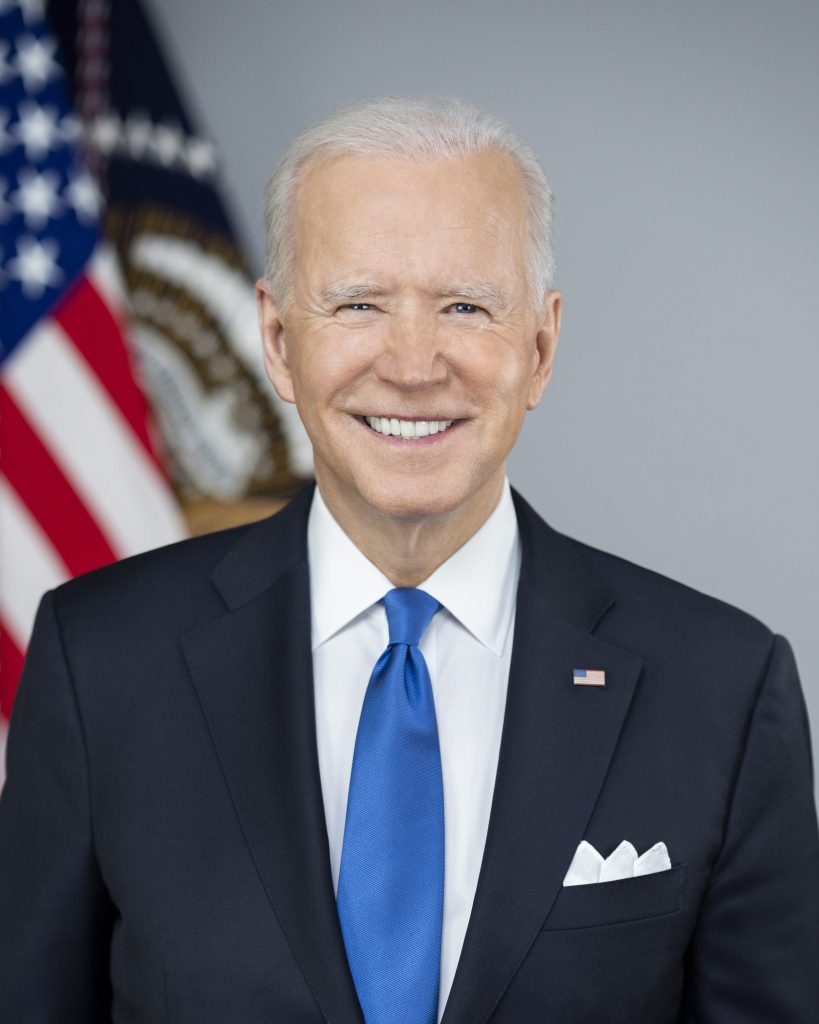
Headshot of President Joseph R. Biden Jr. L’68

President Joseph R. Biden Jr. L’68

In his final speech before leaving for his Jan. 20, 2021, inauguration in Washington, DC, President Joseph R. Biden Jr. L’68 referenced Syracuse, as he recalled the beginning of his life in public service:

“When I came home after graduating from Delaware and then going on to law school in Syracuse, I came home after law school to Wilmington, to our county. And it had gone dark. Dr. [Martin Luther] King was assassinated. Wilmington had been in flames. The National Guard patrolled the streets. That turmoil inspired me to become a public defender: a step I never anticipated would lead me towards this improbable journey” (as quoted in Syracuse Post- Standard, Jan. 19, 2021).

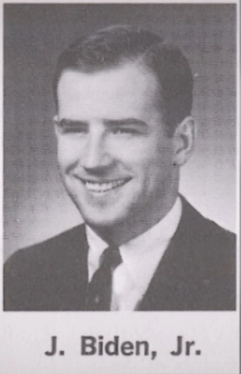
Black and White headshot of President Joseph R. Biden Jr. L’68 when he was in law school.

Biden may have called his journey from law student, to public defender, to Delaware councilor, to senator, to vice president, to the first Syracuse alumnus elected to the nation’s highest office as “improbable.” But to some of those who know him best, the steps President Biden first took in law school always pointed in that direction.

In this article, we deliver a profile on President Biden in the words of his Syracuse friends and professors who taught him or later worked with him, and a new generation of students who are inspired by his story and his service.

Themes emerge through these vignettes, traits that can be seen as touchstones for anyone considering public service in any form, including deep empathy that balances focused ambition, an ethical core that underwrites trust in public institutions, and faith and self-assurance that help to overcome obstacles and, in President Biden’s case, multiple tragedies.

Syracuse University and the College of Law are proud to count a President of the United States among our alumni. But public service is no exception among our Orange family. However you serve your community—whether as a volunteer; a public defender; in the military, the judiciary, or public office; or in any other way on the front lines or behind the scenes—we dedicate this profile to you, and we thank you for your service.

“A job is about a lot more than a paycheck. It’s about your dignity. It’s about respect. It’s about your place in your community.” — President Joseph R. Biden Jr. L’68

In Their Words: Classmates and Other Friends

William J. Brodsky L’68

Chairman, Cedar Street Asset Management, LLC; Former Chairman & CEO of Chicago Board Options Exchange (CBOE)

“The only political race I ever lost was to Brodsky,” has come up many times.
I didn’t know Joe well during my first semester of law school, but I beat him by one vote even though I had never run for Class President before. Later I learned that Joe had held that position all through his high school and college years.

Years later, I held a fundraiser for him in Chicago with high-level executives such as Jamie Dimon, and Joe would publicly announce: “That SOB Brodsky was the only guy who beat me.” It was my political claim to fame!

I remember conversing with Joe in the school lounge sometime before graduation. All of us were focused on the bar exam and finding a job. I asked him what his plan was post-graduation and he said, “I’m going into politics.” My thought was “that’s not a job!” In hindsight, it is clear that he knew exactly what he wanted to do. At that time to me, success meant finding a legal position.

Our lives intertwined in many ways over the years, and that has led to a long, pleasant, and warm relationship. I supported him financially in every election he was in after graduation. Later, two of my sons interned for Joe. My oldest had interned for a member of the House of Representatives. When my son, Michael, and I ran into Joe as we were walking around on the Hill one day, Joe asked who Michael was interning for, and Mike said the congressman’s name. Joe then said to me, “Your other two sons, Stephen and Jonathan better work for me!” And they did!

How does it feel now that Joe is president after all the ups and downs he’s had, and what does it say about him? Determination, character, kindness, and decency.

Roger Harrison ’65, G’68

President, RH Associates

I first met Joe in 1965 while I was a Resident Advisor in my first year of graduate school. Joe was Assistant Resident Advisor to me in Watson Dormitory. We were only a few doors apart. After activities, we’d spend time talking as peers, and we became friends. In fact, I was asked to be an usher at his and Neilia’s wedding, and I asked him to be an usher at my wedding.

I knew of Joe’s ambition to run for political office early on. In 1972, he had a decision to make: run for governor or the US Senate. The Senate played into his long-term goal.

I joined his ’72 campaign as a volunteer, helping with communications and advertising. That period further solidified my relationship with Joe and the Biden family. When he became a senator in January of 1973, I was appointed Administrative Aide (similar to a Deputy Chief of Staff today) for his Washington, DC, office, and I commuted with him to Delaware for a while. When you travel with someone, you get to know them in a way that others don’t.

There’s consistency in his personality. Joe’s the same person in public as in private. He is smart, confident, charming, and opinionated. He stands by his convictions. He’s strong in his ambitions, but not arrogant. His confidence was always contagious, without a hint of superiority. His presidency brings attention and pride to the University, and it bucks the Ivy League trend.

Clayton Hale L’68

Partner and Co-General Counsel, Mackenzie Hughes LLP

Joe and I were good friends. We had a lot of fun hanging out together. He’s a nice guy. In law school, it was obvious he wanted to get into politics. He had a stutter, so he spent a lot of time talking to high school groups. As a little kid, you might dream about being president, but somewhere along the way that changes, so it’s an awesome thought that someone I used to hang out with holds that office.

Jeffrey Harris L’68

Managing Partner, Rubin, Winston, Diercks, Harris & Cooke LLP

I recall being in the White Hall lounge one day and asking Joe what he was going to do after law school. He said, “Go home and be elected to the Senate.” That answer stuck with me— it wasn’t the answer I expected: we were just looking for jobs and to pass the bar!

As a classmate, he was an affable guy. The same traits you see today were how he was in law school: a regular guy, fun to be with, easy to talk to. He’s made for this moment. He has the qualities that are needed, and they are the same ones he had in law school. SU Football Coach Dino Babers has said that Joe Biden being President will make recruiting easier. I hope the law school can be enhanced by his presidency.

Donald T. MacNaughton L’68

Syracuse University Trustee and Member, College of Law Board of Advisors Partner, White & Case LLP (Ret.)

Joe was open, warm, and well-liked. He had no pretensions. That was one of Joe’s appeals as a classmate, and it remains so today. He is a natural leader who brings people together. I see him as the quintessential Irish American politician, much like Tip O’Neal. When Joe ran for Class President, he made sure to meet everyone, and he got along with everyone.

Two years out of law school, I ran into Joe at a New York City Bar meeting. He was running for Newcastle County Council. Why? Joe explained that Delaware is a small state and Newcastle County is the premier county, so it would give him statewide recognition for an eventual Senate election. There was an older Republican incumbent in the Senate, and Joe had eyes on taking him on. He wasn’t casual about it. He had his eyes on it.

Joe gets things done and brings people together. I’m very proud of him, the law school, and the Class of 1968, which has in it a very impressive group of people who have had terrific careers. Syracuse prepared us well for the future. Plus, I can joke with my old law firm partners that their law schools don’t have a United States president!

One dear memory I have of Beau Biden L’94: Joe had given the law school Commencement address in 2006. It was now several years later, and Beau had been invited to give the 2011 Commencement address. I saw him in the old Dean’s library practicing his speech. He was nervous. I told him he’d do fine, but Beau said that he knew he was following in his dad’s footsteps, and he didn’t want to let his dad down.

Beau was a wonderful young man. His speech was terrific and very well received. Syracuse is very proud to have both Joe and Beau as part of the Orange family.

“I’m very proud for the University; having an alum at the highest level will be very good for the law school’s future.” — Robert Osgood L’68

Ed Moses L’68

Partner, Mackenzie Hughes LLP

Joe was conscientious. He and I were close in law school. I met him on our first day and asked what he wanted to do with his law degree. Joe’s idea was to run for office. His goal was clear: to get into politics in order to help his community.

When he was a 1L, as a Resident Advisor, he was always looking out for the isolated kids. He’s a compassionate guy, and he genuinely cared about the well-being of those who didn’t seem to fit in easily. He helped them tremendously. His empathy serves him well.

Robert Osgood L’68

Partner, Sullivan & Cromwell LLP (Ret.)

Looking back now on his journey to Washington, DC, Joe’s rise in politics seems very natural. He was personable as a student, with a winning personality and the best smile in politics.

He was friends with everyone! In one class, when he was called upon by the professor, the professor said “Mr. Bidden.” In 1965, it was gutsy for a first-year, first-semester law student to correct a stern professor in class, even if was over the pronunciation of one’s name. It was slightly brash but done with a dazzling smile.

I recall that Joe was co-chair of the students’ Speaker’s Committee, and he’d look for opportunities to go into the city of Syracuse and speak to people. It was an indicator he’d pursue a political career. He was good at it. His character is not a fabrication, it’s real. I’ve been in the Senate lunchroom with him and seen how he jokes and throws his arm around Republican members as if they were brothers.

I’m very proud for the University; having an alum at the highest level will be very good for the law school’s future.

“Syracuse holds a special place in my heart. I made lifelong friends here at the law school, including my best friend Jack Owens, who ended up being my law partner and my brother-in-law.” — President Biden, Congratulations video to the Syracuse University Class of 2021

John T. (Jack) Owens L’68

Former Deputy Attorney General of Pennsylvania
Chairman, Mediguide International LLC

Joe and I spent up to an hour and a half in the locker room talking during our first encounter. We hit it off. I grew up on Long Island and had some interest in politics, but here’s some guy from Delaware saying he was going to be a senator. I am often asked if he brought up wanting to be President of the United States. I was expecting it, but he never did bring that up.

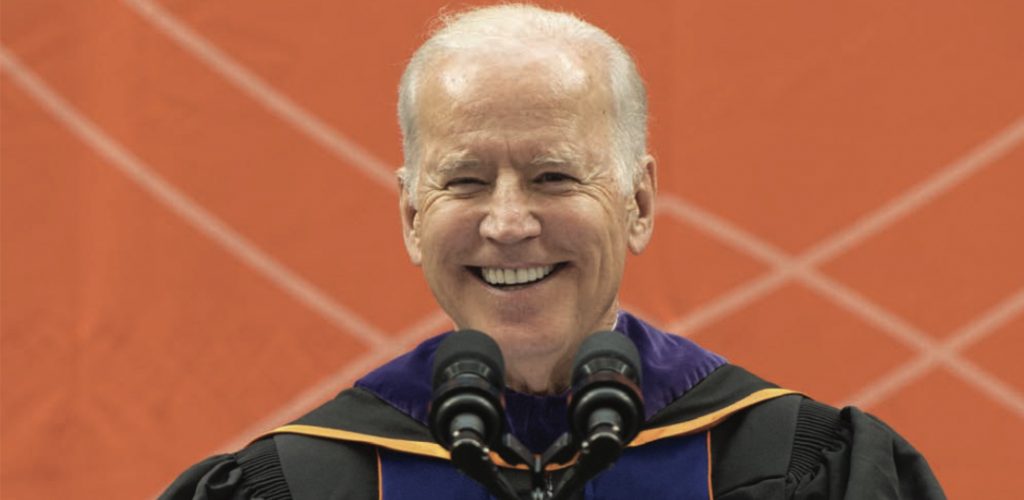
President Biden speaks at the 2016 Law Commencement. with orange background and in graduation robe at podium.
President Biden speaks at the 2016 Law Commencement.

Joe may not have been too serious about books in law school but over time, he became a very serious person. He does not get enough credit for how bright he is. The truth is he’s very smart and strategic. He’s focused on getting things done correctly, and he’s a natural-born leader who draws people to him. His son, Beau, was the same way.

His first wife Neilia deserves a lot of credit for helping him pass the Delaware bar on the first try. Delaware was one of the tougher bars at the time, and she helped him prepare for the test. Neilia was a star. Plus, Joe had the boys [Hunter and Beau] to keep him motivated.

After Neilia died, my wife—and Joe’s sister—Valerie, became the boys’ second mother. When Valerie and I were engaged, we moved in with Joe and the boys, and we lived together for two to three years. During these tough times, not a single cross word was passed between us.

Richard Boddie L’70

Vice President, Coast Community College Association

I remember my Orientation days in 1967. It was crowded in the old building, but I heard what I thought was this Black guy talking. I couldn’t wait to meet this brother. It turned out to be Joe Biden holding court in the room. We became close friends. I remember political discussions in the law school, and it would often be me and him “against” 10 classmates. Joe and I were generally the only two or three voices in any debate regarding what is now called “social justice,” and know that I am still trying to understand and accept that term.

In law school, I knew Joe would have success in politics. He said even back then he’d be the youngest senator ever. He had name recognition in Delaware because his father had the largest Chevy dealership in the state: Biden Motors. In fact, in my day, the law school parking lot had lots of Chevy Corvettes in it—about 15 to 20 of us had them: we got them at cost through Joe!

The Hon. Joseph E. Fahey L’75

Onondaga County Court (Ret.)

The friendship between Judge Fahey and Joe Biden began back in the 1960s. The pair lived in Syracuse’s Strathmore neighborhood, while Joe finished law school and while Judge Fahey was heading into his freshman year at Onondaga Community College.

Joe and his first wife Neilia lived on Stinard Avenue (Neilia taught at the nearby Bellevue School) and I lived on South Geddes Street. He got to know all the guys in the neighborhood. He’d play stick-ball and basketball with us. Anytime the Biden name comes up, we talk about how Joe was my neighbor in law school and what a nice, great guy he is. (As told to the Syracuse Post-Standard, March 23, 2019, and WSYR, Jan. 19, 2021).

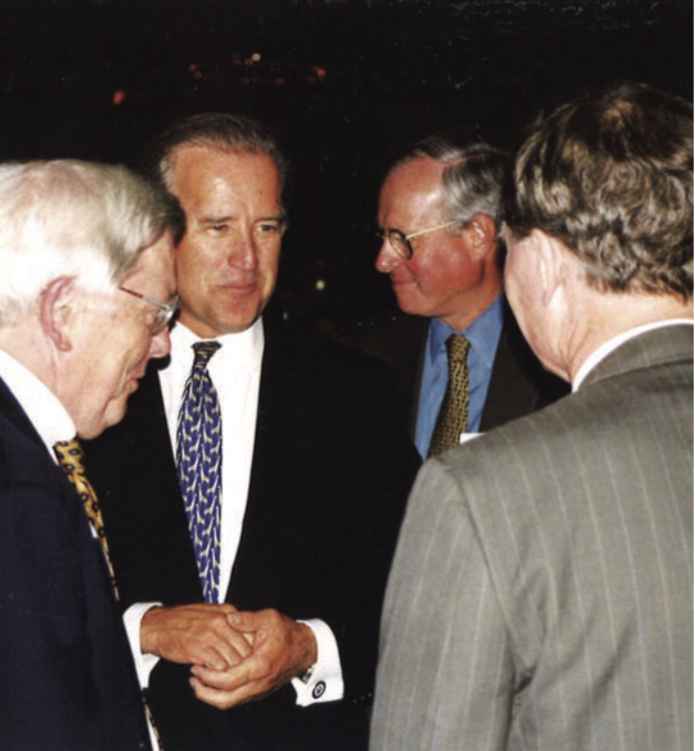
From left, Professor Emeritus Tom Maroney, President Biden, Don MacNaughton, and an unidentified guest at the Class of 1968’s 30th reunion.

Professor Emeritus Thomas Maroney L’63

I’m very proud of him, and I’m proud for myself, not just because I had a little part in his development. I’m a first- generation Irish American. My parents were Irish immigrants who moved to Syracuse. That Joe Biden—an Irish American like me—is President of the United States makes me deeply proud.

I remember one day after class he came in to have a chat with me. It was a long, interesting talk. I came home and told my wife; this student has a presence. I said he’s going to be something one day. I had a good feeling about him. I think he will do what is right. He has experience, he has integrity, and he has compassion. (Quoted in Syracuse Post-Standard, Jan. 20, 2021.)

Robert M. Hallenbeck G’80, L’83

Chair, College of Law Board of Advisors
Becton, Dickinson & Co. (Ret.)

In 2009, when Joe Biden was sworn in as Vice President, I took even greater pride in my degree from the College of Law. Every time I saw the life-sized cutout of him grinning in the Admissions office, I couldn’t help but return his smile.

Twelve years later, although few of us have been able to get to campus in a long while, I still smile when I recall that cutout. Along with all of the other Orange alumni, I feel immense pride in the accomplishments of someone who walked the same halls I did.

President Biden’s election reinforces the pride I feel in the accomplishments of so many of our amazing fellow alumni. From judges to legislators, from entrepreneurs to corporate executives, from the military to public service, and from firms large and small, the College continues to admit, educate, and graduate individuals who through their time, talent, and treasure have made their communities better places.

Michael Hoeflich

John H. & John M. Kane Distinguished Professor of Law,
University of Kansas School of Law
Dean, Syracuse University College of Law, 1988-1994

I got to know the Bidens when they stayed with me while Beau was a law student and I was Dean. Speaking of Beau, he was my Research Assistant during his 2L and 3L years. There was pressure on him coming from a public family, to be sure.

One memory I have of Joe and his wife, Jill, was of a dinner together at the Brewster Inn in Cazenovia. I had asked the owner to find us an area away from the main dining room, to help avoid the predictable traffic jam. As we walked through the dining room, Joe spent an hour going from table to table since he was so friendly and wanted to connect with people.

“The University, its law school, its public policy school, and all its components, value, inspire, and nurture those who serve the public in all walks of life.” — The Hon. James E. Baker

The Hon. James E. Baker

Director, Institute for Security Policy and Law

One of the things I respect about the University and President Biden is they share a common belief that public service has something to do with serving the public, not oneself. Service is not measured by the attainment of a particular position, but by what you do in the position you attain.

In the case of President Biden, this is reflected in his response to the COVID pandemic. He has mobilized the nation; he has communicated clearly and consistently; and he is relying on fact-based science, public health specialists, and logistics professionals.

I also value and respect all University and College of Law graduates who have gone on to serve the public, whether in the military, Peace Corps, public health work, teaching, or elective office. I respect the College as much for the hundreds of lawyers it has sent into government service as much as I do for the emergence of the 46th President. I do not presume to speak for him, but I suspect President Biden would agree.

The University, its law school, its public policy school, and all its components, value, inspire, and nurture those who serve the public in all walks of life. There is no better academic institution in the world to prepare to do so. And now that Syracuse Law becomes only the fifth law school to graduate a President of the United States and Commander-in- Chief, we have added an exclamation mark to this long tradition.

Professor Emeritus William C. Banks

I first met Joe in 1992, when he came to campus to visit Beau. In 1994, he asked me to serve as Special Counsel to the Senate Judiciary Committee that was considering the nomination of Stephen Breyer to the Supreme Court. Even though Justice Breyer’s confirmation was not in doubt, Joe treated the task with the seriousness and dedication that he devotes to all of his public service.

At some point, I either asked him or he volunteered why he was working so hard to learn about Justice Breyer and the issues that he would confront on the Court. He reminded me that he and the Senate need to take the confirmation of justices seriously so as to educate Americans about the role of the Supreme Court. Throughout the process and on the floor of the Senate on the day of confirmation, I could see Joe doing what he does best—providing a basic civics lesson to the American people.

Joe demonstrates a seriousness of purpose; a dedication to our fundamental values of decency, humility, and empathy; and a commitment to make our democracy just a little better.

President Biden’s ascension shows that hard work, persistence, and perseverance has its rewards, and that a law student from Syracuse can go toe-to-toe with anyone and come out on top. No one has overcome the tragedies and picked himself up as Joe has. There has never been a more dedicated public servant. All of us can learn from his example.

President Biden and Professor Emeritus William C Banks in 2016 in front of flags

Ken Knight L’21

President, Student Bar Association, Class of 2021

There have only been 46 presidents, and to have one of them from the College of Law is historic. We must celebrate our victories. Public service has always been a staple of the College. To see this commitment reaffirmed at the highest level is a confirmation for all who are connected to the College.

President Biden also demonstrates that, with public service, there is always more work to be done. There are times when you will be called upon to follow and other times when you will be called upon to lead, but leadership does not outweigh service. Service must be to all the citizens of our country, and I hope to see action that is very intentional and impactful for the communities that have been disparately impacted over countless generations of oppression.

I hope this administration leads us towards equality and beyond performative justice. I am proud to put that challenge in the hands of a College of Law graduate, and I know that greatness awaits all of our graduates.

Troy Parker L’21

President, Class of 2021

When I think that a College of Law alum is President of the United States, I’m inspired and so proud. President Biden’s stature highlights the strong academic work we are conducting at Syracuse.

It shows that with drive and passion, the degree we’re receiving can make a large impact on people’s lives. And it reinforces that a J.D. gives us immense power and privilege, and that we all have a duty to use it for good. It is an honor to share the same alma mater as the President. Hopefully, he isn’t the last.

President Biden meets with Syracuse Law students in Dineen Hall, 2016.

Gabriella Kielbasinski, Class of 2022

President, Class of 2022

President Biden’s commitment to public service is evidence of something that is already made clear within the College of Law every day: that its students, past and present, have a regular and renewed commitment to serving the community at large. It is encouraging to think that our College of Law played a role in shaping the President who is to meet this unprecedented moment. It makes you think, for what future moment is my present education preparing me?

“It makes you think, for what future moment is my present education preparing me?”— Gabriella Kielbasinski, Class of 2022

Kendall Anderson, Class of 2023

President, Class of 2023

We have a vast alumni network, people who are dedicated to serving their communities and their country, and President Biden is one of those alums. Whether it was his defense of public housing in the 70s or his work with President Barack Obama on the Affordable Care Act, he has a desire to defend his community, a desire I feel is shared by many in the College of Law community.

President Biden’s election reaffirms my belief that we can do anything we set our minds to. We can be the change we want to see from the world and push it forward. Seeing an alum in this prominent position is nothing short of inspirational.

A thank you letter from President Biden to then Assistant Dean for External Relations and Administration Janice Herzog Donohue after the 2006 Syracuse Law Commencement at which Biden spoke.
A thank you from President Biden to then Assistant Dean for External Relations and Administration Janice Herzog Donohue after the 2006 Syracuse Law Commencement at which Biden spoke.

Chancellor Syverud on President Biden

In his address to the Class of 2021, President Biden talked about his love for Syracuse University and his appreciation for the education he received here. I can attest to the truth of these words and the passion with which he lives them. He credits the College of Law with instilling the confidence that launched his life in public service. He also expressed unwavering faith in our students’ ability to take their Syracuse education and transform their lives, their communities, and the world.

That faith and optimism are character traits that President Biden has exhibited since he was a young law student. I am struck by how the new generation of law students reflect those characteristics in their comments. Their sense of purpose is infectious and inspiring.

President Biden has talked about his feeling, upon graduating from the College of Law in 1968, that he and his classmates were entering public life at a critical inflection point in our history. He believes this is also true for the present generation of Syracuse University graduates. To declare victory over the coronavirus pandemic, to advance justice and equity for all, and to surmount the global challenges we face will require all the talent, hope, and courage our graduates have to offer. It will take greatness.

As we reflect on an alumnus’ ascent to the highest elected office in our land, we can all be proud that Syracuse University produces graduates who rise to the highest levels indeed. We should all stand taller as Orange alumni knowing that leaders and luminaries continue to build their foundation for making an impact here at Syracuse University.

Dean Boise on President Biden

One of the enduring phrases from President Biden’s inaugural address is, “We will lead not merely by the example of our power but by the power of our example.” Reading their reflections on Biden’s presidency, I know that our students have taken this phrase to heart. They recognize and share his qualities of hope, resilience, and confidence whether or not their politics align with President Biden’s. These are traits that those who know President Biden personally recognize as a constant, driving force throughout his life.

Perhaps these shared qualities are driven by a sense of urgency and destiny. Biden himself has drawn parallels between his generation—graduating into the tumult of the late 1960s—and this one: the Boomers and the Zoomers, if you will. Today’s graduates are facing, as Biden notes elsewhere in his inaugural address, a “historic moment of crisis and challenge.” I have no doubt our students can and will meet these numerous challenges and summon the willpower to turn them into triumph. But they can’t do it alone.

Let’s not forget the role we must play as alumni and supporters of our great College, the role President Biden remembers his alma mater playing in his journey. Whether it be service to your community, ethical and inclusive leadership, or offering guidance to aspiring lawyers that cultivates them beyond the classroom, our students appreciate and draw strength from what you do.

As we look forward, let’s strengthen our resolve to support our students in whatever ways we’re able. And like you, they will not only make us proud of their leadership, they will continue to pay it forward.

President Biden poses with Syracuse Law students during his 2016 visit to Dineen Hall.

Has the COVID-19 Pandemic Ushered in the Drone Age?

By 3L Viviana Bro

COVID-19 has impacted every area of our lives. COVID-19 may have accelerated the incorporation of unmanned aerial vehicles, otherwise known as drones, into our daily lives. Examples include law enforcement activities, assisting in search and rescue operations, inspecting pipelines and infrastructure, photographing real estate, surveying land, disaster assistance, news gathering, and recreational.

Even though the benefits of drone integration seem palpable and extensive, concerns that drone technology may impact and erode privacy and property right have yet to be resolved in the United States. Drones are authorized via remote control by a pilot on the ground and are generally restricted from operating beyond the pilot’s line of sight, over people, above 400 feet, and within certain distances of an airport.

In “Geospatial World,” Mukesh Sharma reports that drone use during the pandemic has been widespread in parts of China and Europe where drones fitted with loudspeakers broadcast coronavirus-related messages and information. The Chinese government deployed drones with infrared cameras to read people’s temperature as they stood on apartment balconies. Some governments deployed drones to enforce COVID-19 restrictions such as forbidden social gatherings that fueled infection dissemination. In the United States and abroad, drones have been used to deliver medical supplies, household goods, and food.

Drone involvement in containing the virus through benign utilitarian missions has contributed to a positive image. Arguably, pre-pandemic drone apprehension is dissipating as drone pervasiveness in the public’s consciousness has increased during lock-downs.

However, many worry that drone proliferation is starting to erode some historical rights. For instance, the Federal Aviation Administration (FAA) has stated that 49 U.S.C grants them the right to create comprehensive regulations for “the use of the navigable airspace … to ensure the safety of aircraft and the efficient use of [that] airspace.” (Unmanned Aircraft Systems: Current Jurisdictional, Property, and Privacy Legal Issues Regarding the Commercial and Recreational Use of Drones, GAO U.S. Government Accountability Office, Sept. 2020). In the GAO report, the Department of Transportation has clarified that the term “navigable airspace” “… includes zero feet (‘the blades of grass’) as the minimum altitude of flight for UAS.”

This understanding clashes with property rights in airspace. Under ancient common law doctrine, property rights in airspace extended to the periphery of the universe (GAO Report). In the 1946 landmark United States v. Causby decision, the U.S. Supreme Court analyzed the concept of ownership of airspace above private property. The Court concluded that landowners have “exclusive control of the immediate reaches of the enveloping atmosphere,” and that they own “at least as much of the space above the ground as they can occupy or use in connection with the land.”

Under the authority to control the navigable airspace, the FAA has granted drones freedom of operation from the ground and up to 400 feet. This authorization, some claim, is incongruent with landowners’ property rights in airspace. To initiate a discussion and bring some uniformity about “the states’ ability to take action against operators of drones who violate existing trespass, privacy and negligence laws,” the Uniform Law Commission (ULC) took the lead in drafting the “Uniform Tort Law Relating to Drones Act” (GAO Report).

According to Brian Wynne and Gary Shapiro in  New Approach to State Drone Laws Balances Privacy and Innovation article, stakeholders flatly rejected the first 2018 version because it presented a “one-sided, unworkable, 200-foot ‘line in the sky’ approach.” The 2019 version has not fared much better. While proponents of this Act perceive it as a compromise between the rights of landowners’ property rights and the drone industry, vociferous critics see is a “radical departure” from current property rights (GAO Report).

While the debate rages in the U.S., other nations, whose views on privacy and property rights differ radically from ours, are moving forward with the development and utilization of drone technology. As a result, these countries are amassing and mining vast amounts of data from their citizens. Some claim that the exploitation of these data allows these countries to make extraordinary scientific leaps, which the United States cannot realize under current notions of privacy and property rights (In the Age of AI, Frontline film, Dec. 2019).

As the pandemic slowly retreats and we emerge from a penumbra of uncertainty, some anticipate a more benign attitude toward drone technology will emerge. A new outlook could enable proponents and opponents to arrive at legislation that makes sense in an increasingly technological world. Three companies (Amazon, UPS, and Wing from Google) have obtained special permissions to deliver beyond visual line of sight. Amazon was granted two patents covering a technology to provide surveillance services via drones, with a “virtual fence” around the property being surveilled.

Balancing privacy and property rights with the social and economic benefits that drones bring is a difficult task. But it must be done because drones are here to stay, whether we like them or not.

2Ls Penny Quinteros and Margaret Santandreu Win 2020 BSK Competition

Congratulations to 2Ls Penny Quinteros and Margaret Santandreu, winners of the 2020 Bond, Schoeneck & King Alternative Dispute Resolution (BSK ADR) Competition. More than 70 watched the final on Zoom, with Quinteros and Santandreu prevailing over the team of 3L Kylie Mason and Shannon Wagner. 

For their final case, argued on Oct. 22, 2020, students negotiated the validity of a sales agreement for a horse, Beautiful Pegasus, after he was stolen from the farm where he was being cared for prior to delivery. Teams had to identify who would be held liable for the theft, and they advocated for a full reimbursement or specific performance.

Third year, second year, LL.M., and JDinteractive online law degree program students took part in the competition. At the final, Mason was named Best Advocate, while Quinteros becomes the first JDinteractive student to win a College of Law intracollegiate advocacy competition. 

“Despite the challenges that a virtual competition brings, students put their creativity to the test and vigorously advocated for their clients,” says 3L Frances M. Rivera Reyes, BSK ADR Negotiation Competition Director. “Without a doubt, we have some incredibly talented advocates in our school.”

Final judges were The Hon. Joanne F. Alper ’72, a retired judge for the Circuit Court of the Seventh Circuit of Virginia; James L. Sonneborn, of Bousquet Holstein PLLC; and Brian Butler L’96, a managing member for Bond, Schoeneck & King PLLC.

BSK ADR 2020 Competition Finalists

“So Extraordinarily Rewarding”

Martin Feinman L’83 Deploys Fellowships to Help Recruit Social Justice Lawyers

Headshot of Martin Feinman L'83

“The idea has always been to do what I can to steer students in this direction,” says Martin R. Feinman L’83, Director of Delinquency Training in the Juvenile Rights Practice at The Legal Aid Society of New York, the largest social justice law firm in the United States.

Over the years, Feinman has steered students toward a career in social justice law by funding stipends for students working in the Children’s Rights and Family Law Clinic, by encouraging The Legal Aid Society to host Syracuse interns and externs and to hire graduates, and by offering students advice and guidance, as he did at an Oct. 28, 2020, panel discussion on careers in social justice, hosted by the Office of Career Services.

Now Feinman is leveraging his generous financial contributions to promote careers in public interest with a focus on juvenile justice. Fellowships are awarded to students who secure externships or postgraduate positions providing criminal defense on behalf of indigent persons and/or legal advocacy on behalf of youth and young adults in the juvenile justice or welfare system.

Life -Saving, Difference-Making

With more than 30 years’ experience in the field—during which he has advocated for children and families, defended indigent adults, trained young attorneys, and advised policymakers—Feinman knows what he’s talking about when he says the need for social justice lawyers is enormous. “But needless to say this work isn’t for everyone and doesn’t always pay as well,” he adds.

“Students have loans to repay and might wonder whether a public interest career can meet their aspirations,” Feinman continues. “I say it can, and through this fellowship program, I want to motivate students to at least try this area of practice.”

Feinman admits that there can be barriers other than financial to a career in his field.

“This work can be intimidating and emotionally overwhelming, especially when you are the difference between an adolescent or adult client’s freedom or incarceration, or when you are representing a young child who has been neglected or abused,” says Feinman. “Then, there are the overwhelmed court calendars and stressed-out judges pressuring you.”

“But on the flip side, it’s just so extraordinarily rewarding,” Feinman asserts. “You are engaged in work that can be life-saving and difference-making.”

Tremendous Need

When he trains young attorneys, Feinman emphasizes that The Legal Aid Society lawyers often support clients unconditionally in ways that nobody else has ever done, sometimes not even family members.

“We are there to do everything we can to help the client,” Feinman explains, “and to be that kind of advocate is inspiring, motivating, and rewarding, but sometimes heartbreaking.”

Feinman admits he has been “crushed” sometimes when adults he has represented have been jailed or youths sent away from home, but that he’s also had “the thrill of making arguments that have changed people’s lives. The potential for job satisfaction is tremendous.”

The need for attorneys at The Legal Aid Society is tremendous too. Feinman explains that the Juvenile Rights Practice group represents children charged as delinquents in family court as well as children whose parents are being charged with abuse and neglect.

“We represent tens of thousands of kids a year, with a team of about 200 attorneys,” he says. “An attorney might be working with 150 clients at a time. And that’s just the tip of the iceberg. On the Criminal Defense side, the numbers are even greater. Then there’s The Legal Aid Society’s civil practice, the mental health side, the criminal defense side … the list goes on and on.”

“I have had the thrill of making arguments that have changed people’s lives. The potential for job satisfaction is tremendous.”

Exploring Paths to Success

How can a student discover if a social justice career is a good fit? Feinman says that the law school years are the perfect time to try different areas of practice “because once employed the more you establish yourself as one type of attorney, the greater the chance that that is what you’ll continue to do.”

“But in law school,” he observes, “there’s a great opportunity to experiment, to see what you are passionate about, and to see if something can work for you in a way you hadn’t anticipated.”

The foundation for that advice is Feinman’s own career. At one point, being a lawyer was the last thing on his mind. He started his career as a social worker, taking an M.S.W. from Syracuse University before working as a therapist and then becoming Program Director of the Adolescent Unit at Hutchings Psychiatric Center in Syracuse.

Feinman recalls interviewing with the social work director at Hutchings, who said he might want to consider law school. “At the time, that was furthest from my mind,” he says.

But a couple of years later, Feinman was enrolled at the College of Law. His advisor in the early 1980s, Professor Richard Goldsmith, soon set him on another career trajectory. “He said, you might think about being a litigator, to which I said, ‘You’re out of your mind!’”

But again Feinman kept his mind open and got involved with the College’s legendary Advocacy Program, then coordinated by Professor Emeritus Travis H.D. Lewin. He fell in love with trial work and criminal law, and his successful three-decade career combining social work, juvenile advocacy, criminal defense, and litigation ensued.

But not before he explored another route. “After a one-year federal court clerkship, I tried the private sector for one and a half years,” Feinman recalls. “I represented banks in foreclosure proceedings and building designers whose designs were flawed. They were entitled to representation, of course, but at the end of the day, I didn’t care for that work.”

Ultimately, Feinman’s advice to students is to expose themselves to the many kinds of law practice during law school. “You never know what will grab you and shake you. And like me, you might find there are unanticipated events that alter the career path you are on.”

Feinman says he hopes his new fellowships will be an incentive for students to explore his practice area, one whose rewards—in terms of changing lives, advocating for the vulnerable, and providing hope and justice—are priceless.

The Schuppenhauers: Making Their Legacy Count

The city of Canandaigua and Canandaigua Lake as seen from the Ontario County Courthouse

Given his deep ties to his community, John A. “Jack” Schuppenhauer’s L’76 advice to law students should come as no surprise: “I’d say to students that the law is an honorable profession. It provides an opportunity for an attorney to help others and serve their community.”

Jack has served his community as principal of the Canandaigua, NY-based Schuppenhauer Law Firm for 43 years. He was born a few miles from the picturesque Finger Lakes town, located on the northern end of Canandaigua Lake, attending Canandaigua Academy before taking a bachelor’s degree from Ohio State University and an M.P.A. from Northeastern University.

Jack returned to Central New York to study law at Syracuse. He entered the legal profession in 1977 and started his eponymous law firm in 1981. Six years ago, looking to the future, Jack took on a partner—his daughter Erika, a 2009 Syracuse University graduate with a double bachelor’s degree in political science and policy studies and a J.D. from University at Buffalo School of Law.

Now, to honor their family’s ties to Central New York, Syracuse University, and the College of Law, Jack, Betsy (his wife of 34 years), and Erika have created the Schuppenhauer Family Scholarship for College of Law students, through a bequest in their wills. “It’s our way of giving back to the University and College and to acknowledge the future it provided to us,” says Jack.

“It’s Easy as Can be”

As a general practice law firm, estate planning, trusts, and wills are among the services the Schuppenhauer Law Firm offer their clients. To set up their own family bequest, Erika and her parents sat down to look over their wills and decide what legacy this communityminded family wished to leave. “I wanted my will to coincide with my parents’,” says Erika. “Syracuse University was on the top of our list of organizations to bequeath to, and dad especially wanted to donate to the law school.”

The next step was for the family to contact the College of Law Advancement and External Affairs team. “They walked us through the process,” Erika continues. “It’s as easy as can be, and now our wills contain specific bequests to the University and College.”

Located along Canandaigua’s historical, picturesque Main Street—surrounded by nineteenth century brick buildings with mansard roofs and decorative cornices— Jack says his law firm “has given me a great opportunity to get to know people in my community and become involved in local organizations.” Both Jack and Erika volunteer for local charitable organizations, and Jack has served as a part time Canandaigua City Court Judge since 1996.

“Having a small practice provides you with a real identity in the community, as opposed to a large firm to which you might commute from another community,” Jack says, adding that both he and his daughter live only about a mile from their office.

The Schuppenhauers in front of their law firm holding a Syracuse University banner

“Take that Challenge”

A family law firm in a pretty Upstate lakeside town might conjure up images of times past, but Jack and Erika acknowledge that technology is evolving the way they practice. “People Google everything now,” observes Erika. “Clients are internet educated, and they shop around. They are more likely to want ’drive by’ legal advice these days.”

“The nature of the law consumer has changed, and people are more astute, and more demanding,” agrees Jack, adding that since his career started in the 1970s, government and statutory regulations also have dramatically changed the legal profession.

Although a relatively new law graduate, Erika says these technological changes appear to have accelerated since she passed the bar. Students, she says, need to pay attention to them.

“I graduated six years ago, yet even I did research in books. Everything is online now, and you have thousands of cases at your fingertips to comb through. Students definitely need to be computer savvy,” she explains, adding that she’s also had to learn how to be a businesswoman as well as how to provide general law services. “Students need to gain customer service skills and business acumen, especially for a small practice.”

“Take every opportunity to learn something new every day.”-Erika Schuppenahuer ’09

Erika admits that when she started out at the Schuppenhauer Law Firm, she had much to learn about how to practice law and help run a business. Then again, her relationship with her mentor is a pretty solid one. “I’ve been so lucky to learn under my dad and to have someone who has taken me under his wing, while being very patient!”

Given her learning curve since graduating law school, Erika’s own advice to law students shouldn’t come as a surprise either. “Take every opportunity to learn something new every day,” she says. “General practice challenges you every single day. So take that challenge and go at it. There will be bumps in the road, but you should keep going!”