Professor Lauryn Gouldin recently spoke with the Washington Examiner concerning the recent Supreme Court of the U.S. ruling in United States v. Rahimi and its potential impact on an appeal in the Hunter Biden Federal gun case.
Gouldin said the Supreme Court repeatedly noted that Rahimi had notice and process for being subject to a domestic violence protective order, whereas Biden did not.
“You don’t have any of that notice or process that attaches for Biden’s case. That is a lot of what his defense team was challenging before the trial and at the trial.”
Gouldin also spoke with Law 360 on the cases (may be behind paywall.) Here, she says a review of the drug addiction cases will also require a “completely different” historical analysis given that opium and other drugs were not illegal when the Second Amendment was enacted.
More than 50 faculty, students, alumni, and friends from Syracuse Law and Syracuse University along with dozens on Zoom from around the world, attended the program “The Past, Present, and Future of Disability Lawn and Policy at the College of Law” to honor the retirement of Professor Arlene Kanter.
Kanter’s contributions to the lives of numerous Syracuse Law students and the global legal profession during her four-plus decades of service are difficult to wrap one’s head around. There are countless books, articles, presentations, committee memberships, guest teaching positions, not to mention co-counsel to two U.S. Supreme Court cases, and so much more, it is hard to narrow these accomplishments down to a few highlights.
There are, however, two lasting accomplishments that will continue to make an impact on the world at large:
Kanter established the Syracuse Law Disability Law and Policy Program (DLPP) in 2005 which has evolved into one of the most comprehensive disability legal studies programs in the country. DLPP draws J.D., LL.M., S.J.D., and visiting scholars from around the world to immerse themselves in all aspects of disability law and its intersection with international human rights law.
From 2001-06, Kanter worked with the United Nations committee on drafting the Convention on the Rights of People with Disabilities (CRPD). Since then, she has collaborated with governments and disability organizations on implementing the CRPD in more than a dozen countries and counting.
In Their Words:
“As we gather today, we owe a big thank you to Professor Arlene Kanter for founding the DLPP back in 2005 and serving as the director of the program for nearly 20 years. Under her leadership, the DLPP has grown into a center that is not only integral to the College of Law but also to the broader university.”
“You are a beloved teacher, and that is to say not only for the law students and [those] in the School of Education and other places, but for all of us. You have always committed to teaching us to make us more aware. Your path-making ways have also inspired all of us to be and do our best.”
Paula Johnson, Director of the Cold Case Justice Initiative
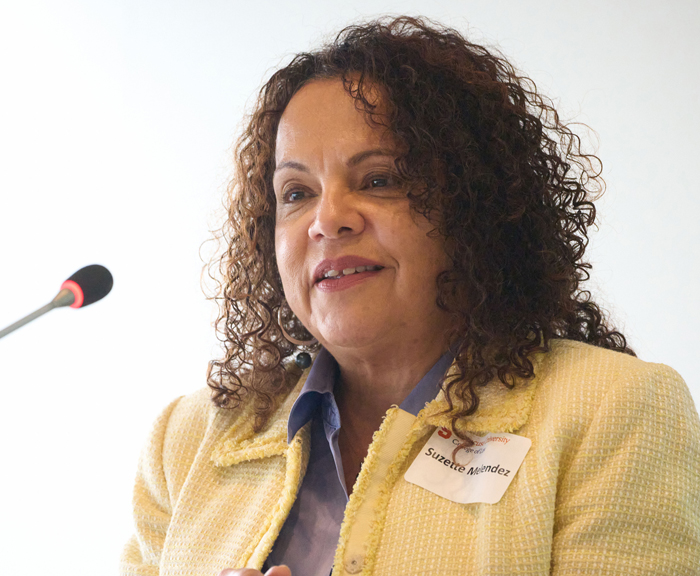
“There were several instances when the Children’s Rights and Family Law Clinic represented members and families that were members of the disability community. When I needed to seek out disability expertise, and someone who knew the area at both a theoretical and practical level, for me there was only one answer. It was Arlene. Arlene always made herself available as a collaborative partner who could consult to make sure that I was serving our clients to the best of our ability and withwhom I could explore the latest and greatest developments in disability law that would provide the best option for our clients.”
Suzette Meléndez, Faculty Fellow for the Office of Strategic Initiatives in Academic, Affairs and the Office of Diversity and Inclusion, Syracuse University; former director of the Children’s Rights and Family Law Clinic
“You have fostered an environment of inquiry and critical thinking and most importantly to me, you have delivered real change in our university community. You secured a commitment that our university would ensure that our newly-constructed buildings not only ensure accessibility but also move beyond mere compliance to ensure equity through your advocacy on the campus facilities advisory board. Simply put, your voice matters in the room. It matters for people with disabilities and all of us.”
Cora True-Frost G’01, L’01, Bond, Schoeneck & King Distinguished Professor
“We are truly indebted to your leadership, your energy, and your passion for all things disability rights. I know you’ll continue to be a strong force for change, but I also hope you get to enjoy a little bit more time with family and friends and the beautiful sun and sea of Cape Cod.”
Beth Ferri, Associate Dean for Research, School of Education
“Every time I return to SU for alumni events or to speak with disability law students, I am astounded by the diversity of students and professions and interests that Arlene has cultivated within the DLPP. Every time I’m at an event I am inspired by the law students and alums. It’s an amazing legacy.”
Julie Morse G’05, L’05, Attorney, Legal Services of Central New York
“Although I did not have the benefit of being one of your students, the lessons I’ve learned from you transcend the classroom. Evidenced here today, your work and your humanity have left an imprint on so many and the seeds you planted continue to grow.”
Andrew Horsfall L’10, Assistant Dean of International Programs, Co-Director, LondonEx
“What strikes me is that my story is not really special when you look at the alums in this network. She’s created a who’s who network of people in disability rights. I think it’s important to summarize what an impact she has had on the world if we just think of the number of people with disabilities who were her alumni’s clients as part of a class action, as part of policies we are changing, we quickly get to millions of people that were positively impacted by Arlene and whose lives have her fingerprints on them.”
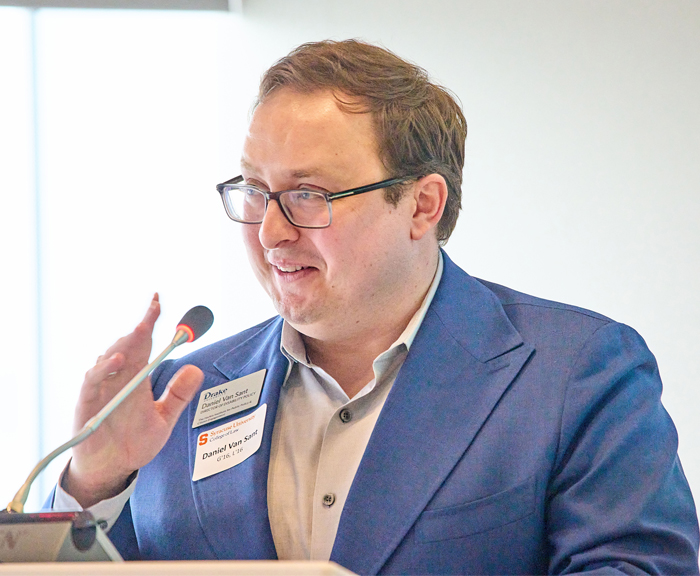
Daniel Van Sant G’16, L’16, Director of Disability Policy, The Harkin Institute
“Professor Kanter is an internationally recognized scholar in disability law. And she writes incisive articles defending disability rights. Yet she is a humble, warm, and friendly person. I am so grateful and honored to be Professor Kanter’s student as an LL.M. and S.J.D. As an advisor, she is guiding me through my dissertation and encourages me to explore new methods in legal study. I could not ask for a better Ph.D. advisor.”
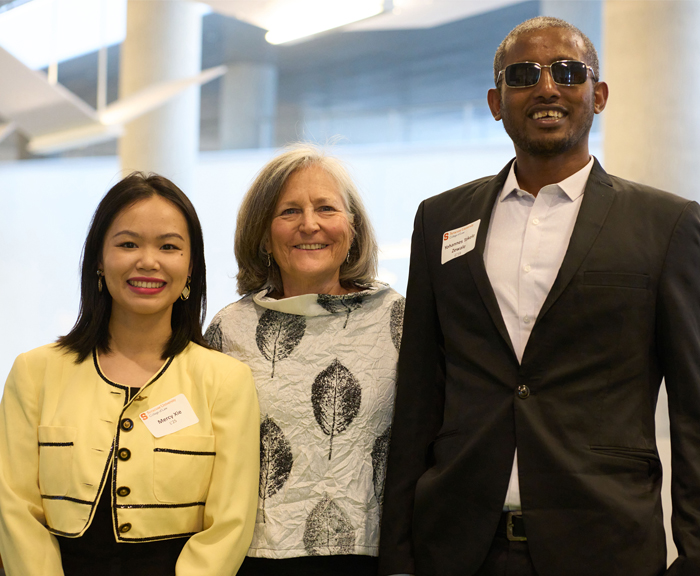
Renci “Mercy” Xie LL.M.’20, S.J.D. candidate
“As I think of the past very busy year as I settle into my life in Syracuse, one thing has been constant—Arlene’s support. In the disability law field, Arlene is nothing short of a legend. The College of Law has a reputation as a disability law and policy leader thanks to Arlene’s groundbreaking work. As I continue to think of the future of DLPP, I think about continuing to live up to Arlene’s standards and staying true to her values.”
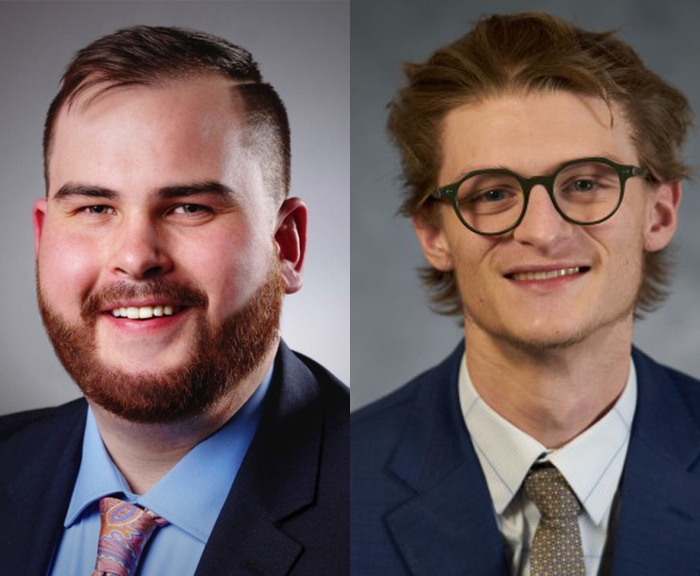
The team of 3Ls Jackson Dankert and Brett VanBuren have won the 2024 New England Hockey Arbitration Competition (NEHAC) hosted by Western New England School of Law.
NEHAC is a moot court competition centered on hockey arbitration offered to law students from schools across the U.S. and Canada held every summer virtually. In the first stage, Dankert and VanBuren represented two players seeking arbitration as well as their corresponding hockey teams during three rounds of competition. After the first stage, the Syracuse Law team scored highest amongst all competing teams, earning a spot in the finals where they prevailed in one final round. VanBuren was selected as M.V.P. of the competition.
Before the competition, Dankert and VanBuren submitted two 10-page briefs in support of both the player side and the club in one of the arbitration scenarios. They then prepared scripts and slides to present at the competition. Daniel Greene L’16, an associate at Newman & Lickstein, served as their coach. Greene competed at the Hockey Arbitration Competition of Canada and took second place in 2015.
Dankert is currently a Mergers and Acquisitions summer intern at KPMG and is Vice President of the Sports and Entertainment Law Society as well as being a member of the Travis H.D. Lewin Advocacy Honor Society Alternative Dispute Resolution Division, and Syracuse Law Review.
VanBuren is a US Army JAG Corps summer intern assigned to Southern European Task Force – Africa where he competed in the NEHAC from Vicenza, Italy, President of the Corporate Law Society, a member of the Journal of International Law and Commerce, and a member of the Travis H.D. Lewin Advocacy Honor Society Alternative Dispute Resolution Division. He was recently appointed the Law Student Representative to the Syracuse University Board of Trustees.
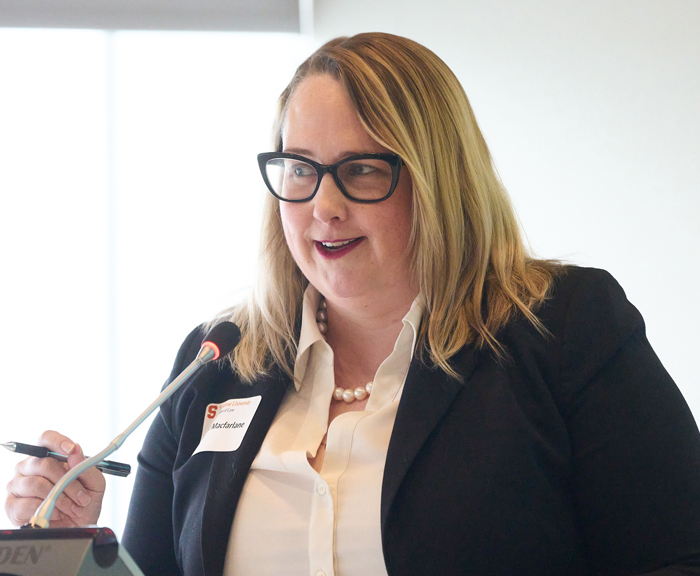
Katherine Macfarlane, a leading expert on disability law, civil procedure and civil rights litigation, joined the College of Law last summer to lead the groundbreaking Disability Law and Policy (DLPP) program. The program was founded and led by Professor Emerita Arlene Kanter, who retired in June after 35 years of teaching.
Macfarlane’s disability law research and advocacy focus on reasonable accommodations in the workplace and higher education. Macfarlane is herself a person with disabilities. She has had rheumatoid arthritis, an autoimmune disease that causes joint deterioration and visual impairment, since childhood. Her lived experience with disability is one reason she’s excited to direct the DLPP program, she says.
Before joining the faculty as an associate professor last August, Macfarlane served as special counsel for disability rights in the U.S. Department of Education’s Office for Civil Rights, an appointment supported by a grant from the Ford Foundation’s U.S. Disability Rights Program. She previously was an associate professor at Southern University Law Center and the University of Idaho College of Law. She also was an assistant corporation counsel in the New York City Law Department, where she served as lead counsel in federal civil rights actions and an associate in Quinn Emanuel Urquhart & Sullivan’s Los Angeles and New York offices. After law school, she served as a law clerk for the District of Arizona and the U.S. Court of Appeals for the Ninth Circuit.
Katherine Macfarlane (Photo by Marilyn Hesler)
In addition to her disability law research, Macfarlane writes at the intersection of federal civil procedure and civil rights litigation. Her article about the modern implications of 42 U.S.C. § 1983, the landmark civil rights law originally passed as part of the Ku Klux Klan Act of 1871, has been cited twice by U.S. District Court Judge Carlton Reeves, most recently in Green v. Thomas, an order denying qualified immunity that received national media attention.
New DLPP Initiatives
Macfarlane appreciates that Kanter’s DLPP groundwork has provided an understanding of disability law and policies here.
“The University’s understanding of what it takes to support people with disabilities means I can jump right into the kind of programming I want to do. Things I might have had to fight for at other institutions are a given at Syracuse. That’s so refreshing.”
Through DLPP, Macfarlane wants to empower law students to see themselves as disability law scholars and future academics. She hopes to make this year’s inaugural student scholarship-focused symposium a yearly tradition and continue hosting discussions with cutting-edge disability law scholars and advocates. She plans to spotlight the novel disability law work being done by several law faculty. She will also continue to offer disability knowledge workshops and trainings to departments and faculty at Syracuse and around the country and wants to involve DLPP students in those efforts. She especially hopes to maintain the University’s reputation as a destination for law students interested in disability law and law students with disabilities.
“I want for us as a university to think beyond compliance and consider what it takes to continue to attract students and faculty who have disabilities—how to remain an institution where disabled individuals are supported and succeed,” she says. “That means we need to think through the experience of people with disabilities from the minute they arrive on campus and about how to streamline the process of obtaining a reasonable accommodation, for example. We need to ask how much time, money, and health insurance a person with disabilities is required to expend and how we can lessen those burdens. Our conversations should reach far beyond a discussion about accessible design and dive into the day-to-day experience of people with disabilities.”
Early Law Interest
Macfarlane lived in Canada and Italy in her youth and always wanted to go to law school. When she moved to the U.S., she was drawn to and inspired by U.S. civil rights movements and civil rights law. Congressman John Lewis is one of her heroes. Her disability law specialty came about later in her career.
“I have been disabled for as long as I can remember, but in law school, I was too self-conscious to identify with the disability community or focus on disability law,” she says. “Well into my twenties, I lived my medical experience in secret, hiding my constant procedures and chronic pain from even my closest friends. Finding the disability community and disability law has been pretty life-changing for me in that I can finally be myself. I became an expert in disability law because I had to in order to protect my own rights, but then I realized I loved this area of the law and the people doing this work, and I never left.”
People with disabilities are underrepresented in the practice of law and academia, Macfarlane says. “Not only is there a real need for people with disability law experience, there is also an absolute need for people with disabilities to go into this area of law. Having more disabled people in the practice of law is a readily attainable goal. But the spaces they work in have to be accessible, too, so law schools, courthouses and law firms have to constantly audit their physical spaces and their disability-related policies,” she says.
DLPP As Leverage
DLPP provides a forum to leverage both objectives, Macfarlane says. “I also love that I can expose students with disabilities to this area of law and advocacy and help give them the confidence to exist as a person with disabilities that I didn’t have myself as a law student. And this generation of law students makes me so excited! They understand what access requires. I’m very interested to see what this generation of young people do when they enter the practice of law or when they come into positions like mine.”
A focus on the specialty requires careful monitoring of litigation and Supreme Court decisions to guard against a decline in disability rights, Macfarlane says. She cites a recent attempt to narrow the Americans with Disabilities Act that could allow businesses to forego making their establishments accessible. She finds it concerning that some recent Supreme Court decisions may foreshadow a lowering of America’s commitment to disability rights as well.
That’s why the DLPP’s efforts are essential, Macfarlane says. “I’m always pitching DLPP to students. Disability law is a vital, cutting-edge area of law; it’s always changing. Many of us come to this specialty because we’re fired up about disability rights in our own lives. That’s why I’m so pleased to be here; it’s tremendous that a person with a disability is at the helm of this program.”
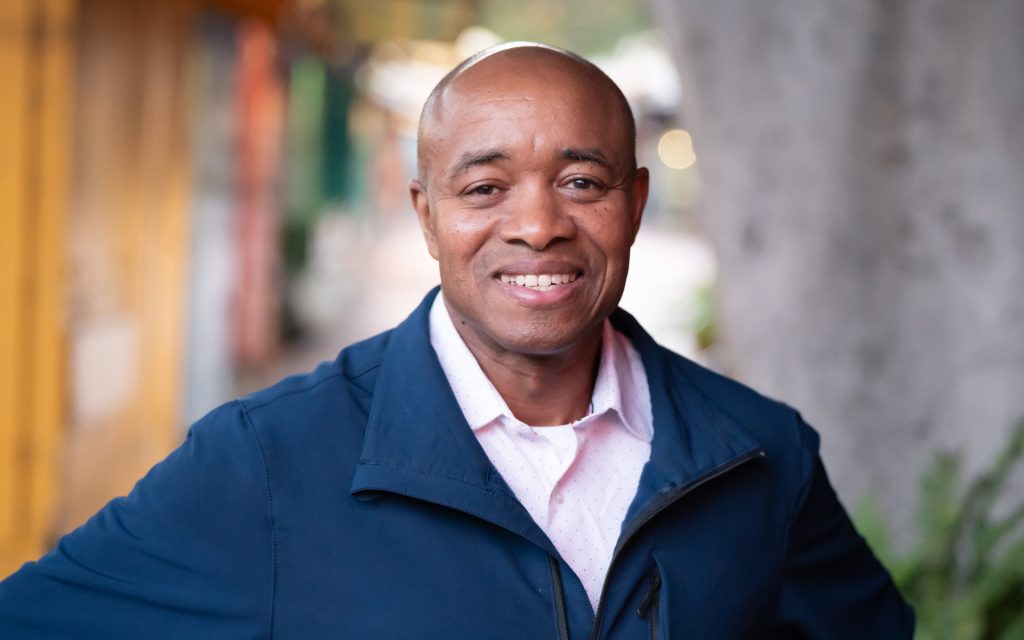
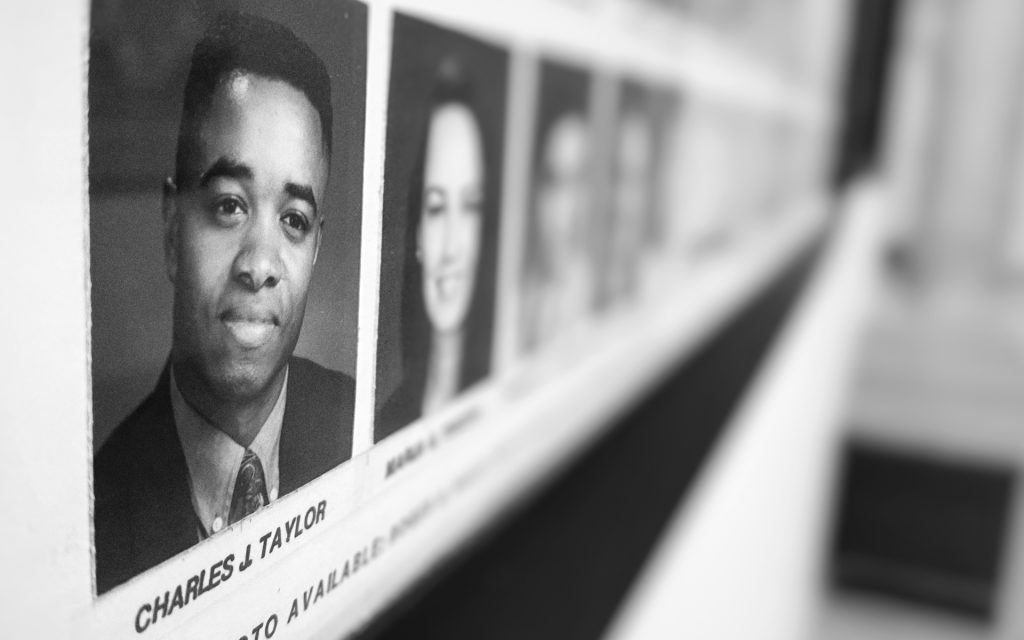
Charles Taylor L’96 was working on his bachelor’s degree in business administration at the University of Southern California (USC) in the early ‘90s when he went to a law school forum and spoke to a representative from the Syracuse University College of Law. His interest in law started around the time of the beating of Rodney King by four Los Angeles police officers and the subsequent riots when those officers were acquitted by a jury. Then, Taylor was also an enlisted sailor assigned as an air traffic controller in the U.S. Navy Reserves. He was weighing a career in aviation and aerospace, “But,” he says, “law school was a rare opportunity, and I wanted to help make the world a better place.”
Taylor was invited to a six-week pre-law program at Syracuse Law, which gave him a first-hand experience of what law school would be like. It made a positive impression, and he decided that law school would be his next step. So, the native Californian moved across the country to attend Syracuse Law.
He recalls several mentors at the law school, including the late Professor C. Roderick Surratt, who taught contracts law; then-Dean Daan Braveman, a distinguished lecturer who was instrumental in teaching him constitutional law; and Professor of Law Paula C. Johnson, who taught criminal law.
“The breadth of the faculty had a positive impact on me, and it kept me interested in pursuing the law,” he explains.
Taylor also participated in the Black Law Students Association and worked at the Housing and Finance Clinic, which gave him an opportunity to help those from the local community with issues related to housing and finance.
After graduating with a law degree, Taylor worked in insurance and finance, while also continuing his commitment to the U.S. Navy Reserves for a time. In addition, he earned an LL.M. in taxation from the University of San Diego School of Law, which led him to a position as tax counsel for the California State Board of Equalization. In 2008, he became a staff counsel for the Office of the State Controller. In his current role, he works for State Controller Malia M. Cohen, who is the chief fiscal officer for the state of California. His responsibilities are primarily focused on unclaimed property issues, where constituents are trying to claim funds from bank accounts or insurance policies, for example, that have somehow been lost and turned over to the state. His job is to work to return money that belongs to the proper owners.
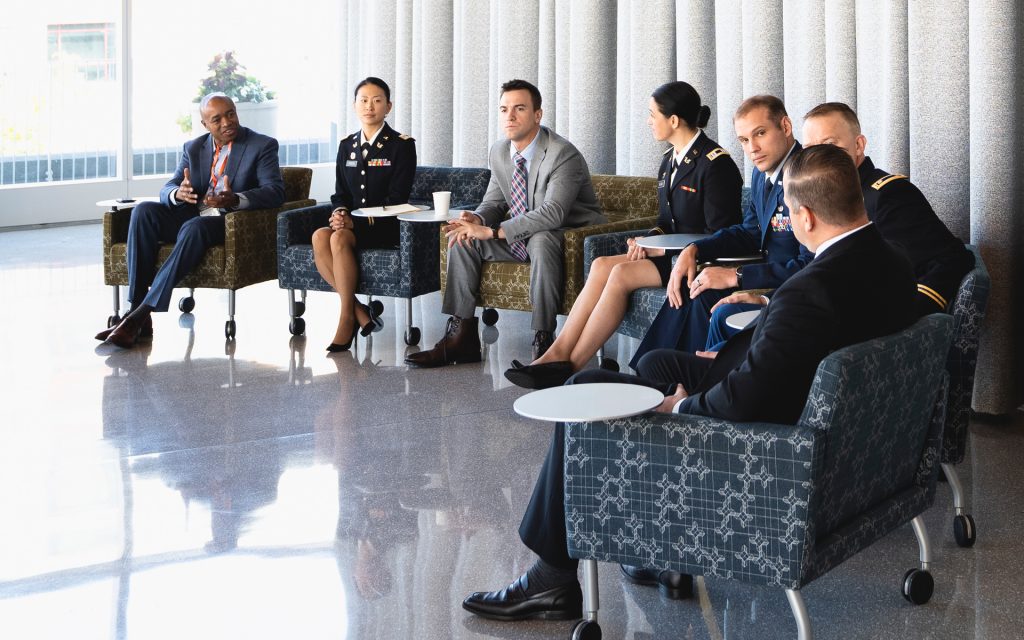
Charles Taylor L’96 addressing students and alumni at the NVRC in 2022
As his career grew, he also stayed true to his military roots. In 2003, Taylor left the U.S. Navy Reserves and joined the U.S. Army Reserves, as part of the Judge Advocate General’s (JAG) Corps, where he remains today as a lieutenant colonel and deputy commander of the Army Reserves 4th Legal Operations Detachment based at Fort Totten in New York. As deputy commander, Taylor executes the unit commander’s vision and guidance, and provides training and legal services in support of a ready, responsive and globally engaged Army and Joint Force, while also working on the legal needs of soldiers, civilian military employees and military families.
His involvement with the Army is part-time, requiring him to travel cross country once a month and two full weeks a year, but he remains committed to his military service.
“It’s a balancing act,” he says of his parallel careers. “My role with the Army is now more of a management function, but managing people is one of the biggest effects that the military has,” he says, noting that his skills learned in the military have helped him be a better attorney in his role with the controller’s office.
Being stationed with the Army in New York State gives Taylor the opportunity to visit Syracuse University on occasion. He has visited campus twice in the past few years, once for a Syracuse Alumni Law Association meeting, and another, last year, for a career program with the University’s Office of Veterans Affairs, talking about the JAG Corps. In March, Taylor also had the opportunity to interact with some of Syracuse Law’s alumni and JDinteractive (JDi) students who were attending a residency on bankruptcy law in Los Angeles. He hopes to look for more chances to keep his connection with Syracuse Law going strong.
Taylor is pleased that he made the decision to take his career in the direction of the law and encourages others to do the same.
“If you’re interested in the law, pursue your dreams,” he says. “Talk to other people who you can identify as mentors and who can help you get through the rigors of law school. And, finally, remember to build relationships—and maintain those relationships to the best of your ability as you progress in your legal career.”
Distinguished Visiting Lecturer David Cay Johnston was recently interviewed by Salon about the verdict in the Donald Trump business fraud case, his sentencing, and the upcoming election, among other related topics.
Regarding sentencing, Johnston says:
“Donald Trump can bring his lawyers and they can certainly try to moderate what he says in the pre-sentencing interview. But the pre-sentencing report prepared by a probation officer will likely not contain anything new in terms of who Donald is or anything the judge doesn’t know. What it will provide the probation officers with is opportunity to judge whether he can even fake contrition, and that’s where Trump has an irresolvable problem. Roy Cohn taught him that if law enforcement comes after you then you attack them. They are corrupt. They are dishonest. You are as pure as the fresh fallen snow. Never, ever give an inch. You are perfect. Well, that’s not going to work with the probation officer and Judge Merchan. But that approach will work with Trump cult followers and too many other members of the public.
I think the meeting with the pre-sentencing probation officer is an opportunity for Trump to manipulate, but it’s also a high risk that he will just dig himself further. At the sentencing hearing, if the judge calls on Trump to speak, I think there’ll be a real crisis for him. He will know that he can’t apologize. Trump cannot say “I was wrong.” All he can do is attack the judge, and that’s an invitation to a longer sentence. That’s how the system is supposed to work. If you refuse to acknowledge and take responsibility for wrongdoing, you’re sure to get a longer tougher sentence than somebody who says, “Yeah, I screwed up, and I recognize that now.”
I will be surprised if Judge Merchan does not give Trump some time behind bars. That could be the absolute minimum of 30 days. More likely, it may be much longer up to the four-year maximum.”
Syracuse native and first-year law student Luke Overdyk ’22 (FALK), L’26, has had an appreciation for the environment for as long as he can remember. He attributes that to his parents taking him and his three brothers on hikes, enjoying nature documentaries on family movie nights and instilling an appreciation of the beauty of Central New York.
“Although I was interested in sports, I found myself more excited about my environmental classes,” he says. Overdyk met Payton Sorci L’22, who was studying at Syracuse University College of Law at the time. Both had common interests in sports and giving back to the community, and soon Sorci became a friend and mentor who further encouraged Overdyk to study law as a way to combine his interests.
Overdyk took a sports law class at Falk and later merged his interests in the environment for his senior Capstone, working at Syracuse University’s Sustainability Office as an intern for the Atlantic Coast Conference (ACC) Sports Sustainability Team. There, he worked with other ACC schools to learn how they developed processes to reduce emissions and limit waste for their athletic programs.
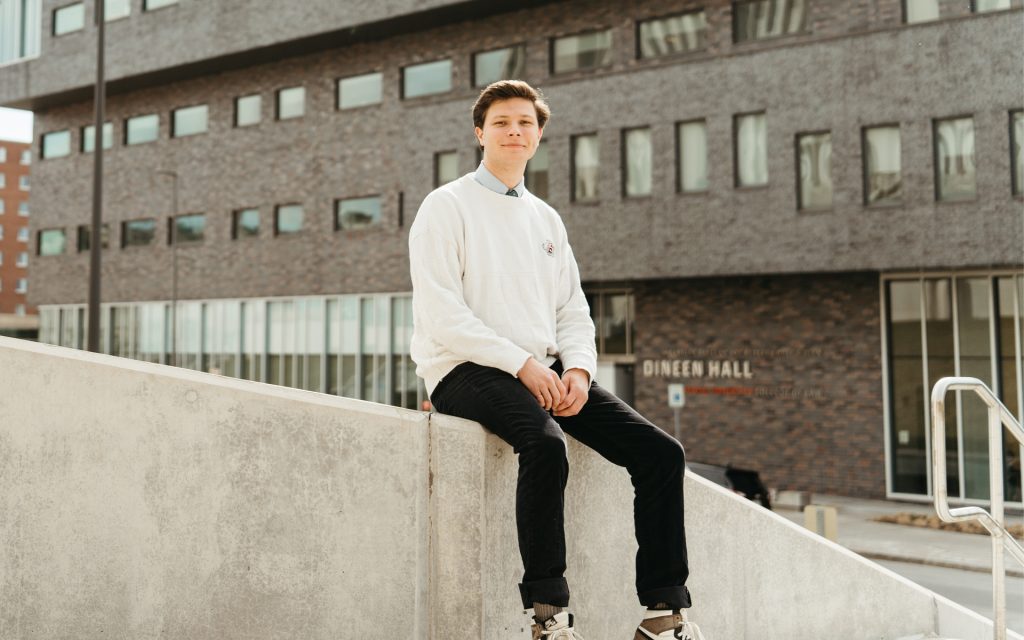
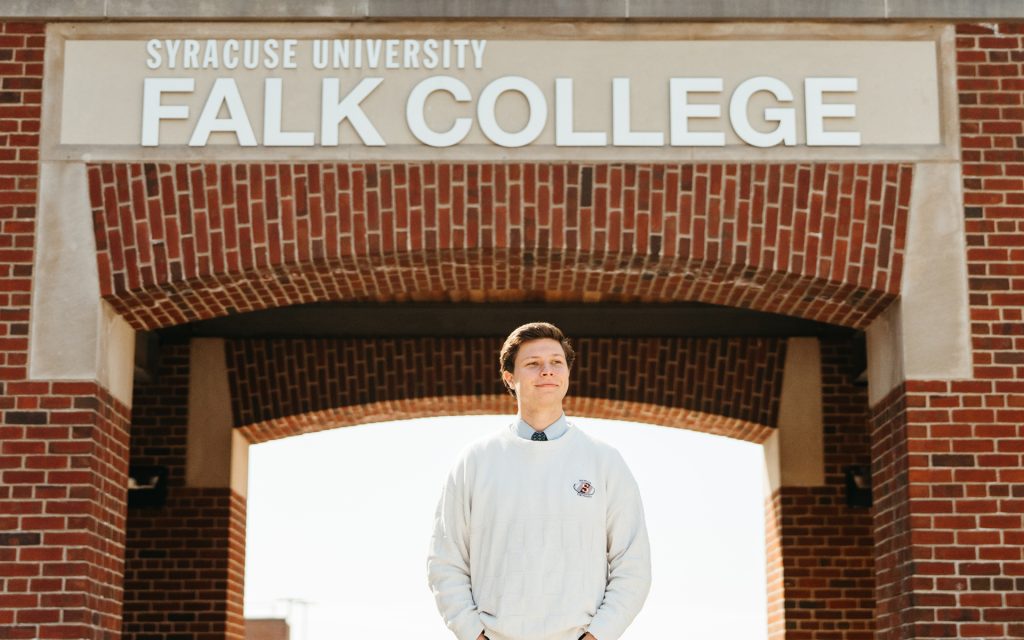
Luke walks on campus in a vintage Syracuse University sweater that once belonged to his grandfather and College of Law alumnus, Bernard Mahoney L’69.
Ultimately, he decided he wanted to go to law school, but not just any law school—Syracuse University College of Law. It was the only place he applied to, and he is proud to be the third generation of his family to attend.
”I wanted to be like my mom, and a law degree resonated with me,” he says. “And, of course, my dad, who is an engineer, has also been tremendously supportive of my career decisions.” (Overdyk’s mom, Joanie Mahoney ’87 (WSM), L’90, is president of SUNY ESF and a former Onondaga County executive. His late grandfather, Bernard Mahoney L’69, was a Syracuse Common Councilor and member of the New York State Assembly.)
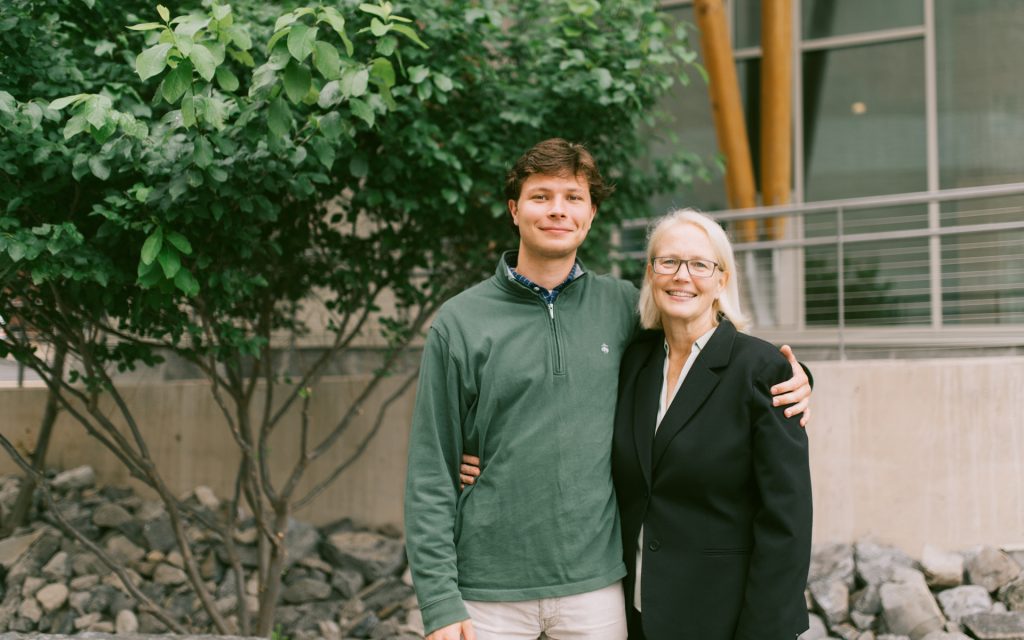
Luke poses proudly with his mom, Joanie Mahoney ’87, L’90 during orientation at the College of Law.
“My mom taught me to have the confidence to just ‘go for’ things…She credits Syracuse Law with teaching her to problem solve throughout her career, and I know that wherever I end up, law school will have taught me relevant skills.”
Luke Overdyk ’22 (FALK), L’26
On his first official visit to the College of Law as an admitted student, Luke hangs back from the building tour to snap a photo of his mom from one of the graduation composites hanging on the walls of the second floor of Dineen Hall.
“My mom taught me to have the confidence to just ‘go for’ things. And, she has taken a lot of the heaviness out of the parts of law school that can be daunting, starting with taking the LSATs,” Overdyk says. “She credits Syracuse Law with teaching her to problem solve throughout her career, and I know that wherever I end up, law school will have taught me relevant skills.”
On Overdyk’s first day of law school orientation, he sat next to Austin Dewey L’26. “We talked about how we both loved pick-up basketball and were interested in environmental law, and we quickly decided to create a club for other law students who cared about the planet,” he explains. “While we were a bit overwhelmed during our first semester as 1Ls, we hit the ground running the second semester, and the Environmental Law Student Association (ELSA) recently had its first meeting. We are fortunate to have Professor David Dreisen as the club’s faculty advisor, as he is a distinguished environmental law expert.
“Our region’s challenges actually create very positive opportunities for change, which is so important as they pertain to the environment, economic interests and the people who live here.”
Luke Overdyk ’22 (FALK), L’26
Both Overdyk and Dewey want it to be “the coolest club on campus,” and an inclusive organization that can closely examine issues through discussions with government leaders, scientists and others who can speak on the many ways our society interacts with our natural environment, particularly within the Syracuse community. Overdyk is well aware that his hometown of Syracuse has some unique environmental challenges, including a history of pollution in nearby Onondaga Lake, ongoing lead abatement problems in the community and issues surrounding the environmental impact of the reconstruction of Route 81, which intersects the city.
“Our region’s challenges actually create very positive opportunities for change, which is so important as they pertain to the environment, economic interests and the people who live here,” he explains.
Luke and Professor David Driesen stop to greet each other as they pass on campus.
As his first year of law school draws to a close, Overdyk is confident in his decisions to pursue the law and co-found a new club on campus. This summer, he will work at the Onondaga County District Attorney’s Office, while also training for the New York City Marathon in November to raise money for the World Wildlife Fund.
Luke and classmate, Austin Dewey L’26 take a photo together after running a marathon in Philidelphia.
“Syracuse University has an important role to play in the greater community, and I try to be a positive advocate for that. I have made so many great friends in law school, and I like introducing them to all that our city has to offer, as well as the natural beauty around us. I’m hoping they’ll see it the same way I do,” he says. “In the meantime, I’m going to pursue my interests and take advantage of all that the law school has to offer, while taking the next two years to figure out where my career path might lead. I’ve been lucky to grow up in Syracuse— and grateful to attend Syracuse University and Syracuse Law.”
Burton Blatt Institute Chairman and University Professor Peter Blanck’s 2nd edition of “Disability Law and Policy” was released in honor of the 34th Anniversary of the Americans with Disabilities Act (ADA). “Disability Law and Policy provides an overview of the themes and insights in disability law. It is a compelling compendium of stories about how our legal system has responded to the needs of impacted individuals.
The year 2025 marks the 35th anniversary of the ADA, celebrated on July 26. During the past three decades, disability law and policy have evolved dramatically in the United States and internationally. “Walls of inaccessibility, exclusion, segregation, and discrimination have been torn down, often brick by brick. But the work continues, many times led by advocates who have never known a world without the ADA and are now building on the efforts of those who came before them,” says Blanck, a professor at the College of Law.
Lex Frieden, an internationally distinguished disability rights scholar and advocate and former Chairperson of the U.S. National Council on Disability, writes in the Foreword to Blanck’s book: “In 1967, I survived a head-on car crash. When I woke up, I was paralyzed from the shoulders down. . . . My story is one of many in the modern disability rights movement. In ‘Disability Law and Policy,’ Peter Blanck retells my story, and the personal experiences of many others living with disabilities, in a master tour of the area. Peter is a world-renowned teacher, researcher, lawyer, and advocate. He has been central to the modern sea change in disability civil rights . . . ‘Disability Law and Policy’ should be read by all of us—people with the lived experience of disability and their advocates, parents, family members, and friends.”
Blanck says that “a new generation of people with disabilities, building on the efforts of Lex Frieden and many others, families, friends, advocates, and supporters, is stepping forward. As a guiding beacon, disability law and policy offer hope of a future in which all people, regardless of individual difference, will be welcomed as full and equal members of society.”
“Disability Law and Policy” is published by Foundation Press and is available from West Academic.
Syracuse Law has named Teaching Professor Beth Kubala as Executive Director of Clinical Education. In this capacity, Kubala will lead the clinical faculty in expanding offerings as envisioned by our strategic plan, elevating activities of the clinics within the College of Law, and collaborating with community partners to identify areas that need support in access to justice in Central New York.
In addition, Kubala is the newly established director of Veteran and Military Affairs for the College of Law. She will continue to direct the Betty and Michael D. Wohl Veterans Legal Clinic, where she has enthusiastically supported clinical legal education and innovated new partnerships and opportunities to enhance both the student experience and the delivery of legal services.
“Since joining the clinical faculty, Beth has served as a valued supporter of our veteran and military-connected students at the College of Law. Beth has been instrumental in growing our ranks of veteran and military-connected students, bringing in scholarship opportunities, and connecting them to resources and opportunities through the Office of Veteran and Military Affairs and the D’Aniello Institute for Veterans and Military Families. Beth has also assisted many students in their pursuit of careers as military Judge Advocates,” says Dean Craig Boise.
A recent American Bar Association (ABA) Law Student Podcast featured Professor Roy Gutterman L’00 discussing the First Amendment rights of college students. Gutterman was interviewed by Professor Todd Berger, the podcast host, along with current student hosts Leah Haberman and Chay Rodrigues.
Gutterman, the director of Syracuse University Newhouse School’s Tully Center for Free Speech, discussed the history of free speech law, different aspects of free speech, and what law students should know about current campus events as interpreted through the existing legal frameworks.