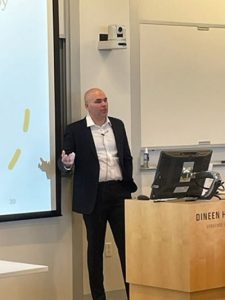
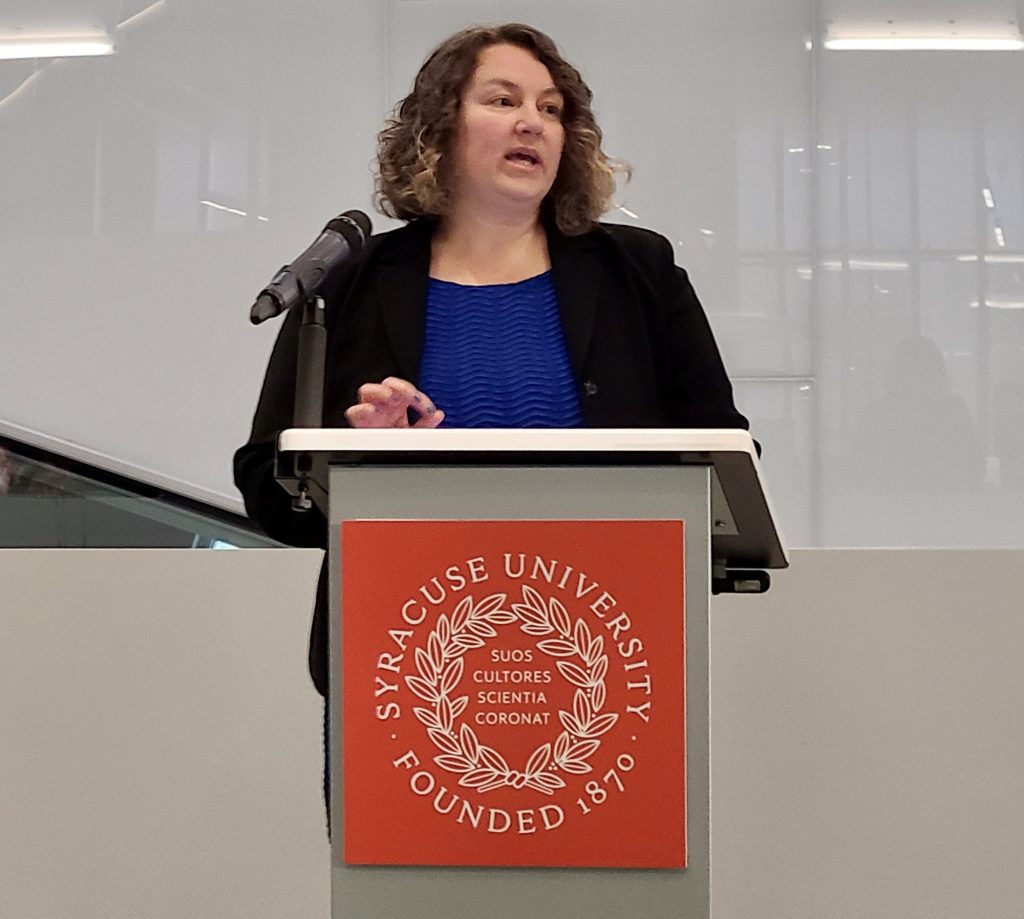
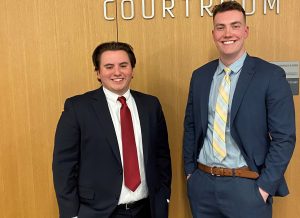
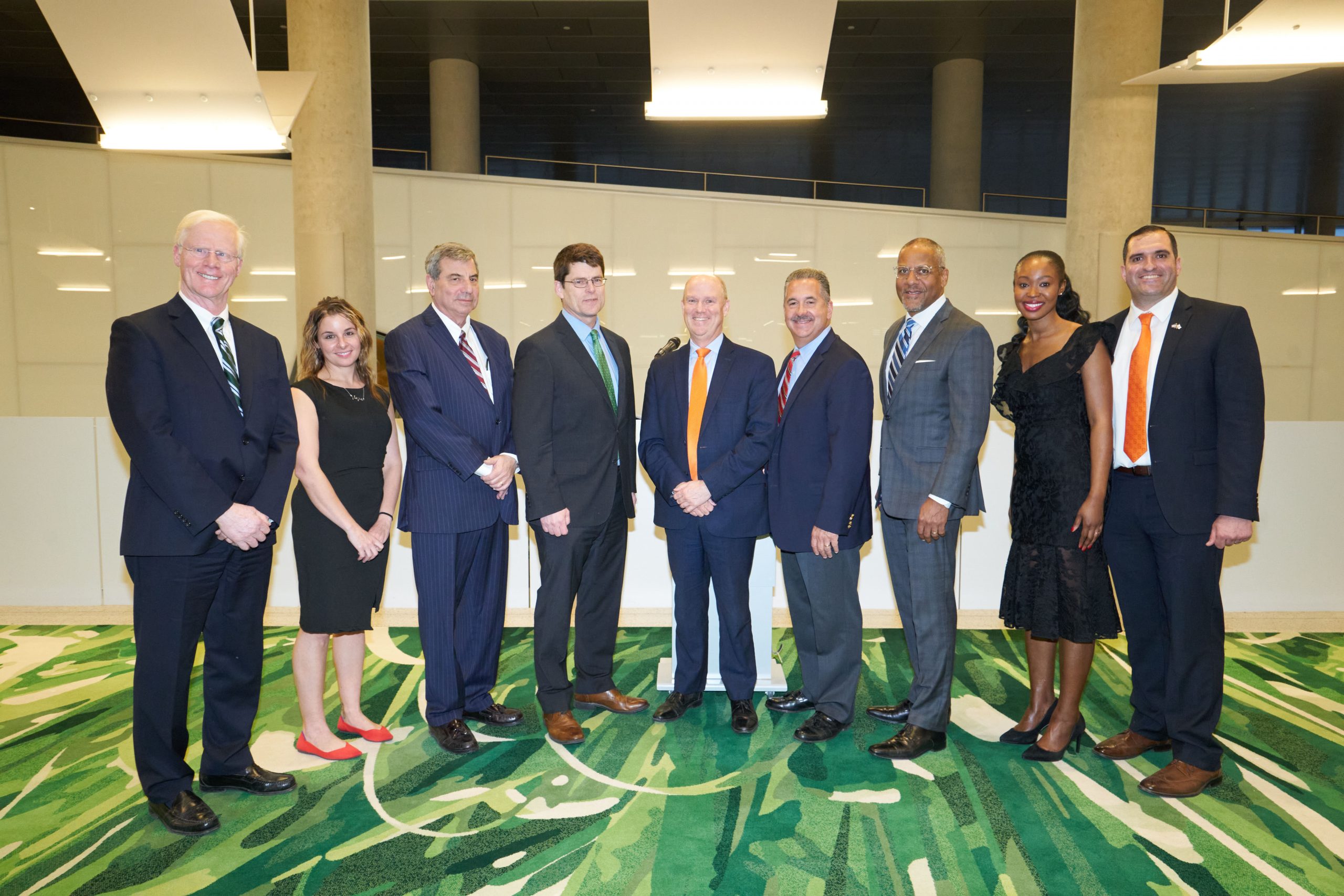
Professor Malloy presented the Annual Zoning Law Update, a continuing education program for zoning and planning board officials in Onondaga County, this past Saturday, April 23. The annual education program is designed to meet the certification requirements for zoning and planning officials in New York State.
Held at Dineen Hall this year, presenters included law students Kate Mazdzer (2L) and Michael Towey (3L), who are both a part of Malloy’s Advanced Zoning Law Program, and Alum Christopher Baiamonte L’19 of the Wladis Law Firm.
The program is sponsored by the Center for Property, Citizenship, and Social Entrepreneurism at the College of Law and by the Town of DeWitt, NY. Approximately 40 officials were on hand for the annual training that covered such topics as Area and Use Variances; Article 78 court review; Affordable Housing and the demise of the single-family residential zone, Unconstitutional Conditions; and criteria for evaluating Reasonable Accommodation under the ADA and FHA.
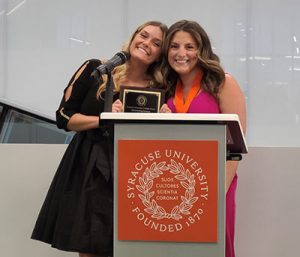
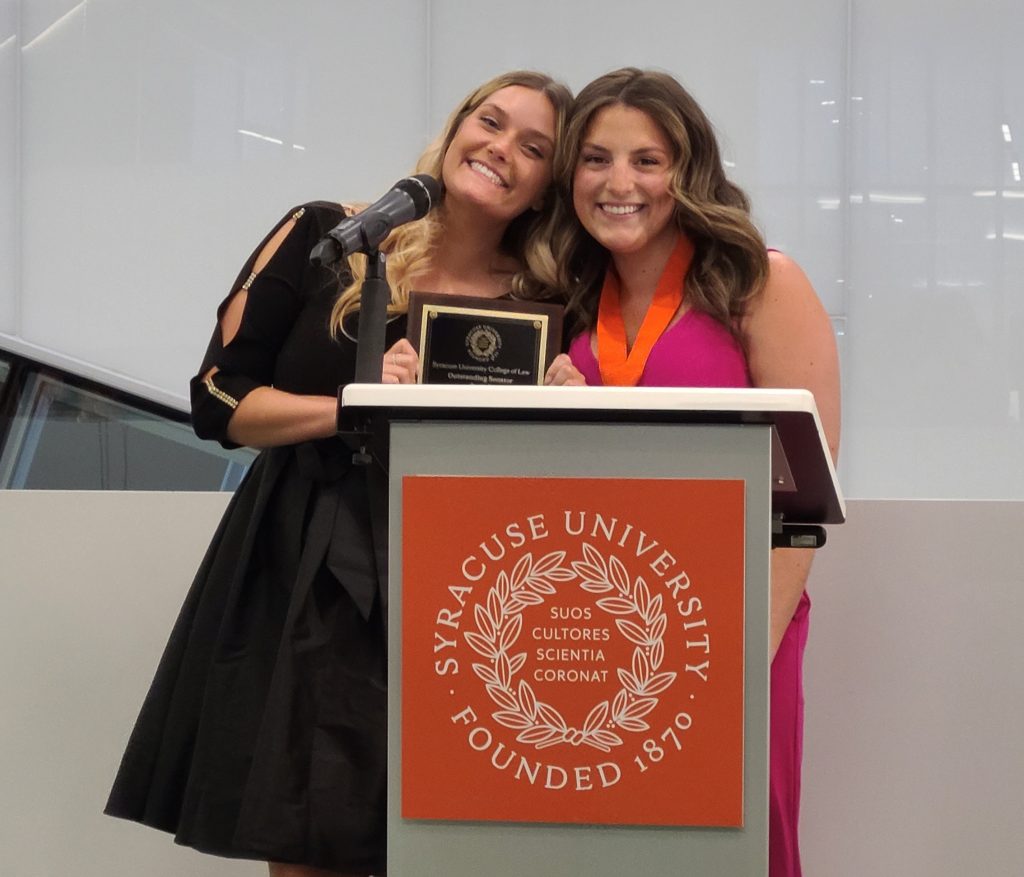
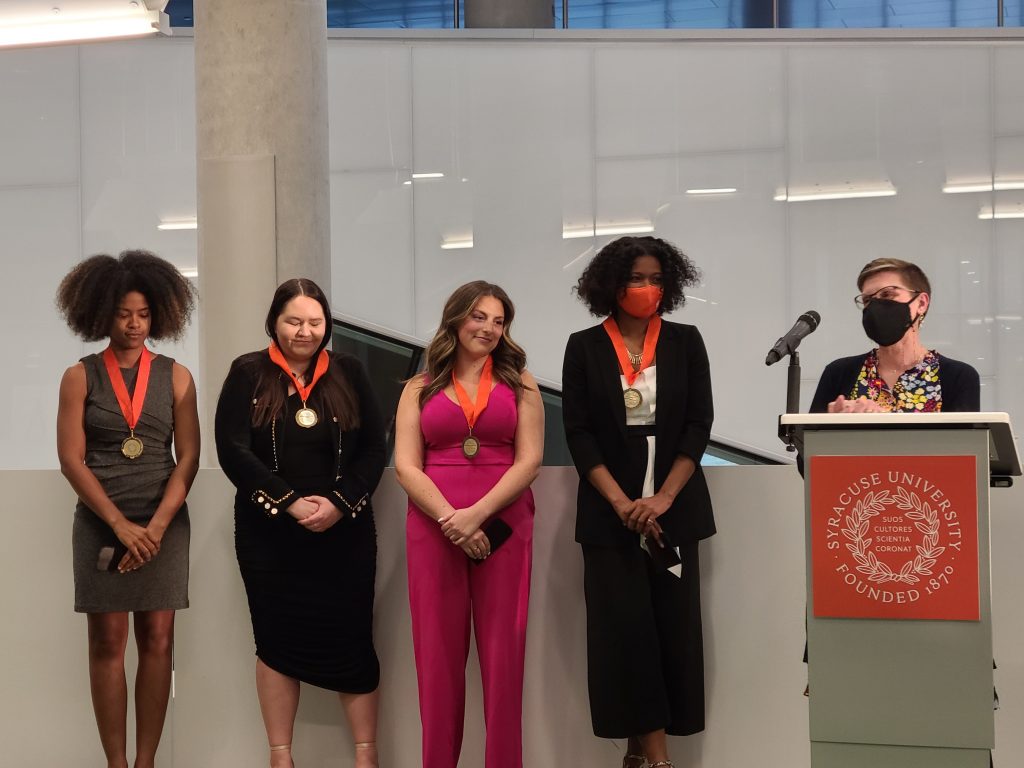
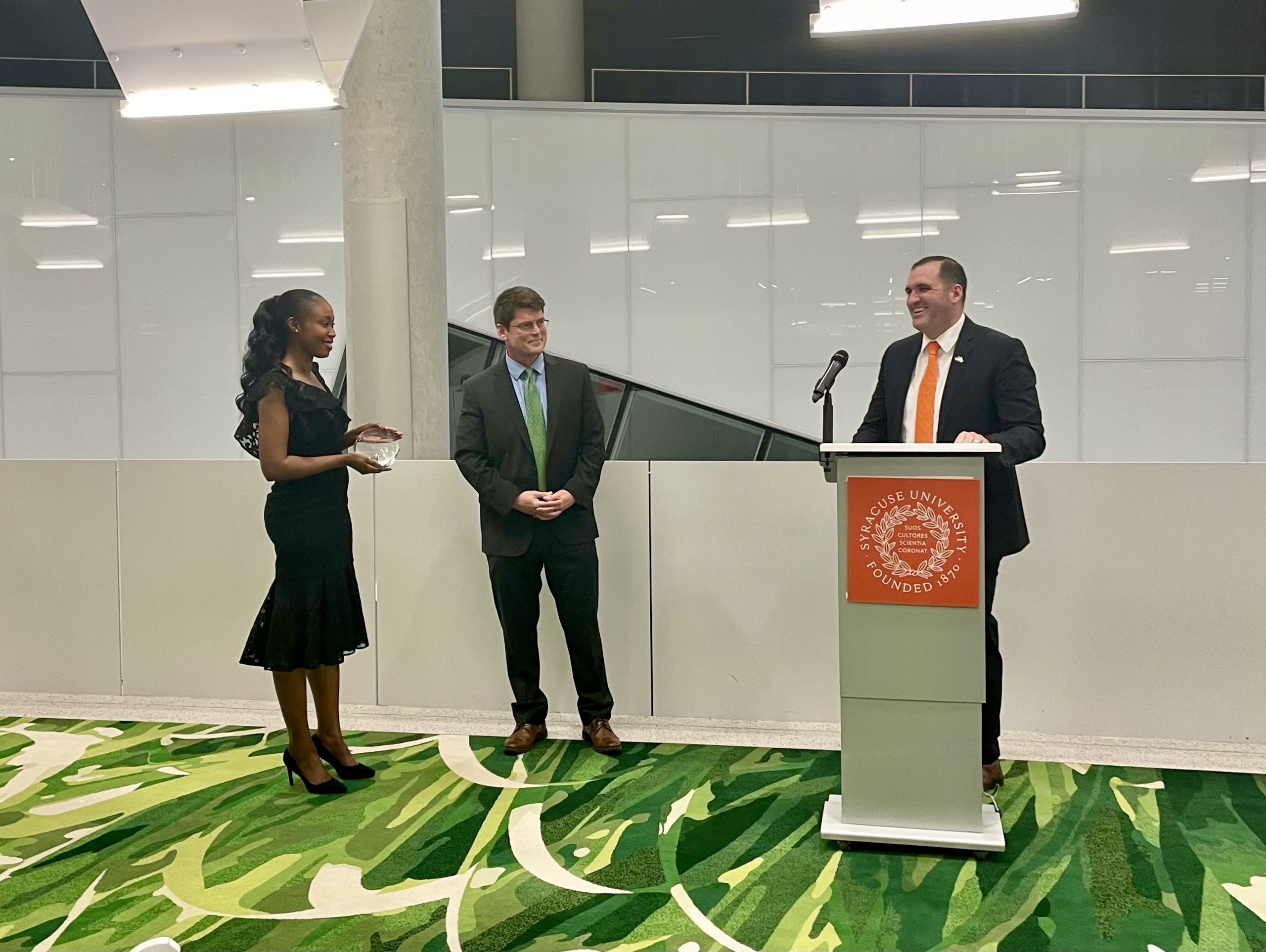
The Student Bar Association (SBA) hosted a Students Award Ceremony in Dineen Hall on April 20, highlighting the work of various students, organizations, staff, and faculty.
2022 Award Winners
Distinguished Service Awards
Gabby Kielbasinski
Abby Neuviller
Olivia Stevens
Kayla Wheeler
Outstanding Graduate Award
Christopher Martz
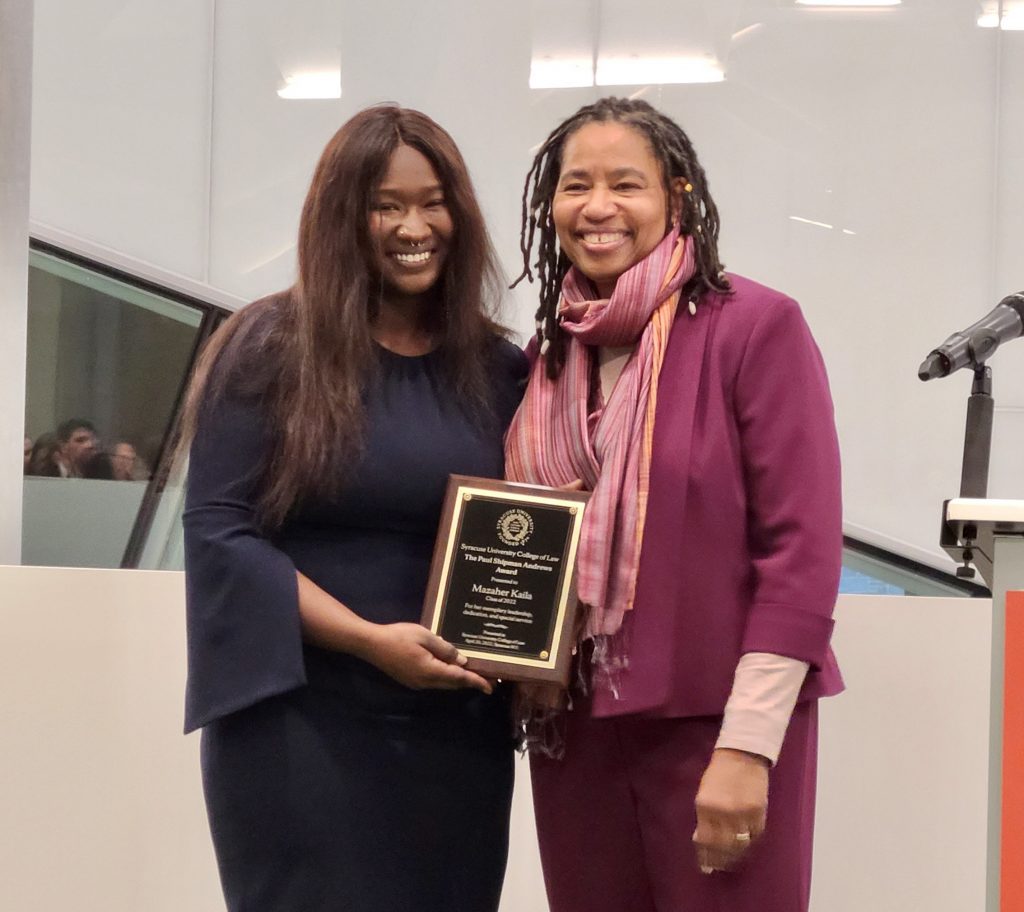
Paul Shipman Andrews Award
Mazaher Kaila
Unsung Hero Award
Kevin Casserino
Scott Ceurvels
Evan Groder
Joseph Hobika
Gabby Kielbasinski
Seth Owens
Omnia Shedid
Payton Sorci
Caroline Synakowski
Tia Thevenin
Student Organization of the Year Award
First Generations Law Students Association
Staff Award
Kyle Davis
Faculty Award
Professor Rakesh Anand
The SBA also welcomed newly elected SBA Officers for 2022 – 2023, who will play a critical role in developing a legacy of service, leadership, and excellence at the College of Law. Congratulations to all the award winners this year!
Cora True-Frost G’01, L’01, Bond, Schoeneck and King Distinguished Professor, has been selected by the U.S. Department of State and the Fulbright Program to join the University of Oslo,Pluricourts as a Fulbright Scholar. Beginning in August 2022, True-Frost will conduct her research and scholarship on European Tribunals and International Disability Law: Definitions, Discrimination, and Involuntary Detention.
“Fulbright Scholarships are prestigious academic achievements and Professor True-Frost is a deserving recipient and representative of the College of Law in this program,” says College of Law Dean Craig M. Boise. “Her scholarship at the intersection of international law and politics and the rights of the disabled is being justly recognized. Cora is a gifted classroom teacher and will ultimately enrich this field and our students, building connections between leading international courts and our law school.”
Q: What is your research focus for this distinguished appointment and what are your intended outcomes?
True-Frost: I will be examining contests between European tribunals and international bodies over the interpretation and application of international law, with a specific focus on international disability law norms within Europe by the Court of Justice for the European Union (CJEU) and the European Court of Human Rights (ECtHR.) Several substantive areas in the Convention on the Rights of Persons with Disabilities (CRPD) are provoking high-stakes contests of legitimacy and authority between and among both international-level treaty bodies, and regional courts. I intend to initially engage an admittedly broad question, but through a methodologically narrow approach: in the 2020s, what relative roles do international courts, regional tribunals, as well as “soft law”-makers, such as human rights treaty bodies and the European Commission (“EC”), play in determining the rights of people with disabilities in Europe?
While national domestic legal systems work to avoid conflicts by permitting appeals only within a strict hierarchy of authority and constrained jurisdiction, the same is not true of the international system. The complexities and sophistication of the judicial system of the European Union (“EU”) offer a perfect opportunity to examine conflicts and variations arising in the legal interpretation and application of a relatively new international law, the CRPD. Within Europe, multiple sources of law and policy protect people with disabilities—national legislation, European Union Directives, European Commission subsidiary organs, regional conventions, the European Disability Forum, and Council of Europe policies. International law, such as the CRPD, also protects people with disabilities in Europe.
My past scholarship has examined the effects of the CJEU’s efforts to respect and observe its international legal obligations. To give an example, a past project examined the impacts of the Kadi & al-Barakaat case, in which the CJEU struck down a Council of the European Union (“Council”) law for violating fundamental rights[1] in implementing the UN Security Council’s (UN SC) resolution. The CJEU decision took pains to emphasize the EU’s compliance with international law even in the face of a particularly draconian UN SC resolution. My work showed how the CJEU decision in turn helped push the powerful UN SC to reform its procedures related to targeted sanctions in the fight against terrorism post-9/11.
My broader scholarly focus on international-level tribunals and organizations inevitably and frequently overlaps with decisions of regional tribunals such as the CJEU and the ECtHR. For example, my forthcoming article, “Listening to Dissonance at the Intersections of International Human Rights Law” contributes to the fragmentation literature by focusing on conflicts between the interpretations of provisions of treaties by international-level treaty bodies; through analyzing issues related both to the horizontal allocation of authority and the impacts of conflicting interpretations on different norms, my research continuously led to the jurisprudence of the CJEU and ECtHR.[2] I am excited to be able to take this next step in my research.
Q: What are your intended outcomes from your research?
True-Frost: I will be developing a qualitative series of case studies of contests of authority and legitimacy focused on various EU Directives implementing the CRPD and CJEU judicial decisions regarding these Directives will form the core research. The first phase of this project will map and analyze various consistencies, conflicts, and variations in European tribunals’ articulation of three substantive areas of disability law in relation to international disability law standards: defining disability,[3] applying employment discrimination law,[4] and setting forth standards for involuntary detention.[5] In its second phase, the project will develop normative implications both for the legitimacy of international and regional courts and for the substance of disability law.
I very much welcome the opportunity to closely engage CJEU and ECtHR decisions in conversation with the community of many scholars working on Pluricourts’ international tribunals’ research in Norway, and would plan to make research trips, as needed, to Geneva, Luxembourg, and Strasbourg. My work overlaps with the literature focused on at Pluricourts. I have written regarding almost all of the research topics, particularly: the legitimacy of international tribunals; the proper allocation of powers between different international and national lawmaking, executive, and judicial organs; the impacts of global administrative law, and best practices of international lawmaking bodies.
Q: Why did you pursue a Fulbright?
True-Frost: My international law scholarship has always benefitted and grown from my experience abroad. Pursuing this important research topic about conflicts between international and disability law in Europe will offer me the opportunity to meet with various stakeholders in European regional and domestic courts and do primary research.
I am an international law scholar with a focus on the development of human rights norms in international tribunals and organizations. However, my research over the last decade has continued to lead me to the jurisprudence of European tribunals, which have had a strong influence on the content of international human rights law.
Q: Why study European law in Norway in particular?
True-Frost: Norway has a unique relationship with the EU, so the opportunity to examine its own domestic interpretations of European and international human rights law will offer more context to my research on conflicts. Luckily, in 2020, when I decided to pursue my research with the Fulbright program in Europe to focus on European law, I learned that the University of Oslo offered a Fulbright grant focused on international courts and tribunals. I was already aware of the University of Oslo’s Pluricourts research center, which is a Center of Excellence funded by the Norwegian government, as I had the opportunity to attend the 11th Annual Conference of the European Society of International Law in Norway in September 2015, which Pluricourts had sponsored. During my brief visit, as a junior scholar on pre-tenure leave, I was extremely impressed by the University, its faculty, and its strong networks in international law. Over the course of the short conference, I saw many ways that the Pluricourts’ research agenda overlapped with my own research agenda. My interest in living and researching in Norway now is helped by the knowledge that two dear friends and former colleagues of mine from my earlier work on gender justice in East Timor, who are Norwegian, both live in Oslo now with their families. This is an example of how networking and staying in touch professionally builds bridges to future international experiences.
The Fulbright also offers me the opportunity for concentrated, comparative research in disability law, a new area of interest for me. At Syracuse Law, I have had the pleasure of teaching international and domestic law students who are Blind, Deaf, dyslexic, and wheelchair-using, among many other disabilities. I have seen the challenges my students, both domestic and international, face in securing the support and accommodations they require. In recent years, as international attention has rightly if belatedly, focused on too long-delayed calls for racial justice, my interest in race and intersectionality along with my experience with disabled students, have raised my awareness and concern about the many unnecessary challenges disabled people face.
Q: What impact will this have on your teaching?
True-Frost: I look forward to integrating connections and publications from this research project into both the ECtHR and International Human Rights Law classes I teach. I also look forward to connecting our students interested in international law with the work I will be doing abroad, by delivering remarks/observations to College of Law students via Zoom or Skype while I am at the University of Oslo. I look forward to learning more about Norwegian higher education techniques, as I have been able to do in France with our partners there during the ECtHR classes.
[1] The ECJ held that the review of lawfulness applied only to the EC act purporting to give effect to the international agreement, and not to the international agreement itself. See, e.g., C. Cora True-Frost, Signaling Credibility: The Development of Standing in International Security, 32 Cardozo L. Rev. 1183 (2011).
[2] C. C. True-Frost, Listening to Dissonance at the Intersections of International Human Rights Law, 43 Mich. J. Int’l L. 361 (2022).
[3]See, e.g., Case C-13/05, Sonia Chacon Navas v. Euerst Colectividades SA,2006 E.C.R. I-6467 (defining “disability” as “referring to a limitation which results in particular from physical, mental or psychological impairments and which hinders the participation of the person concerned in professional life”); Case C-303/06, S. Coleman v. Attridge Law and Steve Law, 2008 E.C.R. I-5603 (reaffirming the CJEU’s definition of “disability” from Chacon Navas); Joined Cases C-335/11 & C-337/11, HK Danmark, acting on behalf of Jette Ring v. Dansk almennyttigt Boligselskab and HK Danmark, acting on behalf of Lone Skouboe Werge v. Dansk Arbejdsgiverforening, acting on behalf of Pro Display A/S, 2013 E.C.L.I. 222 (in the aftermath of the EU’s ratification of the CRPD re-defined the concept of “disability” by writing that it “must be interpreted as including a condition caused by an illness medically diagnosed as curable or incurable where that illness entails a limitation which results in particular from physical, mental or psychological impairments in which interaction with various barriers may hinder the full and effective participation of the person concerned in professional life on an equal basis with other workers, and the limitation is a long-term one”).
[4] A complainant proceeding before the CJEU in 2021 will find the CJEU’s interpretations of EU employment discrimination law to be far more harmonious with international disability law standards than they were in just 2015. See, e.g., Grainne de Burca, The Decline of the EU Anti-Discrimination Law?, __ N.Y. Univ. L. Rev. (forthcoming); Michael Rubenstein, Recent and Current Employment Discrimination Cases in the Court of Justice of the European Union, 15 Equal Rts. Rev. 57 (2015); Vlad Perju, Impairment,
Discrimination, and the Legal Construction of Disability in the European Union and the United States, 44 Cornell Int’l L. J. 280 (2011).
[5]See, e.g., Oviedo Convention and its Protocols, Council of Eur. (n.d.), https://www.coe.int/en/web/bioethics/oviedo-convention;Robert Adorno, The Oviedo Convention: A European Legal Framework at the Intersection of Human Rights and Health Law, 2 J. Int’l Biotechnology L. 133 (2005); UN Rights experts call on Council of Europe to stop legislation for coercive mental health measures, Eur. Disability F. (May 28, 2021), https://www.edf-feph.org/un-rights-experts-call-on-council-of-europe-to-stop-legislation-for-coercive-mental-health-measures/; Karolina Kozik, What Does the Council of Europe Have Against People with Disabilities?, Hum. Rts. Watch (Nov. 4, 2020), https://www.hrw.org/news/2020/11/04/what-does-council-europe-have-against-people-disabilities#.
Crandall Melvin Professor of Law and Director of the Syracuse Civics Initiative Lauryn Gouldin has been named a Meredith Professor by Syracuse University, recognizing her excellence in teaching.
The award is one of the highest teaching honors bestowed by the University, awarded to two appointed tenured faculty annually. The 2022-2025 Meredith Professors are Gouldin and Julie Hasenwinkel, professor and chair of biomedical and chemical engineering in the College of Engineering and Computer Science and a faculty member with the University’s BioInspired Institute.
Gouldin teaches constitutional criminal procedure, criminal law, evidence, constitutional law, and criminal justice reform at the College of Law. Her scholarship focuses on the Fourth Amendment, pretrial detention and bail reform, and judicial decision-making. Her articles have appeared in the University of Chicago Law Review, BYU Law Review, Denver Law Review, Fordham International Law Journal, and the American Criminal Law Review, among others.
In 2017, the AALS Criminal Justice Section recognized her article, “Defining Flight Risk,” as the first runner-up in the Section’s Junior Scholars Paper Competition. In 2015, in recognition of her excellence in teaching, Gouldin was selected by the Syracuse University Meredith Professors to receive a Teaching Recognition Award. In 2014 and 2015, the College of Law Student Bar Association honored Gouldin with the Outstanding Faculty Award. At their commencement, the Class of 2018 awarded her the College of Law’s Res Ipsa Loquitur Award for outstanding service, scholarship, and stewardship.
As a newly appointed Meredith Professor, Gouldin will receive a supplementary salary award and an additional fund for professional development for each year of their appointment. The Meredith Professors are enrolled for life in the Meredith Symposium to provide a permanent forum for the discussion of teaching and learning.
The College of Law Innovation Law Center performed a recent patent analysis for the new medical technology startup JelikaLite, a company focusing on pediatric neurological health that is working to develop a treatment for autism. JelikaLite’s new treatment, Cognilum, received “Breakthrough Device Designation” from the FDA in January and is on the path to go to market post-clinical trials.
Co-founder and CEO Katya Sverdlov obtained important backing and support for Cognilum from Upstate Medical University’s CNY Biotech Accelerator in Syracuse, selected as a winner at this year’s annual Medical Device Innovation Challenge (MDIC).
Kathi Durdon, Director of Operations for the Biotech Accelerator, then connected Sverdlov to the SU Innovation Law Center for Cognilum’s patent needs.
Sverdlov explains, “we did have patent attorneys, but the last time they did patent analysis for us was two years ago. I was terrified that something had happened, but the SU law center did absolutely wonderful analysis for us with really good feedback on our possibilities on the patent.”
Professor Nina Kohn will speak about the “Impact of Questioning an Older Adult’s Decision-Making Capacity: Maximizing Self-Determination, Minimizing Harm” in a virtual Elder Justice Decision Making Capacity Symposium hosted by the Department of Justice from April 19 – 21. Kohn’s talk will take place from 4:05 p.m. – 4:50 p.m. on the first day of the three-day symposium.
Criminal and civil justice systems tend to make mistaken assumptions about older adults’ capacity to make decisions for themselves. This can negatively impact the lives of aging adults and can have profound implications on their treatment in criminal and civil proceedings.
In this symposium, attendees will learn about protocols and tools available to discuss the decision-making capacity of elder adults via expert panels and discussions. Additional topics will include:
Advances in the aging brain research and its relevance for decision making
The role of clinicians in conducting forensic decision-making capacity assessments with older adults
The impact of questioning an older adult’s decision-making capacity
Uncover the latest science in elder care, as well as best clinical, legal, and judicial practices to increase access to both justice and self-determination in older adults.
Crandall Melvin Professor of Law Shubha Ghosh has been invited to speak at the Conference on Innovation and Communication Law, held May 19 and 20 at the Danube University, Krems, Austria.
Ghosh will speak on “Crisis, Invention, and Innovation” in relation to COVID and other crises.
More information on the conference can be found here.
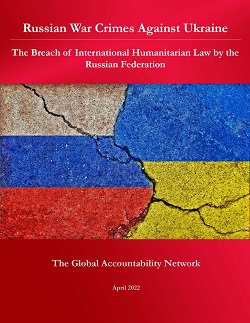
The paper lays out an indictment of numerous war crimes, crimes against humanity, and crimes of aggression from February 24, 2022, to April 1, 2022, during the invasion of Ukraine. The report includes a sample draft (Appendix A, page 47) of a criminal indictment against President Vladimir Putin for his war crimes. The white paper was created by the Ukraine Task Force, comprised of law students and legal scholars, with the goal to create a non-partisan, high-quality analysis of open-source materials.
“Because of his aggressive acts and his intentional targeting of Ukrainian civilians, Vladimir Putin has lost all political legitimacy and has made Russia a pariah state. This white paper catalogs the horror he has unleashed and lays out a pathway for holding him accountable for aggression, war crimes, and crimes against humanity,” said David Crane L’80, the project leader of the white paper and Distinguished Scholar in Residence at Syracuse University College of Law.
Crane is the founding chief prosecutor of the Special Court for Sierra Leone, an international war crimes tribunal where he indicted Liberian President Charles Taylor, the first sitting African head of state in history to be held accountable in this way.
According to the report on Ukraine:
“Since the invasion, Ukrainian citizens have been forced to endure kidnappings, property destruction, starvation, terror, shellings, and murder at the hands of the Russian Federation. As is consistent with the complex and intricate history of Ukraine, Russia once again seeks to assert its dominance and control of the territory in wanton violation of international law and Ukrainian sovereignty. As of the writing of this document, President Zelenskyy continues to lead his country and seek peace for its citizens, while the Russian Federation continues its campaign of atrocities meant to terrorize Ukraine and strip it of its national identity.
There is no clearer violation of the laws of humanity. At its most basic elements, international law and the laws of humanity establish self-determination and self-expression of a people as fundamental rights free from infringement by foreign powers. President Putin, and the rest of his Russian Federation political and military command seek to upend these values and establish a new world order with authoritarianism, terror, and oppression at its center. The international community cannot remain silent, and the road does not end at sanctions — it begins.” (page 40)
The 276-page report lays out the history of Russian aggression in Ukraine, the legal framework of accountability, individuals who bear the responsibility for crimes, and the specific violations of international law.
“The Ukraine Task Force established by the Global Accountability Network (GAN) was an incredible and unique experience that allowed law students to take an active part in international legal discourse,” said Syracuse Law student 3L Christopher Martz, the task force director and one of the lead writers of the white paper. “The Ukraine Task Force encountered serious difficulties in documenting war crimes in real time, especially considering the fact that GAN pulled students from all across the country. However, the leadership of Professor Crane and the commitment of GAN volunteers helped overcome these difficulties, resulting in an important living document that creates a framework of accountability moving forward.”
Additionally, the appendix of the report offers exhaustive details of how the researchers documented their evidence:
Appendix B (page 68) is a crime narrative detailing by date and cities where crimes were committed and by the responsible party. Appendix B is a grim summary of the civilian deaths suffered during the invasion from bombings and attacks on residences, hospitals, schools, grocery stores, public buses, and many more.
Appendix C (page 102) expands on the crime narrative and provides a more detailed breakdown of the violations of International Humanitarian Law, as well as documenting violations of the Ukrainian Penal Code. Appendix C gives a day-by-day and detailed accounting of the atrocities and war crimes committed and the specific articles of the Rome Statute, Geneva Convention, and Ukrainian Penal Code they violate.
Appendix D (page 124) is a comprehensive profile detailing the command-and-control structure of the Russian political and military senior leadership. This “dossier” lists the individuals responsible for the atrocities in Ukraine, and documents relevant information surrounding their responsibility and complicity.
“We have done this once before and we can do it again with the International Criminal Court prosecuting the alleged war crimes and crimes against humanity and a United Nations-backed Special Court for Ukraine, the world’s second hybrid international war crimes tribunal, the Special Court for Ukraine the crime of aggression”, according to Crane. “Its mandate will be to prosecute those who bear the greatest responsibility for the aggression against Ukraine must include President Vladimir Putin,”
Members of the media, please contact Ellen James Mbuqe, executive director of media relations at Syracuse University, at 412-496-0551 or ejmbuqe@syr.edu, for interviews.
More about David Crane and Syracuse University
David Crane was a professor of practice at Syracuse University College of Law from 2006 until his retirement in 2018. During that time, he taught international criminal law, international humanitarian law, military law, and national security law. While at Syracuse Law, Crane founded Impunity Watch, an online student-run law review, and public service blog, and the Syrian Accountability Project (SAP), an internationally-recognized effort among students, activists, journalists, and non-governmental organizations to document war crimes and crimes against humanity during the Syrian Civil War. Crane later returned to the College of Law as a Distinguished Scholar in Residence.
In 2014, Crane co-authored the “Caesar Report” that detailed the systematic killing of thousands of people in Syria and testified about the report at the UN Security Council. Crane also has testified to the US House of Representatives Committee on Foreign Affairs and its Subcommittee on Africa, Global Health, Global Human Rights, and International Organizations on the Syria crisis and related human security and humanitarian issues. In 2016, Crane helped to draft a UN resolution “to establish a special team to ‘collect, consolidate, preserve and analyze evidence” as well as to prepare cases on war crimes and human rights abuses committed during the conflict in Syria.” Subsequently, he assisted the UN in setting up the independent justice mechanism mandated by the resolution.
When he was chief prosecutor of the Special Court for Sierra Leone, Crane was the first American to be a Chief Prosecutor of an international war crimes tribunal since 1945 when Justice Robert Jackson and Telford Taylor were prosecutors at the Nuremberg Trials.
Third-year students Bradley Ace and Robert Rose prevailed over finalist 2Ls Meghan Ellsworth and Jessica Johnson in the Entertainment and Sports Law Negotiation Competition. Rose was named Best Advocate.
Final round judges were Professor John Wolohan, Daniel Greene L’16, Associate at Newman and Lickstein, and Erin Phillips L’15, Associate at Newman and Lickstein.
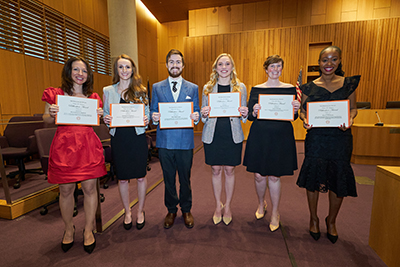
The Syracuse Law Review celebrated the annual award winners for Volume 72 in a ceremony at the Melanie Gray Ceremonial Courtroom on April 7, 2022.
As the first in-person Law Review Banquet to occur since the onset of the pandemic, it was a night to remember. Dean Craig M. Boise offered opening remarks to students, faculty, and alumni, celebrating the achievements of the Law Review staff and winners soon to be announced.
Hilda Frimpong, Syracuse Law Review Editor-in Chief, gave the welcome speech for the ceremony. Frimpong is the first Black Editor-in-Chief in the history of the Syracuse Law Review, a proud accomplishment celebrated on the same day that Ketanji Brown Jackson was confirmed as the first Black woman to serve as a justice on the Supreme Court.
2022 Award Winners
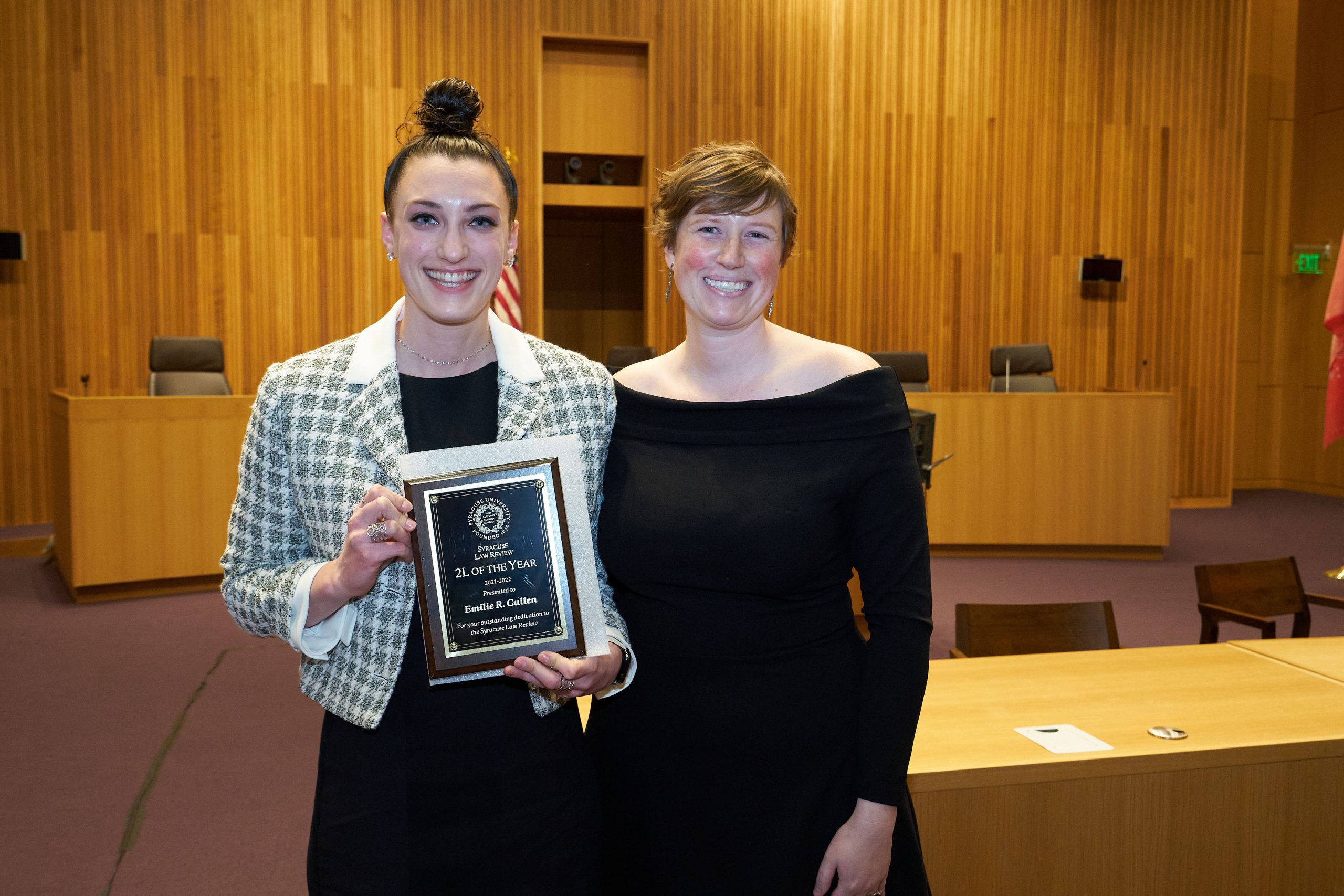
2L of the Year: Emilie R. Cullen
3L of the Year: Hilda Frimpong
Samuel J. M. Donnelly Award: Niloofar Abedzadeh
Faculty & Staff Award: Kyle Davis
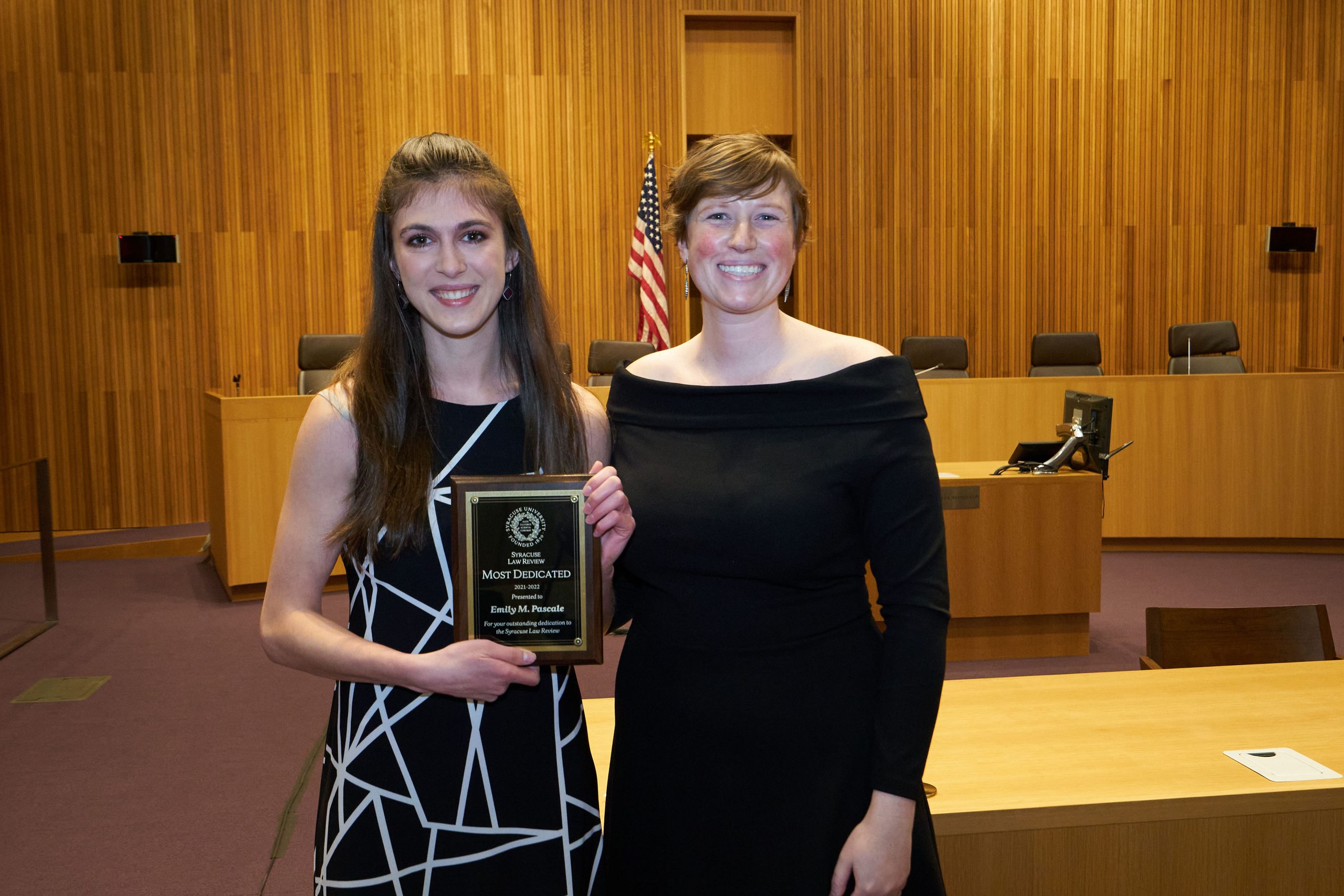
Most Dedicated Award: Emilie M. Pascale
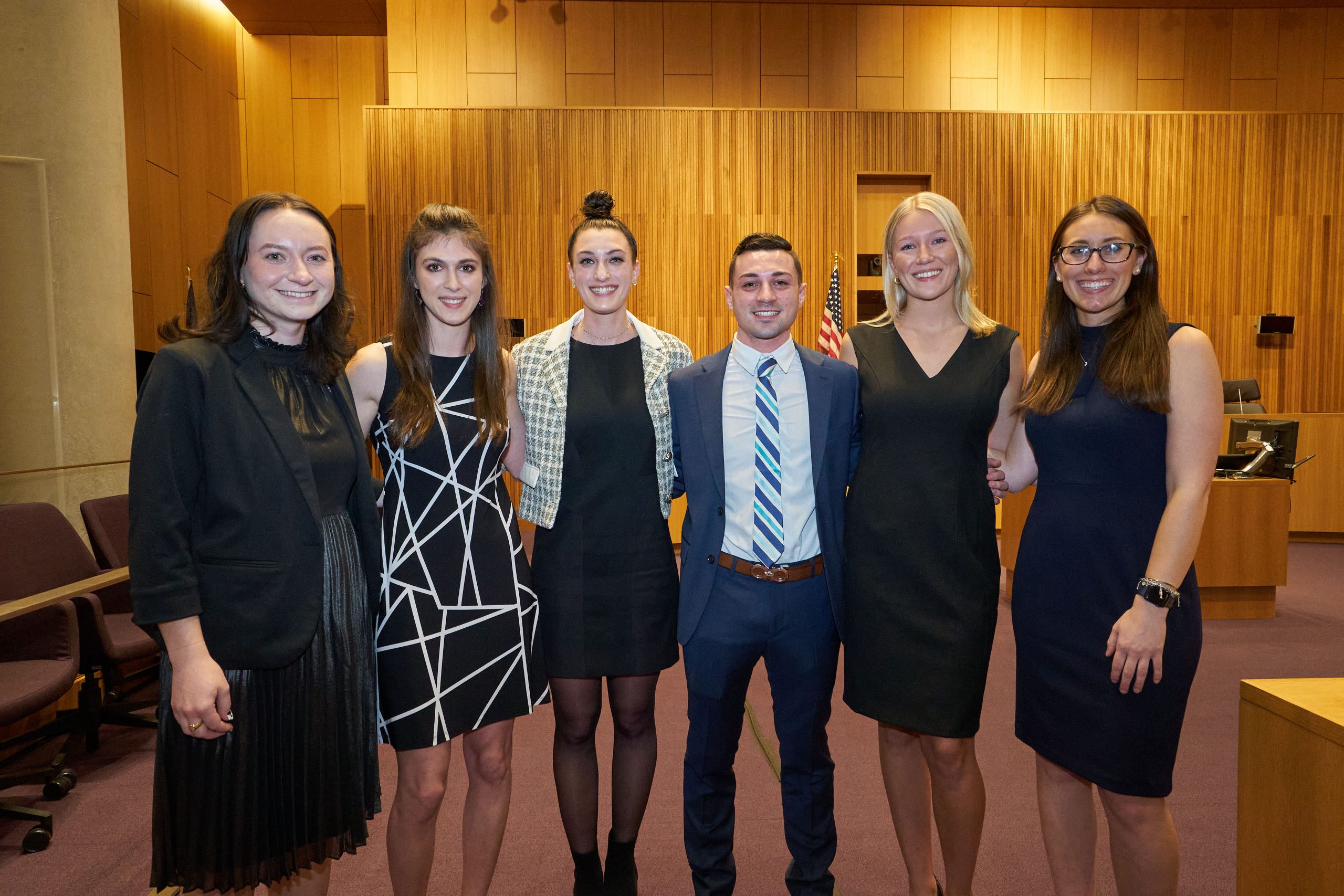
Volume 73 Student Notes Selected for Publication
Emilie Cullen
Paul Dipadua
Emily Pascale
Penny Quinteros
Tim Walsh
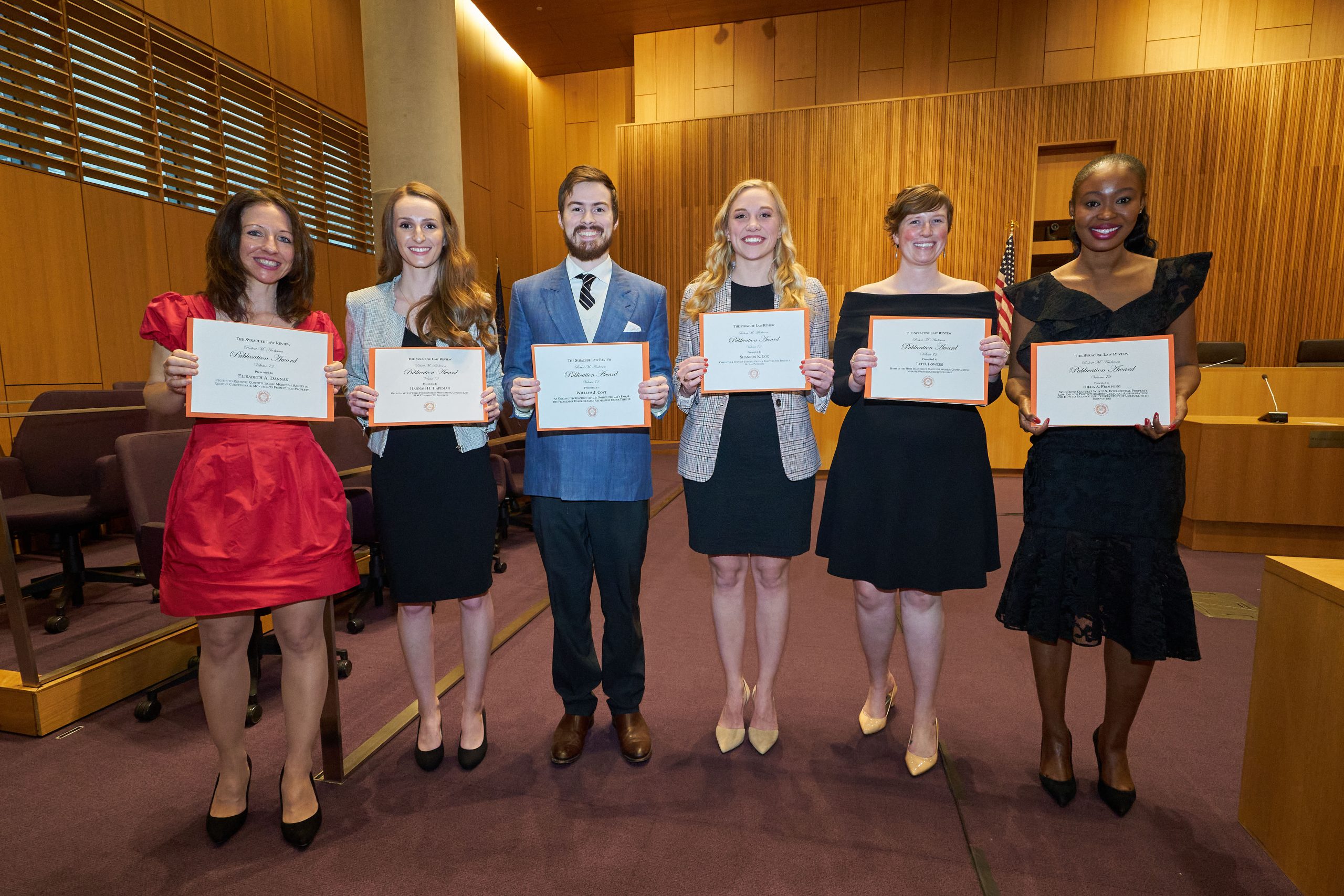
Robert M. Anderson Publication Award Winners
William J. Cost
Shannon K. Cox
Elisabeth Dannan
Hilda A. Frimpong
Hannah T. Hapeman
Kathryn Morris
Leita Powers
Immediately following the awards ceremony, attendees enjoyed a reception in the David M. Levy Atrium. John Powers L’96, Partner, Hancock Estabrook LLP, delivered the keynote speech for the night as this year’s Alumni Achievement Award recipient. To wrap up the festivities, Raymond Scarlata provided a “look ahead toast” as the Editor-in-Chief-elect for Volume 73.