News

Joe Di Scipio L’95 Gives DCEx Students an Inside Look at Political Advertising Issues

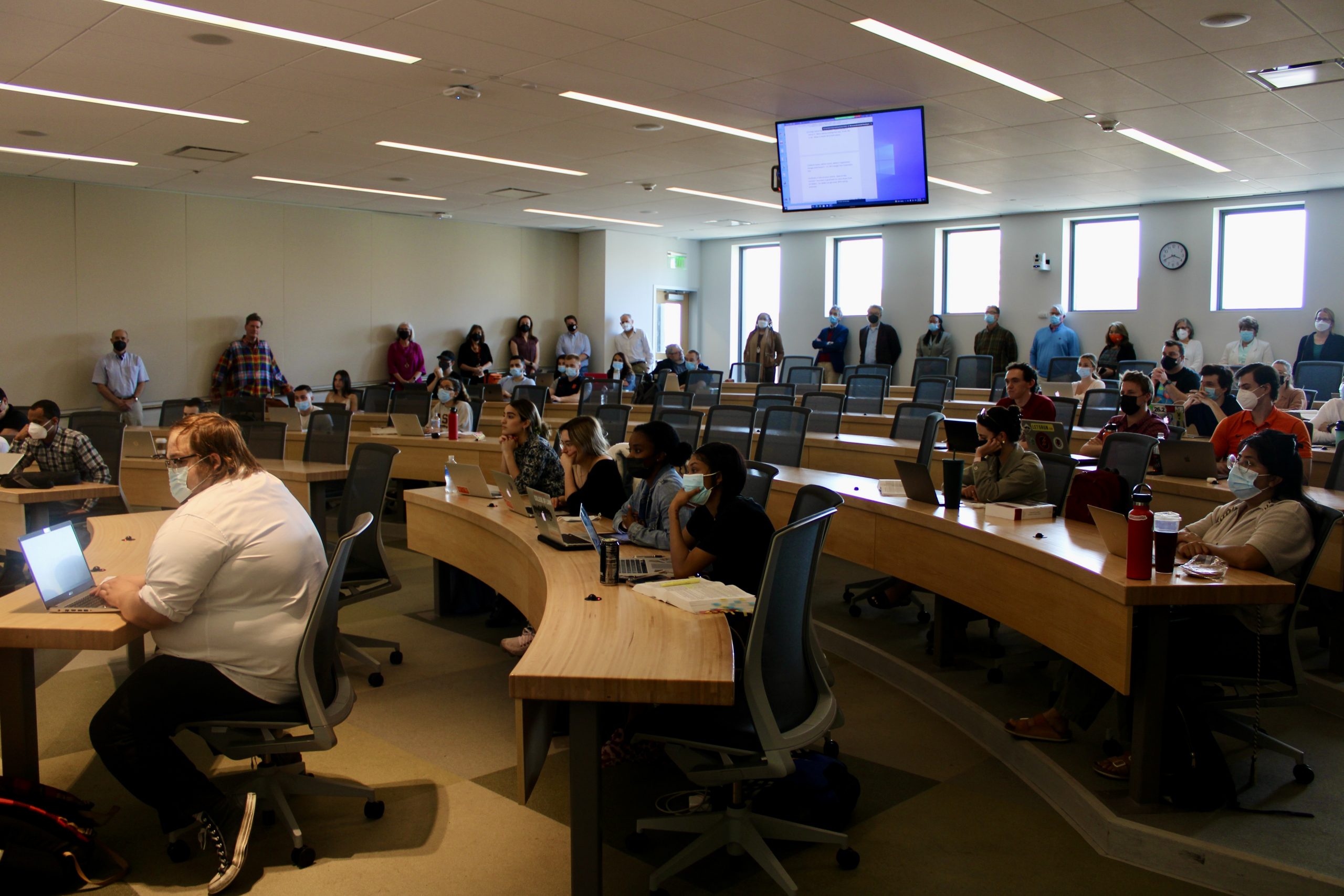
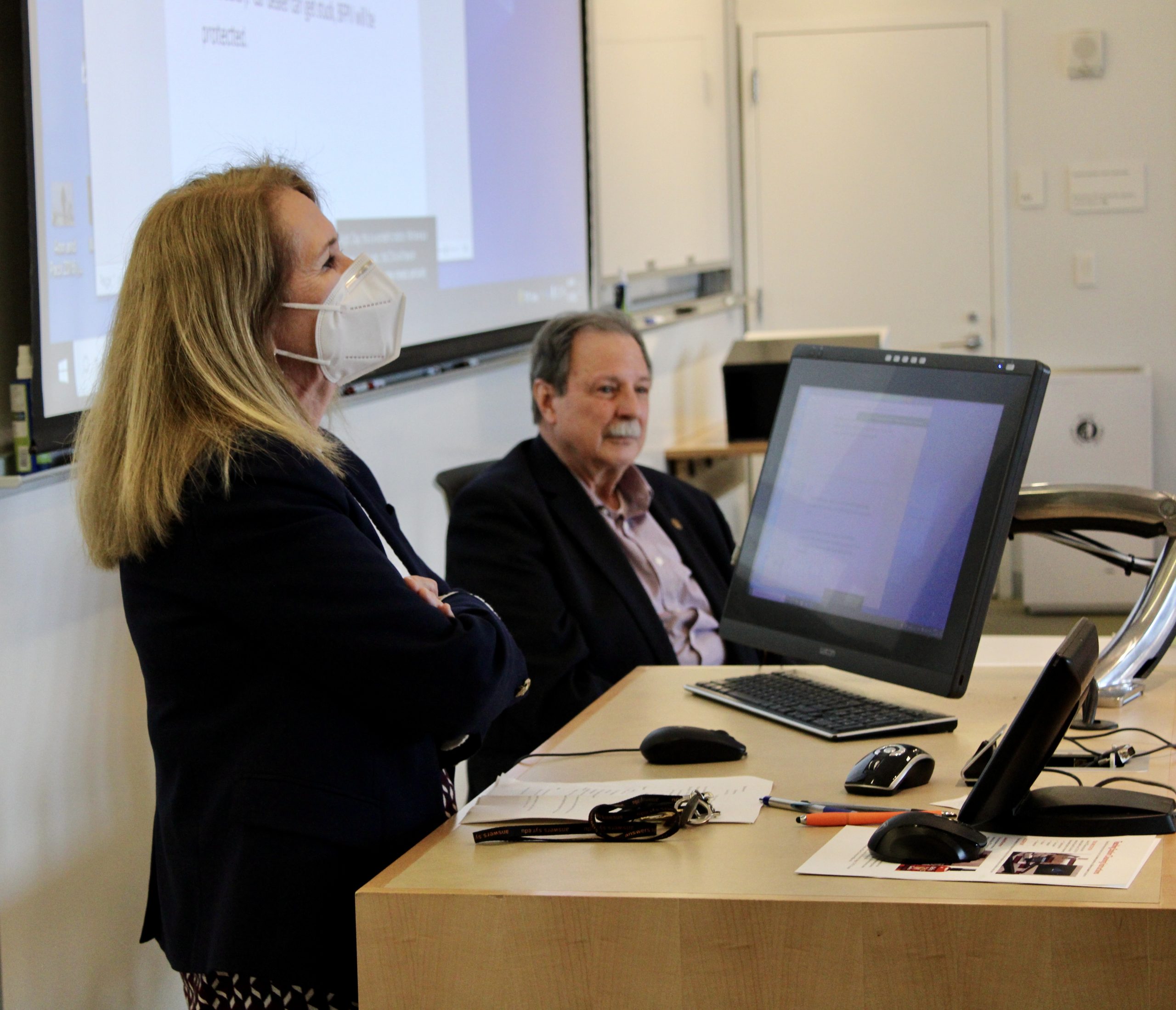
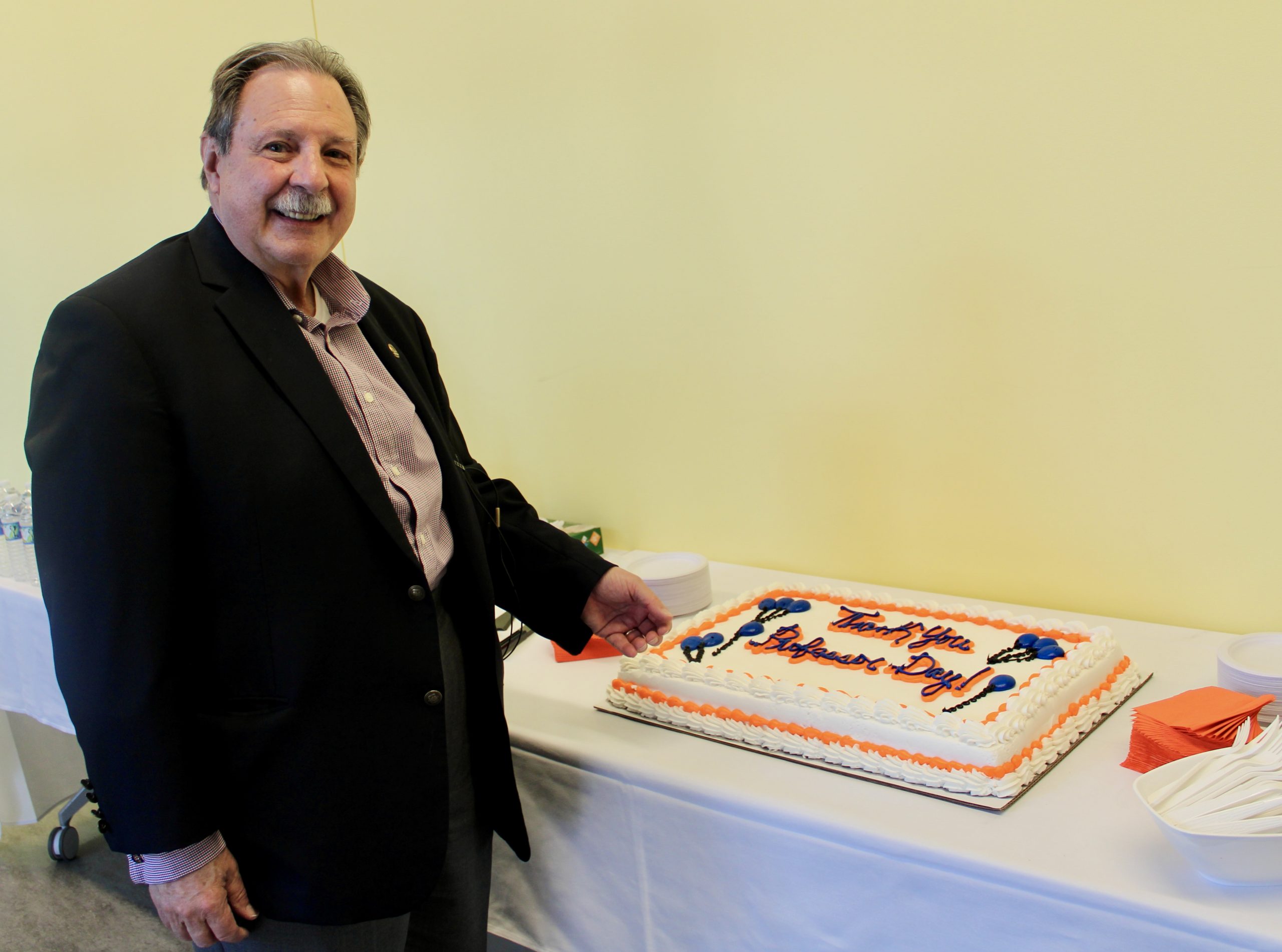
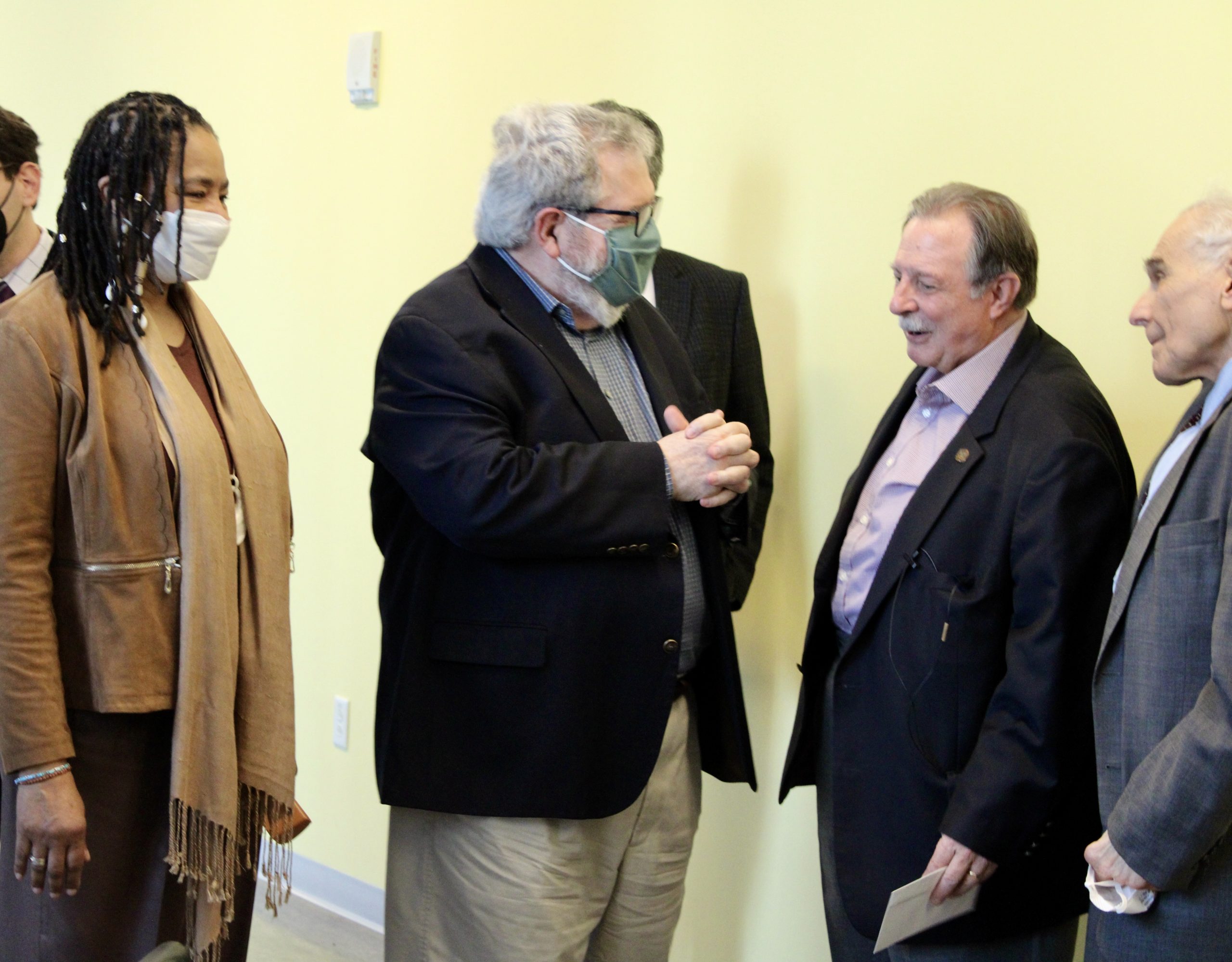
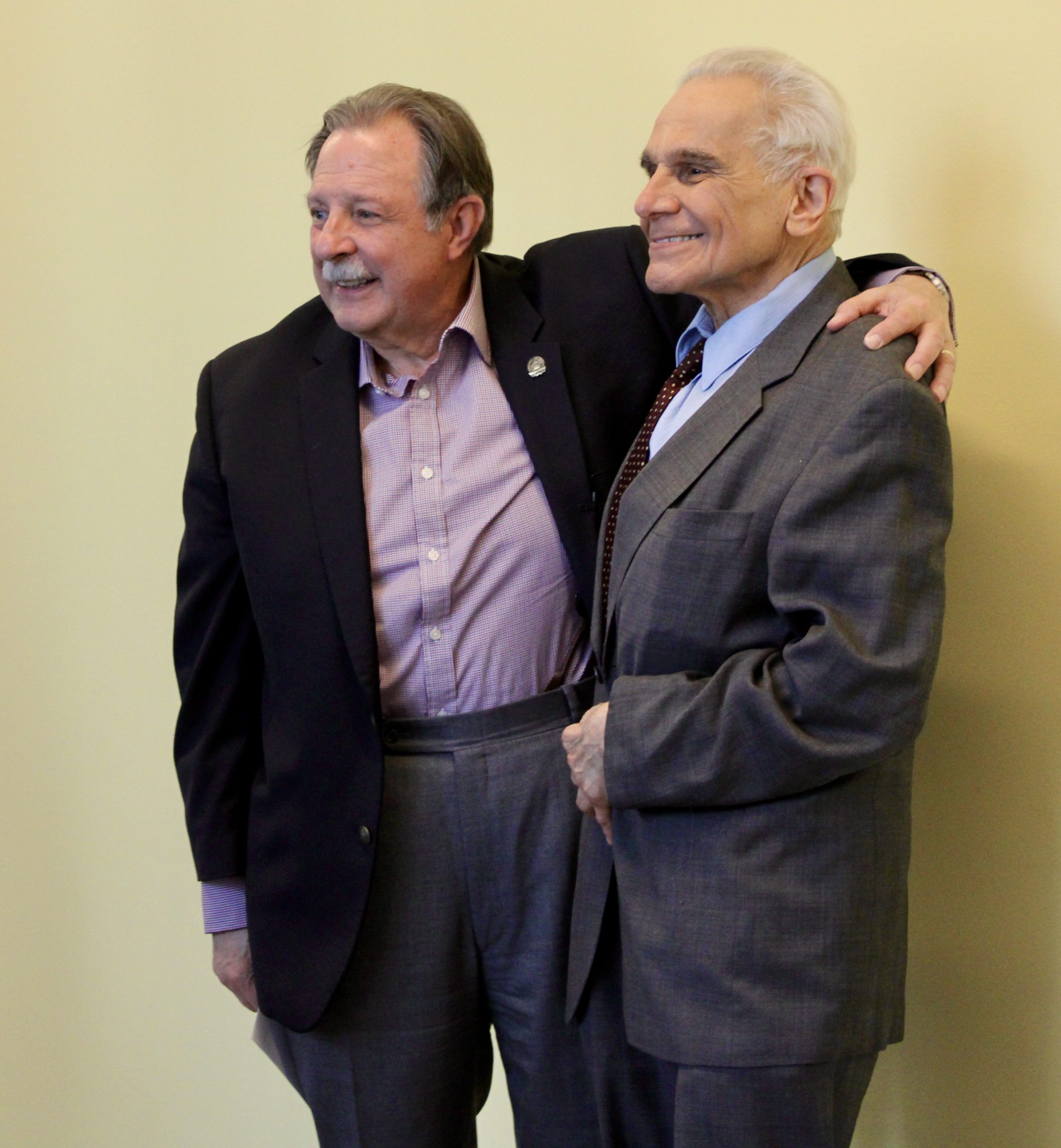
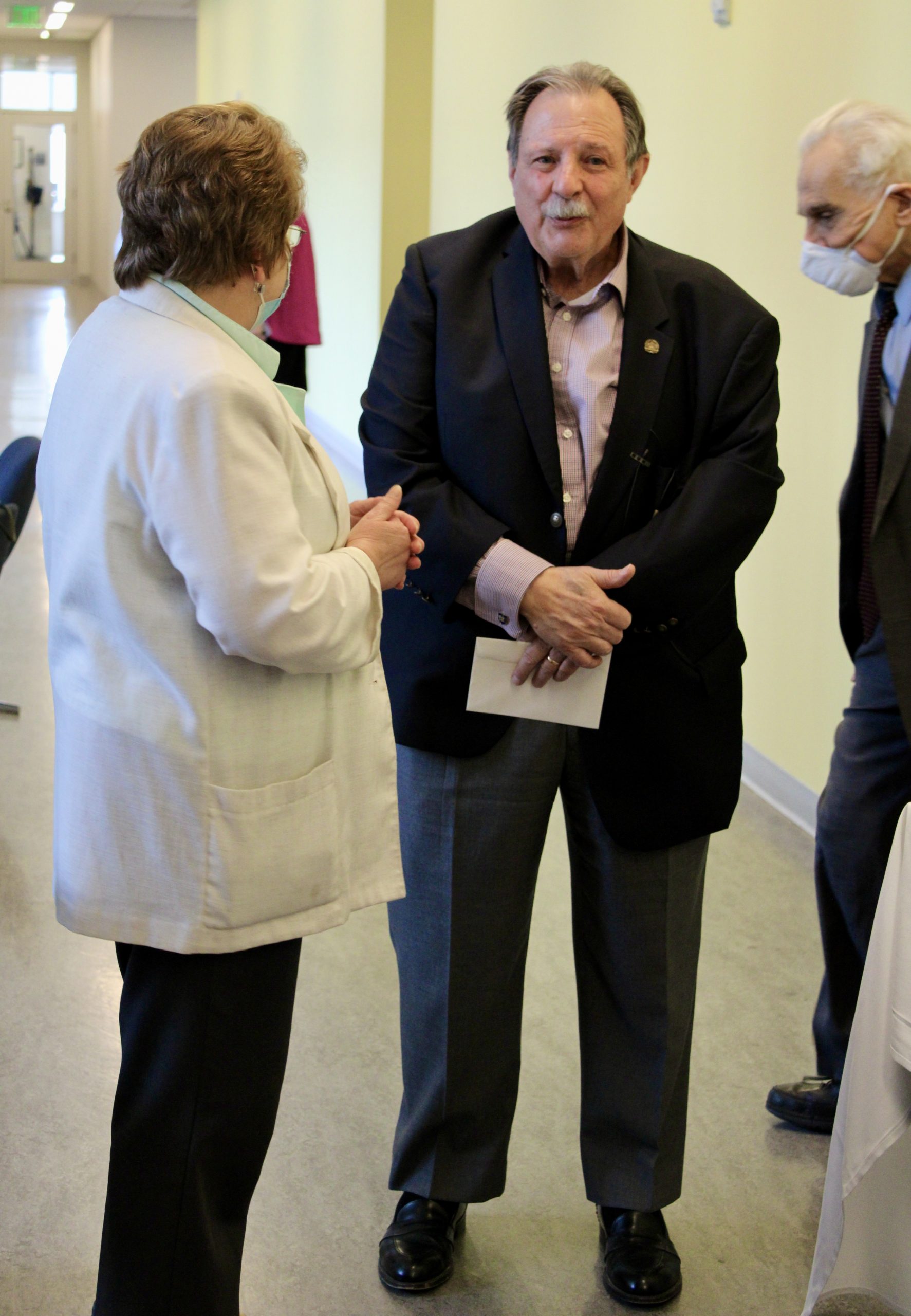
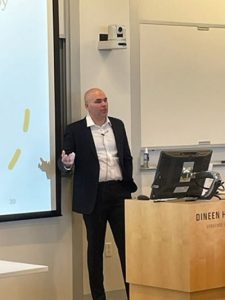
On March 22, 2021, students from the Spring 2021 Washington, DC, Externship Program (DCEx) heard from Joseph Di Scipio L’95, who offered a seminar discussing FCC compliance issues for broadcasting stations. 

Di Scipio is an accomplished legal expert in FCC regulatory compliance who currently serves as Senior Vice President, FCC Legal & Business Affairs and Assistant General Counsel at Fox Corporation. He is responsible for all FCC regulatory matters relating to Fox Corporation’s television stations, including negotiating retransmission consent and other distribution agreements, spectrum issues, M&A activity, and other special projects. 

Also holding an M.P.A .from Syracuse University Maxwell School of Citizenship and Public Affairs, Di Scipio serves on the National Association of Broadcasters Board of Directors and has previously served as the President of the Syracuse University Law Alumni Association. Di Scipio continues to provide support to Syracuse Law students and alums.

In preparation for the seminar, students viewed various political candidate and issue-related advertisements along with substantiation documents which compared claims made in the advertisements to the facts collected from the public record. 

After presenting these recent case studies, Di Scipio led an in-depth analysis and discussion surrounding FCC compliance with respect to political and issue-related advertisements. Di Scipio discussed with students his decision-making process, which includes a step-by-step analysis and risk-balancing test that takes into account the brand’s reputation, candidate rights to air advertisements, and sustaining ad revenues. 

Voice of America Interviews Professor Emily Brown About Amazon Union Drive

Amazon company workers at a warehouse in Bessemer, AL, are trying to organize a union, what many analysts see as a milestone event for the American workforce, while Amazon continues its efforts to disrupt a possible “yes” vote. 

The Voice of America Eurasia Division asked labor law expert Professor Emily Brown for her analysis.

Professor Brown’s segment begins at 47′ 36″. 

Watch the March 9, 2021, segment.

https://www.golosameriki.com/embed/player/0/5807853.html?type=video

Preparedness, Planning, and Leadership: Professor William C. Banks Looks at Lessons Learned in 2020

Professor of Law Emeritus William Banks

Hope jostles with fear in US

(China Daily | Jan. 5. 2021) New leader is on the way, but wounds could take time to heal in a polarized nation

The year 2020 has passed into history with a series of cascading events in the United States ranging from racism protests to a traumatic presidential election-all played out against the backdrop of a deadly pandemic.

The past year will make itself felt in 2021 as a more divided country grapples with twin health and economic crises.

The US casualties from the novel coronavirus, which the nation’s scientists now believe first infected people there in mid-December 2019, had surged past 351,000 on the first days of 2021. That’s roughly one of every 1,000 residents, the most in the world for a single nation.

But the pandemic wasn’t the only event that shaped the year.

William Banks, distinguished professor emeritus at Syracuse University College of Law in New York, summed up 2020 in three phrases: COVID-19, racial justice, and democracy threatened.

The pandemic will mark 2020 as equivalent to 1918 when a similar pandemic killed huge numbers of people, Banks said.

“The lessons learned hopefully are preparedness, planning, and leadership,” he told China Daily. “The US lacked all three this year” …

Read the full article.

Letter to Students from Dean Boise Regarding Events in Washington, DC, Jan. 6, 2021

Dear College of Law Students,

Each of you came to Syracuse to learn the law. You were no doubt driven by various conceptions of what the law means, whether our laws are just—or justly applied—or what a career in the law might look like for you. 

As your faculty, we pride ourselves on our knowledge of the law, and it is our role to help you learn it, interpret it, analyze it, apply it, and—yes—challenge it, even criticize it.

But yesterday’s violent storming of the Capitol by a mob angry with the outcome of the election illustrates more dramatically than any classroom instruction the most important function of the law—to serve as the framework for maintaining a peaceful, orderly, and well-functioning society.  

Acts like those perpetrated on Jan. 6, 2021, not only are unprecedented in our country’s history, they also threaten the very roots of our democracy and chillingly demonstrate its fragility. 

Whatever your political persuasion, we can surely agree that the rule of law must always be paramount, that disagreements are to be resolved through the democratic process, not violence, and that the periodic transfer of power must take place peacefully. A colleague reminded me yesterday of Supreme Court Justice Robert Jackson’s statement in his concurring opinion in Youngstown Sheet & Tube Co. v. Sawyer:

… [W]ith all its defects, delays, and inconveniences, men have discovered no technique for long preserving free government except that the Executive be under the law, and that the law be made by parliamentary deliberations. Such institutions may be destined to pass away. But it is the duty of the Court to be last, not first, to give them up.

The events of January 6 remind us of the truths in this statement, that “free government” is not inevitable—it may “pass away”—and that the Courts, and we lawyers, as officers of the Courts, are afforded both the privilege and the profound responsibility of being the last defense against its demise.

Shortly after the outbreak of the Civil War, Frederick Douglass wrote that “nations are taught less by theories than by facts and events.” Take stock of the facts and events that have unfolded before you—yesterday and throughout this election process—and as you prepare to resume your studies this semester, know that you are being offered the most valuable lesson of your legal education.

Most importantly, I urge you to commit yourself in whatever way you are able to work toward preserving the framework of law that has secured the freedom we have for so long enjoyed.

Best regards,

Craig M. Boise
Dean and Professor of Law

College of Law Faculty to Participate in Society of Socio-Economists Annual Meeting

Several College of Law faculty members will be among the participants in the 2021 Society of Socio-Economists (SOS) Annual Meeting. Hosted by the College of Law and titled “Pressing Social Issues,” the meeting will take place via Zoom on Jan. 10, 2021. 

The issues to be discussed include wealth and income distribution; race, gender, and class justice; environmental sustainability; inclusive capitalism; the economics of war and peace; corporate fiduciary duties, social responsibility, and governance; and the ethical dimensions of economic analysis.

Included among the featured participants are Syracuse University College of Law professors Robert Ashford, Christian Day, David Driesen, and Shubha Ghosh. The full program can be found at societyofsocio-economists.com.  

For more information, contact Professor Robert Ashford, Program Co-Chair for the AALS Section on Socio-Economics.

Professor William C. Banks Comments on the Capitol Hill Riot

U Law Professor Saddened, Concerned About Democracy’s Future

(Spectrum News | Jan. 7, 2021) Sadness: That’s how Syracuse University Law Professor Bill Banks felt when he watched a mob rush the Capitol on Wednesday. A group of people took extreme measures to vindicate a president who refuses to accept defeat, he said.

“It’s quite an ironic and disturbing spectacle to have the president of the United States engage in sedition,” said Banks. “That is in violent, illegal attempts to overthrow the government of the United States.”

Capitol police were overwhelmed Wednesday afternoon. The logistics are still unknown.

Law enforcement in Washington, D.C., is unique because the Defense Department usurps the city’s power, said Banks. He says either the police misapprehended where the group was or they were underprepared.

“They simply didn’t have the numbers to stand up to the thousands of violent thugs who were using any means available to them to break into the building,” said Banks …

Read the full article


CNY Reactions to Washington D.C. Attack on Congress from Disgust to Anger to Blaming Trump

(WAER | Jan. 7, 2021) Reactions to the storming of the U.S. Capitol building by a large number of President Trump supporters Wednesday sparked some strong reactions from New York’s Congressional delegation and political experts in Central New York …

Syracuse University Professor William Banks, founder of the Institute for Security Policy and Law says the mob and its activities fall short of a coup attempt, though said it was appropriate for police to use force to quell rioting …

Read the full story.

Lawyers in Love: David Katz L’17 and Danielle Katz L’18

Photo of David Katz and Danielle (Wilner) Katz  holding hands outside

Although David Katz and Danielle (Wilner) Katz took two very different paths to get to the College of Law—where they met in 2016 before getting married in 2018—their journey shared one thing in common: each decided to attend Syracuse Law because of the quality education and collaborative environment it offered.

David, a Cornell University grad, knew since fifth grade he wanted to study law. Danielle, a Toronto native, had landed a job in guest service management after her undergraduate study in Canada but she needed more of a challenge.

So Danielle began researching law schools. She decided on Syracuse, which was the perfect distance from home, and is surprised even today at how much she enjoys living and working in Central New York as a change from her big city roots in Toronto.

“Syracuse is great. I love the person I’m with and the work that I do,” she says.

When David and Danielle met in the fall semester, neither of them thought much of each other. Danielle was just starting law school, and David was entering his last year.

But in the spring semester, David came across Danielle stressing over an assignment. He offered to take her to get something to eat. She agreed, but wanted to make it quick, thinking they would swing by McDonalds. But David—a local from Liverpool, NY—was a regular at Phoebe’s, down Irving Avenue from campus, so that’s where he took her.

“I was so stressed, I couldn’t enjoy myself,” Danielle admits.

But after Danielle turned in her assignment, she realized what a great time she had had with David. They became fast friends, so much so that when she couldn’t get home for Passover, David invited her to his family’s home for Easter instead.

“We weren’t dating, but his whole family thought we were,” Danielle recalls. Adds David, “My uncle pulled me aside and said, ‘You think she is just your friend, but there’s more to this!’”

Shortly after Easter 2016, the couple made it official and began dating. In November 2018, they took a weekend off from Danielle’s final semester and were married in Toronto. They held off on a honeymoon until after graduating and settling into their work lives.

Last winter, the Katzes were finally able to honeymoon in St. Lucia. Having had a great time on the Caribbean island, they arrived home just as the whole world was shutting down because of the coronavirus pandemic. After almost a year on lock-down as newlyweds, they have not only survived but thrived during an unprecedented time.

The couple has the alumni community as a support structure and work they share in common and which they love. David is a civil litigation associate at Smith Sovik Kendrick & Sugnet PC while Danielle practices corporate transactions and trusts and estates at Barclay Damon LLP. They couldn’t be happier, they say.

“Because we don’t work in the same area, it’s really cool to get different perspectives on working in the same profession,” David explains.

“Essentially he goes to court and I don’t,” Danielle notes.

Lawyers in Love: Jay Brown L’95 & Consuela Pinto L’95

Jay Brown and Consuela Pinto on a beach hugging.

Jay Brown, who grew up in the Pacific Northwest and studied finance and economics at Santa Clara University, combined two desires when he came to Syracuse in 1992: the study of law and the experience of going East. He didn’t expect to meet his future wife, Consuela Pinto.

Growing up in North Jersey, Consuela was thrilled to go out of state to Boston University’s Questrom School of Business. She always knew her aim was college, as her first-generation Italian parents desperately wanted their children to become either doctors or lawyers.

She was settled and established in Boston, working in human resources for a bank that wanted her to stay after graduation. However, with law school in the back of her mind, Consuela knew if she didn’t go right after graduation, she may never go.

In their words, Jay and Consuela’s relationship started as a solid, comfortable friendship. Cast together in Professor Richard Ellison’s 1L Law Firm section, they ended up in a small study group.

In the second semester, Jay asked Consuela to have dinner at Pastabilities in Armory Square. There, they started a pastime that still holds after 23 years of marriage—debate, or what Consuela calls “ridiculous discussions.” That night they deliberated over the existence of New Hampshire’s coastline (for the record, the state does have a 13-mile stretch of Atlantic shoreline called the Seacoast Region).

Consuela, who had also graduated with an M.P.A. from the Maxwell School, says, “Jay is very calm and I’m the polar opposite, and if there was a point in my life when I needed an infusion of calmness, it was my time in Syracuse.”

After graduation, the couple headed to Washington, DC, where Consuela went to work for the Department of Labor. This was the perfect location for Jay as well, because his focus was antitrust law.

Making their home in Silver Spring, MD, the couple have raised two children. Isabel is in Boston attending Northeastern University, while Matthew is a high school junior studying from home because of the coronavirus pandemic.

Upon leaving the labor department, Consuela, who had been the President of the DC Women’s Bar Association, became a shareholder at FortneyScott, a leading management employment law firm. Her focus is Equal Employment Opportunity compliance, with a specialty in government investigations.

Today, Jay is still steeped in business law as Deputy General Counsel at the US Chamber of Commerce. He says 2020 was a busy year for the Chamber with the discovery that going virtual added the benefit of reaching a larger audience. Before the pandemic, he says, they would draw hundreds to an onsite event, now they virtually reach thousands at a time.

Both have been working from home for the past year, which they say has turned out to be great, adding tremendously to family time. Cutting out the commute, they can even have breakfast together; with the bonus of being available for Matthew if he has study questions.

Referring to his career spent in the nation’s capital, Jay compliments the College of Law’s impact, noting its great alumni network. “Our class had a particularly large group of graduates relocate to DC. Among them are alums who have reached high levels in government agencies, prominent firms, and well-known companies with offices in the capital.”

DRIVEN: Gunther Buerman L’68 on the Road from Syracuse Law to the Newport Car Museum

Maggie and Gunther Buerman at the Newport Car Museum in a car.
Maggie and Gunther Buerman at the Newport Car Museum

Gunther Buerman L’68 could lay claim to being “The Most Interesting Man in the World!”

Through a legal career that saw him grow the Harris Beach PLLC law firm from 20 lawyers to over 200, to founding and owning the American Rock Salt Company, to his competitive sailing endeavors, to establishing what USA Today calls one of the “10 Best New Attractions in America”— the Newport Car Museum—Buerman also embodies Dean Boise’s belief that a “well-rounded person makes a well-rounded lawyer.”

Gunther Buerman on sail boat with other people in Newport, RI.
Buerman competes in sailing events from his home in Newport, RI.

Buerman’s path to the College of Law started as an undergraduate at St. Lawrence University, where he studied history and government. He thought about teaching, but when he learned his friends were applying to law schools, he took the law boards and scored in the 98th percentile.

“Syracuse was gracious to see what I did in undergrad, and provided me with a full scholarship,” he recalls.

Buerman, on the left, is presented with a trophy after a race.

“Be entrepreneurial”

While in law school, business-related courses caught his interest. “Going back to undergrad, I was always interested in learning how to run a business, so courses on Contracts and Financial Transactions have served me well all these years and continue to do so,” Buerman says.

Upon graduating from Syracuse Law, Buerman began his legal career in Rochester, NY. He became Harris Beach’s Managing Partner by age 40 and served in that role and Chief Operating Officer for nearly 30 years, overseeing the tenfold growth in the firm’s personnel.

“The business of running a law firm was a constant in my legal career,” says Buerman. “How does a firm in Upstate New York serve its clients with a good team, and how do you add to that team?” he says. The answer, he reveals, is to be entrepreneurial, and to instill that mindset in the attorneys and staff. Embracing new technologies quickly helps a firm stay on top, he adds.

Along the way, Buerman assembled a sizeable private collection of automobiles. He had become hooked on the art of car design while at St. Lawrence. “I almost majored in fine arts. Cars are kinetic art and a reflection of the culture of when they were built. For example, the 1950s and ‘60s cars of the new jet and rocket age had rocket- like fins and tail lights like jet planes, and rocket exhausts. The collection started with an old ’66 Ford Mustang I inherited and fixed up. Then a Porsche, and from there it kept snowballing.” So much so, he had to install lifts in his home garage to store his collection.

“Let’s start a Museum!”

After retiring from Harris Beach, Buerman and his wife Maggie began splitting their time between Newport, RI—where they would race his TP52 and 12 Metre sailboats during the summer weekends— and a home in Florida. Their automobile collection was scattered between the two residences.

“Maggie and I realized we weren’t able to drive and enjoy the cars as much while racing the sailboats, so I said to her that we should sell them or start a museum. Her immediate response was, ‘Let’s start a museum!’” says Buerman.

Using his experience as a lawyer, he and Maggie established the Newport Car Museum, a 501c(3) organization that occupies a former Patriot missile factory in nearby Portsmouth, RI. The Museum opened in 2017 and displays approximately 85 cars representing six decades of automobile innovation.

Having the Museum cars—all of which are from Buerman’s collection—open and accessible to visitors was an important feature for Buerman. Each car is on a platform and without ropes around them, which enables easy access and the ability to have them driven on the Museum grounds.

3 cars on display at the Newport Cart Museum.
The Newport Car Museum features approximately 85 cars
representing six decades of automobile innovation.

“Experience life”

Like for other businesses and attractions, the COVID-19 pandemic had a significant impact on the Museum. “We closed on March 15 but were open in a limited capacity by early June,” Buerman explains. “You couldn’t just open the doors. We had to put in place a whole new set of COVID-19 protocols. Since we have a lot of physical space, people could be socially distanced.” Now we are fully opened, without any COVID-19 restrictions.

Again, Buerman’s background as a lawyer helped the Museum navigate new regulations on labor issues that became critical during the pandemic. The Museum is seeing a rebound in traffic as vaccines are rolled out and pandemic restrictions are rolled back. Buerman is bullish about the immediate future: “I see a ’Roaring ’20s scene about to happen again. People are looking for opportunities to get out and experience life. Maybe even the Charleston will come back!”

“Looking back, I was lucky to go to a law school that served me so well and continues to do so,” Buerman adds.