News

Professor Nina Kohn on WHEC: Nursing Home Residents Are Being Disenfranchised

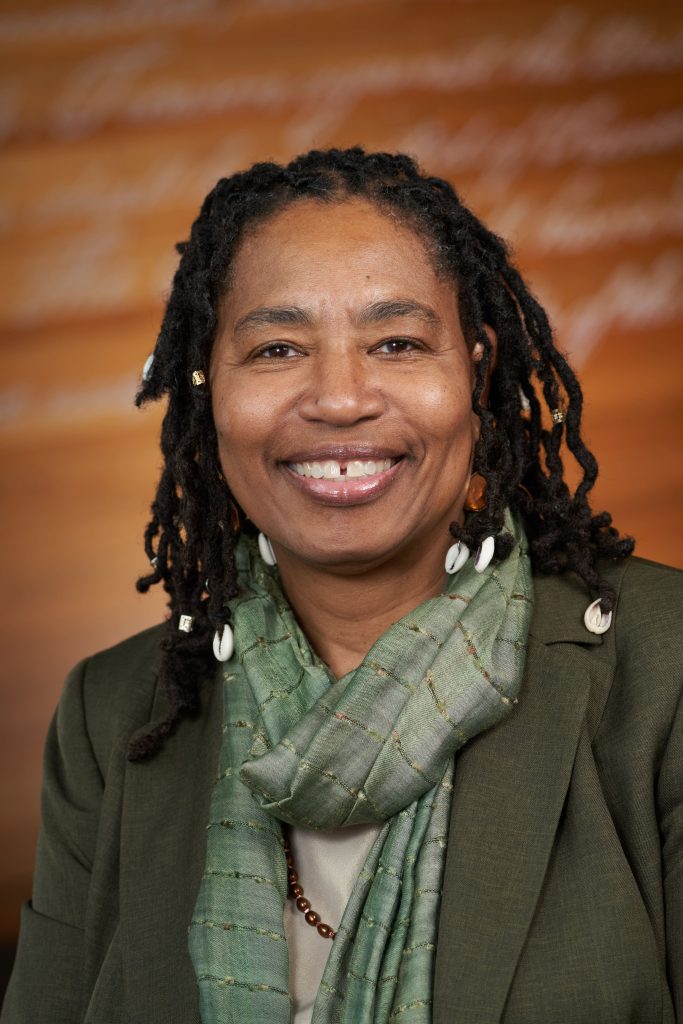
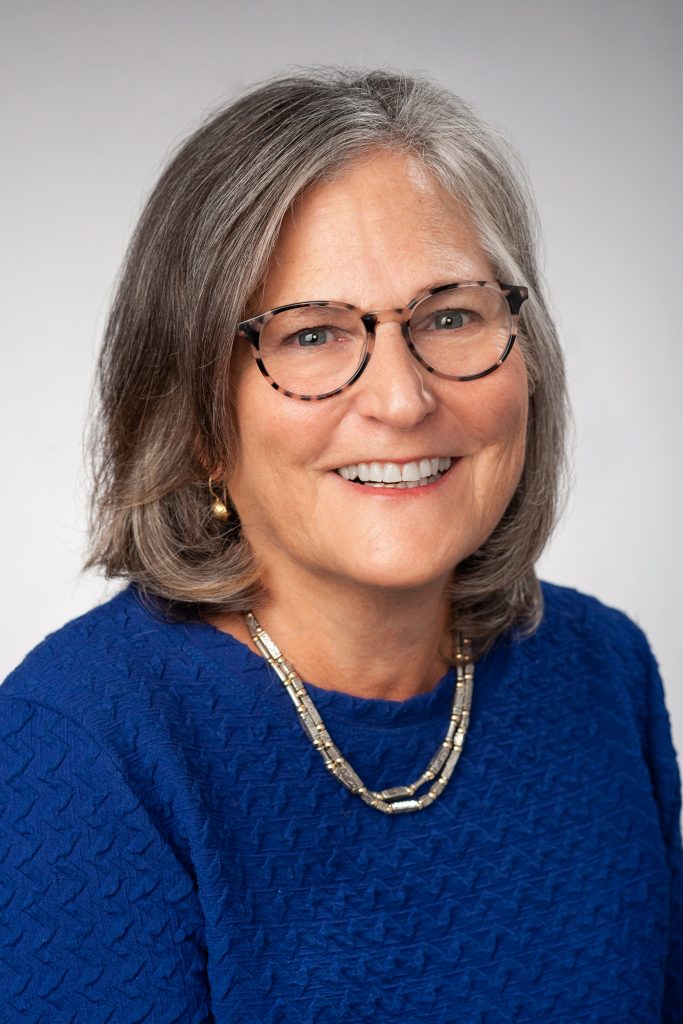
Professor Nina Kohn

Nursing home residents face voting challenges during pandemic

(WHEC Rochester, NY | Oct. 29, 2020) At 94, Mary Insalaco has voted in every presidential election dating back to the 1940s. And despite being isolated in a nursing home, she wasn’t about to let that stop her this year.

“That’s one thing I’ve always believed in. Your vote counts. Even though it’s one, it counts. They add up,” Insalaco said.

Mary is used to voting in person. But because of COVID-19 restrictions, she can’t really leave the Jewish Home. So her daughter, Carol Britt, came here with Mary’s mail-in ballot. They talked through the glass during a window visit and discussed how Mary wanted to vote.

“Today she’s going to put her signature on it that this is her choice,” Britt said, holding Mary’s ballot.

“My daughter brought me my papers here, I signed them, filled them out with her and gave it back to her and got my little voting sticker and I proudly wore it,” Insalaco said.

Mary’s fortunate to have family nearby to assist her. But for many nursing home residents, that’s not the case. And that has some advocates worried about the roadblocks facing seniors as we approach Election Day.

“So it’s very much like we have a train barreling down the track and the brakes are not working,” Nina Kohn said.

Kohn is a law professor at Syracuse University and a scholar in elder law.

Brett Davidsen: “Are they being disenfranchised?”

Kohn: “In many cases, yes. A resident of a nursing home needs substantial assistance typically to be able to vote and when that assistance isn’t forthcoming, as a practical matter, they won’t be able to vote” …

Has the COVID-19 Pandemic Ushered in the Drone Age?

By 3L Viviana Bro

COVID-19 has impacted every area of our lives. COVID-19 may have accelerated the incorporation of unmanned aerial vehicles, otherwise known as drones, into our daily lives. Examples include law enforcement activities, assisting in search and rescue operations, inspecting pipelines and infrastructure, photographing real estate, surveying land, disaster assistance, news gathering, and recreational.

Even though the benefits of drone integration seem palpable and extensive, concerns that drone technology may impact and erode privacy and property right have yet to be resolved in the United States. Drones are authorized via remote control by a pilot on the ground and are generally restricted from operating beyond the pilot’s line of sight, over people, above 400 feet, and within certain distances of an airport.

In “Geospatial World,” Mukesh Sharma reports that drone use during the pandemic has been widespread in parts of China and Europe where drones fitted with loudspeakers broadcast coronavirus-related messages and information. The Chinese government deployed drones with infrared cameras to read people’s temperature as they stood on apartment balconies. Some governments deployed drones to enforce COVID-19 restrictions such as forbidden social gatherings that fueled infection dissemination. In the United States and abroad, drones have been used to deliver medical supplies, household goods, and food.

Drone involvement in containing the virus through benign utilitarian missions has contributed to a positive image. Arguably, pre-pandemic drone apprehension is dissipating as drone pervasiveness in the public’s consciousness has increased during lock-downs.

However, many worry that drone proliferation is starting to erode some historical rights. For instance, the Federal Aviation Administration (FAA) has stated that 49 U.S.C grants them the right to create comprehensive regulations for “the use of the navigable airspace … to ensure the safety of aircraft and the efficient use of [that] airspace.” (Unmanned Aircraft Systems: Current Jurisdictional, Property, and Privacy Legal Issues Regarding the Commercial and Recreational Use of Drones, GAO U.S. Government Accountability Office, Sept. 2020). In the GAO report, the Department of Transportation has clarified that the term “navigable airspace” “… includes zero feet (‘the blades of grass’) as the minimum altitude of flight for UAS.”

This understanding clashes with property rights in airspace. Under ancient common law doctrine, property rights in airspace extended to the periphery of the universe (GAO Report). In the 1946 landmark United States v. Causby decision, the U.S. Supreme Court analyzed the concept of ownership of airspace above private property. The Court concluded that landowners have “exclusive control of the immediate reaches of the enveloping atmosphere,” and that they own “at least as much of the space above the ground as they can occupy or use in connection with the land.”

Under the authority to control the navigable airspace, the FAA has granted drones freedom of operation from the ground and up to 400 feet. This authorization, some claim, is incongruent with landowners’ property rights in airspace. To initiate a discussion and bring some uniformity about “the states’ ability to take action against operators of drones who violate existing trespass, privacy and negligence laws,” the Uniform Law Commission (ULC) took the lead in drafting the “Uniform Tort Law Relating to Drones Act” (GAO Report).

According to Brian Wynne and Gary Shapiro in  New Approach to State Drone Laws Balances Privacy and Innovation article, stakeholders flatly rejected the first 2018 version because it presented a “one-sided, unworkable, 200-foot ‘line in the sky’ approach.” The 2019 version has not fared much better. While proponents of this Act perceive it as a compromise between the rights of landowners’ property rights and the drone industry, vociferous critics see is a “radical departure” from current property rights (GAO Report).

While the debate rages in the U.S., other nations, whose views on privacy and property rights differ radically from ours, are moving forward with the development and utilization of drone technology. As a result, these countries are amassing and mining vast amounts of data from their citizens. Some claim that the exploitation of these data allows these countries to make extraordinary scientific leaps, which the United States cannot realize under current notions of privacy and property rights (In the Age of AI, Frontline film, Dec. 2019).

As the pandemic slowly retreats and we emerge from a penumbra of uncertainty, some anticipate a more benign attitude toward drone technology will emerge. A new outlook could enable proponents and opponents to arrive at legislation that makes sense in an increasingly technological world. Three companies (Amazon, UPS, and Wing from Google) have obtained special permissions to deliver beyond visual line of sight. Amazon was granted two patents covering a technology to provide surveillance services via drones, with a “virtual fence” around the property being surveilled.

Balancing privacy and property rights with the social and economic benefits that drones bring is a difficult task. But it must be done because drones are here to stay, whether we like them or not.

Professor Mark Nevitt on Pentagon Labyrinth: What’s the Military’s Role in a Contested Election?

What’s the Military’s Role in a Contested Election?

(POGO Pentagon Labyrinth | Oct. 27, 2020) We are on the eve of what could be a contentious and disputed election, and a turbulent transition. Given the possibility that we will not know who the winner is for some time after November 3, there are increased concerns about domestic disturbances and violence.

This is prompting many to openly discuss the military’s role in such a scenario. The Military Times recently published an article titled “How the president could invoke martial law.” Several legal scholars have also weighed in on the issue in the past few months.

One is Mark Nevitt, a professor of constitutional law, national security law, environmental law, and climate change law at Syracuse University College of Law. He has a solid military background as well. He started his career as a Naval aviator flying the S-3 Viking; he flew over a thousand hours and had approximately 300 carrier landings. When the Navy retired the S-3s, it sent Mark to Georgetown Law. He spent the rest of his career as a Navy judge advocate general before retiring in 2017 to join academia.

Listen to the segment.

Professor William C. Banks Mulls Election Scenarios in Medium and AP

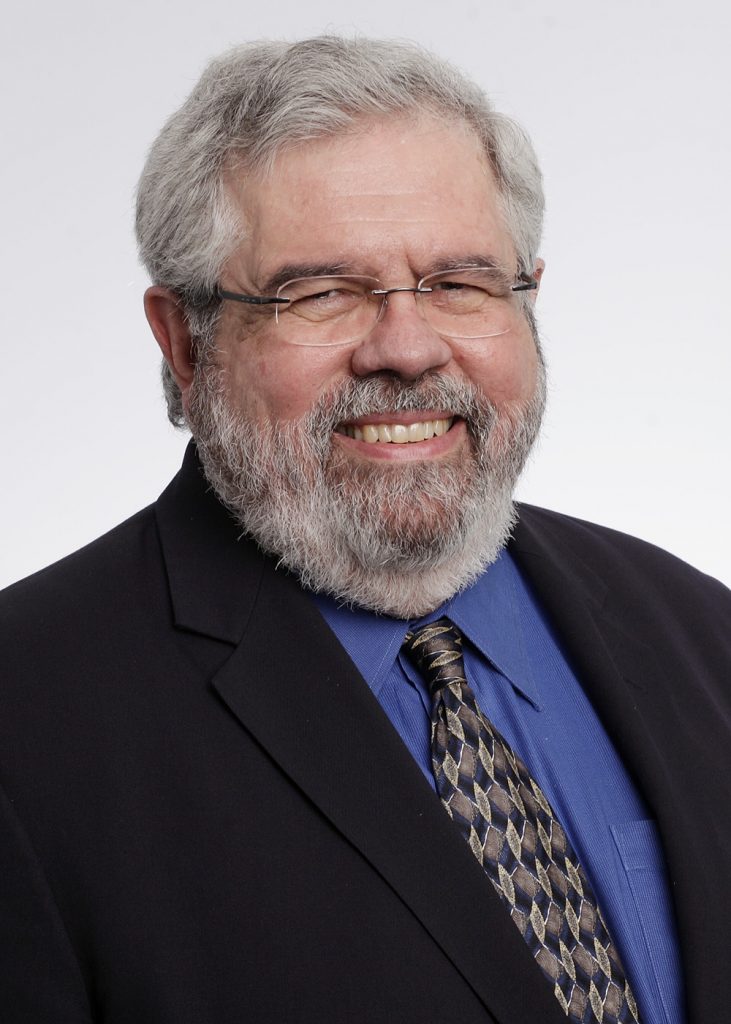
Professor of Law Emeritus William Banks

Will There Be Blood?

(Medium | Oct. 26, 2020) In his inaugural address four years ago, President Donald Trump declared a crusade against the “carnage” he said his predecessors had wrought on the nation, lining their own pockets while creating a nation of “forgotten men and women.” Five hours later, fired up and triumphant, Trump filed for re-election, the earliest incumbent to do so in memory. So it was that Trump set the stage for what a lot of people thought was him governing, but in effect has been the most foreboding, nerve-frazzling — and by far the longest — re-election campaign in modern U.S. history.

Just a week away from its climax, some of the country’s most sober voices say one cost of Trump’s term-long barrage of grievance and accusation is the possibility of civil unrest on and after Election Day. There is always the chance that fraught tempers will dissipate, either by luck or a landslide one way or the other that imposes a forceful quiet on the contest. But, with an animated Trump issuing daily allegations of a sinister plot to unseat him, and supporters of both sides apprehensive of how far the other is prepared to go to win, the fear is that Americans will erupt in the worst political violence since Jim Crow …

… William Banks, a law professor at Syracuse University, said the president’s actions reflect mere “Trumpian rhetoric, played to maximum volume for his base.” Perhaps, though we won’t know until we see his reaction should he be defeated next Tuesday …

Read the full article.

An Election Day Role For National Guard? Maybe, But Limited

(AP | Oct. 30, 2020) Federal laws and long-standing custom generally leave the U.S. military out of the election process. But President Donald Trump’s unsubstantiated warnings about widespread voting irregularities have raised questions about a possible military role.

If any element of the military were to get involved, it would likely be the National Guard under state control. These citizen soldiers could help state or local law enforcement with any major election-related violence. But the Guard’s more likely roles will be less visible — filling in as poll workers, out of uniform, and providing cybersecurity expertise in monitoring potential intrusions into election systems …

… William Banks, professor at Syracuse University College of Law, said that sending uniformed troops to the polls, including the Guard, would be unwise.

“The overriding point is that we don’t want the military involved in our civilian affairs. It just cuts against the grain of our history, our conditions, our values, our laws,” he said …

Professor William C. Banks Helps Military Times Explain Martial Law

Professor of Law Emeritus William Banks

How the president could invoke martial law

(Military Times | Oct. 23, 2020) Throughout 2020, America has faced a global pandemic, civil unrest after the death of George Floyd and a contentious election. As a result, an influx of fear about the possibility of the invocation of martial law or unchecked military intervention is circulating around the internet among scholars and civilians alike.

“The fear is certainly understandable, because as I’m sure you know, martial law isn’t described or confined or limited, proscribed in any way by the Constitution or laws,” Bill Banks, a Syracuse professor with an expertise in constitutional and national security law, told Military Times. “If someone has declared martial law, they’re essentially saying that they are the law.”

What is ‘martial law’

In short, martial law can be imposed when civil rule fails, temporarily being replaced with military authority in a time of crisis. Though rare, there have been a number of notable U.S. cases where martial law came into play, including in times of war, natural disaster and civic dispute — of which there has been no shortage in 2020.

While no precise definition of martial law exists, a precedent for it exists wherein, “certain civil liberties may be suspended, such as the right to be free from unreasonable searches and seizures, freedom of association, and freedom of movement. And the writ of habeas corpus [the right to a trial before imprisonment] may be suspended,” according to documents from JRANK, an online legal encyclopedia …

Read the full article.

2Ls Penny Quinteros and Margaret Santandreu Win 2020 BSK Competition

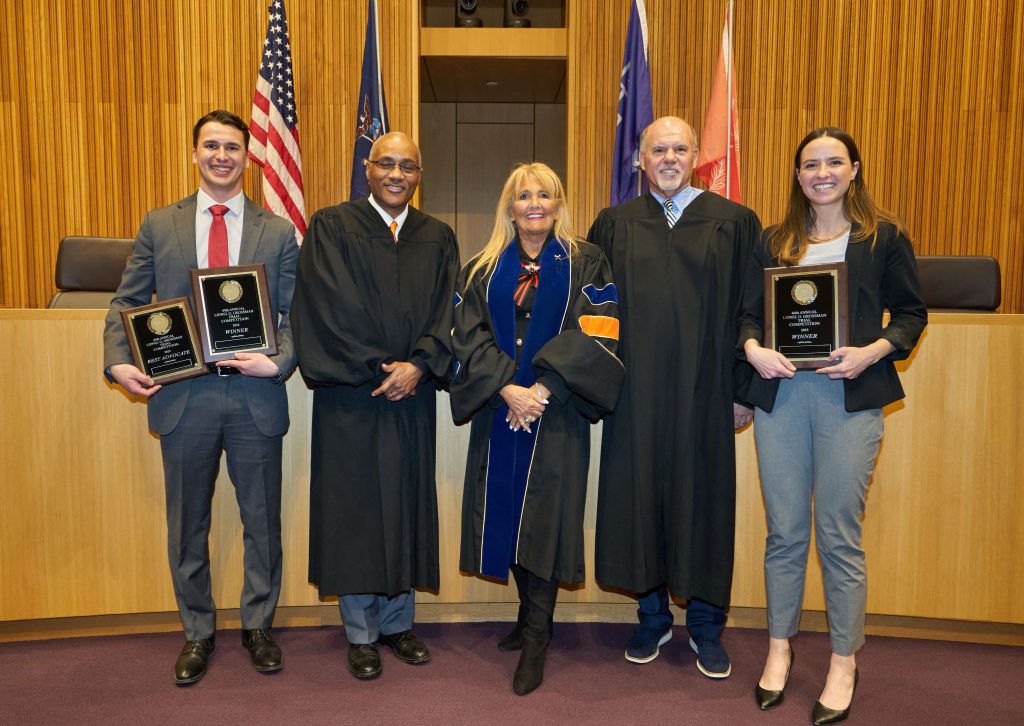
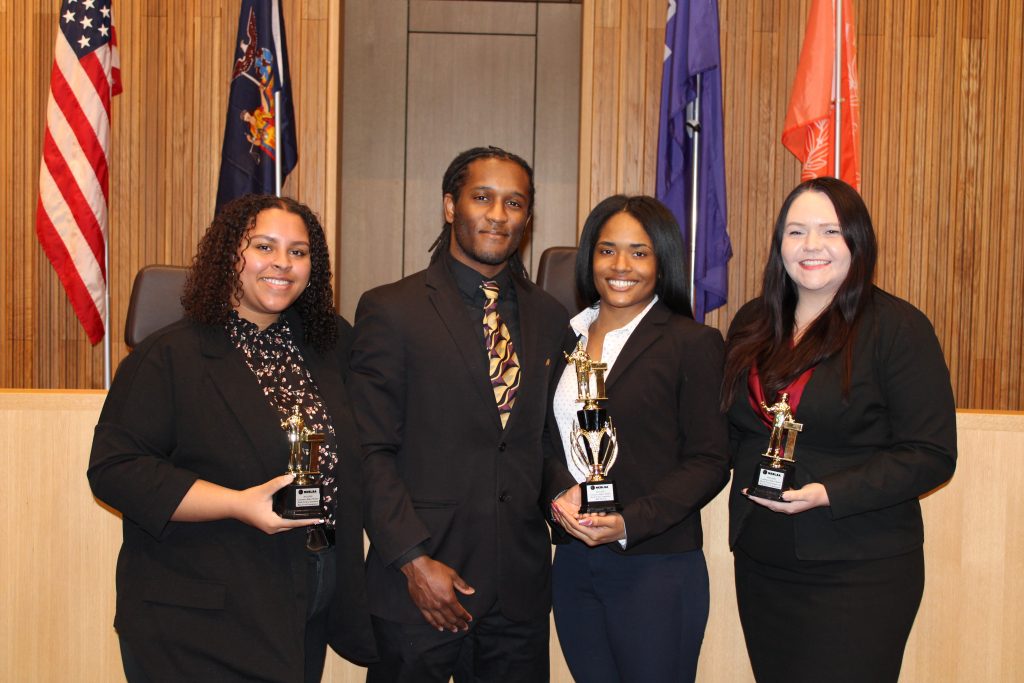
Congratulations to 2Ls Penny Quinteros and Margaret Santandreu, winners of the 2020 Bond, Schoeneck & King Alternative Dispute Resolution (BSK ADR) Competition. More than 70 watched the final on Zoom, with Quinteros and Santandreu prevailing over the team of 3L Kylie Mason and Shannon Wagner. 

For their final case, argued on Oct. 22, 2020, students negotiated the validity of a sales agreement for a horse, Beautiful Pegasus, after he was stolen from the farm where he was being cared for prior to delivery. Teams had to identify who would be held liable for the theft, and they advocated for a full reimbursement or specific performance.

Third year, second year, LL.M., and JDinteractive online law degree program students took part in the competition. At the final, Mason was named Best Advocate, while Quinteros becomes the first JDinteractive student to win a College of Law intracollegiate advocacy competition. 

“Despite the challenges that a virtual competition brings, students put their creativity to the test and vigorously advocated for their clients,” says 3L Frances M. Rivera Reyes, BSK ADR Negotiation Competition Director. “Without a doubt, we have some incredibly talented advocates in our school.”

Final judges were The Hon. Joanne F. Alper ’72, a retired judge for the Circuit Court of the Seventh Circuit of Virginia; James L. Sonneborn, of Bousquet Holstein PLLC; and Brian Butler L’96, a managing member for Bond, Schoeneck & King PLLC.

BSK ADR 2020 Competition Finalists

Institute for Security Policy and Law Experts Featured in JNSLP COVID-19 Special Issue

As the novel coronavirus swept the globe in late 2019 and early 2020, a full-blown pandemic quickly and significantly affected the United States. The public health crisis worsened in the winter and spring of 2020, and it soon became clear that national security institutions and processes were being tested, sometimes in new and unique ways.

This is the background of a special COVID-19 issue of the Journal of National Security Policy and Law, edited by Professor Emeritus William C. Banks: “A stunningly good collection of short articles surveying and detailing many of the most vexing legal and policy problems associated with the pandemic,” Banks explains.  

“The articles have been written by internationally recognized subject matter experts who have experience in government, the courts, the cyber domain, public health, human rights, international organizations, domestic military policy and policing, journalism, and several other disciplines,” Banks adds. “Some of the articles take a granular look at aspects of the pandemic, while others widen the lens to look at such issues as leadership.”

Among the articles, Syracuse University Institute for Security Policy and Law Director the Hon. James. E. Baker discusses “Leadership in a Time of Pandemic” in the journal’s lead article, as well as the importance of using the Defense Production Act to its fullest extent during a health crisis.

In his article, Professor Mark P. Nevitt evaluates the responses of different branches of the military and argues that the current public health crisis could be an opportunity to reevaluate the governance of domestic military operations

The Special Issue groups its articles into categories. The first focuses on who is in charge. A second grouping examines pandemic responses from the perspectives of health, privacy, military, and emergency law. A third concerns information from the perspectives of transparency and journalism. A final section includes an important comparative and international law perspective on cybersecurity and the pandemic.

MarketWatch Discusses Google Antitrust Suit with Professor Shubha Ghosh

Professor Shubha Ghosh

(MarketWatch | Oct. 20, 2020) The Justice Department formally charged Alphabet Inc.’s Google with antitrust violations Tuesday, the first major action against Big Tech for its staggering market power and valuations.

“Google is a monopolist in the general search services, search advertising, and general search text advertising markets,” according to the Justice Department’s complaint, filed in federal court in Washington, D.C., on Tuesday morning. “Google aggressively uses its monopoly positions, and the money that flows from them, to continuously foreclose rivals and protect its monopolies.”

Deputy Attorney General Jeff Rosen said Tuesday morning that Google GOOG GOOGL was charged with violating the Sherman Act with its search and search-advertising businesses after a 16-month investigation …

… The Justice complaint does not portend an onslaught of legislation against tech companies but could signal consumer-protection laws down the line, Shubha Ghosh, a law professor specializing in tech issues at Syracuse University, told MarketWatch …

Read the full article.

Professor Roy Gutterman L’00: The Right to Vote Is “The Essence of a Democratic Society”

Professor Roy Gutterman

(Syracuse Post-Standard | Oct. 22, 2020) Four years ago, more than 130 million Americans voted in the presidential election. Through the swirling chaos of this year’s election, experts predict an even more robust voter turnout.

So far, two weeks before the election, 25 million have already voted, largely attributed to both the heightened interest in the election and the Covid-19 crisis. Locally, early voting opens on Saturday at six locations throughout Onondaga County. Whether it is braving lines and social contact at a polling places on Nov. 3, or casting an absentee ballot by mail, will you be one of those voters?

Though much of the attention is focused on the presidential election, and for good reason, there are congressional and state legislative races and local elections on the ballots. The “down-ticket” races and issues may lack the glitz, glamour and gore of the national election but they still play an important role in the democracy and governmental operations. The lower-ticket races determine everything from the composition of Congress to your local government officials, as well as special ballot issues.

The right to vote has been a hard-fought right that embodies the most basic part of the democratic system: choosing the people and officials who will design, set and enforce laws and public policy, and defining what our society stands for. The right to self-governance through public participation — voting — is so vital, the Constitution and a body of federal and state laws ensure and protect the right to vote …

Read the full article.