Lawyers from more than 40 countries have earned their degrees from the College of Law LL.M. program during its 10 years of existence. Seeking to study and further their knowledge in the theory and practice of law in the U.S., LL.M. students are international lawyers who already possess a degree in law from their respective countries. These students come to the U.S. to learn and for a one-year program (or more if they would like to extend), and make the transition to practicing law in the U.S.
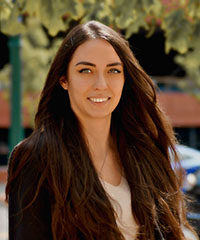
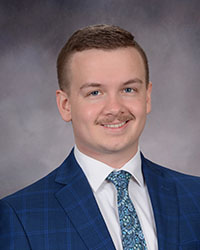
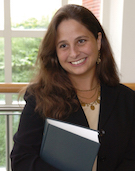
One of these students, Daria Ivasiuk LL.M. ’20, found her experience at the College of Law to be particularly beneficial in preparing her for future success.
Daria Ivasiuk LL.M. ’20
Path to America
Ivasiuk is originally from Ukraine. She graduated from Ukrainian University with bachelor’s and master’s degrees in law. After working in Information Technology (IT) briefly after graduating, Ivasiuk’s family decided to move to the U.S. where they had family in the Syracuse area. Relocating to another country introduced a major professional transition for Ivasiuk, and she found herself on the fence about whether she should pursue a career in law or computer science.
Curious about the U.S. legal system, Ivasiuk ultimately chose to pursue law. She was pleased to discover that Syracuse Law offered a one-year LL.M. program that she was eligible to enroll in to practice law in her new home.
“When I was accepted into the program, my happiness was beyond any measure,” Ivasiuk explained. “Syracuse Law school is a nice place to study, in all terms, and was very helpful and welcoming to me in my journey. No matter your background, Syracuse will help you pursue your legal dream.”
Embracing Diversity
Ivasiuk quickly found that what makes the College of Law unique is how it embraces diversity, helping students of all different backgrounds and nationalities feel welcome and supported. She specifically remembers a meeting of LL.M. students held on the first day of orientation week.
Ivasiuk painted the scene, saying, “when I entered, I saw maybe 30 or more people from all around the world. Each brought their own background, history, cultures, and food preferences—and all were different. I was impressed by this diversity and that Syracuse welcomes everyone. It made me feel that I’m not a stranger here.”
The College of Law provides all LL.M. students with peer mentors to ease the transition in the social aspects of law school and living abroad. Embracing cultural differences and learning from each other is a mutually beneficial experience for both the mentors and students. The social aspect of this experience is also key, as students are immersing themselves not only in the study of U.S. law but also in the whole experience of what it means to be a law student in the U.S.
The U.S. Law School Experience
As she began taking courses at the College of Law, Ivasiuk learned how the U.S. legal system and standards differ from that of Ukraine. She recalls the American Legal Systems course taught by Professor Shannon Gardner where she and her fellow classmates learned about constitutional law in the U.S. piece-by-piece, with a focus on the differences between law at the federal and state levels.
Legal Writing for International Students is another course specifically designed for LL.M. students. This course focused on legal research, essential knowledge for all legal careers. Preparing for her legal memorandum assignment, Ivasiuk researched many facts and cases, piecing her case together to articulate her position. These types of legal writing skills have been very helpful to Ivasiuk in providing background and understanding of what her legal career in the U.S. would soon entail.
Keeping classes small and providing access to professors sets LL.M. students up for success, enabling them to have enriching discussions around the subjects that they are seeking to master. “Professor Deborah O’Malley took the time to review every question we had until we had no more,” Ivasiuk was happy to find. “It was very helpful to me.”
Preparing for the Future
The main takeaway Ivasiuk learned from law school is that you must work for your results.
“You gain determination and become disciplined while at law school, which greatly prepares you to be a hardworking attorney,” Ivasiuk said. “I also learned communication skills at Syracuse that I use in my career now, mainly in how to pitch my own ideas.”
After graduation from Syracuse, Ivasiuk worked at a six-month internship focused on immigration law and asylum cases at the Law Offices of Jose Perez L’07. That fall, Ivasiuk received the good news that she passed the New York Bar exam. She then accepted an offer to join the Olinsky Law Group, focusing on disability law, and recently transferred to a nonprofit, Hiscock Legal Aid Society, as a staff attorney.
In the Next Five Years…
Ivasiuk’s favorite component of her current position is the fact that she can help underrepresented people and those with low incomes.
“I want to serve our community and help as many people as I can,” Ivasiuk explained, “because I believe that justice should be provided to everyone. Over the next five years, I want to deepen my knowledge of divorce law and be able to say I am a specialist. I’d like to advise people on every step of their divorce, and to make the process as amicable as possible so people won’t be traumatized, especially when there are children involved.”
“I kept fighting for the court to do the right thing.” The words of a man who spent 16 years in prison and decades professing his innocence. The words of a man who sought help from the Innocence Project, the infamous Johnnie Cochran, and multiple attorneys including one who took his money, all his files and did nothing. The words of a man who finally succeeded in getting his conviction overturned in court because he never gave up, and because of the two tenacious graduates of the College of Law who have made justice causes their life’s work.
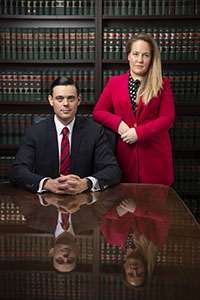
J. David Hammond L’07 and Melissa Swartz L’14
J. David Hammond L’07 and Melissa Swartz L’14 work for different law firms in Syracuse, but they have forged a formidable team in confronting injustice and incompetence in pursuit of what Hammond describes as “meaningful representation” for the client. Last fall, they succeeded in winning exoneration for Anthony Broadwater who was imprisoned in 1983 after being wrongfully convicted of raping Alice Sebold, a Syracuse University student who later detailed the rape in her memoir Lucky. Though released from prison in 1999, Broadwater was further “sentenced” to life as a registered violent sex offender, severely limiting his ability to work and build a future. He waited forty years to be declared a truly free man after Hammond and Swartz produced evidence that led a judge to vacate the conviction.
“No lawyer is perfect. But when you have a case that involves another attorney’s mistakes or misconduct, it’s vital that you place yourself in the shoes of a client and appreciate what they went through with that lawyer,” says Hammond. “The legal concept of ‘meaningful representation’ defines what a lawyer must do in terms of strategy and diligence in providing assistance to the client. If you are operating in a system that is patently unfair, you can’t just go in there kicking and screaming. Coming into a courtroom and expressing outrage is kind of a JV approach to lawyering. You have to know when it’s appropriate to challenge the system or just preserve an appellate issue.”
And you need to know when to call upon colleagues for specialized help. That’s why Hammond contacted his friend Swartz at Cambareri & Brenneck Attorneys at Law and asked her to join him on the Broadwater case after he was approached by a film producer and private investigator who was doing research related to a movie adaptation of Sebold’s memoir. The case raised alarming questions about misidentification in a police line-up and microscopic hair analysis that allegedly linked Broadwater to the rape. Hammond knew he would need the help of an attorney who specialized in forensic analysis.
“Melissa is a phenomenal lawyer, and probably among the best in this area,” says Hammond. “I’ve never met any lawyer better in forensics—blood spatter, DNA—she just eats it up! For every case with a forensic aspect, there’s nothing better than a lawyer who could moonlight as a forensic expert. Most lawyers can’t do that. And it’s good to have a teammate to plan with.”
Hammond says his methodical approach to developing and presenting a case was forged by his experiences in law school, followed by nearly ten years of military service. “Law school essentially reprograms your brain to think in a different way. Through the process of a good legal education, you can look at things less subjectively. It also takes tremendous self-discipline, and that was really strengthened for me during my time in the military.”
Hammond served in the military first as a Judge Advocate in the U.S. Army, prosecuting court-martial cases, and conducting training on the military justice system for the Army’s police academy. Eventually, he became a Battalion Judge Advocate for the Airborne Special Forces at Joint Base Lewis-McChord (WA) where he served as the primary legal advisor to all levels of command on military justice, operational law, international law, domestic and foreign policy, fiscal law, administrative law, and legal assistance. He provided training to service members in the Law of Armed Conflict (LOAC) and Rules of Engagement (ROE). He finished his military career on the defense side, representing soldiers convicted at courts-martial on appeal before the U.S. Army Court of Criminal Appeals and the U.S. Court of Appeals for the Armed Forces.
“As a military officer you’re programmed to think strategically: every action has a consequence which produces another consequence, and so on. Whether you’re in a courtroom or preparing for the appellate argument, you have to plan for those third and fourth order effects,” says Hammond. “There’s an amazing quote attributed to former President Dwight D. Eisenhower when he was overall Commander of the Allied Forces in World War II. He famously said, ‘Plans are useless, but planning is indispensable.’ In my view, it’s also the lawyer’s motto. There are lawyers who wing it and take things as they come, and they usually aren’t the best. It’s that methodical approach to every case that sets lawyers apart, and I think that’s what law school begins to teach and the military reinforced for me.”
The practice of law demands the same kind of discipline and focus that Hammond employed in military service. “I’ve dealt with the stress of military leaders relying on me for split-second decisions: Can I drop this munition on this target? If you can learn to deal with that sort of scenario, there aren’t a lot of situations in the civilian legal world that can shake you up. It’s about planning within the bounds of the law and ethical considerations. You have to continually ask yourself ‘What’s your desired end state and what plans can be put into place to achieve that desired end state?’ Thinking through all the possible courses of action. It’s the process that allows you to come as close to perfection as possible, to apply a method to the madness.”
Hammond now works for Syracuse-based CDH Law, a veteran-owned legal defense firm, which states on its website: “We achieve results because we are disciplined. Our military, police, and prosecutorial backgrounds forged unmatched self-discipline into our character.” Certainly, that disciplined process has defined Hammond’s career and continues to impact the cases he takes on. He served as the only military-appointed lawyer on Chelsea Manning’s appeal, following her conviction and court-martial for leaking classified information (Manning was granted clemency in 2017 by President Barack Obama and her appeal continued for several years after). Manning’s trial record consisted of nearly 50,000 pages, one of the largest files in military history.
Hammond defines the Manning case as another “justice cause” involving government overreach and an unjust sentence by the court.
“Even though I am methodical and strategic in my approach, these justice cases also involve a personal element,” says Hammond. “I can’t help but become personally invested in the outcome. A lot of people get jaded and keep their personal feelings out of the equation. But it should matter to you.”
Swartz agrees that justice cases demand discipline and passion for the law and the client. “To be an effective attorney you really need to know your area of practice. You don’t just dabble, especially in criminal law, where lives hang in the balance,” says Swartz. “You can be a great orator, but that’s not enough.” In the Broadwater case, Swartz says her years of working “on the other side” in the Onondaga County district attorney’s office honed her appreciation for forensic evidence (or the lack thereof). The Broadwater conviction, largely based on microscopic hair analysis that has proven to be suspect, represented prosecutorial misconduct in her view.
“The system didn’t work for Anthony Broadwater,” says Swartz. “I’ve never had a case keep me up at night, until this one. The idea is that he lost 40 years of his life. I want to do everything I can so that he is able to move forward.” She and Hammond are part of the legal team that recently filed a lawsuit in the New York State Court of Claims, working toward getting the state to compensate Broadwater for the years of life lost to the unjust conviction. “In law school, they teach you about making people whole again,” says Swartz. “In reality, in cases like this one, you can never really achieve wholeness. We will fight the state of New York and pursue other avenues for relief, so he can be financially compensated.”
Swartz’s passion for justice and criminal law developed long before law school. “I was in fourth grade when my math teacher allowed us to watch the OJ Simpson trial on television. It was obviously completely inappropriate,” she recalls. “I remember coming home one day and telling my parents I wanted to be Johnnie Cochran.” The irony of that is not lost on Swartz, given that Cochran turned down a request by Broadwater to take up his case.
Swartz grew up with what she terms an obsession with the criminal mind. “One of my beloved books was Helter Skelter,” she says. She approached law school with that same obsession, tailoring her courses to her passion. “I didn’t take a lot of bar courses to get ready for the bar, I didn’t care about law review or moot court. I took a seminar on the death penalty because I knew exactly what I wanted to do.” Most valuable to her were the experiences she gained externing in the district attorney’s office and the classes taught by working attorneys. “One of my bosses now, Steve Cambareri L’89, was my trial practice professor. I remember him telling me that I was sometimes dangerously close to being overly dramatic. And I was over the top. I’ve toned myself down,” she adds with a laugh.
Swartz still loves legal drama, real and fictional. With both sincerity and humor, she easily shares a long-time dream—to play a character in a two-part episodic Law & Order, starting off as the victim who eventually unveils herself as the murderous perpetrator of the crime. Art imitating life? Life imitating art? The fact is, Swartz loves and lives her work.
“To be good at what you do, you need to love what you do,” says Swartz. “To be effective at it, you need to love your area of practice. I’m obsessed with it.”
Swartz says she and Hammond make a good pair because they are similarly passionate about criminal defense, and similarly hard-working, but bring very different viewpoints to each case. They argue. They debate. They trust each other. And, ultimately, they give to each client the best possible representation.
“We treat every case and every client as if it’s the case or the client of the century,” says Hammond. Because it just might be.
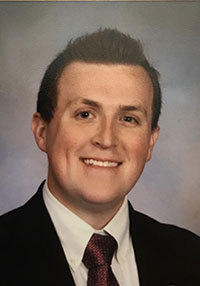
September 11, 2001, fell during the first week of high school for John C. Jensen L’12, and the impact on him was profound. The events of that day sparked in Jensen an interest in the law and in international affairs. “I also developed a great respect for firefighters,” Jensen remembers. Today an Assistant Attorney General at the Office of the New York State Attorney General, Utica Regional Office, Jensen also volunteers as an Emergency Medical Technician-Basic (EMT-B) and firefighter for the New Hartford, NY Fire Department.
It was through this volunteer work that Jensen learned about the plight of an American family desperately trying to flee Afghanistan last August. Using his legal skills and knowledge of international law and bolstered by the aid and assistance of numerous people, most notably his former professor and mentor David M. Crane L’80, Jensen went on to help 16 people—15 Americans and one Afghan national— escape Afghanistan as the U.S. completed its withdrawal from the country.
It started in mid-August 2021, when fellow volunteer firefighter Sean Mahoney shared with Jensen that his friend, Schenectady, N.Y. resident Faziya Namaty had traveled to Afghanistan for a family gathering, and found herself unable to return to the U.S. When the Taliban seized control, Namaty was stuck with her family, unsure if they would be able to fly home. She sent videos of the deteriorating situation on the ground, showing Taliban checkpoints and the chaos near the airport in Kabul.
“It started with rescuing one person,” Jensen remembers. “As more stories of persons left behind emerged, it became a mass effort.”
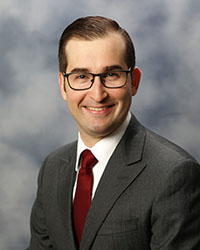
John C. Jensen L’12
Jensen and Mahoney began working the phones and reaching out for assistance. “I felt like I had a pretty good idea who could help—the roles of the different government agencies,” Jensen said. Jensen was grateful for the help and direction they received from the offices of Congressman John Katko L’88 and Senator Kirsten Gillibrand. It was Katko’s office that advised Jensen to compile GPS coordinates, passports, and other information about the evacuees, which were obtained via secure messaging apps.
Jensen also connected with other fellow Syracuse Law alums. “I just picked people’s brains. These relationships you have built over the years—in classes, the Student Bar Association— they all translate later,” he said.
Jensen also got help to arrange the rescue mission from a key group known as “Digital Dunkirk.” The volunteer group, largely made up of U.S. veterans and service members, worked to facilitate the evacuations of Americans and Afghan refugees. At one point, Jensen made a cold call to U.S. Central Command, which helped him get in direct contact with those coordinating the evacuations.
Important to the task at hand was Jensen’s coursework and experience at Syracuse Law. He took three classes from Professor Crane: National Security Law, Atrocity Law, and International Criminal and Civil Practice and Procedure, and he completed additional courses in the College’s Institute for National Security and Counterterrorism (now the Institute for Security Policy and Law).
“Professor Crane’s courses provided me with an in-depth knowledge of international law, the law of armed conflict, and importantly the role of various federal and international agencies and NGOs in responding to international disasters, such as the one we experienced with the fall of the Afghan Republic,” Jensen said. “They also gave me a clear-eyed appreciation for the risks of leaving people, particularly U.S. persons, behind and the realities of the complex relationships between nations when dealing with humanitarian crises.”
During the crisis last August, Jensen felt part of his responsibility was to reassure the families he and Mahoney were working with. “You are limited in what you can do. We just tried to keep them calm.” Jensen advocated around the clock for a rescue mission to escort the Americans hiding from the Taliban to the airport. At one point, a military officer they were working with asked Jensen “What agency are you guys with, USAID?” The answer, of course, was “The New Hartford Fire Department.”
For Namaty and her family, there was a happy ending. Jensen and his wife, Sarah Murnane Kelly Jensen L’12, were driving with their infant son Colin on the way to Cape Cod when he received a call that Namaty and 15 family members, then trapped in Kabul and Kandahar, would be rescued once those in Kandahar could relocate to Kabul. Under cover of darkness, the Kandahar group made their way to an undisclosed location where they were rescued by the U.S. military. All of them then flew from Kabul to Qatar, and then to Washington, D.C., on August 25.
For Jensen and his friend Mahoney, the work continued. With the assistance of Hale Transportation, a bus company in Clinton, N.Y. that donated a bus, and two volunteers, Namaty’s family was driven from the Washington, D.C. airport to the family home in Schenectady. Everyone is doing well now and back to their lives, Jensen reports. He hopes to meet them all in person soon.
Jensen has now turned his attention to the crisis in Ukraine, volunteering with the Global Accountability Network, led by Professor Crane, to document the current war crimes and crimes against humanity taking place in Ukraine.
HOW A COLLEGE OF LAW ALUM BECAME A POTATO CHIP HISTORIAN
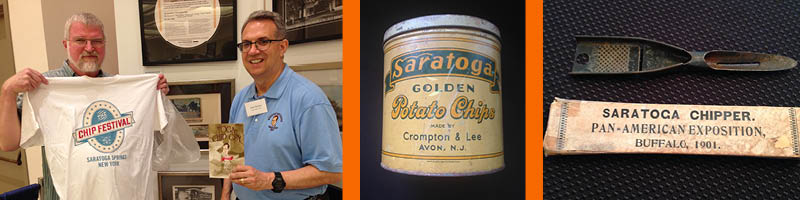
As Alan B. Richer L’79, owner of TogaChipGuy.com, prepared for his interview on a History Channel series in 2020 about the history of potato chips, it felt like he was studying for the bar exam again.
Richer grew up in New Jersey and came to Syracuse University where he triple-majored in Risk Management and Insurance, Accounting, and Communications. He continued his education at the College of Law, where he said his great professors made a big difference in his life. “It wasn’t so much the content of the course material, but that they taught me how to think,” Richer said.
After law school, Richer was a tax lawyer for Exxon, and then moved on to the computer company Data General. The new position taught him how to juggle lots of different responsibilities, but with fewer resources, he said. Eventually, he started doing international tax law and moved to GE in 1990, until his retirement in 2013.
At GE, Richer woke up at two o’clock in the morning and worked for 12 hours daily, working with colleagues in different countries. As part of his work, he traveled and met people of diverse backgrounds. “I met a lot of really bright people,” he said. “And one of the things that’s nice about the tax area is you really have to continually stretch and be at your best because there are so many bright people in and surrounding the field.” No matter where his career took him, Richer returned to his roots nearly every year, visiting the law school and watching Syracuse basketball—a tradition he continues to this day.
During his career, he discovered an interest that would shape the rest of his life: the history of the potato chip. In 2004, Richer and his wife bought a second house on Saratoga Lake in New York. As he searched for artwork depicting lake life, he was directed to Michael Noonan, famed Saratoga photographer George Bolster’s protégée. Although Bolster was known as the man who saved the history of Saratoga Springs through photography, Richer would soon begin to discover and document another part of Saratoga’s history: the potato chip, which was purportedly invented near his lake house.
“My mother always said I should do everything in moderation, but I never paid attention to that, so I started collecting everything. That’s how it all began,” Richer said. He learned that the inventor of the potato chip is unknown, but all potato chips were initially called Saratoga Chips. He was fascinated by how the name Saratoga was initially used to describe potato chips and became curious as to how the name phased out to become the generic potato chip we know today.
As neighbors began to hear about his collection, the Saratoga Springs Preservation Foundation asked him to do a program about the history of the potato chip. Word was spreading, and a writer from the Albany Times Union ultimately deemed Richer the “Toga Chip Guy,” which Richer liked and kept as his moniker.
Alan Richer
With his new title, Richer continued his research by calling others who may have stories or memorabilia. He referred to himself as “a Potato Chip Historian.” Some would laugh and hang up, he admitted, but that did not deter him. His big break came when he called the Snack Food Association, now known as SNAC International, in Washington, D.C. They connected him with Don Noss, son of SNAC’s founder, who enjoyed talking about the history of the potato chip.
Richer and Noss became “phone pals” and eventually met up. Together, they went on road trips to different “chippers,” which are family-started potato chip companies.
“I agreed that I would perpetuate the stories of their families and in exchange, they gave me their family’s chip memorabilia,” he said.
As he collected memorabilia and stories, he started a blog about his findings. The blog’s popularity and publicity led others to reach out to him. “I started getting calls and emails from as far away as Australia and New Zealand, all over the world,” he said. From these interactions, he continues his collection and research.
Even on his vacations, if something catches his eye, he dives in. Whether through public libraries, historical societies, museums, or even ancestry, he’s collected some of the oldest potato chip tins out there, and now has the largest collection of Saratoga Potato Chip memorabilia in the world.
In 2020, the History Channel called on him for their show, The Food that Built America. In preparation for an on-camera interview, he received over a hundred questions. “I must have stayed up 40 hours the next two days to research them all. I had never shot a TV show before, so I was thinking to myself I’d have to memorize all of my answers! I felt like I was studying for the bar exam all over again,” he said. He soon discovered his notes would be available for consultation. A success, his interview footage was used on several of the show’s episodes.
Potato Chip Memorabilia
So how has Richer meshed his J.D. with his love for potato chips? Presentation skills and the ability to research have helped him, especially as he gives lectures on the history of the potato chip. At the beginning of his presentations, he uses the Socratic Method to challenge what people think, and he makes his lectures interactive, entertaining, and educational.
As to current trends in the potato chip industry, he says that health and wellness are a big factor. “Now, you find different cooking techniques using different ingredients, like mushrooms, seaweed, and many vegetables other than potatoes.” Richer calls these chips “no-tato” chips. He has created other words, like “Chipcipes,” which are chip or dip recipes that can be found on his website.
His creativity and adaptivity reflect the characteristics of a well-rounded lawyer. From stand-up comedy to freelance journalism, Richer’s experiences exemplify this aspect of him.
During a conversation with Richer, it’s easy to imagine listening to hours of his countless, fascinating stories. From how the shape of the Pringles chip came to be, to Al Capone’s potato chip route from the East Coast into the Midwest. When he was a tax lawyer, Richer was bound by the rules of client confidentiality, often unable to talk about his work. Now, he can share his passion with anyone willing to listen.
A popular question? What is his favorite potato chip? Cape Cod Kettle Chips, 40% Less Fat.
Syracuse University, the city of Syracuse, and family ties mean everything to the Pearce family.
Left: Andrew Pearce L’12, his father Ted Pearce L’77, and Ted’s great-uncle Harry Kallet ’1912 showcasing 100 years of family ties to Syracuse University.
It all started at 2208 East Genesee Street in Syracuse. All five Pearce siblings went on to attend Syracuse University when they came of age, with Stephen attending just before WWII rocked the country and the world. His brother, Walter Pearce L’29, acquired his law degree at Syracuse Law, along with his cousin by marriage Judge Richard Aronson L’29, who went on to become a New York State Supreme Court Judge in Syracuse.
Stephen met his soon-to-be wife, Shirley Plehn, at school while she, too, was pursuing her undergraduate degree at Syracuse. Many years later, Stephen and Shirley had a son, Ted Pearce L’77, who now serves as counsel at Bradley Arant Boult Cummings LLP in Charlotte, NC.
Ted’s path to law school began as he was studying Constitutional Law in pursuit of his undergraduate degree. A history major, Ted felt a strong draw and interest in law as he navigated through his studies. In many ways, he found the two disciplines to be quite compatible, and soon, he decided to explore these interests and apply for law school. When the time came for Ted to decide where he would go, there was one clear choice in his mind—Syracuse University College of Law.
Decades later, Ted’s son Andrew Pearce L’12 made that very same decision, with the influence of now over 120 years of family ties to the city and University. Andrew chose to study law at Syracuse not only because of his father’s positive experiences but also because of the strong reputation the College of Law has in the New York City area, where he spent the first 10 years of his career in banking prior to his current position as an Associate at Mintz in Boston, MA. The strong alumni base and connections in the city made Syracuse a front-runner for Andrew.
We spoke with both Ted and Andrew about their time spent at Syracuse as each is approaching a milestone class reunion this fall, Ted’s being the 45th and Andrew’s the 10th.
What are some of your favorite memories of law school?
Ted: Walking up the Crouse Irving stairs each morning during the winter on my way to law school. I particularly enjoyed hearing the alliteration in speech by Professor Richard Goldsmith and the enthusiasm of Professor Travis Lewin during his evidence lectures. I do remember that the graduation ceremony at Hendricks Chapel was quite delightful.
Andrew: I played on an intramural ice hockey team at SU made up of all law students, which was a blast. It was a great way to take a break from studying and really bond with other classmates who were going through the same experiences and challenges I was while getting my degree. We had so much fun playing against other teams and then grabbing beers and a burger afterward to let off some steam.
I also have some great late-night memories, particularly during my first year of law school, studying in the law school library until it closed at midnight and then popping down to a bar at the base of campus for a beer and sandwich. It was the perfect way to cap off a long day with some of my best friends.
Did any faculty make a lasting impression on you?
Ted: Professor Samuel Fetters ‘living people have no heirs’ and my daily runs with Professor Goldsmith.
Andrew: There were a number, but Professor Margaret Harding in particular taught a class that laid the foundation for the work that I do every day as a securities lawyer. Her class was a springboard for my career, fueling an interest that led me to my first summer associate position at an investment bank. The information she taught me was the initial foundation of my understanding of securities law, and her class had a larger-than-life lasting impression on me.
How would you summarize the value of your time at Syracuse Law?
Ted: I felt that my legal education at Syracuse was very solid. I never felt outgunned or outmanned by any of my legal adversaries I faced in my career who may have graduated from the “more prestigious schools.”
Andrew: I participated in the Law in London program during my 1L summer, providing me with eight weeks of working experience for a London borough in the legal council’s office. It was a tremendous experience and a great addition to my resume that was key in helping me secure my first job at Deutsche Bank. It was a fantastic program that I cannot recommend enough.
Thirty-five years passed between the year of Ted’s commencement in 1977 and Andrew’s commencement in 2012. In talking to his father about his experiences, Andrew believes that there are many similarities, but also key differences in their time spent at Syracuse. “I actually had a few of the same professors who taught my father, specifically Professor Robert Rabin,” Andrew said, “which was a really cool experience for me, and I think that the way students are taught law and the Socratic method of teaching has remained largely the same over the years. There is a lot of history and reasoning behind that.”
On the flip side, Andrew thinks law school is now a friendlier place with a more approachable culture for the new generation of law students. Students have increased access to professors and more chances to get help and have conversations outside of the classroom to enhance the student learning experience. “The new facilities with a fireplace in the Atrium and open concepts also make a big difference in the atmosphere for current law students, I’m sure, which I didn’t get to experience myself but are a very nice addition,” Andrew explained in reference to Dineen Hall.
Another way the College has changed is the advent of technology such as Zoom to conduct classes. In spring 2023, will join the College as a Distinguished Lecturer teaching a JDinteractive residency on Franchising in North Carolina.
With more than 120 years of history with Syracuse, we asked Ted if he foresaw any future Pearce family generations attending Syracuse University and/or the College of Law. He said, “I currently have one granddaughter. Though she is only nine months old, there is a generational promise!”
When speaking with the Murphy family, one can’t help but notice their shared love of family and the city of Syracuse. Although each family member has a unique personality, the interest in law is a strong recurring gene. Every Murphy who has gone to law school has chosen the College of Law at Syracuse.
Timothy (Tim Jr.) Murphy Jr. L’21Daniel (Dan) M. McGarvey L’23
The legacy started with Hon. Thomas J. Murphy L’54, and three of his sons who followed his footsteps and share a deep pride in continuing his legacy in law and at Syracuse. Now, the story continues with the family’s Class of 2021 graduate of the College, a current student at the College, and potential future applicants, too.
The Hon. James (Jim) Murphy L’84 said his mentor has been his father. They’ve followed similar paths towards the bench, Jim now serving as Chief Administrative Judge for New York’s 5th District.
Jim and his brothers, Timothy (Tim) P. Murphy L’89, Managing Partner at Hancock Estabrook, and Martin (Marty) Murphy L’86, now retired after 34 years at the Onondaga County Attorney’s office, see and experience law as an opportunity to help people and make a difference. They all agree that if a family member expresses interest in law, they encourage them to explore it, but don’t pressure them.
Timothy (Tim Jr.) Murphy Jr. L’21 is part of the third generation of Murphys to graduate from College. He became interested in law after he took a pre-law course in college and loved it.
“That’s what got me more interested, and then I started approaching my dad, and asking him more about his career and law school. The spark was ignited in college, but my dad was there to help my exploration, and answer questions,” he said.
Although they could go anywhere, Syracuse is home to the Murphys. Tim Jr. and Daniel (Dan) M. McGarvey L’23, a nephew of the Murphy brothers, and son of their sister, say the proximity to family influenced their decision to pick the College of Law. Dan said the family’s connection to the College also factored into his decision, as it’s special to him, and he’s honored to be a part of the legacy.
When asked why they think their family continues to choose Syracuse Law, Jim says that it may be because he speaks highly of it and that his brothers have also had positive experiences. Tim emphasizes that the College offers great opportunities to get hands-on experiences. For Marty, the academic preparation he received at the College made all the difference; he described it as the foundation of his career. He’s also advised his nephews to get as much practical experience as possible, recalling that an internship led him to his 34-year-long career at the County Attorney’s office. Similarly, for Tim Jr., it was his externship that placed him in his current job with the Department of Commerce.
“I think our children see a lot of people happy with the career they chose, and it kind of rubs off on you in a funny way,” Marty said.
The Love of Family, First
As he grew up, Tim Jr. saw his predecessors’ successes and satisfaction with their legal careers, but he also observed how much they value their Murphy family. “I got to see the part that really mattered for all of them, which wasn’t the career itself, but what they came home to at the end of the day,” he said. “It’s great to have a career you love, but I’ve always appreciated that each of them also placed so much value on their family lives, and I’m a product of being raised with that love and care.”
For Jim, thinking back on his trial lawyer days, the importance of family was still relevant in the courtroom. When convincing a jury, Jim said he imagined them as family members. “I’m from a big family, so to me, it was always about convincing all my aunts and uncles that we’re right,” he said. “Believe me, families argue about everything, so if you can carry the day with your family, you’re probably a pretty good trial lawyer,” he joked.
Thinking of his father’s legacy, Jim appreciates the reputation he set for his family. “I like to think that I could build on that as having a reputation of being fair, open-minded, and prepared,” said Jim. For his nephews, “I hope that I give them the same thing my dad gave me, which is a good reputation in the legal community.”
Tim echoed his brother’s sentiments, sharing that he’s proud his family has continued his father’s career. “He was the first person in my family to become a lawyer, and now we’re onto the third generation,” Tim said. Proud of all of his three children, he thinks law was the suitable choice for Tim Jr., as it matches his strengths in reading and writing, and feeds his intellectual curiosity.
The Third Generation
In the span of 70 years, each generation has received the same excellent education, but in different classrooms. “My father told us he went to law school in downtown Syracuse, and when I went it was next to the Carrier Dome,” said Marty. “Now, my nephews are going to the law school down the hill a little bit, across from the Stadium. It’s interesting and amazing that each generation attended the same law school, in three different locations.”
For the younger Murphys, they’re honored to continue and be a part of their family’s legacy, which they highly value. “There’s some responsibility in that, but it’s absolutely special, and it is definitely something that I’m keenly aware of every day,” Dan said.
“I acknowledge how privileged I am to have had two generations before me who had gone to law school,” Tim Jr. said. “It’s something I’ve never taken for granted or taken lightly because it is such a massive privilege, and I do appreciate that.”
Marty echoed feeling proud of his family’s legacy, and of his nephews who continue it.
The Dinner Table Conversation Continues
Law is still a hot topic at the Murphy family dinner table, but a few members’ roles in the conversations have changed. As a law student, Dan’s questions have changed from general questions about the law to specific advice seeking.
“Everybody needs help every now and again, and I’m so lucky to have such willing people there to ask,” Dan said.
Tim Jr. is also grateful for the advice his father and other members have given him. “I’ve had no shortage of people who could offer me advice. I always listened to what they said,” he said.
For Jim, it feels like he was sitting in his nephew’s spot not too long ago. Seeing young lawyers like them enter the field makes him feel better about the profession. “I think very highly of them,” he said. “Watching them grow up and hone their skills, I think they will do well. I have no doubt.”
Although nothing is for certain, most of the Murphys admitted they wouldn’t be surprised if a few more family members soon joined the legacy.
ALUMS REFLECT ON THEIR JOURNEY FROM LAW SCHOOL TO THE C-SUITE
The College of Law has produced extraordinary leaders throughout our history. Today, our alumni include the President of the United States, a congressional representative, elected and appointed officials at all levels of government, judges, other public servants, business and nonprofit executives, entrepreneurs, writers, managing partners, and law firm chairs, and so many others in positions of influence.
In this third edition of The View from the Corner Office, we focus on alumni in senior leadership or entrepreneurial positions in medicine and pharmaceuticals. To be sure, the pandemic has placed a spotlight on public health, global health, and healthcare systems. Here are the stories of just a few of the College of Law’s alums who have risen to the daunting task of helping to attain the highest level of healthcare delivery by utilizing their law school training.
Along the way, we learn that for an Orange lawyer, any career benefits from a Syracuse law diploma. Look for more C-suite stories in future issues of the Stories Book, and if you missed them, prior issues, too, on our website.
Connie Matteo L’91
Assistant General Counsel in Pfizer’s Civil Litigation Group
Connie Matteo L’91
Prior to joining Pfizer in October 2009, Connie Matteo L’91 was a Senior Corporate Counsel at Wyeth. Before going in-house, she was a principal of Porzio, Bromberg & Newman in Morristown, NJ, and a member of the firm’s Litigation Department. Her practice focused on complex product liability, including pharmaceutical drugs and medical devices product liability claims. She also counseled pharmaceutical clients on issues related to regulatory compliance.
Matteo has authored a number of articles related to product liability litigation and regulatory compliance, frequently speaks on topics related to such litigation, and serves as a guest lecturer at two law schools.
Her interest in science was prompted by Matteo’s own struggle with lupus, a chronic autoimmune disease. “As a patient, I have a deep respect for the work that pharmaceutical companies do to improve the health of patients,” she says, noting the diagnosis pushed her to hone her focus on the pharmaceutical world.
What was your path to get where you are?
When I started at the College of Law, I definitely didn’t see myself in my current role. As a first-generation student, my knowledge of the legal profession was fairly limited. I was also a bit shy, so I certainly never saw myself as a litigator. My original goal was to become a human rights attorney and to return to Amnesty International where I had interned in college. I attended an international law symposium during my first year of law school and quickly realized that international law wasn’t for me.
My career path was not typical for an in-house lawyer as I started my career as a plaintiff’s lawyer at a small firm. One of the two partners at the firm was a College of Law alum. As a benefit of working at a small firm, I had the opportunity to get substantive, hands-on experience, especially trial work. By my third year of practice, I recognized that I enjoyed cases that involved science and moved to a large firm’s product liability group in 1994. As an associate and partner, I worked on many matters for Pfizer and Wyeth. In 2007, I joined Wyeth which was later acquired by Pfizer.
How did law school prepare you for your current role?
One of the highlights of my time at Syracuse was participating in the College of Law’s trial advocacy program. I gained so much from that experience. I learned practical litigation skills, such as learning to think on my feet and make decisions quickly. I use the skills gained in the trial advocacy program almost every day.
Is there a professor or mentor during your time at the College of Law that stands out?
Professor Travis H.D. Lewin. Not only did I gain a tremendous amount from his evidence and trial practice courses, but he was also a mentor and coach for the trial teams.
In light of the pandemic, what innovation has most affected your industry or how you practice law?
Zoom has dramatically changed my practice over the last two years, and I suspect it will continue to have a role after the pandemic. Before the pandemic, I traveled regularly for case management conferences, depositions, and trials. My only exposure to Zoom prior to the pandemic was once, as a guest lecturer at another law school. In the last two years, I’ve participated in roughly 10 mediations over Zoom. I’ve observed many oral arguments, case management conferences, depositions, and several jury exercises. We’ve even had an arbitration over Zoom. The ability to participate in hearings and conferences without traveling is a significant time-saver.
How has your organization overcome challenges posed by the COVID-19 pandemic?
Pfizer moved at lightning speed to make the impossible possible: Produce a COVID-19 vaccine in less than one year. But we also committed to changing the normal ways of working. We’ve had to pivot from traveling to attend in-person meetings to Zoom, and have adopted this “lightning speed” mentality in all the work that we do. We cut out red tape where we can, and closely collaborate with colleagues and partners to accomplish our purpose—breakthroughs that change patients’ lives. As the litigation lawyer that supports Pfizer’s vaccine team, it has been a very busy past couple of years but the work I’ve done and continue to do is the most meaningful and satisfying work I’ve ever done.
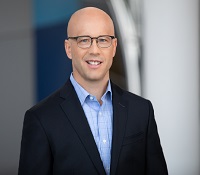
Jeremy McKown L’98
Vice President of Law, Janssen R&D at Johnson & Johnson
Jeremy McKown L’98
In overseeing a global legal team at Johnson & Johnson, most recently pursuing an expedited development of a COVID-19 vaccine, Jeremy McKown L’98 relies on effective communication and practical decision-making. Sometimes, including when facing a global pandemic, he says, solutions must be found both creatively and through compromise.
“For every facet of the vaccine development process, my team was involved from a contract perspective, but also from a counseling perspective, because we were trying and doing things we hadn’t attempted in the past.”
In his work, he most enjoys negotiating complex license agreements but says he’s had a varied career. “It’s been a very fulfilling journey.” He finds gratification especially in seeing a successful outcome after a patient has benefited from a J&J clinical trial or a newly approved medicine.
“When I see someone whose life we’ve helped or saved, it brings tears to my eyes. It’s the same thing with our vaccine effort over the past two years, when I see what that’s done for society across the globe, I take it to heart. It’s very rewarding, and it’s exciting working on programs that may save people’s lives, or at the very least, make their lives better.”
What is your current position and what was your path to get where you are?
In my current role as head of R&D legal for J&J’s Pharmaceutical Group, I manage around 30 lawyers and professionals across the globe. We focus on transactions and spend much of our time drafting and negotiating clinical trial agreements, complex R&D agreements, and other types of agreements needed for our R&D business. Prior to taking this role in 2019, I worked at J&J as a patent attorney in our pharmaceutical and consumer businesses.
After my first year at Syracuse, I knew I wanted to do intellectual property law. To further investigate, while in school, I took a part-time job downtown with a small IP firm. This helped crystallize that I wanted to be an IP lawyer, particularly focusing on patent law. I first started in Washington, D.C. because I was told this is where all the patent IP firms were. I worked at Dorsey & Whitney and then Wilmer Hale and felt extremely fortunate to find general practice firms that exposed me to patent preparation and prosecution, patent litigation, IP due diligence, and significant transactions including complex license agreements.
How did law school prepare you for your current role?
Learning to think and approach problems differently was the biggest takeaway. Spending my undergraduate and graduate years in science required a different mindset. From the first day in law school, I recognized the need to approach problems from a different perspective. The most beneficial subject matter was taking federal courts and patent law courses and discussing practical examples. The best way to figure out how to draft a patent claim is to actually practice doing it. Professor Theodore Hagelin’s Law Technology Management Program (now known as the Innovation Law Center) was extremely important because it was less about reading textbooks and more about interacting with other law students and companies on projects. The huge benefit there was that we were working on real projects and interacting with different companies on these projects.
We worked on projects we knew would have an impact on large Fortune 500 companies or small start-ups. To sit across the table with business leaders and discuss our research and tell them what plans we’d developed and how they could maximize their intellectual property was an important skill-building tool. It was as close as you could get to a real-world experience, and that hands-on experience was extremely valuable.
Is there a professor or mentor during your time at the College of Law that stands out?
Professor Lisa Dolak L’88, who taught patent law and federal courts, was great because she had industry and legal experience. It wasn’t just theoretical like reading a textbook, it was a real-world experience that she was sharing with students. On top of that, during my third year, under Professor Hagelin, I was a teaching assistant for the Law Technology & Management program. The combination of learning from both professors really solidified my interest in IP.
In light of the pandemic, what innovation has most affected your industry or how you practice law?
Zoom has been incredibly important. Before we would do conference calls, but you never really knew if people were paying attention. During the pandemic, it was an extremely important tool to be able to visually connect and talk through issues. It didn’t solve every problem, but it made things more personal. From a mental health aspect, it was essential given that many of my team members were isolated in their apartment buildings. After meetings, I often received comments about how connected people felt thanks to this medium. This was really gratifying to hear and made me feel better as a team leader.
The pandemic also made people think differently about how and what tools can be used to get things done quicker and more efficiently.
Consider artificial intelligence (AI) and machine learning, which have grown by leaps and bounds. We are now piloting AI tools to make the practice of law more efficient. We look at complex transactions a different way than simple transactions. Confidentiality agreements (CDAs) and non-disclosure agreements (NDAs) are the simplest forms of contracts we work with. If we can use an AI tool to craft the CDA or NDA and redline it when it comes back from another party, it makes a lower priority – but essential – task much more efficient. Then we can focus on higher-priority work. There’s not an AI tool or company out there that I’m aware of that has solved every issue, but we are spending time looking at different tools that will make contracting more efficient, and, I think, easier for attorneys to spend more time on higher value work.
Can you talk about your legal role in the COVID-19 vaccine rollout?
I have a number of examples. To run a clinical trial, you need to have a clinical investigator and other health care professionals work with the trial subjects. In many situations, people didn’t want or couldn’t go to a hospital or clinic because of the many restrictions related to COVID-19. This was completely understandable given the pandemic. We had to think about new ways of working, e.g., how to allow nurses and other healthcare professionals to go into people’s homes. My team—which includes Carrie Kissick Rabbitt L’03 and Michael McCabe L’06—worked with our clinical and R&D teams to develop creative solutions, in a compliant manner to make this happen. Given the benefits of these new practices, we continue to use some of these new ways of working.
For the vaccine itself, we were part of Operation Warp Speed (OWS), which was formed under the Trump administration and continues under the Biden administration. The goal of OWS was to accelerate the development of safe and effective vaccines for COVID-19.
This required my team to quickly draft and negotiate agreements together with a number of different stakeholders within the federal government, including the National Institute of Health and Biomedical Advanced Research and Development Authority, and develop budgets and flexible contract language, while also focusing on clinical data transfer and privacy issues.
Another significant issue was identifying clinical trial sites and recruiting patients while managing staff shortages, supply chain bottlenecks, and pandemic fatigue. We worked closely with our scientific teams as they utilized AI tools to predict the right hotspots three to four months in advance at the country, state, province, and county levels. Setting up our clinical sites in the right locations was critical to evaluating the safety and efficacy of our vaccine. We had weekly meetings with our vendors and partners to ensure we were on track. As you can imagine, there were so many moving parts in the vaccine clinical trial.
And at times, the contracts weren’t exactly the way we wanted them, but we had to move quickly and balance the level of risk with the time necessary to negotiate the perfect contracts because, in a global pandemic, every day that went by was a delay of a getting a vaccine to the global population. People’s lives were at stake. The amount of time we put in was unbelievable— the team gave up vacations, holidays, and weekends, and reprioritized other projects. It was a heroic effort by everyone, from the scientists to the lawyers, to get things across the finish line.
Dean A. Rosen G’90, L;90
Partner at Mehlman Castagnetti Rosen & Thomas
Dean Rosen G’90, L’90
As an expert on America’s complex health care system, Dean Rosen G’90, L’90 says health care became his focus by accident but has endured because of his work’s important interplay and intersection with policy and people’s lives.
“Health care has been such an interesting career focus,” he says, “because it makes up one-fifth of our economy; because, at the federal level, it is the most heavily regulated portion of the economy, and because the government is a major payer for health care services.” The federal government, in his view, is more important to healthcare stakeholders than to almost any other constituent because of the unique nature of the sector—government programs impose detailed rules and regulations and set rates and reimbursement parameters and protocols.
Rosen played a leading role in developing and advancing health policy through influential posts on Capitol Hill for 15 years. On the Hill, he divided his time between traditional labor issues, law reform issues, and health care, which, he says, were the “Super Bowl of legislation” in the early ’90s. His efforts helped to create the Medicare Prescription Drug Improvement and Modernization Act of 2003 and the Health Insurance Portability and Accountability Act of 1996 (HIPAA), among others.
Rosen says that lobbying and policy are a very “hands-on, personal services business” where one’s background is a driving force for success. Thus, his own experience and credibility on the Hill and his knowledge helped him grow the then Mehlman Castagnetti lobbying firm from a dozen clients to now approaching 150, half of whom are in the healthcare field
What was your path to get where you are? Did you see yourself in this role or field while in law school?
Initially, my interest was in a law career that embraced communications, which is why I did the dual degree with Newhouse. I was flexible on what that would be.
I loved the study of law, but I found the practice of it in a big firm setting not enjoyable. After a couple of years working in the law firm setting, I volunteered on political campaigns and eventually took a leave of absence to work on Capitol Hill. That time really underscored for me that I wanted to have a career in government and politics, and not at a law firm.
In 1993, I was hired by my home state senator from Minnesota, David Durenberger, a healthcare expert. Bill Clinton had just been elected president, and his highest priority was comprehensive health reform. Senator
Durenberger served on two key committees in the Senate that dealt with health care, and I was hired because of my legal background and the work I’d done as an employment lawyer. When it was clear that the Clintons were going to really push on health care, Durenberger deployed all of us on his staff to work on the issue. I had to learn the issues really quickly, and I rapidly developed a deep interest in them.
So, health care was really by accident. After spending years working in various positions on Capitol Hill as a senior staff person for various committees that dealt with health care, policy issues, and Congressional leadership, I joined the firm Mehlman Castagnetti, which was at that time a five- or six-person lobbying firm. We’ve now grown to about 20 full-time lobbyists. We’re one of the biggest government relations firms in D.C. and have been ranked in the top 10 for the last couple of years.
Now day-to-day, I use a lot of the skills and the strategic insights that I gained from working in government to help clients navigate through a number of issues, whether it be trying to pass or stop legislation, helping to shape regulations, or helping clients understand what’s going on in Washington, and how that may impact their strategic goals and business.
How did law school prepare you for your current role?
I have a nontraditional career. I’m a lawyer in the sense that I keep my bar license and use my legal training, but I really don’t practice law. I work as a lobbyist, but just as I did on Capitol Hill, I utilize the skills I learned at Syracuse Law. My clients are trying to figure out, every day, how they can comply with the law, and how they can change laws. I apply what I learned from my coursework in administrative and regulatory law specifically, as well as more broadly what I gained in legal reasoning and interpretation skills. Beyond that, law school gave me the ability to look critically at an issue, analyze a document, to think creatively about how to solve problems. I use that every day, whether I’m drafting a piece of legislation or analyzing a regulation.
Is there a professor or mentor during your time at the College of Law that stands out?
Professor Theodore Hagelin, who led the Technology Commercialization Law Program,(now known as the Innovation Law Center), really cared about and understood the intersection between law and the technology sector. He was also my Law Review note advisor. My Law Review note was about a Federal Communications Commission regulation that I felt needed to be reexamined given the evolution of technology. Because it was a complex issue, I don’t think I would have been able to write it without somebody like Professor Hagelin who understood and had a passion for this area. Also, Professor Travis H.D. Lewin, who led the moot court program, stands out. He had a way of making law fun, and he was passionate about his students. Public speaking is a big part of what I do now, and he helped me gain the confidence I need to advocate for issues in front of small and large audiences.
In light of the pandemic, what innovation has most affected your industry?
The rapid development of vaccines is the most significant. I think the fastest development of a vaccine before COVID-19 was five years, and the COVID-19 vaccine was developed within a year. Additionally, while doctors and nurses had begun using telehealth, the pandemic accelerated the use and acceptance of telehealth as a healthcare delivery method because of necessity. I personally worked on that front, in order to help providers secure the waivers and greater flexibility they needed for telehealth. There are strict government restrictions in place, with Medicare in particular, around how seniors can get care. These restrictions have been waived during the pandemic. I think that the new modality may be one of the biggest changes in our healthcare system brought on by the pandemic. We have such a shortage of providers, especially in mental health, I believe this is an area where telehealth is going to expand and change how we deliver much-needed care to patients moving forward.
G. Randall Green L09
Division Chief of Cardiac Surgery and Director of Upstate Heart Institute, SUNY Upstate Medical University; Founder at Phairify, Inc.
Dr. Randall Green L’09
Day-to-day, G. Randall Green L’09 is a heart surgeon. In the midst of his decades-long medical career, he’s also completed both law and business degrees, which he utilizes within and outside of his demanding work at Upstate.
Green’s time in legal practice focused on transactional health law. He represented physicians and physician groups in contract negotiations with hospitals. During this time, he says, it became clear that physicians struggled to define their fair market valuation. “In that process, I learned that fair market value was rarely what it seemed to be,” he says because it is based on “horrendously bad information.”
The reason: The body of market research done by several third-party providers relies on a sample size of about 3% of physicians. This is often only representative of large, multi-specialty groups. Based on all he learned while representing physicians, and what he has observed in the field as a practicing physician and a medical team leader, Green decided to help solve the problem.
In 2019, he founded Phairify, a web-based platform that helps physicians measure their professional value based on aggregated and specialty-specific data. The platform also helps recruiters to better understand and price the market for physicians and inform recruitment practices.
What elements of your legal training do you apply in your current work?
I think the practical aspect of working with clients tops the list. In the third year of law school, I worked with two different clients, one from Rochester and one locally through the College’sTechnology Commercialization Law Program (now known as the Innovation Law Center). These companies told us about a problem they had and, working in a four-person group, we analyzed the problem and the intellectual property around it. Efforts included commercialization opportunities, device research, examination of the finances, etc. It was a great opportunity to dive into a problem like an entrepreneur and then be meticulous in terms of parsing out the problem, understanding it, and then going through a series of solutions to be successful. It’s now the same thing my team does with our company.
The Innovation Law Center now continues this work, and things came full circle when we became a portfolio company in the center. I saw in action now what I saw in my third year. Students did their review and gave us ideas on what could be protectable intellectual property.
Is there a professor or mentor during your time at the College of Law that stands out?
Professor Ted Hagelin, who founded and served as director of the Technology Commercialization Law Program, was spectacular. This program was heavy into patent law, and IP, and very much about how you start with an idea, protect the idea, and commercialize the idea. Entrepreneurship was a big part of my life. Professor Hagelin really opened my eyes to what in a business is a protectable asset as intellectual property. He made it very clear how one can run a business up to the margin of the law. He helped me discover that I really understood very little about business. That’s why I went on to Cornell University for business school immediately following law school. Professor Hagelin had a massive impact on my understanding of the commercialization process, and how business and law intersect.
Additionally, Professor Lisa Dolak L’88 was a powerful influence as well. I think she was a spectacular educator and taught me a great deal about patent law and, indirectly, business.
How has your work been impacted by the COVID-19 pandemic?
I approach everything from a transactional health law perspective, centering on physicians and hospitals working together. I would have to say, COVID has strained that relationship. COVID put all healthcare providers in a trying position, by having to provide care to a great number of people in the setting of scarce and constrained resources. We are at an all-time high, I think, of physician burnout. Physicians are leaving their practices in large numbers, which exacerbates the looming problem of a predicted shortage of physicians. Many are leaving current roles to look for better offerings, with greater resources, and a solid percentage of physicians are permanently leaving. Many physicians are also near retirement, which exacerbates the problem.
Health care doesn’t happen for patients unless physicians and hospitals work together… hospitals can’t deliver care without physicians. We are heading into an era where there are going to be very few physicians. We’re looking at a shortage of about 140,000 physicians by 2035. As physicians become increasingly scarce, we see a real opportunity in empowering physicians and helping them to quantify their market value and exert control over the jobs they seek and get; in turn, that information allows employers to come in and shape jobs that meet physicians’ expectations and advance their delivery needs.
How do you balance running a company and a full-time role as both a cardiac surgeon and hospital leader?
Any startup really has to be done in your spare time. And, you just have to make the time.
They’re incredibly resource-needy. My hospital job takes precedence: I’m a heart surgeon all day long. I fit in all the other activities on nights and weekends. I’m lucky to have three outstanding co-founders. We meet Tuesday, Thursday, and Sunday nights for two hours, no matter what.
We schedule additional meetings as needed. But you’re always doing something: you’re either raising money; selling the product, both to society and physicians; generating marketing and advertising content, or overseeing the design of the application.
Final thoughts?
As a practicing physician, an attorney, and an entrepreneur, I credit a great deal of whatever small success I’ve had to Syracuse University College of Law. It was a great experience. It’s a phenomenal law school, and I’m very proud to be an alumnus.
In the New York Law Journal story, “Big Law Firms Join Nursing Homes, Hospitals in Fight Over Liability for COVID-19 Deaths”, Professor Nina Kohn notes that the introduction of more high-powered attorneys signals that providers—which are often large, chain entities that own facilities across multiple jurisdictions—might be stepping up efforts to secure appellate victories.
Prolonging—and winning—the battle over where these cases are heard also benefits providers because it increases the expense for plaintiffs’ counsel and potentially discourages other individuals from bringing suits, Kohn said.
“This isn’t just defeating a claim in a particular facility or even in a particular jurisdiction but looking out for the interests of a large organization that may span many different states,” Kohn said. “If you can take care of a bunch of states in one fell swoop, that’s efficient. … As plaintiffs’ attorneys are trying to figure out what is viable under COVID and what is not, a few key wins at the federal level could have a desired chilling effect from the industry’s point of view.”
The College of Law’s first cohort of Doctor of Juridical Science in Law (S.J.D.) students and their academic pursuits are profiled in the Syracuse University story, “Elevating Law Research”.
Learn how Renci “Mercy” Xie LL.M. ’20, Ricardo Pereira LL.M. ’18, Jawad Salman LL.M. ’18, and Yohannes Zewale LL.M. ’19 have come from around the world to the College of Law to complete their Doctor of Juridical Science in Law degrees, focusing on employment discrimination class actions, tax law, and disability law.
Professor Emeritus William C. Banks is quoted by the New York Times in the article, “Facing Subpoenas, Trump Allies Try to Run Out the Clock on Democrats.” Professor Banks notes that for those facing subpoenas in the January 6 inquiry, “The law is not on their side at all, so the only thing they can do is what often happens in litigation, which is to drag it out and seek to delay because the elections are coming.”