Criminal Law and Policy

Professor Katherine Macfarlane’s Article on Section 1983 Cited in Qualified Immunity Ruling

Professor Katherine Macfarlane’s article Accelerated Civil Rights Settlements in the Shadow of Section 1983, 2018 Utah L. Rev. 639 (2018) was cited by District Judge Carlton W. Reeves of the U.S. District Court for the Southern District of Mississippi in a ruling in Green v. Thomas, denying a motion to dismiss malicious prosecution and false arrest claims on the grounds of qualified immunity. In his decision, Judge Reeves cites Professor Macfarlane’s article on Section 1983, a law that was passed originally as part of the Ku Klux Klan Act of 1871, and its historic role in civil rights litigation, writing:

The Ku Klux Klan Act “established a new legal order that contemplated direct federal intervention in what had been considered to be state affairs, a system in which federal courts were to enforce newly created federal constitutional rights against state officials through civil remedies and criminal sanctions.” Katherine A. Macfarlane, Accelerated Civil Rights Settlements in the Shadow of Section 1983, 2018 Utah L. Rev. 639, 660 (2018) (quotation marks and citation omitted). 

In conclusion, Judge Reeves writes:

“Desmond Green has suffered two injustices. The judiciary should not impose a third. If qualified immunity would do that, closing the courthouse doors to his claims, then the doctrine should come to its overdue end. The motion to dismiss is denied. This case is stayed so that Detective Thomas can exercise her right to an immediate interlocutory appeal. If she declines to timely appeal, the case will proceed into discovery as to this defendant. Detective Thomas can exercise her right to an immediate interlocutory appeal. If she declines to timely appeal, the case will proceed into discovery as to this defendant.”

Judge Reeves also cited Professor Macfarlane in his 2020 decision in Jamison v. McClendon.

Professor Gregory Germain writes: The Most Important Part of Trump’s Hush Money Case begins Next Week

In this legal review, Professor Gregory Germain examines the next step in the Donald Trump hush money trial: jury instructions that are expected the week of May 27.

Media wishing to interview Professor Germain on this or related topics should email Rob Conrad, director of communications and media relations or Syracuse University’s media team by email.

The public and the press have been riveted by the parade of celebrity witnesses testifying in the first criminal trial of a former United States President.  While the public and the press speculate about whether Donald Trump really had a one night stand with Stormy Daniels, or whether the jury liked or believes Michael Cohen’s testimony, those factual questions pale in comparison to the fundamental legal issues that Manhattan District Attorney Alvin Bragg has to prove to obtain a proper conviction. 

At this point in the trial, the jury likely has no idea what this case is really about.  What comes next is the most important part of the trial, by far, where the jury is told what they have to find in order to convict Trump of the charged crime.

The first and most important step in presenting the law to the jury will be Judge Merchan’s jury instructions.  The jury instructions tell the jury what is the law that they must apply.  Proper jury instructions will identify the separate legal elements of the crime(s) that must be proven for a conviction.  Improper jury instructions will gloss over the legal issues, and make it more likely that a jury, who may not like the defendant, will convict, but also more likely that any conviction will be overturned on appeal. 

The charges against Trump are that he violated New York Penal Law § 175.10 by falsifying business records.  The business records state that Trump paid attorney fees to Michael Cohen, rather than stating that some portions of the payments were really to reimburse him for the hush money payments he made to Stormy Daniels.  Although Trump has tried to impeach Michael Cohen’s credibility, there is really no logical alternative to his testimony that Trump was aware of Cohen’s hush money payments and agreed to reimburse him.

Penal Law Section 175.10 requires a showing (1) that Trump, with the intent to defraud, [made or caused to be made] false entr[ies] in an enterprise’s business records,” and (2) that “his intent to defraud includes an intent to commit another crime or to aid or conceal the commission thereof.”  See NYPL §§ 175.05, 175.10.

Thus, the two elements require the District Attorney to prove that Trump intended to defraud, and intended to cover up a separate crime when he made or caused the false business entries. 

The judge held preliminary discussions about the jury instructions on Tuesday.  Trump argued that the jury instructions should specifically require the jury to find that the false business entries were made to “defraud” someone out of money or property.  There has been no evidence admitted at trial to suggest that business records were falsified to defraud anyone out of money or property, which is the normal meaning of “fraud.”  But there are some appellate division cases interpreting “defraud” to mean “mislead.” The prosecutor argued that the instructions should gloss over the requirement by suggesting that the business records were falsified to mislead the public. 

But there is a problem with the DA’s argument.  The false business records were made in 2017 after the 2016 election was over.  They were private business records that were not disclosed to the public.  How could they have been made with an “intent to defraud” the public when they were made after the election and without disclosure to the public? 

There was no evidence in the trial to show why the records were falsified.  I suspect that a decision was made to make the hush money payments through Cohen so that Trump’s fingerprints would not obviously be on the payments.  That might preserve some measure of deniability, although not much.  Payments made by one’s lawyer are usually on one’s behalf.

But Trump did not deny making the payments.  So the public was not misled or “defrauded: in any way by the records. 

Early in the case, the District Attorney suggested that Trump might have been disguising the payments to commit tax fraud.  But the DA introduced no evidence to support that claim.  Trump asked Judge Merchan to prevent the District Attorney from arguing the tax fraud point.  The District Attorney argued that falsifying the payment as income to Cohen rather than a reimbursement was a “tax law violation,” but Trump pointed out that there is no evidence that anyone received a tax benefit from the characterization.  The court did not rule on the issue. 

If the judge does not clarify the legal issues, the jury will surely be confused about the requirements, and the basis for the jury’s verdict may be unclear.

Similarly, the parties argued about instructions concerning David Pecker’s testimony, which suggested that there was a conspiracy to catch and kill stories.  That indeed might have been a crime, but it has nothing to do with the business entries that are the basis for the charges.  If anything, that is a separate matter that is very prejudicial and not probative of the business records charges.  The judge’s failure to instruct the jury not to consider character evidence about other crimes in determining whether Trump committed the charged business records violation may make verdict difficult to sustain on appeal.

The DA’s second requirement is to show that the business records were falsified with the intent to conceal a separate crime, separate from the “defraud” requirement.  The DA has indicated that the separate crime is New York Election Law § 17.152, which makes it a misdemeanor to “conspire to promote or prevent the election of any person to public office by unlawful means.”  This is circular since the separate crime itself requires conduct that uses “unlawful means.” 

There is, I think, a theory for establishing a conspiracy to commit a separate crime, but it has nothing to do with the separate conspiracy involving David Pecker.  Michael Cohen’s payment to Stormy Daniels was a loan made to Trump, and could be characterized as being made to influence the election.  Campaign loans, like campaign contributions, are subject to campaign finance limits, so Michael Cohen’s loan might be an illegal campaign contribution.  Trump conspired with Cohen to make the illegal campaign finance contribution loan.  Therefore, Cohen violated federal campaign finance law, and Trump violated New York Election Law § 17.152 by conspiring with Cohen to do so. 

The problem with this theory, however, is the intent requirement.  Covering up the obscure New York Election Law and the federal campaign finance violation must have been the reason for making the payment through Cohen, and there was no evidence that either Cohen or Trump were aware of these rather obscure state or federal election law provisions in connection with the loan.  Intending to hide a porn star payment seems very different from intending to hide an election law violation.  It does not make sense that they would structure the payment through Cohen, which created an election law issue, if they were aware that it created an election law issue.  Having Trump’s lawyer make the payment surely provided very little cover to Trump.  Unless they were very foolish, they were likely unaware that they were doing anything illegal by running the hush money payments through Cohen.

So we do not know what Judge Merchan’s jury instructions will say, but he seemed to be leaning towards ambiguity rather than clarity, as he has throughout the case.  Ambiguity might allow the jury to reach whatever determination they want based on their feelings for the parties and their conduct, rather than on the basis of the law.  The testimony at trial shows a lot of sleazy and unethical dealings by Trump, Pecker, Stormy Daniels and Michael Cohen.  By failing to distinguish the sleazy and unethical, from the illegal, the judge may obtain a conviction but it will be much less likely to be upheld on appeal.  And ambiguity will continue to play into Trump’s political narrative of an unfair prosecution.

Judge Merchan’s independence is on the line in these jury instructions, and he should rightly be judged in the court of public opinion by the care and clarity used in his jury instructions in a case as complex and confusing as this one.

After the jury instructions are completed, the parties will make their closing arguments.  This will be the District Attorney’s opportunity to make the case, based on the evidence, that Trump falsified business records to defraud and to commit the separate crime of conspiring to unlawfully influence the election. 

Then Trump’s attorneys will have an opportunity to point out the statutory requirements, and to argue that the evidence does not meet the legal requirements of the charged crime. 

It will then be up to the jury to decide whether the crime has been proven. 

Internship and Externship Experiences, Faculty Mentors Helped 3L Find His Calling in Criminal Law

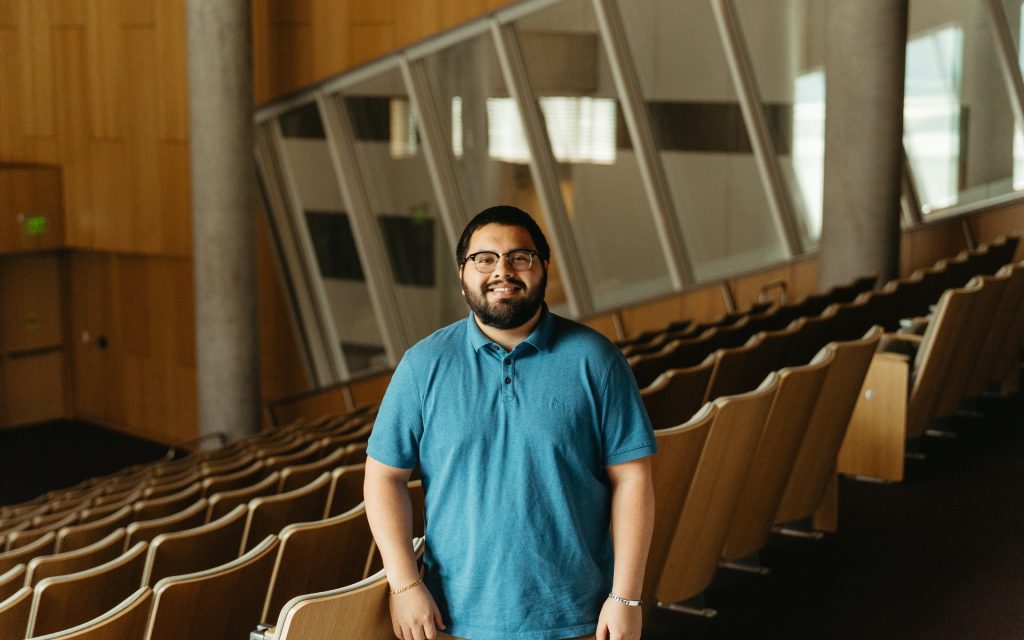
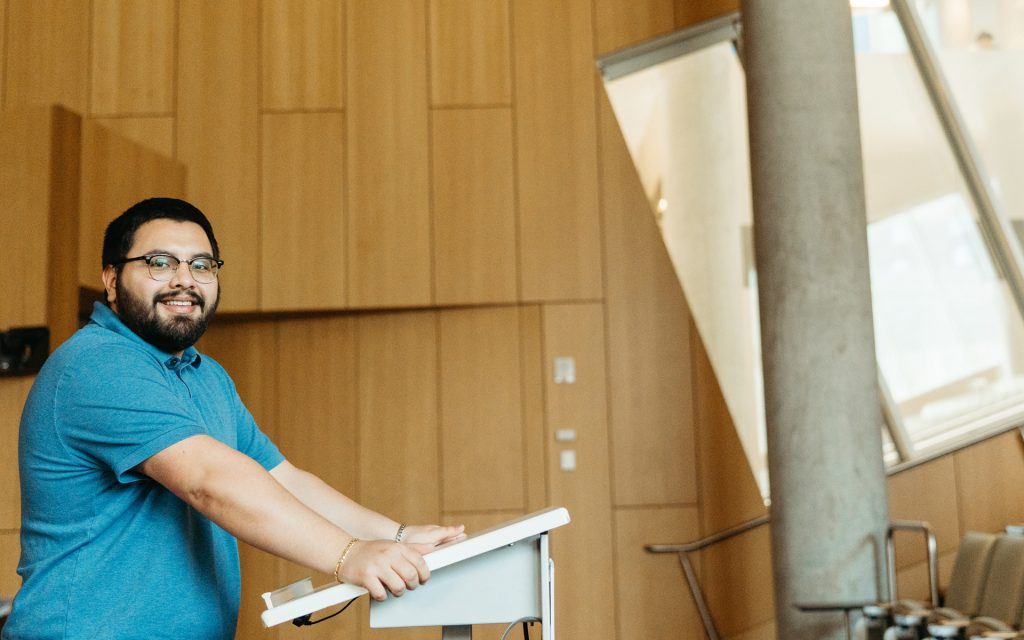
Peraza in the courtroom looking at the camera

When Daniel Peraza Soles L’24 started at the Syracuse University College of Law, he wasn’t sure what area of the profession he wanted to pursue. But, after taking classes from experts in the field and participating in externships and internships over two summers, he decided that criminal law was the way to go.

Two pivotal experiences helped shape his choice. The first was working in the summer of 2022 as an extern at the Public Defender’s Office for the Ninth Judicial Circuit Court in Orlando, Florida. He credits “four amazing felony attorneys” from the Public Defender’s Office for serving as mentors and allowing him to see what goes into preparing for a criminal court case.

“I was able to sit in on psychological evaluations, go into jail cells and meet with the clients and more,” he says. “It’s interesting work, and I started to see how this experience also helped people along the way.”

His second experience, in the summer of 2023, helped to solidify his decision when he worked as an intern with the Office of the Federal Public Defender for the Northern District of New York.

Peraza working on a laptop with classmates in Dineen Hall

“The work I did there was invaluable,” he says. “I was given many opportunities to come up with my own creative ideas to help the attorneys assist clients in any way possible.”

This led Peraza Soles’ interest in finding out more about the defendants’ backgrounds. “Part of the work of a criminal defense attorney is discovering as much as they can about an individual’s health or family struggles in order to bring these things to light and see how we can make their experiences known at sentencing,” he explains. “You’re dealing with someone’s life, so it’s incredibly important information to have at the time a person is sentenced. It’s not about asking for people to be let off for their actions, not at all. It’s more about wanting to make sure the court understands what each person has been exposed to and get them the help they need, so one day they might be able to reintegrate into society.”

His interest in criminal law led him to write “People Not Numbers,” a class assignment on Adverse Childhood Experiences (ACE), which, while not an exact indicator, can show the likelihood between the aspects of the home life of minors—negligence, abuse or exposure to drugs and alcohol, for example—and future criminal involvement.

Of course, his coursework and interaction with Syracuse Law faculty over the past three years has also helped affirm his decision. He is grateful to Lauryn P. Gouldin, the Laura J. & Douglas Meredith Professor of Teaching Excellence, Crandall Melvin Professor of Law and director of the Syracuse Civics Initiative, who teaches various courses related to criminal law for being a mentor to him. Gouldin’s scholarship focuses on the Fourth Amendment, and Peraza Soles is grateful to her for “helping me to understand criminal procedures and letting me talk her ear off about what I think about the Fourth Amendment,” he says.

Peraza in the courtroom looking at the camera

He is also especially appreciative of Professor of Law Todd Berger, director, advocacy programs, and a former public defender, for helping him to understand what he could expect in criminal law and assisting him in developing his litigation skills; as well as Associate Teaching Professor Courtney Abbott Hill L’09 for helping him learn to properly prepare legal documents, providing feedback on resumes and cover letters, and encouraging him to take the Multistate Professional Responsibility Examination (MPRE) after 1L, so he wouldn’t have to stress about it as he studies for the bar this summer.

Peraza Soles has been very involved in Syracuse Law since he enrolled. As a 2L, he was vice president of the International Law Society and participated in three different advocacy competitions, most notably the Ulvaldo Herrera National Moot Court Competition. He is grateful for his involvement with the Advocacy Program, which he calls “fantastic advocacy learning experience.”

This year, Peraza Soles is the executive director of the Travis H.D. Lewin Advocacy Honor Society, something he encourages all students to look into, as it is ranked in the top 15 in the nation. And, thanks to his involvement and hard work, Peraza Soles was the recipient of the Syracuse Law’s Rhoda S. and Albert M. Alexander Memorial Scholarship in recognition of his commitment and dedication to public service.

Peraza chatting with a group of students in the hallway of Dineen Hall

Today, Peraza Soles is preparing for his next chapter post-graduation—a full-time job working at the Colorado State Public Defender’s Office. He is excited to use the skills developed over the past three years to represent the rights of others in a court of law.

“Law school is as challenging as people say it is, but if you can get through 1L, you’re golden,” he says. “Keep an open mind when you head to law school and look at different areas to see which ones appeal to you. You just never know. I didn’t imagine going in to criminal defense when I started here three years ago, but then something clicked, and I saw what I think is a great fit for me.”

Lessons in Adversity Create Voice for Those Who Don’t Have One

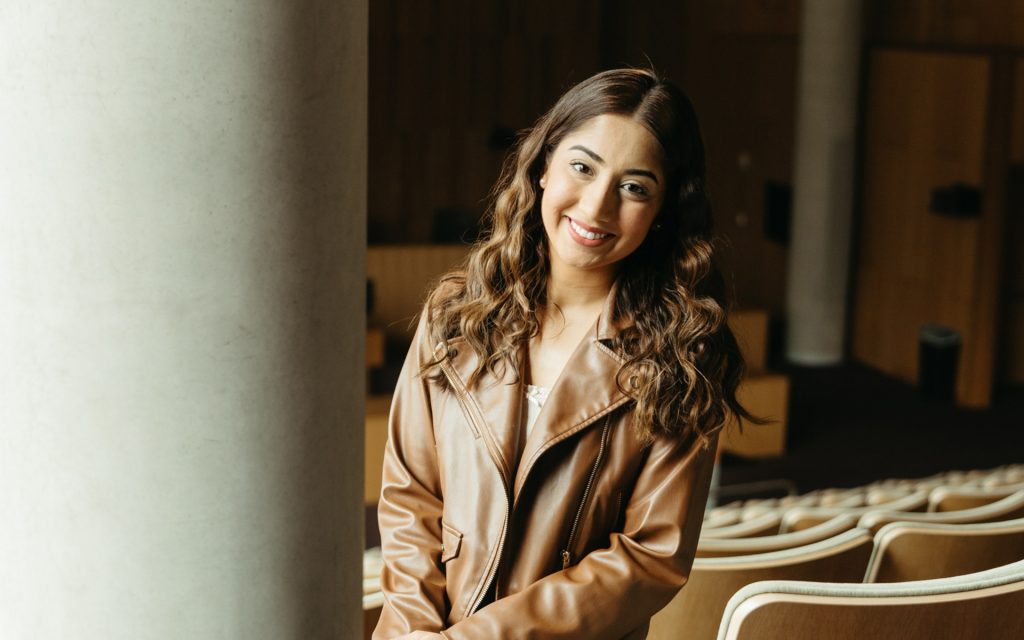
Maheen Asim headshot

“The flower that blooms in adversity is the most rare and beautiful of all,” says Maheen Asim L’24, quoting her favorite line from Disney’s “Mulan.”

Blooming in the face of adversity, particularly as a woman of color, has been a lesson that Asim has been learning since she was a child who immigrated to the U.S. from Pakistan with her parents. The family had a good life, according to Asim, whose mother was a doctor and father worked in computer science, but her parents wanted to live where there were more opportunities for them and their daughter. They had few family members or friends in the U.S. and moved around a lot, often working menial jobs despite their education back in Pakistan. They were living in a basement in New York City when 9/11 occurred, and Asim remembers being called a “terrorist” by her kindergarten classmates—unsure what the word even meant. Later, when the family moved to Texas, she always felt she “couldn’t fit in with the brown kids but also didn’t fit in with the white kids.”

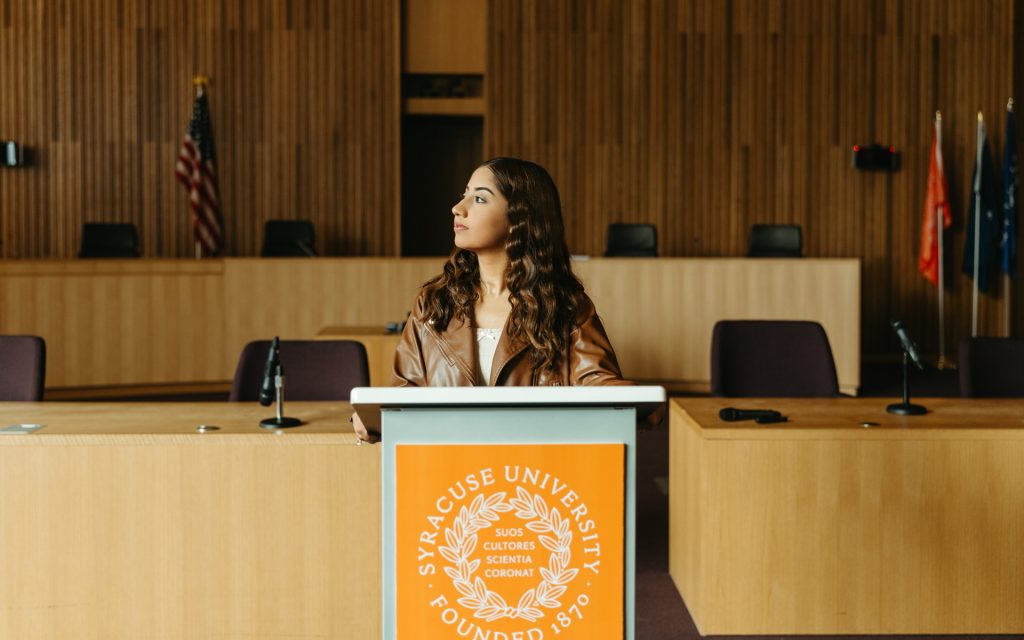
Maheen Asim at the podium in the courtroom looking out of the window

Still, the family persevered. It took her parents 20 years to recoup the education they had earned in Pakistan. Asim also pursued her education, graduating with honors from the University of Texas at Austin with a bachelor’s degree in government. She decided to attend law school to “be a voice for so many people who don’t have one”—like her parents at the time.

Asim was awarded a Dean’s Scholarship to attend Syracuse Law and eager to return to New York State. She took on many activities and leadership roles, including working as a research assistant for several professors, including Teaching Professor Monica Luna, Teaching Professor Andrew Greenberg and Professor of Law Todd Berger; competing on the National Moot Court Gabrielli Family Law Intercollegiate Team; working at the Criminal Law Defense Clinic with Teaching Professor Gary Pieples; and participating in the McKenzie Hughes Appellate Advocacy Competition and the Lionel O. Grossman Trial Competition. Asim also completed a summer associate position with the Nationwide Insurance Trial Division at the Law Office of Brian Rayhill in New York City and the Parsons Corporation in Syracuse. Her other legal experiences were with the 431st District in Dallas, where she clerked for a judge; Berry Appleman and Leiden LLP in Richardson, Texas; and Lexitas Litigation Firm, in Dallas.

Currently, Asim is the president of the Syracuse Animal Legal Defense Fund, the Estate Planning Society and the Criminal Law Society, as well as the appellate director for the Travis H.D. Lewin Advocacy Honor Society, Appellate Division.

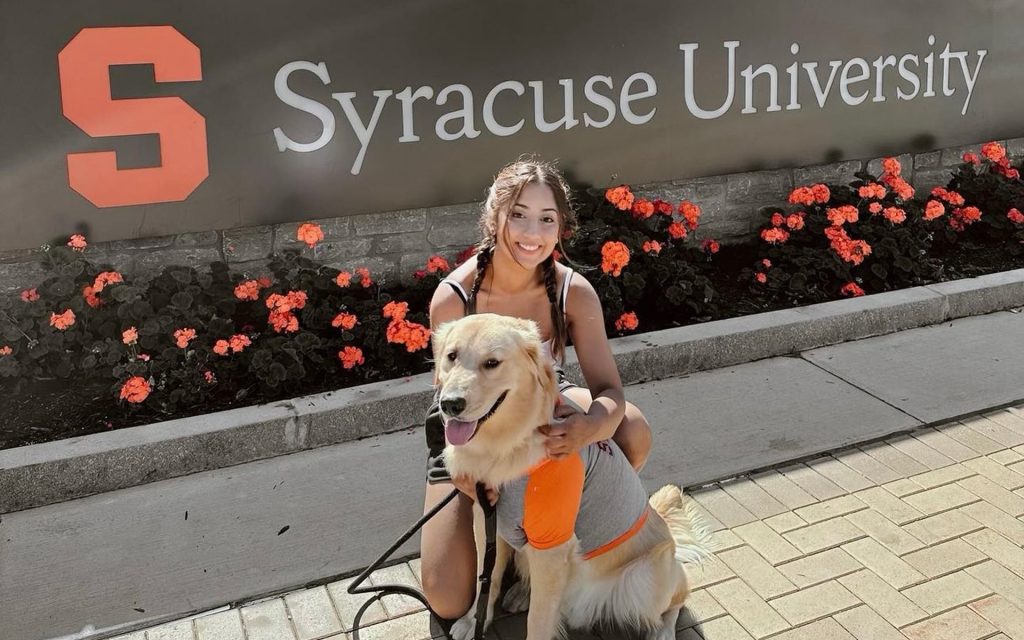
Maheen and her dog Clifford in front of the Syracuse University sign
Maheen and her dog Clifford

“When you are a leader and involved in many activities you have the opportunity to meet individuals from different backgrounds with different beliefs that help you develop a sense of responsibility that people respect,” Asim says. “It helps you grow as a person and see that being different isn’t a bad thing. My experiences here have taught me not to compare myself to others because the only one you can compare yourself to is you.”

While her mother is her biggest role model, she also looks to people like former First Lady Michelle Obama, the late Supreme Court Justice Ruth Bader Ginsburg, international human rights attorney Amal Clooney, Sen. Bernie Sanders and former Pakistani Prime Minister Imran Khan, all of whom she admires for their representation of women, human rights and their willingness to stand up for others.

Maheen on her laptop adorned with many stickers
Maheen on her laptop with an RBG dissent sticker displayed

She intends to work in criminal defense or prosecution in New York City after law school. She will be the first lawyer in her family, something particularly outstanding in her culture where expectations for women are generally marriage and a family.

Asim has truly bloomed in the face of adversity and is confident that will make her a talented lawyer. “I have had a lovely experience at Syracuse Law. I wish I could tell my 1L self that it’s all going to be OK — just push through, especially when it’s hard,” she says. “I never give up. I just don’t stop! And, that is what will help me continue to move forward always.”

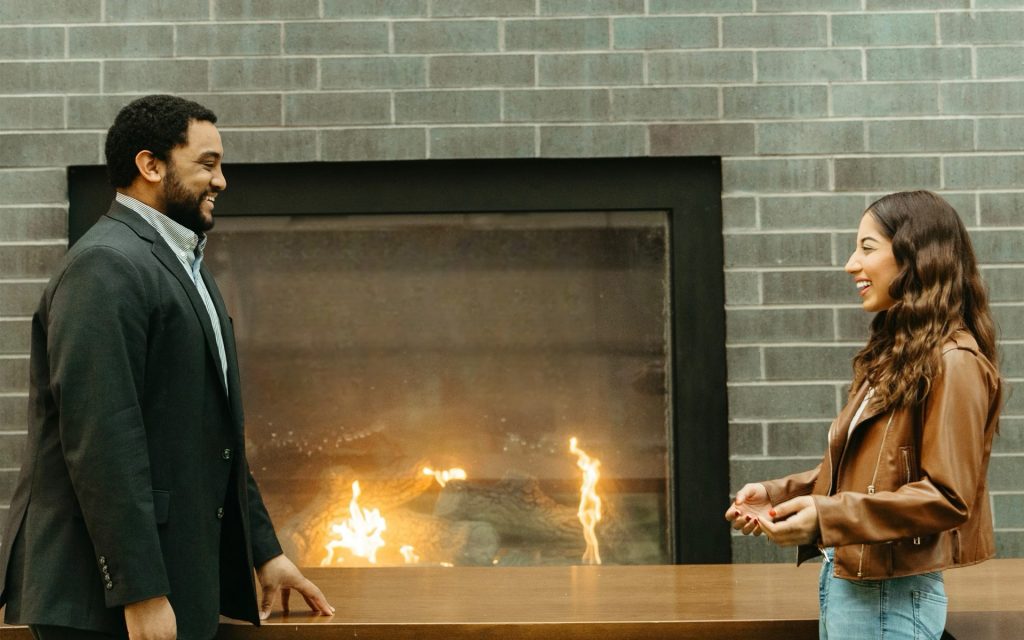
Maheen and James Cameron laughing in front of the fireplace in Dineen Hall

Professor Gregory Germain Discusses Trump’s Criminal Case

Professor Gregory Germain recently spoke with Newsweek about the Trump criminal case regarding hush money payments to Stormy Daniels.

In the article “Why Donald Trump’s Hopes of Trial Acquittal Are Slim”, Germain says “The D.A. is going to have a much easier time than Trump. It’s going to be very difficult for Trump to find jurors from the Manhattan jury pool who are likely to side with him, as Manhattan voters are overwhelmingly Democratic and quite liberal.”

Professor Greg Germain on Trump Gag Order: “He Could Face Direct Criminal Contempt”

Professor Greg Germain recently spoke with Newsweek about the gag order issued to Donald Trump in the Stormy Daniels hush money case.

Germain said, “apart from making comments outside of court, Trump could face ‘direct criminal contempt’ proceedings while appearing in person at the Daniels trial.”

“If Trump did not control himself in court, for example, if he insulted the judge in court, the judge could hold him in direct contempt and put him in jail for a few days or something like that,” said Germain.

Germain added that, in addition to direct and indirect criminal contempt of court, Trump could also face civil contempt proceedings.

“Civil contempt is to force future compliance with an order. If Trump was ordered to do something, like turn over his passport or testify, and refused, he could be put in jail until he agreed to comply,” he said.

Professor Paula Johnson on Unresolved Civil Rights-era Killings: “There wasn’t a Commitment to Solving the Cases.”

Professor Paula Johnson, Director of the Cold Case Justice Initiative, spoke with Bloomberg Law News for the article “Civil Rights Era Killings Draw New Scrutiny, Scant Prosecutions.” Johnson, who studies racially motivated killings of the Civil Rights era, summarizes that the lack of justice for victims and their families is that “there wasn’t a commitment to solving the cases.”

“That’s why we’re still talking about racially motivated killings of the civil rights era because they didn’t get the full treatment they should have gotten,” she said. “As each year and each decade goes by, that becomes more and more difficult.”

This article may be behind a paywall.

“Very Rare”: Professor Robert Nassau on the Recent Hunter Biden Federal Criminal Tax Evasion Charges

Professor Robert Nassau, director of the Low Income Taxpayer Clinic, said the recent Federal criminal tax evasion charges brought against Hunter Biden are “very rare.”

In a BBC News article, Nassau notes that “the criminal statutes cited in this case are pretty broad and could apply to millions of people who don’t file a return for one reason or another… prisons could, theoretically, be overfilled with tax criminals.”

The U.S. Army Court of Criminal Appeals will be sitting at the College of Law on Tuesday, Nov. 7 in the Melanie Gray Ceremonial Courtroom

The hearing will begin at 12:00 p.m. for the case of U.S. v. U.S. Army Staff Sergeant (E-6) Daniel D. Herman.  The case concerns an Army soldier who was convicted of wrongfully broadcasting intimate visual images and making a false official statement.  Representing the appellant will be Major Mitchell Herniak and Mr. Jonathan Potter.  Representing the government will be Captain Stu Miller and Major Chase Cleveland.  The Court Commissioners are Captain Andrew O’Grady and Captain Alex Vanscoy.

The three-judge panel will consist of Appellate Military Senior Judge Colonel Elizabeth Walker, Associate Judge Colonel Tim Hayes, and Associate Judge Colonel LaJohnne Morris. 

Herman was tried at Fort Hood, Texas, before a general court martial appointed by Commander, III Corps and Fort Hood, Lieutenant Colonel Scott Z. Hughes, presiding.  On May 14, 2022, a military judge sitting as a general court-martial convicted Herman (the appellant), contrary to his pleas, of six specifications of wrongful broadcast of intimate visual images and one specification of false official statement in violation of Articles 117a and 107, Uniform Code of Military Justice, 10 U.S.C. §§ 917a and 907 [UCMJ].  The military judge sentenced Herman to reduction to the grade of E-1, confinement for 13 months, and a bad conduct discharge. On May 23, 2022, the convening authority approved the findings and sentence as adjudged. On June 13, 2022, the military judge entered judgment. 

Arguments will be heard on the following issue: “Whether the military judge erred by denying the appellant’s motion to suppress statements and derivative evidence.”  

Professor Beth Kubala who arranged the court’s visit added, “This hearing should appeal to a number of students at Syracuse Law.  The proceedings may be rooted in Military Law, but the matters the Court will discuss include issues pertinent to all law school students – constitutional rights, the privilege against self-incrimination, custodial interrogation, and even policy considerations.” 

More information about the case can be found at this link.

Following the hearing, there will be a question-and-answer session with the judges, as well as a reception with judges and representatives of the Judge Advocate General’s Corps from Fort Drum in the Levy Atrium. 

The History of the U.S. Army Court of Criminal Appeals

Before the Uniform Code of Military Justice (UCMJ), Army courts-martial were prosecuted using the Articles of War. The Articles of War were initially established in 1775 and amended most extensively in 1874. Military justice lacked uniformity and some sentences were excessive. There was no system of appellate review. The commander, as reviewing authority, conducted the only post-trial examination of the record of trial in peacetime.

 On Aug. 23, 1917, in Houston, Texas, African-American Soldiers of the 24th Infantry rioted, killing 15 white men, including civilians, police officers, and National Guardsmen. In November 1917, 63 African-American Soldiers were court-martialed in the largest murder trial in American history. Fifty-eight were convicted. Thirteen of the convicted Soldiers were sentenced to death. Article 48 of the Articles of War authorized the command to carry out death sentences without submitting the case for further review or confirmation. The 13 Soldiers were hanged the next day with no appellate review and no clemency.

The Houston riot and ensuing executions exposed the lack of appellate review in court-martial proceedings. Soon after the executions, the War Department promulgated General Order No. 7 on Jan. 17, 1918, requiring the execution of any sentence involving death or dismissal of an officer to be suspended pending review and a determination of legality by the Office of the Judge Advocate General.

The UCMJ was enacted by the U.S. Congress in 1950 and took effect on May 31, 1951. Article 66 of the UCMJ gave The Judge Advocate General the power to create Boards of Review. The Boards could review all cases where the sentence approved by the convening authority affected a general or a flag officer, extended to death, a punitive discharge, or included confinement of one year or more. The UCMJ empowered the Boards to “weigh the evidence, judge the credibility of witnesses, and determine controverted questions of fact, recognizing that the trial court saw and heard the witnesses.” Boards of Review could set aside findings or sentences, order a rehearing or, where it found the evidence insufficient, order the charges dismissed. Significantly, the UCMJ created the United States Court of Military Appeals to provide civilian review of courts-martial.

 The Military Justice Act of 1968 changed the Boards of Review to the Courts of Military Review and made the board members judges. Though commanders initiated courts-martial, the emphasis shifted to attorneys conducting the proceedings under the watchful eye of a trial judiciary. The Act changed military justice practice to closely mirror the civilian court system, including a tiered system of appellate review.

 Major General Kenneth J. Hodson, serving as The Judge Advocate General of the Army, advocated for the Military Justice Act of 1968. After retiring as The Judge Advocate General, Major General Hodson was immediately recalled to duty as Chief Judge of the Army Court of Military Review in 1971. He also held the concurrent title of Commander, U.S. Army Legal Services Agency. Major General Hodson was the first general officer to serve as the chief judge.

 In 1994, the U.S. Army Court of Military Review was renamed the U.S. Army Court of Criminal Appeals. The name change coincided with the renaming of the U.S. Court of Military Appeals to the U.S. Court of Appeals for the Armed Forces.

Presently, the U.S. Army Court of Criminal Appeals is composed of three judicial panels. Each panel includes three appellate judges (with one judge appointed as the senior judge of that panel) and a commissioner. The Chief Judge, while not assigned full-time to a single panel, sits on cases with judges from all three panels and is also assigned a chief commissioner. The Clerk of Court staff provides paralegal support to the Court.

Professor Lauryn Gouldin Discusses the Federal Gun Charges Filed Against Hunter Biden with the BBC

Crandall Melvin Professor of Law Lauryn Gouldin provided insight to the BBC into the gun charges filed against Hunter Biden.  The argument over the constitutionality of one of the charges – a ban on gun possession for drug users – rests on a Supreme Court ruling that expanded gun rights last year.

In the ruling, the conservative-leaning court said that firearms restrictions must be consistent with the “historical tradition of firearm regulation” in the U.S.

Gouldin noted that under that ruling, the Supreme Court would “likely” find the charges against Biden unconstitutional.