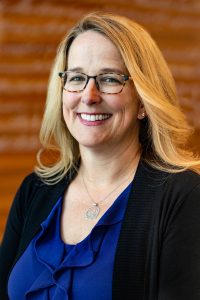
Crandall Melvin Professor of Law and Director of the Syracuse Civics Initiative Lauryn Gouldin has been named a Meredith Professor by Syracuse University, recognizing her excellence in teaching.
The award is one of the highest teaching honors bestowed by the University, awarded to two appointed tenured faculty annually. The 2022-2025 Meredith Professors are Gouldin and Julie Hasenwinkel, professor and chair of biomedical and chemical engineering in the College of Engineering and Computer Science and a faculty member with the University’s BioInspired Institute.
Gouldin teaches constitutional criminal procedure, criminal law, evidence, constitutional law, and criminal justice reform at the College of Law. Her scholarship focuses on the Fourth Amendment, pretrial detention and bail reform, and judicial decision-making. Her articles have appeared in the University of Chicago Law Review, BYU Law Review, Denver Law Review, Fordham International Law Journal, and the American Criminal Law Review, among others.
In 2017, the AALS Criminal Justice Section recognized her article, “Defining Flight Risk,” as the first runner-up in the Section’s Junior Scholars Paper Competition. In 2015, in recognition of her excellence in teaching, Gouldin was selected by the Syracuse University Meredith Professors to receive a Teaching Recognition Award. In 2014 and 2015, the College of Law Student Bar Association honored Gouldin with the Outstanding Faculty Award. At their commencement, the Class of 2018 awarded her the College of Law’s Res Ipsa Loquitur Award for outstanding service, scholarship, and stewardship.
As a newly appointed Meredith Professor, Gouldin will receive a supplementary salary award and an additional fund for professional development for each year of their appointment. The Meredith Professors are enrolled for life in the Meredith Symposium to provide a permanent forum for the discussion of teaching and learning.
The College of Law Innovation Law Center performed a recent patent analysis for the new medical technology startup JelikaLite, a company focusing on pediatric neurological health that is working to develop a treatment for autism. JelikaLite’s new treatment, Cognilum, received “Breakthrough Device Designation” from the FDA in January and is on the path to go to market post-clinical trials.
Co-founder and CEO Katya Sverdlov obtained important backing and support for Cognilum from Upstate Medical University’s CNY Biotech Accelerator in Syracuse, selected as a winner at this year’s annual Medical Device Innovation Challenge (MDIC).
Kathi Durdon, Director of Operations for the Biotech Accelerator, then connected Sverdlov to the SU Innovation Law Center for Cognilum’s patent needs.
Sverdlov explains, “we did have patent attorneys, but the last time they did patent analysis for us was two years ago. I was terrified that something had happened, but the SU law center did absolutely wonderful analysis for us with really good feedback on our possibilities on the patent.”
Professor Nina Kohn will speak about the “Impact of Questioning an Older Adult’s Decision-Making Capacity: Maximizing Self-Determination, Minimizing Harm” in a virtual Elder Justice Decision Making Capacity Symposium hosted by the Department of Justice from April 19 – 21. Kohn’s talk will take place from 4:05 p.m. – 4:50 p.m. on the first day of the three-day symposium.
Criminal and civil justice systems tend to make mistaken assumptions about older adults’ capacity to make decisions for themselves. This can negatively impact the lives of aging adults and can have profound implications on their treatment in criminal and civil proceedings.
In this symposium, attendees will learn about protocols and tools available to discuss the decision-making capacity of elder adults via expert panels and discussions. Additional topics will include:
Advances in the aging brain research and its relevance for decision making
The role of clinicians in conducting forensic decision-making capacity assessments with older adults
The impact of questioning an older adult’s decision-making capacity
Uncover the latest science in elder care, as well as best clinical, legal, and judicial practices to increase access to both justice and self-determination in older adults.
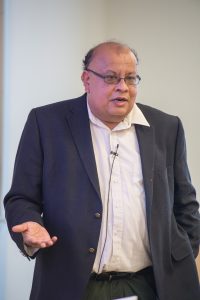
Crandall Melvin Professor of Law Shubha Ghosh has been invited to speak at the Conference on Innovation and Communication Law, held May 19 and 20 at the Danube University, Krems, Austria.
Ghosh will speak on “Crisis, Invention, and Innovation” in relation to COVID and other crises.
More information on the conference can be found here.
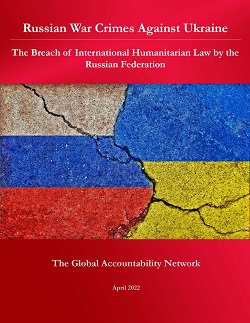
The paper lays out an indictment of numerous war crimes, crimes against humanity, and crimes of aggression from February 24, 2022, to April 1, 2022, during the invasion of Ukraine. The report includes a sample draft (Appendix A, page 47) of a criminal indictment against President Vladimir Putin for his war crimes. The white paper was created by the Ukraine Task Force, comprised of law students and legal scholars, with the goal to create a non-partisan, high-quality analysis of open-source materials.
“Because of his aggressive acts and his intentional targeting of Ukrainian civilians, Vladimir Putin has lost all political legitimacy and has made Russia a pariah state. This white paper catalogs the horror he has unleashed and lays out a pathway for holding him accountable for aggression, war crimes, and crimes against humanity,” said David Crane L’80, the project leader of the white paper and Distinguished Scholar in Residence at Syracuse University College of Law.
Crane is the founding chief prosecutor of the Special Court for Sierra Leone, an international war crimes tribunal where he indicted Liberian President Charles Taylor, the first sitting African head of state in history to be held accountable in this way.
According to the report on Ukraine:
“Since the invasion, Ukrainian citizens have been forced to endure kidnappings, property destruction, starvation, terror, shellings, and murder at the hands of the Russian Federation. As is consistent with the complex and intricate history of Ukraine, Russia once again seeks to assert its dominance and control of the territory in wanton violation of international law and Ukrainian sovereignty. As of the writing of this document, President Zelenskyy continues to lead his country and seek peace for its citizens, while the Russian Federation continues its campaign of atrocities meant to terrorize Ukraine and strip it of its national identity.
There is no clearer violation of the laws of humanity. At its most basic elements, international law and the laws of humanity establish self-determination and self-expression of a people as fundamental rights free from infringement by foreign powers. President Putin, and the rest of his Russian Federation political and military command seek to upend these values and establish a new world order with authoritarianism, terror, and oppression at its center. The international community cannot remain silent, and the road does not end at sanctions — it begins.” (page 40)
The 276-page report lays out the history of Russian aggression in Ukraine, the legal framework of accountability, individuals who bear the responsibility for crimes, and the specific violations of international law.
“The Ukraine Task Force established by the Global Accountability Network (GAN) was an incredible and unique experience that allowed law students to take an active part in international legal discourse,” said Syracuse Law student 3L Christopher Martz, the task force director and one of the lead writers of the white paper. “The Ukraine Task Force encountered serious difficulties in documenting war crimes in real time, especially considering the fact that GAN pulled students from all across the country. However, the leadership of Professor Crane and the commitment of GAN volunteers helped overcome these difficulties, resulting in an important living document that creates a framework of accountability moving forward.”
Additionally, the appendix of the report offers exhaustive details of how the researchers documented their evidence:
Appendix B (page 68) is a crime narrative detailing by date and cities where crimes were committed and by the responsible party. Appendix B is a grim summary of the civilian deaths suffered during the invasion from bombings and attacks on residences, hospitals, schools, grocery stores, public buses, and many more.
Appendix C (page 102) expands on the crime narrative and provides a more detailed breakdown of the violations of International Humanitarian Law, as well as documenting violations of the Ukrainian Penal Code. Appendix C gives a day-by-day and detailed accounting of the atrocities and war crimes committed and the specific articles of the Rome Statute, Geneva Convention, and Ukrainian Penal Code they violate.
Appendix D (page 124) is a comprehensive profile detailing the command-and-control structure of the Russian political and military senior leadership. This “dossier” lists the individuals responsible for the atrocities in Ukraine, and documents relevant information surrounding their responsibility and complicity.
“We have done this once before and we can do it again with the International Criminal Court prosecuting the alleged war crimes and crimes against humanity and a United Nations-backed Special Court for Ukraine, the world’s second hybrid international war crimes tribunal, the Special Court for Ukraine the crime of aggression”, according to Crane. “Its mandate will be to prosecute those who bear the greatest responsibility for the aggression against Ukraine must include President Vladimir Putin,”
Members of the media, please contact Ellen James Mbuqe, executive director of media relations at Syracuse University, at 412-496-0551 or ejmbuqe@syr.edu, for interviews.
More about David Crane and Syracuse University
David Crane was a professor of practice at Syracuse University College of Law from 2006 until his retirement in 2018. During that time, he taught international criminal law, international humanitarian law, military law, and national security law. While at Syracuse Law, Crane founded Impunity Watch, an online student-run law review, and public service blog, and the Syrian Accountability Project (SAP), an internationally-recognized effort among students, activists, journalists, and non-governmental organizations to document war crimes and crimes against humanity during the Syrian Civil War. Crane later returned to the College of Law as a Distinguished Scholar in Residence.
In 2014, Crane co-authored the “Caesar Report” that detailed the systematic killing of thousands of people in Syria and testified about the report at the UN Security Council. Crane also has testified to the US House of Representatives Committee on Foreign Affairs and its Subcommittee on Africa, Global Health, Global Human Rights, and International Organizations on the Syria crisis and related human security and humanitarian issues. In 2016, Crane helped to draft a UN resolution “to establish a special team to ‘collect, consolidate, preserve and analyze evidence” as well as to prepare cases on war crimes and human rights abuses committed during the conflict in Syria.” Subsequently, he assisted the UN in setting up the independent justice mechanism mandated by the resolution.
When he was chief prosecutor of the Special Court for Sierra Leone, Crane was the first American to be a Chief Prosecutor of an international war crimes tribunal since 1945 when Justice Robert Jackson and Telford Taylor were prosecutors at the Nuremberg Trials.
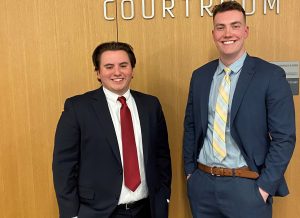
Third-year students Bradley Ace and Robert Rose prevailed over finalist 2Ls Meghan Ellsworth and Jessica Johnson in the Entertainment and Sports Law Negotiation Competition. Rose was named Best Advocate.
Final round judges were Professor John Wolohan, Daniel Greene L’16, Associate at Newman and Lickstein, and Erin Phillips L’15, Associate at Newman and Lickstein.
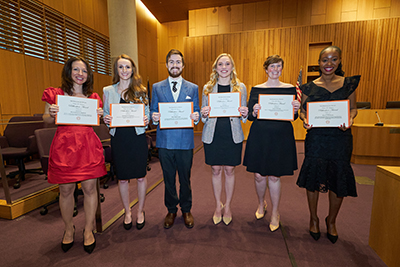
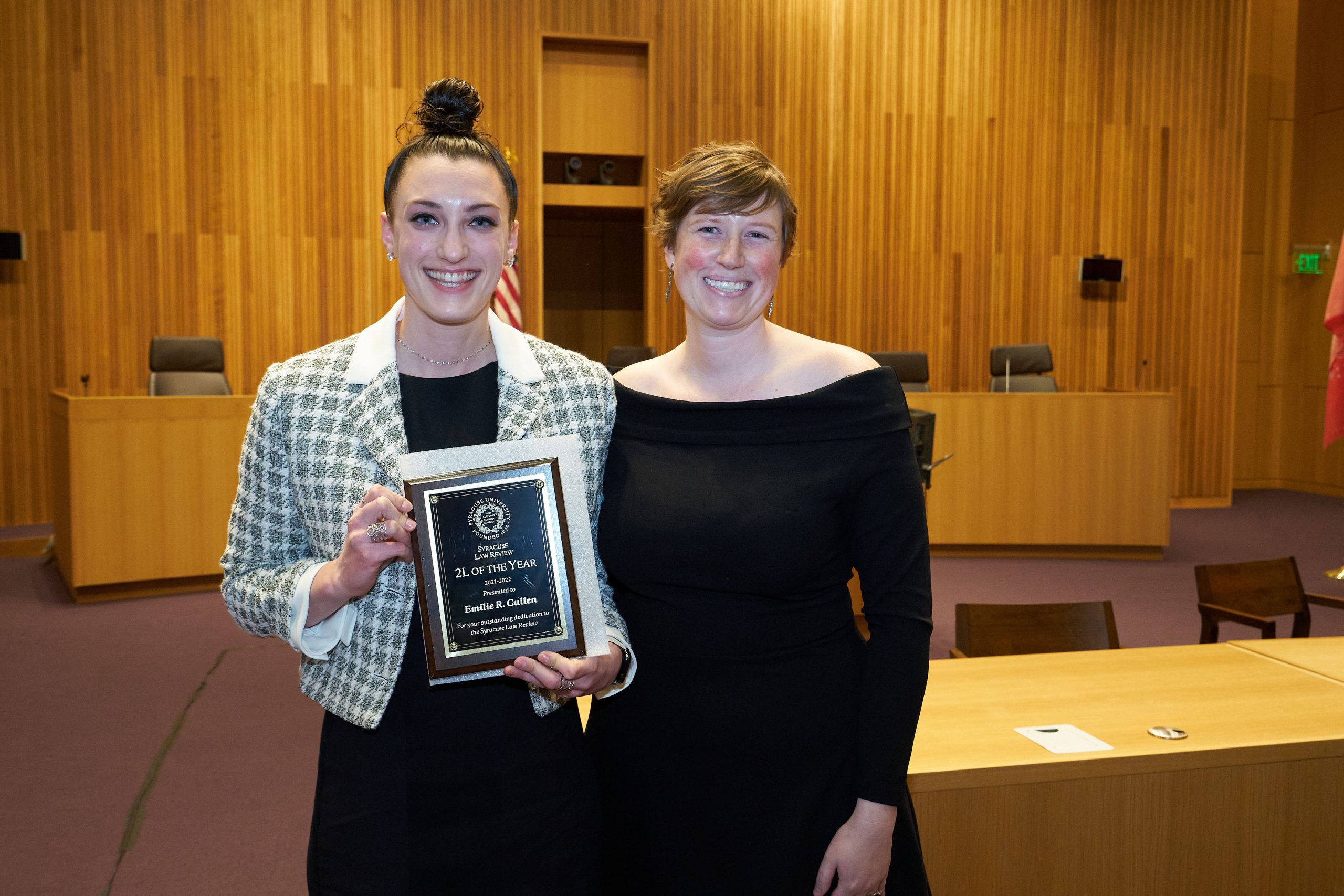
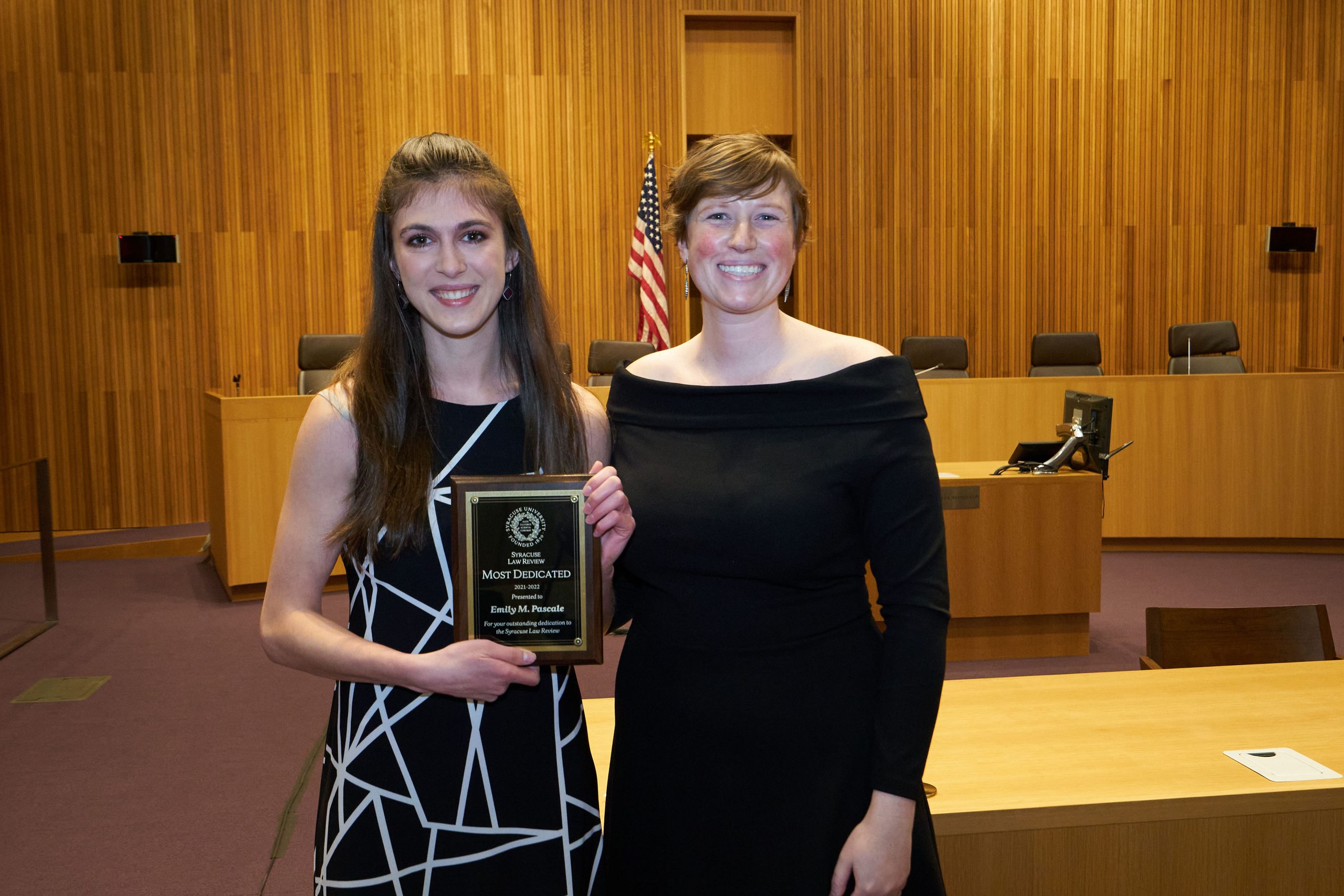
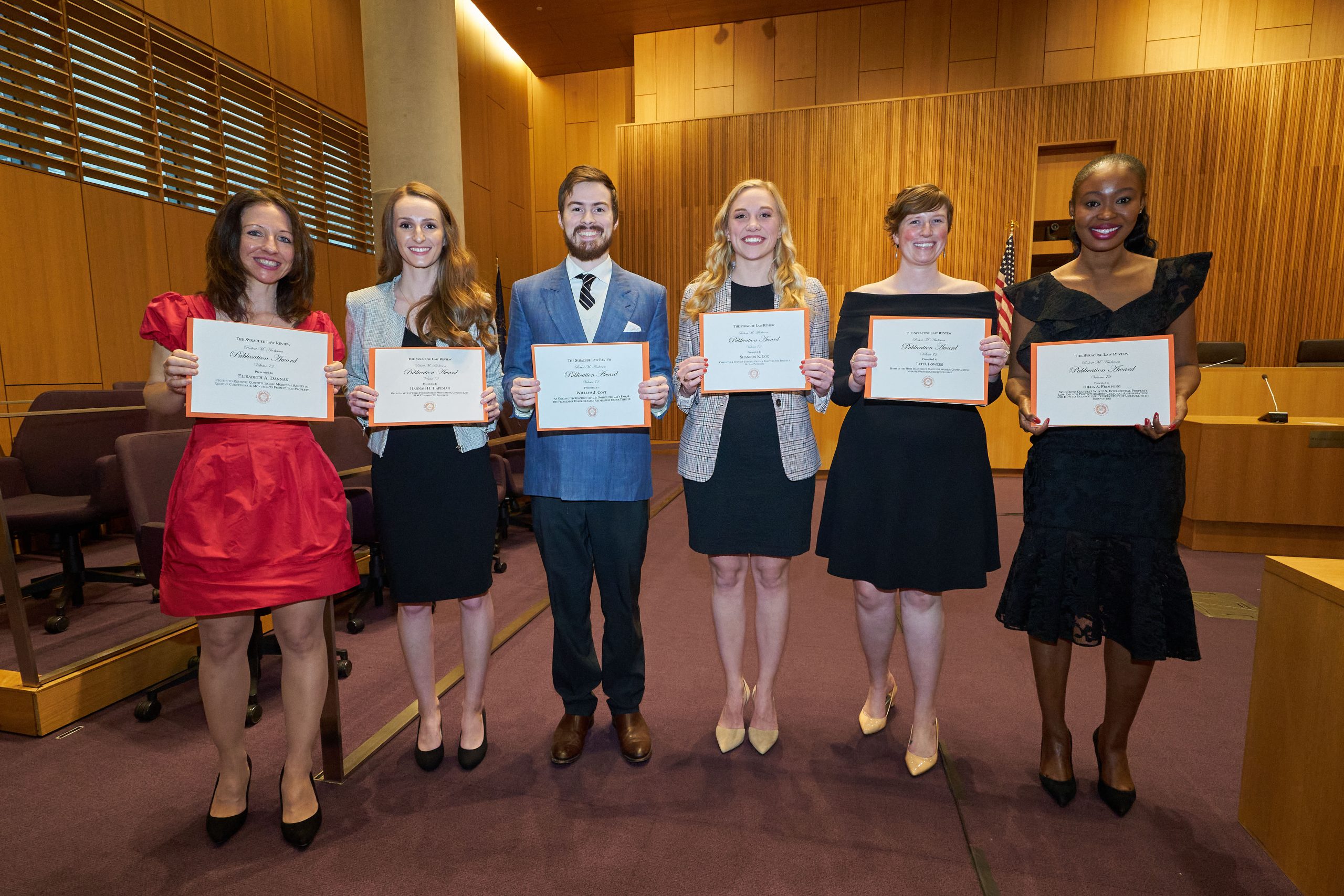
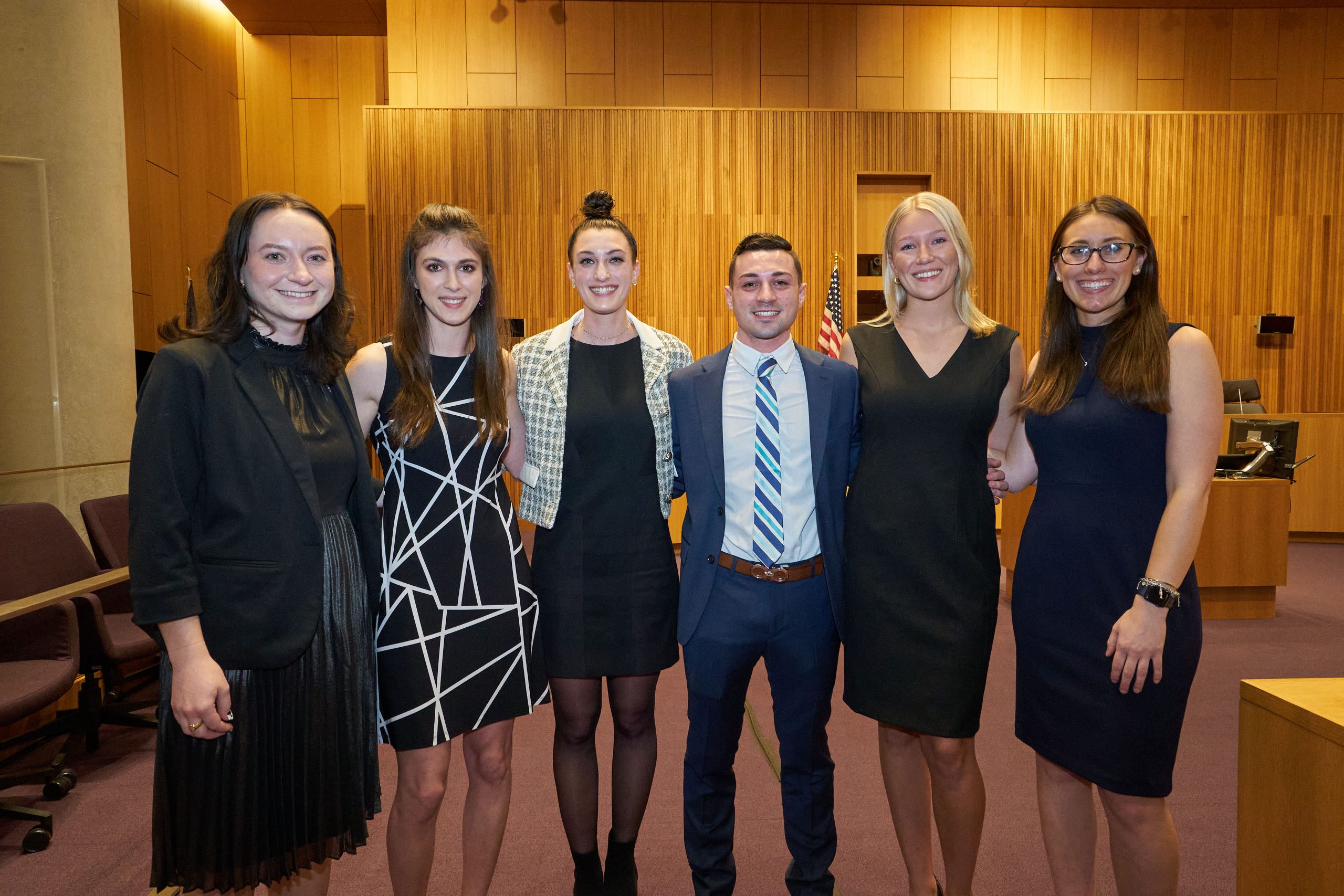
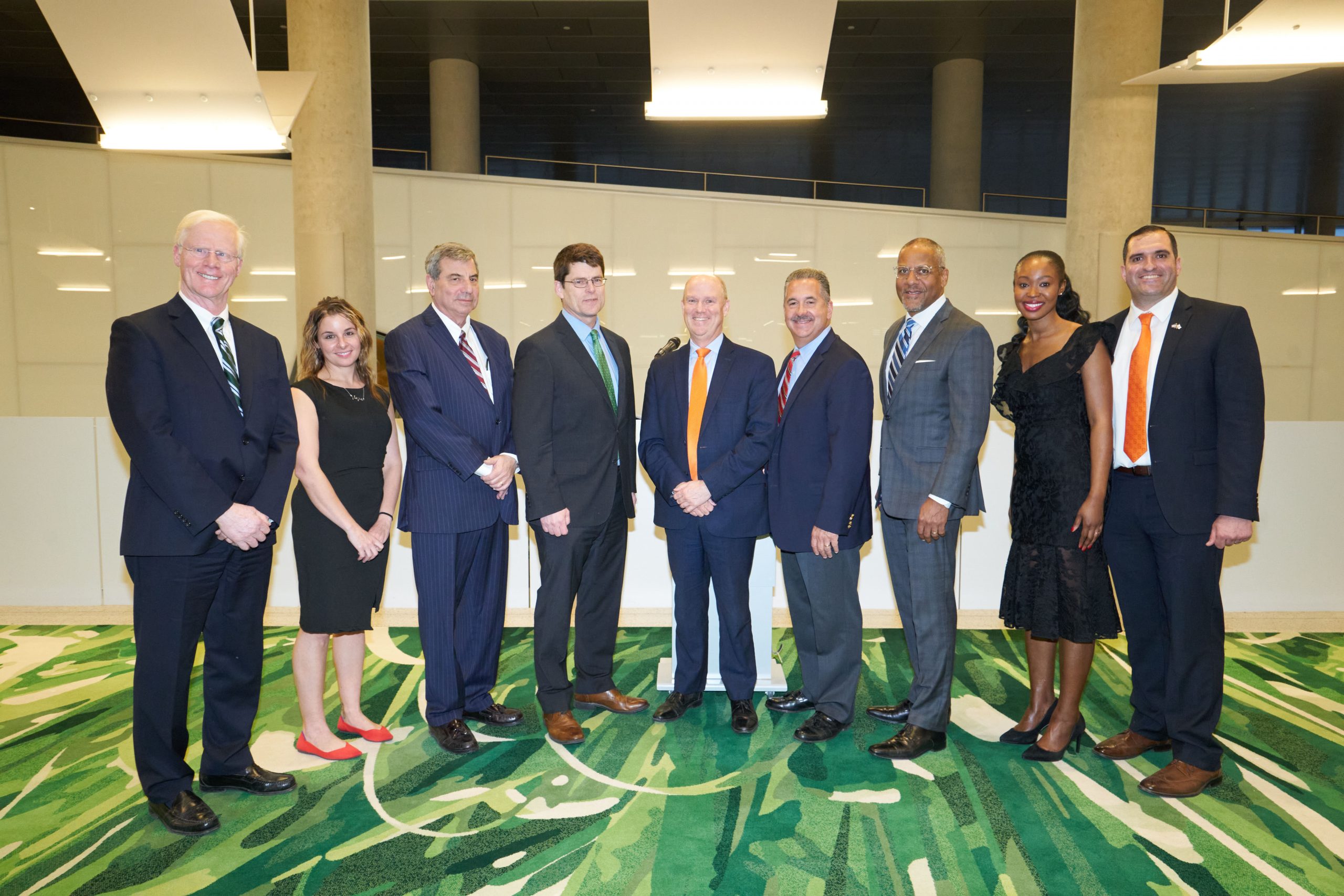
The Syracuse Law Review celebrated the annual award winners for Volume 72 in a ceremony at the Melanie Gray Ceremonial Courtroom on April 7, 2022.
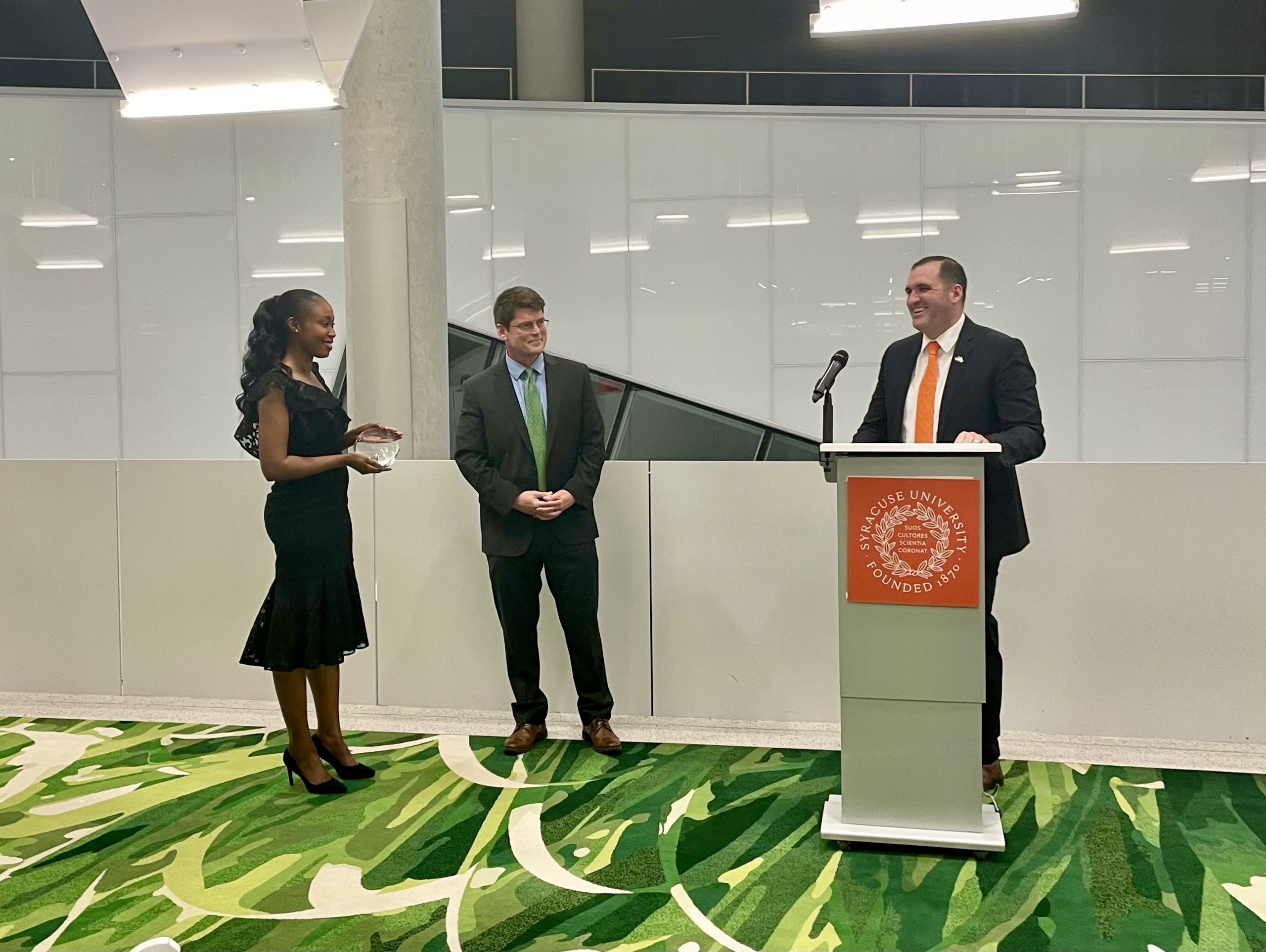
As the first in-person Law Review Banquet to occur since the onset of the pandemic, it was a night to remember. Dean Craig M. Boise offered opening remarks to students, faculty, and alumni, celebrating the achievements of the Law Review staff and winners soon to be announced.
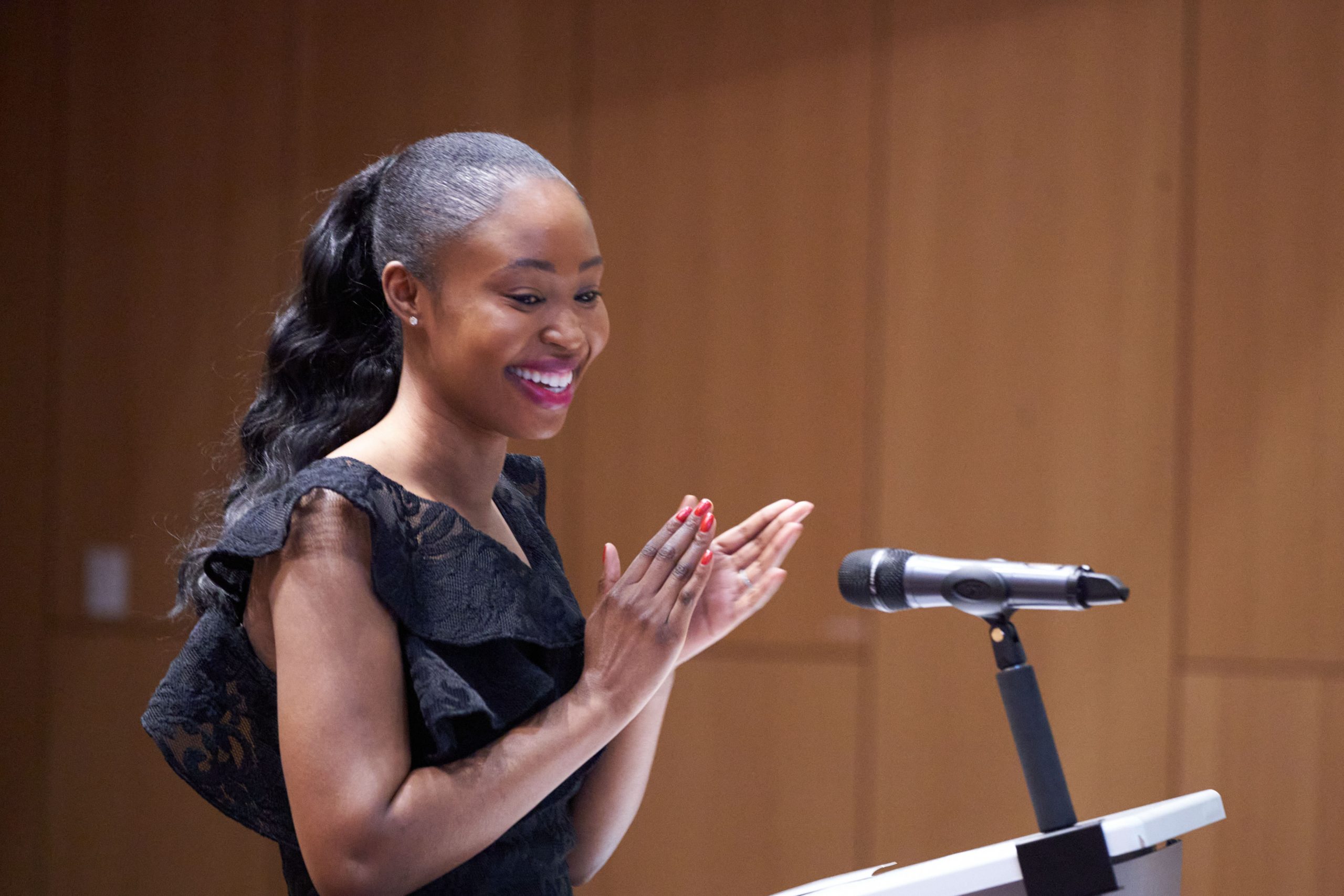
Hilda Frimpong, Syracuse Law Review Editor-in Chief, gave the welcome speech for the ceremony. Frimpong is the first Black Editor-in-Chief in the history of the Syracuse Law Review, a proud accomplishment celebrated on the same day that Ketanji Brown Jackson was confirmed as the first Black woman to serve as a justice on the Supreme Court.
2022 Award Winners
2L of the Year: Emilie R. Cullen
3L of the Year: Hilda Frimpong
Samuel J. M. Donnelly Award: Niloofar Abedzadeh
Faculty & Staff Award: Kyle Davis
Most Dedicated Award: Emilie M. Pascale
Volume 73 Student Notes Selected for Publication
Emilie Cullen
Paul Dipadua
Emily Pascale
Penny Quinteros
Tim Walsh
Robert M. Anderson Publication Award Winners
William J. Cost
Shannon K. Cox
Elisabeth Dannan
Hilda A. Frimpong
Hannah T. Hapeman
Kathryn Morris
Leita Powers
Immediately following the awards ceremony, attendees enjoyed a reception in the David M. Levy Atrium. John Powers L’96, Partner, Hancock Estabrook LLP, delivered the keynote speech for the night as this year’s Alumni Achievement Award recipient. To wrap up the festivities, Raymond Scarlata provided a “look ahead toast” as the Editor-in-Chief-elect for Volume 73.
As you walk through the Atrium or Law Library, beautiful oil paintings may catch your eye. The Law Library is delighted to present, in a double-sided gallery facing the Levy Atrium and the Law Library’s Kossar Reading Room, a selection of paintings by Professor Christian C. Day.
Professor Day has painted since his childhood and is an impressionist realist. His recent paintings feature Central New York scenes, seascapes, flora, and still life. This collection, entitled STILL LIFE, STILL LAND, will be on display through May 6.
We encourage you to view these wonderful paintings over the next few weeks, and we thank Professor Day for the honor of sharing them with us.
In this Benzinga article, Crandall Melvin Professor of Law Shubha Ghosh discussed Elon Musk’s recent Twitter poll in advance of news of his purchase of a 9% stake in Twitter.
Ghosh says, “Proxy solicitation is where a shareholder can get other shareholders to participate in a vote so that management of a company can change its policies,” he said. “And there are rules regarding proxy solicitation. It may be a gray area, but it doesn’t strike me as a proxy solicitation. I think he’s just doing sort of an investigation as to what the policies are and not necessarily trying to get fellow shareholders to vote in a particular way or swayed them in a particular way — these tweets were done to all his followers, some of whom may be Twitter shareholders, some may not be Twitter shareholders.”