Passing through the doors of the Eleanor Theodore Lecture Hall in Dineen Hall, a law student might just wonder about the woman behind the name. A simple Google search would turn up an obituary (she died at the age of 92 on January 15, 2021), but even that would not reveal the answer. The student would have to dig deeper and conduct research (primary and secondary) to uncover details about Theodore and her impact on the city of Syracuse, her profession, and the world at large. And that would have suited Theodore just fine. Because she liked to work quietly, diligently, over decades, surrounded by books, records, and historical artifacts.
Theodore was a woman who may not have made headlines, but she nonetheless made a huge impact on countless lives.
After earning her undergraduate degree in 1949 from Syracuse University in just three years, Theodore enrolled in the College of Law, fulfilling a childhood dream to become a lawyer. She would be the only woman to graduate in the Class of 1952.
“Eleanor was very smart,” says Steve Nicolaos, who was close to Theodore throughout his life, even helping to take care of her during her last year of life. “She would tell me that the law was a male-dominated field back in the ‘50s and that she experienced a good deal of resentment. She said she had to work twice as hard to succeed.” And succeed she surely did.
For eight years, Theodore practiced general law in a small Syracuse law firm and in 1960, she was appointed assistant corporation counsel for the City of Syracuse, becoming the first woman in the history of the city’s law department and the only woman attorney during her first decade on the job. A trailblazer of her time, Theodore provided legal advice to mayors, city departments, and the council. She was also the assigned attorney to the Syracuse Planning Commission and the Board of Zoning Appeals, defending them in any litigation.
Theodore was a woman who was passionate about her work, putting her whole self into her professional life. In a short profile piece published in the Syracuse Law Magazine (Fall 2007), Theodore said, “I intended to remain in the law department for four years and ended up staying 37 years, serving under five mayors and 11 corporate counsels.”
Theodore worked with both Republican and Democratic administrations throughout the span of her career. “That was highly unusual,” one of Theodore’s long-time friends, Dean Assimon, explains, “because often you see politicians cleaning house after an election. But she got things done and earned universal respect and trust. We need more Eleanors these days.”
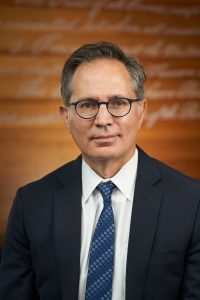
“You name it—whatever happened in Syracuse, Eleanor probably had a hand in it, working through multiple administrations and transitions, and helping to build and protect the city she loved,” said College of Law Dean Craig Boise during a ceremony to dedicate the lecture hall in Theodore’s name.
Through multiple administrations and major political transitions, Theodore kept her head down and remained steadfast in her commitment to her work. In a major accomplishment for her profession, she compiled all laws and statutes of the City of Syracuse into a publication that was easy to access by members of the law department and the local bar. While this effort may seem insignificant at face value, it assisted members of the law department and the local bar in improving the way things were always done. “Previously there were statutes you might not be aware of unless someone called it to your attention,” Theodore said. “It was frustrating.”
Taking what she learned in her law career and applying it to other aspects of her life, Theodore was also a very passionate member of her church community. She was a member of St. Sophia’s Greek Orthodox Church since childhood, attending Sunday school and Greek school, along with religious services. As an adult, she brought her legal mind and dedication to her faith by serving on the Parish Council for more than 30 years, including four times as its president. She was widely considered the church historian and is credited with putting together a book on the Church’s history.
History in all its forms was important to Theodore, along with understanding the rules, regulations and doctrines that governed the church.
“Eleanor actually read through the uniform parish regulations of the Greek Orthodox Archdiocese to ensure that our church bylaws were in compliance,” recalls Assimon, with a bit of humor. “When we had a general assembly meeting, we would invariably do something wrong, and Eleanor would take me aside and quietly whisper, ‘Now, Dean, you know you’re supposed to do this and this and this.’”
“Eleanor was very much a follower of rules and regulations,” Mary Assimon, Dean’s wife and Theodore’s close friend remembers. “Whatever Eleanor did, whether it was law or church-related, it had to be a certain way. What’s right was right. What’s wrong was wrong.” St. Sophia’s priest, Fr. David Smith, says Theodore “was clearly not a push-over, but everything she did was gentle and peacemaking. I think she’d like to be remembered for her humility, which was rather robust.”
That was the Eleanor Theodore way. With quiet determination and humility, she ensured the rules and regulations governing the church—and the City of Syracuse—were followed without
fanfare. And with a deep respect for history and those who helped make history. Theodore was interviewed in a video to celebrate St. Sophia’s centennial in 2021. She opens the film by paying tribute to the first Parish Council that had served a century before.
“I admire those people,” said Theodore on video. “They must have faced difficult times. Remember in this country, when you were foreign-born, even though you might be a citizen, you were considered a foreigner. And they built that church and maintained that church. They went through a Depression and they still survived. And we are the beneficiaries of their endeavors.”
Members of St. Sophia’s are beneficiaries of Theodore’s endeavors, too. She was on the building committee (as the only woman, of course!) that oversaw the construction of the new church in Dewitt when St. Sophia’s moved from downtown Syracuse in 1973. It was important to her to keep costs in line. “We endeavored to build a church at a
reasonable cost so we would not—not—encumber future generations with a tremendous mortgage,” Theodore said in her recorded video interview. “I have seen mortgages in other churches that go on forever; we didn’t wish to do that.”
Church members are beneficiaries of both her prudence and her generosity. She helped raise thousands of dollars— and donated thousands of her own—to support the stunning stained glass windows and iconography throughout the church. “When I look at our iconography project, I always hear Eleanor’s gentle voice and sense her support,” says Fr. David.
Her sister died the year before Theodore passed away. Neither married nor had children. Mike Bandoblu L’11, her friend and attorney, said: “Eleanor was introverted, but also very nurturing and selfless. When we talked about my 2-year-old daughter, she would just light up. It seemed to me that she would have wanted to be a mother. Now, through her estate gift, she sort of is—a mother to many.”
Theodore amassed a large estate, working hard, and living with her only sister, Dorothy, in a house filled with art, literature, and collectibles. Jim Bandoblu, Theodore’s accountant, believes the legacy that Eleanor left in her gifts to the Church and the College of Law reflects her deep love for both.
“The Church and the law school both defined her,” says Jim Bandoblu. “They drove her faith and they drove her culture—her desire to give back to the communities she loved.”
Her estate gift to the College of Law creates the Eleanor Theodore Memorial Law Scholarship Fund to support scholarships for deserving and promising students. The amount of the gift was not revealed, reflecting the wishes of the donor, her lifelong modesty and her desire to serve others without fanfare.
“Eleanor often told people that this law school was important to her,” says Dean Boise. “What she learned here built a future for her and allowed her to live a life of service. By putting her name on the lecture hall, we hope our students will remember the woman who was modest in demeanor, but fierce in her commitment to public service. A woman who loved history, tradition, and building for the future.”
College of Law Creates the Eleanor Theodore L’52 Memorial Law Scholarship Fund and Names Lecture Hall in Her Honor
As he prepared to deliver this year’s annual State of the College Address, Dean Craig Boise was thinking about both place and time. Moments before, he had officially dedicated the lecture hall where he was standing in the name of Eleanor Theodore L’52. He was thinking about her legacy and gift to future generations of law students who would study there.
“Today, we honor a woman who graduated more than a half-century ago, the only woman in the Class of 1952,” said Boise. “Eleanor Theodore, who also earned her undergraduate degree from Syracuse University in 1949, passed away last year at the age of 92. Her estate gift to the College of Law will create the Eleanor Theodore Memorial Law Scholarship Fund to support scholarships for deserving and promising students.”
The amount of the gift was not revealed, reflecting the wishes of the donor, her lifelong modesty, and her desire to serve others without fanfare. “Eleanor was an introvert,” says Mike Bandoblu L’11, Theodore’s close friend, accountant, and executor of her estate. “She was a private person, but she always put others first. The first word that comes to mind in describing Eleanor is ‘selflessness.’”
During the dedication ceremony, Boise recalled Theodore’s career of service over nearly four decades in the Department of Law for the City of Syracuse. As assistant corporation counsel, she provided legal advice to mayors, city departments, the Common Council, planning commission and others.
“You name it—whatever happened in Syracuse, Eleanor probably had a hand in it, working through multiple administrations and transitions, and helping to build and protect the city she loved,” said Boise. According to a profile of Theodore published in Syracuse Law Magazine (Fall 2007), she was the first woman in the history of the city’s law department and its only female attorney during her first decade there. She served for 37 years, under 5 mayors and 11 corporation counsels.
“Her education at the College of Law was important to her. She often told people that. What she learned here built a future for her and allowed her to live a life of service,” said Boise. “By putting her name on this lecture hall, we hope our students will remember the woman who was modest in demeanor but fierce in her commitment to serving others and the College of Law.”
In opening the program, J.D. Candidate, Class of 2024, and President of the College’s Women’s Law Students Association Julie Yang said, “The Women’s Law Students Association is committed to empowering women and advancing women in legal education and the legal profession. Our mission is to advocate for gender equity and women’s causes while creating lasting relationships with our mentors and alumnae. It is fitting therefore that we should join in this morning’s unveiling, in celebration of a woman who was truly a trailblazer. I know I speak for all my colleagues when I say that we will remember this day with great admiration and inspiration.”

 The Innovation Law Center at Syracuse University College of Law has been selected as a part of a $15 million, five-year investment by the National Science Foundation (NSF). The investment is designed to foster innovation and entrepreneurship in STEM programs in rural, economically underserved regions. Syracuse University joins nine other colleges in the newly awarded grant, NSF Innovation Corps (I-Corps): Interior Northeast Region Hub (IN I-Corps). The grant will help the ILC continue to foster innovation and entrepreneurship.