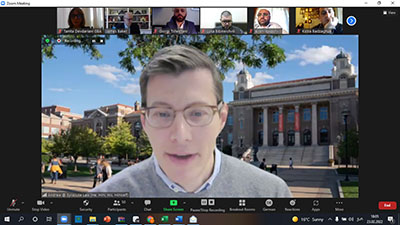
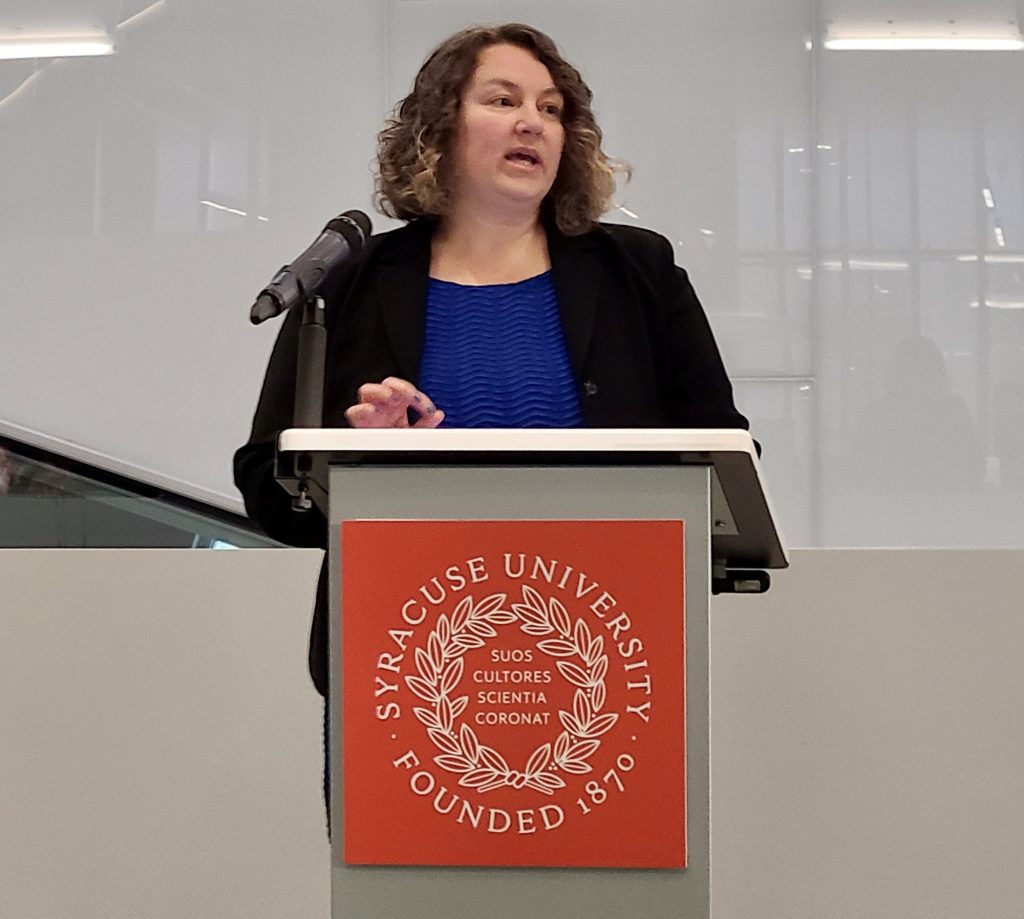
As part of a newly-launched partnership between the College of Law and the Republic of Georgia Bar Association (GBA) earlier this academic year, Syracuse Law offered a five-part lecture series to members of the GBA to discuss a range of topics that covered foundational aspects of the U.S. legal system, and nuances of criminal procedure, commercial law, national security law, and intellectual property.
College of Law faculty members wrapped up the final component of the series in April. Participating in the series were:
Professor Shannon Gardner: Sources of U.S. Law: From the Common Law Up
Hon. James Baker: Current Issues in Security: Bar Associations, Public Citizens, and the Rule of Law
Professor Todd Berger: Introduction to U.S. Criminal Procedure by
Adjunct Professor David Reed L’85: Demystifying U.S. Commercial Contracts
Professor Shubha Ghosh: Overview of U.S. Legal Issues in Patent, Copyright, and Trademark Law
The College of Law was a natural partner for this effort given the broad expertise of faculty, overall interest in supporting internationalization efforts, and alumni members of the GBA.
Executive Director of the GBA Giorgi Tshekhani praised the partnership, commenting that “while enhancing the quality of justice in Georgia is one of our priorities as well as main challenges, sharing of knowledge and experience from our highly qualified U.S. colleagues is of significant importance. I would like to thank the representatives and professors of the SU College of Law for their active and valuable involvement in the lecture cycle.”
In the past, the College of Law has helped arrange for lectures to lawyers in Azerbaijan, Brazil, Russia, Saudi Arabia, and throughout Europe, but this was the first comprehensive series arranged in coordination with an institutional partner.
Professor Todd Berger explains, “this program builds on several different international collaborations that we’ve done with other academic institutions over the years, connecting us with actual practicing lawyers in other countries. Each partnership, including this one with the GBA, has some key differences that give our faculty new perspectives from around the world.”
This partnership not only promotes the expertise of the College of Law faculty but also advances the teaching of law and exposure to diverse perspectives beyond borders and provides visibility to prospective students in countries around the world.
“These conversations not only enhance participants’ knowledge,” Professor Shannon Gardner remarks, “but also lay the groundwork for future collaboration and partnership between the College of Law and the Georgian Bar Association. The opportunity for both College of Law faculty and members of the Georgian Bar Association to learn more about the laws and legal systems of each other’s country has been invaluable.”
With the ease and comfort of virtual exchanges over platforms like Zoom, the College of Law plans to continue to expand these efforts in other parts of the world.
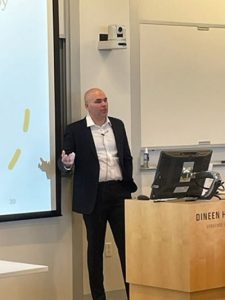
Professor Malloy presented the Annual Zoning Law Update, a continuing education program for zoning and planning board officials in Onondaga County, this past Saturday, April 23. The annual education program is designed to meet the certification requirements for zoning and planning officials in New York State.
Held at Dineen Hall this year, presenters included law students Kate Mazdzer (2L) and Michael Towey (3L), who are both a part of Malloy’s Advanced Zoning Law Program, and Alum Christopher Baiamonte L’19 of the Wladis Law Firm.
The program is sponsored by the Center for Property, Citizenship, and Social Entrepreneurism at the College of Law and by the Town of DeWitt, NY. Approximately 40 officials were on hand for the annual training that covered such topics as Area and Use Variances; Article 78 court review; Affordable Housing and the demise of the single-family residential zone, Unconstitutional Conditions; and criteria for evaluating Reasonable Accommodation under the ADA and FHA.
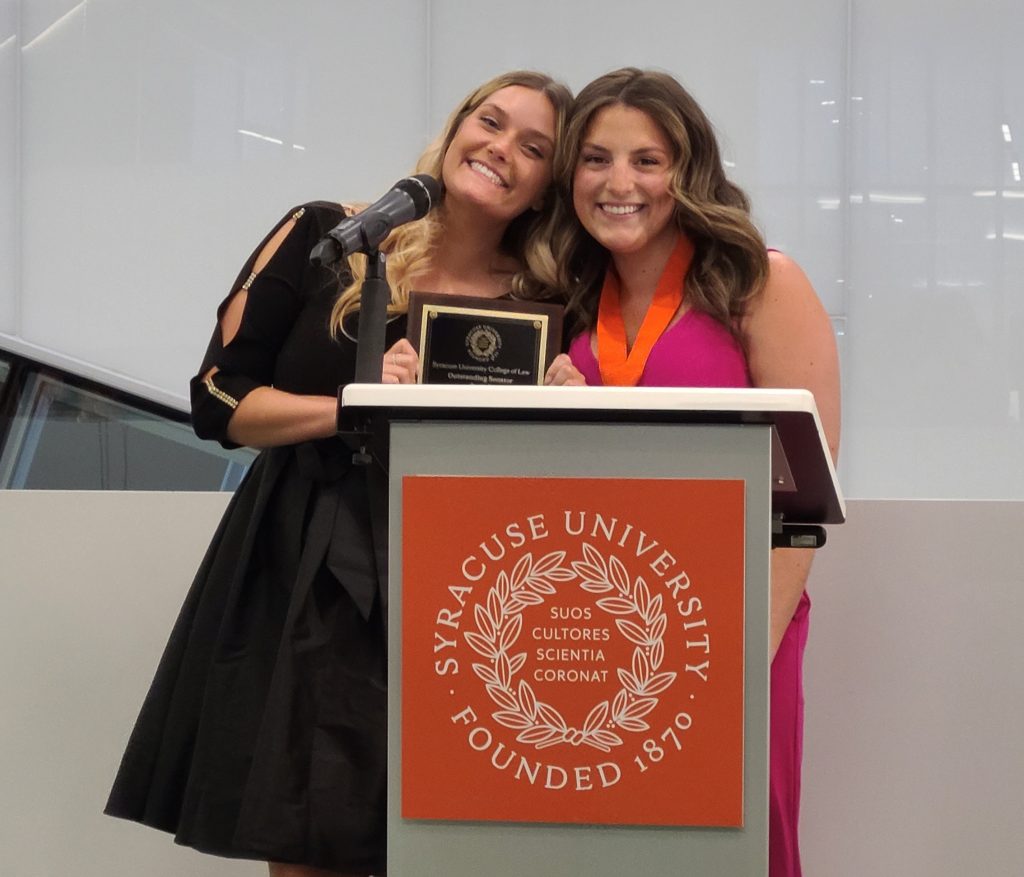
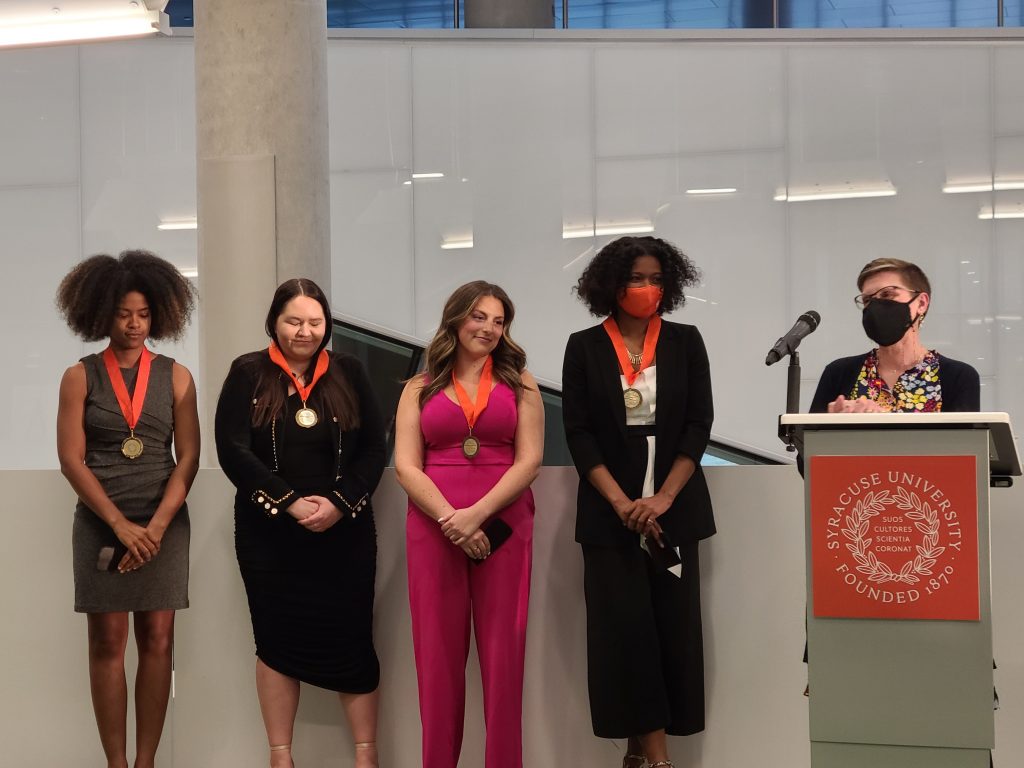
The Student Bar Association (SBA) hosted a Students Award Ceremony in Dineen Hall on April 20, highlighting the work of various students, organizations, staff, and faculty.
2022 Award Winners
Distinguished Service Awards
Gabby Kielbasinski
Abby Neuviller
Olivia Stevens
Kayla Wheeler
Outstanding Graduate Award
Christopher Martz
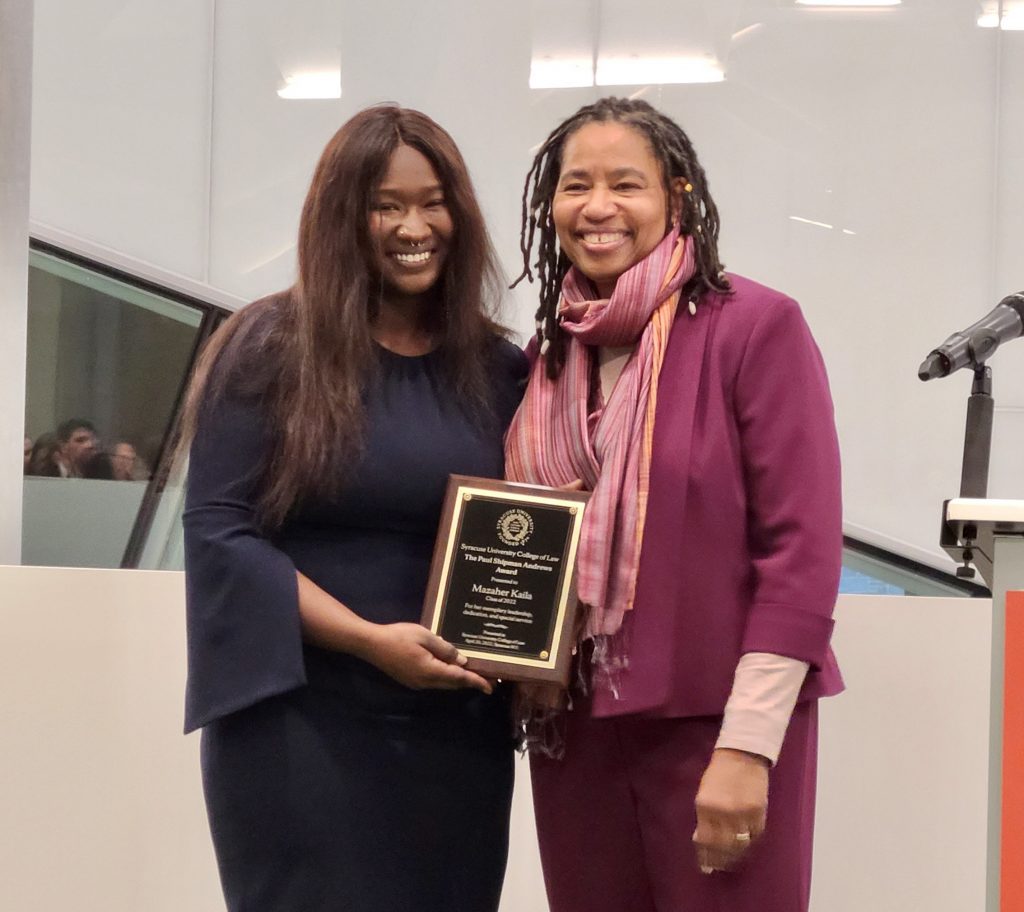
Paul Shipman Andrews Award
Mazaher Kaila
Unsung Hero Award
Kevin Casserino
Scott Ceurvels
Evan Groder
Joseph Hobika
Gabby Kielbasinski
Seth Owens
Omnia Shedid
Payton Sorci
Caroline Synakowski
Tia Thevenin
Student Organization of the Year Award
First Generations Law Students Association
Staff Award
Kyle Davis
Faculty Award
Professor Rakesh Anand
The SBA also welcomed newly elected SBA Officers for 2022 – 2023, who will play a critical role in developing a legacy of service, leadership, and excellence at the College of Law. Congratulations to all the award winners this year!
The paper lays out an indictment of numerous war crimes, crimes against humanity, and crimes of aggression from February 24, 2022, to April 1, 2022, during the invasion of Ukraine. The report includes a sample draft (Appendix A, page 47) of a criminal indictment against President Vladimir Putin for his war crimes. The white paper was created by the Ukraine Task Force, comprised of law students and legal scholars, with the goal to create a non-partisan, high-quality analysis of open-source materials.
“Because of his aggressive acts and his intentional targeting of Ukrainian civilians, Vladimir Putin has lost all political legitimacy and has made Russia a pariah state. This white paper catalogs the horror he has unleashed and lays out a pathway for holding him accountable for aggression, war crimes, and crimes against humanity,” said David Crane L’80, the project leader of the white paper and Distinguished Scholar in Residence at Syracuse University College of Law.
Crane is the founding chief prosecutor of the Special Court for Sierra Leone, an international war crimes tribunal where he indicted Liberian President Charles Taylor, the first sitting African head of state in history to be held accountable in this way.
According to the report on Ukraine:
“Since the invasion, Ukrainian citizens have been forced to endure kidnappings, property destruction, starvation, terror, shellings, and murder at the hands of the Russian Federation. As is consistent with the complex and intricate history of Ukraine, Russia once again seeks to assert its dominance and control of the territory in wanton violation of international law and Ukrainian sovereignty. As of the writing of this document, President Zelenskyy continues to lead his country and seek peace for its citizens, while the Russian Federation continues its campaign of atrocities meant to terrorize Ukraine and strip it of its national identity.
There is no clearer violation of the laws of humanity. At its most basic elements, international law and the laws of humanity establish self-determination and self-expression of a people as fundamental rights free from infringement by foreign powers. President Putin, and the rest of his Russian Federation political and military command seek to upend these values and establish a new world order with authoritarianism, terror, and oppression at its center. The international community cannot remain silent, and the road does not end at sanctions — it begins.” (page 40)
The 276-page report lays out the history of Russian aggression in Ukraine, the legal framework of accountability, individuals who bear the responsibility for crimes, and the specific violations of international law.
“The Ukraine Task Force established by the Global Accountability Network (GAN) was an incredible and unique experience that allowed law students to take an active part in international legal discourse,” said Syracuse Law student 3L Christopher Martz, the task force director and one of the lead writers of the white paper. “The Ukraine Task Force encountered serious difficulties in documenting war crimes in real time, especially considering the fact that GAN pulled students from all across the country. However, the leadership of Professor Crane and the commitment of GAN volunteers helped overcome these difficulties, resulting in an important living document that creates a framework of accountability moving forward.”
Additionally, the appendix of the report offers exhaustive details of how the researchers documented their evidence:
Appendix B (page 68) is a crime narrative detailing by date and cities where crimes were committed and by the responsible party. Appendix B is a grim summary of the civilian deaths suffered during the invasion from bombings and attacks on residences, hospitals, schools, grocery stores, public buses, and many more.
Appendix C (page 102) expands on the crime narrative and provides a more detailed breakdown of the violations of International Humanitarian Law, as well as documenting violations of the Ukrainian Penal Code. Appendix C gives a day-by-day and detailed accounting of the atrocities and war crimes committed and the specific articles of the Rome Statute, Geneva Convention, and Ukrainian Penal Code they violate.
Appendix D (page 124) is a comprehensive profile detailing the command-and-control structure of the Russian political and military senior leadership. This “dossier” lists the individuals responsible for the atrocities in Ukraine, and documents relevant information surrounding their responsibility and complicity.
“We have done this once before and we can do it again with the International Criminal Court prosecuting the alleged war crimes and crimes against humanity and a United Nations-backed Special Court for Ukraine, the world’s second hybrid international war crimes tribunal, the Special Court for Ukraine the crime of aggression”, according to Crane. “Its mandate will be to prosecute those who bear the greatest responsibility for the aggression against Ukraine must include President Vladimir Putin,”
Members of the media, please contact Ellen James Mbuqe, executive director of media relations at Syracuse University, at 412-496-0551 or ejmbuqe@syr.edu, for interviews.
More about David Crane and Syracuse University
David Crane was a professor of practice at Syracuse University College of Law from 2006 until his retirement in 2018. During that time, he taught international criminal law, international humanitarian law, military law, and national security law. While at Syracuse Law, Crane founded Impunity Watch, an online student-run law review, and public service blog, and the Syrian Accountability Project (SAP), an internationally-recognized effort among students, activists, journalists, and non-governmental organizations to document war crimes and crimes against humanity during the Syrian Civil War. Crane later returned to the College of Law as a Distinguished Scholar in Residence.
In 2014, Crane co-authored the “Caesar Report” that detailed the systematic killing of thousands of people in Syria and testified about the report at the UN Security Council. Crane also has testified to the US House of Representatives Committee on Foreign Affairs and its Subcommittee on Africa, Global Health, Global Human Rights, and International Organizations on the Syria crisis and related human security and humanitarian issues. In 2016, Crane helped to draft a UN resolution “to establish a special team to ‘collect, consolidate, preserve and analyze evidence” as well as to prepare cases on war crimes and human rights abuses committed during the conflict in Syria.” Subsequently, he assisted the UN in setting up the independent justice mechanism mandated by the resolution.
When he was chief prosecutor of the Special Court for Sierra Leone, Crane was the first American to be a Chief Prosecutor of an international war crimes tribunal since 1945 when Justice Robert Jackson and Telford Taylor were prosecutors at the Nuremberg Trials.
Third-year students Bradley Ace and Robert Rose prevailed over finalist 2Ls Meghan Ellsworth and Jessica Johnson in the Entertainment and Sports Law Negotiation Competition. Rose was named Best Advocate.
Final round judges were Professor John Wolohan, Daniel Greene L’16, Associate at Newman and Lickstein, and Erin Phillips L’15, Associate at Newman and Lickstein.
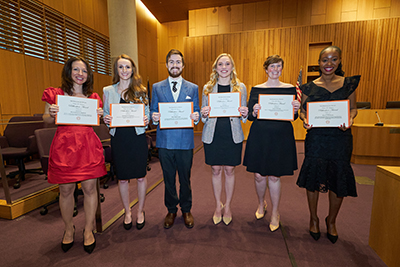
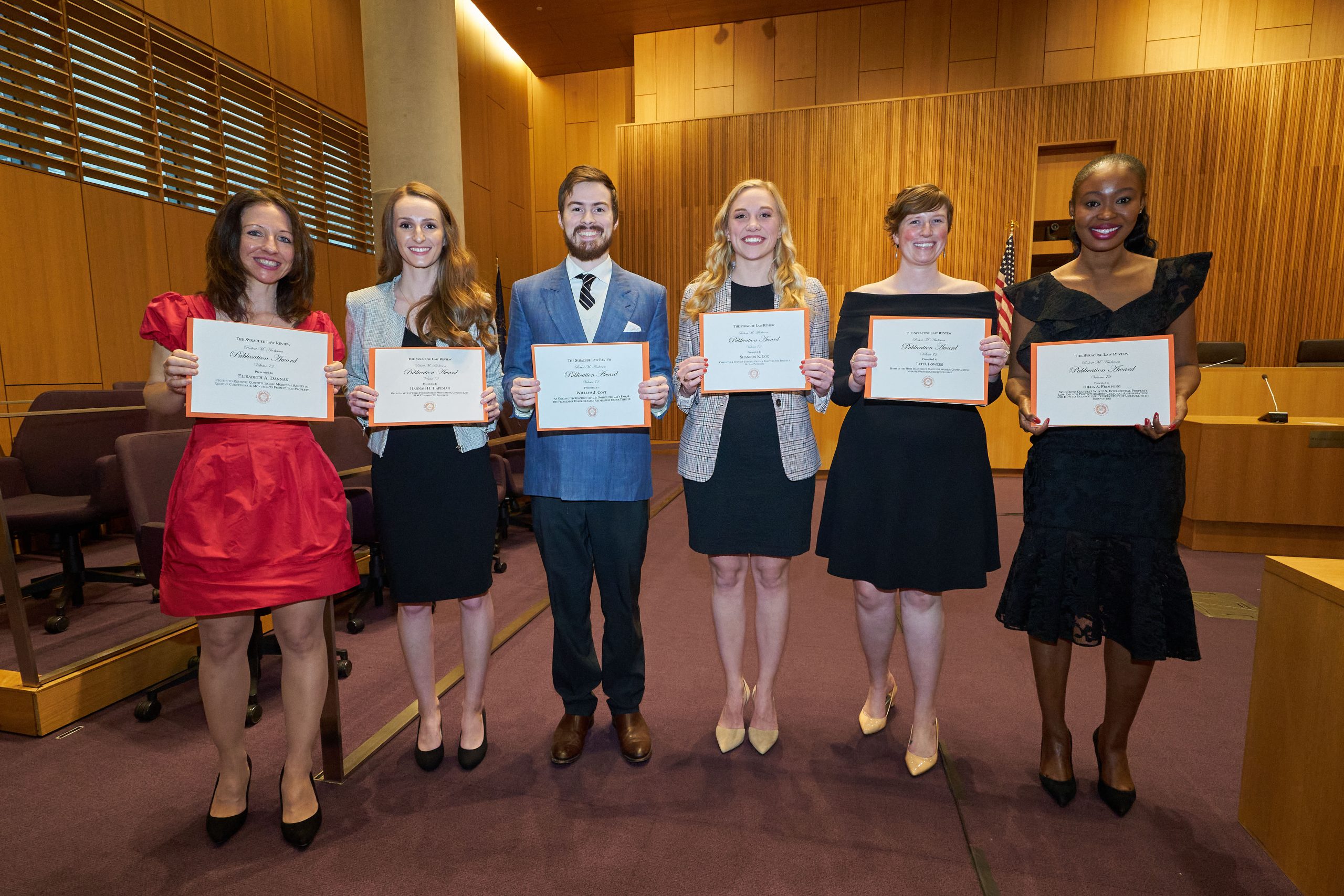
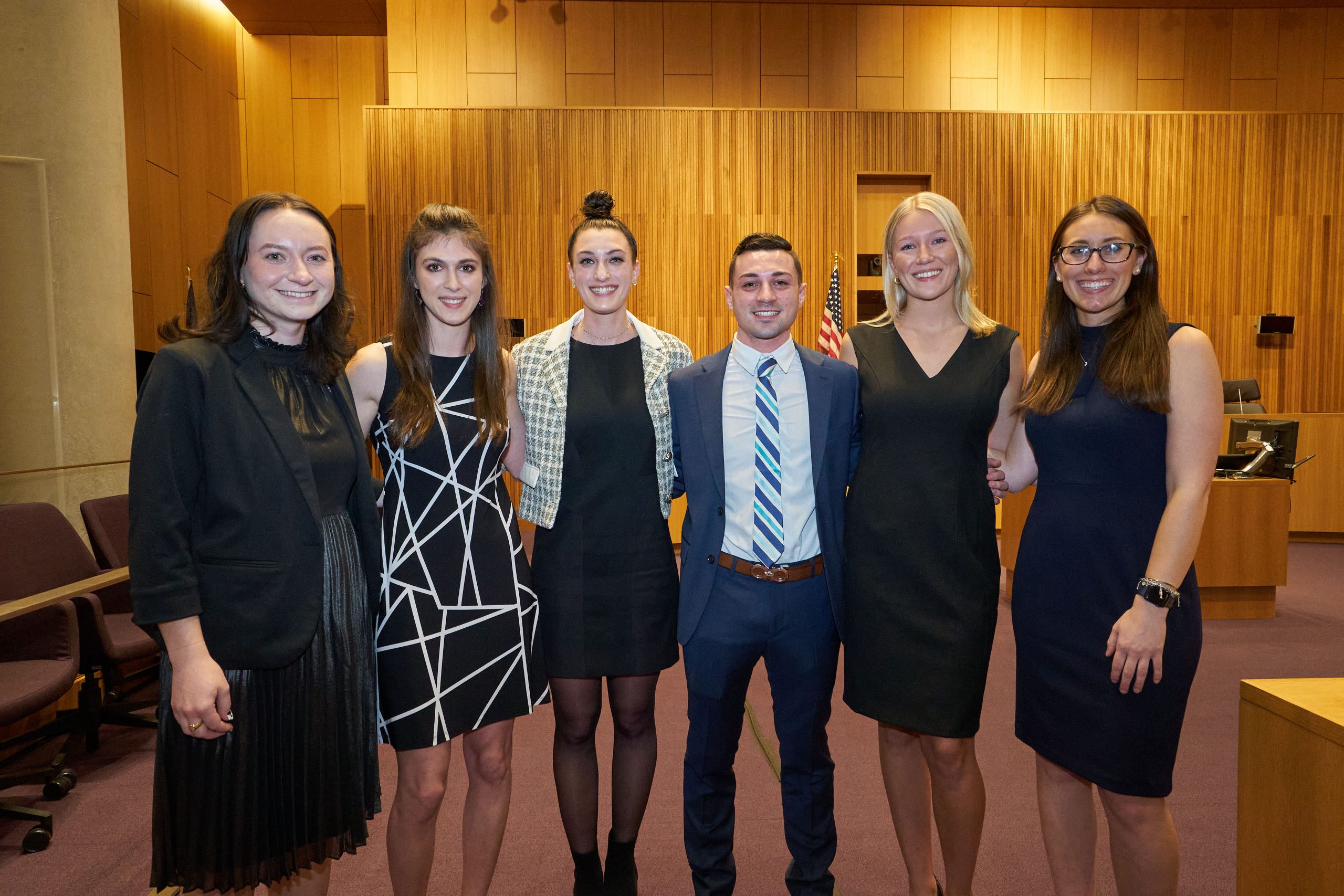
The Syracuse Law Review celebrated the annual award winners for Volume 72 in a ceremony at the Melanie Gray Ceremonial Courtroom on April 7, 2022.
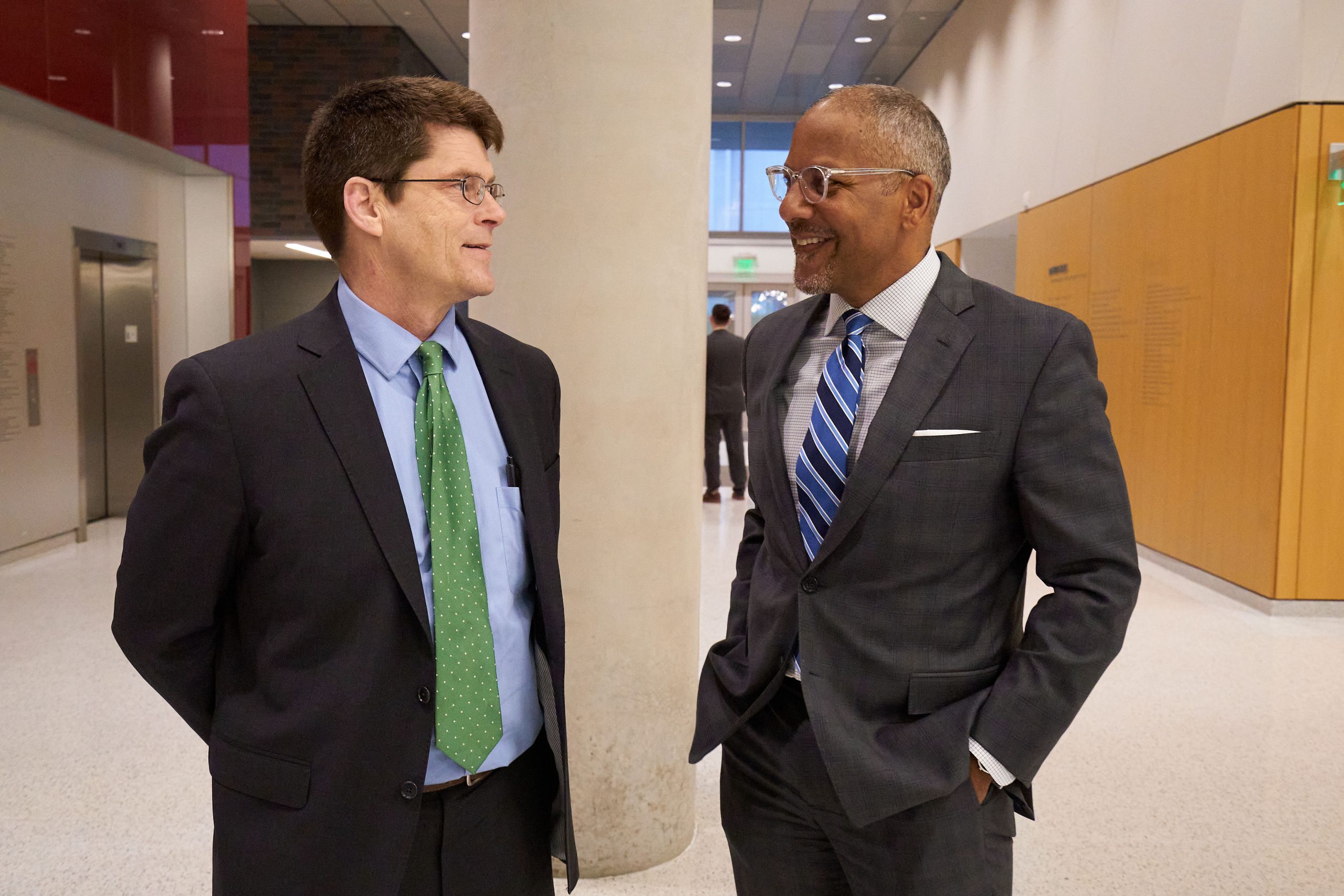
As the first in-person Law Review Banquet to occur since the onset of the pandemic, it was a night to remember. Dean Craig M. Boise offered opening remarks to students, faculty, and alumni, celebrating the achievements of the Law Review staff and winners soon to be announced.
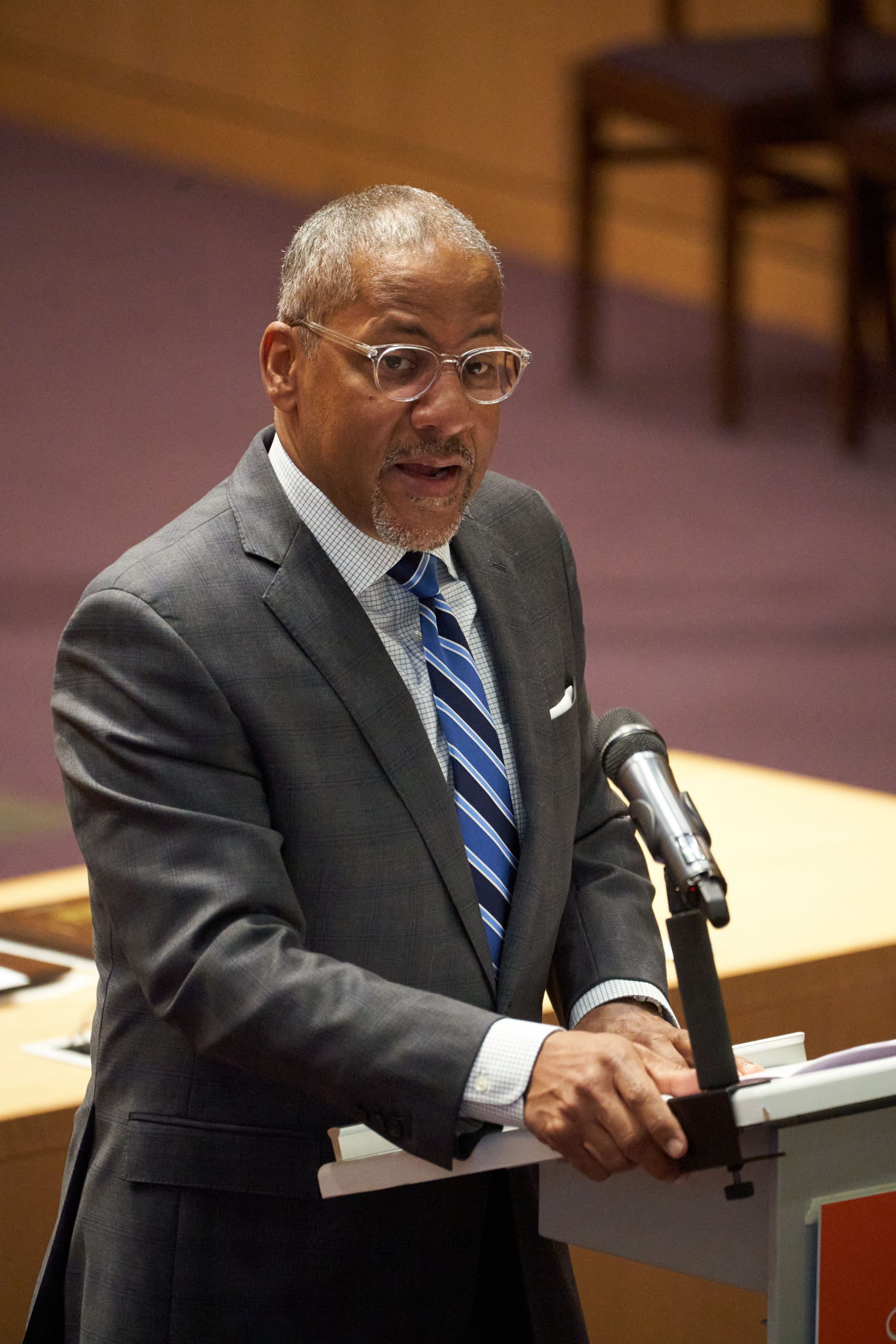
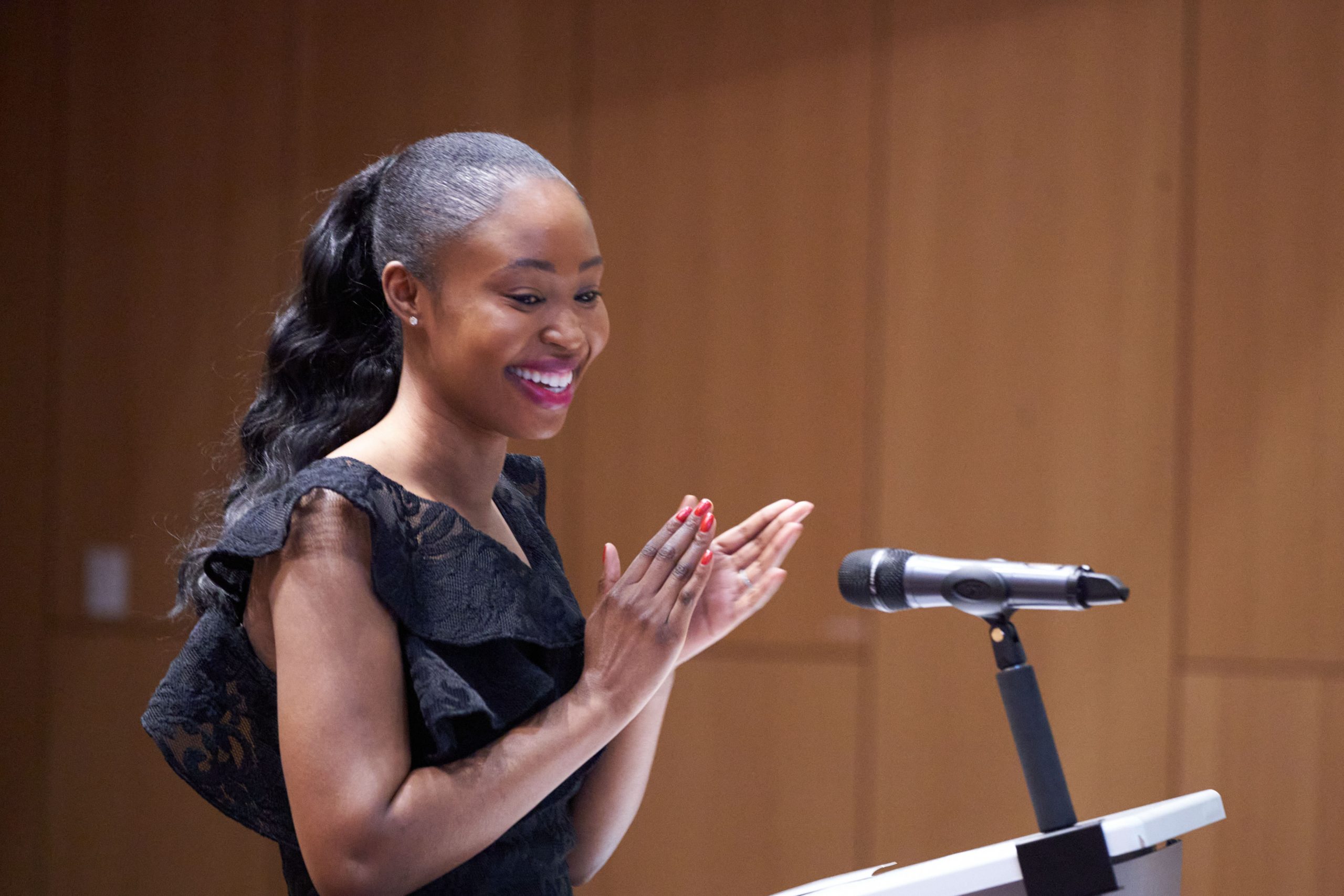
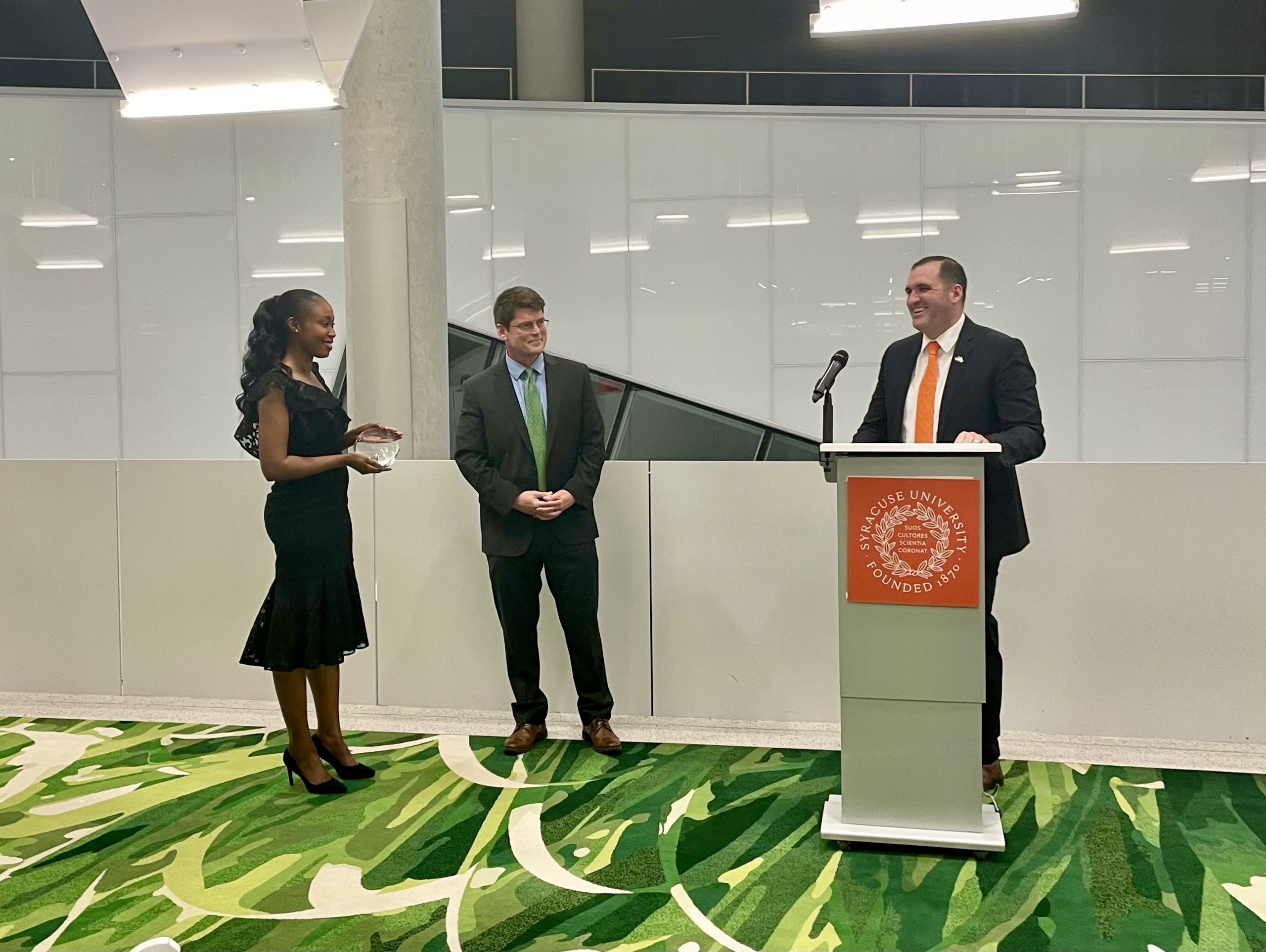
Hilda Frimpong, Syracuse Law Review Editor-in Chief, gave the welcome speech for the ceremony. Frimpong is the first Black Editor-in-Chief in the history of the Syracuse Law Review, a proud accomplishment celebrated on the same day that Ketanji Brown Jackson was confirmed as the first Black woman to serve as a justice on the Supreme Court.
2022 Award Winners
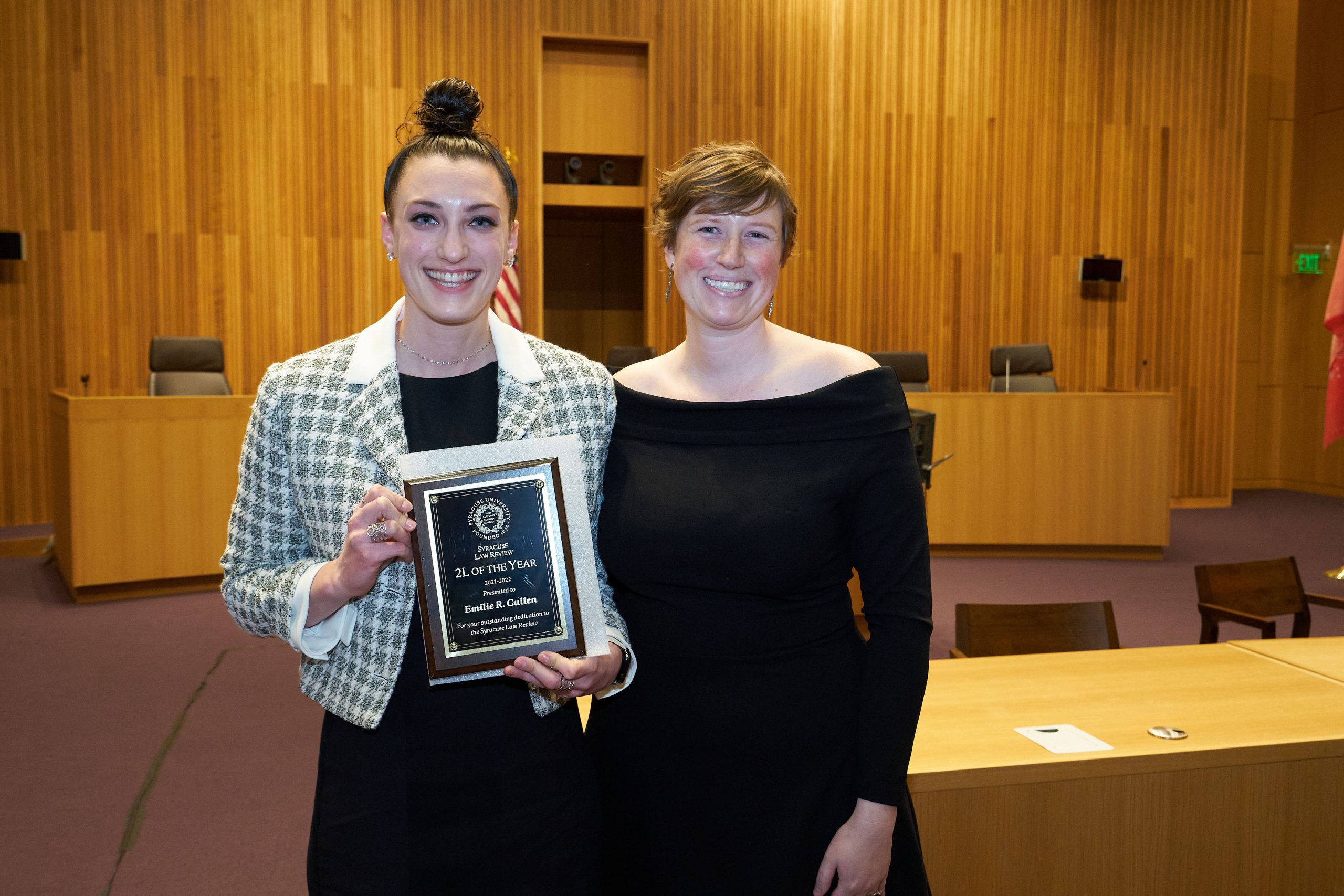
2L of the Year: Emilie R. Cullen
3L of the Year: Hilda Frimpong
Samuel J. M. Donnelly Award: Niloofar Abedzadeh
Faculty & Staff Award: Kyle Davis
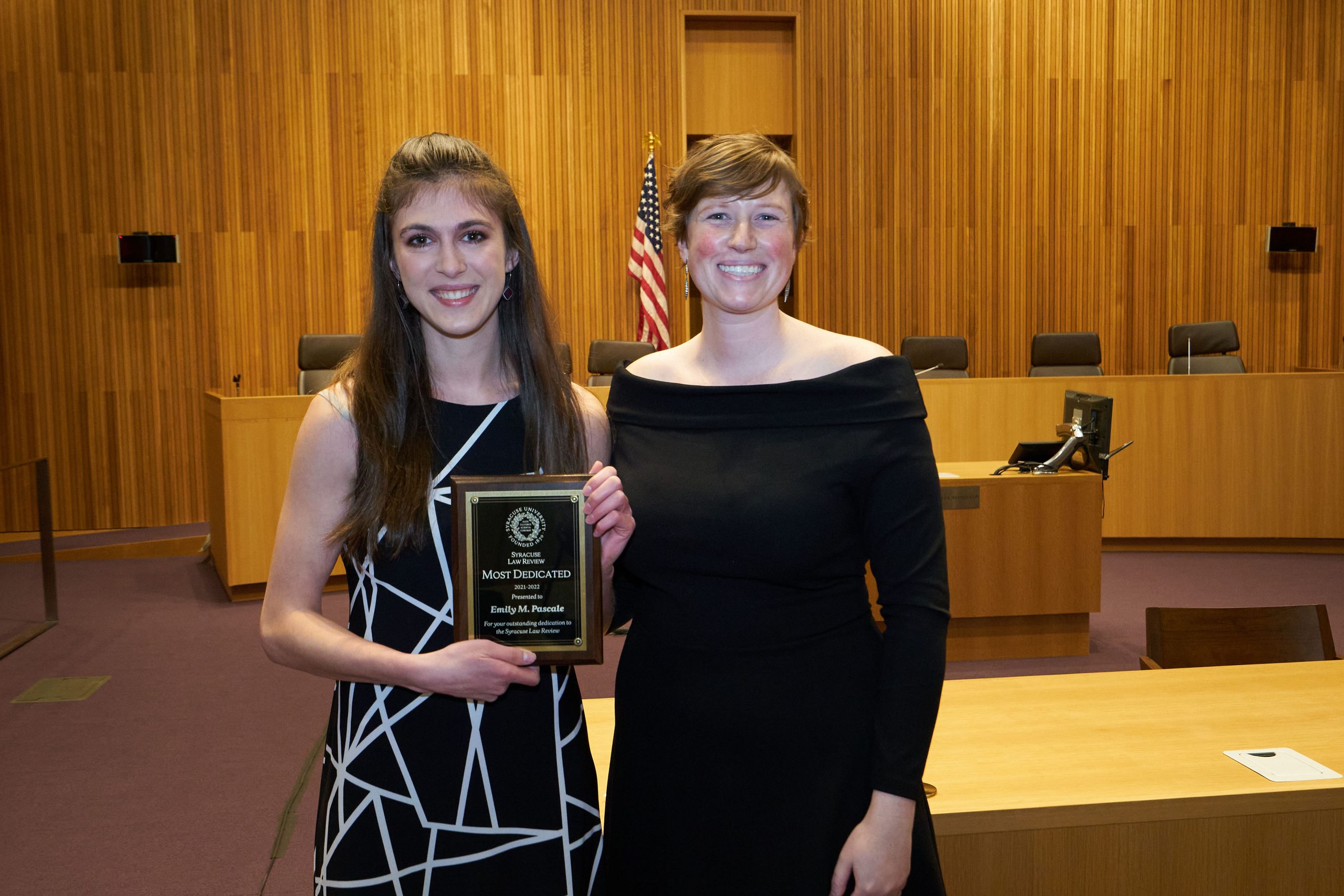
Most Dedicated Award: Emilie M. Pascale
Volume 73 Student Notes Selected for Publication
Emilie Cullen
Paul Dipadua
Emily Pascale
Penny Quinteros
Tim Walsh
Robert M. Anderson Publication Award Winners
William J. Cost
Shannon K. Cox
Elisabeth Dannan
Hilda A. Frimpong
Hannah T. Hapeman
Kathryn Morris
Leita Powers
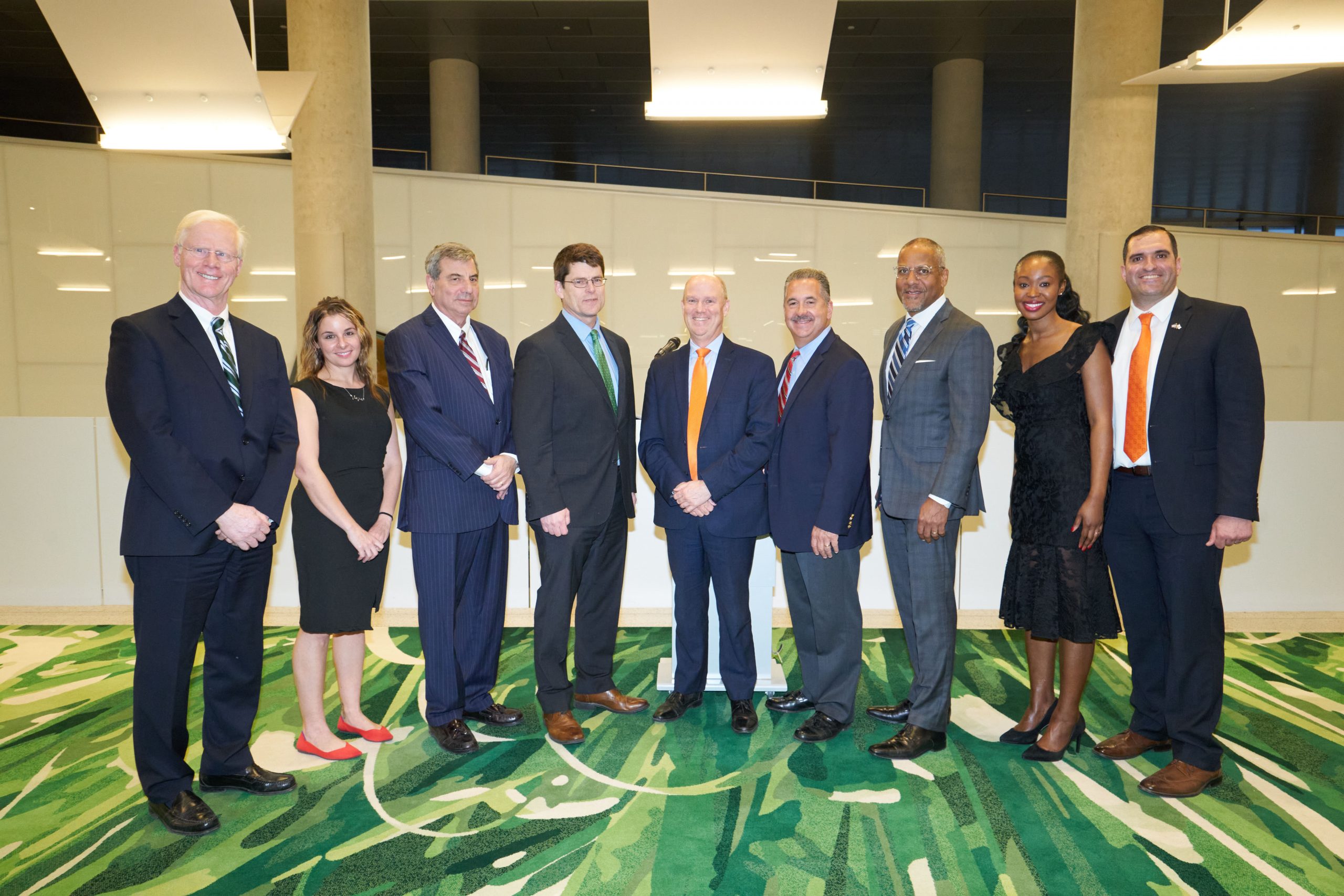
Immediately following the awards ceremony, attendees enjoyed a reception in the David M. Levy Atrium. John Powers L’96, Partner, Hancock Estabrook LLP, delivered the keynote speech for the night as this year’s Alumni Achievement Award recipient. To wrap up the festivities, Raymond Scarlata provided a “look ahead toast” as the Editor-in-Chief-elect for Volume 73.
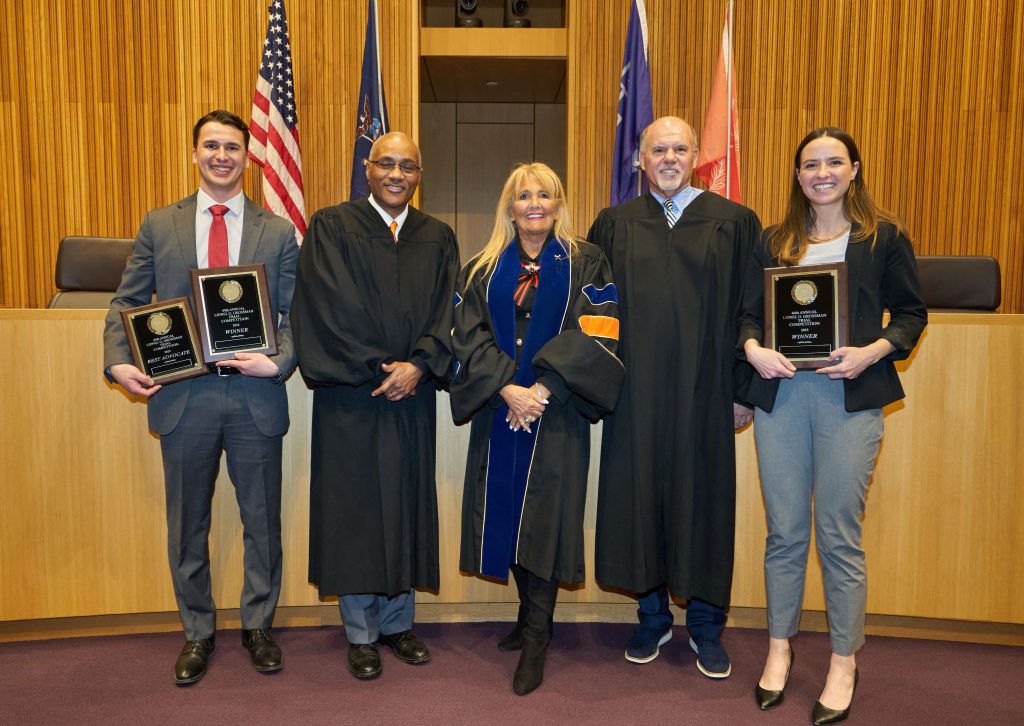
3L Jackson Somes, the Hon. Rodney Thompson, the Hon. Bernadette Romano Clark, the Hon. Glenn T. Suddaby, 3L Morgan Steele
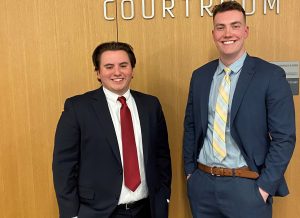
The team of 3Ls Morgan Steele and Jackson Somes won the 44th Annual Lionel O. Grossman Trial Competition. Somes also received the Best Advocate award.
They prevailed over finalists 2L Giovanni Antonucci and LL.M. student Dessi-Ann Yetman.
The Hon. Glenn T. Suddaby L’85, Chief U.S. District Court Judge, Northern District of New York served as the presiding judge. The evaluators were the Hon. Bernadette Romano Clark L’89, Oneida County Supreme Court Judge and the Hon. Rodney Thompson L’93, Presiding Judge, Family Division, Superior Court of New Jersey.
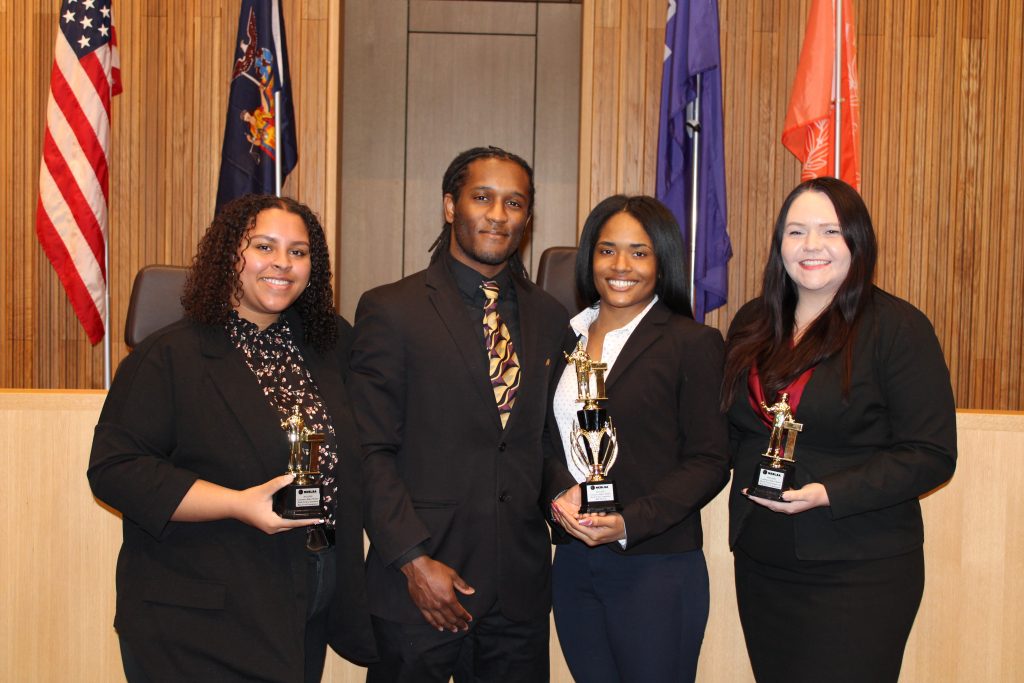
The Black Law Student Association (BLSA) Mock Trial Team has advanced to the national round of the Constance Baker Motley Mock Trial Competition. This is the third year in a row the BLSA Mock Trial Team has advanced to the finals
The team consists of 3Ls Abigail Neuviller, Alexis Eka, Randi Gray, and 2Ls Autumn Burgin and Kendall Anderson. Burgin won the award for Best Cross-Examination and Neuviller won the award for Best Direct Examination.
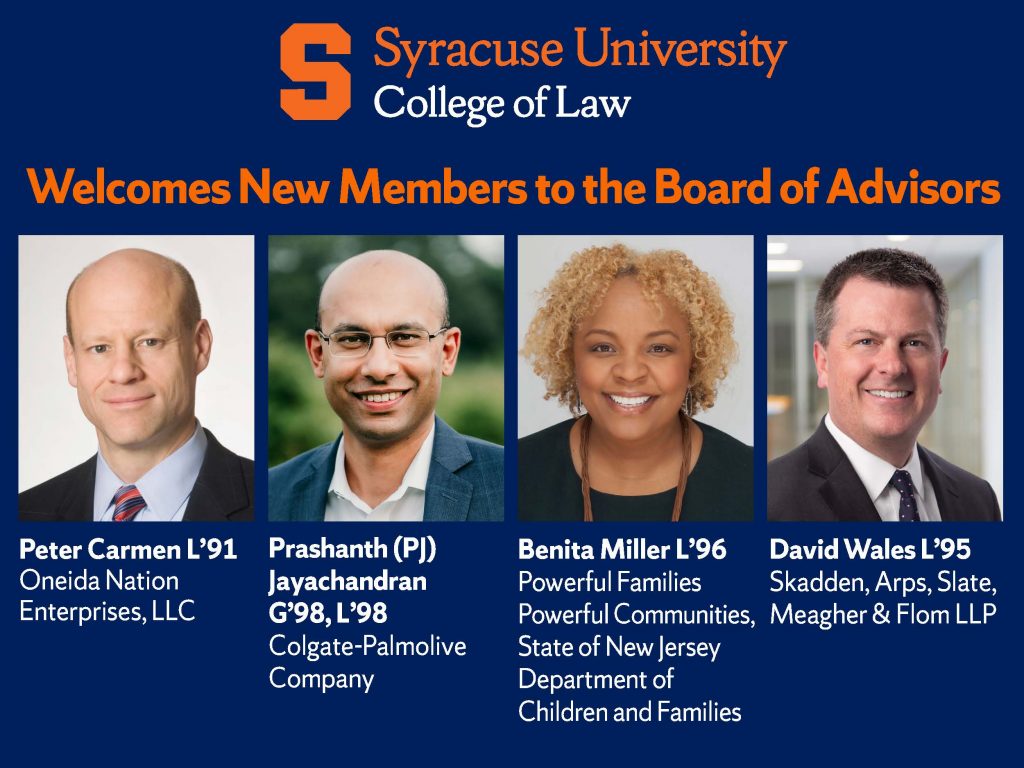
(Syracuse, NY | Feb. 16, 2022) Syracuse University College of Law has appointed four new Board of Advisors members: Peter Carmen L’91; Prashanth (PJ) Jayachandran G’98 L’98; Benita Miller L’96, and David Wales L’95. These appointments reflect the heft of the College of Law’s alumni and underscore the College’s commitment to project on its board the diverse talent and leadership represented by its alumni community.
“The College of Law benefits greatly from our dynamic, engaged Advisors who provide essential guidance in support of our mission and our students,” says Dean Craig M. Boise. “Peter, PJ, Benita, and David bring varied backgrounds, perspectives, and experiences to our distinguished Board. I look forward to working with them closely as we continue to advance our mission and prepare our students for their careers in law.”
“Law schools must anticipate and respond to a rapidly changing legal profession, with innovative educational offerings and opportunities for students,” says Board of Advisors Chair Robert M. Hallenbeck L’83. “These four highly regarded lawyers and community leaders will help provide insight into the future of the profession that will ensure that the College of Law is well-positioned to meet the needs of our students and build a bench of influential and practice-ready Orange lawyers.”
Syracuse Law’s new Advisors bring to the boardroom business acumen, corporate and non-profit leadership, and expertise in antitrust, ESG, labor relations, social welfare, and children’s rights law.
Peter Carmen
Pete Carmen is the Chief Operating Officer of the Oneida Indian Nation and its enterprises.
In this role, Pete works closely with Oneida Indian Nation leadership to oversee the daily operations and administration for Oneida Nation Enterprises LLC, which includes Turning Stone Resort Casino, YBR Casino & Sports Book, Point Place Casino, Oneida Innovations Group, The Lake House at Sylvan Beach, The Cove at Sylvan Beach, SavOn Stores, Maple Leaf Markets, The Preserve hunting grounds, Salmon Acres fishing lodge, five golf courses, three marinas, two spas, and dozens of restaurants. Pete’s role also includes oversight of Oneida’s administration, including Legal, Finance, IT, Human Resources, Governmental Affairs, Security, Marketing, and Supply Chain, and he works with the Oneida leadership in overseeing the Oneida Indian Nation Police Department.
Since Pete joined the Oneida Indian Nation in 2006, he has played an integral role in the Nation’s growth. Over the last 15 years, Oneida has developed its gaming, hospitality, entertainment, technology, and government contracting footprints exponentially. Today, Oneida Nation Enterprises is the No. 1 largest employer in its two home counties—Madison and Oneida—and among the largest employers in the 18-county Central New York region. Oneida Nation Enterprises has become one of the most awarded companies regionally and is now routinely recognized among industry leaders nationally. It partners with a broad range of national gaming, real estate, and retail companies, among others.
Pete was born and raised in Syracuse and has spent most of his life in the Empire State. Before stepping into his current role in 2008, Pete served as the Oneida Indian Nation’s general counsel, chief legal officer, and senior vice president. Previously, Pete was a partner, department chair, and a member of the executive committee at Mackenzie Hughes LLP, a law firm in Syracuse, and he served a federal judicial clerkship with Chief Judge Neal P. McCurn of the U.S. District Court for the Northern District of New York. Pete graduated from Brandeis University and received a law degree from the Syracuse University College of Law in 1991.
Prashanth (PJ) Jayachandran
Prashanth Jayachandran is Chief Supply Chain Counsel for Colgate-Palmolive Company. As lead counsel for the Global Supply Chain, Jayachandran oversees global commercial contracting, labor relations, and legal issues related to logistics, transportation, trade, manufacturing, and product distribution. Jayachandran also addresses key global policy issues related to human rights, environmental impact, and sustainability. In his prior roles for Colgate, Jayachandran served as Chief Human Resources and Benefits Counsel, and Division General Counsel for Colgate Asia.
Jayachandran serves as Distinguished Lecturer for the College of Law’s JDinteractive program, teaching a course related to corporate sustainability (“The Corporate Lawyer in a Sustainable World”).
In addition, Jayachandran serves on several non-profit boards in various leadership roles. He is the Chair of the Board of Directors for the Princeton, NJ YMCA; co-founder of the New Jersey Youth Civics Coalition; and a member of the Board of Advisors for the University of Wisconsin-Madison, Division of Student Affairs. Jayachandran also serves on the Board of Advisors for the Paul, Weiss ESG & Law Institute.
Jayachandran received a Bachelor of Arts degree (Economics and Political Science) from the University of Wisconsin-Madison. He received a Juris Doctorate from Syracuse University College of Law and a Master of Public Administration from the Maxwell School of Citizenship and Public Affairs at Syracuse University.
Benita Miller
Benita R. Miller is currently the Executive Director of Powerful Families Powerful Communities and an Executive on Loan to the State of New Jersey Department of Children and Families overseeing a five-year demonstration project to re-imagine New Jersey’s child welfare system through a human-centered design process that leverages the voice of community members as co-designers. She previously served as the President and CEO of Children’s Aid and Family Services in New Jersey. Prior to her work in New Jersey, Miller served as the Executive Director of Brooklyn Kindergarten Society where she expanded the agency’s early childhood education footprint from five to seven centers as well as built the first sensory gym co-located in New York City Housing Authority development.
Miller was the founding Executive Director of the NYC Children’s Cabinet in the Office of the Mayor and served as the Deputy Commissioner of the Division of Family Permanency Services in the Administration for Children’s Services (ACS). Before joining ACS, Miller served as Director of Scholarships at the NAACP Legal Defense and Educational Fund, where among other responsibilities she implemented programs for undergraduate and law student scholars. She is the founder and former executive director of the Brooklyn Young Mother’s Collective and is the recipient of the Union Square Award and Petra Fellowship on behalf of her advocacy work with young parents. She was also recognized by the American Civil Liberties Union as one of the top nine advocates to influence Title IX implementation. She previously represented children and young people in child protective, delinquency, and PINS proceedings in Brooklyn Family Court as a staff lawyer with the Legal Aid Society.
Miller earned a Bachelor of Fine Arts in Print Journalism from Wayne State University where she was a Rosa Parks Scholar at The Detroit News and received her Juris Doctorate from Syracuse University College of Law. She serves as a board member for many nonprofit organizations including Strategies for Youth and is an active member of Alpha Kappa Alpha Sorority, Inc. and Jack and Jill of America, Inc.
David Wales
David P. Wales is Partner, Antitrust/Competition at Skadden, Arps, Slate, Meagher & Flom LLP’s Washington, D.C. office. He is recognized as a leading antitrust lawyer and has over 25 years of experience in both the private and public sectors. His practice focuses on providing antitrust advice to U.S. and international clients in a wide range of industries on all aspects of antitrust, including mergers and acquisitions, alliances, criminal grand jury investigations, dominant firm conduct, distribution arrangements, licensing, and competitor collaborations.
Wales has the distinctive experience of serving as a senior official in both U.S. antitrust agencies. Most recently, he served as acting director of the Bureau of Competition (2008-09) during a three-year tenure at the Federal Trade Commission, where he oversaw all of the agency’s antitrust enforcement activity, including in the health care, pharmaceutical, oil and gas, technology, chemical, defense, retail, and consumer product industries. He also served as counsel to the assistant attorney general in the Department of Justice’s Antitrust Division (2001-03), where he was part of the small front-office team managing all of the agency’s merger and conduct matters.
Wales earned his Bachelor of Arts from the Pennsylvania State University and his Juris Doctorate from Syracuse University College of Law. He regularly speaks and writes on antitrust issues and has held various leadership positions in the American Bar Association’s Antitrust Section. Recognized as a leading antitrust practitioner, he is consistently ranked in Chambers USA: America’s Leading Lawyers for Business, Chambers Global: The World’s Leading Lawyers for Business, Legal 500, The Best Lawyers in America, The International Who’s Who of Competition Lawyers & Economists, and Best Lawyers.
Peter Carmen L’91, Prashanth (PJ) Jayachandran G’98, L’98, Benita Miller L’96, David Wales L’95