News

Graduation Recognition and Celebration

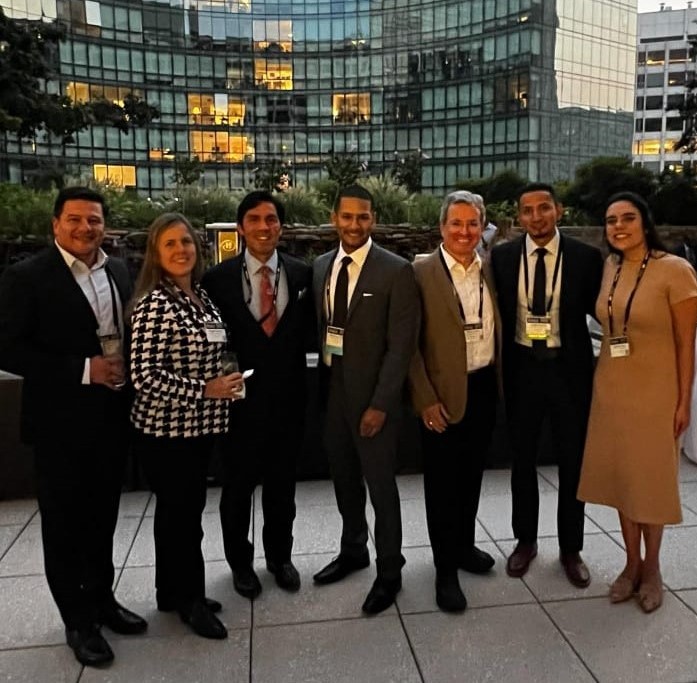
Celebration in Dineen Hall Atrium

Cheers to the class of 2022! The College of Law hosted a Graduation Recognition and Celebration event in Levy Atrium this evening for our students, friends, and family members who have supported these graduates along their law school journey. Dean Boise kicked off the evening with a celebratory toast, followed by the announcement of a few academic awards and student achievement announcements.

Congratulations to these prestigious award winners, unveiled this evening:

National Association of Women Lawyers Award: Gabriella Kielbasinski

Seeley Johnson Award: Mazaher Kaila

ALI-CLE Scholarship and Leadership Award: Jake Goldsmith

We’d also like to recognize a few other spectacular Class of 2022 students for their success and high achievements. Class of 2022 Academic Excellence

Highest Average: Leita M. Powers

Second Highest Average: Chana Feldbrand

Third Highest Average: Hayley M. Rousselle

Academic Success Fellows

Tara L. Andryshak

Alexandra G. Corradi

Lyndon Elizabeth Hall

Shelby R. Petro

Jackson Somes

Grace O. Sullivan

Student Recognition

Law Ambassador Recognition: Molly N. Graham and Tara L. Andryshak

Clinical Legal Education Association SU College Of Law 2022 Nominee: Mary Elizabeth E. Boswell

Scribes Award

William J. Cost

Molly N. Graham

Hannah T. Hapeman

Gabriella E. Kielbasinski

Leita M. Powers

Hayley M. Rousselle

Samir Shah

Cold Case Justice Initiative Volunteers

Alejandra J. Bridida

Rachel Brenner

Jillian L. Brodock

Scott M. Cuervels

Jamie C. Davila

Shannon E. Edwards

Emily Hildreth

Julia Kelly

Mathew J. McCartin

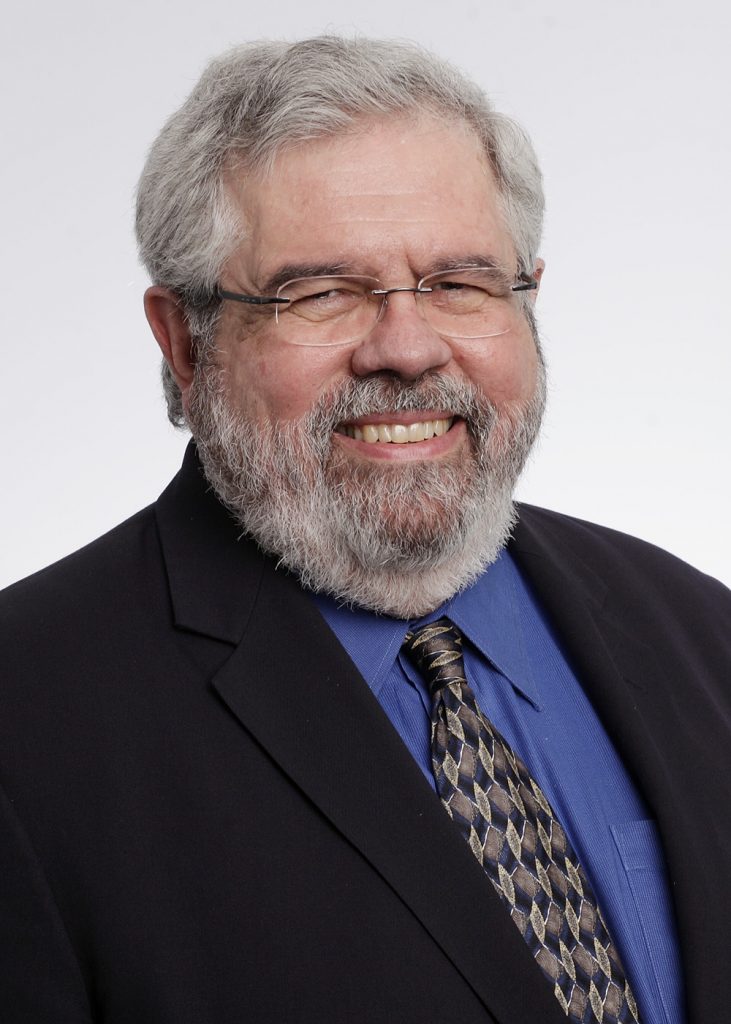
Happy Retirement, Professor Day!

Professor Christian Day taught his last class for the College of Law on Monday, April 25th, 40 years after he taught his first class in 1982. Day has taught more than 20 different courses over the years, mostly in the corporate law area. He has taught large, foundational courses, seminars focusing on a specialized areas of the law, doctrinal classes, and experimental classes.  The range and depth of the courses taught by Day demonstrate his commitment to preparing his students for the practice of law, with a fully comprehensive curriculum. During his tenure, Day has taught and prepared thousands of SU students for their professional lives.

As a scholar, Day’s research has focused on early capital markets. He has published more than 25 articles and has attended more than 30 scholarly conferences in the U.S., Europe, and Asia. He has been the advisor to several organizations, including the Journal of International Law and Commerce, the Corporate Law Society, and the Federalist Society. The Advocacy Honor Society benefited greatly from Day’s mentorship, as he served as the program director for five years and has also coached a number of winning teams. Additionally, Day was instrumental in the development and expansion of the College of Law’s externship program in London for the last 15 years. He has also provided significant service to the University, as senator for many years and as chair of the committee on honorary degrees.

The College of Law offers a sincere thank you to Professor Day, for his service over the years and the spectacular impact he has made on the school. Day’s retirement will enable him to spend more time with his family and give him a chance to continue to further pursue his love of oil painting. Students and colleagues gathered around his last class to provide a standing ovation, enjoying a reception of cake and celebration.

Vice Adm. Robert B. Murrett (Ret.) writes “The current fight and lasting implications of the war in Ukraine” at The Hill

Vice Adm. Robert B. Murrett (Ret.), Deputy Director, Syracuse University Institute for Security Policy and Law, writes “The current fight and lasting implications of the war in Ukraine” at The Hill.

Murrett says, “The collective support of Ukraine in all its dimensions will need to be steady and enduring. The ongoing struggle against Russian aggression is a marathon and not a sprint, and will require sustained military, humanitarian, and diplomatic support — as well as no small measure of post-conflict reconstruction, on the order of another Marshall Plan.”

Class of 2022 Commencement Week Information

Grad Fair!

Wednesday, May 4 (4:00-7:00 PM)

Thursday, May 5 (immediately after the Graduate Recognition and Celebration)

Travis Lewin Commons

Pick up regalia, return library books, receive pre-ordered JOST/JILC Gavels, pick-up Class Act Cords, plus other graduate goodies!

Graduate Recognition and Celebration

Thursday, May 5, 2022

David M. Levy Atrium

Dineen Hall

4:30 p.m. – 7 p.m.

The official program and champagne toast start at 5 p.m.

Livestream Here

Commencement

Friday, May 6, 2022

Stadium

11 a.m.

Livestream Here

Visit the Law Commencement site for more details.

Advocacy Honor Society Announces 2022 Award and Scholarship Winners at Banquet

Advocacy Honors Society Celebration

The Syracuse University College of Law’s Travis H.D. Lewin Advocacy Honor Society (AHS) hosted its annual Students Award Ceremony at SKY Armory on April 21, highlighting the work of various students, organizations, staff, and faculty.

2022 Award Winners

Travis H. D. Lewin Advocacy Honor Society Executive Director Award

Brandon Bourg and Margaret Santandreu

Richard Risman Appellate Advocacy Award

Scott Ceurvels

Courtcall Scholarship Award (Advocacy Director Award)

Gabby Kielbasinski, Penny Quinteros, and Morgan Steele

Ralph E. Kharas Award

Olivia Stevens

Lee S. Michaels L’67 Advocate Of The Year Award

Austin Milone (2L)

Emil M. Rossi L’72 Scholarship Award

Autumn Burgin (2L) & Angelica Judge (2L)

Models of Excellence in Advocacy Award (In Honor of Michael S. Olsan L’89)

Caleb Gieger (2L) & Roland Lucas (2L)

International Academy Of Trial Lawyers Student Advocate Award

Marina De Rosa & Amanda Nardozza

The following 3L students were admitted to the Order of Barristers: M. Bradley Ace, Marina De Rosa, Kelsey Gonzalez, Amanda Nardozza, Abigail Neuviller, Margaret Santandreu, Morgan Steele, Olivia Stevens, Cierra Thomas, and Gabriella Verdone.

The AHS is comprised of a select group of second and third-year law students, representing the best oral advocates at the College. The College of Law’s nationally ranked Advocacy Program enjoys a strong track record of stellar results on the biggest stages competing against other law schools. These competitions, supported by the student-run AHS, teach advocacy skills through mock appellate, alternative dispute resolution (ADR), and trial experiences.

Congratulations to all the award winners this year!

College of Law Partners with Republic of Georgia Bar Association for 5-Part Lecture Series

Republic of Georgia Bar Association 5-Part Lecture Series

As part of a newly-launched partnership between the College of Law and the Republic of Georgia Bar Association (GBA) earlier this academic year, Syracuse Law offered a five-part lecture series to members of the GBA to discuss a range of topics that covered foundational aspects of the U.S. legal system, and nuances of criminal procedure, commercial law, national security law, and intellectual property. 

College of Law faculty members wrapped up the final component of the series in April. Participating in the series were:

  • Professor Shannon Gardner: Sources of U.S. Law: From the Common Law Up 
  • Hon. James Baker: Current Issues in Security: Bar Associations, Public Citizens, and the Rule of Law 
  • Professor Todd Berger: Introduction to U.S. Criminal Procedure by 
  • Adjunct Professor David Reed L’85: Demystifying U.S. Commercial Contracts 
  • Professor Shubha Ghosh: Overview of U.S. Legal Issues in Patent, Copyright, and Trademark Law 

The College of Law was a natural partner for this effort given the broad expertise of faculty, overall interest in supporting internationalization efforts, and alumni members of the GBA. 

Executive Director of the GBA Giorgi Tshekhani praised the partnership, commenting that “while enhancing the quality of justice in Georgia is one of our priorities as well as main challenges, sharing of knowledge and experience from our highly qualified U.S. colleagues is of significant importance. I would like to thank the representatives and professors of the SU College of Law for their active and valuable involvement in the lecture cycle.”

In the past, the College of Law has helped arrange for lectures to lawyers in Azerbaijan, Brazil, Russia, Saudi Arabia, and throughout Europe, but this was the first comprehensive series arranged in coordination with an institutional partner.  

Professor Todd Berger explains, “this program builds on several different international collaborations that we’ve done with other academic institutions over the years, connecting us with actual practicing lawyers in other countries. Each partnership, including this one with the GBA, has some key differences that give our faculty new perspectives from around the world.”

This partnership not only promotes the expertise of the College of Law faculty but also advances the teaching of law and exposure to diverse perspectives beyond borders and provides visibility to prospective students in countries around the world.

“These conversations not only enhance participants’ knowledge,” Professor Shannon Gardner remarks, “but also lay the groundwork for future collaboration and partnership between the College of Law and the Georgian Bar Association. The opportunity for both College of Law faculty and members of the Georgian Bar Association to learn more about the laws and legal systems of each other’s country has been invaluable.” 

With the ease and comfort of virtual exchanges over platforms like Zoom, the College of Law plans to continue to expand these efforts in other parts of the world. 

College of Law Remembers Dean Emerita Hannah R. Arterian

Dean Emerita Hannah Arterian

Arterian served as dean of the College of Law from 2003-15. During her tenure, she increased the quality and size of the college’s faculty, diversified educational opportunities for students and brought Dineen Hall, one of the most ambitious building projects in the University’s history, to life. The College of Law moved into Dineen Hall, a 200,000-square-foot building on the western side of campus, in August 2014. The building brought together the law school community under one roof for the first time and has been rated as one of the most architecturally attractive law school buildings in the world.

“Our College of Law community mourns the loss of Dean Emerita Hannah Arterian,” says Craig Boise, dean of the College of Law. “Her leadership and influence, her impact on the lives of countless alumni, faculty, and staff, and her many accomplishments as dean, including the successful fundraising campaign that gave us Dineen Hall, will always be a part of our story.”

Arterian was raised in Staten Island and attended Elmira College, where she earned a bachelor’s degree in English literature magna cum laude in 1970 and was inducted into Phi Beta Kappa. She attended the University of Iowa College of Law, where she was the first woman to hold an editorial position on the Iowa Law Review and was a member of the Order of the Coif.

After earning her juris doctorate, Arterian worked for the New York City law firm Dewey, Ballantine, Bushby, Palmer & Wood, practicing corporate tax law. She then returned to University of Iowa’s law school as a visiting professor and joined the faculty in 1978, one of the first women to teach at the college.

Arterian went on to hold teaching positions at Arizona State University (ASU) and the University of Houston’s law schools before returning to ASU in 1985. Arterian became the first woman to serve as the college’s associate dean in 1992. When she began teaching at ASU in 1979, she was the only woman on the college’s law faculty and only the second to hold a faculty position in living memory. There, she taught courses on labor relations, employment law, and employment discrimination and wrote in the area of Title VII—particularly on the dilemmas for pregnant women employed in chemically toxic work environments.

She was named the 11th dean of Syracuse University’s College of Law—and the second woman appointed to the position—in 2002. She fundraised $1 million during the first year of her tenure and laid the groundwork for financial success and opportunities for the school. Arterian cultivated a diverse and accomplished faculty, developed relationships with alumni across the globe and recruited many of the college’s board of advisors, with the long-term goal of increasing the quality of the college’s legal education and constructing a new building.

Arterian introduced an expanded orientation program for incoming students into the College of Law, which included alumni from all over the United States, as well as formal ceremonies to welcome new students into the college. One of her major projects was building the College of Law’s alumni association, as well as reinvigorating alumni connections to the school.

She worked with colleagues to forge strong relationships with Korean alumni by attending annual meetings and alumni events in Seoul. These visits included visiting the Korean Constitutional Court and discussing U.S. and Korean Supreme Court decisions with justices of the Korean Supreme Court. These international connections were also cultivated through Arterian’s work with colleagues to further develop the Law in London Program. Many programs and institutes, such as the Institute for National Security and Counterterrorism (now the Institute for Security Policy and Law); the Institute for the Study of the Judiciary, Politics, and Media; the Veterans Legal Clinic (now the Betty and Michael D. Wohl Veterans Legal Clinic); Securities, Arbitration and Consumer Law Clinic; Elder Law Clinic; and the externship program, were created, expanded and/or fostered under Arterian’s leadership.

With her colleagues and the Board of Advisors, Arterian raised $40 million to construct Dineen Hall, one of the nation’s premier law facilities. “She is part of the ethos of that place. She was a visionary,” says Alexandra Epsilanty L’92, former associate dean of advancement in the College of Law and a close colleague of Arterian. “Dineen Hall and the education of the next generation of legal minds are part of her legacy. She fought tooth and nail for the law school. It was like one of her kids. She cared about the law because she cared about civil society.”

During her tenure at ASU and at the College of Law, Arterian worked with the American Bar Association (ABA) to perform site inspections of law schools throughout the country and assess the qualifications of nominees to the federal judiciary and served on committees for the ABA, as well as the American Association of Law Schools. She was also a co-editor, with Jeremy Paul, of the SSRN Journal on Legal Education. In 2007, Arterian aided in the vetting process of then-vice-presidential nominee Joseph R. Biden Jr. L’68. In 2009, she joined AccessLex Institute (formerly Access Group), a nonprofit comprising representatives of accredited law schools with the mission of education financing and debt management for law graduates, as well as investigating loan options and loan policy advocacy. After becoming a member of its executive committee in 2011, Arterian was elected as the chair of the AccessLex Board of Directors in 2014.

Arterian is survived by her children, William Furnish, Susannah Arterian, Diana Arterian, and Cordelia Arterian; three granddaughters, Marnie and Celeste Arterian, and Helena Muñoz Furnish, and her sister, Susan Arterian.

A celebration of life will take place in Syracuse in the College of Law’s Melanie Gray Ceremonial Courtroom in Dineen Hall, 950 Irving Ave., on Sunday, May 8, at 2 p.m. A celebration of life in Phoenix, Arizona, will be held at Changing Hands Newton, 300 W. Camelback Rd. on Saturday, May 28, at 3 p.m.

In lieu of flowers, donations may be made to the organizations Arterian held dear—the Fresh Air Fund, Humane Society Legislative Fund, or to your own alma mater or institution of learning.

Professor Robin Malloy, Kate Mazdzer (2L), Michael Towey (3L) and Christoper Baiamonte L’19 Present at Annual Zoning Law Update

Michael Towey Presents at Annual Zoning Law Update

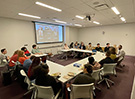
Professor Malloy presented the Annual Zoning Law Update, a continuing education program for zoning and planning board officials in Onondaga County, this past Saturday, April 23. The annual education program is designed to meet the certification requirements for zoning and planning officials in New York State. 

Held at Dineen Hall this year, presenters included law students Kate Mazdzer (2L) and Michael Towey (3L), who are both a part of Malloy’s Advanced Zoning Law Program, and Alum Christopher Baiamonte L’19 of the Wladis Law Firm.

The program is sponsored by the Center for Property, Citizenship, and Social Entrepreneurism at the College of Law and by the Town of DeWitt, NY. Approximately 40 officials were on hand for the annual training that covered such topics as Area and Use Variances; Article 78 court review; Affordable Housing and the demise of the single-family residential zone, Unconstitutional Conditions; and criteria for evaluating Reasonable Accommodation under the ADA and FHA. 

Student Bar Association (SBA) Hosts 2022 Students Award Ceremony

SBA Awards 2022

The Student Bar Association (SBA) hosted a Students Award Ceremony in Dineen Hall on April 20, highlighting the work of various students, organizations, staff, and faculty. 

2022 Award Winners

Distinguished Service Awards 

Gabby Kielbasinski  

Abby Neuviller 

Olivia Stevens  

Kayla Wheeler 

Outstanding Graduate Award  

Christopher Martz  

Paul Shipman Andrews Award  

Mazaher Kaila  

Unsung Hero Award  

Kevin Casserino 

Scott Ceurvels 

Evan Groder  

Joseph Hobika  

Gabby Kielbasinski

Seth Owens 

Omnia Shedid  

Payton Sorci 

Caroline Synakowski 

Tia Thevenin 

Student Organization of the Year Award  

First Generations Law Students Association  

Staff Award  

Kyle Davis 

Faculty Award  

Professor Rakesh Anand  

The SBA also welcomed newly elected SBA Officers for 2022 – 2023, who will play a critical role in developing a legacy of service, leadership, and excellence at the College of Law. Congratulations to all the award winners this year!

Professor Cora True-Frost G’01, L’01 Awarded Fulbright to European Center of Excellence for Research on European Tribunals and Int’l Disabilities

 Cora True-Frost G’01, L’01, Bond, Schoeneck and King Distinguished Professor, has been selected by the U.S. Department of State and the Fulbright Program to join the University of Oslo,Pluricourts as a Fulbright Scholar. Beginning in August 2022, True-Frost will conduct her research and scholarship on European Tribunals and International Disability Law: Definitions, Discrimination, and Involuntary Detention.

 “Fulbright Scholarships are prestigious academic achievements and Professor True-Frost is a deserving recipient and representative of the College of Law in this program,” says College of Law Dean Craig M. Boise. “Her scholarship at the intersection of international law and politics and the rights of the disabled is being justly recognized.  Cora is a gifted classroom teacher and will ultimately enrich this field and our students, building connections between leading international courts and our law school.”

 Q: What is your research focus for this distinguished appointment and what are your intended outcomes? 

 True-Frost: I will be examining contests between European tribunals and international bodies over the interpretation and application of international law, with a specific focus on international disability law norms within Europe by the Court of Justice for the European Union (CJEU) and the European Court of Human Rights (ECtHR.)  Several substantive areas in the Convention on the Rights of Persons with Disabilities (CRPD) are provoking high-stakes contests of legitimacy and authority between and among both international-level treaty bodies, and regional courts. I intend to initially engage an admittedly broad question, but through a methodologically narrow approach: in the 2020s, what relative roles do international courts, regional tribunals, as well as “soft law”-makers, such as human rights treaty bodies and the European Commission (“EC”), play in determining the rights of people with disabilities in Europe? 

 While national domestic legal systems work to avoid conflicts by permitting appeals only within a strict hierarchy of authority and constrained jurisdiction, the same is not true of the international system. The complexities and sophistication of the judicial system of the European Union (“EU”) offer a perfect opportunity to examine conflicts and variations arising in the legal interpretation and application of a relatively new international law, the CRPD.  Within Europe, multiple sources of law and policy protect people with disabilities—national legislation, European Union Directives, European Commission subsidiary organs, regional conventions, the European Disability Forum, and Council of Europe policies.  International law, such as the CRPD, also protects people with disabilities in Europe. 

My past scholarship has examined the effects of the CJEU’s efforts to respect and observe its international legal obligations. To give an example, a past project examined the impacts of the Kadi & al-Barakaat case, in which the CJEU struck down a Council of the European Union (“Council”) law for violating fundamental rights[1] in implementing the UN Security Council’s (UN SC) resolution. The CJEU decision took pains to emphasize the EU’s compliance with international law even in the face of a particularly draconian UN SC resolution.  My work showed how the CJEU decision in turn helped push the powerful UN SC to reform its procedures related to targeted sanctions in the fight against terrorism post-9/11.

 My broader scholarly focus on international-level tribunals and organizations inevitably and frequently overlaps with decisions of regional tribunals such as the CJEU and the ECtHR. For example, my forthcoming article, “Listening to Dissonance at the Intersections of International Human Rights Law” contributes to the fragmentation literature by focusing on conflicts between the interpretations of provisions of treaties by international-level treaty bodies; through analyzing issues related both to the horizontal allocation of authority and the impacts of conflicting interpretations on different norms, my research continuously led to the jurisprudence of the CJEU and ECtHR.[2]  I am excited to be able to take this next step in my research.

Q: What are your intended outcomes from your research? 

True-Frost: I will be developing a qualitative series of case studies of contests of authority and legitimacy focused on various EU Directives implementing the CRPD and CJEU judicial decisions regarding these Directives will form the core research.  The first phase of this project will map and analyze various consistencies, conflicts, and variations in European tribunals’ articulation of three substantive areas of disability law in relation to international disability law standards: defining disability,[3] applying employment discrimination law,[4] and setting forth standards for involuntary detention.[5]  In its second phase, the project will develop normative implications both for the legitimacy of international and regional courts and for the substance of disability law.

 I very much welcome the opportunity to closely engage CJEU and ECtHR decisions in conversation with the community of many scholars working on Pluricourts’ international tribunals’ research in Norway, and would plan to make research trips, as needed, to Geneva, Luxembourg, and Strasbourg. My work overlaps with the literature focused on at Pluricourts.  I have written regarding almost all of the research topics, particularly: the legitimacy of international tribunals; the proper allocation of powers between different international and national lawmaking, executive, and judicial organs; the impacts of global administrative law, and best practices of international lawmaking bodies. 

Q: Why did you pursue a Fulbright? 

True-Frost: My international law scholarship has always benefitted and grown from my experience abroad.  Pursuing this important research topic about conflicts between international and disability law in Europe will offer me the opportunity to meet with various stakeholders in European regional and domestic courts and do primary research.

I am an international law scholar with a focus on the development of human rights norms in international tribunals and organizations. However, my research over the last decade has continued to lead me to the jurisprudence of European tribunals, which have had a strong influence on the content of international human rights law. 

Q: Why study European law in Norway in particular?

True-Frost: Norway has a unique relationship with the EU, so the opportunity to examine its own domestic interpretations of European and international human rights law will offer more context to my research on conflicts.  Luckily, in 2020, when I decided to pursue my research with the Fulbright program in Europe to focus on European law, I learned that the University of Oslo offered a Fulbright grant focused on international courts and tribunals. I was already aware of the University of Oslo’s Pluricourts research center, which is a Center of Excellence funded by the Norwegian government, as I had the opportunity to attend the 11th Annual Conference of the European Society of International Law in Norway in September 2015, which Pluricourts had sponsored.  During my brief visit, as a junior scholar on pre-tenure leave, I was extremely impressed by the University, its faculty, and its strong networks in international law. Over the course of the short conference, I saw many ways that the Pluricourts’ research agenda overlapped with my own research agenda. My interest in living and researching in Norway now is helped by the knowledge that two dear friends and former colleagues of mine from my earlier work on gender justice in East Timor, who are Norwegian, both live in Oslo now with their families. This is an example of how networking and staying in touch professionally builds bridges to future international experiences.

The Fulbright also offers me the opportunity for concentrated, comparative research in disability law, a new area of interest for me.  At Syracuse Law, I have had the pleasure of teaching international and domestic law students who are Blind, Deaf, dyslexic, and wheelchair-using, among many other disabilities.  I have seen the challenges my students, both domestic and international, face in securing the support and accommodations they require. In recent years, as international attention has rightly if belatedly, focused on too long-delayed calls for racial justice, my interest in race and intersectionality along with my experience with disabled students, have raised my awareness and concern about the many unnecessary challenges disabled people face. 

Q: What impact will this have on your teaching? 

True-Frost: I look forward to integrating connections and publications from this research project into both the ECtHR and International Human Rights Law classes I teach.  I also look forward to connecting our students interested in international law with the work I will be doing abroad, by delivering remarks/observations to College of Law students via Zoom or Skype while I am at the University of Oslo.  I look forward to learning more about Norwegian higher education techniques, as I have been able to do in France with our partners there during the ECtHR classes.

[1] The ECJ held that the review of lawfulness applied only to the EC act purporting to give effect to the international agreement, and not to the international agreement itself.  See, e.g., C. Cora True-Frost, Signaling Credibility: The Development of Standing in International Security, 32 Cardozo L. Rev. 1183 (2011).

[2] C. C. True-Frost, Listening to Dissonance at the Intersections of International Human Rights Law, 43 Mich. J. Int’l L. 361 (2022).

[3] See, e.g., Case C-13/05, Sonia Chacon Navas v. Euerst Colectividades SA,2006 E.C.R. I-6467 (defining “disability” as “referring to a limitation which results in particular from physical, mental or psychological impairments and which hinders the participation of the person concerned in professional life”); Case C-303/06, S. Coleman v. Attridge Law and Steve Law, 2008 E.C.R. I-5603 (reaffirming the CJEU’s definition of “disability” from Chacon Navas); Joined Cases C-335/11 & C-337/11, HK Danmark, acting on behalf of Jette Ring v. Dansk almennyttigt Boligselskab and HK Danmark, acting on behalf of Lone Skouboe Werge v. Dansk Arbejdsgiverforeningacting on behalf of Pro Display A/S, 2013 E.C.L.I. 222 (in the aftermath of the EU’s ratification of the CRPD re-defined the concept of “disability” by writing that it “must be interpreted as including a condition caused by an illness medically diagnosed as curable or incurable where that illness entails a limitation which results in particular from physical, mental or psychological impairments in which interaction with various barriers may hinder the full and effective participation of the person concerned in professional life on an equal basis with other workers, and the limitation is a long-term one”).

[4] A complainant proceeding before the CJEU in 2021 will find the CJEU’s interpretations of EU employment discrimination law to be far more harmonious with international disability law standards than they were in just 2015.  See, e.g., Grainne de Burca, The Decline of the EU Anti-Discrimination Law?, __ N.Y. Univ. L. Rev. (forthcoming); Michael Rubenstein, Recent and Current Employment Discrimination Cases in the Court of Justice of the European Union, 15 Equal Rts. Rev. 57 (2015); Vlad Perju, Impairment,

Discrimination, and the Legal Construction of Disability in the European Union and the United States, 44 Cornell Int’l L. J. 280 (2011). 

[5] See, e.g.Oviedo Convention and its Protocols, Council of Eur. (n.d.), https://www.coe.int/en/web/bioethics/oviedo-convention;Robert Adorno, The Oviedo Convention: A European Legal Framework at the Intersection of Human Rights and Health Law, 2 J. Int’l Biotechnology L. 133 (2005); UN Rights experts call on Council of Europe to stop legislation for coercive mental health measures, Eur. Disability F. (May 28, 2021), https://www.edf-feph.org/un-rights-experts-call-on-council-of-europe-to-stop-legislation-for-coercive-mental-health-measures/; Karolina Kozik, What Does the Council of Europe Have Against People with Disabilities?, Hum. Rts. Watch (Nov. 4, 2020), https://www.hrw.org/news/2020/11/04/what-does-council-europe-have-against-people-disabilities#.