
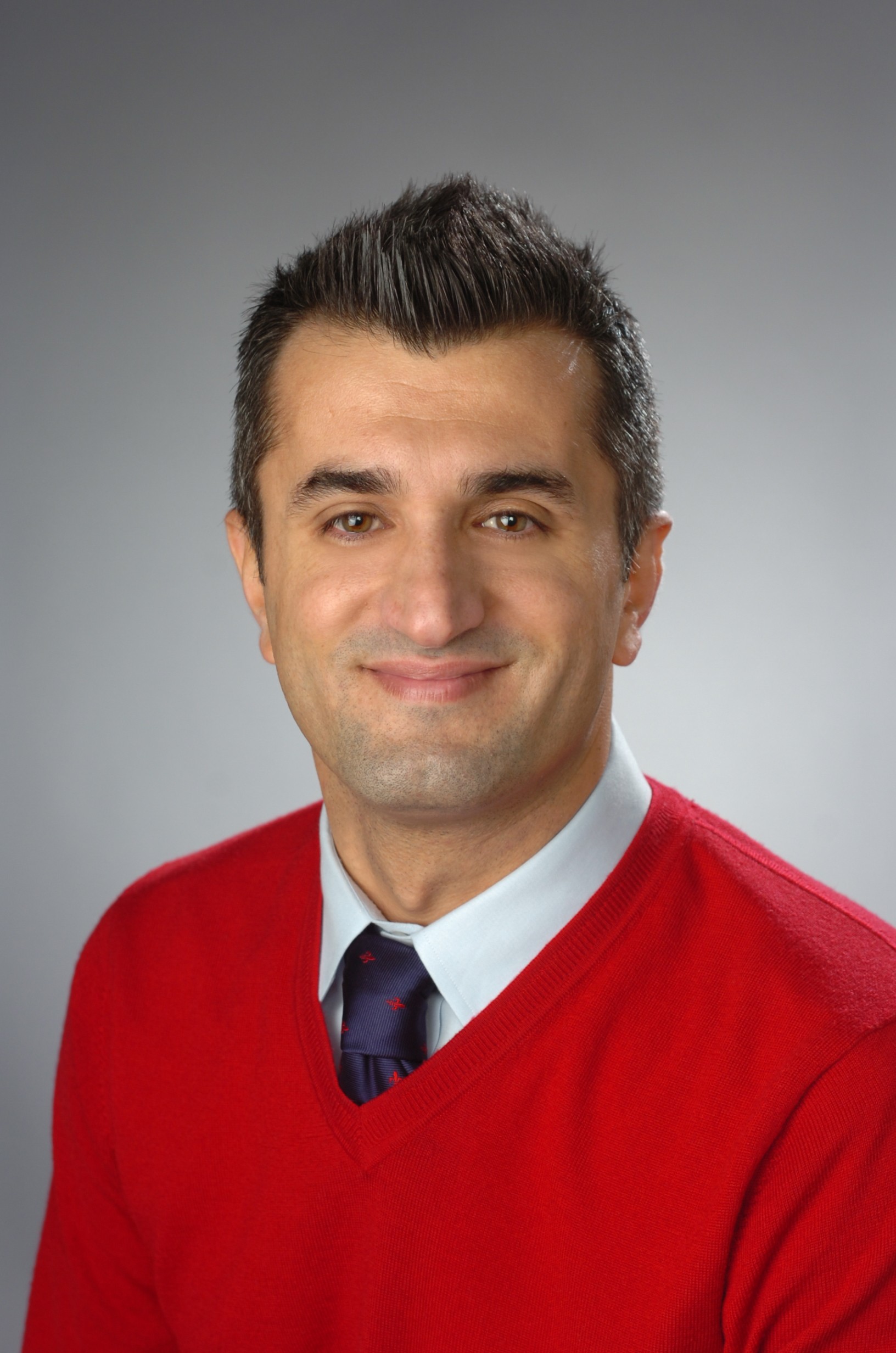
 | Associate Professor, Department of Political Science Director, Pre-Law in Europe Program Associate Professor, College of Law (by Courtesy Appointment) O’Hanley Faculty Scholar Senior Research Associate, Middle Eastern Studies Program Research Affiliate, South Asia Center (315) 443-4431 ysezgin@syr.edu |
Yüksel Sezgin is Associate Professor of Political Science and Law at Syracuse University, where he directs the Pre-Law Program in Europe and holds the title of O’Hanley Faculty Scholar. A comparative legal scholar, he specializes in legal pluralism, religious family law, and the intersection of law, rights, and religion across diverse jurisdictions.
Professor Sezgin’s first book, Human Rights under State-Enforced Religious Family Laws (Cambridge University Press, 2013), was based on 27 months of fieldwork in Israel, Egypt, and India, as well as 185 interviews with members of 20 ethnoreligious communities. Awarded the American Sociological Association’s Gordon Hirabayashi Human Rights Book Prize, the book demonstrates how state enforcement of Islamic, Jewish, and Hindu family laws systematically produces human rights violations, and how individuals across different regimes mobilize remarkably similar resistance strategies to defend their rights.
His forthcoming book, Judging through Narrative (Cambridge University Press), examines how civil judges in Israel, Greece, India, and Ghana adjudicate Muslim family law. Drawing on more than 20 months of fieldwork (2013–2022), nearly 300 interviews with judges, lawyers, and litigants, and content analysis of over 3,000 court rulings in five languages, the study applies Robert Cover’s and Peter Brooks’ narrative theories to analyze the normative frames courts employ in Islamic law disputes. It shows how these frames shape precedential authority in lower courts, how civil rights groups strategically use them to advance reform, and how they influence minority communities’ perceptions of procedural justice.
Professor Sezgin earned degrees from the University of Ankara, the Hebrew University of Jerusalem, SOAS–University of London, and the University of Washington. He previously taught at the University of Washington, Harvard Divinity School, and the City University of New York, and has held visiting appointments at the Institute for Advanced Study (Princeton), Oxford University, Columbia University, Bielefeld University, the American University in Cairo, and the University of Delhi.
Beyond academia, he has consulted for international development agencies, including UNDP, UN Women, WHO, and USAID, on issues of religious family law reform, gender justice, and human rights. He serves on the executive board of the Commission on Legal Pluralism, is associate editor of the Journal of Legal Pluralism, and his commentaries have appeared in outlets such as The Washington Post and Al Jazeera English.
Education
- University of Washington Ph.D 2007
- University of Washington M.A. 2002
- Ankara University B.A. 1996